Last updated 2026-07-25
TL;DR
Minnesota does not issue a separate 'NEMT license.' You need Minnesota Health Care Programs (MHCP) enrollment through DHS as a transportation provider, plus credentialing with the state's contracted broker (currently managed under MHCP's Non-Emergency Medical Transportation program). Add a DOT/vehicle inspection, driver background checks, and commercial auto insurance. Budget several weeks to a few months for paperwork and broker approval before you can bill.
What is non-emergency medical transportation (NEMT), exactly?
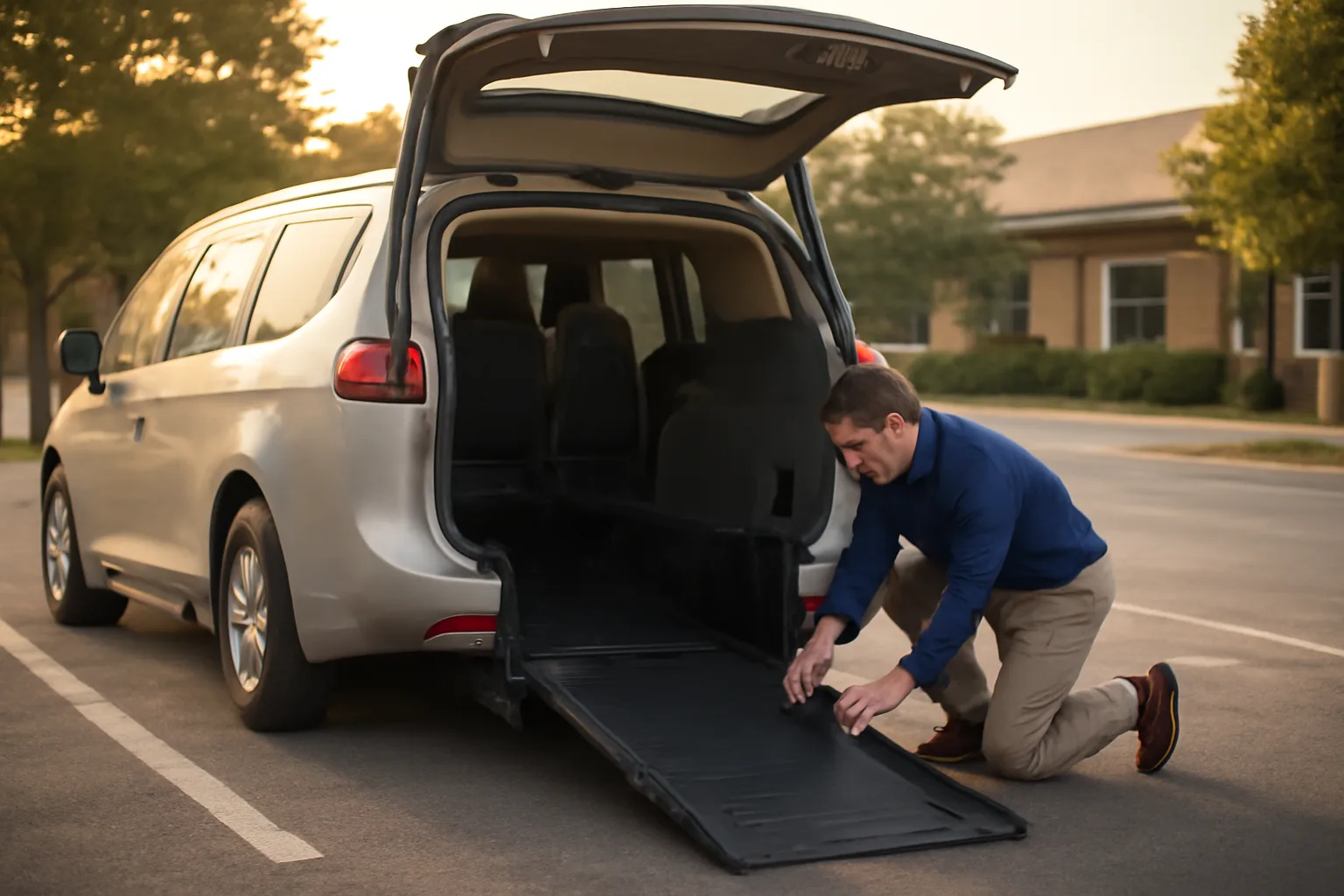
Non-emergency medical transportation is scheduled transport to and from medical appointments for people who don't need an ambulance but can't get there on their own, whether that's because of a wheelchair, a cognitive impairment, a rural address with no bus line, or just not having a working car. It covers everything from a folding-ramp minivan picking up a dialysis patient three times a week to a wheelchair-accessible van running someone to a specialist forty miles away. NEMT is different from emergency medical transport, which involves 911 dispatch, lights and sirens, and licensed EMS crews. If you're cross-shopping those two businesses, the licensing, insurance, and staffing requirements are not the same animal at all; ambulance services in Minnesota are regulated separately by the Minnesota Department of Health's EMS Regulatory Board, not by DHS transportation contracts. See emergency medical transport if you're weighing that path instead. Most NEMT rides in Minnesota are paid for by Medical Assistance (Minnesota's Medicaid program), and that's the payer this article focuses on. There's also a separate volunteer-driver and mileage-reimbursement track for people who can drive themselves or get a ride from a friend or family member, but that's not a business model, it's a reimbursement mechanism, so it's outside the scope of what a new owner-operator is building.
Does Minnesota require a separate NEMT license, or is it a Medicaid enrollment?
Minnesota does not have a standalone 'NEMT license' issued by a licensing board the way it licenses, say, a nursing home or a daycare. What you actually need is enrollment as a Minnesota Health Care Programs (MHCP) transportation provider through the Department of Human Services (DHS), plus credentialing with whatever broker or coordination system DHS has contracted to manage trip assignment in your service area [1]. That two-step structure trips people up constantly. You can be fully enrolled with DHS and still not get a single trip if you haven't separately completed broker credentialing, because the broker is the one dispatching rides and paying you, while DHS is the one that determines you're an eligible provider type in the Medical Assistance program at all. DHS publishes NEMT provider requirements and forms through its Non-Emergency Medical Transportation program pages, and the specific enrollment packet, fee schedule, and current broker contact should be confirmed directly with DHS's provider enrollment unit, because contract structures and broker assignments do change [2]. Don't rely on a forum post or a competitor's website for who the current broker is in your county; call DHS or check the current MHCP provider manual section on transportation. If you want the general multi-state picture of how broker credentialing works before you get Minnesota-specific, nemt and non emergency medical transportation services walk through the broker layer in more depth.
How do you start a NEMT business in Minnesota, step by step?
There's a real sequence here, and doing steps out of order is the single biggest cause of wasted weeks. 1. Pick your business structure and get an EIN. Most owner-operators form an LLC. This isn't NEMT-specific, it's basic Minnesota Secretary of State business filing. 2. Get your vehicle. If you're running a wheelchair-accessible van, confirm it meets ADA lift/ramp and securement standards before you buy, not after. A used van that needs $8,000 in retrofit work to pass inspection is not a bargain. 3. Pass a vehicle safety inspection. Minnesota Department of Public Safety requires commercial vehicles used for hire to meet specific inspection standards; confirm the current inspection requirement and interval with the Minnesota Department of Public Safety, Driver and Vehicle Services division, since requirements can vary by vehicle class and seating capacity [3]. 4. Get commercial auto insurance with the liability limits your state and broker require, more than personal auto minimums. See the insurance angle below. 5. Get driver qualifications sorted: a valid Minnesota driver's license (commercial license only if the vehicle class requires it), a clean or explainable driving record, and completion of any required background check. 6. Enroll as an MHCP provider through DHS. This includes submitting provider enrollment forms, your NPI if applicable, and supporting documentation about your vehicles and drivers [1]. 7. Apply for broker credentialing. Confirm with your broker and the state Medicaid agency which broker currently manages NEMT dispatch in your county, since Minnesota's broker contracts and coverage areas have changed over time and the wrong assumption here wastes real time. 8. Wait for approval, then start accepting trip assignments. A realistic timeline for a first-time solo operator, from forming the LLC to running a first paid trip, is commonly measured in months rather than weeks, mostly because insurance underwriting and broker credentialing queues move slower than people expect. Nobody publishes a hard average processing time for Minnesota broker credentialing specifically; budget generously and start the insurance and background check steps in parallel with DHS enrollment rather than waiting for one to finish before starting the next.
How do you start a medical transportation business with just one van?
One van is a completely normal, viable way to start, and plenty of MHCP-enrolled NEMT providers in Minnesota run as true owner-operators with a single wheelchair-accessible vehicle. You don't need a fleet to get enrolled. What you do need with one van is a backup plan for when it's in the shop. Brokers assign trips expecting reliability, and a provider who no-shows because their only vehicle broke down burns trust fast. Some new operators keep a rental agreement lined up, or partner informally with another small provider to cover each other's gaps, though check your broker's actual policy on subcontracting or trip reassignment before you assume that's allowed. Insurance and inspection requirements apply the same whether you own one van or twenty; there's no small-fleet exemption in Minnesota. The paperwork burden per vehicle is fixed, so a one-van operation isn't cheaper to license per se, it's just a smaller total commitment. Budget for the vehicle itself (a used ADA-compliant conversion van commonly runs from the high teens into the $40,000+ range depending on age, mileage, and lift type), commercial insurance, and enrollment/credentialing paperwork before you count on a certain trip volume, since MHCP does not guarantee any minimum trip assignments to enrolled providers.
What vehicle and driver requirements does Minnesota NEMT credentialing involve?
Vehicles used for wheelchair-accessible NEMT in Minnesota generally need to meet ADA accessibility standards for the lift or ramp, working securement systems for the wheelchair and occupant, and pass the state's for-hire vehicle safety inspection. Brokers typically layer on their own vehicle age limits and equipment checklists on top of the state's floor requirements, so a van that's technically street-legal can still get rejected by a broker for being too old or missing a specific tie-down type. Confirm current age and equipment limits directly with your assigned broker before purchasing a vehicle. Drivers typically need a valid Minnesota driver's license appropriate to the vehicle class, a background check (criminal history and driving record), and in many broker contracts, completion of specific training modules covering passenger assistance, wheelchair securement, and defensive driving. Some brokers also require a drug screening as part of onboarding. None of this is uniform nationally or even necessarily uniform across every Minnesota county's broker, so treat every specific requirement listed here as 'confirm with your broker' rather than gospel. For general driver training and certification content that applies across states, non emergency medical transportation and nemt transportation cover common certification paths like passenger assistance training and CPR/first aid, which many brokers require even when the state itself doesn't mandate them.
What insurance do you need for NEMT in Minnesota?
You need commercial auto liability insurance sized for a vehicle used for hire, not a personal policy, and the limits brokers require are almost always higher than Minnesota's baseline personal auto minimums. Minnesota's standard no-fault minimum liability limits for private passenger vehicles are $30,000 per person / $60,000 per accident for bodily injury and $10,000 for property damage, plus required no-fault (PIP) coverage [4], but those are floor numbers for ordinary personal vehicles, not for-hire commercial passenger transport. Brokers commonly require significantly higher combined single limits, often $1,000,000 or more, for vehicles carrying Medicaid passengers, along with proof of commercial auto coverage specifically rated for passenger-for-hire use. Confirm the exact required limit with your assigned broker in writing before you bind a policy, because underinsuring here is a common reason credentialing applications get bounced back. You'll also want to ask your insurance agent specifically about wheelchair lift/ramp liability coverage and whether your policy excludes passenger assistance injuries (helping someone transfer from a wheelchair), since that's a real gap some general commercial auto policies don't automatically cover.
Does Medicaid cover ambulance rides in Minnesota, and how is that different from NEMT?
Yes, Medical Assistance covers ambulance transportation when it's medically necessary emergency or medically necessary non-emergency ambulance service, but that's billed and regulated as an ambulance service under Minnesota's EMS rules, not through the NEMT broker system this article covers [5]. Federal Medicaid rules require states to ensure necessary transportation to and from providers, and that includes both emergency ambulance transport and non-emergency transportation for enrollees who need it [6]. The practical difference for a business owner: ambulance services require state EMS licensure through the Minnesota Department of Health, licensed EMTs or paramedics, and specialized medical equipment, none of which applies to standard wheelchair-van NEMT. If someone tells you 'Medicaid pays for ambulance rides so I should just get an ambulance,' that's a completely different, far more expensive and more heavily regulated business than a wheelchair-van NEMT operation. Stick with NEMT vehicle and driver requirements unless you're specifically pursuing EMS licensure. Medicaid also covers non-ambulance NEMT, which is the wheelchair-van and sedan trip type this whole article is about, when a Medical Assistance enrollee has no other means of getting to a covered medical service [6].
Does Medicare cover medical transportation the same way?
No, and this distinction matters a lot for anyone building a business plan around 'Medicare and Medicaid' as if they're one payer. Medicare Part B covers ambulance services only when other transportation could endanger the beneficiary's health, and generally does not cover routine non-emergency wheelchair-van or ambulatory transport to medical appointments [7]. There is a narrow non-emergency ambulance benefit under Medicare when a physician certifies medical necessity, but that's still ambulance-level transport, not the van-and-driver NEMT model. Some Medicare Advantage plans have started offering supplemental non-emergency transportation benefits as an add-on, but that's plan-specific and not guaranteed, and coverage terms vary year to year and plan to plan. If a chunk of your prospective client base is Medicare-only with no Medicaid or Medicare Advantage supplemental benefit, don't assume Medicare will pay for their rides to a routine appointment, because in most cases it won't. This is exactly why Medicaid managed care and state Medicaid NEMT brokers, not Medicare, are the backbone of the wheelchair-van NEMT industry nationally.
How much does it cost to get NEMT-ready in Minnesota?
| Business formation (LLC) | $155 filing fee (Minnesota Secretary of State) | One-time, plus any registered agent fee | |
|---|---|---|---|
| Wheelchair-accessible van | High teens to $40,000+ | Used vs. new, mileage, lift type | |
| Commercial auto insurance | Varies widely by carrier and limit | Often the largest recurring cost | |
| Vehicle inspection | Minimal fee, confirm current amount | Through Minnesota DPS-DVS [3] | |
| Driver background check/training | Varies by broker | Some brokers require paid third-party training modules | |
| DHS provider enrollment | Confirm current fee/process with DHS | May be no-cost application, confirm directly [1] | The honest answer is that the vehicle and the insurance dwarf every regulatory fee combined. Don't let the relatively small state paperwork costs distract you from underwriting the insurance quote carefully, since that recurring premium is what actually determines whether a one-van operation is financially workable month to month. |
There's no single official 'NEMT license fee' from the state because, again, there's no standalone license. Instead you're stacking several cost categories: | Cost category | Rough range | Notes |
How long does Minnesota NEMT enrollment and broker credentialing usually take?
There isn't a published, guaranteed turnaround time from DHS or from Minnesota's NEMT broker for a first-time applicant, and anyone who promises you an exact number of days is guessing. What's realistic to expect: DHS provider enrollment review commonly takes several weeks once a complete application is submitted, and broker credentialing (vehicle inspection scheduling, document review, driver background check results) often adds several more weeks on top of that, especially if anything in your initial packet is incomplete. The single biggest time-saver is submitting a complete packet the first time: correct insurance certificate with the right named limits, current vehicle inspection, and driver background checks already back, rather than trickling documents in over weeks. Incomplete submissions go to the back of the queue, they don't get flagged and fast-tracked. If you want a structured way to track every document DHS and the broker will ask for so you're not submitting piecemeal, that's the exact problem the $199 State + Broker NEMT Launch Kit is built around: a checklist-driven packet for your specific state and broker combination instead of hunting through separate agency PDFs one at a time.
What ongoing compliance does a Minnesota NEMT provider have to maintain?
Enrollment isn't a one-time event. MHCP providers have to keep their enrollment information current, including any change in ownership, address, or vehicle fleet, and DHS revalidates provider enrollment periodically under Minnesota Health Care Programs rules [1]. Miss a revalidation deadline and you can lose billing privileges even if nothing else about your business changed. Brokers typically require annual or biennial vehicle re-inspection, updated insurance certificates every policy renewal, and periodic driver background check refreshes. Some also run random or complaint-triggered vehicle and driver audits. Keep a simple compliance calendar; this is genuinely the least glamorous part of running an NEMT business, and it's also the part most likely to quietly lapse if you're the sole operator busy actually driving trips. Finally, keep documentation of every trip, every vehicle inspection, and every driver credential for as long as your state's Medicaid record retention rules require, since audits can and do look back multiple years. Confirm the specific retention period with DHS, since federal Medicaid recordkeeping expectations set a floor but states can require longer.
Frequently asked questions
How to start a medical transportation business in Minnesota?
Form your business entity, buy or retrofit an ADA-compliant vehicle, pass the state vehicle inspection, secure commercial auto insurance with adequate for-hire limits, complete driver background checks, enroll as an MHCP provider through DHS, and then complete credentialing with your area's NEMT broker before accepting trips. Confirm current forms and the assigned broker directly with DHS.
Does Medicaid cover ambulance rides?
Yes, Medical Assistance covers medically necessary emergency and non-emergency ambulance transportation, but that's billed as an ambulance service under Minnesota EMS rules, separate from the wheelchair-van NEMT broker system. Federal Medicaid rules also require states to ensure necessary transportation to covered medical services for enrollees generally.
What is NEMT?
NEMT, non-emergency medical transportation, is scheduled transport (wheelchair van, ambulatory sedan, or stretcher car) to and from medical appointments for people who don't need an ambulance but lack another way to get there. It's typically paid through Medicaid, and dispatched through state-contracted brokers rather than 911 systems.
Does Medicare cover medical transportation?
Medicare Part B covers ambulance transport mainly when other transportation would endanger the patient's health, and generally does not cover routine non-emergency van or sedan trips to appointments. Some Medicare Advantage plans offer supplemental non-emergency transportation benefits, but that varies by plan and isn't guaranteed.
How do you start a NEMT business with just one van?
One van is enough to get MHCP-enrolled and broker-credentialed in Minnesota; there's no minimum fleet size requirement. You do need a backup plan for vehicle downtime, since brokers expect reliable trip completion, and insurance/inspection requirements apply per vehicle regardless of fleet size.
What is non-emergency medical transportation exactly?
It's transport for Medicaid (and sometimes other payer) enrollees to medical appointments, dialysis, therapy, or pharmacy visits, provided by wheelchair vans, ambulatory sedans, or stretcher vehicles, for people who don't need emergency ambulance care but can't get there independently.
Is there a specific NEMT license in Minnesota?
No. Minnesota doesn't issue a standalone NEMT license. You need Minnesota Health Care Programs (MHCP) provider enrollment through DHS plus separate credentialing with the state's contracted NEMT broker, along with vehicle inspection and commercial insurance requirements.
How much does it cost to start a wheelchair van NEMT business in Minnesota?
Costs stack across several categories: roughly $155 for LLC formation with the Minnesota Secretary of State, a used wheelchair-accessible van (often high-teens to $40,000+), commercial auto insurance (the largest recurring cost), and enrollment/credentialing paperwork. There's no single official 'NEMT license fee.'
Who dispatches NEMT trips in Minnesota, DHS or a broker?
The state-contracted broker handles day-to-day trip dispatch and assignment once you're credentialed with them; DHS handles Medical Assistance provider enrollment eligibility. You typically need both: DHS enrollment alone doesn't get you trips without separate broker credentialing.
What insurance limits do Minnesota NEMT brokers usually require?
Minnesota's baseline personal auto minimums ($30,000/$60,000 bodily injury, $10,000 property damage) are far below what brokers typically require for passenger-for-hire vehicles. Many brokers require combined single limits of $1,000,000 or more; confirm the exact figure with your specific broker in writing before buying a policy.
How long does Minnesota NEMT credentialing take?
There's no published guaranteed timeline. A realistic expectation is several weeks for DHS provider enrollment review, plus several more weeks for broker credentialing (inspection, document review, background checks), especially if your initial application packet is incomplete.
Do NEMT drivers in Minnesota need special certification?
State law doesn't universally mandate one certification for every NEMT driver, but most brokers require background checks, driving record review, and training in passenger assistance and wheelchair securement, and some require CPR/first aid certification. Confirm exact requirements with your assigned broker.
Sources
- Minnesota Department of Human Services, Minnesota Health Care Programs (MHCP) Provider Enrollment: MHCP transportation provider enrollment is required through DHS
- Minnesota Department of Human Services, Non-Emergency Medical Transportation: DHS manages NEMT program requirements and broker coordination
- Minnesota Department of Public Safety, Driver and Vehicle Services: Commercial for-hire vehicle inspection requirements are administered by DPS-DVS
- Minnesota Statutes Section 65B.49: Minnesota minimum auto liability and no-fault (PIP) coverage limits
- Medicaid.gov, Non-Emergency Medical Transportation: Federal Medicaid rules require states to ensure necessary transportation to covered medical services
- Medicare.gov, Ambulance Services Coverage: Medicare Part B covers ambulance transport mainly when other transport would endanger health, and generally excludes routine non-emergency transport
- Minnesota Secretary of State, Business Filings Fee Schedule: LLC formation filing fee with the Minnesota Secretary of State