Last updated 2026-07-25
TL;DR
A NEMT provider application usually means two separate filings: state Medicaid enrollment (sometimes through a portal like PECOS-style or a state-specific system) and broker credentialing with whichever company (Modivcare, MTM, Access2Care, SafeRide) manages rides in your area. You need business licensing, vehicle inspections, driver background checks, and insurance before either will approve you. Confirm exact steps with your state Medicaid transportation unit.
What is non-emergency medical transportation, and how is it different from an ambulance ride?
Non-emergency medical transportation (NEMT) is scheduled transport to and from medical appointments for people who don't need emergency care but can't drive themselves or use regular transit. Think dialysis three times a week, a wheelchair user going to a specialist, or someone recovering from surgery who needs a lift-equipped van. It's a Medicaid benefit in every state, not a courtesy service. Federal regulation actually requires it: 42 CFR 431.53 obligates states to "ensure necessary transportation for beneficiaries to and from providers" as a condition of getting federal Medicaid matching funds [1]. An ambulance ride is a different animal entirely. Ambulances (and does Medicaid cover ambulance rides, yes, under specific medical necessity rules) respond to emergencies or transport patients who need medical monitoring en route. NEMT vehicles, by contrast, are wheelchair vans, ambulatory sedans, or stretcher vans staffed by drivers, not paramedics. If your patient needs an IV drip or cardiac monitoring during transport, that's an ambulance claim, not NEMT. Confirm the line with your state Medicaid agency, because some states carve stretcher-van service into NEMT and others push it toward ambulance billing. The practical difference for you as an owner-operator: ambulance companies bill Medicare Part B and Medicaid directly per trip under emergency or non-emergency ambulance codes. NEMT companies almost never bill Medicaid directly. You get scheduled trips and reimbursement through a transportation broker, and the broker bills the state. That distinction shapes almost everything else in this article.
Does Medicaid cover ambulance rides and non-emergency transportation?
Yes to both, with different rules. Medicaid covers ambulance transport when it's medically necessary, meaning the patient's condition requires the vehicle's equipment or a trained attendant during the ride, under each state's Medicaid ambulance policy. Medicaid also covers non-emergency transportation to and from covered medical services, and federal rule requires states to ensure transportation "to and from providers" for Medicaid enrollees who have no other means of getting there [1]. Does Medicare cover medical transportation? Only in narrower cases. Original Medicare Part B covers ambulance transport when other transportation would endanger the patient's health, and it covers very limited non-emergency ambulance trips (for example, scheduled dialysis transport) if a doctor certifies medical necessity in writing, under the coverage rules at 42 CFR 410.40 [2]. Medicare does not generally cover routine wheelchair-van rides to a doctor's office the way Medicaid does. Some Medicare Advantage plans add limited NEMT-style transportation benefits, but that's a plan-by-plan add-on, not a standard Medicare benefit. If most of your target riders are dual-eligible (Medicare and Medicaid), you'll likely bill through the Medicaid NEMT broker system for routine trips, not Medicare. Here's the number that trips people up: states have wide discretion in HOW they deliver the NEMT benefit. Many states carved out this function to a private broker contract instead of paying providers directly. That single administrative choice is why your application process looks like two applications stacked together.
How do you start a medical transportation business, step by step?
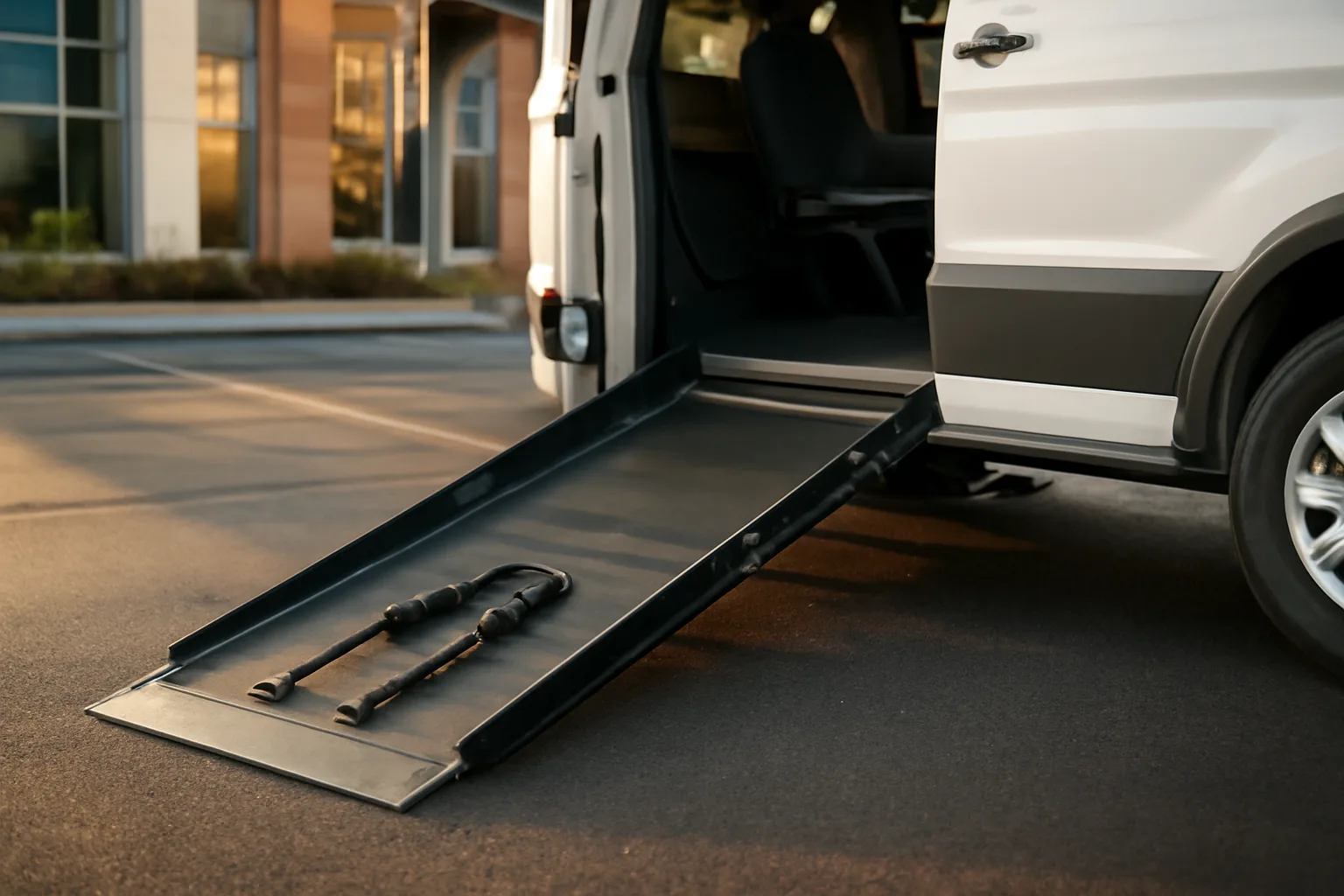
There's no single national license for NEMT. You're threading together local business registration, state Medicaid enrollment, and broker credentialing, and the order matters. Step 1: Form your business entity (LLC is standard) and get an EIN from the IRS. Step 2: Get your state and local operating authority, which might include a for-hire vehicle permit, a state department of transportation number, or a county passenger-carrier license depending on where you operate. Step 3: Buy or retrofit your wheelchair van to meet ADA-compliant lift or ramp standards and pass state vehicle inspection. Step 4: Get commercial auto insurance with the liability limits your state and broker require (often $1,000,000 combined single limit, but confirm the exact figure with your broker and state). Step 5: Screen and train drivers, including background checks, driving record pulls, and any required passenger-assistance or wheelchair securement training. Step 6: Apply for Medicaid provider enrollment in your state. Step 7: Apply for broker credentialing with the transportation broker(s) operating in your region. Step 8: Wait for site visits, document review, and (in many states) fingerprint-based background checks before you get an active provider number. Most of this runs in parallel, not strictly sequential. You can start vehicle shopping and driver screening while your Medicaid application sits in review. What you cannot do is take broker-dispatched trips before you're actually credentialed and active in both systems. Running trips before approval risks non-payment and, in some states, exposure for fraudulent billing under the state's false claims statute.
How do you start a NEMT business with just one van?
One van is completely workable as a starting point, and plenty of owner-operators run exactly that setup for years. The application process doesn't scale down much just because your fleet is small; you still need the same insurance minimums, the same driver screening, and the same Medicaid and broker paperwork as a company with twenty vehicles. Where the one-van model does simplify things: you skip fleet management questions on broker applications (dispatch software, backup vehicle plans, multi-driver scheduling), and your insurance quote is smaller. Some brokers ask about your capacity to take a minimum trip volume per week; a one-van operator should be upfront about that limit rather than overcommitting during credentialing and then failing to show up for assigned trips, which can get you deactivated fast. One practical trap: many states and brokers require a wheelchair-accessible vehicle to meet specific spec standards (tie-down anchor points rated to a certain load, ramp incline angle, interior clearance height) before it passes inspection. Don't buy a used van and assume it qualifies. Get the exact spec sheet from your state Medicaid transportation unit or your target broker before you write a check. See vehicles and equipment guidance if your site has it, or ask the broker directly for their vehicle inspection checklist.
What does the state Medicaid NEMT provider enrollment application actually require?
Every state runs its own Medicaid provider enrollment process, but most ask for the same core stack of documents. Expect to submit: your business formation documents (articles of organization, EIN letter), proof of general and commercial auto liability insurance, vehicle registration and inspection certificates, driver license and background check results for every driver, a completed Medicaid provider enrollment application (often through the state's MMIS portal), and in many states, a criminal background check or fingerprinting requirement tied to Affordable Care Act program integrity rules. Under federal rule, states must screen Medicaid providers according to a risk level (limited, moderate, or high) set out in 42 CFR 455.450, and transportation providers are frequently placed in the "moderate" category, which requires on-site visits in addition to license verification [3]. The regulation states that for a provider assigned to the moderate category, the state Medicaid agency "must conduct on-site visits" as part of its screening [3]. That means don't be surprised if a state inspector or contracted vendor shows up to look at your vehicle and your office before final approval. Processing time varies by state and is not standardized; some states publish target turnaround windows in provider manuals, others don't commit to a timeline at all. Confirm current processing time directly with your state Medicaid transportation unit, since it changes with staffing and application volume. Don't book broker onboarding calls assuming a fixed number of weeks; call and ask where your specific application sits. A related note on billing: in the majority of states, you as the transportation provider don't bill Medicaid directly for NEMT trips. You bill the broker, and the broker bills the state. Some states still run a direct-provider model without a broker layer. Confirm which model your state uses before assuming your Medicaid provider number alone gets you paid.
How does broker credentialing work with Modivcare, MTM, Access2Care, or SafeRide?
Once your state Medicaid enrollment is active (or sometimes in parallel), you apply separately to whichever transportation broker holds the contract in your service area. States often split contracts by region, so the broker you deal with in one county might be different from the broker three counties over. Check your state guides hub or your state Medicaid transportation unit page for the current broker map. Broker credentialing typically asks for the same documents you already gave the state, plus broker-specific extras: a signed transportation services agreement, proof of a certain insurance minimum (brokers sometimes require higher limits than the state baseline), a vehicle inspection form specific to that broker, driver orientation or online training completion, and sometimes a criminal background check run through the broker's own vendor even if the state already ran one. Expect duplication. It's genuinely one of the most annoying parts of this business: the state and the broker rarely trust each other's paperwork completely, so you end up submitting insurance certificates and background checks twice. Once approved, brokers assign you trips through a dispatch app or portal, track your on-time performance and no-show rate, and can suspend or terminate your contract for performance issues independent of your Medicaid status. That means you can lose broker access while your Medicaid enrollment stays technically active, or vice versa. Treat the two credentials as separate ongoing obligations, not a one-time hurdle. Same documents, different reviewers. That's the whole game.
How long does NEMT provider enrollment and broker credentialing take?
There's no honest single number here, and any article that gives you one is guessing. Timelines depend on your state's Medicaid enrollment backlog, whether your vehicle passes inspection on the first try, how fast your background checks clear, and which broker holds your region's contract. Some owner-operators report weeks; others report months, especially if paperwork bounces back for corrections. What you can control: submit complete applications the first time. Missing insurance declarations pages, expired vehicle registrations, and incomplete driver background check packets are the most common reasons for rejection-and-resubmission cycles, which can double your wait. Call your state Medicaid transportation unit before submitting to confirm current document requirements, since these do change (a state might add a new attestation form or update its background check vendor without much public notice). Don't quit your current job or sign a vehicle lease assuming a specific enrollment date. Build slack into your plan.
What insurance and licensing does a wheelchair-van NEMT operator need?
At minimum, expect to need: commercial auto liability insurance (limits set by your state and broker, often in the range of $500,000 to $1,000,000 combined single limit, though this varies significantly and you must confirm the exact figure), general liability insurance, and workers' compensation coverage if you have employees rather than solely contracted owner-operators. Some states also require a specific for-hire passenger vehicle permit or livery license separate from Medicaid enrollment entirely, issued by a state DOT or public utilities commission rather than the Medicaid agency. Your vehicle itself typically needs to pass an inspection confirming ADA-style wheelchair securement points, functioning lift or ramp equipment, and working safety restraints, on a schedule the state or broker sets (commonly annual, but confirm locally). Keep every inspection certificate, insurance declarations page, and driver credential file organized in one place; both the state and the broker will ask for updated copies periodically, more than at initial enrollment. Building that document system early saves you from scrambling at re-credentialing time, which typically happens annually or biennially depending on the program.
What are the most common reasons a NEMT provider application gets denied or delayed?
Incomplete insurance documentation tops the list. A declarations page that doesn't clearly show the required liability limit, or a policy that's about to lapse before the application processes, sends the whole file back. Other frequent snags: driver background checks that turn up disqualifying convictions under the state's specific exclusion list (these lists vary by state and aren't always intuitive, so don't assume a decade-old minor offense is automatically fine or automatically disqualifying); vehicles that fail inspection because the wheelchair lift wasn't serviced or the tie-down anchors don't meet load rating; business entity paperwork that doesn't match across the state filing, the EIN, and the insurance policy (a name mismatch alone can stall a file for weeks); and simply applying to the wrong broker because you didn't confirm which company holds the contract for your specific county or region. A less obvious one: some states require you to already hold an active Medicaid provider number before a broker will even open your credentialing file, while others let you run the two processes in parallel. Doing them in the wrong order for your state wastes real time. Call first and ask.
Where do you actually apply, and how do you keep the paperwork straight?
Start at your state Medicaid agency's transportation unit page, which should list the current broker(s) for NEMT in your state, the Medicaid provider enrollment portal link, and required forms. These pages exist for every state that runs Medicaid, since federal rule requires transportation assurance as described above [1], though the exact URL structure differs state to state (some call it "Non-Emergency Medical Transportation," others fold it into "Medicaid Transportation Program" or a broker-branded name). From there, you'll typically touch three separate systems: your state's Medicaid provider enrollment portal (sometimes called MMIS or a state-branded name), your assigned broker's credentialing portal, and your own internal file of licenses, insurance certs, and driver records that both of the above will ask you to re-verify periodically. Because the two applications (state and broker) ask for overlapping but not identical documents, a lot of owner-operators build one master folder, digital or physical, with every certificate, form, and license in one place, then pull copies for each system as needed rather than hunting for a scattered PDF every time a portal asks for something. If you want a structured starting point instead of building document checklists from scratch, RideCredential's $199 one-time State + Broker NEMT Launch Kit organizes the state Medicaid and broker credentialing document lists together so you're not guessing what each system wants. It's not a guarantee of approval by any state or broker; approval decisions are entirely theirs.
What should you budget for beyond the application itself?
The application fees themselves are usually modest or nonexistent (many state Medicaid enrollment portals don't charge NEMT transportation providers an enrollment fee, though this varies, so confirm with your state). Your real costs sit elsewhere: the wheelchair van itself (new ADA-compliant conversion vans commonly run well into five figures, used ones less but with inspection risk), commercial insurance premiums, driver background check fees, any required training or certification courses, and the notarization or legal fees for setting up your business entity correctly. Build in a cash buffer for the gap between passing your inspections and actually getting your first dispatched trip from the broker. That gap is unpredictable and this article won't invent a number for it, because no one has solid public data on typical time-to-first-trip across states and brokers. Ask other local operators or your broker's onboarding contact directly what recent new providers have experienced in your specific region.
Frequently asked questions
What is NEMT in simple terms?
NEMT stands for non-emergency medical transportation. It's scheduled rides to and from medical appointments for people who can't drive themselves and don't need ambulance-level care, using wheelchair vans, ambulatory sedans, or stretcher vans. Medicaid covers this benefit nationwide because federal rule (42 CFR 431.53) requires states to ensure transportation to medical providers for enrollees who lack other means.
Does Medicaid cover ambulance rides?
Yes, when medically necessary, meaning the patient's condition requires the ambulance's equipment or trained attendants during transport. Each state sets its own Medicaid ambulance payment and coverage policy within federal guidelines. This is separate from NEMT wheelchair-van transport, which covers non-emergency rides where the patient doesn't need medical monitoring en route. Confirm your state's specific ambulance coverage rules with its Medicaid agency.
Does Medicare cover medical transportation?
Medicare Part B covers ambulance transport when other transport would endanger the patient's health, and covers limited scheduled non-emergency ambulance trips (like dialysis) with a doctor's written certification under 42 CFR 410.40. Medicare generally does not cover routine wheelchair-van rides to routine appointments the way Medicaid NEMT does. Some Medicare Advantage plans add limited transportation benefits as a plan extra, not a standard Medicare rule.
How do I start a medical transportation business from scratch?
Form a business entity, get required local/state passenger-vehicle operating authority, buy or convert an ADA-compliant wheelchair van, get commercial auto and general liability insurance, screen and train drivers, then apply for state Medicaid provider enrollment and broker credentialing (Modivcare, MTM, Access2Care, SafeRide, or whichever broker holds your region's contract) in whatever order your state requires.
Can I start a NEMT business with just one van?
Yes, one van is a normal starting fleet size for an owner-operator. You still need the same insurance minimums, driver screening, vehicle inspection, and Medicaid/broker paperwork as a larger fleet. Be upfront with your broker about your trip capacity so you don't overcommit and risk deactivation for missed or declined assigned trips.
How long does it take to get NEMT provider approval?
There's no fixed national timeline; it depends on your state's application backlog, vehicle inspection scheduling, and how fast background checks clear. Some operators report a few weeks, others report several months, especially if documents need resubmission. Confirm current processing expectations directly with your state Medicaid transportation unit rather than relying on a general estimate.
Do I apply to the state or the broker first?
It varies by state. Some states require an active Medicaid provider number before a broker opens your credentialing file; others let the two processes run in parallel. Call your state Medicaid transportation unit and your target broker's provider relations contact before you start to confirm the required order for your specific state.
What insurance do I need for a wheelchair-van NEMT business?
Expect to need commercial auto liability insurance at a limit your state or broker sets (commonly discussed in the $500,000 to $1,000,000 combined single limit range, though this varies and must be confirmed), plus general liability and workers' compensation if you have employees. Some states also require a separate for-hire passenger vehicle permit issued by a state DOT or utilities commission.
Why do NEMT applications get denied?
Common reasons include incomplete or mismatched insurance documentation, driver background checks flagging disqualifying convictions under the state's exclusion list, vehicles failing inspection (bad lift, under-rated tie-downs), business entity name mismatches across filings, and applying to the wrong broker for your specific county or region.
What vehicle specs does a wheelchair van need for NEMT?
Requirements vary by state and broker but generally include a working wheelchair lift or ramp, securement anchor points rated to a minimum load standard, functioning restraint systems, and passing a scheduled inspection (often annual). Get the exact spec sheet from your state Medicaid transportation unit or your target broker before purchasing or converting a vehicle.
Do NEMT providers bill Medicaid directly?
In most states, no. States commonly contract with a transportation broker (Modivcare, MTM, Access2Care, SafeRide, or others) that manages trip dispatch and billing, and providers bill the broker rather than the state Medicaid agency directly. Some states still run a direct-provider billing model without a broker layer. Confirm which model applies in your state.
Is there a fee to apply for NEMT Medicaid provider enrollment?
Many states don't charge a specific enrollment fee for NEMT transportation providers, though this varies and some states or provider types do have fees. Your real costs are the vehicle, insurance, driver screening, and licensing, not the enrollment application itself. Confirm fee details, if any, with your state Medicaid transportation unit.
Can broker credentialing be revoked separately from Medicaid enrollment?
Yes. Brokers monitor performance metrics like on-time rate and no-show rate and can suspend or terminate a provider's broker contract for performance issues independent of that provider's Medicaid enrollment status. Your Medicaid provider number can remain active even if a specific broker relationship ends, and vice versa. Treat them as two separate ongoing obligations.
Sources
- eCFR, 42 CFR 431.53 (Assurance of transportation): States must ensure necessary transportation for Medicaid beneficiaries to and from providers as a condition of federal matching funds
- eCFR, 42 CFR 410.40 (Coverage of ambulance services): Medicare Part B covers ambulance transport when other transportation would endanger health, and limited scheduled non-emergency ambulance trips with physician certification
- eCFR, 42 CFR 455.450 (Screening levels for Medicaid providers): Medicaid providers are screened at limited, moderate, or high risk levels, with moderate-risk categories requiring on-site visits
- Medicaid.gov, Non-Emergency Medical Transportation: Medicaid's non-emergency medical transportation benefit ensures enrollees can get to covered medical services
- 42 U.S.C. 1396a(a)(70) (State plan requirements, NEMT broker option): Federal law permits states to use a broker arrangement to provide non-emergency medical transportation under a state Medicaid plan
- eCFR, 42 CFR 431.51 (Free choice of providers): Medicaid beneficiaries generally have free choice among qualified providers, a baseline rule that interacts with state transportation broker arrangements