Last updated 2026-07-25
TL;DR
Minnesota NEMT providers need a Minnesota Department of Human Services (DHS) Medicaid provider enrollment, compliance with Minnesota's Special Transportation Services (STS) rules for wheelchair vehicles, driver background studies through DHS NETStudy 2.0, proper vehicle equipment certification, and separate credentialing with the broker managing rides in their region (currently transitioning under MN's new transportation delivery model). Budget several weeks to a few months for the full stack.
What is non-emergency medical transportation (NEMT), exactly?
Non-emergency medical transportation is transportation to and from covered medical appointments for people who don't need an ambulance but can't get there on their own, whether because of a disability, a wheelchair, a cognitive condition, or just no working vehicle or license. It covers everything from a sedan ride to dialysis three times a week to a wheelchair-van trip to a specialist two counties over. Minnesota Medicaid calls its version "Special Transportation Services" (STS) when a vehicle needs to be equipped for wheelchairs, stretchers, or has a device to lift or secure a passenger, and it separately covers "common carrier" and volunteer driver rides for people who don't need special equipment [1]. If you're buying a wheelchair van specifically, you're stepping into the STS side of the program, which carries its own vehicle and driver rules layered on top of general Medicaid provider enrollment. Federally, NEMT is a required Medicaid benefit. Federal regulation at 42 CFR 431.53 requires states to "ensure necessary transportation for recipients to and from providers" and to describe the methods it will use to meet that requirement [2]. States have wide room to design how they deliver it, which is why Minnesota's rules look different from a broker-only state like Texas or Florida. For a broader look at how NEMT fits into Medicaid nationally before you get into Minnesota specifics, see medical transportation and what NEMT is.
Does Medicaid cover ambulance rides, and how is that different from NEMT?
Yes, Medicaid covers ambulance transportation when it's medically necessary, but that's a separate benefit from NEMT and it's billed and licensed completely differently. Ambulance service (ground or air) is for emergencies or situations where a person's condition requires medical monitoring during transport, and it's provided by licensed EMS agencies under Minnesota EMS Regulatory Board rules, not by NEMT wheelchair-van companies. Minnesota Health Care Programs (Medical Assistance and MinnesotaCare) reimburse ambulance transports under separate coverage policy from STS/common carrier NEMT, and providers bill using ambulance-specific procedure codes, not the codes used for wheelchair van or sedan trips [1]. If you're setting up a wheelchair-van business, you generally do not need an ambulance license, EMT certification for your drivers, or EMS Regulatory Board registration, because you're not providing emergency medical services or clinical care en route. You're providing safe, equipped transportation. Where people get confused: some wheelchair-van companies market themselves loosely as "medical transport," and callers assume that means ambulance-level service. It doesn't. If a rider needs oxygen monitoring, IV management, or any clinical intervention during the ride, that's an ambulance call, and Medicaid will not reimburse it under the NEMT benefit.
Does Medicare cover medical transportation the same way?
No, and this trips up a lot of new operators. Medicare's NEMT coverage is much narrower than Medicaid's. Original Medicare covers ambulance transportation when medically necessary, but it generally does not cover routine non-emergency wheelchair van or sedan trips to doctor visits the way state Medicaid programs do. Some Medicare Advantage plans voluntarily add a NEMT benefit as a supplemental perk, and CMS has allowed Medicare Advantage plans to offer non-primarily-health-related supplemental benefits, including transportation, under authority expanded in the CHRONIC Care Act and subsequent CMS guidance [3]. But that's plan-by-plan, not guaranteed, and reimbursement rates and rules vary by insurer rather than by a uniform state Medicaid schedule. Practically, this means: your bread-and-butter NEMT revenue in Minnesota is going to come from Medical Assistance (Minnesota's Medicaid program) and MinnesotaCare enrollees, not traditional Medicare fee-for-service riders. If you want Medicare Advantage transportation contracts too, you'll need to approach individual MA plan networks or the broker they use, separately from your DHS Medicaid enrollment.
How do you start a medical transportation business in Minnesota, step by step?
Here's the realistic order of operations, because doing these out of sequence wastes time and money. 1. Pick your business structure and get your EIN, state business registration with the Minnesota Secretary of State, and general liability/commercial auto insurance lined up first. Nothing downstream works without this foundation. 2. Buy or lease your wheelchair van, and make sure it meets Minnesota's Special Transportation Services vehicle standards (see the equipment section below) before you count on it for STS trips. 3. Enroll as a Minnesota Health Care Programs provider through DHS. Minnesota Statutes section 256B.04 gives the commissioner of human services authority to establish provider enrollment and payment procedures for medical assistance vendors, which includes transportation providers [4]. You'll apply through DHS's provider enrollment portal (MN-ITS) and get assigned an NPI-linked provider number. 4. Register your vehicles and get any required local or county STS certification your area requires, since counties and the state have historically shared oversight of the STS program. 5. Run driver background studies through DHS NETStudy 2.0, which Minnesota law requires for individuals providing direct contact services in DHS-licensed and enrolled programs, including transportation of vulnerable populations under Minnesota Statutes chapter 245C [5]. 6. Credential with your regional broker or managed care organization's transportation vendor, since even after DHS enrollment, most trip dispatch flows through a broker system rather than direct billing for many managed care enrollees. 7. Set up your billing and compliance recordkeeping (trip logs, mileage, driver certifications, vehicle inspection records) before your first ride, not after. Minnesota has been actively restructuring how NEMT is delivered statewide, including moving toward more coordinated regional transportation management, so confirm the current delivery structure with your state Medicaid transportation unit before you assume the old broker map still applies.
How do you start a NEMT business with just one van?
One van is completely workable to start, and plenty of owner-operators begin exactly there. The core requirements don't change based on fleet size: you still need business registration, insurance, DHS Medicaid provider enrollment, a compliant vehicle, a background-checked driver (possibly just you), and broker credentialing. The main thing a one-van operation needs to get right early is capacity honesty. Brokers assign trips based on your registered capacity and service area, and if you're the only driver, you need realistic availability windows in your credentialing paperwork, because no-shows and missed pickups get tracked and can affect your standing with a broker. One practical tip: don't buy the van before you've confirmed DHS's current STS vehicle equipment standards (tie-down systems, lift certification, interior clearance) because retrofitting a van that doesn't meet spec costs more than buying compliant equipment the first time. Talk to your vehicle upfitter about DHS/STS compliance specifically, more than generic ADA language, since Medicaid vehicle standards and ADA vehicle requirements aren't identical documents. A one-van operator should also plan for realistic downtime. If your single van needs a lift repair or inspection failure, you have zero backup capacity, which matters for broker performance metrics like on-time pickup rates.
What does Minnesota Medicaid (DHS) provider enrollment actually require?
Minnesota Department of Human Services runs Medicaid provider enrollment through MHCP (Minnesota Health Care Programs). Under Minnesota Statutes 256B.04, the commissioner is directed to "establish rules for enrolling vendors of medical care" and can deny, suspend, or terminate enrollment for cause [4]. For transportation providers specifically, this means submitting an enrollment application through the MN-ITS system, providing your NPI, business license documentation, vehicle information, and attesting to compliance with STS rules if you're operating wheelchair-accessible vehicles. Minnesota's STS program has its own defined standards under Minnesota Rules covering vehicle equipment, driver training, and reporting, layered on top of general provider enrollment [1]. Expect DHS to ask for: - Business entity documents (articles of organization, EIN letter)
- Proof of commercial auto and general liability insurance meeting DHS minimums
- Vehicle registration and STS equipment compliance documentation
- Driver roster with completed NETStudy 2.0 background study clearances
- A designated billing NPI and any required surety bond or financial documentation DHS specifies for your provider type DHS enrollment timelines vary and DHS does not publish a fixed universal processing guarantee, so confirm current turnaround with your state Medicaid transportation unit before you commit to a launch date with staff or a vehicle lease.
What are Minnesota's Special Transportation Services (STS) vehicle and driver rules?
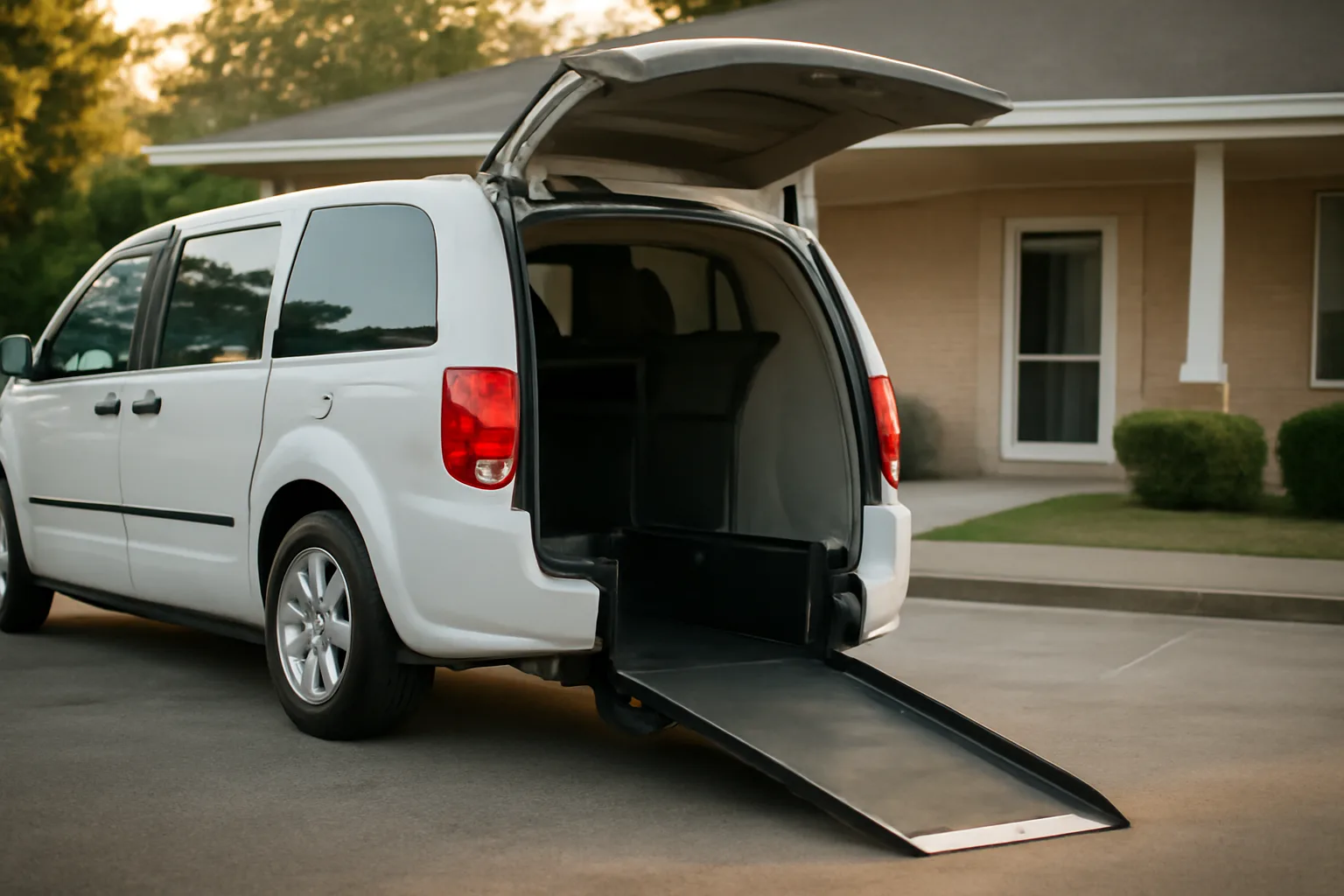
STS is Minnesota's regulatory category for vehicles equipped to transport people who use wheelchairs, stretchers, or need lift-assisted boarding, and it sits inside the broader Medicaid transportation benefit [1]. If your wheelchair van will carry Medicaid enrollees who need lift or ramp boarding and securement, you're an STS provider, and that status brings extra requirements beyond a standard sedan NEMT provider. At minimum, expect STS rules to touch: - Vehicle equipment: wheelchair lifts or ramps, securement systems (tie-downs) rated for the wheelchair and occupant weight, and interior configuration allowing safe boarding and securement.
- Vehicle inspection: STS vehicles typically need periodic safety inspections beyond a standard passenger car inspection, given the added lift/ramp mechanical components.
- Driver training: STS drivers generally need training specific to securing wheelchairs, operating lifts safely, and handling passengers with mobility limitations, more than a standard driver's license.
- Background studies: drivers providing STS transportation to Medicaid enrollees fall under DHS background study requirements via NETStudy 2.0 under Minnesota Statutes chapter 245C [5]. Because STS combines a state Medicaid rule and, in some cases, county-level oversight history, the exact current inspection and training documentation format is something you should confirm directly with your DHS transportation contact and, if applicable, your county human services agency.
What broker credentialing do you need on top of state enrollment?
State Medicaid enrollment gets you legally allowed to bill Minnesota Medicaid for NEMT services. It does not automatically put trips on your schedule. In most states, including historically in Minnesota, actual trip dispatch and payment for many managed care enrollees flows through a transportation broker or managed care organization's transportation vendor, and you have to separately credential with them. Broker credentialing packets typically ask for many of the same documents DHS wants (insurance certificates, vehicle lists, driver background clearances) plus broker-specific items: a signed provider agreement, rate acknowledgment, GPS/dispatch app compliance, and sometimes a vehicle inspection done by or for the broker rather than the state. Minnesota's NEMT delivery model has been in active transition, with the state examining more coordinated, regionally managed transportation administration for Medical Assistance enrollees. That means the specific broker or brokers operating in your county, and their exact credentialing requirements, can change. Confirm current broker assignments and credentialing packets with your state Medicaid transportation unit and with the broker directly before you build your onboarding calendar around outdated information. If you're building your paperwork stack from scratch, our Launch Kit Builder organizes the state enrollment and broker credentialing document set into one $199 one-time package, so you're not hunting down each form separately across DHS and broker portals.
What vehicle and driver requirements should you budget for before buying a van?
Before you sign for a wheelchair van, confirm three things with DHS or your STS compliance contact: required lift/ramp certification standard, tie-down/securement rating, and any minimum interior clearance for wheelchair maneuvering. Retrofitting later is almost always more expensive than buying an already-compliant used or new conversion van. For drivers, plan on: - A valid Minnesota driver's license appropriate to your vehicle class (most wheelchair vans don't require a CDL, but confirm based on your specific vehicle's GVWR).
- A clean driving record check, since brokers and DHS both screen for disqualifying violations.
- A completed NETStudy 2.0 background study, mandatory for individuals with direct contact to people served under DHS-licensed and enrolled programs [5].
- Wheelchair securement and lift operation training, documented and kept on file.
- First aid/CPR certification, which many brokers require even though it's not a clinical service role. Insurance is its own line item: commercial auto policies for wheelchair vans typically cost more than standard commercial auto because of the higher liability exposure of transporting a mobility-limited passenger, and DHS or your broker will set minimum liability coverage thresholds you must carry and prove with a certificate of insurance.
How long does the whole Minnesota NEMT licensing process take?
There's no single published number for "start to first paid trip" because it depends on how fast your business registration, insurance binding, vehicle acquisition, DHS enrollment, and broker credentialing each move, and they don't all move at the same speed. A realistic range most new operators experience is a few weeks for business formation and insurance, additional weeks for vehicle purchase and STS equipment verification, and then a variable DHS enrollment and broker credentialing window that can run from several weeks to a few months depending on application completeness and current processing volume. DHS does not guarantee a fixed enrollment turnaround time publicly, so build slack into your plan rather than assuming a specific number of business days. The biggest timeline killer is submitting an incomplete application, whether that's missing insurance documentation, an unfinished background study, or a vehicle that hasn't passed STS equipment verification yet. Get every document ready before you submit rather than submitting early and patching gaps, since incomplete applications often go back to the bottom of a processing queue rather than staying in place.
What ongoing compliance keeps your Minnesota NEMT credentials active?
Getting enrolled and credentialed once isn't the finish line. Minnesota DHS and your broker both expect ongoing compliance, and lapses can suspend your ability to bill or receive dispatched trips. Ongoing requirements typically include: periodic revalidation of your DHS provider enrollment (Medicaid provider enrollments generally require revalidation on a recurring cycle, commonly discussed federally as at least every five years under 42 CFR 455.414, though state-specific timing and process details should be confirmed with DHS) [6], maintained and renewed commercial auto and liability insurance, current vehicle safety and STS equipment inspections, updated driver background studies when required, and accurate trip documentation for audit purposes. Brokers separately run their own recredentialing cycles, often annually, checking insurance certificates, vehicle lists, and driver rosters are current. Missing a broker recredentialing deadline can pause your trip assignments even if your DHS enrollment is technically still active, so track both calendars separately rather than assuming one covers the other. Keep organized records. If DHS or a broker audits trip logs, mileage, driver certification files, or vehicle inspection history and you can't produce them quickly, that's a compliance problem independent of whether you actually did anything wrong.
Frequently asked questions
What is NEMT?
NEMT stands for non-emergency medical transportation, which is transportation to and from covered medical appointments for Medicaid or Medicare Advantage enrollees who don't need ambulance-level care but can't get to appointments on their own. It includes sedan rides, wheelchair-van trips, and stretcher transport, and it's a required Medicaid benefit under 42 CFR 431.53, though states design the delivery model differently.
How do you start a NEMT business in Minnesota?
Register your business, secure commercial auto and liability insurance, buy a wheelchair van meeting Minnesota's STS equipment standards, enroll as a Minnesota Health Care Programs provider through DHS, complete driver background studies via NETStudy 2.0, and separately credential with whatever regional broker manages Medicaid transportation dispatch in your service area. Confirm the current broker structure with DHS, since Minnesota's delivery model has been changing.
Does Medicaid cover ambulance rides?
Yes, Medicaid covers medically necessary ambulance transportation, but it's billed and licensed separately from NEMT wheelchair-van or sedan services. Ambulance transport requires an EMS-licensed agency under Minnesota EMS Regulatory Board rules, while NEMT wheelchair-van companies operate under DHS Medicaid provider enrollment and STS vehicle standards instead.
Does Medicare cover medical transportation?
Original Medicare generally covers ambulance transportation when medically necessary but does not broadly cover routine non-emergency wheelchair van or sedan trips. Some Medicare Advantage plans voluntarily offer NEMT as a supplemental benefit under CMS flexibility expanded by the CHRONIC Care Act, but coverage and reimbursement vary plan by plan rather than following one uniform Medicaid-style schedule.
What is non-emergency medical transportation?
Non-emergency medical transportation is scheduled transportation for Medicaid or insurance enrollees to medical appointments, dialysis, therapy, or pharmacy visits, provided by sedans, wheelchair vans, or stretcher vehicles rather than ambulances. It's a mandatory Medicaid benefit for eligible enrollees under 42 CFR 431.53, and states like Minnesota implement it through provider enrollment plus, often, a broker-managed dispatch system.
How do you start a medical transportation business with just one van?
One van is enough to start. You still need business registration, insurance, DHS Medicaid provider enrollment, an STS-compliant wheelchair van if you'll transport mobility-device users, a background-checked driver, and broker credentialing. The main added consideration with one van is being realistic about your availability windows and having a plan for downtime if that single vehicle needs repair.
What background check does a Minnesota NEMT driver need?
Minnesota requires a DHS background study through the NETStudy 2.0 system for individuals with direct contact to people served under DHS-licensed and enrolled programs, which includes NEMT drivers transporting Medicaid enrollees, under Minnesota Statutes chapter 245C. Brokers may layer on additional driving record checks or drug screening requirements of their own.
What is Minnesota's Special Transportation Services (STS) program?
STS is Minnesota's regulatory category covering vehicles equipped with wheelchair lifts, ramps, or stretcher capability and used to transport Medicaid enrollees who need that equipment. STS carries added vehicle inspection, securement equipment, and driver training requirements beyond standard sedan NEMT provider rules, and it sits within Minnesota's broader Medicaid transportation benefit.
How long does Minnesota NEMT provider enrollment take?
There's no single published fixed timeline. Realistically, business setup and insurance can take a few weeks, vehicle acquisition and STS compliance verification adds more time, and DHS enrollment plus broker credentialing can run several weeks to a few months depending on application completeness. Confirm current processing expectations directly with DHS since they don't guarantee a specific turnaround publicly.
Do you need a separate license to transport Medicaid patients in a wheelchair van in Minnesota?
You need Minnesota DHS Medicaid provider enrollment plus compliance with Special Transportation Services (STS) vehicle and driver standards if your van serves passengers needing wheelchair lift, ramp, or securement equipment. This is on top of standard business licensing and insurance, and it's separate from any broker credentialing you'll also need to actually receive dispatched trips.
Can you bill Minnesota Medicaid directly, or do you need a broker?
DHS provider enrollment allows you to bill Minnesota Medicaid, but in practice much of the actual trip dispatch for managed care enrollees flows through a regional broker or managed care organization's transportation vendor, and you generally need separate credentialing with them to receive assigned rides. Confirm the current broker structure in your county with your state Medicaid transportation unit.
What insurance does a Minnesota NEMT wheelchair-van business need?
You need commercial auto insurance covering your wheelchair van at levels meeting DHS and broker minimums, plus general liability coverage, and you'll need to provide a certificate of insurance during both DHS enrollment and broker credentialing. Wheelchair-van coverage typically costs more than standard commercial auto because of higher liability exposure from transporting mobility-limited passengers.
Sources
- Minnesota Department of Human Services, Non-Emergency Medical Transportation (NEMT) program overview: Minnesota categorizes wheelchair/lift-equipped Medicaid transportation as Special Transportation Services (STS) separate from common carrier and volunteer driver rides
- 42 CFR 431.53, Code of Federal Regulations (via eCFR): Federal Medicaid regulation requires states to ensure necessary transportation for recipients to and from providers
- Minnesota Statutes section 256B.04: The DHS commissioner has authority to establish rules for enrolling vendors of medical care, including transportation providers, under Minnesota Medicaid
- Minnesota Statutes chapter 245C, Human Services Background Studies: Minnesota requires background studies for individuals providing direct contact services, including transportation, in DHS-licensed and enrolled programs
- 42 CFR 455.414, Code of Federal Regulations (via eCFR): Medicaid provider enrollments generally require periodic revalidation, discussed federally as at least every five years
- Medicaid.gov, Non-Emergency Medical Transportation: NEMT is described by CMS as a required Medicaid benefit that helps beneficiaries without transportation access get to covered medical services