Last updated 2026-07-25
TL;DR
A solid NEMT business plan covers your vehicle and insurance costs, state NEMT/livery licensing, Medicaid provider enrollment, and broker credentialing (Modivcare, MTM, etc.) as separate sections, because each has its own paperwork and timeline. There's no single national template; requirements are set state by state, so treat any generic plan as a starting outline, not a filing document.
What is non-emergency medical transportation, and why does a business plan need to explain it?
Non-emergency medical transportation (NEMT) is scheduled transport for people who have a medical need to get to appointments, dialysis, therapy, or pharmacy visits but don't need an ambulance. Riders might use a wheelchair, need a stretcher, or just need door-through-door help getting from a chair to a car. It's not a 911 response. It's booked ahead of time, usually through a state Medicaid broker or a hospital discharge planner. Centers for Medicare & Medicaid Services (CMS) requires state Medicaid programs to provide transportation to and from medical care as a condition of the program, under the "assurance of transportation" rule at 42 CFR 431.53. States can meet that requirement directly, through managed care plans, or by contracting with a regional broker. That single regulatory fact is why almost every state now routes NEMT trips through one of a handful of national brokers instead of paying drivers directly. A business plan needs a section that explains this because a bank loan officer, an equipment lender, or even a spouse reviewing the numbers with you won't automatically know that your "customer" is really a broker, not the rider. You're not billing patients. You're an approved subcontractor getting dispatched trips and getting reimbursed at a state-set or broker-negotiated rate. That changes your whole cash flow story: you don't set your own prices, and you don't get paid until the broker processes the trip, which can run 2 to 4 weeks depending on the contract. If you want the plain-English version of what riders and case managers mean by the term, see what non emergency medical transportation covers state by state.
How do you start a medical transportation business from scratch?
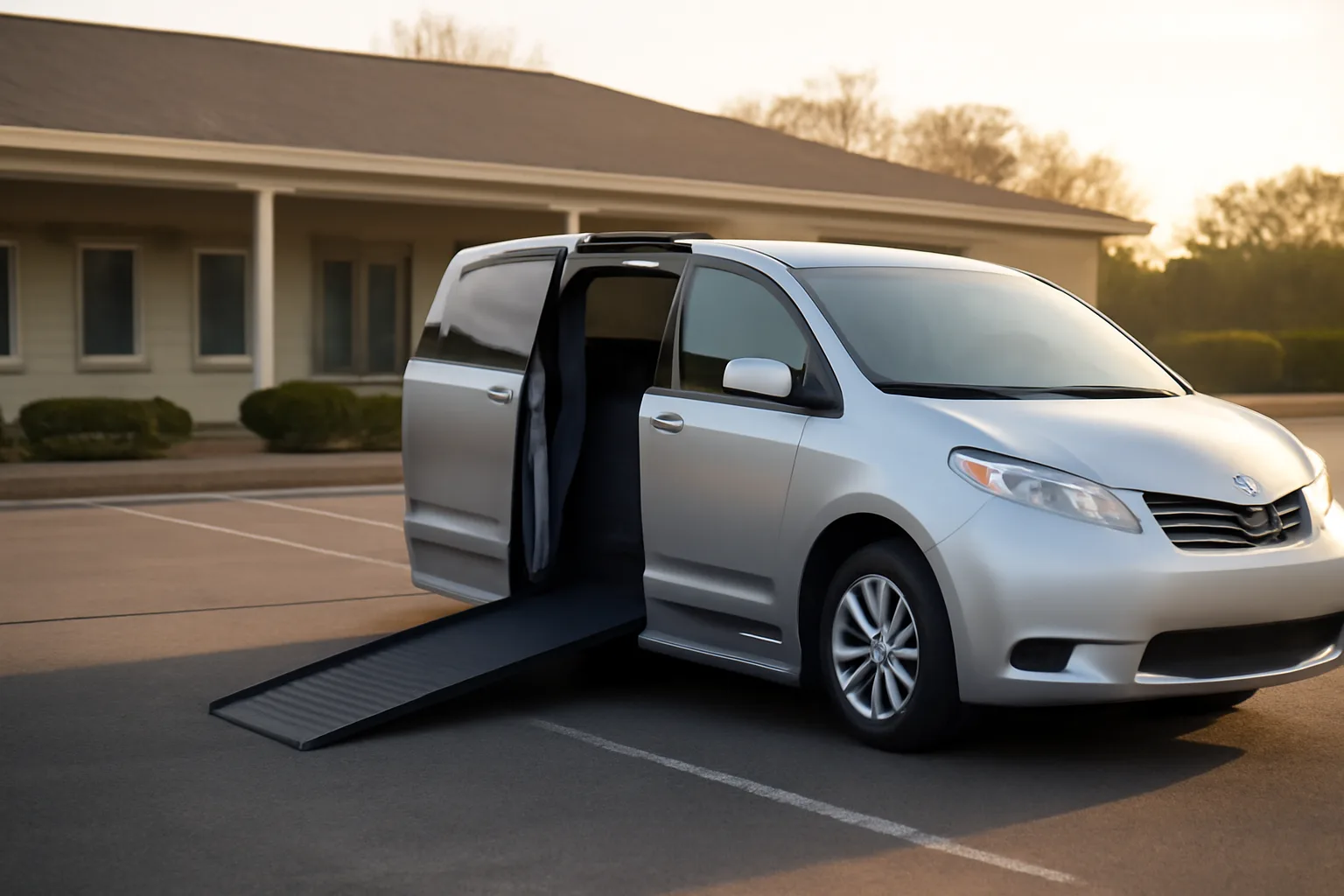
Starting a medical transportation business means stacking four separate approval processes: business formation, vehicle/driver licensing, state Medicaid provider enrollment, and broker credentialing. Skipping the order costs you money, because most brokers won't even open a credentialing file until you already have an active Medicaid provider number and a state-approved vehicle permit. Here's the realistic sequence, in the order lenders and state agencies actually expect to see it: 1. Form your business entity (LLC is standard) and get an EIN from the IRS. 2. Get commercial auto insurance quotes before you buy a van; the insurance market for wheelchair-accessible vehicles is thin and prices swing a lot by state, so this should shape your budget, not come after it. 3. Buy or convert a wheelchair-accessible van (new conversions commonly run $45,000 to $65,000; used converted vans often sell in the $20,000 to $35,000 range, though prices vary heavily by mileage and lift type). 4. Apply for any required state or local NEMT/livery permit and vehicle inspection. 5. Enroll as a Medicaid transportation provider with your state Medicaid agency. 6. Apply for credentialing with the broker(s) operating in your area (Modivcare, MTM, Access2Care, SafeRide, or a state-specific broker). 7. Complete driver background checks, drug testing, and any required training (defensive driving, passenger assistance, CPR/first aid, HIPAA). Each of those steps has its own document checklist, and states differ enough that you should confirm exact requirements with your broker and state Medicaid agency before you spend money on step 3. A used van that fails your state's inspection standard is a wasted $25,000.
How do you start an NEMT business, step by step, with just one van?
Starting an NEMT business with one van is the most common entry point, and it's realistic, but you need to plan for thin margins in year one because a single vehicle means zero redundancy. If that van is in the shop, you have no trips going out and no money coming in. The practical steps for a one-van operator: - Pick your entity structure and register it with your state's Secretary of State office.
- Get a DOT number if your state requires one for passenger vehicles of your size (this depends on vehicle seating capacity and whether you cross state lines; check with your state Department of Transportation).
- Line up commercial auto and general liability insurance quotes early, because underwriters ask about years of experience, driver records, and vehicle type, and a first-year owner-operator with a used lift van will see higher premiums than someone with a small fleet.
- Decide whether to buy new or used. A single used conversion keeps upfront debt lower but raises the odds of downtime; a new one costs more but usually comes with a longer lift/ramp warranty.
- Get the vehicle inspected and permitted under your state's NEMT or livery rules.
- Enroll with your state Medicaid agency as a transportation provider (this is separate from, and precedes, broker credentialing in most states).
- Apply to the broker(s) covering your county or region. A one-van plan should also include a written backup plan: what happens to scheduled trips if the van is down for two days. Some new operators partner informally with another local owner-operator for exactly this reason, though check your broker's subcontracting rules first, because many brokers require every vehicle on their roster to be separately credentialed.
How do you start a non-emergency medical transportation business the right way (avoiding the most common mistakes)?
The biggest mistake new NEMT operators make is buying the van before confirming what their state Medicaid agency and target broker actually require for vehicle specs, and the second biggest is underestimating how long credentialing takes. Common early mistakes worth naming directly: - Buying a used wheelchair van without checking the lift/ramp certification and load rating your state inspection requires.
- Assuming Medicaid enrollment and broker credentialing are the same process. They're not. You typically need an active state Medicaid provider ID before a broker will process your credentialing application.
- Underpricing insurance in the plan. Wheelchair-van NEMT insurance is a specialty line; not every commercial auto carrier writes it, and premiums for accessible vehicles with lift equipment run higher than a standard livery sedan policy.
- Skipping the driver file. Brokers commonly require MVR checks, drug testing, background checks, and specific training certificates (like passenger assistance training or CPR) before a driver can be dispatched, even if that driver is the owner.
- No cash reserve for the reimbursement lag. Broker payment cycles are not instant; many run 2 to 4 weeks after trip completion and claims submission, and a new operator with no reserve can run out of fuel money waiting on the first payment cycle. A good plan puts a realistic credentialing timeline on paper: state Medicaid enrollment alone can take anywhere from a few weeks to a couple months depending on the state's backlog, and broker credentialing is typically layered on top of that, not run in parallel with it in most states. Build your cash-flow plan around the slower estimate, not the fastest possible one.
What sections should a sample NEMT business plan actually include?
| Executive summary | Service area, vehicle type (wheelchair van, ambulatory, stretcher), which broker(s) you're targeting | |
|---|---|---|
| Company and legal structure | Entity type, EIN, state registration, DOT number status | |
| Licensing and compliance plan | State NEMT/livery permit, vehicle inspection standard, driver requirements | |
| Medicaid enrollment plan | Provider type, application steps, required documents, confirmed timeline with your state Medicaid transportation unit | |
| Broker credentialing plan | Which broker(s) operate in your county, their vehicle/insurance minimums, application steps | |
| Fleet and equipment plan | New vs. used, lift/ramp specs, maintenance schedule, backup vehicle plan | |
| Insurance plan | Commercial auto, general liability, workers' comp if you hire drivers | |
| Staffing and training plan | Driver hiring criteria, background checks, required certifications | |
| Operations plan | Dispatch method, scheduling software or manual process, service area map | |
| Financial plan | Startup costs, insurance and fuel as recurring costs, cash reserve for the reimbursement lag | Notice what's missing from that list: a made-up trip-volume forecast. Any template that hands you a pre-filled "you'll run 12 trips a day at $35 a trip" spreadsheet is guessing, not planning. Trip volume depends entirely on your broker's dispatch algorithm, your service area's rider density, and how many other vehicles are already credentialed in your zone. None of that is knowable before you're actually on the roster and getting dispatched trips. For a state-by-state breakdown of what licensing and Medicaid enrollment actually look like where you operate, the medical transportation hub page is the right jumping-off point, and the NEMT overview covers the broker landscape in more detail. |
A usable NEMT business plan is built around the regulatory path (state licensing, Medicaid enrollment, broker credentialing), not a generic startup template pulled from a general small-business guide. Below is a realistic outline, section by section, with what belongs in each. | Section | What it needs to cover |
Does Medicaid cover ambulance rides, and how is that different from NEMT?
Yes, Medicaid covers ambulance transportation, but that's a separate benefit category from NEMT, and the two run through different billing and provider systems entirely. Ambulance transport covers emergency response and medically necessary transport that requires ambulance-level care (a licensed EMT or paramedic, medical equipment on board, sometimes emergency response). NEMT covers scheduled, non-emergency trips where the rider needs transportation help but not medical care during the ride. CMS's Medicaid NEMT guidance describes the assurance of transportation requirement in 42 CFR 431.53, which states: "The Medicaid agency must ensure necessary transportation for beneficiaries to and from providers" [1]. That requirement covers both categories, but states run them through different provider enrollment tracks. If you're planning a wheelchair-van business, you're almost certainly enrolling as an NEMT provider, not an ambulance provider, and you won't need EMT-level certification for your drivers under most state NEMT rules. Ambulance providers face a separate, generally more rigorous, state EMS licensing process that's outside the scope of a typical owner-operator NEMT launch. If your plan involves stretcher vans (non-ambulance stretcher transport, sometimes called "gurney van" service), check your state's definition carefully. Some states classify stretcher transport as NEMT, others require a step-up license closer to (but still short of) ambulance-level certification. This distinction matters for your business plan's licensing section because it changes both your vehicle spec and your driver training requirements.
Does Medicare cover medical transportation, and should that shape your business plan?
Medicare covers ambulance transportation under specific medical necessity rules, but original Medicare generally does not cover routine non-emergency transportation like rides to a doctor's office or dialysis in a wheelchair van. Medicare.gov states that Medicare Part B covers ground ambulance transportation "only if you get transportation in an ambulance to or from a hospital, critical access hospital (CAH), or skilled nursing facility (SNF) when other transportation could endanger your health" [2]. That's a narrow, medically-necessity-driven benefit, not a general transportation benefit. Some Medicare Advantage (Part C) plans do offer supplemental non-emergency transportation benefits, and this is worth a line in your business plan's market section if you're in a state with strong Medicare Advantage penetration, because those trips are typically arranged through the plan's own transportation vendor or broker, separate from your state Medicaid contract. If you want to pursue Medicare Advantage transportation contracts, you'd apply directly to the plan or its transportation vendor, not through your state Medicaid transportation unit. For most new wheelchair-van operators, Medicaid NEMT is the larger and more accessible market, simply because Medicaid's transportation assurance requirement under 42 CFR 431.53 makes NEMT a mandatory, ongoing benefit in every state, while Medicare's transportation coverage is narrower by design [1][2].
How does Medicaid enrollment actually work for an NEMT provider?
Medicaid provider enrollment for NEMT means applying directly to your state Medicaid agency (or its designated transportation broker, in some states) for a provider number that lets you bill for or receive dispatched trips. The exact application, required documents, and review timeline are set by each state, so "how long does it take" and "what forms do I need" both require you to confirm with your state Medicaid transportation unit directly. What's consistent across states, based on the federal regulation underlying CMS's Medicaid NEMT guidance, is the underlying structure: 42 CFR 440.170 defines transportation as a Medicaid benefit that states may cover, and 42 CFR 431.53 requires states to ensure necessary transportation for beneficiaries, giving states flexibility in how they administer that requirement, including through fee-for-service NEMT providers, managed care transportation benefits, or broker contracts [3]. That flexibility is exactly why Georgia's process, Ohio's process, and Texas's process don't look identical on paper even though they're all satisfying the same federal requirement. A realistic business plan should include a checklist line item that says something like: "confirm current NEMT provider enrollment application, required attachments (vehicle inspection certificate, insurance certificate, driver roster, W-9), and expected processing time with [State] Medicaid Transportation Unit" rather than hard-coding a specific timeline or form number, because those change and a stale business plan citing an outdated form number looks worse to a lender than an honest "pending confirmation" placeholder. Once you have an active state Medicaid provider number, you're eligible to pursue broker credentialing, which is the next, separate gate.
How does broker credentialing work, and how is it different from Medicaid enrollment?
Broker credentialing is the process by which a company like Modivcare, MTM, Access2Care, or SafeRide reviews and approves your business to receive dispatched trips within its contracted service area, and it's a separate application from state Medicaid enrollment, even though most states require both. The broker is the middleman between the state Medicaid program (or managed care plan) and your vehicles; it doesn't matter that you're an approved Medicaid provider if the broker running your county hasn't separately credentialed you. Credentialing generally asks for the same core documents in some combination: proof of active Medicaid provider enrollment, vehicle registration and inspection records, commercial auto insurance certificates naming the broker as an additional insured (a common but not universal requirement), driver background check and drug test results, and specific training certificates. Requirements differ by broker and by state contract, so treat any specific checklist as a draft to confirm, not a final list. A few things worth putting directly in your plan's broker section: - Name the specific broker(s) operating your state's Medicaid transportation contract; this can change when states rebid contracts, so check current status with your state Medicaid transportation unit before assuming a broker still holds the contract.
- Note that some states run multiple regional brokers, meaning your credentialing target depends on which county or region you serve.
- Build in review time separately from Medicaid enrollment time; credentialing typically doesn't start until your Medicaid enrollment is active, so these two steps are sequential for most new operators, not parallel. If you're trying to get organized around exactly which documents to gather before you start either application, a packaged reference like the $199 State + Broker NEMT Launch Kit at /launch-kit-builder is built specifically to walk through both tracks side by side, though the state and broker rules themselves always come from the agency and broker directly, not from any third-party guide.
What does the startup cost section of an NEMT business plan need to include?
The startup cost section needs to separate one-time capital costs from recurring monthly costs, because lenders and your own cash-flow math treat them very differently, and NEMT has some unusually front-loaded capital costs compared to a general rideshare or delivery business. One-time costs typically include: - Vehicle purchase or conversion (new wheelchair-accessible conversions commonly run $45,000 to $65,000; used ones often $20,000 to $35,000, with wide variation by mileage, lift type, and region).
- State/local licensing and permit fees (varies by state; confirm with your state's transportation or Medicaid unit).
- Vehicle inspection and any required decals or equipment upgrades to meet inspection standards.
- Initial background checks and drug testing for each driver. Recurring monthly costs typically include: - Commercial auto insurance (a significant line item for wheelchair vans specifically; get quotes before finalizing your vehicle purchase, not after).
- Fuel and vehicle maintenance, which runs higher for lift-equipped vans than standard sedans.
- General liability insurance.
- Dispatch or scheduling software, if you use one instead of manual scheduling.
- Driver wages, if you're not driving solo. What the plan should not include is a made-up trip volume or income figure, because that number depends on broker dispatch patterns you can't know in advance, and presenting a guessed figure to a lender or partner is worse than presenting none at all. Instead, show your fixed and variable cost structure clearly, and note the reimbursement lag (commonly 2 to 4 weeks from trip completion to payment, though this varies by broker contract) as the reason you need a cash reserve, not as a promise of income.
What insurance and licensing does a wheelchair van NEMT business actually need?
A wheelchair-van NEMT business generally needs commercial auto insurance covering the lift/ramp equipment specifically, general liability coverage, a state or local NEMT/livery operating permit, and a vehicle inspection that certifies the accessibility equipment. Exact requirements are set state by state and sometimes at the county or city level too, so this section of your plan should list what you've confirmed and with whom, not assume a national standard exists. Standard commercial auto policies don't automatically cover wheelchair lift equipment or passenger assistance liability the way a specialty NEMT policy does, and not every insurance carrier writes this line at all. This is one of the more common surprises for new owner-operators: you call five insurers, and two don't write wheelchair-van commercial policies in your state at any price. Start these calls before you commit to a vehicle purchase. Vehicle inspection standards (structural integrity of the lift or ramp, load rating, tie-down anchor points, wheelchair securement systems) are typically set by the state Department of Transportation or state Medicaid transportation unit, and some states require periodic re-inspection, more than a one-time approval. Your plan should name the specific agency responsible for vehicle inspection in your state and note the re-inspection interval if one applies. For background on how brokers and states define NEMT vehicle and service categories more broadly, see NEMT transportation and non emergency medical transportation services.
How is NEMT different from emergency medical transport, and why does that distinction matter for your plan?
NEMT is scheduled, non-emergency transport for people who need help getting to medical appointments but don't need medical care during the ride; emergency medical transport is ambulance-level response and transport for situations requiring immediate medical care en route. Your business plan needs to state clearly, in the first paragraph of your executive summary, which category you're building, because the licensing, insurance, staffing, and Medicaid billing pathways diverge completely from that point forward. If you're planning a wheelchair-van business, you're in NEMT, full stop. You don't need EMT-certified drivers, you don't need to meet state EMS licensing rules, and you're not billing under the ambulance benefit category. But you do need to be precise in your paperwork about this distinction, because state Medicaid agencies and brokers use different application forms, different vehicle standards, and sometimes different phone lines entirely for the two categories. Calling the wrong department or filling out the wrong form type is a common early delay. More on how the two categories are defined and regulated separately is covered in emergency medical transport.
Frequently asked questions
How do I start a medical transportation business?
Form your business entity, get commercial auto insurance quotes, buy or convert a wheelchair-accessible vehicle that meets your state's inspection standard, get any required state NEMT/livery permit, enroll as a Medicaid transportation provider with your state Medicaid agency, then apply for broker credentialing (Modivcare, MTM, Access2Care, SafeRide, or your state's broker). Each step has its own documents and timeline; confirm specifics with your state Medicaid agency.
Does Medicaid cover ambulance rides?
Yes. Medicaid is required to cover medically necessary ambulance transportation as part of its transportation assurance under 42 CFR 431.53, which requires states to ensure necessary transportation for beneficiaries to and from Medicaid providers. Ambulance transport is billed and licensed separately from non-emergency medical transportation (NEMT), which covers non-emergency, scheduled rides instead.
What is NEMT?
NEMT stands for non-emergency medical transportation: scheduled transport for Medicaid (and some Medicare Advantage) beneficiaries who need help getting to medical appointments, dialysis, or therapy but don't need ambulance-level care during the trip. It's usually booked through a state Medicaid broker like Modivcare, MTM, Access2Care, or SafeRide rather than billed directly by the rider.
Does Medicare cover medical transportation?
Original Medicare Part B covers ground ambulance transportation when other transportation would endanger your health, but it generally does not cover routine non-emergency rides to appointments. Some Medicare Advantage plans offer supplemental non-emergency transportation benefits, arranged through the plan's own vendor, separate from state Medicaid NEMT programs.
Does Medicaid cover ambulance rides the same way it covers NEMT?
No. Both fall under Medicaid's transportation assurance requirement, but they're separate benefit categories with different provider enrollment tracks, vehicle standards, and staffing rules. Ambulance transport requires EMT/paramedic-level licensing; NEMT wheelchair-van service generally does not, though driver training and background check requirements still apply.
How do I start an NEMT business?
Register your business, secure commercial auto insurance for a wheelchair-accessible vehicle, get the vehicle state-inspected and permitted, enroll with your state Medicaid agency as a transportation provider, then apply for credentialing with the broker(s) operating in your service area. Budget separate time for Medicaid enrollment and broker credentialing; they're usually sequential, not simultaneous.
How do you start a medical transportation business with one van?
One van is a normal starting point, but plan for downtime risk since a single vehicle has no backup. Follow the same sequence as any NEMT startup (entity, insurance, vehicle inspection, Medicaid enrollment, broker credentialing) and build a cash reserve to cover the 2-4 week broker reimbursement lag common in many state contracts.
What is non-emergency medical transportation exactly?
It's transportation for people with a medical need who don't require ambulance-level care: rides to dialysis, physical therapy, dental appointments, or pharmacy pickups for people who use a wheelchair or need help getting in and out of a vehicle. It's typically Medicaid-funded and dispatched through a state-contracted broker.
How do you start a non-emergency medical transportation business from home, with no fleet yet?
You can start with one vehicle you own or finance, working from a home office for scheduling and paperwork. The regulatory steps are identical to any NEMT startup: entity formation, insurance, state vehicle inspection and permit, Medicaid provider enrollment, and broker credentialing. A home-based office doesn't change any licensing requirement.
Do I need a business plan to get Medicaid NEMT provider enrollment approved?
Most state Medicaid agencies don't require a formal business plan document as part of enrollment; they require specific forms, insurance certificates, vehicle documentation, and driver records. A business plan is more useful for your own cash-flow planning and any lender conversation than as a required enrollment attachment, but confirm your state's exact application checklist directly.
How long does NEMT Medicaid enrollment and broker credentialing take?
There's no single national timeline; it depends on your state's processing backlog and the specific broker's review queue. Enrollment and credentialing are typically sequential, not parallel, in most states, so build a conservative multi-step timeline into your plan rather than assuming a fixed number of weeks, and confirm current processing times with your state Medicaid agency and broker.
Can I use a generic business plan template for an NEMT business?
A generic small-business template misses the parts that actually matter here: state licensing sequence, Medicaid provider enrollment, and broker credentialing. Use a generic template's financial and operations sections as a shell, but replace the market/regulatory sections entirely with NEMT-specific steps confirmed against your own state Medicaid agency and target broker.
Sources
- eCFR, 42 CFR 431.53, Assurance of transportation: States must ensure necessary transportation for Medicaid beneficiaries to and from providers (assurance of transportation)
- Medicare.gov, Ambulance Services coverage page: Medicare Part B covers ground ambulance transportation when other transportation could endanger health, to specific facility types
- eCFR, 42 CFR 440.170, Transportation: Federal Medicaid regulations define transportation as a benefit states may cover and states have flexibility in administering it, including through brokers
- CMS, Medicaid Non-Emergency Medical Transportation overview: CMS describes NEMT as a required benefit that states can administer through fee-for-service providers, managed care, or broker contracts
- U.S. Small Business Administration, Choose a business structure: Forming an LLC or other entity and registering with the state is a standard early step for a new small business
- Internal Revenue Service, Apply for an Employer Identification Number (EIN) Online: New businesses obtain an EIN directly from the IRS as part of business formation
- Federal Motor Carrier Safety Administration, Do I Need a USDOT Number?: Whether a passenger vehicle operator needs a USDOT number depends on vehicle seating capacity and interstate operation