Last updated 2026-07-23
TL;DR
Non emergency medical transportation companies drive Medicaid and Medicare Advantage members to routine medical appointments in wheelchair vans, sedans, and stretcher vehicles. Medicaid must cover NEMT under federal rule 42 CFR 431.53. Starting one means state business licensing, vehicle and driver compliance, Medicaid provider enrollment, and separate broker credentialing with companies like Modivcare or MTM in most states.
What is non emergency medical transportation?
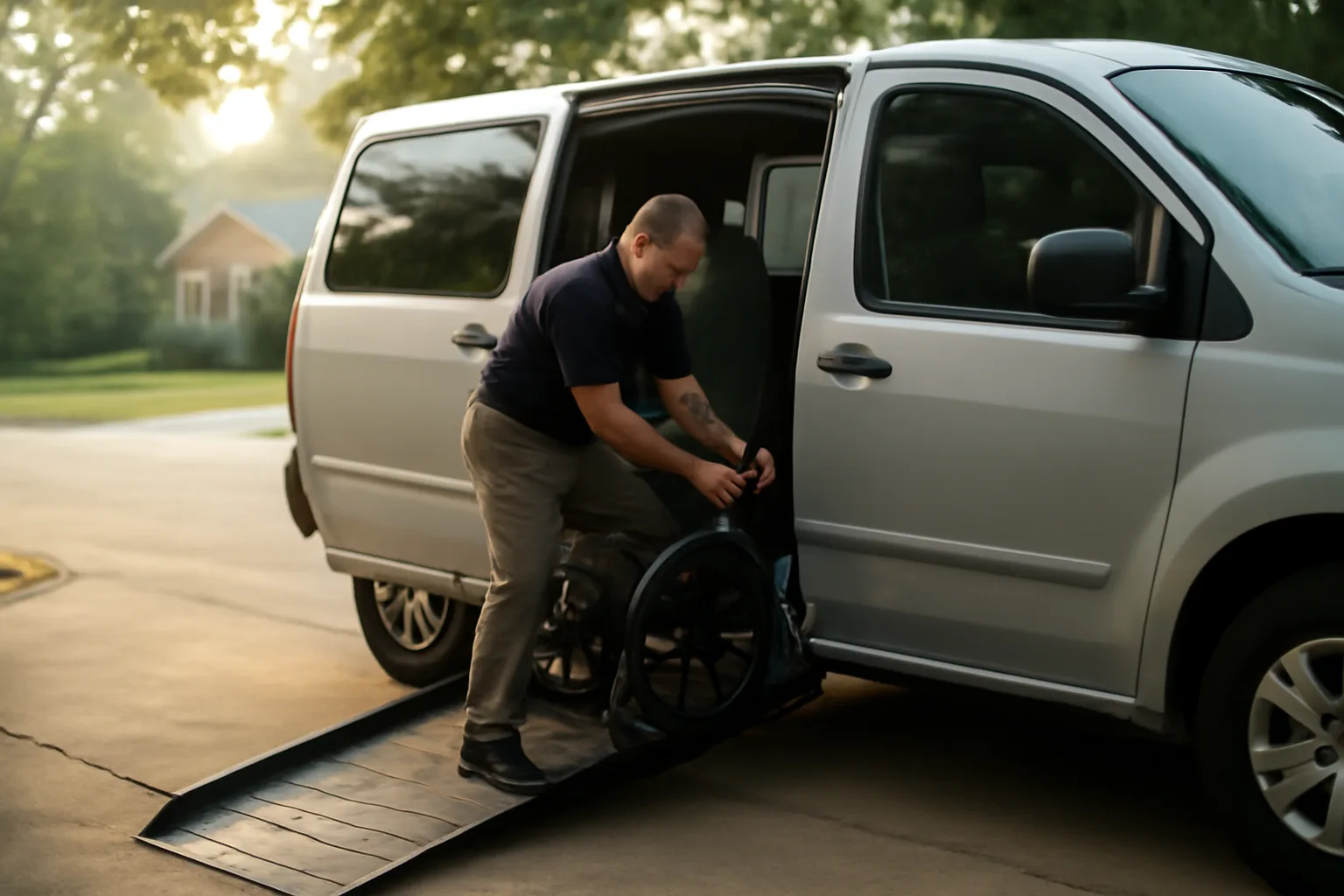
Non emergency medical transportation, usually called NEMT, is transportation to and from medical appointments for people who don't need an ambulance but can't drive themselves or use a bus. Think dialysis three times a week, chemo infusions, physical therapy, or a follow-up visit after a hospital discharge. The vehicle might be a regular sedan, a wheelchair-accessible van with a ramp or lift, or a stretcher van for someone who has to stay lying down. NEMT is different from an ambulance run in one basic way: nobody in the vehicle needs medical monitoring or emergency intervention during the ride. A NEMT driver isn't an EMT. There's no oxygen tank, no cardiac monitor, no siren. The job is to show up on time, help someone get from their door to the vehicle and back, secure a wheelchair properly, and get them to their appointment safely. Most NEMT trips are paid for by state Medicaid programs, because Medicaid is required by federal regulation to make sure eligible members can get to covered medical care. [1] Some Medicare Advantage plans also cover NEMT as a supplemental benefit, though original Medicare mostly does not (more on that below). A smaller slice of the market is private pay, workers' comp, or contracts with dialysis clinics and nursing homes. If you're trying to picture the industry from 30,000 feet: it's a mix of small, one-to-five-vehicle operators and large regional fleets, almost all of them working through a state Medicaid broker rather than billing Medicaid directly. That broker relationship is the part new owners underestimate the most. For a broader look at how the whole system fits together, see medical transportation and nemt transportation.
Does Medicaid cover ambulance rides and NEMT trips?
Yes to both, but they're covered under different rules and usually paid through different channels. Medicaid covers emergency ambulance transportation as a standard medical service in every state, billed like any other medical claim. Medicaid also has to arrange and pay for non-emergency transportation for members who have no other way to get to a covered appointment, under a rule at 42 CFR 431.53 that requires states to 'ensure necessary transportation for beneficiaries to and from providers.' [1] What trips up new owners is the word 'ensure.' States don't have to run NEMT themselves. Most states hand the job to one or more transportation brokers (Modivcare, MTM, Access2Care, SafeRide Health, and others depending on the state and region) who manage scheduling, dispatch, and driver credentialing on the state's behalf. [2] A handful of states still pay NEMT claims directly or let regional transit authorities run it, so the actual process varies a lot state to state. Ambulance coverage under Medicaid requires medical necessity documentation, meaning a provider has to certify the member's condition required ambulance-level transport rather than a wheelchair van or car. NEMT coverage, by contrast, is about access, not medical necessity in the clinical sense. It's for people whose condition doesn't require an ambulance but who genuinely have no other transportation option to reach a Medicaid-covered service. Confirm your specific state's ambulance and NEMT rules with your state Medicaid agency's transportation unit, because prior authorization rules, mileage limits, and covered trip types differ by state.
Does Medicare cover medical transportation?
Original Medicare (Part A and Part B) covers ambulance transportation when it's medically necessary, but it does not generally cover routine non-emergency rides to a doctor's office or dialysis center. Medicare.gov states that Medicare Part B covers ground ambulance transportation 'when necessary because other transportation could endanger your health,' and that in some non-emergency cases a doctor's written order is required for coverage. [3] That's a narrower standard than Medicaid's NEMT rule. Medicare is mostly concerned with medical necessity of the ambulance-level trip itself, not general access to appointments. Medicare Advantage (Part C) plans are a different story. Many Medicare Advantage plans now offer non-emergency transportation as a supplemental benefit, often a set number of one-way trips per year to plan-approved locations. Coverage, trip limits, and the network of approved transportation companies vary by plan and change annually, so a beneficiary (or a NEMT company trying to contract with a plan) has to check the specific plan's benefit summary each year rather than assume anything carries over. For an owner-operator, this means your NEMT company likely won't build a business around traditional Medicare fee-for-service riders. Medicaid NEMT and Medicare Advantage supplemental transportation contracts are where the volume actually is.
How do you start a medical transportation business?
At a high level, starting a NEMT business means stacking four separate approvals on top of each other: business formation, vehicle and driver compliance, state Medicaid provider enrollment, and broker credentialing. None of these happen automatically from one application, and each one has its own paperwork, timeline, and renewal cycle. Here's the rough order most owner-operators follow: 1. Form your business entity (LLC is common) and get a federal EIN. 2. Get general liability and commercial auto insurance built for passenger-for-hire transport, not personal auto coverage. 3. Buy or lease your vehicle(s) and get them inspected and permitted for wheelchair-accessible or NEMT use if your state requires a special vehicle permit. 4. Register with your state's Medicaid agency as a transportation provider, which usually means an NPI number, a Medicaid provider number, and a background check for owners and drivers. 5. Apply separately with the NEMT broker(s) operating in your region (Modivcare, MTM, Access2Care, SafeRide, or a state-specific broker), which involves its own credentialing packet, vehicle inspection, and driver file review. 6. Get trained and certified where required: defensive driving, wheelchair securement, CPR/first aid, and passenger assistance are common requirements even though drivers are not medical staff. The part people miss most is step 5. Being enrolled with your state Medicaid agency does not automatically get you trips. In most states, the broker decides who gets dispatched work, and the broker's own credentialing standards (insurance minimums, vehicle age limits, camera requirements, driver drug testing) can be stricter than the state's baseline Medicaid rules. Confirm both sets of requirements with your state Medicaid agency's transportation unit and with each broker operating in your service area before you buy a vehicle.
How do you start a NEMT business step by step (with one van)?
Starting with a single wheelchair van is common, and it's a reasonable way to test the business before scaling. The steps are the same as above, just sized down. First, confirm demand and broker structure in your county before you spend money. Call your state Medicaid transportation unit and ask which broker(s) manage NEMT in your service area, whether they're accepting new provider applications right now, and what their minimum fleet or vehicle-age requirements are. Some brokers pause new-provider enrollment in saturated counties. Second, get the van itself sorted: a used wheelchair-accessible van (many owner-operators start with a Dodge Grand Caravan, Toyota Sienna, or Ford Transit conversion) needs a working ramp or lift, working securement anchors (four-point tie-down systems are standard), and to pass whatever vehicle inspection your state or broker requires. Buy from a reputable mobility dealer who can show you the conversion paperwork; a van with a shoddy conversion will fail inspection and can be a real safety problem. Third, line up insurance. Personal auto insurance will not cover you if you're transporting Medicaid members for pay. You need a commercial policy, often with specific NEMT or livery endorsements, and brokers usually set minimum liability limits (six figures per occurrence is typical, but confirm the exact number with each broker since it varies). Fourth, get yourself and any drivers through required training: CPR/first aid, passenger assistance techniques, and wheelchair securement training are common broker requirements even for owner-operators driving their own single van. Fifth, submit your state Medicaid provider enrollment application and, separately, your broker credentialing packet. Expect both to ask for the same documents twice: business license, insurance certificate, vehicle registration and inspection, driver background check, and driving record. Keep a folder with digital copies of everything, because you'll resubmit versions of this packet for every broker you add and at every renewal. One van is enough to get started and learn the credentialing process, but plan for the fact that background checks, vehicle inspections, and broker application review can take weeks, and timelines vary a lot by state and broker. Don't sign a van lease assuming you'll be moving members within days of applying.
What does state Medicaid provider enrollment actually involve?
State Medicaid provider enrollment is the step where your business becomes a recognized Medicaid transportation provider in the state's system, separate from whatever broker credentialing you'll also need. Requirements differ by state, but common elements include: - A National Provider Identifier (NPI), which is free and issued by the federal government through the National Plan and Provider Enumeration System.
- A completed state Medicaid provider application, usually through the state's Medicaid Management Information System (MMIS) portal.
- Proof of business licensing, commercial insurance, and vehicle registration/inspection.
- Background checks for owners and, in many states, all drivers, sometimes including fingerprinting.
- An enrollment fee in some states, and a revalidation cycle (often every 3 to 5 years, but confirm with your state) to stay active. Medicaid.gov's transportation guidance describes NEMT as something states 'may provide' through a broker model, a managed care arrangement, or direct state administration, which is why the enrollment process itself looks so different from one state to the next. [1] Some states enroll individual owner-operators directly as Medicaid transportation providers; others route everything exclusively through the regional broker and don't maintain a separate direct-enrollment path at all. You genuinely have to check with your specific state Medicaid transportation unit rather than assume the process looks like a neighboring state's.
How does broker credentialing work with Modivcare, MTM, or Access2Care?
Once you're enrolled with the state (where that's a separate step), the broker credentialing process is usually where most of the real gatekeeping happens, because the broker decides which providers actually get dispatched trips in a given county. Each broker runs its own application, typically covering: - Company and owner information, tax ID, and Medicaid provider number.
- Vehicle list with year, make, model, VIN, inspection status, and wheelchair/stretcher capacity.
- Insurance certificates naming the broker as certificate holder, with specific liability minimums.
- Driver files: license, driving record (MVR), background check, drug test results, and training certificates.
- Sometimes a vehicle inspection performed by the broker's own inspector, more than a state safety inspection. Brokers periodically reopen or close applications by county depending on how many providers already cover that service area, so timing matters. It's common for a broker to say a region is 'closed' to new providers even while a neighboring county is open. Call and ask directly rather than assuming based on the broker's general website language. Credentialing standards, insurance minimums, and reapplication cycles differ by broker and change over time, so treat anything you read online (including this article) as a starting checklist, not a substitute for confirming current requirements directly with each broker and with your state Medicaid agency's transportation unit before you commit to a vehicle purchase or lease. This is also the point where a lot of new owners burn weeks resubmitting incomplete paperwork. Building your document packet once, in a format each broker and state portal can accept, saves real time. That's the specific gap the RideCredential Launch Kit is built to close: a $199 one-time packet of state and broker application checklists and document templates so you're not reinventing the paperwork process from scratch for every broker in your state.
NEMT provider enrollment vs. broker credentialing: what's the difference?
| Who runs it | State Medicaid agency (MMIS system) | Private broker (Modivcare, MTM, Access2Care, SafeRide, etc.) | |
|---|---|---|---|
| What it grants | Legal status as a Medicaid transportation provider | Eligibility to actually receive dispatched trips | |
| Typical requirements | NPI, business license, insurance, background check | Vehicle inspection, driver files, insurance certificate naming broker | |
| Renewal | Every few years (revalidation), varies by state | Often annual, varies by broker | |
| Applies in | Every state with Medicaid NEMT | Only in states/regions using that broker | In broker-managed states, you generally need both: state enrollment to be a legitimate Medicaid provider, and broker credentialing to get on the list of vehicles the broker will actually dispatch. In a state that administers NEMT directly (not broker-managed), the state enrollment step may be the only one, but you'll still deal with vehicle and driver compliance requirements set directly by the state. Ask your state Medicaid transportation unit point-blank which model your state uses before you assume either path applies. |
These are two separate approval processes that get confused constantly, so it's worth laying them out side by side. | | State Medicaid Provider Enrollment | Broker Credentialing |
What vehicles, insurance, and licenses does a NEMT company need?
Vehicle requirements vary by state and broker, but a few things are close to universal. A wheelchair-accessible van needs a working ramp or lift, a securement system rated for the wheelchair loads it will carry, and it has to pass a safety inspection, sometimes a state DOT inspection and a separate broker inspection. Commercial auto insurance for passenger-for-hire vehicles is non-negotiable. Brokers set their own minimum liability limits, and those minimums are usually well above a personal auto policy's limits. Many brokers also require the broker be named as a certificate holder or additional insured, so your agent needs to know this is a livery/NEMT policy, not standard commercial auto. Driver requirements commonly include: a valid driver's license appropriate to the vehicle class, a clean-ish motor vehicle record (exact thresholds vary), a criminal background check, drug testing (pre-employment and sometimes random), and training in passenger assistance, wheelchair securement, and CPR/first aid. Some states or brokers require a specific NEMT driver certification course; others accept general defensive-driving certificates. Confirm exact training requirements with your broker and state, since 'passenger assistance training' can mean a 2-hour online module in one state and a full-day in-person course in another.
How much does it cost to start a NEMT company?
There's no single honest number here, and anyone who gives you one flat figure is guessing. Costs depend heavily on whether you buy new or used, how many vehicles you start with, your state's licensing fees, and your insurance market. What you can budget for with more confidence: a used wheelchair-accessible van conversion typically costs more than a comparable non-converted vehicle because of the ramp/lift and structural modification, business insurance for passenger-for-hire NEMT work runs higher than personal auto coverage, and you should expect application fees, background check fees, and inspection fees at both the state and broker level, usually in the range of tens to a few hundred dollars each rather than thousands, though exact fees vary by state. The biggest hidden cost isn't the vehicle. It's the time and administrative overhead of assembling correct, complete applications for the state and each broker, resubmitting when something's missing, and waiting through review queues. That's operating cost in the form of delay, not a line item, but it's real.
What ongoing compliance do NEMT companies need to maintain?
Getting enrolled and credentialed is the starting line, not the finish line. Vehicle inspections typically need to be renewed annually or on the schedule your state/broker sets. Insurance certificates expire and need to be resubmitted before lapse, or a broker can suspend your dispatch eligibility. Driver background checks and drug testing programs often have renewal or random-testing cadences you have to keep documented. Medicaid provider revalidation happens on a state-set cycle, commonly every few years, and missing a revalidation deadline can deactivate your provider number entirely, cutting off billing until you re-enroll. Brokers also run periodic re-credentialing, sometimes annually, where they re-check insurance, vehicle condition, and driver files. The operators who last in this business tend to treat compliance like a calendar system, not a one-time project: insurance renewal date, vehicle inspection date, driver recert dates, and state revalidation date all tracked somewhere you actually look at. For more on running day-to-day operations once you're credentialed, see non emergency medical transportation services and nemt.
NEMT vs. ambulance vs. emergency medical transport: how are they different?
People use these terms loosely, but they mean different things for licensing and payment purposes. Emergency medical transport is an ambulance responding to or transporting someone with an urgent medical condition, staffed by EMTs or paramedics, billed as an emergency medical service. NEMT is scheduled or on-demand transport for people who need help getting to care but aren't in a medical emergency; drivers are not medical staff and vehicles aren't ambulances. There's a middle category some states recognize, non-emergency ambulance transport, for patients who need to travel lying down or with basic medical monitoring but aren't in acute crisis; that's usually billed and licensed more like ambulance service than standard NEMT, and it often requires EMT-level staffing even though the situation itself isn't an emergency. If you're deciding what kind of company to build, wheelchair van and ambulatory sedan NEMT is the lowest barrier to entry. Stretcher van service sits in between, usually needing more equipment and sometimes different licensing. Ambulance-level service is a different regulatory and staffing world entirely (EMT/paramedic licensure, state EMS agency oversight) and isn't something you back into from a NEMT starting point. For background on how that emergency side is regulated, see emergency medical transport.
Frequently asked questions
What is non emergency medical transportation?
Non emergency medical transportation (NEMT) is transportation to medical appointments for people who don't need an ambulance but can't get there on their own, using sedans, wheelchair vans, or stretcher vehicles. It's mostly funded through state Medicaid programs, which are federally required to arrange transportation for eligible members to covered medical services under 42 CFR 431.53.
Does Medicaid cover ambulance rides?
Yes. Medicaid covers medically necessary emergency ambulance transportation in every state, billed as a standard medical service with documentation supporting ambulance-level need. This is separate from NEMT, which covers non-emergency rides for members with no other transportation option. Prior authorization rules and covered trip types vary, so confirm specifics with your state Medicaid agency.
Does Medicaid cover NEMT?
Yes. Federal regulation 42 CFR 431.53 requires state Medicaid programs to ensure necessary transportation for beneficiaries to and from Medicaid-covered services. Most states meet this requirement by contracting with regional transportation brokers like Modivcare or MTM rather than administering rides directly, though a handful of states manage NEMT themselves.
Does Medicare cover medical transportation?
Original Medicare Part B covers ambulance transportation when medically necessary, but generally doesn't cover routine non-emergency rides to appointments. Many Medicare Advantage (Part C) plans offer non-emergency transportation as a supplemental benefit with limited annual trips, but coverage varies by plan and changes yearly, so check the specific plan's benefit summary.
How do you start a medical transportation business?
Form a business entity, get commercial insurance built for passenger-for-hire transport, acquire and inspect a compliant vehicle, enroll as a Medicaid transportation provider with your state, and separately apply for broker credentialing with whichever companies (Modivcare, MTM, Access2Care, SafeRide) manage NEMT dispatch in your area. Each step has its own paperwork and timeline.
How do you start a NEMT business with just one van?
One wheelchair van is enough to start. Confirm your state's broker structure first, then secure a properly converted and inspected vehicle, get NEMT-appropriate commercial insurance, complete required driver training, and submit both state Medicaid enrollment and broker credentialing applications. Expect weeks of review time for background checks and vehicle inspections before you can accept trips.
What's the difference between state Medicaid enrollment and broker credentialing?
State enrollment makes your business a legally recognized Medicaid transportation provider through the state's system. Broker credentialing is a separate private-company process (with Modivcare, MTM, etc.) that determines whether you actually get dispatched trips in your service area. In most broker-managed states you need both approvals, more than one.
How much does it cost to start a NEMT company?
There's no single reliable figure; costs depend on state fees, vehicle condition, and insurance market. Expect a used wheelchair-accessible conversion van, commercial passenger-for-hire insurance (higher than personal auto rates), and application/inspection fees at both state and broker level, typically tens to a few hundred dollars each rather than thousands. Confirm current fees with your state and target brokers.
Do NEMT drivers need to be EMTs or medical professionals?
No. NEMT drivers are not medical staff and don't provide clinical care during transport. Common requirements instead include a valid license, clean-ish driving record, background check, drug testing, and training in passenger assistance, wheelchair securement, and CPR/first aid. Requirements vary by state and broker, so confirm the exact list before hiring.
Which NEMT brokers should I apply with?
It depends entirely on your state and county. Modivcare, MTM, Access2Care, and SafeRide Health each operate in different regions and sometimes compete within the same state. Call your state Medicaid transportation unit to find out which broker(s) currently manage NEMT in your specific service area before applying anywhere.
Can I run a NEMT business without going through a broker?
In some states, yes, if the state administers NEMT directly or lets qualifying providers enroll without a broker intermediary. In most states, though, brokers control trip dispatch and you'll need broker credentialing in addition to (or sometimes instead of) direct state Medicaid enrollment. This varies enough that you need to ask your state Medicaid agency directly.
How long does NEMT credentialing take?
There's no fixed timeline; it depends on background check processing, vehicle inspection scheduling, and how complete your application packet is on first submission. Incomplete paperwork is the most common cause of delay. Build in weeks, not days, before you assume you'll be accepting trips, and confirm expected processing times directly with your state and target broker.
Do I need a special license to drive a wheelchair van for Medicaid trips?
Requirements vary by state, but a standard driver's license is often sufficient for van-class NEMT vehicles; a commercial driver's license is typically only required for larger vehicles. What's more consistently required is broker/state-mandated training in wheelchair securement and passenger assistance plus a clean background check. Confirm licensing class requirements with your state's motor vehicle agency and target broker.
Sources
- Medicaid.gov, Non-Emergency Medical Transportation: Federal requirement that states ensure necessary transportation for Medicaid beneficiaries to and from providers, and that states may use brokers, managed care, or direct administration
- eCFR, 42 CFR 431.53: Federal regulation requiring state Medicaid plans to ensure necessary transportation for beneficiaries
- Medicare.gov, Ambulance Services coverage: Medicare Part B covers ground ambulance transportation when medically necessary and may require a written order for some non-emergency trips
- Electronic Code of Federal Regulations (eCFR): Federal regulation defining transportation as an optional Medicaid benefit and outlining requirements for medical necessity.
- Federal Motor Carrier Safety Administration (FMCSA): NEMT companies operating vehicles across state lines or meeting certain criteria may need to obtain federal operating authority.
- U.S. Small Business Administration: Steps for registering a new NEMT business entity, including choosing a business structure and obtaining an EIN.
- Internal Revenue Service (IRS): NEMT companies must obtain an Employer Identification Number (EIN) as part of business registration before Medicaid enrollment.
- Electronic Code of Federal Regulations (eCFR): Federal Motor Carrier Safety Regulations establish vehicle maintenance, driver qualification, and safety compliance standards applicable to NEMT vehicles.
- Medicaid.gov (CMS Informational Bulletin): CMS guidance clarifying state options and requirements for administering non-emergency medical transportation benefits, including broker arrangements.
- U.S. Department of Justice, ADA.gov: NEMT vehicles transporting wheelchair users must comply with Americans with Disabilities Act accessibility requirements.