Last updated 2026-07-25
TL;DR
Non-emergency medical transportation (NEMT) in Colorado runs through Health First Colorado (Medicaid) and its regional broker system, currently IntelliRide in the Denver metro area and Modivcare in other regions. To operate, you generally need a Colorado business entity, PUC or exempt-carrier status if applicable, vehicle and driver requirements met, Medicaid provider enrollment through HCPF's Colorado interChange system, and broker credentialing. Confirm current specifics with HCPF and your regional broker before buying a van.
What is non-emergency medical transportation (NEMT)?
NEMT is transportation to and from medical appointments for people who don't need an ambulance but can't get there any other way, whether because of a wheelchair, a walker, dialysis fatigue, or just not having a car or a ride. It's the Medicaid-funded ride to dialysis three times a week, the ride to a mental health appointment, the ride home from a same-day surgery when someone needs a hand getting into the house. Federal Medicaid rules require states to make sure eligible people can get to and from covered services, and NEMT is how most states meet that obligation. The federal regulation is blunt about it: state Medicaid plans must "ensure necessary transportation for beneficiaries to and from providers" under 42 CFR 431.53 [1]. That single sentence is the legal root of the entire NEMT industry, in Colorado and everywhere else. NEMT is not an ambulance. Ambulances (emergency or non-emergency, like a stretcher van transporting someone on a gurney with medical monitoring) sit in a different reimbursement category and usually need different licensing. If you're comparing the two, our emergency medical transport piece breaks down where the line falls. In Colorado specifically, Health First Colorado (the state's Medicaid program, run by the Department of Health Care Policy and Financing, HCPF) covers NEMT as a benefit, and it's mostly delivered through broker-managed networks rather than the state paying transportation companies directly.
Does Medicaid cover ambulance rides, and how is that different from NEMT?
Yes, Medicaid covers ambulance rides, including in Colorado, but ambulance and NEMT are different benefits with different rules, different licensing, and usually different billing codes. Ambulance transport is for situations needing medical monitoring or a level of urgency that a wheelchair van can't provide; NEMT covers people who are medically stable but need help getting to a covered appointment. HCPF's own transportation program pages describe NEMT and ambulance as separate benefit categories, with NEMT covering "transportation to and from Health First Colorado covered services for members who have no other means of transportation". Ambulance providers in Colorado need licensure through the Colorado Department of Public Health and Environment's EMS division, more than a Medicaid provider number, and that's a heavier lift than what a wheelchair-van operator faces. If someone asks "does Medicaid cover ambulance," the honest answer is: generally yes, when medically necessary, under separate ambulance billing rules, but that's not the business this article is about. This article is about the wheelchair-van, non-stretcher side of the industry, which is what most new owner-operators are actually trying to break into.
How do you start a medical transportation business in Colorado?
Starting a medical transportation business in Colorado has a handful of concrete steps, and they mostly need to happen in a particular order: form your business entity, get your vehicle and driver requirements sorted, figure out your Public Utilities Commission (PUC) status, enroll as a Colorado Medicaid provider, and then credential with your regional NEMT broker. First, register your business with the Colorado Secretary of State and get a federal EIN. Second, check whether your operation needs PUC authority. Colorado regulates certain for-hire passenger carriers through the Public Utilities Commission, and the rules for who needs a PUC permit versus who's exempt have changed over the years, so this is a step to confirm directly with the Colorado PUC rather than assume. Some NEMT operators end up exempt depending on vehicle type and how they contract with the broker; others don't. Don't guess on this one. Third, get your vehicle right. A wheelchair-accessible van needs a ramp or lift, tie-downs, and usually has to meet a modification standard tied to something like the National Mobility Equipment Dealers Association (NMEDA) modifier network or a comparable safety standard your broker recognizes, plus routine state vehicle inspection and registration. Fourth, get commercial auto insurance with limits that meet or exceed what your broker requires (this is almost always higher than personal auto minimums, and brokers publish or provide their required limits during credentialing; confirm the current numbers with your broker). Fifth, enroll with Health First Colorado through HCPF's Colorado interChange provider enrollment portal. Sixth, apply for network credentialing with your regional broker, which is a separate process from Medicaid enrollment. Both steps ask for a lot of the same documents (insurance certificates, vehicle registration, driver records, background checks), so having them organized in one folder before you start either application saves real time. For a broader look at how broker relationships generally work across states, see our broker guides overview.
How to start a NEMT business with just one van?
One van is a completely normal and common way to start in Colorado; you don't need a fleet to get credentialed, but you do need every piece of paperwork to be exactly as clean as a five-van company's. The practical order for a one-van operator: confirm your PUC status first, since that determines what kind of operating authority (if any) you need before you can legally accept paid passenger trips. Then buy or convert your van to meet accessibility and safety standards, get it inspected, and get commercial insurance in place, because you can't finish Medicaid or broker enrollment without proof of both. A single-van operator should expect the enrollment and credentialing timeline to run several weeks to a few months, not days. HCPF processes provider enrollment applications on its own schedule and brokers run separate credentialing reviews (background checks, vehicle inspections, driver qualification file reviews), and delays are common when documents are incomplete or a background check needs a rerun. Build slack into your plans; don't sign a vehicle loan assuming you'll be moving Medicaid trips within two weeks of enrollment. One real tradeoff for solo operators: broker portals and dispatch systems assume you can respond to trip offers quickly and reliably. If you're also the only driver, you'll want to think honestly about how you'll handle a no-show driver day (yourself, sick) before committing to broker minimums on acceptance rates or on-time performance, since those metrics matter for staying in good standing on the network.
How do brokers like IntelliRide and Modivcare work in Colorado?
Colorado manages Medicaid NEMT through regional brokers rather than one statewide broker covering everyone the same way. IntelliRide has managed non-emergency medical transportation for the Denver metro region and, at various points, additional counties, while Modivcare (formerly LogistiCare) has managed other regions of the state; which broker covers your service area, and the exact regional map, is something you need to confirm directly with HCPF's transportation program because these regional assignments have shifted over time. Credentialing with a broker is separate from Medicaid provider enrollment with HCPF. You'll typically submit vehicle documentation, insurance certificates, driver qualification files (license, background check, drug screen, driving record), and sometimes a vehicle inspection report, directly to the broker's provider network team. Brokers set their own credentialing standards on top of whatever Medicaid requires, and those standards can be stricter, especially on insurance minimums and driver background check lookback periods. Practical tip: brokers periodically open and close their provider networks depending on regional capacity. Don't assume that because you're Medicaid-enrolled, a broker will automatically add you. Call the regional broker's provider recruitment line before you finalize a vehicle purchase, and ask directly whether the network is open in your county. Our nemt and nemt transportation guides go deeper on how multi-broker states typically structure this if you're weighing Colorado against other states.
How do you enroll as a Colorado Medicaid NEMT provider?
Colorado Medicaid provider enrollment happens through the Colorado interChange system, HCPF's online provider portal, and it's a distinct step from broker credentialing even though the paperwork overlaps heavily. You'll create a provider account, select the correct provider type and specialty for non-emergency transportation, and upload supporting documents including your business license, vehicle information, insurance, and driver credentials. HCPF's provider enrollment pages list current requirements, fees (if any), and required attachments, and these details do change, so treat the live HCPF page as the source of truth rather than any static list, including this one. Expect to provide your National Provider Identifier (NPI) if your entity type requires one, your EIN, ownership disclosure information (Medicaid programs nationally require ownership and control disclosures under federal rules at 42 CFR 455.104), and your PUC exemption or authority documentation. One detail that trips up new operators: Medicaid provider enrollment doesn't automatically put you on a broker's active trip list. You need both an active HCPF Medicaid provider number and an active, approved broker credentialing file before you're eligible to receive dispatched trips in most Colorado regions. Keep copies of every confirmation number and approval letter; brokers will ask for them again during periodic re-credentialing, typically annually.
What does Medicare cover for medical transportation?
Medicare's coverage of medical transportation is much narrower than Medicaid's, and this trips up a lot of new operators who assume the two programs work the same way. Medicare Part B covers emergency ambulance transportation and, in limited circumstances, non-emergency ambulance transportation when a doctor certifies it's medically necessary and other transportation would endanger the person's health, per CMS's ambulance services coverage rules [2]. Medicare generally does not cover routine non-emergency wheelchair-van transportation the way Medicaid does. There's no broad, ongoing Medicare NEMT benefit comparable to Health First Colorado's Medicaid NEMT program. Some Medicare Advantage plans have started offering limited transportation benefits as a supplemental benefit, but that's plan-specific, not a standard Medicare Part A/B benefit, and coverage terms vary enormously by plan and insurer. So if you're building a business plan around Medicare-funded rides, you're building on the wrong program. Medicaid, through Health First Colorado and its brokers, is where the volume and the standing NEMT benefit actually lives in Colorado.
What vehicle and driver requirements apply to Colorado NEMT?
| PUC authority or exemption | Depends on vehicle/contract type | Colorado PUC |
|---|---|---|
| Medicaid provider enrollment | Colorado interChange application | HCPF |
| Broker credentialing | Separate from Medicaid enrollment | IntelliRide or Modivcare, per region |
| Commercial auto insurance | Above state minimum limits | Broker's current credentialing packet |
| Driver background check | Criminal history + driving record | Broker's current credentialing packet |
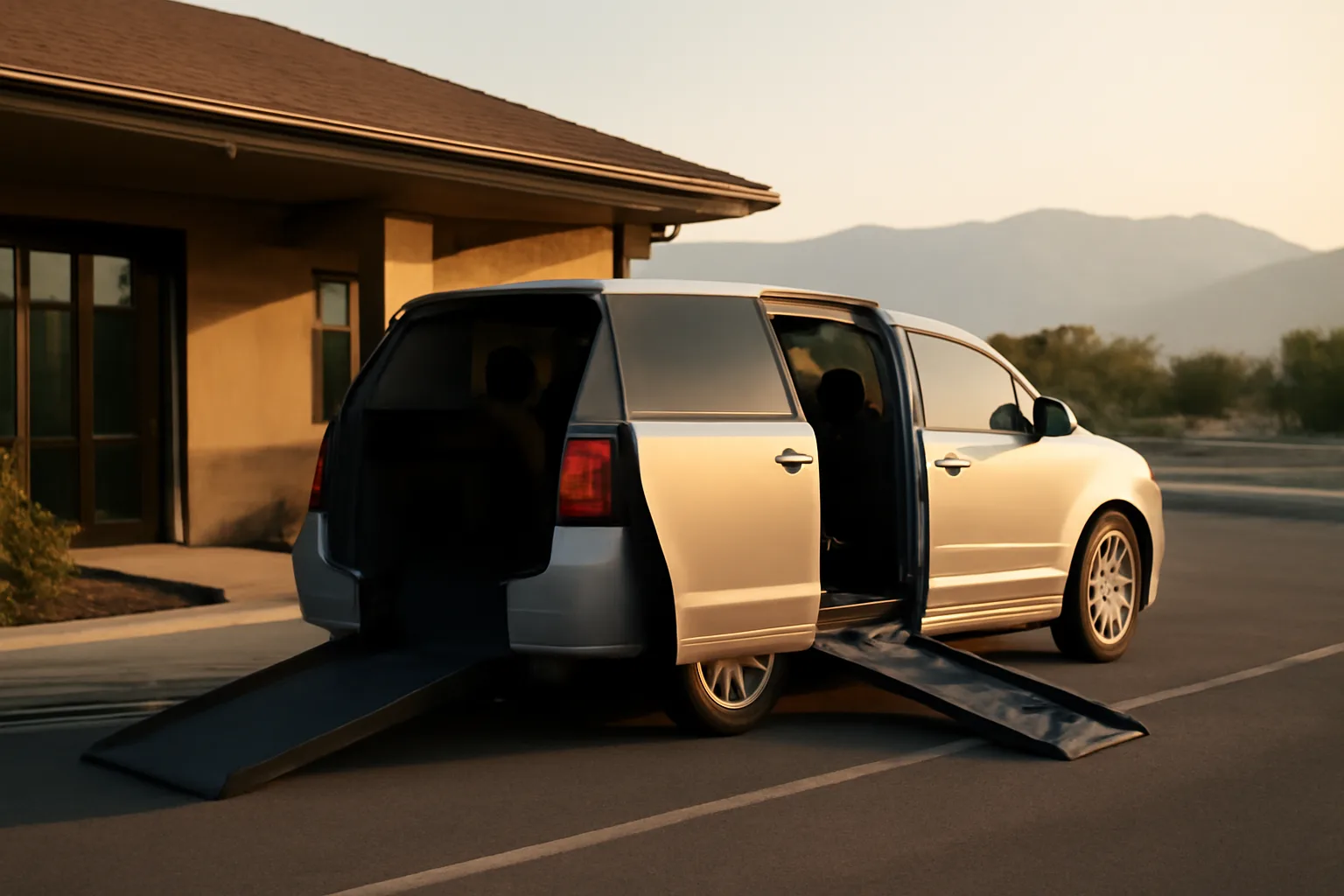
Wheelchair-accessible vans used for Colorado Medicaid NEMT generally need a working ramp or lift, secure wheelchair tie-down systems, current state vehicle registration, and passing state vehicle safety inspection, on top of whatever additional inspection your broker requires at credentialing and periodically afterward. Drivers typically need a valid Colorado driver's license (commercial license requirements depend on vehicle size and passenger capacity under Colorado's CDL rules), a clean driving record within limits the broker sets, a passed criminal background check, and often a drug and alcohol screening. Some brokers also require CPR/first aid certification and specific defensive driving or passenger-assistance training completed before a driver can carry Medicaid trips. Insurance is where new operators most often get surprised by cost. Commercial auto insurance for a wheelchair van, carrying passengers for hire, costs meaningfully more than personal auto coverage, and brokers set minimum liability limits that are usually well above state minimum financial responsibility limits. Get quotes before you buy the van, not after, because the insurance number changes your whole budget. | Requirement area | Typical baseline | Confirm with |
What are the biggest startup mistakes new Colorado NEMT operators make?
The most expensive mistake is buying the van before confirming PUC status and broker network capacity in your county. A wheelchair van is a real financial commitment, and if the local broker network is closed or your business structure needs PUC authority you haven't applied for, you can end up with a vehicle sitting idle for months. The second common mistake is treating Medicaid enrollment and broker credentialing as one step. They're not. Some operators get their HCPF Medicaid provider number, assume they're done, and then discover the broker credentialing file (with its own insurance minimums, background check standards, and vehicle inspection) takes another several weeks on top of that. Third, underestimating insurance cost. New operators budget for the van loan and fuel but not for commercial auto coverage at the limits a broker requires, and that gap can break a first-year budget fast. Fourth, skipping the re-credentialing calendar. Most brokers require periodic re-credentialing (insurance renewal proof, updated background checks, vehicle re-inspection), often annually, and missing a deadline can suspend your ability to receive trips even if nothing else about your business changed.
How much does it cost to start a wheelchair-van NEMT business in Colorado?
Nobody has clean public data on typical NEMT startup cost broken out by state, and any number you see quoted online without a source should be treated skeptically. What's knowable are the cost categories: a wheelchair-accessible van (new or used, factory or aftermarket conversion), commercial auto insurance at broker-required limits, business registration and any PUC fees, driver background checks and drug screening, and the time cost of the enrollment and credentialing process itself, which is unpaid time even though it's real cost. Rather than quote a made-up total, build your own number using local van pricing, an actual insurance quote at your intended coverage limits, and the current HCPF and broker fee schedules (some enrollment or credentialing steps carry small administrative fees, others don't, and this changes). If you want a structured way to pull together the state and broker paperwork instead of hunting across a dozen agency pages, the Launch Kit is a $199 one-time packet built around exactly this problem: state Medicaid enrollment plus broker credentialing paperwork organized in one place. It doesn't replace confirming live requirements with HCPF and your broker, but it saves the scavenger hunt.
How to start a non-emergency medical transportation business, step by step
Here's the realistic order of operations for Colorado, stripped down to the sequence that avoids wasted money: 1. Confirm which regional broker covers your county and call their provider recruitment line to ask if the network is open, before buying anything. 2. Register your business entity with the Colorado Secretary of State and get an EIN. 3. Contact the Colorado PUC to confirm whether your planned operation needs authority or qualifies for an exemption. 4. Get commercial auto insurance quotes at broker-required limits so you know your real operating cost before buying a vehicle. 5. Buy or convert your wheelchair-accessible van and get it inspected. 6. Complete driver requirements: license class, background check, drug screening, any required training. 7. Enroll as a Health First Colorado Medicaid provider through Colorado interChange. 8. Submit broker credentialing with your assigned regional broker. 9. Track your re-credentialing calendar from day one so nothing lapses later. For readers weighing Colorado against how other states structure this, our non emergency medical transportation and medical transportation guides cover the general multi-state pattern, and non emergency medical transportation services walks through the day-to-day operating side once you're credentialed.
Frequently asked questions
What is non-emergency medical transportation (NEMT)?
NEMT is transportation for people who need to get to and from medical appointments but don't require an ambulance, commonly wheelchair van rides for dialysis, therapy, or routine doctor visits. Federal Medicaid rules under 42 CFR 431.53 require states to ensure this kind of transportation exists for eligible beneficiaries who have no other way to get to covered care.
Does Medicaid cover ambulance rides in Colorado?
Yes, Health First Colorado covers medically necessary ambulance transportation, but it's a separate benefit category from NEMT with its own licensing (through CDPHE's EMS division) and billing rules. NEMT and ambulance are administered differently, so a wheelchair-van business and an ambulance business need different credentialing paths.
Does Medicare cover medical transportation?
Medicare Part B covers emergency ambulance transport and limited non-emergency ambulance transport when a doctor certifies it's medically necessary, per CMS's ambulance coverage rules. Medicare does not have a broad ongoing non-emergency wheelchair-van benefit like Medicaid's NEMT program; some Medicare Advantage plans offer limited transportation as a supplemental benefit, but coverage varies by plan.
How do you start a NEMT business in Colorado with one van?
Confirm your broker's regional network is open, check your PUC status, get commercial insurance quotes, buy or convert a compliant wheelchair van, complete driver requirements, then enroll with HCPF's Colorado interChange and credential with your regional broker (IntelliRide or Modivcare depending on your county). One van is enough to start; the paperwork burden is the same regardless of fleet size.
Which broker covers NEMT in Colorado, IntelliRide or Modivcare?
It depends on your county. IntelliRide has managed Denver-metro-area regions while Modivcare manages other parts of the state, but regional assignments have changed over time. Confirm current regional coverage directly with HCPF's transportation program before assuming which broker you'll credential with.
How long does Colorado Medicaid NEMT enrollment take?
There's no fixed published timeline, and it varies by application completeness and current HCPF processing volume. Realistically, expect several weeks to a few months when you add Medicaid provider enrollment through Colorado interChange plus separate broker credentialing together, not days. Incomplete documents or background check delays are the most common cause of slowdowns.
Do I need PUC authority to run NEMT in Colorado?
It depends on your vehicle type and how you contract with the broker; Colorado's Public Utilities Commission regulates certain for-hire passenger transportation, and exemptions exist in some circumstances. This is not something to guess about. Call the Colorado PUC directly before buying a vehicle or signing a broker contract, since operating without required authority can create real legal and financial risk.
What insurance do I need for a Colorado NEMT wheelchair van?
You need commercial auto insurance covering passenger-for-hire transportation, at limits meeting or exceeding your broker's current credentialing requirements, which are typically higher than Colorado's standard minimum financial responsibility limits. Get a quote before buying the van; commercial coverage for wheelchair-accessible for-hire vehicles costs meaningfully more than personal auto insurance.
Is Medicaid provider enrollment the same as broker credentialing in Colorado?
No, they're two separate processes. Medicaid provider enrollment happens through HCPF's Colorado interChange system and gives you a Medicaid provider number; broker credentialing is a separate application to your regional broker (IntelliRide or Modivcare) covering insurance, vehicle inspection, and driver background checks. You typically need both approved before you can receive dispatched trips.
What driver requirements apply to Colorado NEMT drivers?
Drivers generally need a valid Colorado license appropriate to the vehicle, a clean driving record within the broker's set limits, a passed criminal background check, and often a drug and alcohol screening plus CPR/first aid or passenger-assistance training. Exact requirements are set by the broker and can exceed state minimums, so confirm the current list with your broker before hiring.
How much does it cost to start a wheelchair-van NEMT business?
There's no reliable published startup-cost figure specific to Colorado NEMT, and any number quoted without a source should be treated cautiously. Real cost categories include the van, commercial insurance at broker-required limits, PUC or business registration fees, background checks, and the unpaid time spent on enrollment and credentialing. Build your own estimate from a real insurance quote and current van pricing.
Can I operate NEMT in Colorado without joining a broker network?
In practice, most Medicaid-funded NEMT trips in Colorado flow through the regional broker system (IntelliRide or Modivcare), so broker credentialing is usually necessary to receive Medicaid-paid trips. Private-pay or non-Medicaid transportation work may not require broker credentialing, but confirm with HCPF whether any Medicaid trips can be accessed outside the broker system in your region.
Sources
- eCFR, 42 CFR 431.53: Federal Medicaid regulation requiring states to ensure necessary transportation for beneficiaries to and from providers
- Centers for Medicare & Medicaid Services, Medicare Ambulance Services: Medicare Part B coverage rules for emergency and limited non-emergency ambulance transportation
- 42 CFR 455.104, eCFR: Federal Medicaid provider ownership and control disclosure requirements
- Colorado Division of Insurance / DORA: State regulatory requirements applicable to transportation and insurance providers operating in Colorado.
- Federal Motor Carrier Safety Administration (FMCSA): Vehicle inspection requirements applicable to non-emergency medical transportation vans operating in interstate commerce.
- Colorado Department of Revenue, Division of Motor Vehicles: Driver licensing and vehicle registration requirements relevant to starting a NEMT business in Colorado.
- Medicaid.gov: Federal overview of the Medicaid non-emergency medical transportation benefit and state requirements to ensure access to care.
- U.S. Small Business Administration (SBA): Steps for registering a new business, relevant to starting a NEMT company in Colorado.