Last updated 2026-07-25
TL;DR
Non-emergency medical transport (NEMT) driver jobs range from W-2 gigs with a local transport company to owning your own wheelchair van and contracting with Medicaid brokers like Modivcare or MTM. Medicaid covers NEMT in every state as a required benefit; Medicare mostly does not, except limited ambulance cases. Starting your own operation means state Medicaid enrollment, broker credentialing, insurance, and vehicle inspection, usually 60-120 days end to end.
What is non-emergency medical transportation (NEMT)?
NEMT is transportation for people who need to get to a medical appointment, dialysis, or pharmacy but don't need an ambulance or emergency care. Think wheelchair vans, ambulatory sedans, and stretcher cars, not lights-and-sirens rigs. It's a distinct category from emergency medical transport, which involves 911 dispatch and higher-acuity clinical care. Federal Medicaid rules require states to make sure eligible people can actually get to covered services. The regulation is blunt about it: states must "ensure necessary transportation for beneficiaries to and from providers" under 42 CFR 431.53 [1]. That single rule is why NEMT exists as an industry at all. No other insurance program has an equivalent blanket mandate. Most states don't run NEMT themselves anymore. They hand it to a broker, a company like Modivcare, MTM, Access2Care, or a regional player, who then contracts with local transportation providers and independent drivers. If you're looking for a driving job or thinking about buying a van and going independent, you're stepping into that broker layer, not applying to the state directly in most cases. For background on how the overall system fits together, see non emergency medical transportation.
What kinds of NEMT driver jobs actually exist?
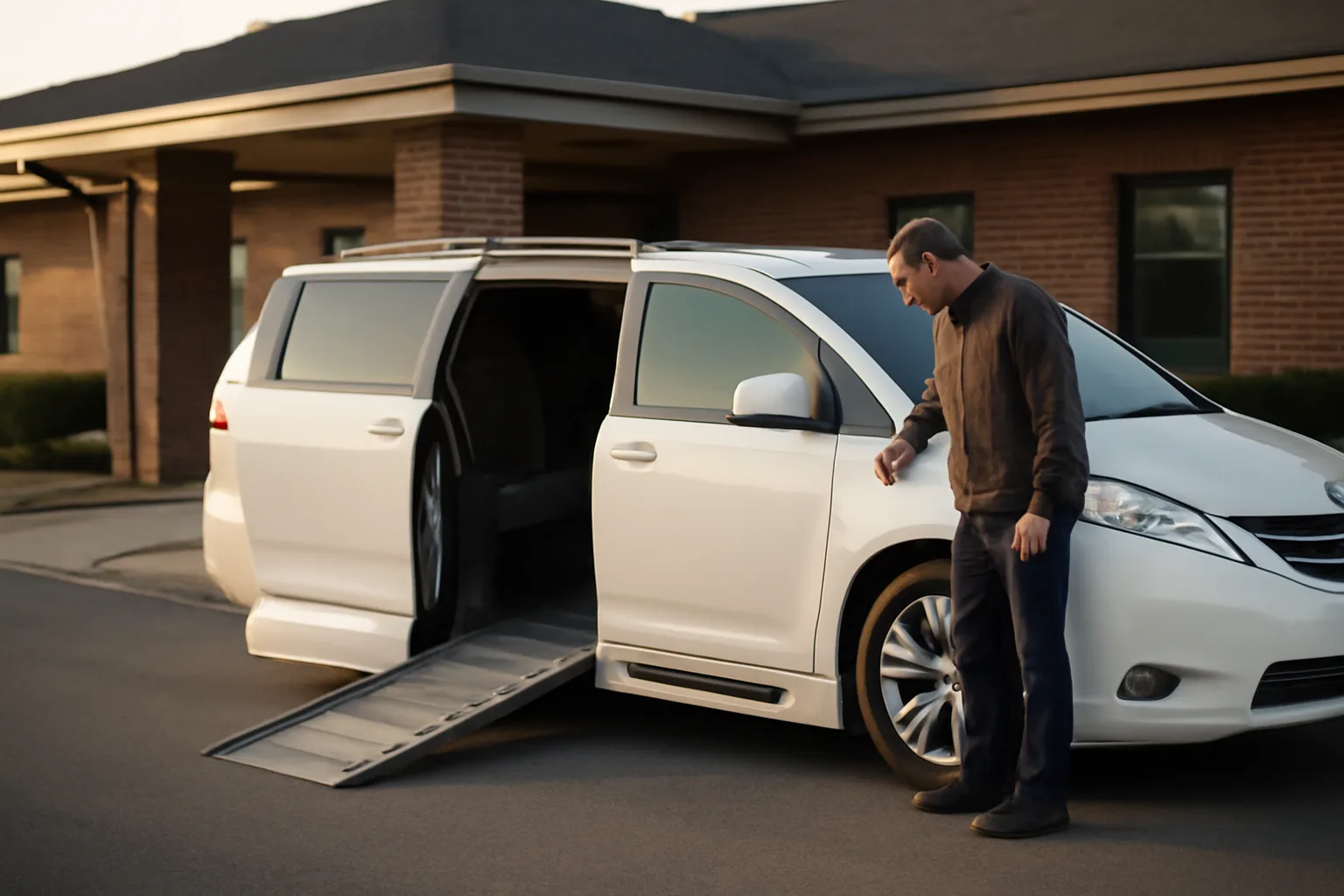
There are basically three tracks: driving for someone else's fleet as a W-2 or 1099 driver, driving for a rideshare-style NEMT app as an independent contractor, or owning your own vehicle and enrolling as a Medicaid transportation provider yourself. W-2 or 1099 driver for an existing NEMT company. You show up, drive their van, they handle the Medicaid enrollment and broker contracts. Pay varies a lot by market and vehicle type (wheelchair-accessible runs generally pay more than ambulatory sedan trips), and you'll need a clean driving record, sometimes a specific license class depending on the vehicle's seating capacity, and CPR/first aid certification in many states. App-based or broker-direct contractor. Some brokers let individual owner-operators sign on directly once they're credentialed, similar to how a rideshare driver works but with a wheelchair lift and much more paperwork upfront. Owner-operator running your own small fleet. This is the highest-effort, highest-control path. You buy or lease the van (or vans), get state Medicaid enrollment, get credentialed with one or more brokers, carry commercial insurance, and dispatch your own trips. It's a real small business, not a gig. All three tracks eventually touch the same state Medicaid transportation unit and the same broker credentialing process, so understanding that pipeline matters even if you just want a driving job, because employers will ask if you already have what they need.
Does Medicaid cover ambulance rides?
Yes, but ambulance and NEMT are two different benefit categories with different rules. Medicaid covers ambulance transportation when it's medically necessary, meaning the person's condition requires the specific equipment or trained personnel an ambulance provides, or transport by any other means would endanger the person's health, per federal guidance on medically necessary transportation [2]. NEMT, by contrast, covers people who need a ride but don't need ambulance-level care, someone using a wheelchair who needs door-to-door assistance and lift-equipped transport, for example. States are required to provide NEMT services and can do it directly, through contracted brokers, or as a shared ride/mileage reimbursement program, per CMS guidance on NEMT and 42 CFR 431.53 [1] [2]. Don't assume ambulance and NEMT billing overlap. If you're planning to run stretcher-van service, confirm with your state Medicaid agency whether that falls under NEMT credentialing or a separate ambulance provider enrollment, because the paperwork and rate rules differ.
Does Medicare cover medical transportation?
Mostly no, and this trips up a lot of new owner-operators who assume Medicare works like Medicaid. Original Medicare Part B covers ambulance transportation only when other transportation could endanger the person's health and the trip is to a Medicare-covered destination, per CMS's ambulance services coverage page [3]. It does not generally cover non-emergency wheelchair van or sedan transport the way Medicaid does. Some Medicare Advantage plans have added NEMT as a supplemental benefit in recent years, but that's plan-specific and optional, not a federal requirement the way Medicaid NEMT is. If a rider only has Original Medicare and needs a non-emergency wheelchair van ride, Medicare generally won't pay for it. That gap is a real revenue consideration if you're building a business plan around one payer; check with each Medicare Advantage plan's member services line directly rather than assuming coverage.
How to start a non-emergency medical transportation business
Here's the honest sequence, not the shortcut version. 1. Pick your state and confirm the rules with the actual state Medicaid transportation unit. Every state runs this differently; some have a single statewide broker, some carve NEMT out by region, some still let counties or the state run it directly. 2. Get your vehicle right first. A used wheelchair-accessible minivan with a working ramp or lift, valid state inspection, and commercial registration is the baseline. Don't buy the van before you've confirmed what the broker in your area requires for age limits and lift specs, because some brokers reject vehicles over a certain age or mileage. 3. Form your business entity and get your EIN. Most owner-operators use an LLC. This isn't optional if you want commercial insurance and a broker contract in your name rather than your personal name. 4. Get commercial auto insurance with the liability limits your state and broker require. NEMT liability minimums are usually well above personal auto minimums; ask the broker for their specific certificate of insurance requirements before you bind a policy, since you may need to name the broker as a certificate holder. 5. Enroll as a Medicaid provider with your state Medicaid agency. This is separate from broker credentialing and usually involves a provider enrollment application, background checks, and sometimes a site or vehicle inspection. 6. Apply for broker credentialing with Modivcare, MTM, Access2Care, or whichever broker operates in your service area. Expect a separate application, its own insurance certificate requirements, driver background checks, vehicle inspection, and often a driver training or orientation module. 7. Get your dispatch and billing workflow running before your first trip, not after. States and brokers change these requirements often enough that any specific dollar figure or form number here would go stale fast, so treat every number below as a starting point to confirm, not a guarantee. For a broader look at how brokers slot into state programs, see nemt transportation.
How to start a NEMT business with one van
One van is a completely normal way to start, and a lot of owner-operators never grow past two or three. The math and the paperwork are the same whether you have one van or twenty; the difference is just how much of the work you're doing yourself versus hiring for. With one van, you're the driver, the dispatcher, and the biller, at least at first. That's fine operationally, but it means your schedule has to match when the broker sends you trips, and most brokers assign trips through a portal or app on a rolling basis, not a fixed contract of guaranteed rides. The realistic startup sequence for a single-van operator: buy or lease one wheelchair-accessible van that meets your target broker's age and lift requirements, form an LLC, get commercial insurance, complete state Medicaid provider enrollment, and get credentialed with at least one broker in your area (sometimes two, since coverage areas and trip volume assignment vary by broker and you don't want a single point of failure). Budget real time for this. Credentialing with a broker alone can take several weeks once your application, insurance certificate, and vehicle inspection are all submitted; state Medicaid provider enrollment often runs in parallel and can add more time on top of that. Nobody publishes a universal number because every state and broker has its own queue, so ask your state Medicaid transportation unit and your target broker directly what their current processing time looks like.
How do you start a medical transportation business (step-by-step checklist)?
| Entity formation | LLC, EIN, business bank account | 1-2 weeks | |
|---|---|---|---|
| Vehicle | Wheelchair-accessible van, inspection, commercial registration | Varies, confirm broker's age/mileage limits first | |
| Insurance | Commercial auto liability meeting state/broker minimums | 1-3 weeks to bind | |
| State Medicaid enrollment | Provider application, background check, possible site visit | Weeks to a couple months, confirm with your state Medicaid agency | |
| Broker credentialing | Application, insurance certificate, vehicle inspection, driver orientation | Weeks to a couple months, confirm with each broker | |
| Driver requirements | Clean MVR, CPR/first aid cert (state and broker dependent), background check | Varies | |
| Dispatch/billing setup | Broker portal access, trip assignment process, claims workflow | Before first trip | The two boxes that trip people up most are insurance certificate wording (brokers often want specific endorsements, more than a generic policy) and vehicle age limits (some brokers won't credential a van past a certain model year or mileage, so check before you buy, not after). |
If you want the condensed checklist version to work from, here it is. This assumes wheelchair van NEMT, the most common owner-operator entry point. | Step | What it involves | Typical timing |
Do I need a special license or CDL to drive NEMT?
Usually not a CDL, if you're driving a standard wheelchair van or sedan under the seating and weight thresholds that trigger commercial license requirements. Federal commercial driver's license rules generally kick in for vehicles designed to carry 16 or more passengers including the driver, or for heavier gross vehicle weight ratings, under FMCSA's CDL definitions [4]. Most wheelchair vans seat far fewer people than that, so a standard driver's license is often enough. But states can layer on their own requirements, and brokers frequently require a defensive driving course, a specific background check standard, and CPR/first aid certification regardless of what license class you hold. Some states also require a passenger endorsement or a specific NEMT driver certification separate from a CDL. Confirm with your state's motor vehicle agency and your target broker before you assume you're covered with a plain license. Don't take a job posting's word for it; requirements change and vary by vehicle type.
How does state Medicaid provider enrollment actually work?
Every state Medicaid agency has a provider enrollment process, and NEMT providers go through it like any other Medicaid provider type, even though a broker also credentials you separately. The enrollment typically asks for your NPI (National Provider Identifier) if applicable, business license, insurance proof, vehicle information, and often a background check on owners and drivers. CMS requires state Medicaid programs to screen providers based on a categorical risk level (limited, moderate, or high), which can include license verification, database checks, and sometimes site visits, under 42 CFR 455.450 [5]. Transportation providers commonly fall into the moderate risk category, which can mean an unannounced site visit as part of enrollment or revalidation. Revalidation isn't a one-time thing either. Most states require Medicaid providers to revalidate enrollment on a recurring cycle, often every few years, so budget for that as an ongoing compliance task, not a one-and-done application. Check your specific state Medicaid transportation unit's provider manual for the exact cycle and risk category applied to NEMT.
What does broker credentialing involve beyond state enrollment?
Broker credentialing is a separate layer on top of state Medicaid enrollment, and it's often the part new owner-operators underestimate. Modivcare, MTM, Access2Care, and similar companies operate under contract with the state, but they set their own operational and documentation requirements for the transportation providers in their network. Expect the broker application to ask for your Medicaid provider number, proof of insurance naming specific coverage types and limits, vehicle inspection records, driver background checks (sometimes more stringent than the state's baseline), and completion of the broker's own driver orientation or training module. Some brokers also require GPS-equipped dispatch software or a specific mobile app for trip verification. Because broker requirements and contracts change, and because each broker runs its own regional network, there's no universal credentialing packet that works everywhere. Confirm current requirements directly with the broker operating in your service area before you assume last year's checklist still applies. For a rundown of how NEMT services get delivered day to day once you're credentialed, see non emergency medical transportation services.
What does it cost to get a NEMT business credentialed and running?
Costs break into three buckets: the vehicle, insurance, and the paperwork/compliance layer. The vehicle is usually the biggest number, and a used wheelchair-accessible van can range widely depending on age, mileage, and lift condition, so get a broker's vehicle standards in writing before you shop. Commercial auto insurance for NEMT typically costs more than personal auto insurance because of the higher liability limits brokers require and the passenger risk profile. Get quotes from insurers who specifically write NEMT or paratransit policies, more than a generic commercial auto quote, since coverage gaps around wheelchair passengers and lift equipment are common with generalist policies. The compliance layer (LLC formation, EIN, state Medicaid enrollment fees where applicable, background check fees, broker application fees) is smaller individually but adds up in time more than money. This is the part a resource like a state and broker NEMT launch kit can shortcut somewhat, by giving you the checklist and document templates instead of hunting them down state by state; RideCredential's $199 Launch Kit is built around exactly that gap, though it doesn't replace confirming final requirements with your specific state and broker.
What should I check before buying a wheelchair van for NEMT?
Confirm the broker's vehicle standards before you buy, not after. The three things that most often disqualify a used van: age past the broker's cutoff, mileage past their cutoff, and a lift or ramp system that doesn't meet their inspection standard. Also check ADA-related accessibility requirements for the lift and securement system, since brokers and state Medicaid vehicle inspections typically require working wheelchair securement straps or a locking system, more than a functioning ramp. A van that looks fine cosmetically can still fail inspection over securement points or lift certification paperwork that's missing. Get the vehicle's maintenance and inspection history if it's used. A failed pre-credentialing inspection costs you time you don't get back, and some brokers only inspect on a set schedule, so missing a window can mean a real delay before you're allowed to take trips.
Frequently asked questions
What is non-emergency medical transportation (NEMT)?
NEMT is transportation for Medicaid beneficiaries and others who need to get to medical appointments, dialysis, or pharmacies but don't require ambulance-level emergency care. It typically uses wheelchair vans, ambulatory sedans, or stretcher vehicles. States must ensure this transportation is available to eligible Medicaid beneficiaries under 42 CFR 431.53, usually through a contracted broker like Modivcare or MTM.
Does Medicaid cover ambulance rides?
Yes. Medicaid covers ambulance transportation when it's medically necessary, meaning the person's condition requires ambulance-level equipment or trained personnel, or other transport would endanger their health. This is a separate benefit category from NEMT, which covers non-emergency rides for people who don't need ambulance care.
Does Medicare cover medical transportation?
Original Medicare generally covers ambulance transportation only, and only when medically necessary and other transport would endanger the person's health, per CMS guidance. It typically does not cover non-emergency wheelchair van or sedan rides. Some Medicare Advantage plans add NEMT as a supplemental benefit, but that varies by plan, so confirm with the specific plan.
How do I start a NEMT business?
Form a business entity, secure a compliant wheelchair van, get commercial insurance meeting broker minimums, enroll as a Medicaid provider with your state Medicaid agency, and get credentialed with brokers operating in your area (Modivcare, MTM, Access2Care, or others). Each step has its own paperwork and timeline, so confirm current requirements directly with your state and target broker before spending on a vehicle.
Can I start a NEMT business with just one van?
Yes. One van is a common starting point, and many owner-operators stay small. You'll still need the full checklist though: business entity, commercial insurance, state Medicaid provider enrollment, and broker credentialing. The paperwork burden is similar whether you have one van or several; the difference is workload and scheduling flexibility.
Do NEMT drivers need a CDL?
Usually not, for standard wheelchair vans or sedans under the passenger and weight thresholds that trigger federal CDL rules (generally vehicles carrying 16 or more passengers including the driver). States and brokers can still require passenger endorsements, defensive driving courses, or CPR certification separate from license class, so confirm with your state DMV and target broker.
How long does NEMT broker credentialing take?
It varies widely by broker and state, often several weeks once your insurance certificate, vehicle inspection, and background check are all submitted. State Medicaid provider enrollment can add more time and often runs in parallel. Ask your state Medicaid transportation unit and target broker directly for their current processing timelines rather than assuming a fixed number.
What insurance do I need to drive NEMT?
Commercial auto insurance with liability limits meeting your state and broker's minimums, which are typically higher than personal auto policy limits. Brokers often require specific certificate of insurance wording and may need to be named as a certificate holder. Look for insurers who specifically write NEMT or paratransit policies rather than generic commercial auto coverage.
What's the difference between NEMT and emergency medical transport?
NEMT serves people who need a ride to a medical appointment but don't need emergency care, using wheelchair vans, sedans, or stretcher vehicles without lights and sirens. Emergency medical transport involves 911 dispatch, ambulances, and trained emergency medical personnel for acute or life-threatening situations. They're regulated and reimbursed differently.
How much does it cost to start a NEMT business?
Costs break into the vehicle, commercial insurance, and compliance paperwork. The wheelchair van is usually the largest expense and varies widely by age and condition; insurance costs more than personal auto due to higher liability limits; enrollment and credentialing fees are smaller but time-intensive. Get your target broker's vehicle standards before buying to avoid a disqualified van.
Do all states use brokers like Modivcare or MTM for NEMT?
Most states contract NEMT management to a broker, but not all use the same model; some carve it out regionally, some let managed care organizations handle it, and a few still run parts of it directly through counties or the state. Confirm the specific model and broker(s) for your state with your state Medicaid transportation unit.
Is NEMT driving a good full-time job or side option?
It depends on whether you're driving for an existing company (W-2/1099, someone else handles credentialing) or running your own vehicle (more control, more paperwork, more upfront cost). Neither path guarantees a set trip volume or income; brokers assign trips on a rolling basis, and volume varies by region, season, and broker relationships.
Sources
- eCFR, 42 CFR 431.53: States must ensure necessary transportation for Medicaid beneficiaries to and from providers
- Medicaid.gov, Non-Emergency Medical Transportation: NEMT is a required Medicaid benefit ensuring access to medically necessary, non-emergency covered services
- Medicare.gov, Ambulance Services coverage: Medicare Part B covers ambulance transportation only when medically necessary and other transportation would endanger health
- FMCSA, Commercial Driver's License (CDL) Definitions: Federal CDL requirements generally apply to vehicles designed to transport 16 or more passengers including the driver, or based on gross vehicle weight rating
- eCFR, 42 CFR 455.450: CMS requires state Medicaid programs to screen providers based on categorical risk levels of limited, moderate, or high