Last updated 2026-07-23
TL;DR
A medical transporter usually means a non-emergency medical transportation (NEMT) driver who takes Medicaid or Medicare Advantage members to routine appointments, dialysis, or therapy. It's different from an ambulance. Medicaid covers NEMT in every state under federal rule, and many states pay ambulance rides separately. Starting the business means picking a vehicle, getting state Medicaid enrollment, and credentialing with brokers like Modivcare or MTM.
what is a medical transporter, exactly?
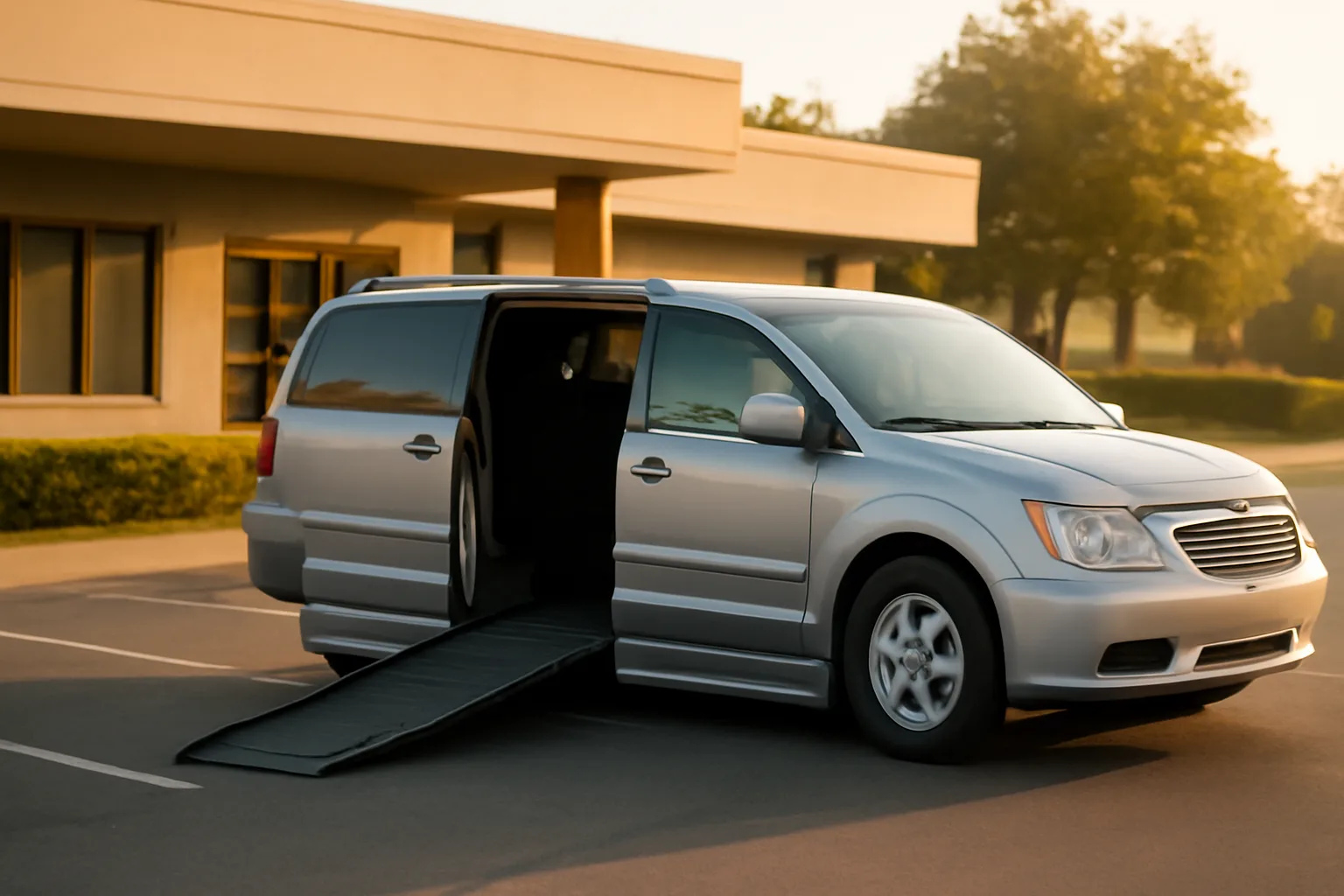
A medical transporter is someone who drives patients to and from medical care, most often under a program called non-emergency medical transportation, or NEMT. The term gets used loosely. Some people mean ambulance crews. Most of the time, in the context of starting a business, it means a driver or company that runs a wheelchair van, ambulatory sedan, or stretcher van to get Medicaid or Medicare Advantage members to dialysis, dialysis, chemo, physical therapy, or a regular doctor visit. This is not emergency work. No lights, no sirens, no clinical care beyond basic wheelchair securement and maybe a gait belt. Federal Medicaid rule requires states to make sure eligible people can get to and from providers, and NEMT is the mechanism states use to meet that requirement [1]. If you're picturing an ambulance crew with EMTs, that's a different regulatory world (state EMS licensing, scope of practice rules) and a different topic. This article is about the NEMT side, since that's where nearly all new owner-operators with a wheelchair van actually land. For the broader landscape, see medical transportation and emergency medical transport if you want to understand how the two systems differ.
what is NEMT (non-emergency medical transportation)?
NEMT is transportation to a medical service for someone who doesn't need emergency care but also can't get there on their own, whether because they use a wheelchair, don't drive, or have no other ride. Medicaid.gov describes it as a service states must provide to "ensure that Medicaid beneficiaries have unencumbered access to healthcare providers when their conditions are otherwise stable" [1]. Modes of NEMT vary by trip. A member going to a routine checkup might get a standard sedan or a rideshare-style trip. Someone using a wheelchair needs a wheelchair van with a lift or ramp and tie-downs. Someone who can't sit upright needs a stretcher van. States and their brokers set the mode based on the member's medical need, usually documented by a prescriber or case manager. Most states don't run NEMT in-house anymore. They contract it out to transportation brokers like Modivcare, MTM, Access2Care, or SafeRide Health, who build networks of independent transportation providers (that's you) and dispatch trips. You get credentialed with the broker, more than the state, and the broker decides which trips come your way. For the fuller explainer on how the program works state by state, see nemt and non emergency medical transportation.
does medicaid cover ambulance rides?
Yes, generally, but with real caveats depending on your state. Medicaid covers ambulance transportation when it's medically necessary and other transportation would endanger the person's health, per federal guidance on medical necessity for ambulance services [1]. States set their own rates, prior authorization rules, and documentation requirements for ambulance claims, and coverage details (mileage caps, base rate, ground vs. air) vary a lot by state Medicaid agency. Ambulance coverage is billed and licensed completely differently from NEMT. Ambulance providers need state EMS agency licensure and typically bill Medicaid directly (or through a different contractor) rather than going through an NEMT broker. If your plan is a wheelchair van business, you are not in the ambulance lane at all, and you don't need EMS licensure for standard NEMT work in most states. Confirm this distinction with your state Medicaid agency, since a few states blur the lines in how they classify "invalid coach" or stretcher-van services. One stat worth knowing: CMS has flagged ambulance services as an area with notable improper payment rates in Medicaid audits over the years, which is part of why documentation (trip logs, medical necessity forms, mileage) gets checked closely on the ambulance side. NEMT wheelchair-van trips get audited too, just under different rules.
does medicare cover medical transportation?
Original Medicare covers ambulance transportation when it's medically necessary, meaning any other transportation would endanger the person's health, and Medicare Part B pays 80% of the Medicare-approved amount after the deductible is met [2]. Original Medicare generally does not cover routine non-emergency rides to a doctor's office the way Medicaid does. Medicare Advantage plans are the exception people often miss. Many Medicare Advantage (Part C) plans offer NEMT as a supplemental benefit, sometimes a set number of one-way trips per year to plan-approved providers. This is plan-specific, not a Medicare-wide guarantee, so a Medicare Advantage member's transportation benefit could look completely different from their neighbor's, depending on which plan they picked. CMS's page on Medicare Advantage supplemental benefits is the place to verify what a given plan currently allows [3]. If you're building a business, this matters because brokers frequently manage both the Medicaid NEMT population and Medicare Advantage transportation benefits under the same network. You may get credentialed once and end up running trips funded by two completely different payers, with different trip authorization rules for each. Ask the broker directly which payer types your contract covers.
how to start a medical transportation business (the real sequence)
Here's the order that actually works, based on how state Medicaid agencies and brokers structure their onboarding. Skipping steps just means you redo paperwork later. 1. Pick your business structure and get your basics: LLC or corporation registration with your state, an EIN from the IRS, and a business bank account. This is a Tuesday afternoon of work, not a barrier. 2. Buy or lease your vehicle. A used wheelchair-accessible minivan (Dodge Grand Caravan or Chrysler Pacifica conversion, typically) is the most common starter vehicle. Expect a wide price range depending on age, mileage, and conversion quality; budget for a DOT-compliant wheelchair lift or ramp and certified tie-down securement, since brokers and states will inspect this specifically. 3. Get commercial auto insurance rated for livery/NEMT use, not personal auto or standard commercial. This is one of the most commonly underestimated costs and timelines; carriers that actually write NEMT policies are a shorter list than you'd think, and some states require specific minimum liability limits for wheelchair-accessible vehicles. 4. Enroll as a Medicaid transportation provider with your state Medicaid agency. This usually means an application through the state's Medicaid provider enrollment portal, background checks, vehicle inspection, and driver qualification documentation (driving record, drug screening, CPR/first aid). 5. Apply for broker network credentialing. In broker-managed states (most of them), state enrollment alone doesn't get you trips. You separately apply to Modivcare, MTM, Access2Care, SafeRide, or whichever broker holds the contract in your region, and go through their own credentialing packet, insurance verification, and vehicle/driver checks. 6. Set up dispatch and scheduling. Brokers assign trips through an app or portal; you'll need a phone or tablet and a plan for how you accept, decline, and document trips. Each of these steps has its own timeline, and states differ enough that you should confirm current requirements directly with your state Medicaid transportation unit and the specific broker before you commit money to a vehicle.
how to start a NEMT business step by step
If "NEMT business" and "medical transportation business" sound like the same question to you, they basically are, NEMT is just the specific federal/state term for the non-emergency side described above. The mechanics are identical to the sequence in the prior section. What differs is emphasis, since NEMT businesses live and die by broker relationships more than by direct Medicaid billing. A few things new owner-operators get wrong on the NEMT side specifically: They assume Medicaid enrollment alone means trips will start flowing. In most states, the broker controls trip volume and assignment, not the state. State enrollment is a prerequisite, not the finish line. They underestimate insurance lead time. NEMT-rated commercial auto policies can take weeks to bind, especially for a first-time operator with no claims history, and some brokers won't even start credentialing review until your certificate of insurance is in hand. They buy the vehicle before confirming their state's and broker's specific equipment requirements (tie-down type, lift certification, vehicle age limits). Some brokers won't credential vehicles over a certain age or mileage, which varies by contract, so confirm this before you buy, not after. For deeper background on how broker credentialing works market by market, nemt transportation and non emergency medical transportation services walk through the broker layer in more detail.
how to start a medical transportation business with one van
One van is plenty to start. Most successful owner-operators in this space run exactly one wheelchair van for a while before adding a second vehicle or driver, and there's nothing wrong with staying at one van long-term if that's the business you want. With a single van, a few things change in your favor: your insurance quote is simpler (one vehicle, one or two drivers), your broker credentialing packet is smaller, and you can be the driver yourself rather than hiring and managing employees right away. The tradeoff is that your schedule is fully consumed by whatever trips you accept; there's no backup vehicle if yours needs a repair or a lift replacement, and no second driver to cover if you're sick. Practical one-van setup priorities, roughly in order of what actually blocks you from getting trips: - Vehicle inspection passing state and broker equipment standards
- Commercial auto insurance certificate naming any broker requirements they specify
- Driver qualification file: license, MVR, background check, drug screen, CPR/first aid card
- State Medicaid provider enrollment approval
- Broker credentialing approval and a signed transportation services agreement A one-van operation is also the cheapest way to test broker demand in your area before you sink money into a second vehicle. Trip volume and payer mix differ enormously by county and by which broker holds the contract, so there's no universal number to plan around; ask your target broker what typical trip density looks like in your specific service area before you commit to expansion.
how do you start a medical transportation business without wasting money?
The expensive mistakes in this business are almost always ordering: buying the van before confirming broker equipment specs, paying for a website and branding before you have a single Medicaid provider number, or signing a vehicle lease before insurance is actually bindable. Spend money, in order, on: the vehicle (used, mechanically sound, correctly converted), insurance (get quotes before you buy the van, not after), and paperwork prep (background checks, drug screens, driver files) that brokers will ask for anyway. Skip early spending on things like a dispatch software subscription, branded signage, or a second vehicle until you have at least one broker contract active and know what trip volume actually looks like. One genuinely useful shortcut for the paperwork side: a lot of the state Medicaid enrollment forms and broker credentialing packets ask for the same underlying documents (insurance certificate, vehicle inspection, driver qualification file, W-9, business license) just formatted differently. Building one clean document set you can reformat per state and per broker saves real time. That's the specific problem a resource like RideCredential's $199 State + Broker NEMT Launch Kit is built to solve, it's a one-time reference packet, not a guarantee of approval from any state or broker, since approval decisions always sit with them. Check it out at /launch-kit-builder if you'd rather not build the packet from scratch.
does medicaid cover ambulance and NEMT the same way?
No. Different services, different rules, often different contractors. Ambulance is emergency or urgent medically necessary transport, billed by a licensed EMS provider, generally reimbursed at a state-set rate under Medicaid's ambulance benefit [1]. NEMT is routine transportation to and from covered services for members who are medically stable but can't get there on their own, and it's typically run through a broker contract rather than direct state billing [1]. A member could plausibly use both in the same month: an ambulance ride to the ER after a fall, then NEMT wheelchair-van trips to follow-up appointments and physical therapy afterward. As an owner-operator with a wheelchair van, you're squarely in the NEMT lane, and you bill (or get paid) through the broker's process, not by submitting ambulance claims to Medicaid directly. States vary in how strictly they separate these programs administratively, and a few use the term "medical transportation" loosely enough to cover both in public-facing materials. When in doubt about what your specific state calls its programs and how they're structured, the state Medicaid transportation unit's own page is the accurate source, not a general search result.
what does broker credentialing actually check for?
Brokers like Modivcare, MTM, Access2Care, and SafeRide each run their own credentialing process, but they check for roughly the same things: valid state Medicaid enrollment (in most states), current commercial auto insurance meeting their minimums, vehicle inspection records showing the lift or ramp and tie-downs are functional and certified, and driver files covering license validity, motor vehicle record, background check results, and drug screening. Some brokers also require a signed transportation services agreement with specific insurance language, minimum coverage limits that can exceed your state's legal minimum, and periodic re-inspection of vehicles (often annually). None of this is standardized nationally; broker requirements and state Medicaid rules both change, sometimes with little public notice, so always confirm current requirements directly with the broker and your state Medicaid agency before you assume last year's checklist still applies. A rejection at this stage is common and rarely permanent. Most denials come from fixable issues: an insurance certificate missing required language, a vehicle inspection that didn't include the specific tie-down certification the broker wants, or a driver file missing one document. Ask specifically what failed and resubmit rather than assuming the door is closed.
what's the difference between a medical transporter and an ambulance company?
A medical transporter, in the NEMT sense, drives people who are medically stable to routine and recurring appointments. An ambulance company transports people who need emergency care or ongoing clinical monitoring during transport, staffed by licensed EMS personnel (EMTs or paramedics) operating under state EMS scope-of-practice rules. The licensing bar is completely different. NEMT wheelchair-van drivers generally need a valid driver's license, a clean-enough driving record, background check clearance, and often CPR/first aid certification, but not EMS licensure. Ambulance staff need state EMS certification at the appropriate level, and the vehicle itself needs separate state EMS agency licensure, more than a Medicaid provider number. If you're buying a wheelchair van and thinking about Medicaid work, you almost certainly want the NEMT path, not the ambulance path. The startup cost, licensing timeline, and staffing requirements for standing up a licensed ambulance service are substantially higher than for a wheelchair-van NEMT operation, and most new owner-operators in this space are correctly choosing NEMT for exactly that reason.
Frequently asked questions
What is a medical transporter?
In most business contexts, a medical transporter is a driver or company providing non-emergency medical transportation (NEMT), taking Medicaid or Medicare Advantage members to routine appointments like dialysis, therapy, or checkups. It's distinct from an ambulance, which handles emergency or clinically monitored transport under state EMS licensure.
What is NEMT?
NEMT stands for non-emergency medical transportation, a Medicaid benefit that gets medically stable members to and from covered healthcare services when they have no other way to get there. Federal Medicaid rule requires states to ensure this access, and most states run it through contracted transportation brokers.
Does Medicaid cover ambulance rides?
Yes, when the ride is medically necessary and other transportation would endanger the person's health, though exact coverage rules, rates, and documentation requirements are set by each state Medicaid agency. Ambulance coverage is billed separately from NEMT and requires state EMS licensure, not Medicaid NEMT provider enrollment.
Does Medicare cover medical transportation?
Original Medicare Part B covers medically necessary ambulance transportation, paying 80% of the Medicare-approved amount after the deductible. Original Medicare generally doesn't cover routine non-emergency rides. Some Medicare Advantage plans add NEMT as a supplemental benefit, but this varies by plan, so check the specific plan's benefits.
How do I start a medical transportation business?
Register your business, buy or lease a properly converted wheelchair van, get NEMT-rated commercial auto insurance, enroll as a Medicaid transportation provider with your state, and then apply for credentialing with the broker (Modivcare, MTM, Access2Care, or SafeRide) that holds the contract in your area. Confirm each step's current requirements directly with the agency and broker.
How do I start a NEMT business specifically?
Follow the same sequence as any medical transportation startup: entity formation, vehicle and insurance, state Medicaid enrollment, then broker credentialing. The NEMT-specific detail is that broker approval, not state enrollment alone, is what actually opens trip assignments in most states.
Can I start a medical transportation business with just one van?
Yes. One wheelchair van is a normal and complete way to start, and many owner-operators stay at one vehicle long-term. You'll need the same insurance, state enrollment, and broker credentialing as a larger fleet, just with a smaller paperwork packet and no backup vehicle if yours needs repair.
What is non-emergency medical transportation?
Non-emergency medical transportation (NEMT) is transportation to and from covered medical services for people who are medically stable but can't get there on their own, whether due to disability, lack of a vehicle, or no available driver. It's a required Medicaid benefit in every state, usually run through contracted brokers.
How much does it cost to start a wheelchair van NEMT business?
Costs vary widely by vehicle age and condition, insurance market, and state fees, so there's no single reliable number. Major cost categories are the wheelchair-accessible vehicle itself, NEMT-rated commercial auto insurance, and time spent on state Medicaid enrollment and broker credentialing paperwork. Get insurance quotes before buying a vehicle.
Do I need an ambulance license to run NEMT trips?
No. Standard NEMT wheelchair-van work does not require EMS/ambulance licensure in most states. You need a valid driver's license, a clean driving record, background check clearance, and typically CPR/first aid certification, plus your vehicle needs to meet state and broker equipment standards for lifts and tie-downs.
Which brokers handle NEMT credentialing?
The major national NEMT brokers are Modivcare, MTM, Access2Care, and SafeRide Health, though which one holds the contract in your state or region varies and can change over time. Confirm directly with your state Medicaid transportation unit which broker currently manages NEMT in your service area.
Is NEMT the same thing as ambulance transport?
No. NEMT serves medically stable members traveling to routine care, with no clinical staff required onboard beyond basic wheelchair securement help. Ambulance transport is for emergency or clinically monitored situations, staffed by licensed EMTs or paramedics, and is billed and licensed under completely separate state rules.
Does Medicaid pay the driver directly or through a broker?
In most states, Medicaid contracts with a transportation broker who manages the provider network, assigns trips, and handles payment to individual transportation providers. A smaller number of states still manage NEMT directly or through regional models. Confirm your specific state's structure with its Medicaid transportation unit.
Sources
- Medicaid.gov, Non-Emergency Medical Transportation: Federal Medicaid rule requires states to ensure NEMT access for medically stable beneficiaries
- Medicare.gov, Ambulance Services coverage: Medicare Part B covers medically necessary ambulance transport at 80% after deductible
- CMS, Medicare Advantage Supplemental Benefits: Medicare Advantage plans may offer NEMT as a supplemental benefit, varying by plan
- Medicaid.gov: CMS guidance clarifying state requirements for ensuring non-emergency medical transportation (NEMT) coverage under Medicaid
- Electronic Code of Federal Regulations (eCFR): Federal regulation (42 CFR 431.53) requiring state Medicaid programs to ensure necessary transportation for beneficiaries to and from providers
- Internal Revenue Service: Process for obtaining an Employer Identification Number (EIN), a required step in starting a medical transportation business
- Medicaid.gov: Fact sheet explaining NEMT broker credentialing standards and requirements for transportation providers enrolling with state Medicaid programs
- U.S. Small Business Administration: Step-by-step guidance on registering a new small business, applicable to starting a NEMT or medical transportation company