Last updated 2026-07-23
TL;DR
"Medical transportation near me" usually means non-emergency medical transportation (NEMT), the Medicaid-funded rides to dialysis, dental, and specialist visits that ambulances don't handle. Medicaid must cover it under federal rule; Medicare mostly doesn't except for limited ambulance and some Medicare Advantage extras. Starting an NEMT business means state Medicaid enrollment, broker credentialing, and a compliant wheelchair van.
What does 'medical transportation near me' actually mean?
When someone searches this phrase, they're usually looking for one of two very different things: a ride to a non-emergency medical appointment, or an emergency ambulance. Those are not the same industry, not the same funding, and not the same phone number to call. Non-emergency medical transportation, or NEMT, covers rides to dialysis, physical therapy, methadone clinics, prenatal visits, and specialist appointments for people who can't drive themselves and don't need a 911 response. Emergency medical transport is the ambulance that shows up for a heart attack or car crash, billed completely differently and regulated by a separate set of state EMS rules. If you're reading this because you or a family member needs a ride to dialysis three times a week, you want NEMT, and you should start with your state's Medicaid transportation broker or your health plan's member services line, not a Google Maps search. If you're reading this because you just bought a wheelchair van and you're trying to figure out how the industry works, this article walks through both the rider side and the operator side. For the deeper mechanics of getting credentialed, see our nemt overview and the non emergency medical transportation breakdown.
What is NEMT?
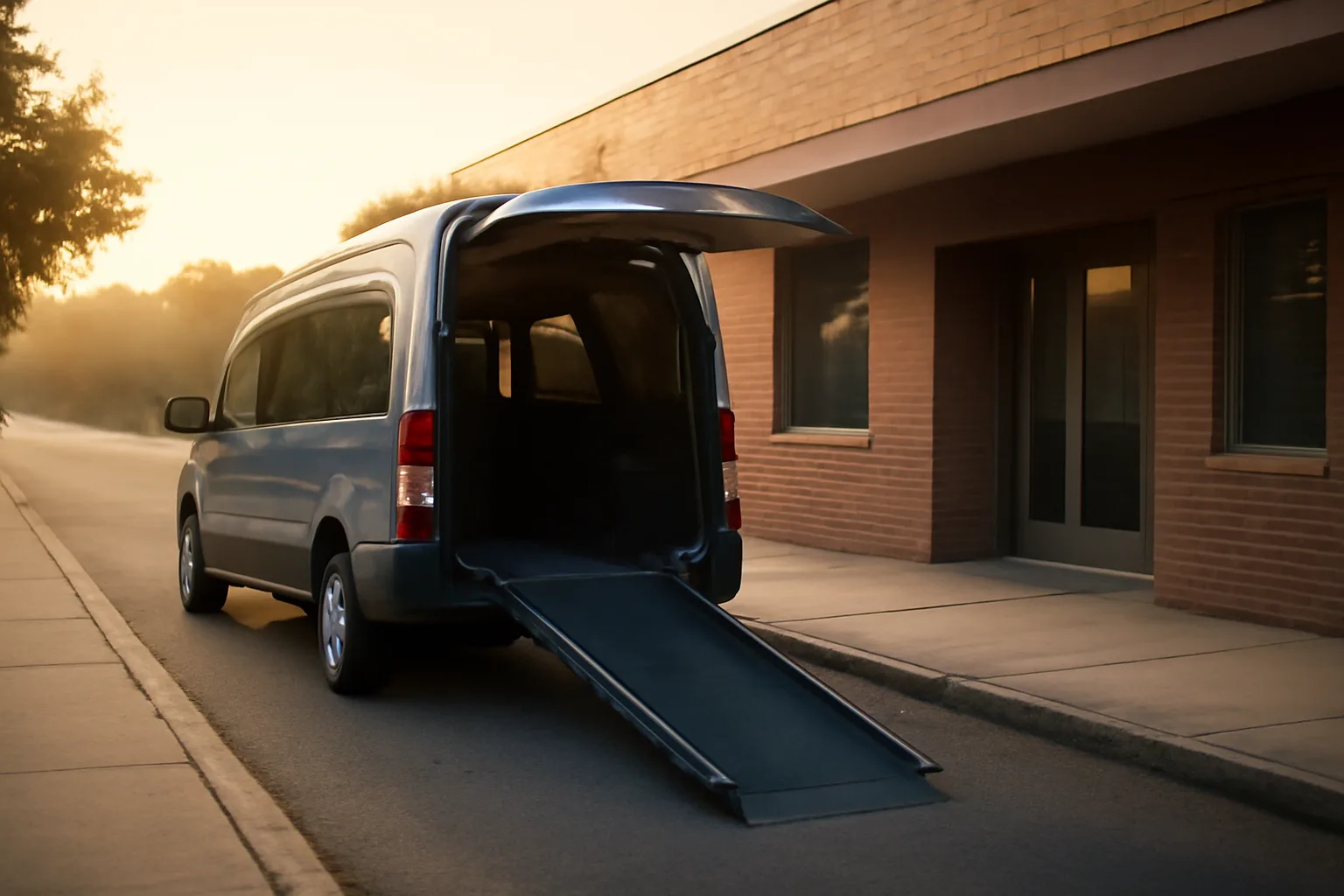
NEMT stands for non-emergency medical transportation. It's transportation to and from covered medical services for people who have no other way to get there, usually because of a disability, an age-related limitation, or a temporary condition like recovering from surgery. It's not an ambulance service and it's not a taxi in the general sense; it's a Medicaid benefit with its own federal rule. Federal Medicaid regulation at 42 CFR 431.53 requires state Medicaid agencies to "ensure necessary transportation for beneficiaries to and from providers" and to describe in their state plan how they meet that requirement [1]. Most states satisfy this by contracting with a transportation broker, a private company that manages trip scheduling, driver credentialing, and payment on the state's behalf. The big national brokers are Modivcare, MTM, and Access2Care, with regional players like SafeRide filling in specific states or counties; confirm which broker holds the contract in your state with your state Medicaid agency, because it changes and states sometimes run competitive rebids. NEMT vehicles range from ambulatory sedans (a rider who can walk and sit normally) to wheelchair-accessible vans with a ramp or lift, to stretcher vans for riders who must stay lying down but don't need medical monitoring. Each vehicle type has its own credentialing requirements, insurance minimums, and often a separate broker contract tier. For an operator, that means the van you buy determines which contracts you're even eligible to bid on. See our nemt-transportation guide for how vehicle type maps to broker tiers.
Does Medicaid cover ambulance rides?
Yes. Medicaid covers ambulance transportation when it's medically necessary, meaning the beneficiary's condition requires the kind of monitoring or immediate care an ambulance provides and other transportation would endanger their health. This is separate from the NEMT benefit and is billed and regulated differently, often under each state's EMS licensing agency rather than the Medicaid transportation broker. Coverage rules and reimbursement rates vary heavily by state because ambulance is a state-plan service with state-set rates within federal guardrails. Some states require prior authorization for non-emergency ambulance transport (like a scheduled stretcher transfer between facilities) while true emergency dispatches don't need prior approval. Medicaid.gov's transportation page confirms states must ensure necessary transportation to covered services, which includes emergency ambulance access as part of the broader coverage guarantee [2]. If you're an operator: ambulance-level service (Basic Life Support or Advanced Life Support) is a completely different license track, with EMT or paramedic staffing requirements, a state EMS certificate, and often a Certificate of Need in Certificate-of-Need states. It's not something you back into from a wheelchair-van NEMT operation without separate licensing. Don't confuse the two when you're planning your business.
Does Medicare cover medical transportation?
Mostly no, with real exceptions. Original Medicare (Parts A and B) does not cover routine non-emergency transportation to doctor visits, dialysis, or therapy the way Medicaid does. Medicare Part B covers ambulance services when other transportation would endanger the person's health, subject to Medicare's medical necessity rules, and it generally pays 80% of the Medicare-approved amount after the Part B deductible is met [3]. There is a narrower non-emergency ambulance benefit for some patients with a written order from a doctor stating transportation by any other means is contraindicated, common for dialysis patients who are bed-confined. That still runs through the ambulance benefit, not a separate NEMT line. Medicare Advantage (Part C) plans are a different story. CMS lets Medicare Advantage plans offer supplemental benefits, and many now include a set number of non-emergency transportation trips per year as an extra, especially plans aimed at people with chronic conditions. Coverage, trip limits, and the transportation vendor used vary by plan and by year, so anyone relying on this needs to check their specific Medicare Advantage plan's Evidence of Coverage document, not assume it's included. For someone dual-eligible for Medicare and Medicaid, the Medicaid NEMT benefit is usually the one that actually pays for routine rides.
How to start a medical transportation business
Starting an NEMT business is closer to starting a licensed home-care agency than starting a rideshare side gig. There's a real sequence, and skipping steps costs you money and time later. First, form your business entity (LLC is standard) and get your EIN, general liability and commercial auto insurance, and any local business license. Second, get your state's for-hire vehicle or livery permit if your state requires one for medical transport vehicles; some states fold this into a separate NEMT-specific permit. Third, enroll as an NEMT provider with your state Medicaid agency, which is a separate process from broker credentialing and usually involves an application, background checks on owners and drivers, and proof of insurance. Fourth, apply for credentialing with the broker(s) operating in your service area, which layers on their own vehicle inspection standards, driver training documentation, and often a minimum fleet size or specific vehicle age cap. Medicaid.gov's provider enrollment guidance for states describes screening requirements including background checks and site visits that states must apply based on a provider's categorical risk level [4]. Transportation providers are commonly screened at the "moderate" risk level, which typically means fingerprint-based background checks in many states, though the exact risk category and screening depth is set at the state level, so confirm this with your state Medicaid agency directly. Build in real time for this: many operators report the state enrollment plus broker credentialing sequence takes weeks to a few months depending on how backed up the state's screening unit is, and that's before your first broker trip assignment shows up. Our non emergency medical transportation services page walks through the paperwork stack in more detail, and it's worth reading before you buy a vehicle, not after.
How to start an NEMT business, step by step
Here's the realistic order of operations, because doing this out of sequence is the single most common way new operators waste money. 1. Research your state's specific NEMT enrollment requirements and confirm which broker(s) hold contracts in your county. This differs by state and sometimes by region within a state. 2. Decide your vehicle type before you buy anything: ambulatory sedan, wheelchair van, or stretcher van. Broker contracts are often vehicle-type specific, and wheelchair vans have ADA-related equipment and inspection requirements ambulatory sedans don't. 3. Set up your business entity, EIN, and insurance. Commercial auto insurance for wheelchair-accessible vehicles costs meaningfully more than personal auto insurance because of the passenger liability exposure; get quotes before committing to a purchase price on the van. 4. Apply for state Medicaid provider enrollment. This is the state-level approval to bill Medicaid at all. 5. Apply for broker credentialing with each broker in your area. This is separate from state enrollment and has its own vehicle inspection, driver file, and background check requirements. 6. Get your vehicle inspected against broker standards (wheelchair lift or ramp function, tie-down anchors, first aid kit, fire extinguisher, and often a maximum vehicle age, commonly somewhere around 6 to 10 years depending on the broker, confirm the exact cap with your broker). 7. Train and document your drivers: defensive driving, passenger assistance, wheelchair securement, and often CPR/First Aid certification. Requirements vary by state and broker. 8. Start taking trip assignments once approved, and track every trip's documentation carefully, since brokers audit and can suspend providers for record-keeping gaps. States and brokers change these requirements over time, so treat any specific dollar figure, timeline, or document list you find online (including this one) as a starting checklist to confirm directly with your state Medicaid transportation unit and your broker, not a locked-in guarantee.
How do you start a medical transportation business with just one van?
Plenty of NEMT operators start with a single wheelchair van, and it's a completely viable way to enter the industry. The mistake is assuming one van means a lighter compliance load; it doesn't. Every requirement above (state enrollment, broker credentialing, insurance, driver files, vehicle inspection) applies whether you run one van or twenty. What's different with one van is your operating slack. If that van is in the shop, you have zero backup capacity, which matters because brokers track your on-time performance and missed-trip rate, and repeated failures to cover assigned trips can get your contract suspended. Build a maintenance reserve before you launch, not after your transmission fails during your first month of live trips. One-van operators should also think hard about which broker contracts to pursue first. Some brokers assign trips in batches sized for multi-vehicle fleets and may deprioritize single-vehicle providers in high-volume service areas. Ask directly during credentialing what trip volume you can realistically expect with one vehicle, and get it in writing if they'll give you anything in writing at all. Nobody in this industry will promise you trip volume, and you should be skeptical of anyone who does. A lot of new owner-operators underestimate the paperwork half of this and overestimate the driving half. If you want a structured way to get the state and broker paperwork stack organized before you're deep into vehicle shopping, our $199 Launch Kit Builder walks through state-specific enrollment and broker credentialing documents in one place; it's not a guarantee of approval, it's an organizing tool, and the actual approval decision always sits with your state Medicaid agency and the broker.
How to start a non-emergency medical transportation business (the compliance side)
The compliance side is where most new operators underestimate the workload, so it deserves its own section separate from the general startup steps above. Driver requirements typically include a clean motor vehicle record, a background check (often including fingerprinting for Medicaid-funded transportation), and specific training in passenger assistance and wheelchair securement. Many states or brokers also require CPR and First Aid certification, and some require drug and alcohol testing programs similar to what commercial trucking uses. None of this is standardized nationally; it's set state by state and sometimes broker by broker within the same state, which is why 'confirm with your broker and state Medicaid agency' isn't a cop-out, it's the honest answer. Vehicle compliance for wheelchair vans usually covers ramp or lift function testing, wheelchair tie-down and occupant restraint systems meeting a recognized standard, interior signage (grab bars, no-smoking notices), first aid and fire extinguisher equipment, and a maximum vehicle age or mileage cap. Insurance minimums for commercial NEMT vehicles are also typically higher than personal auto minimums because of the passenger liability exposure, and some brokers require you to name them as an additional insured on your policy. Documentation is the part people skip and regret. Trip logs, driver certification files, vehicle maintenance records, and insurance certificates all need to be kept current and accessible, because brokers conduct periodic audits and state Medicaid program integrity units can request records going back years. Losing your credentialing over a missing document is a completely avoidable failure mode, and it happens to operators who treated the paperwork as a one-time hurdle instead of an ongoing obligation.
How is NEMT different from an ambulance or a rideshare?
NEMT sits between an ambulance and a regular rideshare, and it's worth being precise about the boundaries because mixing them up gets operators in trouble. An ambulance is licensed emergency medical equipment staffed by EMTs or paramedics, dispatched for conditions requiring in-transit medical care or monitoring. It's regulated by state EMS agencies, not Medicaid transportation brokers, even though Medicaid can pay for medically necessary ambulance trips. A rideshare (Uber, Lyft, or a local taxi) is a general-public transportation service with no disability-specific vehicle equipment requirement, no Medicaid enrollment, and no wheelchair securement standard unless the specific vehicle happens to have it. Some Medicaid programs and Medicare Advantage plans have started contracting directly with rideshare companies for ambulatory-only NEMT trips (riders who can walk and don't need a wheelchair van), but that's a separate contract track from traditional NEMT broker credentialing and doesn't apply to wheelchair-accessible transportation. NEMT is the middle tier: a lower level of medical equipment than an ambulance, but with disability-specific vehicle standards, Medicaid enrollment, and broker credentialing requirements a standard rideshare driver never has to meet. Understanding which tier you're building toward before you buy a vehicle saves you from buying the wrong van for the contracts you actually want. Our emergency medical transport page covers the ambulance side in more depth if that's the direction you're actually headed.
How do I find medical transportation near me as a rider?
If you need a ride to a medical appointment right now, start with your Medicaid managed care plan's member services number, printed on your insurance card, or your state Medicaid agency's transportation line. They'll tell you which broker (Modivcare, MTM, Access2Care, SafeRide, or a regional company) handles trip scheduling in your county, since this varies by state and sometimes by region. Most brokers require advance scheduling, commonly a few business days ahead for routine appointments, though urgent same-day requests are often handled through a separate process; ask specifically when you call, since policies differ by broker and by state. Dialysis and other recurring treatments can usually be set up as a standing ride so you're not calling every week. Medicare beneficiaries without Medicaid should check their specific Medicare Advantage plan's Evidence of Coverage for a transportation benefit, since Original Medicare generally doesn't cover routine rides. If you're dual-eligible, lead with your Medicaid card, since that's almost always the benefit that actually covers routine NEMT.
What does it cost to get an NEMT business credentialed and running?
There's no single national number here, and anyone quoting you one flat figure for every state is guessing. Costs break into a few real buckets: business formation and licensing fees (typically a few hundred dollars), commercial insurance (meaningfully more than personal auto coverage because of passenger liability, and it varies by state, coverage limits, and your driving record), the vehicle itself (a compliant wheelchair van, new or used, with a working ADA-compliant lift or ramp), driver training and background check fees, and any state-specific NEMT permit fee. Broker credentialing itself is typically free to apply for, but getting your vehicle and driver files to pass inspection can involve real costs if your van needs retrofitting to meet tie-down or ramp standards. Build a buffer for this rather than assuming your first inspection passes clean. The honest answer to "how much does this cost to start" is: it depends heavily on your state, your broker, and whether you're buying a used van that already has commercial wheelchair-accessible equipment installed versus retrofitting one yourself. Get quotes before you commit to a specific vehicle purchase.
Frequently asked questions
What is NEMT in simple terms?
NEMT stands for non-emergency medical transportation. It's rides to and from medical appointments (dialysis, therapy, specialist visits) for people who can't drive themselves and don't need an ambulance. Medicaid is required by federal rule to cover it, usually through a contracted broker like Modivcare, MTM, Access2Care, or a regional company like SafeRide.
Does Medicaid cover ambulance rides?
Yes, when medically necessary, meaning the person's condition requires monitoring or care that only an ambulance can provide during transport. It's covered under a state's ambulance benefit, separate from the routine NEMT broker system, and reimbursement rates and prior authorization rules vary by state Medicaid agency.
Does Medicare cover medical transportation?
Original Medicare generally doesn't cover routine non-emergency rides to appointments. It covers ambulance transport under Part B when other transportation would endanger the patient's health, usually at 80% of the Medicare-approved amount after the deductible. Some Medicare Advantage plans offer limited non-emergency transportation as a supplemental benefit; check your specific plan's Evidence of Coverage.
How do I start an NEMT business from scratch?
Form your business entity, get commercial insurance, buy or retrofit a compliant vehicle, enroll as a provider with your state Medicaid agency, and get credentialed separately with the broker(s) operating in your area. Each step has its own paperwork and timeline, and skipping the state enrollment step before buying a vehicle is a common costly mistake.
Can I start an NEMT business with just one wheelchair van?
Yes, plenty of operators start with one van. The compliance requirements (insurance, state enrollment, broker credentialing, driver training) are identical whether you run one vehicle or a fleet. The tradeoff is zero backup capacity if that van needs repairs, so budget a maintenance reserve before you take your first trip assignment.
What's the difference between NEMT and an ambulance?
An ambulance is licensed emergency medical equipment staffed by EMTs or paramedics for conditions needing in-transit medical care, regulated by state EMS agencies. NEMT is non-medical transport (a van with a wheelchair lift or a sedan) for people who need help getting to an appointment but don't need medical monitoring during the ride.
How long does NEMT provider enrollment take?
It varies by state and by how backed up the screening unit is, but many operators report a process spanning several weeks to a few months from state Medicaid enrollment through broker credentialing approval. Background checks, vehicle inspections, and document review all add time; confirm current timelines directly with your state Medicaid agency and target broker.
Do I need a special license to drive an NEMT wheelchair van?
Most states don't require a commercial driver's license (CDL) for standard wheelchair vans under a certain weight, but they do typically require a clean driving record, a background check, and specific passenger-assistance and wheelchair-securement training documented in your driver file. Requirements differ by state and broker, so confirm specifics before hiring drivers.
How much does NEMT broker credentialing cost?
Applying for broker credentialing itself is typically free, but passing the vehicle inspection can cost money if your van needs tie-down anchors, ramp repairs, or other retrofitting to meet the broker's standard. Commercial insurance and any state permit fees are the bigger recurring costs, and both vary by state and coverage limits.
What vehicle do I need to start an NEMT business?
It depends on which service tier you're targeting: an ambulatory sedan for walking passengers, a wheelchair-accessible van with a working ramp or lift for wheelchair users, or a stretcher van for passengers who must stay lying down. Broker contracts are often vehicle-type specific, so decide your service tier before buying anything.
Is NEMT the same as medical transportation in general?
'Medical transportation' is the broader umbrella term covering both emergency ambulance transport and non-emergency NEMT rides. In everyday conversation people usually mean NEMT when they search 'medical transportation near me,' since that's the recurring, schedulable ride most patients and caregivers actually need.
Can Uber or Lyft be used for medical transportation?
Some Medicaid programs and Medicare Advantage plans now contract directly with rideshare companies for ambulatory-only trips, meaning riders who can walk and don't need a wheelchair van. This is a separate arrangement from traditional NEMT broker credentialing and doesn't cover wheelchair-accessible or stretcher transportation.
Sources
- eCFR, 42 CFR 431.53 Assurance of transportation: Federal Medicaid regulation requires states to ensure necessary transportation for beneficiaries to and from providers
- Medicaid.gov, Non-Emergency Medical Transportation: States must ensure necessary transportation to and from Medicaid-covered services
- Medicare.gov, Ambulance Services coverage: Medicare Part B covers ambulance services when medically necessary, generally paying 80% of the approved amount after the deductible
- Medicaid.gov, Provider Screening and Enrollment: States must apply risk-based screening including background checks to Medicaid providers based on categorical risk level
- eCFR: Federal regulation defining transportation as a Medicaid benefit, including ambulance and non-emergency transportation services
- Federal Motor Carrier Safety Administration (FMCSA): Federal definition of a 'commercial motor vehicle,' relevant to NEMT van/fleet compliance requirements
- Medicaid.gov: State health official guidance clarifying Medicaid non-emergency medical transportation program requirements
- Internal Revenue Service (IRS): Requirement to obtain an Employer Identification Number (EIN) when starting an NEMT business
- U.S. Small Business Administration (SBA): Steps for registering a new business, applicable to starting a medical transportation company