Last updated 2026-07-23
TL;DR
"Medical transport services near me" usually means non-emergency medical transportation (NEMT), which covers rides to medical appointments for people who can't drive themselves. Medicaid covers NEMT in every state as a required benefit; Medicare covers it in very limited cases. Ambulance coverage is separate from NEMT and depends on medical necessity.
What does "medical transport services near me" actually mean?
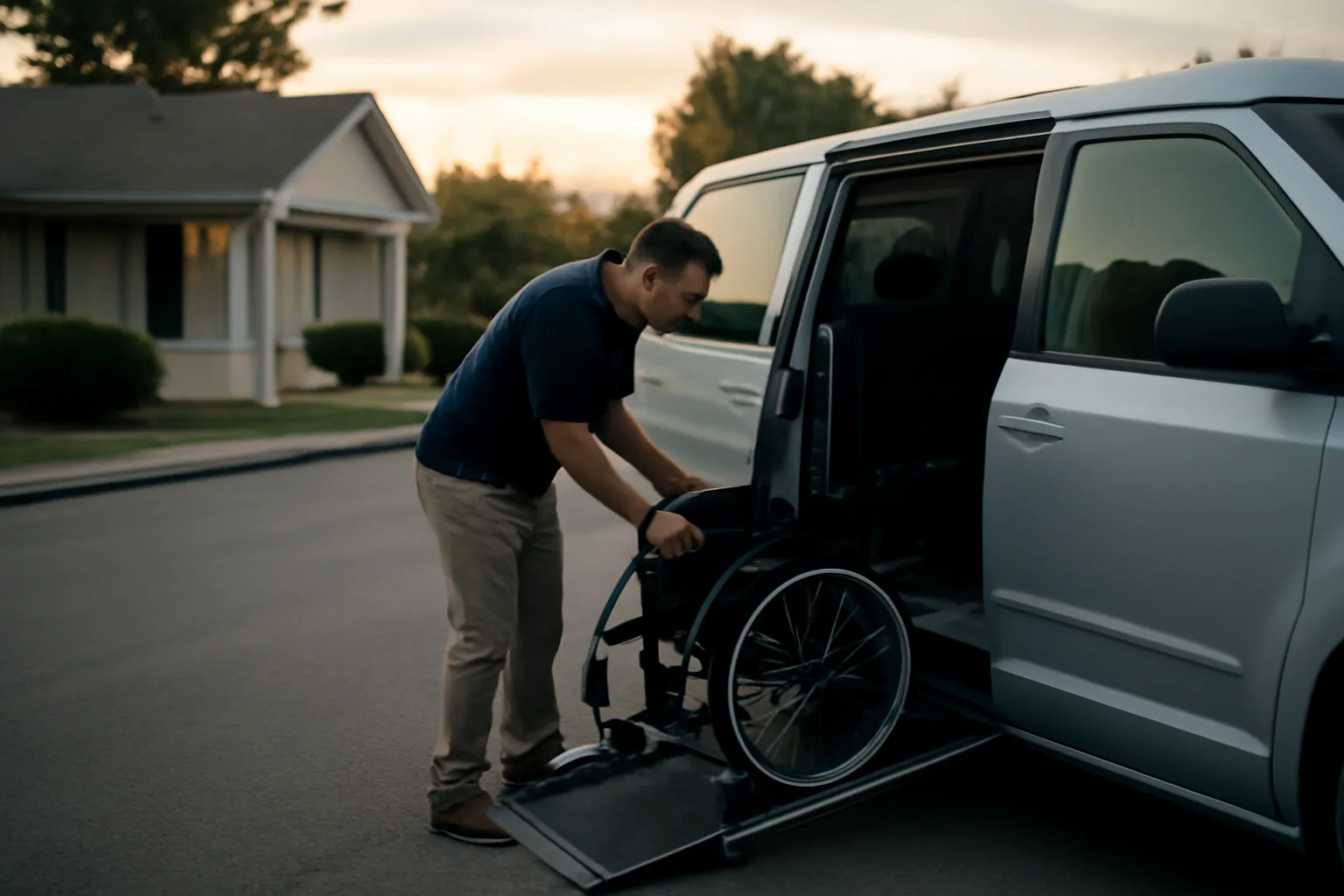
People type this phrase into Google for two very different reasons. Some are patients or caregivers trying to find a ride to a dialysis appointment, a dementia specialist, or a follow-up surgery visit. Others are entrepreneurs trying to figure out what business they'd actually be running if they bought a used wheelchair van. Both groups end up in the same place: non-emergency medical transportation, usually shortened to NEMT. This is not an ambulance. It's a scheduled, non-emergency ride, often in a van with a wheelchair lift or ramp, sometimes in a regular sedan, provided by a driver who is not a paramedic and doesn't carry emergency medical equipment. If you're the patient, your search should really be "NEMT provider near me" or "non-emergency medical transportation [your county]" and it should route through your state Medicaid agency or your Medicaid managed care plan, not a random web search. If you're the aspiring operator, this article walks through the whole path: what NEMT is, how Medicaid and Medicare actually pay for rides, and how to start the business with one van. For a broader look at how the industry is structured, see medical transportation and nemt.
What is NEMT (non-emergency medical transportation)?
NEMT is transportation to and from medical appointments for people who have no other way to get there, and whose condition doesn't require an ambulance. Federal Medicaid rules require states to guarantee this kind of transportation for enrollees who need it, calling it "assurance of transportation" under Medicaid rules at 42 CFR 431.53 [1]. The Centers for Medicare & Medicaid Services (CMS) describes NEMT as covering "transportation to and from covered Medicaid services" for beneficiaries "who have no other means of transportation" [2]. That's the whole point of the benefit: it exists so that lack of a car, a working driver's license, or a caregiver doesn't become the reason someone misses dialysis, chemo, or a prenatal visit. NEMT vehicles range from ambulatory sedans and minivans for people who can walk and transfer themselves, up to wheelchair-accessible vans with ramps or lifts, and in some states, stretcher vans for people who must travel lying down but don't need ambulance-level care. Most state Medicaid programs contract this work out to regional or statewide brokers (Modivcare, MTM, Access2Care, and others depending on the state) who dispatch trips to independent transportation companies and owner-operators. For a deeper explainer on how that broker layer works, see non emergency medical transportation and non emergency medical transportation services.
Does Medicaid cover ambulance rides?
Yes, but only when the transportation is medically necessary at an ambulance level, meaning the person's condition requires medical monitoring, oxygen, IV management, or emergency-level care during the ride. Medicaid ambulance coverage is a distinct benefit category from NEMT, governed separately, and it's billed and reimbursed differently. Medicaid.gov's coverage guidance groups "emergency and non-emergency medical transportation" together under state plan benefits, but each state's Medicaid agency sets its own specific criteria for when an ambulance trip is medically necessary versus when a lower level of transport (like NEMT) is appropriate [2]. If a patient can be safely transported by wheelchair van or car service, Medicaid generally expects that cheaper option to be used instead of an ambulance. This distinction matters a lot for new operators. Owning a wheelchair van does not qualify you to bill for ambulance transport. Ambulance services require EMT or paramedic staffing, a different vehicle certification, and a completely separate enrollment and licensing path through your state's EMS office, not the NEMT broker network. If you're planning a wheelchair-van business, you're in the NEMT lane, not the ambulance lane, and the requirements below are for that lane specifically. Confirm the exact medical-necessity criteria and ambulance-vs-NEMT dividing line with your state Medicaid agency, since it varies by state.
Does Medicare cover medical transportation?
Medicare's coverage of non-emergency transportation is much narrower than Medicaid's. Original Medicare (Part B) covers ambulance services when they are medically necessary, meaning any other form of transportation would endanger the person's health, according to Medicare.gov's ambulance services coverage page [3]. Medicare does not generally cover routine rides to a doctor's office, dialysis, or a specialist just because someone lacks a car. There is a narrow non-emergency ambulance benefit for people who need scheduled, repetitive ambulance transport (for example, some dialysis patients) and even that requires a physician's written order certifying medical necessity, per CMS guidance [3]. Some Medicare Advantage plans offer non-emergency transportation as a supplemental benefit, but that's plan-specific, not a standard Medicare benefit, and it varies year to year and plan to plan. If a Medicare beneficiary is also enrolled in Medicaid (dual eligible), NEMT coverage generally comes through the Medicaid side of their coverage, not Medicare. This is one of the most common points of confusion for new patients and new operators alike: Medicare and Medicaid are not interchangeable for ride coverage.
What is NEMT, and how is it different from an ambulance or a rideshare?
| Ambulance | Licensed EMS agency | EMT or paramedic | Medicaid/Medicare ambulance benefit, private insurance | |
|---|---|---|---|---|
| NEMT wheelchair van | NEMT owner-operator or fleet | Trained driver, no clinical staff | Medicaid NEMT benefit via broker | |
| NEMT ambulatory sedan | NEMT owner-operator or fleet | Trained driver | Medicaid NEMT benefit via broker | |
| Rideshare (Uber/Lyft) | Gig driver | None | Rider pays, or limited state pilot programs | NEMT drivers typically need a valid driver's license, a clean driving record, background check clearance, and often CPR/first aid certification, but not EMT licensure. Vehicle standards (wheelchair securement systems, lift maintenance, insurance minimums) are set by each state's Medicaid transportation unit and enforced through the broker's credentialing process. See nemt transportation for more on vehicle and driver standards, and emergency medical transport if you're trying to understand where the emergency/non-emergency line actually falls. |
NEMT sits in the middle between an ambulance and a regular rideshare trip. An ambulance is for medical emergencies or conditions requiring monitoring during transport. A rideshare (Uber, Lyft) is a general-purpose ride with no medical accommodation, no wheelchair securement standards, and no Medicaid billing relationship in most cases (though some states now run separate rideshare pilot programs alongside NEMT). NEMT fills the gap: transportation for people who are medically stable enough not to need an ambulance, but who can't use public transit or a regular car because of a wheelchair, a stretcher need, cognitive impairment, or simply no access to any vehicle at all. | Service type | Who provides it | Medical staff on board | Typical payer |
How do you start a medical transportation business?
At a high level, starting an NEMT business means forming a legal business entity, getting the right vehicle and insurance, enrolling as a Medicaid transportation provider in your state, and credentialing with whatever broker manages NEMT trips in your area. There's no single national license. Every piece of this runs through your specific state. Here's the rough sequence most new owner-operators follow: 1. Form your business entity (LLC is common) and get an EIN from the IRS. 2. Get commercial auto insurance that meets your state's minimum liability limits for for-hire medical transport, which are typically higher than personal auto minimums. 3. Buy or convert a wheelchair-accessible vehicle that meets ADA and state accessibility standards. 4. Apply for Medicaid provider enrollment through your state Medicaid agency's transportation unit. 5. Apply for credentialing with the broker(s) operating in your state or region (Modivcare, MTM, Access2Care, SafeRide, or a state-specific broker). 6. Complete driver background checks, drug screening, and any required driver training or certification. 7. Pass a vehicle inspection specific to NEMT standards (lift function, securement points, signage rules, first aid kit). The timeline for all of this varies enormously by state and by how backed up the broker's credentialing queue is. Some operators report a few weeks; others wait a few months, especially if paperwork gets kicked back for corrections. Nobody, including us, can promise a specific approval timeline or guarantee approval, because every state Medicaid agency and every broker sets its own review process and can change it without much notice.
How do I start a NEMT business step by step?
The step-by-step mechanics are the same whether you're planning a one-van operation or a small fleet, but the paperwork burden feels a lot heavier when you're doing it solo for the first time. Here's what tends to trip people up. Business structure and tax ID come first because almost every other application (insurance, Medicaid enrollment, broker credentialing) asks for your EIN and legal entity name. Get this squared away before you spend money on a vehicle. Medicaid provider enrollment is separate from broker credentialing, and people confuse the two constantly. Enrolling with your state Medicaid agency establishes you as a recognized Medicaid provider type. Credentialing with a broker is what actually gets you trips, since brokers are the ones dispatching rides on behalf of the state or the managed care plans. In most states you need both, not one or the other. Confirm the exact enrollment sequence with your broker and your state Medicaid agency, since some states require Medicaid enrollment first and others let you credential with the broker in parallel. Insurance is often the most expensive and slowest piece. For-hire wheelchair van insurance with medical transport endorsements is a specialty line, not something every agent writes, and premiums vary widely by state, driving record, and vehicle count. Get quotes early, because a slow insurance approval can hold up everything else. Driver requirements usually include a background check (often including a fingerprint-based check), drug and alcohol screening, a motor vehicle record check, and sometimes passenger assistance or wheelchair securement training. If you're the owner-operator and also the driver, you'll go through this yourself. If you plan to hire drivers later, budget time for this per driver, more than once. Vehicle inspection standards typically cover the wheelchair lift or ramp mechanism, tie-down and securement points, interior lighting, first aid and fire extinguisher requirements, and sometimes specific signage or vehicle marking rules. These standards come from your state Medicaid transportation unit or the broker's credentialing manual, and they are not identical state to state.
How do you start a medical transportation business with one van?
One van is a completely normal and common way to start. You don't need a fleet to enroll as a Medicaid NEMT provider or to credential with a broker. Most states have owner-operator provider categories built for exactly this. The core requirements don't shrink much just because you have one vehicle: you still need the business entity, the right insurance, Medicaid enrollment, broker credentialing, and a compliant wheelchair van. What does shrink is your overhead while you get through the approval process, since you're not carrying payroll or a lot of extra vehicles sitting idle. A few practical things matter more when you're a one-van operation. First, your vehicle can't be down for repairs without your whole business being down, so budget for lift maintenance and have a repair plan before you're relying on trip income. Second, brokers assign trips based partly on your service area and availability, so understand how scheduling and dispatch actually works in your region before you assume steady trip flow, since availability differs broker to broker and county to county. Third, some states require a minimum number of vehicles or a certain liability insurance tier that applies regardless of fleet size, so a "one van" plan still has to clear the same regulatory bar as a bigger company in terms of paperwork. We are not going to tell you what a one-van operation will earn, because trip volume and reimbursement rates vary too much by state, broker, and market to responsibly project, and anyone who guarantees you a number is guessing.
How to start a non-emergency medical transportation business (state and broker specifics)
The paperwork differs by state because Medicaid is a joint federal-state program, and each state Medicaid agency runs its own transportation unit with its own provider manual, rate structure, and broker contracts. Federal Medicaid rule 42 CFR 431.53 sets the baseline requirement that states "assure necessary transportation" for enrollees [1], but it leaves states wide room to design how they do it. That means two neighboring states can have completely different processes: one might run NEMT through a single statewide broker contract, another might split it regionally by county or by managed care plan, and a third might allow direct Medicaid enrollment for smaller providers without a broker in the middle at all. Because of that variation, the only reliable way to get your state's exact requirements is to go straight to your state Medicaid agency's transportation unit and the broker(s) operating your service area. Confirm current provider enrollment forms, minimum insurance limits, vehicle inspection checklists, and credentialing timelines directly with them, since these details change and a webpage written today can be outdated within a year. If you want a structured way to pull together the state Medicaid enrollment paperwork and broker credentialing packet in one pass instead of hunting across a dozen agency websites, that's the exact gap the $199 one-time State + Broker NEMT Launch Kit is built to close: a starting packet of the forms and checklists you'll need to gather anyway, organized by state and broker, at launch-kit-builder. It doesn't replace confirming details with your state and broker, and it doesn't guarantee enrollment or approval; it just saves you the hunting.
What documents and licenses does NEMT provider enrollment usually require?
Most state Medicaid transportation units ask for a similar core packet, even though the exact forms differ. Expect to gather: your business formation documents (articles of organization or incorporation), your EIN confirmation letter, proof of commercial auto insurance meeting state minimums, vehicle registration and title, a vehicle inspection or safety certification, driver background check results, and a completed Medicaid provider enrollment application specific to transportation providers. Some states also require a surety bond, a separate business license from the state or county, or proof of a certain number of years of driving experience for anyone behind the wheel. Broker credentialing packets often duplicate a lot of this information but in the broker's own format, plus additional items like a W-9, direct deposit banking information, and signed compliance agreements covering things like HIPAA and trip documentation standards. The honest answer to "how long does this take" is: it depends entirely on your state and broker, and neither we nor anyone else can promise a specific processing time or guarantee that your application will be approved. Build slack into your plan and don't buy a vehicle you can't afford to have sit idle for a few weeks or months while paperwork clears.
What's the difference between broker credentialing and Medicaid provider enrollment?
Medicaid provider enrollment registers you with the state as an approved Medicaid transportation provider type, and it's governed by the state Medicaid agency directly. Broker credentialing is a separate process run by whichever private company (Modivcare, MTM, Access2Care, SafeRide, or others) holds the trip-dispatch contract in your area, and it's what actually gets rides routed to you. In most states you need to complete both. Being Medicaid-enrolled without broker credentialing usually means you can't receive dispatched trips, since the broker controls trip assignment. Being broker-credentialed without Medicaid enrollment usually isn't possible in the first place, since brokers typically require proof of Medicaid enrollment as part of their own credentialing packet. The practical order varies by state: some let you start broker credentialing in parallel with Medicaid enrollment, others require Medicaid enrollment to be fully approved first. Confirm the required order and any overlap with your specific broker and state Medicaid agency before you assume you can skip a step or run them simultaneously.
Where does a patient actually find NEMT rides near them?
If you're the patient or caregiver, not the operator, the fastest legitimate path is your Medicaid managed care plan's member services line or your state Medicaid transportation unit's website, not a general web search for "medical transport services near me." Every state Medicaid program is required to make NEMT available to enrollees who need it and have no other transportation option, under 42 CFR 431.53 [1]. Most states route the actual scheduling through a broker's call center or app, and your Medicaid card or managed care plan member handbook should list the number to call. Trips generally need to be scheduled a few days in advance for routine appointments, though many brokers have shorter-notice options for urgent (but still non-emergency) needs. Confirm your specific state's advance-notice window and same-day request policy with your broker, since it varies. If you're not sure whether you qualify, your state Medicaid agency's transportation unit page is the authoritative source, and CMS's Medicaid.gov transportation guidance is a good starting reference for how the federal requirement works [2].
What should a new owner-operator know before buying a wheelchair van?
Buy the insurance and enrollment picture before you buy the van, not after. A lot of new operators buy the vehicle first because it's the exciting, tangible part, then discover the insurance quote is higher than expected, or the vehicle's lift doesn't meet their state's securement standard, or the broker in their area isn't accepting new credentialing applications right now. Ask your state Medicaid transportation unit and prospective broker, before you buy: what vehicle age and mileage limits apply, what specific lift or ramp certification they require, what liability insurance minimums apply to for-hire medical transport (these are usually higher than standard commercial auto minimums), and whether the broker's credentialing queue in your area is currently open or backlogged. A used van that looks fine can still fail an NEMT-specific inspection over things like securement point spacing or lift weight rating, so get inspection criteria in writing before you commit money. And remember that owning a compliant vehicle gets you nothing without the paired Medicaid enrollment and broker credentialing described above; the van is necessary, but it's not sufficient.
Frequently asked questions
What does NEMT stand for?
NEMT stands for non-emergency medical transportation. It's transportation to and from medical appointments for people who are medically stable but have no other way to get there, whether because of a disability, a wheelchair, or lack of a vehicle. It's different from an ambulance, which is for medical emergencies or conditions requiring monitoring during the ride.
Does Medicaid cover ambulance rides?
Yes, when the transportation is medically necessary at an ambulance level, meaning the patient's condition requires monitoring or emergency-capable care during transport. This is a separate Medicaid benefit from NEMT, with its own criteria set by each state Medicaid agency. Confirm your state's specific medical-necessity rules with its Medicaid transportation unit.
Does Medicare cover medical transportation?
Original Medicare covers ambulance transportation when it's medically necessary, per CMS guidance. It generally does not cover routine non-emergency rides to appointments just because someone lacks a car, though a narrow scheduled non-emergency ambulance benefit exists for cases like some dialysis patients with a physician's order. Some Medicare Advantage plans offer extra transportation benefits, but that varies by plan.
How do you start a medical transportation business?
Form a business entity, get commercial auto insurance meeting your state's for-hire medical transport minimums, acquire a compliant wheelchair van, enroll as a Medicaid transportation provider through your state Medicaid agency, and get credentialed with the broker operating in your area (like Modivcare, MTM, Access2Care, or SafeRide). Both Medicaid enrollment and broker credentialing are usually required, not either/or.
How do I start an NEMT business with just one van?
One van is enough to start; most states have owner-operator provider categories built for exactly this. You still need the same core pieces as a bigger company: business entity, qualifying insurance, Medicaid enrollment, broker credentialing, and a compliant vehicle. The main practical risk is that your whole business is down if that one van needs repairs.
What is the difference between Medicaid provider enrollment and broker credentialing?
Medicaid provider enrollment registers you with your state as an approved transportation provider type. Broker credentialing is a separate process with the private company that dispatches trips in your area. Most states require both: enrollment establishes eligibility, credentialing is what actually gets you assigned rides.
Can I start an NEMT business without EMT certification?
Yes. NEMT drivers are not required to be EMTs or paramedics, since NEMT vehicles don't provide medical monitoring or emergency care during transport. Requirements typically include a valid driver's license, clean driving record, background check, drug screening, and sometimes CPR/first aid or passenger-assistance training, set by your state and broker.
How long does NEMT provider enrollment or broker credentialing take?
It varies widely by state and broker, and there's no reliable universal timeline. Some operators report a few weeks, others a few months, especially if paperwork needs corrections. Confirm current expected timelines directly with your state Medicaid agency and broker, since neither can be guaranteed in advance.
What insurance do I need for a wheelchair van NEMT business?
You need commercial auto insurance with for-hire medical transport endorsements meeting your state's minimum liability limits, which are usually higher than personal auto insurance minimums. This is a specialty line, not every insurance agent writes it, so get quotes early since approval can take time and affect your launch schedule.
Is a rideshare like Uber or Lyft the same as NEMT?
No. Rideshare drivers provide general transportation with no wheelchair securement standards, no medical training requirement, and generally no direct Medicaid billing relationship, though some states run separate rideshare pilot programs alongside traditional NEMT. NEMT specifically requires Medicaid enrollment and broker credentialing to bill for trips.
Does Medicaid require states to cover non-emergency medical transportation?
Yes. Federal Medicaid regulation 42 CFR 431.53 requires state Medicaid programs to "assure necessary transportation" for enrollees to and from Medicaid-covered services when they have no other means of getting there. States design the specific delivery method, often through contracted brokers, but the underlying requirement is federal.
What documents do I need for NEMT Medicaid provider enrollment?
Typically: business formation documents, EIN confirmation, proof of qualifying commercial auto insurance, vehicle registration and inspection records, driver background check results, and a completed state-specific Medicaid transportation provider application. Some states add a surety bond or local business license requirement. Confirm the exact list with your state Medicaid agency.
Can I run an NEMT business in multiple states?
You can, but each state requires its own separate Medicaid provider enrollment and its own broker credentialing, since Medicaid is administered state by state under federal rules. There's no single national NEMT license that covers multiple states at once.
Sources
- eCFR, 42 CFR 431.53 Assurance of transportation: Federal Medicaid regulation requiring states to assure necessary transportation for enrollees to and from covered services
- Medicaid.gov, Non-Emergency Medical Transportation: CMS description of NEMT as transportation to Medicaid-covered services for beneficiaries with no other means of transportation
- Medicare.gov, Ambulance services coverage: Medicare Part B covers ambulance services when medically necessary and covers scheduled non-emergency ambulance transport only with a physician's order
- Medicaid.gov: Non-emergency medical transportation (NEMT) is a federally required Medicaid benefit that ensures beneficiaries can get to covered medical appointments.
- eCFR (42 CFR 431.53): States must ensure necessary transportation for Medicaid beneficiaries to and from providers, the regulatory basis for NEMT.
- Internal Revenue Service (IRS): Starting a medical transportation business requires obtaining an Employer Identification Number (EIN) as part of business registration.
- U.S. Small Business Administration (SBA): Step-by-step guidance on registering a new business, licensing, and choosing a legal structure applicable to starting an NEMT business.
- Federal Motor Carrier Safety Administration (FMCSA): Certain medical transport vehicles may need to comply with federal motor carrier operating authority requirements depending on vehicle size and interstate operation.
- Medicaid.gov: Medicaid provider enrollment is a distinct process from broker credentialing and is required for NEMT providers to bill state Medicaid programs directly.