Last updated 2026-07-25
TL;DR
You get a medical transportation contract by forming your business, insuring and licensing your vehicle, enrolling as a Medicaid transportation provider with your state, then credentialing with the broker(s) that manage rides in your area (Modivcare, MTM, Access2Care, or SafeRide). Most owner-operators run both tracks at once, since state enrollment can take 30 to 90 days and broker credentialing runs alongside it.
how do you start a medical transportation business
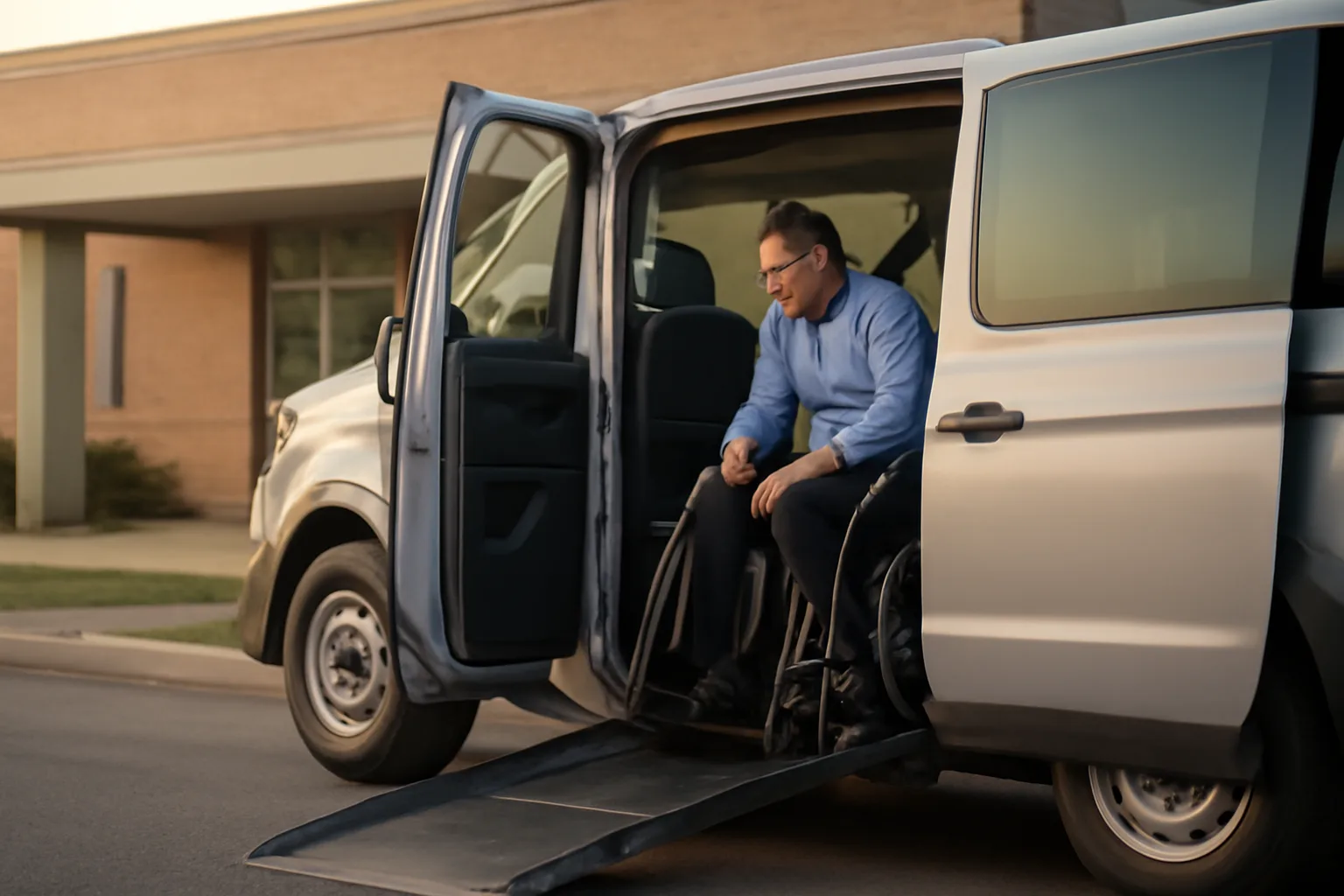
You start by picking a lane. NEMT (non-emergency medical transportation) means driving Medicaid or Medicare Advantage members to dialysis, chemo, dental, and specialist appointments in a wheelchair van, sedan, or ambulatory vehicle. It's not the same business as emergency ambulance service, and the licensing paths split almost immediately. The realistic sequence for a one-van owner-operator looks like this: form an LLC, get a federal EIN, open a business bank account, buy or lease a wheelchair-accessible van, get commercial auto insurance with the right liability limits, pass your state's vehicle inspection (many states require a DOT number or state-specific NEMT vehicle permit), and then apply for Medicaid transportation provider enrollment in your state. After that, you apply to become a credentialed driver/vehicle with whichever broker runs Medicaid transportation in your region. Don't skip the paperwork order. A lot of new owner-operators try to credential with a broker before they have state Medicaid enrollment done, and get bounced back because the broker application asks for your state provider number as a required field. Confirm the exact sequence with your state Medicaid agency's transportation unit before you spend money on vehicle upfits or extra insurance riders you might not need yet. Background checks and driver requirements vary by state but almost universally include a criminal background check, driving record pull, and drug screening. Some states also require CPR/First Aid certification and passenger assistance training before a driver can transport Medicaid members. Check your state guide for the specific list.
what is nemt
NEMT stands for non-emergency medical transportation. It's transportation to and from covered medical services for people who don't have another way to get there, and who don't need an ambulance or emergency response. Federal Medicaid rules require states to make sure eligible people can get to and from providers. The regulation at 42 CFR 431.53 requires state Medicaid plans to "ensure necessary transportation for beneficiaries to and from providers" [1]. States implement this differently: some run NEMT in-house, most contract it out to a managed transportation broker like Modivcare, MTM, Access2Care, or SafeRide, and some use a mix of brokers by region. NEMT covers wheelchair van trips, ambulatory sedan/livery trips, stretcher van trips (non-emergency, non-ambulance), and in rural areas sometimes mileage reimbursement for a friend or family member driving the member. It does not cover 911 emergency ambulance runs. If you're picturing lights and sirens, that's emergency medical transport, a completely different licensing and reimbursement world. Most NEMT trip volume nationally moves through managed care brokers rather than direct state fee-for-service billing, though the exact split depends on the state. Check your specific state Medicaid transportation page for who manages rides in your county, because broker territories often split by region within a single state.
how to start a nemt business with one van
One van is a completely normal way to start, and plenty of successful owner-operators never grow past two or three vehicles. The math and paperwork don't scale down much just because you're small, though. You still need the same insurance minimums, the same background check, and the same state enrollment paperwork as a 20-van fleet. Here's the realistic one-van checklist: business entity and EIN, commercial auto insurance meeting your state's minimum liability limits (these run higher than personal auto, often $500,000 to $1,000,000 combined single limit for passenger-carrying vehicles, confirm with your state and insurer), a wheelchair van that passes your state's vehicle inspection standards (tie-downs, lift or ramp certification, working securement points), a chauffeur or for-hire endorsement on your driver's license if your state requires one, and enrollment as a Medicaid transportation provider. A wheelchair van itself typically costs $35,000 to $65,000+ used, more for a new mobility van with a factory ramp or lift conversion, though prices swing a lot by region and mileage. Don't buy the van before you've confirmed your state's specific accessibility and inspection requirements. Some states require annual vehicle inspections through the Medicaid transportation unit or through the broker directly, separate from your regular state vehicle inspection. One van means you can't take every ride offered. Brokers dispatch by GPS proximity and vehicle type, so a single wheelchair van in a broker's system realistically gets fewer trip offers than a multi-vehicle fleet in the same territory. That's a capacity reality, not a guarantee of any particular trip volume, and nobody should promise you specific numbers before you've operated for a few months.
how do you start a medical transportation business step by step
Step one is deciding your vehicle type: wheelchair van, ambulatory sedan, or stretcher van, since each has different insurance and licensing requirements. Step two is forming your LLC and getting your EIN from the IRS. Step three is business insurance. Step four is state Medicaid provider enrollment. Step five is broker credentialing. Most states route NEMT enrollment through their Medicaid Management Information System (MMIS) provider portal, the same system used for medical provider enrollment generally, just with a transportation provider type code. Expect to submit: your business license, proof of insurance, vehicle registration and inspection records, driver background check results, W-9, and sometimes a surety bond. Some states, like Texas, require enrollment through the state's Medicaid contractor before you can bill for any trips; check your state Medicaid transportation page for the exact portal name and required forms. Once you have a state Medicaid provider number, you apply to the broker or brokers operating in your county. This is a separate application even though it references your state number. Brokers each run their own credentialing process, their own vehicle inspection, and often their own driver training modules. If two brokers split territory in your state (common in larger states), you may need to credential with both to cover your full service area. Budget real time for this. State enrollment alone commonly takes 30 to 90 days depending on the state's backlog and whether your application comes back with corrections needed. Broker credentialing typically adds another 2 to 6 weeks once your state number is active. Plan your first revenue date at least 60 to 120 days out from when you start the paperwork, not from when you buy the van.
how to start a non-emergency medical transportation business (broker side)
Broker credentialing is a separate track from state Medicaid enrollment, and it's where a lot of owner-operators get stuck. Modivcare, MTM, Access2Care, and SafeRide each run their own provider network application, typically through an online portal. Expect the broker application to ask for: your state Medicaid transportation provider number, general and professional liability insurance certificates naming the broker as certificate holder or additional insured, vehicle photos (interior and exterior), proof of wheelchair securement equipment, driver rosters with background check attestations, and a signed independent contractor or provider agreement. Brokers also run their own onboarding orientation, sometimes in-person, sometimes an online module, before activating you in their dispatch system. Some brokers require a road test or vehicle inspection at a broker-approved facility, more than your state inspection. Confirm the specific list with each broker directly since requirements change and differ by state contract. One thing worth knowing going in: broker contracts are typically "non-exclusive" and "at-will," meaning the broker can adjust your trip offers, add or remove you from certain zones, or end the agreement with notice as spelled out in your specific provider agreement. Read that agreement closely before you sign, specifically the sections on payment terms, no-show/late cancellation policy, and termination. If something in the contract language is unclear, ask the broker's provider relations team directly rather than guessing.
does medicaid cover ambulance rides
Yes, Medicaid covers ambulance transportation when it's medically necessary, meaning the person's condition requires transport by ambulance rather than any other means. This is billed and licensed completely separately from NEMT. Ambulance service (emergency and some non-emergency stretcher-level medical transport) falls under different Medicaid billing codes and a different state licensing agency, usually the state EMS office rather than the Medicaid transportation broker network. If you're picturing an ambulance business specifically, rather than a wheelchair van, you're looking at EMT/paramedic staffing requirements, state EMS licensure, and a completely different capital and insurance picture than wheelchair van NEMT. See emergency medical transport for that path. Medicaid.gov's guidance on non-emergency medical transportation describes it as a benefit distinct from ambulance service, and notes states must ensure Medicaid beneficiaries have transportation to and from providers [2]. Confirm with your state Medicaid agency which category your intended service falls under before you invest in equipment, because a wheelchair van outfitted with a lift is not equivalent to an ambulance and can't bill ambulance codes.
does medicare cover medical transportation
Medicare's coverage of medical transportation is narrower than Medicaid's. Original Medicare Part B covers ground ambulance transportation when other transportation would endanger the person's health, and when the destination is a hospital, critical access hospital, or skilled nursing facility (with specific rules), under the ambulance benefit described in 42 CFR 410.40 [3]. Original Medicare generally does not cover routine non-emergency wheelchair van rides to a doctor's appointment the way Medicaid does in most states. Where NEMT-style benefits show up under Medicare is through Medicare Advantage (Part C) plans, many of which now offer non-emergency transportation as a supplemental benefit, though the trip allowance, covered destinations, and provider network are set individually by each Medicare Advantage plan, not by CMS uniformly. If you want Medicare Advantage trip volume in addition to Medicaid trips, that usually means credentialing with the same broker networks (Modivcare, MTM, etc.) since insurers frequently subcontract Medicare Advantage transportation benefits to the same brokers that manage state Medicaid NEMT. Ask each broker during credentialing whether their network includes Medicare Advantage trip types in addition to Medicaid, since not all contracts include both.
how to start a medical transportation business: insurance and licensing basics
Insurance is the single most expensive fixed cost of getting credentialed, and it's not optional or negotiable at any point in the process. You need commercial auto liability insurance sized to passenger-carrying, wheelchair-accessible vehicle use, not a personal auto policy and not a standard commercial policy sized for cargo vans. Most states and brokers require combined single limit liability coverage well above personal auto minimums, commonly in the $500,000 to $1,000,000 range per occurrence for wheelchair vans, though your specific state or broker contract may require more. General liability coverage is usually required in addition to auto liability. Confirm exact figures with your state Medicaid transportation unit and with each broker you plan to credential with, since limits vary by state and by broker contract. Licensing splits into three layers: state business licensing (LLC, EIN, any local for-hire vehicle permit your city or county requires), state Medicaid transportation provider enrollment, and broker-specific credentialing. Some states also require a separate certificate of public convenience and necessity or for-hire operating authority through the state's Department of Transportation, particularly if you plan to serve areas outside your home county. This is one more reason to call your state Medicaid transportation unit before buying a vehicle: the paperwork stack differs meaningfully state to state, and a rule true in Florida may not apply in Ohio. A reader who's put together all these documents once (LLC formation, insurance certificates, state Medicaid provider applications, and broker packets across Modivcare, MTM, Access2Care, and SafeRide) will tell you the actual work isn't any single form, it's tracking which document each authority wants and in what format. RideCredential built a $199 one-time Launch Kit specifically for that problem: state-specific enrollment checklists plus broker credentialing packet templates, organized so you're not re-answering the same nine questions four different ways for four different portals.
how long does medical transportation credentialing take
Plan on 60 to 120 days from a standing start (no LLC, no insurance yet) to your first live trip, and treat anything faster as a bonus, not the expectation. This isn't a guaranteed timeline, since state backlogs and broker onboarding queues shift constantly, but it's a realistic planning window based on how the two-track process (state, then broker) actually runs. State Medicaid provider enrollment commonly takes 30 to 90 days, and that clock often restarts if your application comes back with a request for corrections. Some states process transportation provider applications faster than general medical provider enrollment because the transportation provider type has fewer clinical credentialing checks (no licensure board verification, for instance), but insurance and vehicle inspection documentation still has to be complete and correctly formatted. Broker credentialing typically adds another 2 to 6 weeks once your state provider number is active, covering the provider agreement, insurance certificate review, vehicle inspection, and driver orientation. If you're credentialing with more than one broker (common in states with split territories), run the applications in parallel rather than sequentially. There's no rule requiring you to finish one broker before starting the next application. The biggest timeline killer is incomplete insurance paperwork: certificates that don't list the broker as additional insured, or liability limits below what the broker's contract requires. Get your insurance certificate of the exact form and limits the broker specifies before you submit, rather than after a rejection.
what does a state medicaid transportation contract application actually require
| Who runs it | State Medicaid agency's MMIS portal | Each broker's own provider portal | |
|---|---|---|---|
| Typical timeline | 30 to 90 days | 2 to 6 weeks after state number issued | |
| Core requirement | State Medicaid provider number | Valid state Medicaid provider number as prerequisite | |
| Insurance check | State minimum liability limits | Broker-specific limits, broker often named as additional insured | |
| Vehicle check | State vehicle inspection | Broker vehicle inspection, sometimes separate | |
| Renewal | Often annual, per state | Often annual, per broker contract | One provider number typically covers your whole state relationship with Medicaid billing. Broker credentialing is separate for each broker operating in your territory, so a two-broker state means two full applications. |
Every state's Medicaid provider enrollment portal asks for a similar core packet, even though the online system and form names differ. Expect to submit business formation documents (articles of organization, EIN confirmation), a completed Medicaid provider enrollment application (usually online through the state's MMIS portal), a W-9, proof of commercial auto and general liability insurance meeting state minimums, vehicle registration and inspection certification, and driver background check results including any state-specific exclusion list screening. States check applicants against federal and state Medicaid exclusion lists before enrolling any provider, including transportation providers, under federal screening requirements at 42 CFR 455.436 [4]. Some states also require a criminal background check fee paid directly to the state or a third-party vendor, a site visit or vehicle inspection scheduled through the state's transportation unit, and, in a handful of states, a surety bond. None of this is universal. The exact combination is genuinely different state to state, which is why "confirm with your state Medicaid agency" isn't a hedge, it's the actual correct answer every time someone asks what's required. Here's a comparison of the two credentialing tracks side by side: | Requirement | State Medicaid enrollment | Broker credentialing (Modivcare/MTM/etc.) |
what happens after you're credentialed
Once your state Medicaid enrollment is active and you're credentialed with a broker, you're placed into their dispatch system and start receiving trip offers through their driver app or dispatch portal. This is where the actual operating business starts, distinct from the credentialing process. Each broker has its own trip acceptance rules, on-time performance standards, and no-show documentation requirements, all spelled out in your provider agreement. Missing performance standards (chronic lateness, high cancellation rate) can lead to reduced trip offers or, in the broker's discretion under your agreement, termination. Read the performance standards section of your contract as carefully as the payment terms section. Payment cycles vary by broker, typically weekly or biweekly, with payment tied to completed and properly documented trips. Get clear on the broker's specific documentation requirements (signature capture, mileage logs, odometer photos) before your first week of trips, since missing documentation is one of the most common reasons for payment disputes in NEMT. Renewal isn't a one-time event either. Most states require annual re-enrollment or revalidation for Medicaid providers, and brokers typically require annual insurance certificate updates and sometimes annual vehicle re-inspection. Calendar these dates the day you get credentialed, not the week before they're due.
Frequently asked questions
How to start a medical transportation business?
Form an LLC, get an EIN, buy commercial auto insurance sized for passenger transport, get your wheelchair van inspected to state standards, enroll as a Medicaid transportation provider through your state's MMIS portal, then apply to credential with the broker(s) operating in your area (Modivcare, MTM, Access2Care, SafeRide). Budget 60 to 120 days total.
Does Medicaid cover ambulance rides?
Yes. Medicaid covers ambulance transportation when it's medically necessary, meaning the person's condition requires ambulance-level transport rather than a wheelchair van or car. This is billed under separate ambulance codes and licensed through the state EMS office, not through the NEMT broker network that handles wheelchair van and sedan trips.
What is NEMT?
NEMT stands for non-emergency medical transportation. It covers rides to and from covered medical appointments for people who don't need an ambulance and don't have another way to get there, using wheelchair vans, ambulatory sedans, or stretcher vans. Federal Medicaid rules under 42 CFR 431.53 require states to ensure this transportation is available.
Does Medicare cover medical transportation?
Original Medicare Part B covers ground ambulance transport when other transport would endanger the person's health, generally to a hospital or skilled nursing facility. It typically doesn't cover routine non-emergency wheelchair van rides. Some Medicare Advantage plans add non-emergency transportation as a supplemental benefit, often through the same broker networks used for Medicaid.
How do you start a NEMT business with one van?
One van works fine to start. You still need the full stack: LLC, EIN, commercial auto and general liability insurance at state/broker-required limits, a wheelchair van passing state inspection, state Medicaid provider enrollment, and broker credentialing. The paperwork requirements don't shrink for a single vehicle, only your trip capacity does.
What is non-emergency medical transportation?
Non-emergency medical transportation (NEMT) is scheduled transport to medical appointments, dialysis, therapy, and similar covered services for people who don't need emergency care but can't get there on their own. It's typically provided by wheelchair vans, ambulatory sedans, or non-emergency stretcher vans, and is usually managed through state Medicaid brokers.
How long does it take to get a Medicaid transportation provider number?
Most states process Medicaid transportation provider enrollment in 30 to 90 days, though this varies by state backlog and whether your application needs corrections. Confirm the current timeline with your specific state Medicaid transportation unit, since some states process transportation providers faster than clinical provider types.
Do you need a state Medicaid number before applying to a broker like Modivcare or MTM?
In most states, yes. Broker credentialing applications typically require an active state Medicaid transportation provider number as a prerequisite field. Confirm the exact sequence with each broker and your state Medicaid agency, since a few states allow parallel processing while most require state enrollment to complete first.
How much does NEMT insurance cost for a wheelchair van?
Costs vary widely by state, driving history, and insurer, and nobody has solid national averages published specifically for wheelchair van NEMT. What's consistent is the coverage type: commercial auto liability sized for passenger-carrying vehicles, often $500,000 to $1,000,000 combined single limit, plus general liability. Get quotes from insurers that specifically write NEMT policies.
Can one company be credentialed with multiple brokers in the same state?
Yes, and it's common in states where broker territory splits by region or where more than one broker operates in overlapping counties. Each broker requires its own separate credentialing application even though both reference the same state Medicaid provider number. Run applications in parallel to save time.
What's the difference between NEMT and ambulance transportation licensing?
NEMT (wheelchair vans, ambulatory sedans, stretcher vans) is licensed through state Medicaid transportation enrollment and broker credentialing. Ambulance transportation is licensed through the state EMS office, requires EMT or paramedic staffing, and bills separate Medicaid and Medicare ambulance codes. They are different businesses with different capital and staffing requirements.
What documents do brokers like Modivcare or MTM ask for during credentialing?
Typically: your state Medicaid provider number, liability insurance certificates naming the broker as additional insured, vehicle photos showing wheelchair securement equipment, driver background check attestations, and a signed provider agreement. Exact requirements differ by broker and by state contract, so confirm the current list directly with each broker's provider relations team.
Sources
- eCFR, 42 CFR 431.53: Federal Medicaid regulation requiring states to ensure necessary transportation for beneficiaries to and from providers
- Medicaid.gov, Non-Emergency Medical Transportation: Federal overview of Medicaid NEMT coverage and how states administer transportation benefits
- eCFR, 42 CFR 410.40: Medicare Part B ambulance coverage requirements, including the condition that other transportation would endanger the person's health
- eCFR, 42 CFR 455.436: Federal requirement that states check Medicaid provider applicants, including transportation providers, against exclusion databases before enrollment
- IRS, Apply for an Employer Identification Number (EIN) Online: Federal process for obtaining the EIN required as part of business formation before Medicaid provider enrollment
- Texas Health and Human Services, Medical Transportation Program: Texas requires enrollment through the state's Medicaid transportation contractor structure before a provider can bill for NEMT trips