Last updated 2026-07-25
TL;DR
NEMT clients come from three channels: Medicaid broker contracts (Modivcare, MTM, and similar), direct contracts with dialysis clinics and nursing homes, and state Medicaid fee-for-service enrollment. Most new owner-operators get their first trips through a broker within 60-120 days of enrolling, once vehicle inspection, driver background checks, and insurance minimums clear.
What is non emergency medical transportation (NEMT)?
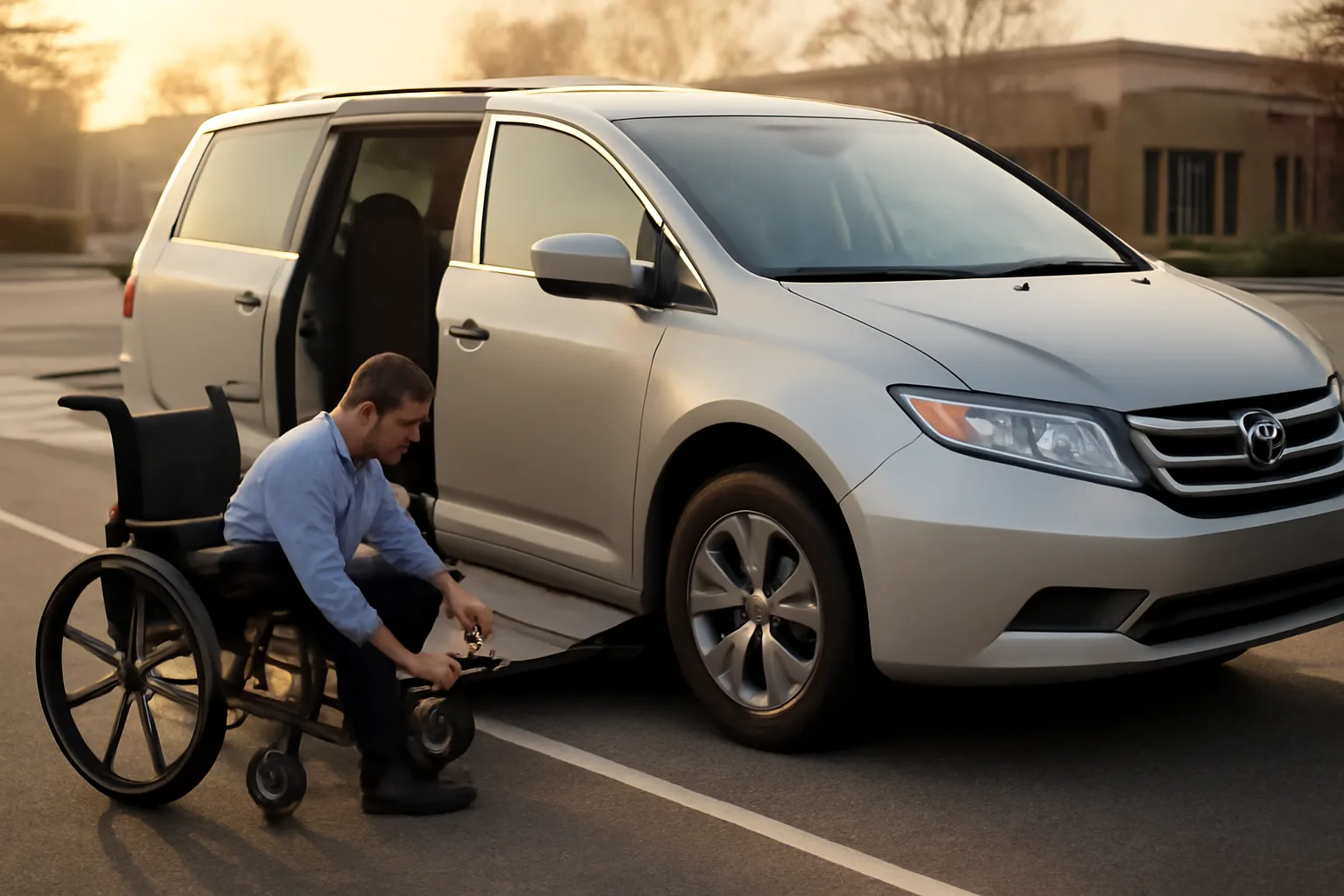
Non emergency medical transportation is scheduled transport for people who need to get to a medical appointment, dialysis session, or pharmacy but don't need an ambulance. It covers wheelchair vans, ambulatory sedans, and stretcher vans. It does not cover 911 calls or anyone who needs clinical monitoring during the ride. Federal Medicaid rules require states to make sure eligible people can actually get to covered care. The regulation at 42 CFR 431.53 says states must "specify that the Medicaid agency will ensure necessary transportation for recipients to and from providers" [1]. States meet that obligation either by running the trips themselves, contracting with a single statewide broker, or paying transportation providers directly through fee-for-service billing. That's the whole business model in one paragraph: Medicaid (and sometimes Medicare Advantage plans) pays for rides, a broker or state agency manages who gets which ride, and you're the vendor who shows up with a lift-equipped van. Read the fuller breakdown on what NEMT is and how it differs from ambulance service. Sedan and ambulatory work exists too. But wheelchair-van owner-operators are the segment brokers chronically need more of. Lift-equipped vehicles cost more to buy and maintain, and fewer owners want to run them.
How do you start a medical transportation business?
You start by treating this as a regulated transportation and healthcare vendor business, not a rideshare side gig. There are four building blocks you need before you can accept a single Medicaid trip: a business entity, a compliant vehicle, driver credentials, and insurance that meets broker minimums. Form your LLC or corporation first. Most states require the entity to exist before you can apply for a state Medicaid provider number or a broker network application, because both ask for your EIN and business registration documents. Next, get your vehicle right. A used minivan with a fold-out ramp is the cheapest entry point, usually running $18,000 to $35,000 depending on age and mileage, versus $45,000 to $70,000+ for a new or low-mileage conversion van. Check your state's NEMT vehicle standards; many require ADA-compliant tie-downs, a specific ramp weight rating, and annual safety inspections through the state Medicaid transportation unit or DOT. Then line up driver requirements: most states and brokers require a clean MVR, a background check (often including a fingerprint-based check for anyone transporting Medicaid members), CPR/First Aid certification, and defensive driving or passenger assistance training. See the drivers and training requirements before you hire your first driver. Finally, get commercial auto insurance with the liability limits your broker requires (commonly $1,000,000 combined single limit, though this varies by state and broker, so confirm with your broker and state Medicaid agency) plus general liability and workers' comp if you'll have employees.
How to start a NEMT business with one van (the realistic path)
One van is not a limitation, it's the standard starting point. Nearly every successful NEMT owner-operator started with exactly one wheelchair van and grew from there. Here's the sequence that actually works, in order: 1. Register your business entity and get an EIN. 2. Buy or lease one ADA-compliant wheelchair van that meets your state's inspection standard. 3. Apply for your state Medicaid NEMT provider enrollment (this can take 30 to 90 days depending on the state; some states use PECOS-linked or state-specific portals). 4. Apply to the broker(s) operating in your region (Modivcare, MTM, Access2Care, SafeRide, or a state-specific broker) as a transportation network provider. 5. Complete broker-specific vehicle inspection and driver onboarding. 6. Start with broker-assigned trips while you build a couple of direct facility relationships on the side. With one van, don't spread yourself across five broker applications at once. Pick the broker(s) that actually hold the contract in your county (check your state Medicaid transportation unit's website, since brokers are usually assigned by region), and get that one relationship solid before you add a second. A lot of new owner-operators lose weeks re-doing paperwork because they didn't check state-specific document requirements before applying. A state + broker launch checklist built for your specific state can save you from resubmitting the same W-9 and insurance certificate three times to three different portals.
What is a NEMT broker and why do most clients come through one?
A broker is a company a state Medicaid agency hires to manage all non emergency medical transportation trips for that state, or a region of it, instead of the state managing thousands of individual transportation vendors itself. Modivcare, MTM, Access2Care, and SafeRide are the largest national brokers. Several states also run their own broker or use a smaller regional one. The broker takes ride requests from Medicaid members, dispatches them to credentialed transportation providers in its network, and pays those providers, usually on a per-trip or per-mile basis set in the broker's provider contract. This is why broker credentialing, not cold marketing, is the main client-acquisition channel for most NEMT owner-operators. Each broker has its own credentialing packet: business license, vehicle inspection report, insurance certificates, driver files, and sometimes a facility site visit. Requirements differ by state contract too, since the same broker (say, Modivcare) runs different documentation standards in Florida than it does in Ohio, based on that state's Medicaid contract terms. Confirm current requirements with your broker and state Medicaid agency before assuming last year's checklist still applies. Getting into more than one broker's network, where your state has more than one operating, is one of the few real ways a single-van operator increases trip volume without adding marketing spend. Learn more about how broker networks are structured in our NEMT broker overview.
Does Medicaid cover ambulance rides?
Yes, Medicaid covers ambulance transportation when it is medically necessary, but that's a separate benefit category from NEMT. Ambulance transport is for emergencies or situations requiring medical monitoring during the ride; NEMT is for members who need a ride to a covered service but don't need ambulance-level care. CMS confirms this split directly: "Medicaid covers transportation to and from medical appointments... this can include non-emergency transportation as well as emergency transportation like ambulance rides" [2]. Both are Medicaid-covered categories, but they run through different provider enrollment, different vehicle and staffing standards (EMTs and paramedics vs. NEMT drivers), and usually different billing codes. If you're building a wheelchair-van business, you're in the NEMT lane, not the ambulance lane. Don't confuse the two when you're researching licensing, because ambulance services require EMS licensure through your state's EMS office, which is a different, more clinical regulatory track than NEMT vehicle and driver credentialing. If you're weighing whether ambulance-level service is ever right for your business, see emergency medical transport for how that licensing differs.
Does Medicare cover medical transportation?
Medicare's coverage of transportation is much narrower than Medicaid's. Original Medicare Part B covers ambulance transportation when it's medically necessary and other transportation would endanger your health, per CMS guidance on ambulance services [3]. It does not generally cover routine non-emergency rides to a doctor's office or dialysis for someone who could otherwise travel by car or van. Where NEMT-style benefits show up on the Medicare side is through Medicare Advantage (Part C) plans. Many Medicare Advantage plans now offer non-emergency transportation as a supplemental benefit, something traditional Medicare doesn't include. CMS's 2019 final rule expanded the definition of allowable supplemental benefits for Medicare Advantage plans, permitting benefits like transportation that address health-related social needs, and specifically discusses transportation as one of the items plans could newly offer under an expanded primarily health-related standard [4]. That regulatory shift is part of why you'll see brokers like Modivcare and MTM managing Medicare Advantage transportation contracts alongside their Medicaid work. Practically, that means: if you want Medicare-linked business, you're generally credentialing with a broker that manages a specific Medicare Advantage plan's transportation benefit, not billing Medicare directly the way an ambulance company would.
How do you get direct-contract clients outside the broker system?
Direct contracts are the second leg of a healthy client mix, and they're worth building even if broker trips are your bread and butter. Dialysis centers, adult day health programs, nursing homes, and outpatient behavioral health clinics all need reliable transportation for their patients, and many will contract with an independent NEMT provider directly instead of relying only on broker-dispatched rides. The pitch to a facility is simple: consistent drivers who know their patients, predictable pickup windows, and a direct phone line instead of a call center. Dialysis clinics especially value this, since a late or no-show ride can mean a missed treatment with real clinical consequences, and clinic transportation coordinators remember which vendors show up on time. How to actually get in front of them: call the transportation coordinator or office manager (not the front desk) at clinics within a 15 to 20 mile radius of your base, ask what their current pain points are with rides, and offer a trial period on a handful of their toughest cases (dialysis three-times-a-week patients, wheelchair-bound patients, whatever they struggle to staff). Bring your certificate of insurance and vehicle inspection paperwork to that first meeting; facilities want to see you're already broker-credentialed or state-enrolled before they'll trust you with their patients. Don't abandon broker credentialing to chase direct contracts, though. Direct-pay private clients are a smaller, slower-growing pool than Medicaid's broker-managed volume, and most successful operators run both channels at once.
How does state Medicaid provider enrollment work, and do I need it if I only work through a broker?
In many states, you need both. Broker credentialing gets you into the broker's dispatch network; state Medicaid enrollment is a separate registration with your state Medicaid agency (or its fiscal agent) that establishes you as an approved provider type in the state's system. Some states require NEMT providers to be Medicaid-enrolled even if all their trips route through a broker, because the broker reports trip and payment data back to the state under that provider number. Medicaid.gov's provider enrollment guidance emphasizes that state agencies "must have a method to verify that providers... meet applicable federal and state requirements" before enrollment [5]. That's why every state runs its own screening process, application fee (commonly in the $100-$700 range depending on the state and provider type, though several states waive fees for certain provider categories), and revalidation cycle, typically every 3 to 5 years. The practical order of operations: check your state Medicaid transportation unit's website first to see whether NEMT providers must enroll directly with the state, only credential through the broker, or both. Requirements genuinely vary state to state and change without much notice, so confirm current rules with your broker and state Medicaid agency rather than relying on a forum post from two years ago. Our state-by-state NEMT guides break down what each state's transportation unit currently publishes.
What credentials and paperwork do brokers actually require?
| Business entity | Articles of organization, EIN letter, W-9 | |
|---|---|---|
| Vehicle | Registration, annual safety/lift inspection, ADA tie-down verification | |
| Insurance | Commercial auto COI naming broker as certificate holder, general liability | |
| Driver files | MVR, background/fingerprint check, CPR/First Aid card, drug screen | |
| Compliance | HIPAA training attestation, non-discrimination policy, sometimes a facility/vehicle photo set | This table is a general pattern, not a guarantee of any specific broker's checklist. Modivcare, MTM, Access2Care, and SafeRide each publish (or provide upon application) their own current requirements, and those requirements are set state by state under that broker's specific Medicaid contract. Always confirm the live checklist with the broker directly before you spend money on inspections or training, since a stale requirement list is one of the most common reasons applications bounce back. One detail new operators miss: some brokers require the insurance certificate to name them as an additional insured or certificate holder with specific wording, more than a generic COI. Get your insurance agent on the phone with the broker's credentialing contact if you're not sure the wording is right, because a mismatched COI is a common rejection reason that costs you another week or two. |
Every broker's packet looks a little different, but most require the same core categories of documentation. Here's what to expect walking in: | Requirement category | Typical documentation |
How long does it take to get your first paying client?
Budget 60 to 120 days from a standing start (entity formed, van bought) to your first broker-dispatched trip, and treat anything faster as a pleasant surprise rather than the plan. That window covers vehicle inspection scheduling, driver background check turnaround (often 2 to 4 weeks depending on the state's fingerprint processing backlog), state Medicaid enrollment review, and the broker's own credentialing queue. The biggest delays are almost never the paperwork itself; they're waiting on someone else's queue. Background checks sit at the state agency. Inspections sit on a scheduler's calendar. Broker credentialing reviewers work through a stack in order received. You can shorten your own timeline by submitting a clean, complete application the first time (missing signatures and mismatched insurance wording are the two most common causes of resubmission delay) and by applying to state Medicaid enrollment and broker credentialing in parallel instead of waiting for one to finish before starting the other, where your state allows that. Direct facility contracts can move faster, sometimes 1 to 3 weeks from first phone call to a trial run, because you're negotiating with one clinic administrator instead of moving through a state or broker's formal review queue. That's part of why a mixed client strategy (broker plus a couple of direct facility relationships) tends to get new operators to their first trip sooner than betting everything on one channel.
What's the fastest realistic way to build a client base as a solo owner-operator?
Layer three channels instead of betting on one. Broker credentialing gives you volume without marketing effort, direct facility contracts give you steadier, more personal relationships, and word of mouth among patients and their families fills the gaps. Start the broker application the same week your van passes inspection, don't wait until you feel "fully ready." Credentialing takes weeks regardless, so get it moving early and use the waiting period to build your facility contact list. Call three to five dialysis centers, kidney care clinics, or adult day programs near you before your first broker trip even comes through. Ask their transportation coordinator directly what's frustrating about their current ride vendor. You'll usually hear the same two complaints: no-shows and drivers who don't know how to handle a transfer safely. Answer both in your pitch. Keep a simple log of every patient you transport well: on-time pickups, careful wheelchair transfers, a driver who remembers a patient's name. That reputation travels through the same small network of case managers, clinic staff, and family caregivers faster than any ad you could run. NEMT is a relationship business wearing a Medicaid compliance hat. The paperwork gets you eligible to work. The reliability gets you asked back. If the paperwork itself is what's slowing you down, a state-specific document checklist like the $199 State + Broker NEMT Launch Kit is built to cut the back-and-forth of figuring out which forms your state and your broker actually want, so you spend your time on inspections and driver hiring instead of hunting through PDFs.
What mistakes cost new NEMT owner-operators the most time?
Applying to every broker in the state at once wastes effort. Pick the broker(s) that actually hold the contract for your county first; spreading a one-van operation across five simultaneous credentialing processes just means five things half-done instead of one thing done right. Buying the van before checking the state's vehicle standard is another common trap. Ramp angle, tie-down type, and inspection intervals vary by state, and a van that passed inspection in one state won't automatically pass in another if you relocate. Submitting insurance certificates with the wrong wording causes real delays. Brokers are specific about how they need to be named on your COI; get this confirmed before your policy renews, not after a rejection. Ignoring direct facility relationships entirely because "the broker sends me trips" leaves you exposed. Broker volume fluctuates with member demand and contract changes outside your control; a couple of direct relationships give you a floor that doesn't depend on someone else's dispatch algorithm. Not revalidating on time is the quiet killer. Most state Medicaid enrollments and broker agreements require periodic revalidation, commonly every 3 to 5 years for state Medicaid enrollment, and missing that window can mean a gap in your eligibility to bill, right when you have a full schedule of patients depending on you.
Frequently asked questions
How to start a medical transportation business from scratch?
Form a business entity, buy or lease an ADA-compliant vehicle meeting your state's standard, secure commercial auto and general liability insurance, hire drivers who pass background checks and CPR training, then apply for state Medicaid NEMT enrollment and broker credentialing (Modivcare, MTM, Access2Care, SafeRide, or your state's broker) in parallel. Budget 60 to 120 days before your first paid trip.
What is NEMT?
NEMT stands for non emergency medical transportation: scheduled rides to medical appointments, dialysis, and pharmacies for people who don't need ambulance-level care. Federal Medicaid rules require states to ensure necessary transportation for eligible members under 42 CFR 431.53, which is why most NEMT trips are funded through Medicaid, either directly or through a contracted broker.
Does Medicaid cover ambulance rides?
Yes. Medicaid covers ambulance transportation when it's medically necessary, as a separate benefit category from non-emergency transportation. CMS guidance confirms Medicaid transportation coverage "can include non-emergency transportation as well as emergency transportation like ambulance rides." Ambulance services require EMS licensure, a different regulatory track than NEMT vehicle and driver credentialing.
Does Medicare cover medical transportation?
Original Medicare Part B covers ambulance transportation only when medically necessary and other travel would endanger your health; it generally doesn't cover routine non-emergency rides. Many Medicare Advantage (Part C) plans now offer non-emergency transportation as a supplemental benefit, often managed through the same brokers that run state Medicaid NEMT networks.
How do you start a NEMT business with just one van?
One van is the normal starting point. Form your entity, get the van inspected to your state's standard, complete driver credentialing, then apply for state Medicaid enrollment and broker credentialing at once. Start with broker-assigned trips while building one or two direct facility contracts (dialysis centers, adult day programs) on the side.
How do NEMT owner-operators actually find their first clients?
Most first clients come through broker-assigned trips once credentialing with Modivcare, MTM, Access2Care, SafeRide, or a state broker clears. In parallel, call dialysis clinics, nursing homes, and adult day programs directly, since facility transportation coordinators often contract independently for reliable, familiar drivers rather than relying only on broker dispatch.
What is non emergency medical transportation, exactly?
It's transport for people who need to reach a covered medical service, like a doctor visit, dialysis, or pharmacy pickup, but don't require ambulance-level clinical care during the ride. It includes wheelchair vans, ambulatory sedans, and stretcher vans, and is typically funded through Medicaid or, for some members, a Medicare Advantage supplemental benefit.
Do I need both state Medicaid enrollment and broker credentialing?
Often yes. Broker credentialing gets you into a dispatch network; state Medicaid enrollment separately establishes you as an approved provider type in the state's system, sometimes required even when all your trips route through a broker. Rules vary by state, so confirm directly with your state Medicaid transportation unit and your broker before assuming one covers the other.
How long does NEMT broker credentialing usually take?
Expect 60 to 120 days from having your entity and vehicle ready to your first dispatched trip, covering vehicle inspection scheduling, driver background check processing, and the broker's credentialing queue. Submitting a complete, accurate application the first time (especially correctly-worded insurance certificates) is the biggest factor in avoiding delays.
Can I get NEMT clients without going through a broker at all?
Yes, through direct contracts with dialysis centers, nursing homes, adult day health programs, and private-pay clients, but this is typically a smaller and slower-growing volume source than broker-managed Medicaid trips. Most sustainable NEMT businesses run both channels, using direct contracts as a stable floor alongside broker-dispatched volume.
What insurance do I need before applying to an NEMT broker?
Commercial auto liability insurance meeting the broker's minimum (commonly around $1,000,000 combined single limit, though this varies by broker and state contract) plus general liability, and workers' compensation if you have employees. Confirm exact minimums and required certificate wording directly with each broker, since requirements differ by broker and by state.
What's the biggest mistake new NEMT owner-operators make when chasing clients?
Applying to every broker in the state simultaneously instead of confirming which broker actually holds the Medicaid transportation contract for their county first. This spreads credentialing effort thin and slows down the one relationship that would actually generate trips soonest.
Sources
- eCFR, 42 CFR 431.53: States must ensure necessary transportation for Medicaid recipients to and from providers
- Medicaid.gov, Non-Emergency Medical Transportation: Medicaid transportation coverage includes both non-emergency transportation and emergency ambulance rides
- Medicare.gov, Ambulance Services: Medicare Part B covers ambulance transportation only when medically necessary and other transport would endanger health
- CMS, Medicare Program; Contract Year 2019 Policy and Technical Changes to the Medicare Advantage, Medicare Cost Plan, Medicare Fee-for-Service, and the Medicare Prescription Drug Benefit Programs, 83 Fed. Reg. 16440: CMS expanded allowable Medicare Advantage supplemental benefits to include health-related transportation
- Medicaid.gov, Provider Enrollment: State Medicaid agencies must verify providers meet federal and state requirements before enrollment
- 42 CFR 431.107, Required provider agreement: Federal rule requiring state Medicaid agencies to have provider agreements that establish enrollment and compliance conditions
- 42 CFR 440.170, Transportation: Federal definition of transportation as a Medicaid-coverable service, distinguishing it from other benefit categories