Last updated 2026-07-25
TL;DR
To get into medical transportation, register your business, get commercial auto/livery insurance, buy or convert a wheelchair-accessible van, enroll as a Medicaid transportation provider in your state, and credential with brokers like Modivcare or MTM. Most owner-operators start with one van and one state Medicaid contract, then add broker contracts once insurance and vehicle inspections are approved.
What is NEMT and how is it different from an ambulance company?
NEMT stands for non-emergency medical transportation. It moves Medicaid and Medicare Advantage members to dialysis, chemo, physical therapy, and primary care visits when they don't own a car or can't safely use one, but they don't need paramedics or a siren. Ambulances (basic life support and advanced life support) are licensed emergency medical services, staffed by EMTs or paramedics, and billed under a completely different set of codes and rules. NEMT vehicles are typically sedans, minivans, or wheelchair-accessible vans, and drivers don't need EMT certification in most states, though many states require CPR/first aid, a background check, and a defensive driving course. Federal Medicaid rule at 42 CFR 431.53 requires state Medicaid programs to "ensure necessary transportation for recipients to and from providers," and most states carry this out through NEMT brokers rather than paying drivers directly [1]. If you're picturing lights and sirens, that's not this business. NEMT is scheduled, non-urgent rides, usually booked a day or more ahead through a broker's dispatch system. That's a much lower barrier to entry than starting an ambulance service, which is why most new owner-operators start here. For more background on how the industry is structured, see non emergency medical transportation.
How do you start a medical transportation business, step by step?
There's no single national license for NEMT. You're stacking together a business entity, insurance, a vehicle, a state Medicaid enrollment, and one or more broker contracts. Here's the order that actually works, based on what state Medicaid transportation units and brokers require. 1. Form your business entity (LLC is standard) and get an EIN from the IRS. 2. Get commercial auto insurance with livery or for-hire passenger endorsement, not a personal or standard commercial policy. Brokers reject applications without this. 3. Buy or convert a wheelchair-accessible van (see the vehicle section below) and get it through any state vehicle inspection required for NEMT or paratransit vehicles. 4. Apply for a National Provider Identifier (NPI) through the National Plan and Provider Enumeration System, since most state Medicaid systems require one for provider enrollment. 5. Enroll as a Medicaid transportation provider with your state Medicaid agency (not the broker) if your state requires direct enrollment alongside broker credentialing. Some states require both; confirm with your state Medicaid agency. 6. Apply for broker credentialing with the broker(s) operating in your region (Modivcare, MTM, Access2Care, SafeRide, or a regional broker), which usually means a separate application, insurance certificate, vehicle inspection, and driver background checks submitted directly to the broker. 7. Complete any required driver training: CPR, first aid, defensive driving, and passenger assistance/sensitivity training are common broker requirements, confirm exact hours with your broker. 8. Wait for both approvals, then get your vehicle onboarded into the broker's dispatch system before you can accept trips. This sequence can run anywhere from a few weeks to several months depending on your state's Medicaid provider enrollment backlog and the broker's credentialing queue. Nobody publishes a national average processing time, so budget generously and start paperwork early rather than after your van is paid off and sitting idle.
How do I start a NEMT business with just one van?
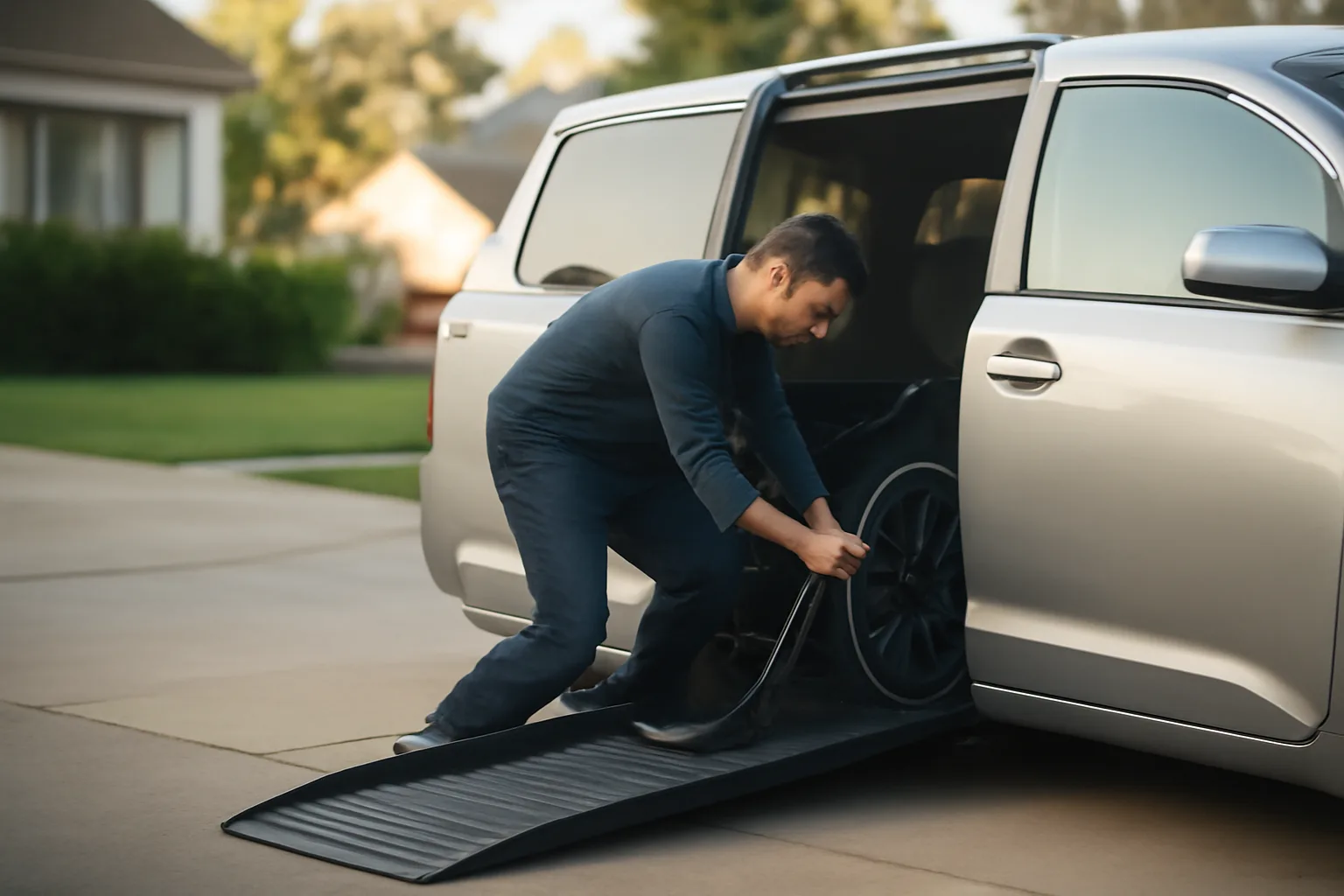
One van is genuinely how almost everyone starts, and it's a reasonable way to test the business before scaling. The core requirements don't change based on fleet size; you still need the entity, the insurance, the vehicle inspection, the Medicaid enrollment, and the broker credentialing, just for one unit instead of ten. With one van, you're also the driver, dispatcher, and biller, at least at first. That means your own background check, drug screening, and driver training requirements apply to you personally. Many states and brokers cap how many trip requests a single-vehicle operator can realistically accept per day, which matters when you're deciding whether to file as an owner-operator under an existing broker network or build your own small fleet later. A wheelchair-accessible van (WAV) costs more to buy and convert than a standard minivan. A new mobility conversion van typically runs from the mid-$40,000s to $60,000+ depending on the ramp or lift system and interior modifications, while a used, already-converted WAV can run considerably less. Whatever you choose, the vehicle has to meet your state's specific NEMT or paratransit vehicle standards (tie-down points, ramp angle, lift certification) before a broker will approve it, so check your state Medicaid transportation unit's vehicle standards before you buy, not after. See nemt transportation for more on vehicle sourcing.
Does Medicaid cover ambulance rides?
Yes, Medicaid covers ambulance transportation when it's medically necessary, but it's billed and regulated separately from NEMT. Federal Medicaid rules require states to cover transportation necessary to get a beneficiary to a covered service, and that includes emergency ambulance transport when a licensed provider determines it's needed [1]. Ambulance services fall under each state's Medicaid fee schedule for emergency medical services, with separate enrollment through the state's EMS licensing board, not the NEMT broker network. If you're building an NEMT business, ambulance transport is a different regulatory track entirely: different vehicle licensing, different staffing certifications (EMT-Basic or Paramedic), and different billing codes. Don't confuse the two when you're researching what license you need.
Does Medicare cover medical transportation?
Medicare Part B covers emergency ambulance transportation and, in limited cases, non-emergency ambulance transportation when a doctor documents it's medically necessary and other transportation would endanger the patient's health [2]. Medicare generally does not cover routine non-emergency medical transportation like rides to a dialysis appointment in a wheelchair van, the way Medicaid does. That gap is filled in part by Medicare Advantage plans, many of which now offer supplemental transportation benefits as an extra benefit, not a guaranteed one. Coverage varies enormously by plan and by year, so if you're hoping to build a business around Medicare Advantage transportation benefits, you'll need to contact each plan directly (often through the same brokers, like Modivcare and MTM, that manage Medicaid NEMT networks) rather than assuming Medicare rules apply uniformly. CMS's own guidance describes Medicare ambulance coverage as available "if any other means of transportation would endanger your health" [2], which is a meaningfully higher bar than Medicaid's NEMT standard.
What is non-emergency medical transportation exactly, and who uses it?
Non-emergency medical transportation, NEMT, is scheduled transportation to and from covered medical appointments for people who have no other way to get there safely, most often Medicaid beneficiaries with disabilities, chronic conditions, or no working vehicle. It includes ambulatory sedan trips, wheelchair van trips, and sometimes stretcher van service for people who can't sit upright but don't need an ambulance. Federal Medicaid rule requires states to "ensure necessary transportation for recipients to and from providers" as a condition of the state's Medicaid plan [1], and CMS guidance describes NEMT as covering people who "need to get to and from medical services but have no way of getting there" [3]. Most states satisfy this obligation by contracting with a regional or national broker (Modivcare, MTM, Access2Care, and others depending on the state) rather than paying transportation providers directly. That broker layer is exactly why owner-operators usually need two approvals, not one: the state Medicaid enrollment and the broker credentialing file. See what is nemt for a longer explainer.
How do state Medicaid enrollment and broker credentialing actually differ?
| Business entity + EIN | IRS / Secretary of State | LLC formation, EIN | |
|---|---|---|---|
| NPI | CMS (NPPES) | Free registration, required for most state Medicaid billing | |
| Medicaid provider enrollment | State Medicaid agency | Application, background check, sometimes site visit; confirm with your state | |
| Commercial insurance | Private insurer | Livery/for-hire endorsement, state minimum liability limits | |
| Vehicle inspection | State DOT or Medicaid transportation unit | Ramp/lift certification, ADA tie-downs where required | |
| Broker credentialing | Modivcare, MTM, Access2Care, SafeRide, etc. | Separate application, insurance cert, vehicle inspection, driver files | Because the requirements and paperwork differ by state and by broker, and change without much public notice, treat any specific number or form name you read online (including in this article) as a starting point to confirm, not a final answer. Always verify directly with your state Medicaid agency and the broker before you spend money on a vehicle or insurance policy. If you want a structured way to track this across both a state and a broker application, that's exactly the gap the $199 State + Broker NEMT Launch Kit is built to close, see launch-kit-builder. |
State Medicaid enrollment makes you a recognized Medicaid provider in that state's system, tied to your NPI and Medicaid provider number. Broker credentialing is a separate, private-sector process where the broker (Modivcare, MTM, Access2Care, SafeRide, or a regional company your state contracts with) verifies your insurance, vehicle, and drivers before letting you into its dispatch network. Some states require both, run mostly in parallel. Others route almost everything through the broker and the state enrollment step is thinner. This varies enough state to state that you genuinely have to check with your specific state Medicaid transportation unit and the broker operating your region; there's no shortcut that applies everywhere. | Step | Handled by | Typical requirement |
What insurance and licensing do you need before you apply?
Get your insurance in order before you fill out any application, because both the state and the broker will ask for a certificate of insurance as a required attachment, not an afterthought. You need commercial auto insurance with a livery, for-hire, or paratransit passenger endorsement; a personal auto policy or a generic commercial policy without that endorsement will get your application bounced. Minimum liability limits vary by state, and some brokers require higher limits than the state minimum, so ask the broker directly what limit they require rather than assuming state minimums are enough. You'll also generally need: - A business license or DBA registration, depending on your state and county.
- A vehicle inspection certificate for wheelchair-accessible vans, covering ramp/lift function and tie-down points.
- Driver background checks (often including a sex offender registry check and motor vehicle record check).
- Drug and alcohol testing, sometimes tied to DOT rules if your vehicle and operation meet DOT thresholds.
- CPR/first aid certification for drivers, required by most brokers even where the state doesn't mandate it. None of this is optional paperwork you can skip and fix later. Missing insurance documentation is one of the most common reasons broker applications stall for weeks.
How much does it cost to start a one-van NEMT business?
There's no single official number for NEMT startup cost because it depends heavily on whether you buy new or used, whether you convert a van yourself or buy pre-converted, and what your state charges for enrollment and inspection fees. Rather than quote a made-up total, here's what to actually budget for: - Vehicle: a new wheelchair-accessible conversion van commonly runs from roughly $45,000 to $60,000+, while used converted vans can cost significantly less depending on age and mileage.
- Commercial insurance with livery endorsement: premiums vary widely by state and driving record; get quotes from at least two insurers that specifically write NEMT/paratransit policies.
- State Medicaid provider enrollment: some states charge an application fee, others don't; confirm the exact fee with your state Medicaid agency.
- Broker credentialing: most brokers don't charge an application fee, but require the insurance and inspection costs above to be already in place.
- Driver training and background checks: costs vary by state and by the certifying organization. Because every one of these varies by state and by broker, treat any flat "it costs $X to start NEMT" claim you see online with real skepticism. The honest answer is: budget for the van as your largest fixed cost, and expect insurance and administrative costs to add several thousand dollars more before you accept your first trip.
How long does state and broker approval usually take?
There's no published national average, and that's a real gap in the data, not something we're hiding. State Medicaid provider enrollment timelines depend on the agency's current backlog, whether they require a site visit, and whether your application is complete on first submission. Broker credentialing timelines depend on the broker's current volume of new applications and how quickly you can supply corrected documents if something's missing. What consistently slows applications down: incomplete insurance certificates, vehicles that haven't passed inspection yet, and driver files missing a background check result. The fastest path is to have every document ready before you submit anything, rather than submitting early and patching gaps as the broker flags them. Given that uncertainty, a reasonable posture is to assume the full process, from forming your business to accepting your first broker-dispatched trip, could take anywhere from four to twelve weeks, and sometimes longer if your state has a known enrollment backlog. Ask your state Medicaid transportation unit directly what their current processing time is; that number changes throughout the year and is more reliable coming from them than from any third-party estimate.
Which brokers should you credential with, and does it matter which one you pick first?
You don't get to pick brokers in the abstract; you credential with whichever broker holds the Medicaid transportation contract in your state and region, and that can change when a state re-bids its contract. Modivcare and MTM are the two largest national NEMT brokers and between them manage transportation networks across a large share of state Medicaid programs, alongside regional and state-specific brokers like Access2Care and SafeRide in certain markets. Find out which broker holds your state's contract by checking your state Medicaid transportation unit's website or calling their transportation line directly; this is public information the state publishes because members need to know who to call to book a ride. Some states split contracts by region, meaning the broker in your county may differ from the broker three counties over, so confirm coverage area, more than company name. Once you know your broker, go to that broker's own provider or vendor enrollment page (not a third-party summary) for the current application, required documents, and any minimum vehicle or insurance thresholds. Broker requirements do change, sometimes with little public notice, so the broker's own current page is always the better source than anything else, including this article.
What ongoing compliance do you need to maintain once you're approved?
Getting credentialed is the start, not the finish. Most states and brokers require ongoing compliance: annual vehicle re-inspection, updated insurance certificates before each policy renewal, periodic driver background re-checks, and sometimes annual retraining hours for CPR or passenger assistance. Brokers also monitor on-time performance, trip completion rates, and complaint history, and can suspend or terminate a provider contract for repeated late pickups or missed trips, according to typical broker provider manuals (specific performance thresholds vary by broker, so confirm your broker's current standard). Keep copies of every inspection certificate, insurance renewal, and training completion record in one place; when a broker or state auditor asks for documentation, you want to produce it same-day, not scramble for it. If you're expanding from one van to a small fleet, each additional vehicle typically needs its own inspection and its own entry in the broker's vehicle roster, even under the same business entity. Don't assume approval for van one covers van two automatically; check your broker's specific fleet addition process.
Frequently asked questions
How do I start a medical transportation business from scratch with no industry experience?
Form an LLC, get commercial auto insurance with a livery/for-hire endorsement, buy or convert a wheelchair-accessible van that meets your state's inspection standards, get an NPI, then enroll with your state Medicaid agency and credential with whichever broker (Modivcare, MTM, Access2Care, SafeRide, etc.) holds your state's NEMT contract. Confirm exact requirements directly with your state Medicaid transportation unit.
Does Medicaid cover ambulance rides?
Yes. Federal Medicaid rule (42 CFR 431.53) requires states to ensure necessary transportation to covered services, which includes medically necessary emergency ambulance transport. Ambulance services are billed and licensed separately from NEMT, through state EMS boards rather than NEMT brokers, so they're a different regulatory track if you're building a transportation business.
Does Medicare cover medical transportation?
Medicare Part B covers emergency ambulance transport and limited non-emergency ambulance transport when a doctor documents that other transportation would endanger the patient's health. Medicare generally doesn't cover routine non-emergency rides like wheelchair van trips to dialysis; some Medicare Advantage plans offer that as a supplemental benefit, but coverage varies by plan and year.
What is NEMT?
NEMT (non-emergency medical transportation) is scheduled transportation, usually for Medicaid beneficiaries, to and from medical appointments when they have no other safe way to get there. It covers ambulatory sedan rides, wheelchair van rides, and sometimes stretcher van service, and is distinct from ambulance service, which handles emergencies and requires EMT/paramedic staffing.
How do I start a NEMT business with just one van?
The same steps apply as any fleet size: form your entity, get livery-endorsed commercial insurance, get your van inspected to state NEMT vehicle standards, obtain an NPI, enroll with your state Medicaid agency, and credential with the broker covering your region. One-van operators are common; just confirm any trip-volume caps your broker applies to single-vehicle providers.
How much does it cost to buy a wheelchair van for NEMT?
A new wheelchair-accessible conversion van typically costs roughly $45,000 to $60,000 or more depending on the ramp/lift system, while used converted vans can cost meaningfully less. Exact pricing depends heavily on the conversion manufacturer, mileage, and your region, so get quotes from at least two mobility dealers before committing.
Do I need an NPI number to start an NEMT business?
Most state Medicaid systems require a National Provider Identifier (NPI) to enroll as a Medicaid transportation provider, obtained free through CMS's National Plan and Provider Enumeration System. Even where the state doesn't strictly require it, brokers commonly ask for it as part of credentialing, so get it early since it's free and fast to apply for.
What's the difference between state Medicaid enrollment and broker credentialing?
State Medicaid enrollment makes you an official Medicaid provider in that state's system. Broker credentialing is a separate process run by the private company (Modivcare, MTM, Access2Care, SafeRide, etc.) that manages ride dispatch for the state. Some states require both; the exact split varies, so confirm with your state Medicaid transportation unit.
Which NEMT broker should I apply with first?
Whichever broker currently holds the Medicaid transportation contract for your state and region, not a broker you simply prefer. Check your state Medicaid transportation unit's website or call their transportation line to confirm the correct broker for your county, since contracts can be split by region and change when states re-bid them.
How long does it take to get approved to drive for Modivcare or MTM?
There's no published national average; timelines depend on the broker's current application volume and whether your insurance, vehicle inspection, and driver background check documents are complete on first submission. A reasonable planning assumption is several weeks to a few months, but ask the broker directly for their current processing estimate.
Do NEMT drivers need to be EMTs or have special medical training?
No. NEMT drivers generally don't need EMT or paramedic certification, since NEMT is non-emergency, scheduled transport. Most states and brokers do require CPR/first aid certification, a clean background check, and sometimes passenger assistance or sensitivity training, confirm your state's and broker's specific requirements before applying.
Can I run an NEMT business without going through a broker at all?
In most states, no, because the state fulfills its federal Medicaid transportation obligation through a broker contract, and broker credentialing is how you get access to Medicaid-funded trips. Private-pay transportation (non-Medicaid clients paying directly) is possible without broker credentialing, but it's a much smaller and less predictable customer base.
What documents slow down NEMT applications the most?
Incomplete certificates of insurance (missing the livery/for-hire endorsement), vehicles submitted before passing state inspection, and driver files missing background check results are the most common holdups reported by state and broker applicants. Having every document finalized before you submit, rather than submitting early and patching gaps, meaningfully shortens the process.
Sources
- eCFR, 42 CFR 431.53 Assurance of transportation: Federal Medicaid rule requiring states to ensure necessary transportation to and from providers
- Medicare.gov, Ambulance Services coverage: Medicare Part B ambulance coverage rules including the 'endanger your health' standard for non-emergency coverage
- Medicaid.gov, Non-Emergency Medical Transportation: CMS description of NEMT as transportation for beneficiaries with no other way to get to medical services
- 42 U.S.C. 1396a, State plans for medical assistance: Statutory basis requiring state Medicaid plans to provide methods of administration including transportation to covered services
- eCFR, 49 CFR Part 382, Controlled Substances and Alcohol Use and Testing: Federal DOT drug and alcohol testing rules that apply to commercial drivers meeting certain vehicle thresholds
- eCFR, 42 CFR 440.170, Transportation: Federal Medicaid regulation defining transportation as a coverable Medicaid service including NEMT