Last updated 2026-07-25
TL;DR
NEMT contracts come from two places: your state Medicaid agency (direct enrollment as a transportation provider) and the brokers that state hires to manage rides (Modivcare, MTM, Access2Care, SafeRide). You need a business entity, the right insurance, a compliant vehicle, and driver background checks before either will talk to you. Most owner-operators do both at once because state enrollment alone rarely fills a schedule.
What is non-emergency medical transportation (NEMT)?
NEMT is transportation for Medicaid (and sometimes Medicare Advantage or private-pay) members who need to get to medical appointments but don't need an ambulance. Think dialysis three times a week, wheelchair van rides to dialysis or oncology, or an ambulatory sedan trip to a primary care visit. It's not a 911 response and it's not staffed with paramedics. Federal Medicaid rules actually require this. States must "arrange for transportation of the recipient to and from providers" under 42 CFR 431.53, and CMS guidance describes NEMT as covering rides for members who have no other way to get to covered care [1]. Most states hand day-to-day management of that benefit to a transportation broker instead of running it themselves, which is why credentialing with a broker matters as much as state enrollment. If you're new to the industry terms, our overview of non emergency medical transportation and what NEMT covers walks through the vehicle types (ambulatory, wheelchair van, stretcher) and how they map to different Medicaid reimbursement rates.
Does Medicaid cover ambulance rides, or is that a separate benefit?
Ambulance transport is a distinct Medicaid benefit from NEMT. It's billed and covered differently. CMS's Medicaid benefits page confirms ambulance services and non-emergency medical transportation are listed as separate covered benefit categories, with NEMT covering "non-emergency transportation to and from health care providers" for members who have no other way to get there [2]. If you're buying a wheelchair van, you are not entering the ambulance business. Wheelchair vans and stretcher vans fall under NEMT, not ambulance licensure, which usually means state EMS certification isn't required, but state Medicaid transportation credentialing is. See our breakdown of emergency medical transport if you're weighing whether to eventually add a stretcher-van or ambulance line, because the licensing path is genuinely different equipment, different training, different agency.
Does Medicare cover medical transportation?
Original Medicare covers ambulance transportation when medically necessary, but it does not generally cover routine non-emergency wheelchair van or ambulatory rides to a doctor's office. That's a common point of confusion for new operators who assume Medicare is a second payer source the way Medicaid is. Medicare.gov states Medicare Part B covers ground ambulance transportation to a hospital, critical access hospital, or skilled nursing facility when other transportation "could endanger your health," and some Medicare Advantage plans offer supplemental NEMT benefits as an extra, not a guarantee [3]. If you want Medicare Advantage NEMT contracts, those typically route through the same brokers (Modivcare, MTM) that manage Medicaid NEMT in your state, under a separate line of business. Ask the broker directly whether their Medicare Advantage NEMT network is open in your county, since it's often smaller and slower to add new vendors than the Medicaid network.
How do I start a medical transportation business from scratch?
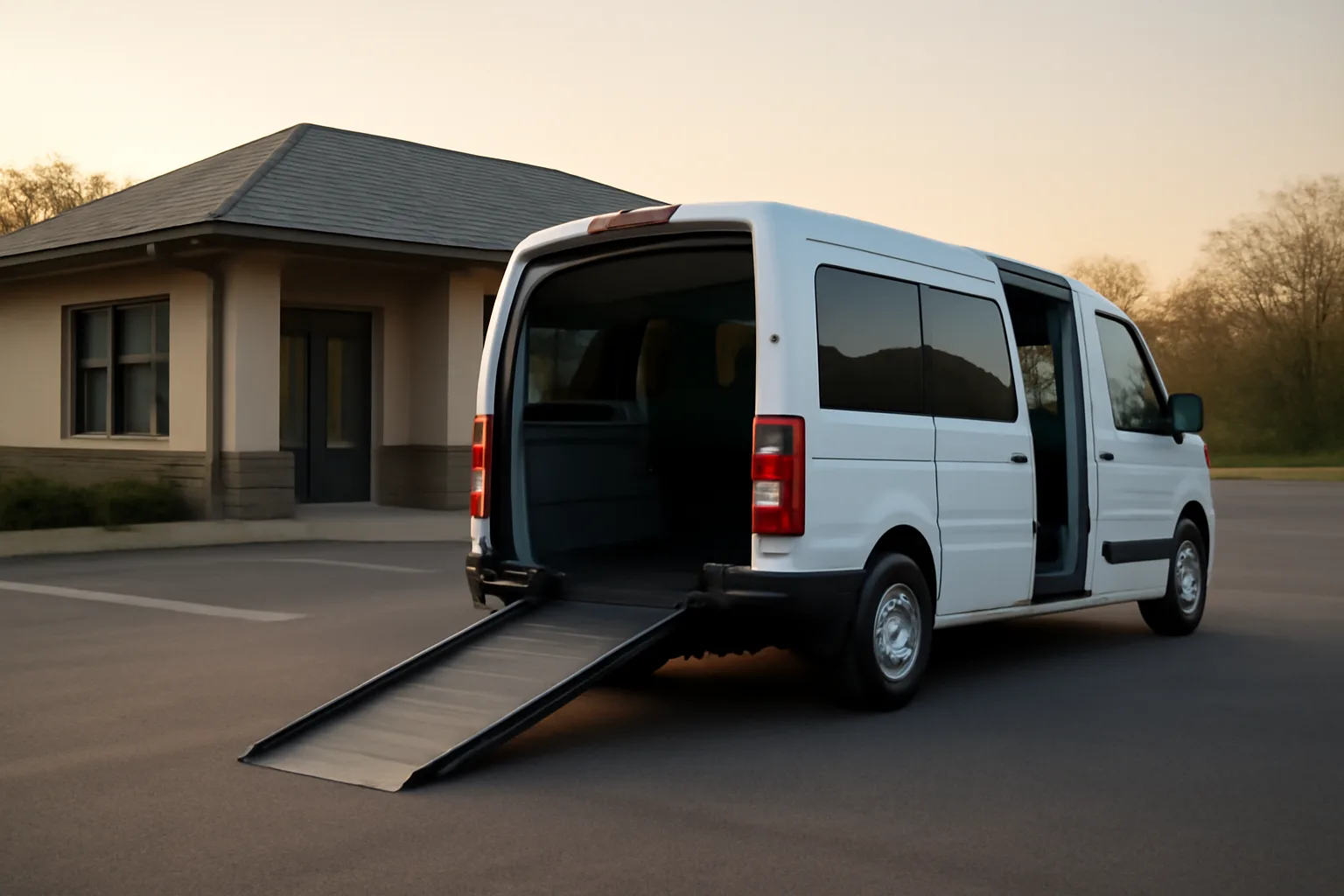
Start with the legal and insurance skeleton before you touch a broker application. Brokers and state Medicaid agencies will reject you outright if your entity, insurance, and vehicle inspection paperwork aren't in order, and resubmitting costs weeks. Here's the realistic order of operations: 1. Form an LLC or corporation and get a federal EIN. 2. Get commercial auto insurance with the liability limits your state Medicaid agency or broker requires (often $1,000,000 combined single limit for wheelchair vehicles; confirm with your broker and state Medicaid agency because limits vary by state and vehicle type). 3. Buy or convert a wheelchair-accessible van that meets ADA and state vehicle inspection standards. 4. Get a state-required vehicle permit or NEMT operating license if your state has one (some states, like Texas and New Jersey, require a specific NEMT operating permit; others fold this into Medicaid provider enrollment). 5. Run background checks and drug screens on every driver, matching your state's Medicaid provider requirements. 6. Apply for a state Medicaid provider number through your Medicaid Management Information System (MMIS) portal. 7. Apply for broker network credentialing (Modivcare, MTM, Access2Care, SafeRide, or whichever broker your state contracts with). This sequence matters. Brokers almost always ask for your state Medicaid provider ID as part of their own application, so skipping ahead to broker credentialing before you're Medicaid-enrolled just gets you a "pending" status that sits for weeks.
How do you start a NEMT business with just one van?
One van is enough to start, and plenty of owner-operators run exactly that for the first year. The paperwork burden per vehicle doesn't shrink much whether you own one van or ten, so the real question is whether one van can generate enough contracted trips to cover your fixed costs (insurance, the van payment, driver wages if you're not driving yourself). With one van, be realistic about capacity. A single wheelchair van can typically run somewhere in the range of 6 to 10 one-way trips a day depending on trip distance and dispatch efficiency, and brokers will route trips based on your registered service area and vehicle type, not your ambitions. You cannot promise a broker coverage in three counties with one van; most credentialing applications ask for your service area and vehicle count, and overstating it creates compliance problems once you're in the network and start missing on-time pickups. A one-van operator should still complete every step above (entity, insurance, state enrollment, broker credentialing) exactly the way a ten-van fleet would. Nobody gets a shortcut because they're small; if anything, brokers scrutinize small new vendors more closely because a single vehicle breakdown means 100% of your capacity is gone.
How do I get state Medicaid enrollment as an NEMT provider?
Each state Medicaid agency runs its own provider enrollment process through its MMIS portal, and the requirements differ meaningfully state to state. There is no single federal NEMT license. General requirements you'll almost always see: a completed Medicaid provider enrollment application, your NPI (National Provider Identifier) or a state-issued provider number, proof of vehicle insurance, vehicle inspection certificates, driver background check results (often including exclusion checks against the HHS OIG List of Excluded Individuals/Entities), and sometimes a state-specific NEMT operating permit. 42 CFR 431.53 requires states to "specify in its state plan a description of the methods that the agency will use to meet this requirement" for transportation assurance, but the mechanics of enrolling as a vendor live entirely at the state level [1]. Search "[your state] Medicaid transportation provider enrollment" and look for your state Medicaid agency's own transportation unit page, not a third-party summary, because fees, timelines, and required forms change without much notice. Some states enroll transportation providers directly through Medicaid; others require you to enroll only through the broker with no separate state provider number at all. Confirm which model your state uses before you assume you need both. Our state-by-state hub on medical transportation links out to individual state Medicaid transportation unit pages so you're not guessing which portal to use.
How do I get credentialed with Modivcare, MTM, Access2Care, or SafeRide?
Brokers run their own vendor credentialing process on top of, or sometimes instead of, state Medicaid enrollment, and each broker's application looks a little different. Modivcare, MTM, Access2Care, and SafeRide each operate in specific states under specific state contracts, so your first job is confirming which broker(s) hold the contract in your county. Typical broker credentialing asks for: - Certificate of insurance naming the broker as certificate holder
- Vehicle photos and current inspection records
- Driver rosters with license numbers, background check results, and drug test records
- W-9 and business formation documents
- Proof of state Medicaid enrollment (in states that require it) or a separate broker-only application (in states that don't)
- Sometimes a road test or vehicle inspection performed by the broker itself Broker credentialing timelines vary widely and brokers don't publish firm SLAs, so treat any "2 weeks" estimate you hear as a best case, not a guarantee. Call the broker's provider relations or network development line directly and ask for their current documentation checklist, because these change often and a stale checklist from a forum post will cost you a rejected application. One honest caution: being credentialed does not guarantee trip volume. Brokers assign trips based on their own algorithm, which weighs your service area, vehicle type, on-time performance, and sometimes existing network saturation in your zip code. A broker can accept your credentialing application and still send you very few trips if your area already has enough capacity.
What insurance and vehicle requirements do NEMT contracts actually require?
| Commercial auto liability | Often $1,000,000 CSL for WAV, sometimes $300,000-$500,000 for ambulatory | Broker + state Medicaid agency | |
|---|---|---|---|
| Vehicle inspection | Annual, sometimes semi-annual for WAV conversions | State DOT or state Medicaid transportation unit | |
| Driver background check | State criminal history + OIG exclusion list check | State Medicaid agency, broker | |
| Drug/alcohol testing | Pre-employment and random, especially for CDL-adjacent vehicles | Broker, sometimes state DOT | |
| Business entity | LLC or corporation, EIN required | IRS, state Secretary of State | Don't let a van sit uninsured while you wait on credentialing paperwork; some new operators buy the van first and only discover the insurance minimum after getting quotes, which delays the whole timeline by weeks. |
Every state and broker sets its own minimums, but a few things show up almost everywhere: commercial auto liability insurance (often $1,000,000 combined single limit, sometimes lower for sedans and higher for wheelchair vans; confirm with your broker and state Medicaid agency), workers' compensation if you have employees, and a current vehicle safety inspection. Wheelchair vans typically need ADA-compliant ramps or lifts, working wheelchair securement systems, and passenger restraints that meet the vehicle's conversion manufacturer specs. Some states require an annual state vehicle inspection separate from your regular DMV inspection specifically for the wheelchair conversion. | Requirement | Typical range or standard | Who to confirm with |
How long does it take to get your first NEMT contract?
There's no honest single number here, because it depends on your state's MMIS processing backlog and which broker you're applying to, and neither publishes a guaranteed turnaround. What's realistic to expect: state Medicaid provider enrollment applications commonly take several weeks to a few months to process, and broker credentialing runs on a separate, sometimes overlapping timeline of its own. The biggest delays owner-operators hit aren't the applications themselves, they're incomplete documentation: missing insurance certificates naming the right entity, vehicle inspection paperwork that expired mid-process, or a driver background check that didn't include the OIG exclusion screen a state now requires. Get every document collected before you submit anything, rather than submitting early and patching gaps later. If you want a structured way to track every document a state and broker will ask for, our $199 one-time State + Broker NEMT Launch Kit organizes the checklist by state and by broker so you're not hunting through five different portals to figure out what's missing.
Can I get NEMT contracts without going through a broker at all?
In some states, yes, if the state Medicaid agency enrolls transportation providers directly and doesn't route all trips through a managed broker. But in most states today, the broker model (Modivcare, MTM, Access2Care, SafeRide, or a regional broker) handles the bulk of Medicaid NEMT trip assignment, and going around it isn't really an option if you want Medicaid volume. Outside Medicaid, you can build direct contracts with dialysis centers, assisted living facilities, hospital discharge planners, and Medicare Advantage plans that run their own transportation networks. These private-pay and facility-direct contracts don't require broker credentialing. But they also don't come with a guaranteed referral pipeline. You have to sell yourself the way any small business development effort works, which is a different skill set than filling out a Medicaid application. Many owner-operators run a blended book: broker-assigned Medicaid trips as the base, plus direct facility contracts on the side. That diversification matters because broker trip assignment can dry up if the broker adds more vendors in your area or shifts volume.
What should I check before I sign a broker agreement?
Read the reimbursement rate schedule before you sign anything, not after your first invoice. Broker per-trip rates (mileage rate, base rate, no-show/cancellation policy) vary by state and by vehicle type, and they're usually not open to negotiation for a new small vendor, but you should still know exactly what you're agreeing to. Ask specifically about: how disputed trips get resolved, how long you wait to get paid after a completed trip, what documentation triggers a payment denial (missing signature, GPS mismatch, late pickup), and whether the broker requires you to use their dispatch app or lets you run your own scheduling software. Also ask what happens to your credentialing status if you go a stretch of months without any assigned trips, some broker contracts include inactivity clauses that can lapse your network status. For a broader look at how the major national brokers differ in coverage area and vendor requirements, our guide to NEMT transportation and NEMT provider services compares what each one typically asks for at the vendor application stage.
Frequently asked questions
What is NEMT in simple terms?
NEMT stands for non-emergency medical transportation. It's rides for Medicaid (and sometimes Medicare Advantage) members getting to medical appointments, dialysis, or therapy who don't need an ambulance. It covers ambulatory sedans, wheelchair vans, and stretcher vans, and is a federally required Medicaid benefit under 42 CFR 431.53, managed at the state level, often through a private broker.
Does Medicaid cover ambulance rides?
Yes, state Medicaid programs cover medically necessary ambulance transportation as a distinct benefit from NEMT. Ambulance coverage applies when transport by any other means would endanger the patient's health. NEMT (wheelchair vans, ambulatory sedans) is a separate benefit category with its own enrollment and broker credentialing process; confirm specifics with your state Medicaid agency.
Does Medicare cover medical transportation?
Original Medicare Part B covers ambulance transportation when medically necessary, but generally does not cover routine non-emergency wheelchair van or sedan rides to appointments. Some Medicare Advantage plans offer supplemental NEMT benefits as an extra, and those trips are usually routed through the same brokers that manage Medicaid NEMT in your state.
How do I start a NEMT business with one van?
Form an LLC, get commercial auto insurance meeting your state's minimum, buy or convert a compliant wheelchair van, run driver background checks, enroll with your state Medicaid agency, then apply for broker credentialing (Modivcare, MTM, Access2Care, SafeRide, whichever holds your state's contract). One van is enough to start; just don't overstate your service area to brokers.
How much insurance do I need for NEMT contracts?
Requirements vary by state and vehicle type, but wheelchair vans commonly need commercial auto liability around $1,000,000 combined single limit, sometimes less for ambulatory sedans. Workers' compensation is usually required once you have employees. Always confirm the exact minimum with your broker and your state Medicaid agency before buying a policy.
How long does NEMT broker credentialing take?
There's no published guarantee from any broker, but state Medicaid provider enrollment commonly takes several weeks to a few months, and broker credentialing runs on its own separate timeline. The single biggest delay is incomplete paperwork: missing insurance certificates, expired vehicle inspections, or incomplete driver background checks.
Do I need a state Medicaid provider number before applying to a broker?
In many states, yes, brokers ask for your state Medicaid provider ID as part of their own application. Some states, though, route all vendor enrollment directly through the broker with no separate state number required. Confirm which model your state uses before assuming you need both, since it changes your application order.
Can I get NEMT contracts without Medicaid at all?
Yes. Direct contracts with dialysis centers, assisted living facilities, hospital discharge teams, or Medicare Advantage plans don't require Medicaid broker credentialing. These require you to build relationships and sell your service directly rather than relying on broker-assigned trip volume, and they don't come with any guaranteed referral pipeline.
What vehicle do I need to start an NEMT business?
A wheelchair-accessible van (WAV) with an ADA-compliant ramp or lift and a working securement system is the most common starting vehicle because it covers the widest range of Medicaid trip types. Ambulatory sedans work for members who can transfer without a wheelchair. Stretcher vans require more equipment and sometimes separate state permitting.
How do brokers decide how many trips to send me?
Brokers assign trips using an internal algorithm that weighs your registered service area, vehicle type, on-time performance history, and existing vendor saturation in your zip code. Being credentialed doesn't guarantee volume; a broker can accept your application and still send few trips if your area already has enough capacity.
What's the difference between Modivcare, MTM, Access2Care, and SafeRide?
Each is a NEMT broker holding state Medicaid contracts in different states and regions, and coverage areas change over time. They each run separate vendor credentialing applications with somewhat different documentation checklists. Confirm which broker(s) hold the active contract in your specific county with your state Medicaid transportation unit before applying.
Is NEMT the same as ambulance service?
No. NEMT covers non-emergency rides in wheelchair vans, ambulatory sedans, or stretcher vans for people who don't need medical care during transport. Ambulance service involves emergency or medically staffed transport and falls under separate state EMS licensure, not standard NEMT Medicaid provider enrollment.
Sources
- Code of Federal Regulations, 42 CFR 431.53: States must assure necessary transportation for Medicaid beneficiaries to and from providers and describe their methods in the state plan
- Medicaid.gov, Non-Emergency Medical Transportation benefit page: Description of NEMT as a required Medicaid benefit distinct from ambulance services, for members with no other transportation to covered care
- Medicare.gov, Ambulance Services coverage: Medicare Part B covers ground ambulance transportation when other transportation could endanger the patient's health, but does not generally cover routine non-emergency rides
- 42 U.S.C. 1396a, Social Security Act Section 1902(a)(70) state plan requirements: Federal statute establishing state Medicaid plan requirements that underlie the transportation assurance obligation
- HHS Office of Inspector General, List of Excluded Individuals/Entities (LEIE): The federal exclusion list states and brokers commonly require providers to screen drivers and owners against before enrollment
- Code of Federal Regulations, 42 CFR 440.170: Federal definition of transportation as a Medicaid benefit category, distinguishing it from other covered medical services