Last updated 2026-07-25
TL;DR
A non-emergency medical transportation (NEMT) business drives Medicaid and Medicaid-managed-care members to routine medical appointments, dialysis, and therapy in vehicles like wheelchair vans and ambulatory sedans. It's not an ambulance service. You start one by forming a business entity, getting the right vehicle and insurance, enrolling as a Medicaid transportation provider in your state, and credentialing with brokers like Modivcare or MTM who dispatch the actual trips.
What is non-emergency medical transportation (NEMT)?
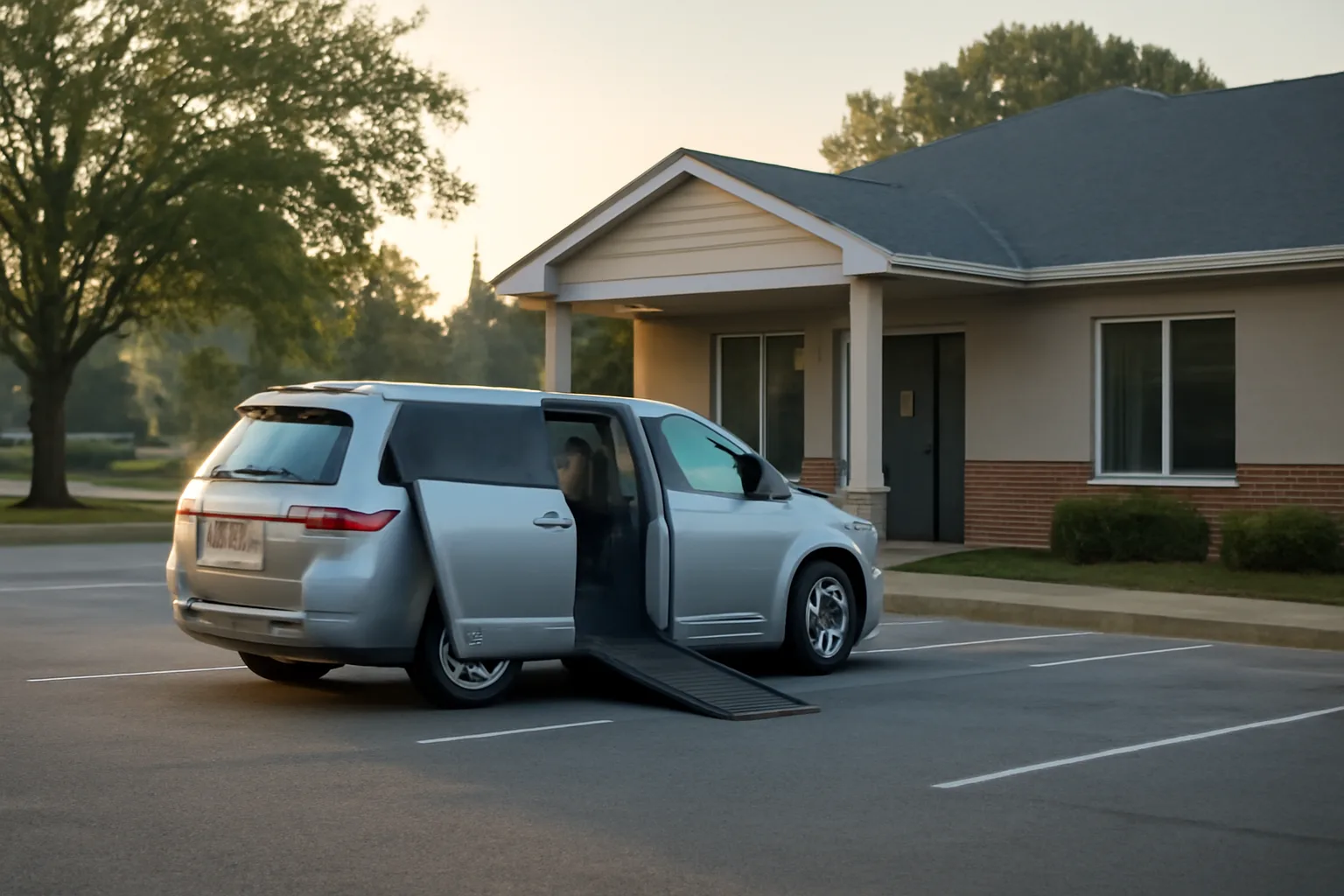
NEMT is scheduled transportation for people who need a ride to a medical appointment but don't need an ambulance or emergency response. Think dialysis three times a week, physical therapy, a specialist visit, or a follow-up after surgery. The federal Medicaid rule requires states to "ensure necessary transportation for beneficiaries to and from providers" and to describe those methods in their state plans [1]. That single regulation, 42 CFR 431.53, is why NEMT exists as an industry at all. It's a federal mandate, not a state nicety. Most NEMT trips use one of three vehicle types: ambulatory sedans or minivans for people who can walk and transfer on their own, wheelchair-accessible vans with a ramp or lift for people who use a wheelchair or scooter, and stretcher vans for people who must travel lying down but don't need medical monitoring. None of these are ambulances. No lights, no siren, no paramedic. The person riding in your van is a Medicaid member (in some states, a Medicare Advantage member too) who has already been approved for a ride, usually through a broker. You're not marketing to patients directly in most states. You're fulfilling trips assigned to you by a transportation broker or, in a handful of states, billing Medicaid fee-for-service directly. Learn more about how the industry fits together on our non emergency medical transportation overview and our nemt page.
Does Medicaid cover ambulance rides, and how is that different from NEMT?
Yes, Medicaid covers ambulance rides, but that's a completely separate benefit from NEMT and it isn't what a wheelchair-van business does. Ambulance transport (emergency or non-emergency ambulance) is billed under a different provider type, usually requires EMT or paramedic staffing, and is regulated by your state's EMS office, not the Medicaid transportation broker network. NEMT, by contrast, covers rides where no medical monitoring is needed during transport. CMS describes NEMT as transportation for Medicaid enrollees who have no other way to get to care and don't require emergency or medical transport [2]. If a passenger's condition changes and they suddenly need oxygen, IV monitoring, or a paramedic, that's outside what a standard wheelchair van or ambulatory vehicle is licensed to provide, and most broker contracts require you to call 911 rather than transport them yourself. So when someone asks "does Medicaid cover ambulance," the honest answer is: yes, as its own distinct benefit category, and it doesn't require the broker credentialing process this article covers. If you want to run ambulances, you're looking at state EMS licensure, not NEMT broker enrollment. For background on that separate world, see emergency medical transport.
Does Medicare cover medical transportation?
Medicare's coverage of non-emergency transportation is much thinner than Medicaid's, and this trips up a lot of new operators. Original Medicare (Part A/B) generally covers ambulance transportation only when other transportation would endanger the person's health, and it does not cover routine non-emergency rides to a doctor's office the way Medicaid does [3]. Where NEMT-style coverage does show up on the Medicare side is through Medicare Advantage (Part C) plans. Medicare Advantage plans have been allowed to offer transportation as a supplemental benefit since CMS expanded the definition of supplemental benefits in its 2019 final rule, and a growing share of plans do offer it. It's plan-by-plan, not a guaranteed federal benefit like Medicaid NEMT is [4]. If you want Medicare Advantage trip volume, you'd contract with the plan or its transportation vendor directly, which is a separate credentialing track from Medicaid broker enrollment. Practical takeaway: don't build your business plan around "Medicare pays for rides." Build it around Medicaid NEMT first, since that's the mandated, statewide benefit with a defined enrollment path. Medicare Advantage transportation contracts are worth pursuing later, as an addition, not a foundation.
How do you start a medical transportation business?
At the highest level, starting a medical transportation business means stacking four things in roughly this order: legal entity and insurance, a compliant vehicle, state Medicaid provider enrollment, and broker credentialing. Skip a step and you'll get stuck later, usually at the broker stage when they ask for a document you don't have. First, form an LLC or corporation in your state and get an EIN from the IRS. Most brokers and state Medicaid agencies require you to be a registered business entity, not a sole proprietor operating under your own name, though rules vary by state (confirm with your state Medicaid agency). Second, get commercial auto insurance with the liability limits your state and brokers require. This is often the single biggest recurring cost new owner-operators underestimate; limits of $1,000,000 combined single limit are common broker requirements, though exact minimums vary by state and broker (confirm with your broker and state Medicaid agency). Third, get your Medicaid provider enrollment application filed with your state Medicaid agency's transportation unit. This usually runs alongside, not instead of, broker credentialing, since in many states a broker manages the network on Medicaid's behalf but Medicaid still requires you to be an enrolled provider of record. Fourth, apply to the broker(s) operating in your region, most commonly Modivcare, MTM, Access2Care, or a regional/state-specific broker. Each has its own application, insurance minimums, vehicle inspection process, and driver background check standard. A realistic first-year budget question we get constantly: is this a $199 problem or a $20,000 problem? The vehicle and insurance are the real money. The paperwork itself, if you do it right the first time, shouldn't cost you thousands in consultant fees; that's the gap our $199 State + Broker NEMT Launch Kit is built to close, with state-by-state enrollment checklists and broker application templates so you're not paying by the hour for someone else to fill in forms you could fill in yourself.
How to start a NEMT business step by step
Here's the order that causes the fewest headaches, based on how state Medicaid transportation units and brokers actually sequence their requirements. 1. Pick your state and confirm the model. Some states run Medicaid transportation through regional brokers, some run it through managed care organizations that each pick their own broker, and a few still pay fee-for-service. Check your state Medicaid transportation unit's page before you buy anything. 2. Register your business entity and get your EIN, DOT number (if required for your vehicle class), and any local business license. 3. Buy or lease your vehicle. A used wheelchair-accessible minivan with a certified conversion (Braun, VMI, or similar) is the standard entry vehicle; expect ongoing costs for wheelchair lift/ramp inspection and maintenance that a standard van doesn't have. 4. Get commercial insurance meeting your state's and broker's minimums, and get any required vehicle permit or inspection done through your state's motor vehicle or transportation department. 5. Run background checks and drug screening on every driver, since brokers and Medicaid agencies both require this and will re-check periodically. 6. Submit your Medicaid NEMT provider enrollment application to your state Medicaid agency. 7. Apply to the broker(s) serving your region. Expect a credentialing packet asking for your provider enrollment number, insurance certificates, vehicle inspection reports, and driver files, all at once. 8. Once approved, get set up on the broker's dispatch and billing platform (most use software like RouteMatch, Uber Health integrations, or a proprietary trip portal) before you take your first assigned trip. For the state-specific version of this sequence, our nemt transportation hub links out to individual state Medicaid transportation unit requirements.
How do you start a medical transportation business with just one van?
One van is more than possible, it's how almost every NEMT company in the country actually started. The credentialing requirements (insurance minimums, driver background checks, vehicle inspection) apply the same whether you have one van or fifty, so there's no regulatory penalty for starting small. The practical constraints with a single vehicle are about capacity, not compliance. You'll be limited in how many broker trip assignments you can accept in a given window, and if your one van is in the shop, you have zero backup capacity, which some brokers factor into how many trips they'll route to you. Some owner-operators solve this by starting as a subcontractor under an existing credentialed provider while their own credentialing is in process, though terms for that arrangement vary a lot and you'd want it in writing. Don't let "I only have one van" stop you from starting the paperwork. Medicaid enrollment and broker credentialing take weeks either way (exact timelines vary by state and broker, confirm current processing times directly), so there's no reason to wait until you've bought a second vehicle to start the application clock running.
What documents and requirements does broker credentialing actually involve?
| Business entity | LLC/corp registration, EIN, state Medicaid provider number | |
|---|---|---|
| Insurance | Commercial auto liability, broker named as certificate holder | |
| Vehicle | Registration, safety inspection, wheelchair lift/ramp certification if applicable | |
| Driver | Valid license, clean MVR, background check, drug screen | |
| Ongoing | Re-inspection, insurance renewal proof, periodic driver re-screening | Once you're credentialed with one broker, a second broker's application usually goes faster since you already have the insurance certificates, inspection reports, and driver files assembled. That's the case for applying to more than one broker in your region if your state uses multiple. |
Broker credentialing is the part new operators underestimate most, because it's really several separate reviews bundled into one application: business, insurance, vehicle, and driver. Expect to submit, at minimum: your certificate of insurance naming the broker as certificate holder, your Medicaid provider enrollment confirmation, vehicle registration and inspection records, ADA-compliant wheelchair lift or ramp certification if applicable, driver's license and MVR (motor vehicle record) checks for every driver, a completed background check (often through a specific vendor the broker names), and drug and alcohol testing records. Here's a comparison of what the biggest national brokers generally ask for, though every broker's exact list changes and you should confirm current requirements directly with them and with your state Medicaid transportation unit before you apply. | Requirement area | Typical ask (confirm specifics with broker) |
What does state Medicaid provider enrollment actually require?
State Medicaid enrollment is separate from broker credentialing, and both matter. Medicaid enrollment establishes you as a recognized provider type in your state's Medicaid Management Information System, which is what allows claims tied to your trips to get paid at all, regardless of which broker dispatched the ride. Every state Medicaid agency has a transportation unit or non-emergency transportation program office that manages this. The federal rule underneath all of it, 42 CFR 431.53, requires the state plan to "specify that the Medicaid agency will ensure necessary transportation for beneficiaries to and from providers" and describe the methods it will use [1]. States implement that requirement very differently: some centralize it in one statewide broker contract, some let each Medicaid managed care organization run its own transportation network with its own broker, and some still process fee-for-service claims for enrolled transportation providers directly. Because of that variation, there is no single national NEMT provider enrollment form. You need your specific state Medicaid agency's transportation unit page, and you'll typically find a provider enrollment application, a list of accepted vehicle types, and sometimes a separate broker directory. Check CMS's overview of state Medicaid non-emergency transportation policy for the federal framework [2], then go to your state's Medicaid agency site for the actual application.
What insurance and licensing does a wheelchair van business need?
Commercial auto insurance is non-negotiable and usually the biggest recurring line item after the vehicle payment itself. Brokers commonly require combined single limits in the range of $1,000,000, sometimes higher for wheelchair-accessible or stretcher vehicles, but exact minimums are set by each broker and each state, so confirm current numbers before you shop policies. Beyond auto liability, many states and brokers also want general liability coverage and, if you have employee drivers rather than owner-operator contractors, workers' compensation coverage as required by your state's labor department. Vehicle licensing depends on your state's classification of NEMT vehicles. Some states treat wheelchair vans under a specific "medical transportation vehicle" permit category with its own annual inspection, separate from a standard passenger vehicle registration. A few states also require a separate business license specifically for medical transportation operators, on top of standard local business licensing. None of this is uniform nationally, which is exactly why you need to check your specific state Medicaid transportation unit's page and your target broker's current vehicle standards rather than relying on what worked for an operator in a different state.
How much does it cost to start, and where does the money actually go?
The honest range is wide because the vehicle dominates the number. A good used wheelchair-accessible minivan with a certified conversion typically runs somewhere in the tens of thousands of dollars depending on age, mileage, and conversion brand; new conversions cost substantially more. That single purchase is almost always the largest expense in your startup budget, dwarfing every licensing or application fee combined. After the vehicle, plan for commercial insurance (a recurring annual or semi-annual cost, not one-time), any state vehicle permit or inspection fee, business registration and EIN (often under $500 depending on your state's LLC filing fee), background check and drug screening fees per driver, and the practical cost of your own time filling out multiple applications correctly the first time. What you shouldn't need to spend much on is the paperwork itself. This is the gap between a $199 problem and a several-thousand-dollar consultant invoice: the actual state Medicaid enrollment forms and broker credentialing applications are public or broker-provided documents. Owner-operators who understand exactly which document goes to the state versus the broker, and in what order, routinely avoid paying a consultant thousands of dollars to do data entry. That's the specific gap a state-and-broker checklist product, like our $199 Launch Kit, is meant to close: it's a paperwork map, not a guarantee of approval, and no legitimate product can promise you'll get credentialed since that decision sits entirely with the state agency and the broker.
How long does it take to get approved and start taking trips?
There's no single national timeline, and anyone who quotes you an exact number without knowing your state is guessing. Medicaid provider enrollment processing time varies by state Medicaid agency, and broker credentialing timelines vary by broker and by how complete your first submission is. What's true everywhere: incomplete applications are the single biggest delay driver. Missing an insurance certificate, submitting a vehicle inspection that's about to expire, or having a driver background check that's aged out past the broker's freshness window (often 30 to 90 days, confirm with your specific broker) will bounce your application back and restart part of the clock. The practical move is to run state Medicaid enrollment and broker credentialing in parallel where your state's process allows it, rather than waiting for one to finish before starting the other, since both processes ask for overlapping documents (insurance, business registration, vehicle records) that you only need to assemble once.
Frequently asked questions
What is NEMT?
NEMT stands for non-emergency medical transportation: scheduled rides to medical appointments, dialysis, or therapy for people who don't need an ambulance or medical monitoring during the trip. It's a Medicaid benefit required under federal rule 42 CFR 431.53, typically delivered through wheelchair vans, ambulatory sedans, or stretcher vans, and dispatched by state-contracted transportation brokers in most states.
Does Medicaid cover ambulance rides?
Yes, Medicaid covers ambulance transportation as its own benefit category, separate from NEMT. Ambulance transport requires EMT/paramedic staffing and is regulated through your state's EMS system, not the NEMT broker credentialing process. NEMT covers non-emergency rides where no medical monitoring is needed; ambulance covers emergency or medically-necessary monitored transport.
Does Medicare cover medical transportation?
Original Medicare covers ambulance transportation mainly when other transport would endanger the person's health, but it generally doesn't cover routine non-emergency rides to appointments. Some Medicare Advantage (Part C) plans offer non-emergency transportation as a supplemental benefit, but that's plan-specific, not a guaranteed federal benefit like Medicaid's NEMT mandate.
How do I start a NEMT business from scratch?
Form a business entity and get an EIN, secure commercial auto insurance meeting broker minimums, acquire a compliant vehicle (often a wheelchair-accessible van), enroll as a Medicaid transportation provider with your state Medicaid agency, then apply for credentialing with brokers like Modivcare or MTM operating in your region. Run the Medicaid and broker steps in parallel where possible.
How do you start a medical transportation business with one van?
One van is completely standard for a first vehicle; credentialing requirements don't scale with fleet size. You'll face a capacity limit on how many broker trips you can accept and no backup if your van needs repairs, but the paperwork process (business registration, insurance, Medicaid enrollment, broker credentialing) is identical to a multi-vehicle operation.
What vehicle do I need for a wheelchair van NEMT business?
Most owner-operators start with a used minivan that has a certified wheelchair conversion (ramp or lift) from a manufacturer like Braun or VMI. The vehicle needs to meet your state's inspection and permit standards for medical transportation vehicles and pass the specific vehicle inspection your target broker requires before credentialing.
How much insurance do I need for an NEMT business?
Broker-required commercial auto liability minimums commonly sit around $1,000,000 combined single limit, though exact figures vary by state and by broker. General liability and, if you have employee drivers, workers' compensation coverage are also commonly required. Confirm current minimums directly with your target broker and your state Medicaid transportation unit before buying a policy.
What is the difference between a NEMT broker and Medicaid provider enrollment?
Medicaid provider enrollment registers you with your state Medicaid agency so claims tied to your services can be paid. Broker credentialing is a separate application to a company like Modivcare, MTM, Access2Care, or SafeRide that actually dispatches trips on the state's or a managed care plan's behalf. Most owner-operators need both, not one or the other.
How long does NEMT credentialing take?
There's no single national timeline; it varies by state Medicaid agency and by broker, and depends heavily on whether your first application submission is complete. Missing insurance certificates, expired vehicle inspections, or aged-out background checks are the most common causes of delay. Confirm current expected processing times directly with your state and broker.
Can I run a NEMT business without a broker contract?
In some states you can bill Medicaid fee-for-service directly as an enrolled transportation provider without going through a broker, but most states now route Medicaid NEMT through regional or statewide brokers, and Medicaid managed care plans often require broker-dispatched trips. Check your specific state Medicaid transportation unit's page to see which model applies.
Is NEMT the same as ambulance service?
No. NEMT vehicles (ambulatory sedans, wheelchair vans, stretcher vans) carry no medical monitoring equipment and no EMT or paramedic staff. Ambulance service is a distinct, separately licensed and separately Medicaid-billed category for situations requiring medical monitoring or emergency response during transport.
How much does it cost to start an NEMT business?
The dominant cost is the vehicle: a used wheelchair-accessible conversion van typically runs in the tens of thousands of dollars. Add recurring commercial insurance, state vehicle permit/inspection fees, business registration costs, and per-driver background check and drug screening fees. The enrollment paperwork itself shouldn't cost thousands if you handle it directly rather than paying a consultant hourly.
Do I need a special license to drive for a NEMT company?
Requirements vary by state and vehicle type; some states require only a standard driver's license with a clean motor vehicle record and passed background check, while others require a specific passenger endorsement or medical transportation driver certification. Confirm the exact driver licensing standard with your state Medicaid transportation unit and your target broker.
Sources
- eCFR, Title 42 Part 431.53: Federal Medicaid regulation requiring states to ensure necessary transportation for beneficiaries and describe methods in the state plan
- Medicaid.gov, Non-Emergency Medical Transportation: CMS description of NEMT as transport for enrollees with no other means of transportation who don't require emergency/medical transport
- Medicare.gov, Ambulance Services Coverage: Original Medicare covers ambulance transportation mainly when other transportation would endanger health, not routine non-emergency rides
- Federal Register, CMS Final Rule 83 FR 16440 (Medicare Program; Contract Year 2019 Policy and Technical Changes to the Medicare Advantage Program): CMS expanded the definition of supplemental benefits to allow Medicare Advantage plans to offer transportation as a supplemental benefit, plan by plan
- 42 CFR 440.170: Federal definition of transportation as a Medicaid service states may cover, including the distinction from other medical assistance categories
- Social Security Act Section 1902(a)(70): Statutory basis allowing states to use a broker arrangement for non-emergency medical transportation under a competitive bidding process