Last updated 2026-07-25
TL;DR
Starting a NEMT business in Maryland means forming a legal entity, getting the right vehicle and driver credentials through MDOT MVA, enrolling as a Maryland Medical Assistance transportation provider, and credentialing with the broker that manages NEMT trips in your region. Budget for insurance, vehicle inspections, and background checks before you take your first Medicaid trip.
What is non-emergency medical transportation (NEMT)?
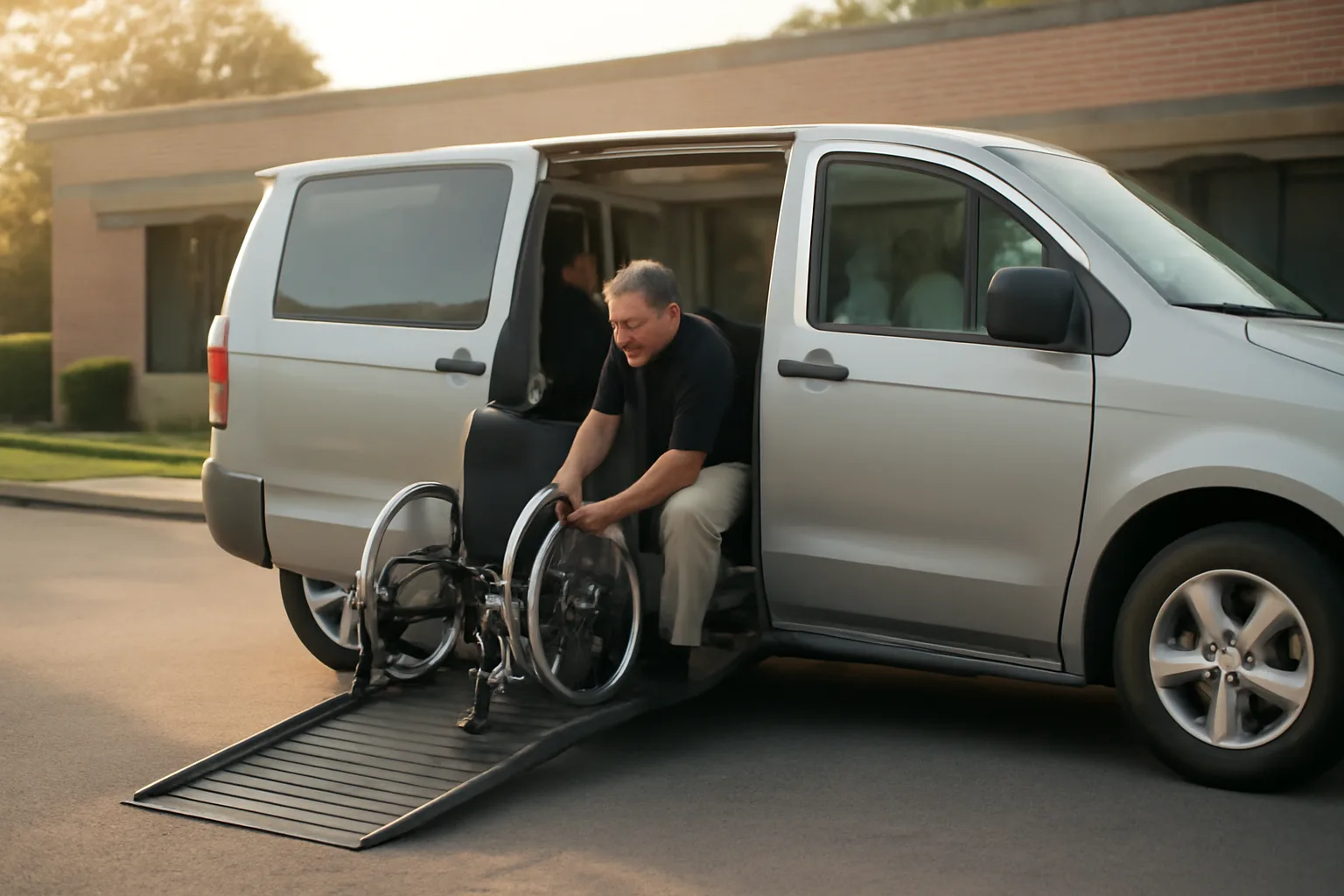
NEMT is transportation for people who need to get to medical appointments, dialysis, therapy, or pharmacy visits but don't need an ambulance or emergency care. It covers wheelchair van rides, ambulatory sedan trips, and stretcher transport for people who are stable but can't drive themselves or use regular transit. The federal Medicaid statute requires states to make sure enrollees have transportation to and from providers. The regulation at 42 CFR 431.53 says states must "ensure necessary transportation for beneficiaries to and from providers" and may do this directly, through contracts, or by paying beneficiaries' own transportation costs [1]. That's the legal hook that created the entire NEMT industry. States either run this in-house or, far more commonly now, hire a broker to manage it. In Maryland, non-emergency transportation for Medicaid enrollees (called Maryland Medical Assistance or Medical Assistance) is handled through the state's NEMT broker system, and providers like you contract with that broker to actually run the trips. If you're new to the field, our overview of non emergency medical transportation is a good primer on how the broker model works nationally before you dig into Maryland specifics.
How do you start a medical transportation business in Maryland?
You start by getting your business legally formed, then layering on the vehicle, driver, and Medicaid/broker credentials on top of that foundation. Skipping steps or doing them out of order is the single biggest reason new operators lose months. Here's the realistic order of operations: 1. Form your business entity (LLC or corporation) with the Maryland Department of Assessments and Taxation. 2. Get an EIN from the IRS and open a business bank account. 3. Buy or lease your wheelchair van and get it titled and registered through the MDOT Motor Vehicle Administration (MVA). 4. Secure commercial auto insurance that meets Maryland's financial responsibility requirements for for-hire vehicles. 5. Get drivers licensed appropriately and run required background checks/drug testing. 6. Enroll as a Maryland Medical Assistance transportation provider. 7. Apply for credentialing with the regional NEMT broker MDH contracts with for your area. 8. Set up dispatch, trip documentation, and billing processes before your first trip. The state Medicaid agency and the broker each have their own paperwork, and they don't always talk to each other on your timeline. Confirm current requirements directly with your broker and the Maryland Department of Health (MDH) transportation unit before you commit to vehicle purchases, because minimum fleet or vehicle-age rules can change [2].
Do you need an NEMT-specific business license in Maryland, or just a regular business license?
Maryland doesn't have one single statewide "NEMT license" separate from your general business registration and your MDOT MVA for-hire vehicle credentials. Instead, you're stacking several requirements: business entity registration, vehicle permitting through MDOT MVA, and provider enrollment through Maryland Medicaid. Counties and municipalities in Maryland can add their own layer. Some jurisdictions require a local for-hire or livery permit on top of state vehicle registration, particularly if you're operating in Baltimore City or one of the larger counties. Call your local Department of Transportation or licensing office before you assume state-level compliance is enough. MDOT MVA handles vehicle titling and registration for passenger vehicles used commercially, and Maryland regulates vehicle emissions inspections tied to registration renewal for vehicles operating in the state [3]. If your wheelchair van is going to carry Medicaid passengers, it typically needs to pass whatever for-hire or commercial vehicle inspection your broker and locality require, on top of standard registration renewal. Confirm the exact inspection category and interval with MDOT MVA directly, since requirements differ for vehicles carrying wheelchair passengers versus standard sedans.
How does Medicaid NEMT enrollment work in Maryland?
You enroll as a Maryland Medical Assistance provider through the Maryland Department of Health, separately from any broker credentialing. Provider enrollment establishes your legal right to bill Medicaid; broker credentialing determines whether you actually get dispatched trips. Maryland Medicaid uses an online provider enrollment portal (the specific portal name and process should be confirmed directly with MDH, since portal names and requirements change). You'll typically need: - Business entity documents and EIN
- NPI (National Provider Identifier) from the National Plan and Provider Enumeration System
- Proof of vehicle registration and insurance
- Driver credentialing records
- A completed Maryland Medicaid provider enrollment application, often with a state-specific transportation provider type code Because federal law under 42 CFR 431.53 puts the obligation to arrange transportation on the state, not directly on you, your actual trip volume and payment mechanics run through whichever broker or managed care arrangement Maryland has contracted for NEMT in your region [1]. Enrollment with MDH is necessary but not sufficient. You still need broker sign-off to get dispatched work in most cases. This two-step structure trips up a lot of first-time owner-operators who think Medicaid enrollment alone means they can start driving trips.
How do you get credentialed with the NEMT broker in Maryland?
You apply directly to the broker managing NEMT for your Maryland region, submit vehicle and driver documentation, pass any required inspections, and sign a transportation services agreement. The broker is your actual dispatcher and payer relationship day to day, even though Medicaid enrollment happens through MDH. Broker credentialing packets commonly ask for: - Certificate of insurance meeting the broker's minimum liability limits (often higher than state minimums)
- Vehicle inspection reports, sometimes on the broker's own form, more than the state inspection
- Driver background check results, drug and alcohol testing records, and defensive driving course certificates
- Copies of driver's licenses and any required passenger assistance or wheelchair securement training certificates
- W-9 and banking information for payment/EFT setup Brokers periodically re-verify these documents (annually is common in many states, though the exact cadence is set by contract). Missing a re-credentialing deadline is one of the most common reasons active owner-operators get suspended from the trip queue with zero warning. Set calendar reminders well ahead of expiration dates for insurance, vehicle inspections, and driver certifications. Maryland has used multiple broker structures over time depending on region and program (Medicaid fee-for-service versus managed care organization arrangements). Confirm with MDH's transportation unit and with any managed care organizations operating in your target county which broker currently holds the NEMT contract for your area, since broker contracts get rebid periodically and the incumbent can change. If you want a broader picture of how brokers like Modivcare, MTM, Access2Care, and SafeRide typically structure credentialing nationally, see our nemt hub page.
How much does it cost to start a NEMT business in Maryland with one van?
| Business entity formation | LLC filing with Maryland SDAT | $100 to $300 | |
|---|---|---|---|
| Commercial wheelchair van | New or used, with ramp/lift | $35,000 to $80,000+ used to new | |
| Commercial auto insurance | Liability, often $1M+ for broker minimums | Varies heavily by driving history and coverage limits; get quotes | |
| MDOT MVA registration/inspection | Titling, for-hire inspection | Confirm current fee schedule with MDOT MVA | |
| Driver background checks/drug testing | Per-driver screening | Roughly $50 to $150 per driver, varies by vendor | |
| Broker credentialing | Application/onboarding | Often no direct fee, but document prep takes real time | Insurance is usually the line item that surprises new owner-operators most. Broker contracts frequently require higher liability limits than Maryland's baseline financial responsibility law, so get quotes before you finalize a vehicle purchase, not after. Our insurance guidance elsewhere on the site walks through how NEMT liability coverage differs from a standard personal auto policy. If you're trying to keep this whole process from eating a month of your life in scattered paperwork, a packaged reference like the $199 State + Broker NEMT Launch Kit exists specifically to organize the state-by-state and broker-by-broker document checklists in one place. It doesn't replace confirming specifics with MDH and your broker, but it can save real time on the assembly work. |
There's no official state fee schedule that bundles all NEMT startup costs into one number, and any site that gives you a single all-in figure is guessing. What's realistic is breaking out the cost categories so you can build your own budget: | Cost category | What it covers | Rough range (confirm current pricing) |
Does Medicaid cover ambulance rides?
Yes, Medicaid covers ambulance transportation when it's medically necessary, but that's a different benefit category from NEMT. Ambulance services (emergency and some non-emergency ambulance transport) are billed under a separate Medicaid benefit than the wheelchair van and ambulatory NEMT trips this article focuses on. Federal Medicaid rules distinguish emergency ambulance transport, which is covered as a medical service when a beneficiary's condition requires it, from routine non-emergency transportation to appointments, which falls under the state's transportation assurance obligation at 42 CFR 431.53 [1]. If you're planning to run ambulance-level transport (with EMTs and medical equipment) rather than wheelchair van or ambulatory NEMT, you're looking at a different licensing pathway through Maryland's EMS system (MIEMSS, the Maryland Institute for Emergency Medical Services Systems), more than MDOT MVA and MDH provider enrollment. Confirm with MIEMSS directly if ambulance-level service is part of your plan, since that licensing track has its own clinical staffing and vehicle equipment standards separate from standard NEMT.
Does Medicare cover medical transportation?
Medicare's coverage of transportation is narrower than Medicaid's. Original Medicare generally covers emergency ambulance transportation and, in limited circumstances, non-emergency ambulance transportation when a doctor certifies it's medically necessary, but Medicare does not have a broad NEMT benefit the way Medicaid does. Under 42 CFR 410.40, Medicare covers ambulance services only when other means of transportation would endanger the beneficiary's health, and non-emergency ambulance transport generally requires a physician's written order certifying medical necessity [4]. Routine rides to a doctor's office in a wheelchair van, without an ambulance-level medical need, generally aren't covered under Original Medicare. Some Medicare Advantage plans have started offering supplemental transportation benefits (rides to appointments) as an extra perk beyond what Original Medicare covers, but that varies plan by plan and isn't guaranteed. If your business model depends heavily on Medicare-covered trips rather than Medicaid, verify directly with each Medicare Advantage plan in your area what transportation benefit, if any, they've built into their supplemental offerings, since this isn't standardized nationally the way Medicaid NEMT is.
What vehicle and driver requirements apply to wheelchair van operators in Maryland?
Your wheelchair van needs proper commercial registration and inspection through MDOT MVA, working wheelchair securement equipment, and drivers who meet Maryland's licensing and, depending on vehicle size, possibly commercial driver's license (CDL) thresholds. Key areas to nail down: - Vehicle inspection: For-hire and commercial passenger vehicles typically face inspection requirements beyond standard registration renewal. Confirm the exact category and interval with MDOT MVA for wheelchair-accessible vans specifically.
- Wheelchair securement: Brokers commonly require specific tie-down systems (four-point securement plus a lap and shoulder belt) and driver training on proper use. This isn't usually a state statute requirement per se, it's a broker credentialing requirement, so check your specific broker's packet.
- CDL thresholds: Federal rules generally require a CDL once a vehicle is designed to carry 16 or more passengers including the driver, per Federal Motor Carrier Safety Administration definitions at 49 CFR 383.5, though many wheelchair vans fall under this threshold and don't require a CDL [5]. Confirm your specific vehicle's passenger capacity classification with MDOT MVA if you're unsure.
- Background checks: Brokers typically require criminal background checks and often a check against state or federal abuse/neglect registries for drivers transporting Medicaid beneficiaries. Requirements vary by broker; confirm the specific screening standard with your credentialing contact. Don't buy a van assuming it'll automatically qualify for broker work. Get the broker's vehicle spec sheet (age limits, mileage caps, required equipment) before you finalize a purchase.
How long does it take to get Medicaid and broker approval in Maryland?
There's no fixed statutory timeline for either Medicaid provider enrollment or broker credentialing in Maryland, and both processes vary based on how complete your application is the first time you submit it. Realistically, plan for weeks, not days, and build slack into any launch date you're planning around. Provider enrollment applications that are missing documentation (an incomplete NPI record, mismatched business entity paperwork, missing insurance certificates) get sent back for correction, which restarts part of the clock. The same is true for broker credentialing: incomplete vehicle inspection paperwork or an expired background check is the most common reason applications stall. The practical move is to get every document (entity formation, EIN, insurance certificate, vehicle title/registration, driver background check, NPI) finalized and organized before you submit anything, rather than submitting partial paperwork and patching it later. Confirm current processing time estimates directly with MDH's transportation/provider enrollment unit and with your target broker, since staffing and volume both affect how fast applications move.
What ongoing compliance do Maryland NEMT operators need to maintain?
Once you're enrolled and credentialed, the work shifts to keeping every credential current: vehicle inspections, insurance certificates, driver background checks, and any required continuing training. Brokers routinely audit these on a schedule set by contract, and letting one lapse can pull you out of the active dispatch pool. Common ongoing obligations include: - Vehicle re-registration and any broker-required re-inspection (confirm interval with MDOT MVA)
- Insurance certificate renewal, submitted to the broker before expiration, not after
- Periodic driver re-screening (background checks, drug testing per your broker's schedule)
- Trip documentation and billing records retention, since Medicaid programs can and do audit historical trip records
- Any required incident reporting to the broker or MDH if an accident or complaint occurs Maryland Medicaid providers are also subject to standard program integrity rules; false claims or billing for trips that didn't happen carries real legal exposure under both state Medicaid fraud statutes and federal false claims law. Keep clean trip logs (pickup/drop-off times, mileage, passenger signature where required) as your primary defense in any audit. For a broader look at how documentation and operations processes work across NEMT generally, our operations section covers dispatch and trip-record best practices that apply regardless of which state you're in.
What's the difference between NEMT and emergency medical transport in Maryland?
NEMT covers stable patients who need a ride to routine or recurring appointments (dialysis, physical therapy, specialist visits), while emergency medical transport covers patients whose condition requires immediate medical care en route, typically via ambulance with trained EMS personnel. The regulatory split matters because it determines which licensing body governs you. NEMT wheelchair van and ambulatory transport falls under MDOT MVA vehicle rules plus Maryland Medicaid provider enrollment and broker credentialing. Emergency and many non-emergency ambulance-level services fall under MIEMSS licensing, with its own EMT staffing and equipment certification requirements. If you're only running a wheelchair van with a driver (no onboard medical equipment or EMT staffing), you're squarely in the NEMT category this article covers. If you're considering adding stretcher-level or ambulance-level service later, that's a separate licensing track worth researching well before you invest in equipment. See our emergency medical transport page for how that licensing differs from standard NEMT, and our nemt transportation and non emergency medical transportation services pages for more on the wheelchair van and ambulatory service model specifically.
Frequently asked questions
How do you start a medical transportation business?
Form a legal business entity, get your vehicle properly titled and inspected for commercial for-hire use, secure adequate commercial auto insurance, screen and credential your drivers, enroll as a Medicaid transportation provider with your state Medicaid agency, and get credentialed with whichever NEMT broker manages trips in your region. Order matters: entity and vehicle work generally needs to happen before Medicaid and broker applications.
What is NEMT?
NEMT stands for non-emergency medical transportation: rides for people who need to get to medical appointments, dialysis, or therapy but don't require an ambulance. It typically includes wheelchair van service, ambulatory sedan trips, and sometimes stretcher transport, arranged through state Medicaid programs under the federal transportation assurance requirement at 42 CFR 431.53 [1].
Does Medicaid cover ambulance rides?
Yes, Medicaid covers medically necessary ambulance transportation, but it's billed as a separate benefit category from routine NEMT wheelchair van or sedan trips. Emergency ambulance transport is covered when a beneficiary's condition requires it; non-emergency ambulance transport generally needs documented medical necessity. Confirm specifics with your state Medicaid agency's transportation and ambulance billing units.
Does Medicare cover medical transportation?
Medicare covers emergency ambulance transportation and, with a physician's order, some non-emergency ambulance transport when medically necessary, per 42 CFR 410.40 [4]. Original Medicare generally does not cover routine wheelchair van or NEMT rides to appointments. Some Medicare Advantage plans offer supplemental transportation benefits, but this varies plan by plan and isn't guaranteed nationally.
How do you start a NEMT business with just one van?
You can start with a single wheelchair van. Form your business entity, get the van properly registered and inspected as a for-hire commercial vehicle through MDOT MVA, secure insurance meeting broker minimums, complete driver background checks, enroll with Maryland Medicaid, and apply for broker credentialing. One van is enough to get credentialed; growth comes later as trip volume and broker relationships develop.
What is non-emergency medical transportation?
Non-emergency medical transportation (NEMT) is rides arranged for Medicaid (and sometimes Medicare Advantage) enrollees who need to reach medical appointments but don't need emergency ambulance care. It includes wheelchair-accessible vans, ambulatory sedans, and sometimes stretcher vehicles, typically dispatched through a state-contracted broker rather than billed directly by the state.
Do I need a special business license for NEMT in Maryland, or does a regular LLC work?
A standard Maryland LLC or corporation registered with the Department of Assessments and Taxation is your legal foundation, but you'll also need MDOT MVA vehicle credentials, possible local for-hire permits depending on your county, and separate Maryland Medicaid provider enrollment plus broker credentialing. There isn't one single combined "NEMT license" that covers all of this.
How much does Maryland NEMT vehicle inspection cost?
Maryland doesn't publish one flat statewide fee that applies to every for-hire wheelchair van inspection scenario, and requirements can differ from standard registration renewal. Confirm the current fee schedule and inspection category for commercial wheelchair-accessible vehicles directly with MDOT MVA before budgeting.
Do I need a CDL to drive a wheelchair van in Maryland?
Usually not, if your van carries fewer than 16 passengers including the driver, since federal CDL passenger-vehicle thresholds generally kick in above that count under 49 CFR 383.5 [5]. Most wheelchair vans fall under this line. Confirm your specific vehicle's passenger rating and licensing requirement with MDOT MVA, since vehicle configuration affects the classification.
Which broker manages Medicaid NEMT trips in Maryland?
Maryland has used different broker and managed-care-organization arrangements for NEMT depending on region and program structure, and contracts get rebid periodically. Confirm the current broker for your specific county and program (fee-for-service versus managed care) directly with the Maryland Department of Health's transportation unit before you start the credentialing process.
How long does Medicaid NEMT provider enrollment take in Maryland?
There's no fixed statutory timeline; it depends heavily on how complete your first submission is. Missing documents (insurance certificates, NPI records, entity paperwork) commonly restart the review clock. Plan for a multi-week process at minimum, and confirm current processing estimates directly with MDH's provider enrollment unit.
Can I run a NEMT business without Medicaid contracts, just private pay?
Yes, some NEMT operators run private-pay or facility-contract models (assisted living facilities, hospitals, private insurance) without ever enrolling in Medicaid. You'd still need proper vehicle registration, commercial insurance, and driver screening, but you'd skip Medicaid provider enrollment and broker credentialing entirely if you never plan to take Medicaid-funded trips.
What insurance coverage do NEMT brokers typically require in Maryland?
Broker liability minimums are often higher than Maryland's baseline financial responsibility requirements for commercial vehicles, commonly in the range of $1 million combined single limit or higher, though exact figures vary by broker and contract. Get a written minimum coverage requirement from your specific broker before buying a policy, since guessing wrong wastes money on the wrong coverage tier.
Sources
- eCFR, 42 CFR 431.53: States must ensure necessary transportation for Medicaid beneficiaries to and from providers, directly or through contracts.
- Maryland Department of Health, Maryland Medical Assistance Program: Maryland Medical Assistance Program administers Medicaid, including transportation-related provider enrollment.
- Maryland Department of the Environment, Vehicle Emissions Inspection Program (VEIP): Maryland regulates periodic vehicle emissions inspection tied to registration renewal for vehicles operating in the state.
- eCFR, 42 CFR 410.40: Medicare covers ambulance services based on medical necessity, mode of transport, and physician certification requirements for non-emergency transport.
- eCFR, 49 CFR 383.5: Federal commercial driver's license rules define a commercial motor vehicle for passenger transport as designed to carry 16 or more passengers including the driver.
- Medicaid.gov, Non-Emergency Medical Transportation: Medicaid.gov describes NEMT as a required benefit ensuring enrollees can get to covered medical services.