Last updated 2026-07-25
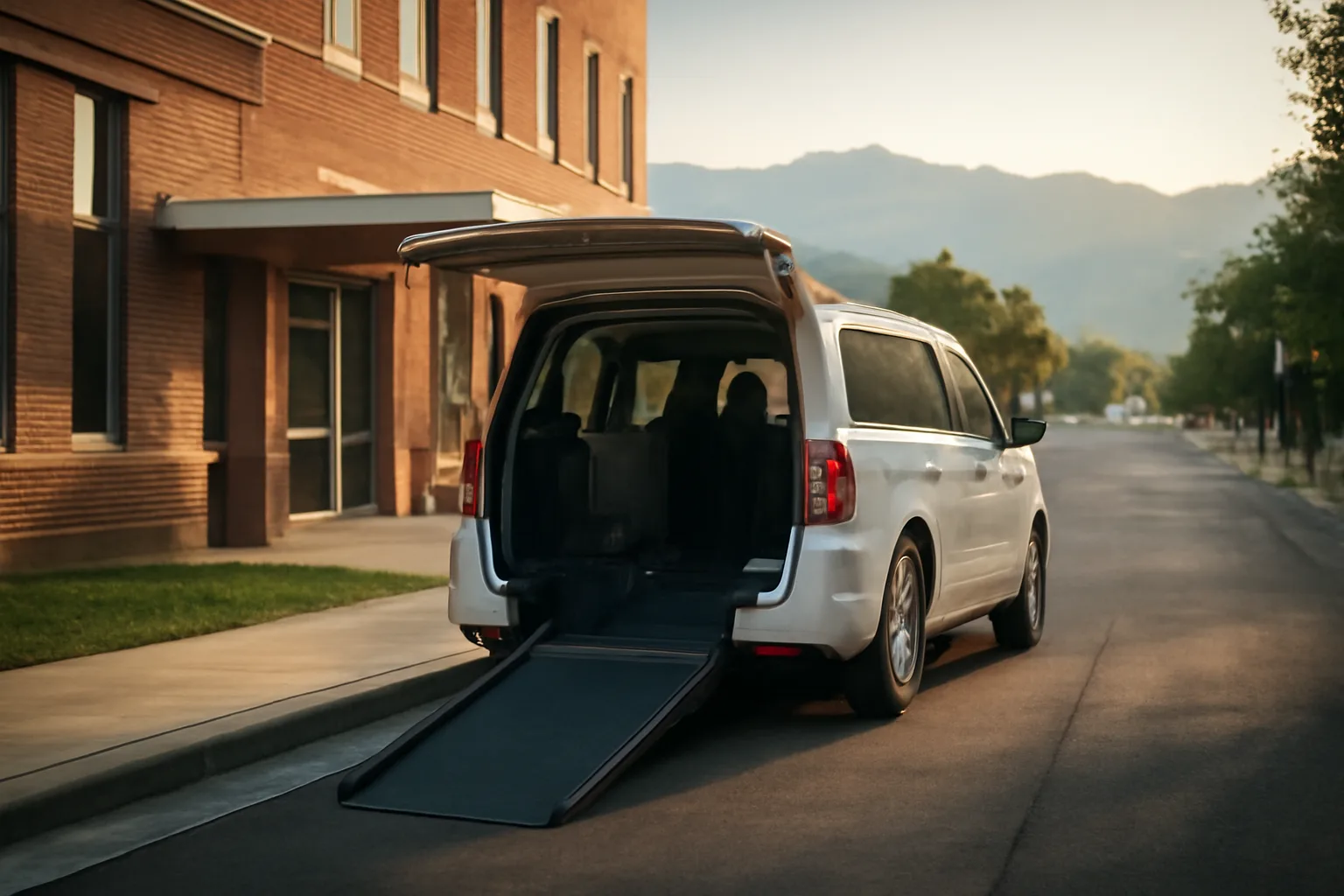
TL;DR
Non-emergency medical transportation (NEMT) moves Medicaid members to medical appointments when they don't need an ambulance. In Denver, that means enrolling as a Health First Colorado provider and getting credentialed with the state's contracted transportation broker (IntelliRide handles NEMT authorization in much of Colorado). Ambulance coverage runs through a separate Medicaid benefit; NEMT is a different program with different rules.
What is non-emergency medical transportation?
Non-emergency medical transportation, almost always shortened to NEMT, is transport for a Medicaid or Medicare Advantage member who needs to get to a medical appointment, dialysis, or a pharmacy pickup but doesn't need an ambulance or emergency response. Think wheelchair vans, ambulatory sedans, and stretcher cars, not lights and sirens. Federal Medicaid rules actually require this. States have to "ensure necessary transportation for recipients to and from providers" under 42 CFR 431.53, and CMS guidance describes NEMT as covering trips "to and from medical services" for members who have no other way to get there [1]. That's the legal backbone for every state NEMT program, including Colorado's. In Denver specifically, NEMT riders are usually going to dialysis centers, methadone clinics, dental offices, specialist visits, or discharge rides home from a hospital like Denver Health or Saint Joseph. The vehicle types vary: a wheelchair van is by far the most common startup vehicle because demand for wheelchair-accessible rides tends to outstrip ambulatory sedan demand in most metro markets, though nobody publishes hard local ridership splits for Denver specifically, so treat that as an industry pattern rather than a Colorado-specific stat. NEMT is not an ambulance service. It is not medical transport in the sense of critical care transfers between hospitals either. Mixing those up on an application is one of the most common reasons a new operator gets bounced back for corrections. If you're building out a broader understanding of the industry before you specialize in Denver, the nemt overview and what is non emergency medical transportation explainer are good starting points.
Does Medicaid cover ambulance rides?
Yes, but through a different benefit than NEMT. Medicaid ambulance coverage pays for emergency transport, and in many states also covers non-emergency ambulance transport when a member's medical condition requires monitoring or a stretcher-level of care during the ride, more than a wheelchair or car seat. CMS is explicit that ambulance services are billed and covered separately from routine NEMT: ambulance transport is a distinct Medicaid benefit category tied to medical necessity documentation, usually a physician's certification that the trip requires ambulance-level care [1]. A wheelchair van company generally can't bill as an ambulance, and an ambulance company generally isn't the right fit for a routine dialysis run. In Colorado, ambulance providers enroll with Health First Colorado under different provider type codes and billing rules than NEMT transportation providers. If you're planning to run wheelchair vans, you're in the NEMT lane, not the ambulance lane, and your enrollment paperwork will reflect that distinction. Confirm current provider type classifications with the Colorado Department of Health Care Policy and Financing (HCPF) before you file anything.
Does Medicare cover medical transportation?
Original Medicare covers ambulance transportation when it's medically necessary, but it does not generally cover routine NEMT rides like wheelchair van trips to a doctor's office. Medicare.gov states plainly that Medicare Part B covers ground ambulance transportation "when other transportation could endanger your health" and specifically when you need medically necessary transport to the nearest appropriate facility [2]. That's a much narrower benefit than what Medicaid NEMT covers. Some Medicare Advantage plans have started adding supplemental NEMT-style benefits (non-emergency rides to appointments) as a plan extra, but that varies by plan and by year, and it is not a standard Original Medicare benefit. If you want to contract with a Medicare Advantage plan for supplemental transportation benefits in the Denver area, you'd negotiate that directly with the plan or its transportation vendor, separate from your Health First Colorado Medicaid enrollment. For a new owner-operator, the practical takeaway is this: your bread-and-butter revenue path in Denver is Health First Colorado Medicaid NEMT, not Medicare. Don't build your whole business plan around Medicare transportation coverage. It isn't there for routine rides.
How do you start a medical transportation business?
Starting any medical transportation business, emergency or non-emergency, follows the same basic skeleton: form a legal business entity, get the right insurance, get the right vehicle inspected and equipped, get a driver with the right background clearances, then get enrolled with whoever pays the bills (Medicaid, a broker, a private-pay client base, or some mix). For NEMT specifically, the payer piece is usually two separate steps, not one. First you enroll as a Medicaid provider with the state (in Colorado, that's Health First Colorado through HCPF). Second, in states that use a transportation broker model, you also have to get credentialed with that broker before you can actually accept trip dispatches and get paid for rides. Colorado uses this broker model for much of the state. A lot of first-time owners assume Medicaid enrollment alone gets them dispatched rides. It doesn't, not in a broker state. You need both the state Medicaid provider number and the broker credential, and the broker credentialing packet (insurance certificates, vehicle inspection forms, driver background check results, W-9, and often a facility or garage inspection) is usually the longer of the two processes.
How to start a NEMT business in Denver, step by step
Here's the realistic order of operations for a Denver-area wheelchair van startup. Timelines below are general ranges seen across NEMT markets; always confirm current processing times with HCPF and your broker directly, since these change. 1. Form your business entity (LLC is common) and get a federal EIN. 2. Get commercial auto insurance with the liability limits your state and broker require, plus general liability. Wheelchair van insurance minimums vary by state and broker; confirm exact limits before you buy a policy, because underinsuring here is a common reason credentialing gets delayed. 3. Buy or convert a wheelchair-accessible van and get it inspected to your state's vehicle standards. Colorado's Public Utilities Commission and HCPF each have relevant vehicle and safety requirements for medical transport vehicles; confirm current inspection requirements with both. 4. Get driver background checks done, including any state-required fingerprint-based criminal history check and a Colorado Department of Revenue motor vehicle record check. 5. Enroll as a Health First Colorado (Colorado Medicaid) provider through the HCPF provider enrollment portal. 6. Apply for broker credentialing with whichever transportation broker manages NEMT dispatch in your Denver service area. Confirm the current broker assignment and application steps directly with HCPF's transportation unit, since broker contracts and coverage areas can change. 7. Wait for both approvals, then start accepting trip assignments. Realistically, plan for this whole sequence to take longer than you'd like. Insurance quotes alone can take a week or two, vehicle inspections get backed up, and broker credentialing reviews commonly run several weeks once a complete packet is submitted. Nobody publishes a guaranteed Denver-specific timeline, so build in buffer, not urgency.
How do you start a medical transportation business with one van?
Plenty of Denver NEMT operators start with exactly one wheelchair van, and that's completely workable. The credentialing process doesn't require a fleet; it requires a compliant vehicle, a qualified driver (who might be you), proper insurance, and a completed application packet. With one van, you're essentially betting your own labor and one vehicle's uptime against fixed costs: insurance premiums, vehicle maintenance, fuel, and any per-trip broker fees or claims processing costs. A single mechanical breakdown means zero capacity that day, so factor a maintenance reserve into your budget from day one, not as an afterthought. One real constraint with a one-van operation: some brokers and some Medicaid contracts have minimum vehicle or driver counts for certain trip types (standing dialysis routes, for example, sometimes go to providers who can guarantee backup coverage). Ask your broker directly whether a single-vehicle provider is eligible for all trip types or only a subset, before you assume you'll get access to every route category. Most people we'd point toward a one-van start also want a clear map of exactly which state and broker documents apply to their situation, since guessing wrong on a form is what causes rework. That's the specific gap a $199 State + Broker NEMT Launch Kit is built to close: it's a paperwork and requirements map, not a guarantee of approval, and it doesn't replace confirming current rules with HCPF and your broker.
How does Colorado Medicaid enrollment work for NEMT providers?
Colorado Medicaid, branded as Health First Colorado, is administered by the Department of Health Care Policy and Financing (HCPF). Transportation providers enroll through HCPF's provider enrollment system, and HCPF's Non-Emergency Medical Transportation program page describes NEMT as covering rides to Health First Colorado covered services for members who have no other transportation available. HCPF's own program language notes that NEMT is managed through transportation brokers in different regions of the state, and that members and providers should contact the applicable regional broker for trip scheduling and provider participation questions. That two-layer structure (state Medicaid enrollment, plus regional broker participation) is the single most important structural fact for a new Denver operator to understand before filling out anything. Colorado has used IntelliRide as its NEMT broker for a large part of the state in recent years, including the Denver metro region, though broker assignments and contract terms can change over time. Colorado's 1915(b) NEMT waiver documentation, which CMS maintains alongside other state waiver authorities, is the underlying federal approval that lets the state run this broker model instead of paying every transportation provider directly [3]. Don't take a broker name as gospel from any article, including this one. Confirm the current broker and its Denver-area coverage directly with HCPF's Non-Emergency Medical Transportation program page before you apply. For a broader look at how state Medicaid transportation programs are structured outside Colorado, see medical transportation and non emergency medical transportation services.
What does broker credentialing actually require in Denver?
Broker credentialing is a separate application on top of your Medicaid enrollment, and it's usually where new owner-operators lose the most time. Every broker's exact checklist differs, and Colorado's assigned broker can change its own forms year to year, but the categories of documentation tend to repeat across the industry: - Proof of commercial auto insurance meeting the broker's minimum liability limits
- Vehicle registration and a passed safety/ADA-accessibility inspection for wheelchair vans
- Driver background checks, often including fingerprint-based state and FBI criminal history results
- Driver's license and driving record checks
- Business licensing documents (articles of organization, EIN letter, W-9)
- A signed provider participation or broker agreement
- Sometimes a facility or vehicle photo inspection The order matters. Insurance certificates and vehicle inspections have to reference the actual VIN and policy details the broker will check, so get your vehicle titled and insured before you start the credentialing paperwork, not after. Submitting an incomplete packet is the single biggest self-inflicted delay operators report anecdotally across NEMT forums and broker guidance pages, though there's no formal published data quantifying how common this is. Confirm the current credentialing checklist directly with your assigned Denver-area broker. Broker requirements are not published in Colorado Medicaid statute and can shift without a corresponding change to HCPF policy.
What vehicle and driver requirements apply to Denver wheelchair vans?
Colorado wheelchair vans used for Medicaid NEMT need to meet both general commercial vehicle safety standards and accessibility requirements for securing a wheelchair safely during transport. That typically means functioning wheelchair lifts or ramps, working securement straps rated for the vehicle, and a passed annual (or broker-required) safety inspection. Drivers generally need a valid Colorado driver's license appropriate to the vehicle class, a clean or explainably clean motor vehicle record, and clearance through a criminal background check process defined by HCPF and the broker. The Colorado Department of Regulatory Agencies (DORA), through its Public Utilities Commission, regulates certain classes of motor carriers operating in the state, and medical transport vehicles can intersect with that oversight depending on vehicle classification and whether the carrier also operates outside Medicaid work [4]. Confirm current classification rules with DORA and HCPF directly rather than assuming your van doesn't need it. None of this is a one-time hoop. Insurance renews annually, vehicle inspections typically recur annually or per broker schedule, and driver background checks often need periodic renewal too. Build recurring compliance costs into your budget the same way you'd budget for fuel, not as a surprise line item in year two.
What does it cost to get started, roughly?
There's no single official number here because insurance premiums, vehicle costs, and broker fees all vary by carrier, vehicle condition, and driving history. But the major cost buckets for a Denver one-van startup generally include: the wheelchair van itself (new or used conversion), commercial auto and general liability insurance premiums, background check and inspection fees, and any Colorado business licensing fees. Beyond the vehicle, expect meaningful ongoing insurance premiums specific to wheelchair-accessible commercial vehicles, since underwriters price these differently than a standard sedan due to lift/ramp liability exposure. Get insurance quotes early in your planning process, not after you've already committed to a specific van purchase, because premium quotes sometimes change the math on which vehicle makes sense. We're deliberately not putting a dollar figure on total startup cost here, because giving you a fake-precise number would be worse than giving you none. Get quotes from at least two or three commercial auto insurers who specifically write NEMT or paratransit policies, and treat any number you see in a generic blog post (including implicitly this one) with real skepticism until you've confirmed it against an actual quote.
Colorado NEMT enrollment and credentialing at a glance
| Step | Who handles it | What it establishes | |
|---|---|---|---|
| Business entity formation | Colorado Secretary of State | Legal right to operate as an LLC or corporation | |
| Commercial insurance | Private insurer | Liability coverage meeting state/broker minimums | |
| Vehicle inspection | State/broker-designated inspector | Vehicle meets safety and accessibility standards | |
| Medicaid provider enrollment | HCPF (Health First Colorado) | Provider number to bill Health First Colorado | |
| Broker credentialing | Assigned regional NEMT broker | Eligibility to receive dispatched trips and get paid | |
| Ongoing compliance | HCPF + broker | Renewed insurance, inspections, background checks | This table is a structural map, not a checklist you should follow blindly. Confirm each row's specific current requirements with HCPF and your broker before treating any step as complete. Order can shift slightly depending on whether your insurer or broker wants documents in a particular sequence. |
What trips actually qualify for NEMT in Colorado?
Health First Colorado's NEMT benefit generally covers transportation to Medicaid-covered medical services for members who have no other means of transportation available, which is the same basic standard CMS describes at the federal level [1]. In practice for a Denver driver, that means trips like dialysis, methadone/opioid treatment program visits, physical therapy, specialist appointments, and hospital discharge rides. It does not mean every ride a member wants. Grocery runs, non-medical errands, and trips to services Health First Colorado doesn't cover generally fall outside NEMT eligibility, and brokers do deny trip requests that don't meet program criteria. Members typically have to show they lack another transportation option, sometimes including asking about available family, friends, or public transit before a trip gets approved. As a driver or operator, you're not usually the one determining medical necessity. That's decided upstream by the broker's trip authorization process. Your job is showing up for authorized trips, documenting pickups and drop-offs accurately, and following the vehicle/securement standards the state and broker require. Good trip documentation habits also matter for emergency medical transport providers who sometimes handle mixed emergency/non-emergency fleets, since billing rules differ sharply between the two categories.
What mistakes should new Denver NEMT operators avoid?
The most common mistake is treating Medicaid enrollment and broker credentialing as one step. They're not. Plenty of new operators get their Health First Colorado provider number and assume they can start driving trips, only to find out they still need a separate broker credentialing approval before dispatch will send them anything. The second common mistake is buying the van before confirming insurance costs and inspection standards. A wheelchair van that looks like a great deal can turn into a bad decision if it needs expensive retrofit work to pass accessibility inspection, or if your insurer won't write a policy on that specific make and model at a price you can absorb. The third is underestimating renewal cycles. Insurance, background checks, and vehicle inspections aren't one-and-done; they recur, and missing a renewal date can knock you out of active broker status until you catch up. Put renewal dates on a calendar the day you get each approval, not the week before it expires. Last, don't skip reading the actual HCPF NEMT program page and your broker's current provider manual. Blog articles, including this one, are a map for orientation. The state's own program page and your broker's provider manual are the sources that control what actually gets approved.
Frequently asked questions
What is non-emergency medical transportation (NEMT)?
NEMT is transportation to and from medical appointments, dialysis, or pharmacy pickups for people who don't need an ambulance or emergency response. It typically uses wheelchair vans, ambulatory sedans, or stretcher vans. Medicaid programs are required to arrange this kind of transportation for eligible members under federal rule 42 CFR 431.53, and Colorado runs its program as Health First Colorado NEMT through HCPF.
Does Medicaid cover ambulance rides in Colorado?
Yes, Medicaid covers medically necessary ambulance transportation as a distinct benefit from NEMT, generally requiring documentation that the trip needed ambulance-level monitoring or a stretcher. This is billed and enrolled separately from routine wheelchair van or sedan NEMT trips. Confirm current ambulance provider enrollment rules directly with Colorado HCPF.
Does Medicare cover medical transportation?
Original Medicare Part B covers medically necessary ground ambulance transportation, but it generally does not cover routine non-emergency rides like wheelchair van trips to a regular doctor's appointment. Some Medicare Advantage plans add supplemental non-emergency transportation benefits, but that varies by plan and isn't part of standard Original Medicare coverage.
How do I start a NEMT business in Denver?
Form a business entity, get commercial auto and liability insurance, buy or convert a wheelchair-accessible van and pass inspection, get driver background checks done, enroll as a Health First Colorado Medicaid provider through HCPF, then apply for credentialing with the regional NEMT broker covering Denver. Both the Medicaid enrollment and the broker credentialing are required before you can accept paid trips.
Can I start a medical transportation business with just one van?
Yes, one wheelchair van is enough to start the credentialing process; there's no fleet-size minimum in most state Medicaid enrollment rules. Some brokers may limit which trip types a single-vehicle provider can accept, particularly standing routes needing backup coverage, so ask your broker directly what a one-van provider is eligible for.
What's the difference between NEMT and an ambulance service?
NEMT transports people who don't need medical monitoring during the ride, usually in wheelchair vans or sedans. Ambulance service is for people whose condition requires medical care or monitoring during transport. They're enrolled under different Medicaid provider types and billed under different benefit categories, and a wheelchair van company generally cannot bill as an ambulance provider.
Who is the NEMT broker for Denver, Colorado?
Colorado has used IntelliRide as its NEMT broker for large parts of the state including the Denver metro area in recent years, but broker contracts and coverage regions can change. Confirm the current broker assignment directly on HCPF's Non-Emergency Medical Transportation program page before applying for credentialing.
How long does Colorado Medicaid NEMT provider enrollment take?
There's no single guaranteed timeline; processing time depends on how complete your application packet is and current HCPF workload. Insurance quotes, vehicle inspections, and background checks each add their own lead time. Build in several weeks of buffer for the combined state enrollment and broker credentialing process rather than expecting a fast turnaround.
What insurance do I need for a Denver wheelchair van NEMT business?
You'll need commercial auto liability insurance meeting your state and broker's minimum limits, plus general liability coverage; specific dollar minimums vary by broker and by vehicle type. Get quotes from insurers who specifically underwrite NEMT or paratransit vehicles, since wheelchair lift and securement liability is priced differently than standard commercial auto.
Does NEMT cover trips to the pharmacy or grocery store?
NEMT generally covers transportation to Medicaid-covered medical services, including pharmacy pickups tied to a covered prescription in many state programs. Grocery runs and general errands typically fall outside NEMT eligibility. Trip approval is decided by the broker's authorization process based on medical necessity and lack of other transportation options.
What background checks do NEMT drivers need in Colorado?
Drivers generally need a valid Colorado driver's license, a clean or explainable motor vehicle record, and a criminal background check, often fingerprint-based, as required by HCPF and the assigned broker. Requirements can vary by broker, and background checks typically need periodic renewal to keep active credentialed status.
Is Medicaid enrollment the same as broker credentialing?
No, they are two separate steps. Medicaid enrollment through HCPF gives you a Health First Colorado provider number, but in Colorado's broker-managed NEMT system you also need separate credentialing approval from the regional broker before you can actually receive dispatched trips and get paid.
Sources
- CMS, Medicaid.gov, Non-Emergency Medical Transportation and 42 CFR 431.53: Federal Medicaid rule requiring states to ensure necessary transportation to and from medical providers, and the distinct treatment of ambulance vs. NEMT benefits
- Medicare.gov, Ambulance Services coverage page: Medicare Part B covers medically necessary ground ambulance transportation but not routine non-emergency rides
- CMS, Colorado 1915(b) Non-Emergency Medical Transportation Waiver: Federal waiver authority underlying Colorado's use of a regional transportation broker model for NEMT instead of direct fee-for-service enrollment of every transportation provider
- Colorado Department of Regulatory Agencies (DORA), Public Utilities Commission, Motor Carrier regulation: State regulatory oversight of certain motor carrier classes in Colorado, relevant to how some medical transport vehicles are classified
- 42 CFR 431.53, Assurance of transportation: Full regulatory text requiring state Medicaid agencies to ensure necessary transportation for recipients to and from providers