Last updated 2026-07-25
TL;DR
A non-emergency medical transportation provider application is the paperwork package (business license, vehicle proof, insurance, driver background checks, and often a state Medicaid enrollment plus broker credentialing) you file to legally bill Medicaid for rides to medical appointments. Most states route payment through a broker like Modivcare or MTM, so you usually need to clear both state enrollment and broker credentialing before you get your first trip.
What is non emergency medical transportation, exactly?
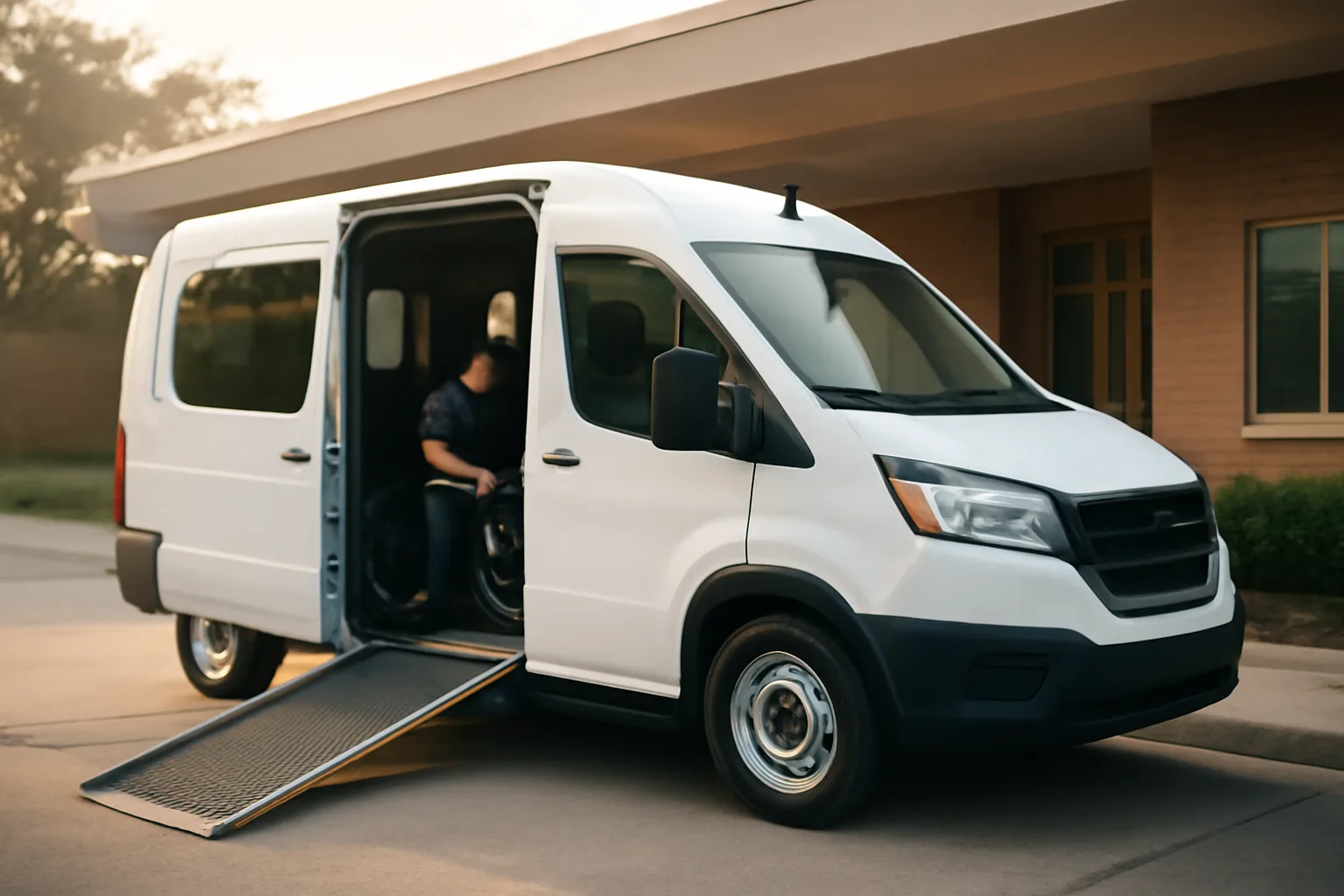
Non-emergency medical transportation, almost everyone in the field just says NEMT, is transport to and from covered medical services for people who don't need an ambulance but can't drive themselves or use a bus. Think dialysis three times a week, chemo, physical therapy, a WIC appointment, a psychiatrist visit. No siren, no paramedic, no IV drip. Just a safe ride, often in a wheelchair van or a sedan. Federal Medicaid rules require states to make sure eligible people can get to and from providers. The regulation is blunt about it: state Medicaid plans must "specify that the Medicaid agency will ensure necessary transportation for beneficiaries to and from providers" and may do this directly, through contracts, or through broker arrangements [1]. That's the legal root of the whole NEMT industry. Nobody bills for it as a whim; it exists because the federal rule requires access to care, and getting there is part of that. Most states don't run this in-house anymore. They hire a transportation broker, and that broker runs credentialing, dispatch, and payment for a whole state or region. That's why your paperwork often splits into two tracks: state Medicaid provider enrollment, and separate broker credentialing. You can read a broader breakdown of how this fits together in non emergency medical transportation and nemt transportation.
Does Medicaid cover ambulance rides, or just non-emergency rides?
Yes, Medicaid covers ambulance transportation too, but it's a completely separate program from NEMT and you don't apply for it the same way. Ambulance transport (emergency, or non-emergency transport that requires medical monitoring en route) is billed under a different Medicaid benefit category, usually requiring EMT or paramedic licensure and a state EMS agency permit, not a NEMT broker credential. CMS describes NEMT as covering situations where a beneficiary "has no other means of transportation" to a Medicaid-covered service and doesn't need ambulance-level care [2]. If your business model is wheelchair vans and ambulatory sedans, you're in NEMT, not ambulance. If you're planning wheelchair vans now and might add a BLS ambulance division later, know that's a wholly different licensing track (state EMS office, not the Medicaid transportation unit) and a different application entirely. Don't try to file one application expecting it to cover both; it won't. For background on the ambulance side specifically, see emergency medical transport.
Does Medicare cover medical transportation the same way Medicaid does?
No, and this trips up a lot of new owner-operators. Medicare's coverage of non-emergency transportation is much narrower than Medicaid's. Original Medicare Part B covers non-emergency ambulance transportation only when it's medically necessary and a physician certifies that other transportation would endanger the person's health [3]. It generally does not cover routine wheelchair-van rides to a dialysis clinic the way state Medicaid programs do. Some Medicare Advantage plans offer NEMT as a supplemental benefit, and that's a growing lane, but it's negotiated plan-by-plan, not a standard entitlement. If a chunk of your planned business is Medicare Advantage members, you'll be credentialing with that plan's transportation network or a broker it uses, separately from your state Medicaid work. Don't assume a Medicaid broker contract automatically gets you Medicare Advantage trips; ask each plan directly.
How to start a NEMT business: the real order of operations
Most people get the sequence backwards. They buy a van first, then try to figure out licensing. Flip it. Here's the order that actually saves you money and rework: 1. Confirm your state's rules for NEMT operating authority (some states require a separate NEMT provider license or permit before Medicaid enrollment; check with your state Medicaid transportation unit). 2. Form your business entity (LLC is standard) and get your EIN. 3. Get commercial auto insurance quotes for the specific vehicle class you're buying, because your insurance certificate is a required exhibit on almost every application. 4. Buy or lease the vehicle only after you know the wheelchair lift, tie-down, and inspection standards your state and broker require. 5. Complete driver requirements: background check, drug screen, defensive driving or passenger assistance training, and often a driving record pull (MVR). 6. Apply for state Medicaid provider enrollment. 7. Apply for broker credentialing (Modivcare, MTM, Access2Care, SafeRide, or whichever broker holds the contract in your service area, confirm with your state Medicaid agency which broker that is). 8. Wait for both approvals before you accept a single Medicaid trip. Skipping ahead to buy the van before you know your state's vehicle-age limit or lift-inspection rule is the single most common expensive mistake. People buy a used van, then find out it's two years past the broker's age cutoff and can't be used for Medicaid trips at all.
How do you start a medical transportation business from scratch, step by step?
Starting from zero, here's what the paperwork stack usually looks like, though every state's specific list varies (confirm with your state Medicaid agency): - Articles of organization or incorporation, filed with your Secretary of State
- Federal EIN from the IRS
- State and local business licenses (some counties require a separate NEMT or livery permit)
- Vehicle registration and title in the business name
- Commercial auto insurance with minimum liability limits set by your state (these vary widely; some states set NEMT-specific minimums, others default to general commercial passenger-vehicle minimums)
- Vehicle safety inspection, often annual, sometimes tied to a DOT or state transportation department standard
- Driver background checks (many states require an OIG exclusion list check and a state criminal background check)
- Driver training documentation (CPR/first aid, passenger assistance, wheelchair securement)
- W-9 and banking information for Medicaid reimbursement
- NPI (National Provider Identifier) number, required for most Medicaid billing entities The NPI is easy to forget. You apply for it free through the National Plan and Provider Enumeration System, and Medicaid enrollment applications almost always ask for it upfront. Get it early; it takes just minutes online and there's no fee, but it has to exist before some state portals will let you submit.
How to start a non-emergency medical transportation business with one van
You can absolutely start with a single wheelchair van. Plenty of owner-operators do. The paperwork burden per vehicle doesn't really shrink with fleet size, though, so a one-van operation still needs the same insurance certificate, same driver file, same vehicle inspection record as a ten-van company. The economics just mean you're carrying that fixed compliance cost across fewer billable seats. A few things matter more when you're solo: First, you are both the owner and probably the driver, so your own background check, driving record, and training certificates go on file, and you need a backup plan (a second qualified driver on paper) for when you're sick or the van is in the shop, because brokers often expect continuous service capability, not "I'll reschedule." Second, your vehicle has to meet the wheelchair lift and securement standards spelled out by your state and broker (tie-down points, lift capacity, height clearance). A used van that looks fine can still fail a NEMT-specific inspection if the lift wasn't installed to spec. Third, expect processing time. State Medicaid provider enrollment alone commonly runs several weeks once your file is complete, and broker credentialing runs on its own separate timeline after that, sometimes overlapping, sometimes not, depending on the state (confirm current timelines with your broker and state Medicaid agency, since these change and vary by state).
What does the state Medicaid provider enrollment application actually ask for?
| Business entity documents | Confirms you're a legal operating entity | |
|---|---|---|
| EIN and NPI | Required identifiers for claims and payment | |
| Certificate of insurance | Proves minimum liability coverage is active | |
| Vehicle list with VINs | Ties specific vehicles to your provider number | |
| Driver roster | Background check and license status per driver | |
| Ownership disclosure | Federal Medicaid rule requires disclosure of owners with 5%+ interest [4] | |
| Site or office address | Some states require a physical business location, more than a P.O. box | On ownership disclosure specifically, this isn't optional paperwork theater. Federal regulation at 42 CFR 455.104 requires Medicaid provider agreements to include disclosure of persons with an ownership or controlling interest of 5 percent or more [4]. States enforce this at enrollment and can ask for it again at revalidation. Many states also require periodic revalidation, commonly every few years, so your provider file isn't a one-and-done filing; you'll refile updated insurance certificates, vehicle lists, and sometimes background checks on a schedule your state sets (confirm your state's specific revalidation interval). Federal rule sets an outer bound here too: state Medicaid agencies must revalidate enrollment of all providers, regardless of provider type, at least every five years, under 42 CFR 455.414 [5]. |
State Medicaid provider enrollment for NEMT typically asks for a fairly standard packet, though exact fields differ by state Medicaid transportation unit: | Item | Why it's asked |
What does broker credentialing add on top of state enrollment?
Broker credentialing is a second, separate approval, and it's where a lot of new operators get surprised. Being enrolled with your state Medicaid agency does not automatically make you an approved network provider for Modivcare, MTM, Access2Care, or SafeRide. The broker runs its own application, often through an online portal, and asks for much of the same documentation again plus broker-specific items: GPS/dispatch app compliance, a specific insurance additional-insured endorsement naming the broker, vehicle photos, and sometimes a ride-along or vehicle inspection by a broker rep. Each broker's exact document list, minimum insurance limits, and vehicle age cutoffs are set by that broker's contract in that state, and they do change. Don't rely on a forum post from two years ago; confirm current requirements directly with the broker's provider network team and your state Medicaid transportation unit before you assume you qualify. A practical note: brokers frequently pause new provider onboarding in a given region when they have enough network capacity. That's not a paperwork problem you can fix; it's a network-capacity decision on their end, and the only real move is to ask directly when they expect to reopen credentialing in your service area. For more detail on broker-specific processes, see nemt and non emergency medical transportation services.
What insurance and vehicle standards do NEMT applications require?
Insurance minimums for NEMT vehicles are set at the state level and vary a real amount from state to state, so there's no single national number to quote here; some states set NEMT-specific commercial liability minimums well above standard personal auto limits, and brokers frequently require higher limits than the state floor plus an additional-insured endorsement naming the broker. Get your quote in writing before you buy the van, because insurers price wheelchair-lift vehicles differently than standard passenger vans, and the premium difference can be significant. Vehicle standards commonly cover: wheelchair lift or ramp weight capacity, tie-down and occupant restraint systems meeting a recognized standard, vehicle age limits (many brokers won't credential vehicles past a certain model-year age), and a documented preventive maintenance schedule. Ask your state Medicaid transportation unit and your target broker for their current vehicle standards documents before you sign a purchase agreement, not after. For a deeper look at lift specs, securement rules, and inspection checklists, see medical transportation.
How long does the whole application process usually take?
Nobody publishes a single reliable national average, and anyone who quotes you an exact number for every state is guessing. What's true across most states: state Medicaid provider enrollment and broker credentialing are sequential or overlapping processes, not one form, and each has its own review queue. Incomplete applications (missing insurance certificate, missing NPI, missing background check results) are the single biggest cause of delay, more than the review itself. A realistic planning approach is to assume the combined process, from your first application submission to your first approved trip, takes measurably longer than a typical business license renewal, often stretching across multiple months when you count vehicle acquisition, insurance binding, driver onboarding, state review, and broker credentialing back to back. Build your cash flow plan around that reality rather than around a best-case guess, and confirm current processing timelines directly with your state Medicaid agency and target broker before you commit to a vehicle purchase date.
What paperwork mistakes cause the most rejections and delays?
A few patterns show up constantly: - Insurance certificate doesn't list the broker as additional insured, or the effective date has already lapsed by the time the application is reviewed.
- Vehicle VIN on the application doesn't match the VIN on the insurance certificate or registration (a simple typo that stalls the whole file).
- Driver background check is older than the window the state or broker accepts (some require checks within the past 12 months, others differ, confirm current windows).
- NPI application submitted late, so the Medicaid enrollment form sits incomplete waiting on a number that takes only minutes to get but wasn't requested until deadline week.
- Ownership disclosure left blank or incomplete, which federal rule requires be filled out accurately for anyone with 5 percent or more ownership interest [4].
- Assuming state enrollment equals broker approval, then showing up ready to take trips with only half the credentialing done. None of these are exotic problems. They're clerical, and they're avoidable if you build a document checklist before you start filing instead of chasing paperwork after a rejection letter comes back.
Building your own application checklist (or using a done-for-you one)
You can absolutely build this checklist yourself from your state Medicaid transportation unit's website and each broker's provider manual. It takes real time to track down every state-specific form, insurance minimum, and broker document list, especially if you're trying to launch in a state where the broker's provider portal isn't well organized. If you'd rather not spend weeks piecing that together from scratch, RideCredential's $199 one-time State + Broker NEMT Launch Kit compiles the state Medicaid enrollment checklist and broker credentialing document list into one package for your state, so you're filing complete applications the first time instead of getting bounced back for a missing endorsement or an old background check. You can start building yours at /launch-kit-builder. It's a reference tool, not a guarantee of approval; final credentialing decisions are always up to your state Medicaid agency and the broker.
What happens after you're approved: staying compliant
Approval isn't the finish line. Federal rule requires state Medicaid agencies to revalidate every enrolled provider's information at least once every five years under 42 CFR 455.414 [5], and brokers typically require ongoing proof of current insurance, vehicle inspections, and driver background checks on their own, often shorter, cycle, sometimes annually. Let any one of those lapse and you can be suspended from taking broker trips even if your state Medicaid enrollment is technically still active. Keep a simple compliance calendar: insurance renewal date, vehicle inspection due date, each driver's background check expiration, and your state's revalidation window. This is the boring part of the business, but it's also the part that keeps you earning instead of sidelined for a paperwork lapse. For ongoing operational guidance once you're running trips, see non emergency medical transportation and nemt transportation.
Frequently asked questions
What is non emergency medical transportation?
Non-emergency medical transportation (NEMT) is transport to and from covered medical appointments for people who don't need ambulance-level care but can't get there on their own. It covers things like dialysis, physical therapy, and mental health visits. Federal Medicaid rule requires states to ensure this access, directly, by contract, or through a broker [1].
Does Medicaid cover ambulance rides?
Yes, but ambulance transport is a separate Medicaid benefit from NEMT, billed under different rules and requiring EMT/paramedic licensure through your state EMS office, not a NEMT broker credential. NEMT covers non-emergency rides in wheelchair vans or sedans; ambulance covers emergency or medically monitored transport.
Does Medicare cover medical transportation?
Medicare Part B covers non-emergency ambulance transport only when a doctor certifies other transportation would endanger the patient's health [3]. It doesn't broadly cover routine wheelchair-van rides the way state Medicaid programs do. Some Medicare Advantage plans add NEMT as a supplemental benefit, but that's negotiated plan by plan, not standard.
How do I start a NEMT business?
Form your business entity, get an EIN and NPI, line up commercial auto insurance for your vehicle class, buy a van that meets your state's lift and securement standards, complete driver background checks and training, then apply for state Medicaid provider enrollment and separately for broker credentialing (Modivcare, MTM, Access2Care, SafeRide, or your state's contracted broker).
Can I start a non-emergency medical transportation business with just one van?
Yes, many owner-operators start with one wheelchair van. You still need full insurance, vehicle inspection, driver background checks, and both state and broker applications, the same as a larger fleet. Plan for a backup driver on file, since brokers expect continuous service capability even from single-vehicle operators.
What documents does the state Medicaid provider enrollment application require?
Typically: business entity documents, EIN, NPI, certificate of insurance, vehicle list with VINs, driver roster with background checks, and ownership disclosure for anyone with 5% or more ownership interest, which federal regulation 42 CFR 455.104 requires [5]. Exact forms vary by state, so confirm with your state Medicaid transportation unit.
Is broker credentialing the same as state Medicaid enrollment?
No. They're separate approvals. State Medicaid enrollment lets you bill the state Medicaid program directly; broker credentialing (with Modivcare, MTM, Access2Care, SafeRide, or whichever broker holds your state's contract) is a separate application that broker runs to let you take trips through its dispatch network. You typically need both.
How long does NEMT provider approval usually take?
There's no single reliable national average, and it varies heavily by state and broker. Combined state enrollment and broker credentialing, from first submission to first approved trip, commonly stretches across several months once you count insurance binding, driver onboarding, and both review queues. Confirm current timelines directly with your state Medicaid agency and broker.
What insurance do I need for a NEMT provider application?
Commercial auto liability insurance is required, with minimums set by your state and often higher minimums or an additional-insured endorsement required by your broker. These limits vary significantly by state, so get a written quote for your specific vehicle class before purchase and confirm current minimums with your state Medicaid agency and target broker.
Do I need an NPI number to bill Medicaid for NEMT?
Most states require an NPI (National Provider Identifier) for Medicaid billing entities, including NEMT providers. It's free to apply for through the National Plan and Provider Enumeration System [4] and takes only minutes online, but get it early since many state enrollment portals require it before you can submit your application.
What's the difference between NEMT and ambulance transport under Medicaid?
NEMT covers non-emergency rides for people who don't need medical monitoring en route, in wheelchair vans or ambulatory vehicles. Ambulance transport covers emergency or non-emergency trips requiring EMT/paramedic-level care and monitoring, licensed through your state EMS agency, and billed under a completely different Medicaid benefit category.
Why would my NEMT provider application get rejected or delayed?
Common causes: insurance certificate missing the broker as additional insured, VIN mismatches between application and registration, expired driver background checks, missing NPI, or incomplete ownership disclosure. Most delays are clerical, not substantive, and are avoidable with a complete document checklist before you file.
How often do I have to revalidate my NEMT Medicaid enrollment?
Federal rule at 42 CFR 455.414 requires state Medicaid agencies to revalidate enrollment of all providers at least every five years, regardless of provider type. Some states set a shorter cycle. Brokers often run separate, sometimes annual, checks on insurance and driver credentials, so track both schedules, more than the state one.
Sources
- 42 CFR 431.53, Assurance of transportation: State Medicaid plans must ensure necessary transportation for beneficiaries to and from providers, directly, by contract, or through a broker
- Medicaid.gov, Non-Emergency Medical Transportation: NEMT covers beneficiaries who have no other means of transportation to Medicaid-covered services and don't require ambulance-level care
- Medicare.gov, Ambulance Services coverage: Medicare Part B covers non-emergency ambulance transportation only when medically necessary and physician-certified
- 42 CFR 455.104, Disclosure by Medicaid providers: Medicaid provider agreements must include disclosure of ownership or controlling interest of 5 percent or more
- 42 CFR 455.414, Revalidation of provider enrollment: State Medicaid agencies must revalidate enrollment of all enrolled providers at least every five years