Last updated 2026-07-25
TL;DR
Minnesota doesn't issue a single 'NEMT license.' You need Minnesota Health Care Programs (Medicaid) enrollment through DHS, proper vehicle permits from DVS, driver background checks, and separate credentialing with the regional broker managing rides in your county. Budget several weeks for paperwork and expect to redo parts of it if a broker's requirements differ from the state's minimums.
What is non-emergency medical transportation (NEMT), and how is Minnesota's system set up?
Non-emergency medical transportation, usually shortened to NEMT, is transportation to and from covered medical services for people who don't have an emergency but also can't get there on their own. Think dialysis three times a week, a wheelchair user going to physical therapy, or a mental health appointment for someone without a car. It's not an ambulance run and it's not a Lyft ride booked on a whim. It's a scheduled or same-day trip tied to a Medicaid-covered service, and states are required to provide it. Minnesota organizes its Medicaid NEMT program (the state calls it 'Non-Emergency Medical Transportation' under Minnesota Health Care Programs, or MHCP) through regional transportation management contractors. As of the most recent program structure, the Minnesota Department of Human Services (DHS) has divided the state into regions and assigns a broker to coordinate rides, verify eligibility, and dispatch trips to enrolled providers in each region [1]. That means your actual day-to-day relationship as an owner-operator is mostly with a broker, not directly with the state, even though your legal enrollment is with DHS. This two-layer structure trips up a lot of new operators. You can be fully enrolled as an MHCP provider and still not get a single dispatched trip because you haven't finished the separate broker credentialing packet for your region. Both steps are mandatory. Neither one substitutes for the other. For background on how NEMT programs work nationally, see our overview of non emergency medical transportation and the broader nemt hub page.
Does Minnesota require a specific 'NEMT license,' or is it a bundle of separate approvals?
| Medicaid provider enrollment | DHS (state Medicaid agency) | Legal authority to bill MHCP for NEMT trips | |
|---|---|---|---|
| Broker credentialing | Regional MTO/broker | Dispatch access, trip assignment, rate agreement | |
| Driver licensing | DVS (driver's license) | Class D or CDL depending on vehicle, background checks | |
| Vehicle compliance | DVS (registration/inspection) | Registration, safety inspection, wheelchair lift certification if applicable | |
| Local permit (some cities/counties) | City or county licensing office | Local operating authority, sometimes taxi/livery-style rules | Skipping any one of these rows means you can own a perfectly good wheelchair van and still not be allowed to bill for a single Medicaid trip. |
There is no single document called an 'NEMT license' in Minnesota. What you actually need is a bundle: Medicaid provider enrollment with DHS, a valid Minnesota driver's license with the correct class and any required endorsements, vehicle registration and inspection compliance through the Department of Public Safety's Driver and Vehicle Services (DVS), and broker credentialing with whichever managed transportation organization (MTO) covers your service region. Some counties or municipalities also require a local passenger transportation permit for vehicles carrying paying passengers, particularly in the Twin Cities metro. Confirm this with your city or county licensing office before you start operating, because requirements vary by jurisdiction and change over time. Here's the rough shape of what stacks up: | Requirement layer | Who administers it | What it covers |
How do you enroll as a Medicaid NEMT provider with Minnesota DHS?
You start by applying for Minnesota Health Care Programs (MHCP) provider enrollment through the DHS Provider Enrollment portal. Minnesota DHS states that providers must be enrolled and revalidated periodically to continue billing MHCP, consistent with federal Medicaid provider screening rules [2]. Federal regulation requires state Medicaid agencies to screen and enroll providers, including NEMT providers, and to revalidate enrollment at least every five years [3]. Expect the application to ask for your business's legal structure (sole proprietor, LLC, corporation), federal Employer Identification Number, National Provider Identifier (NPI) if applicable to your provider type, proof of insurance, vehicle information, and driver background check documentation. DHS may also require a site visit or additional verification depending on your provider category and risk level, since federal rules sort providers into limited, moderate, or high screening categories [3]. Don't assume your business type is exempt from an NPI. Confirm directly with DHS provider enrollment which category NEMT falls under for your specific business structure, because guidance has shifted over time and a wrong assumption here can delay your enrollment by weeks. Once enrolled, you're not automatically getting trips. Enrollment gives you the legal right to bill MHCP. Getting actual dispatched rides requires the separate broker step covered below.
How does broker credentialing work with Minnesota's regional NEMT contractors?
Minnesota assigns NEMT coordination to regional broker/MTO contracts rather than running one statewide call center. That means the specific broker you'll deal with depends on which county or region your business operates in. National broker names you may already recognize from other states, such as Modivcare, MTM, Access2Care, or SafeRide, may or may not hold the Minnesota contract for your area, and contracts can change when DHS rebids them. Confirm with your regional broker and the DHS transportation unit which specific contractor currently manages your county before you build a business plan around any one broker's name. This detail changes on a contract cycle, and building your onboarding paperwork around the wrong company wastes real time. Whatever the current broker is, expect a credentialing packet that duplicates a lot of what DHS already asked for, plus broker-specific items: a signed transportation service agreement, vehicle inspection sign-off using the broker's own form, driver roster with background check results, insurance certificates naming the broker as certificate holder or additional insured, and often a separate rate or reimbursement schedule you sign before you get dispatch access. Many owner-operators find the broker packet is actually the slower step, not the state enrollment. Brokers process a high volume of applications and your file sits in a queue behind everyone else's. Follow up by phone, more than email, if you haven't heard back in the timeframe they quoted you.
What vehicle and driver requirements apply to Minnesota NEMT operators?
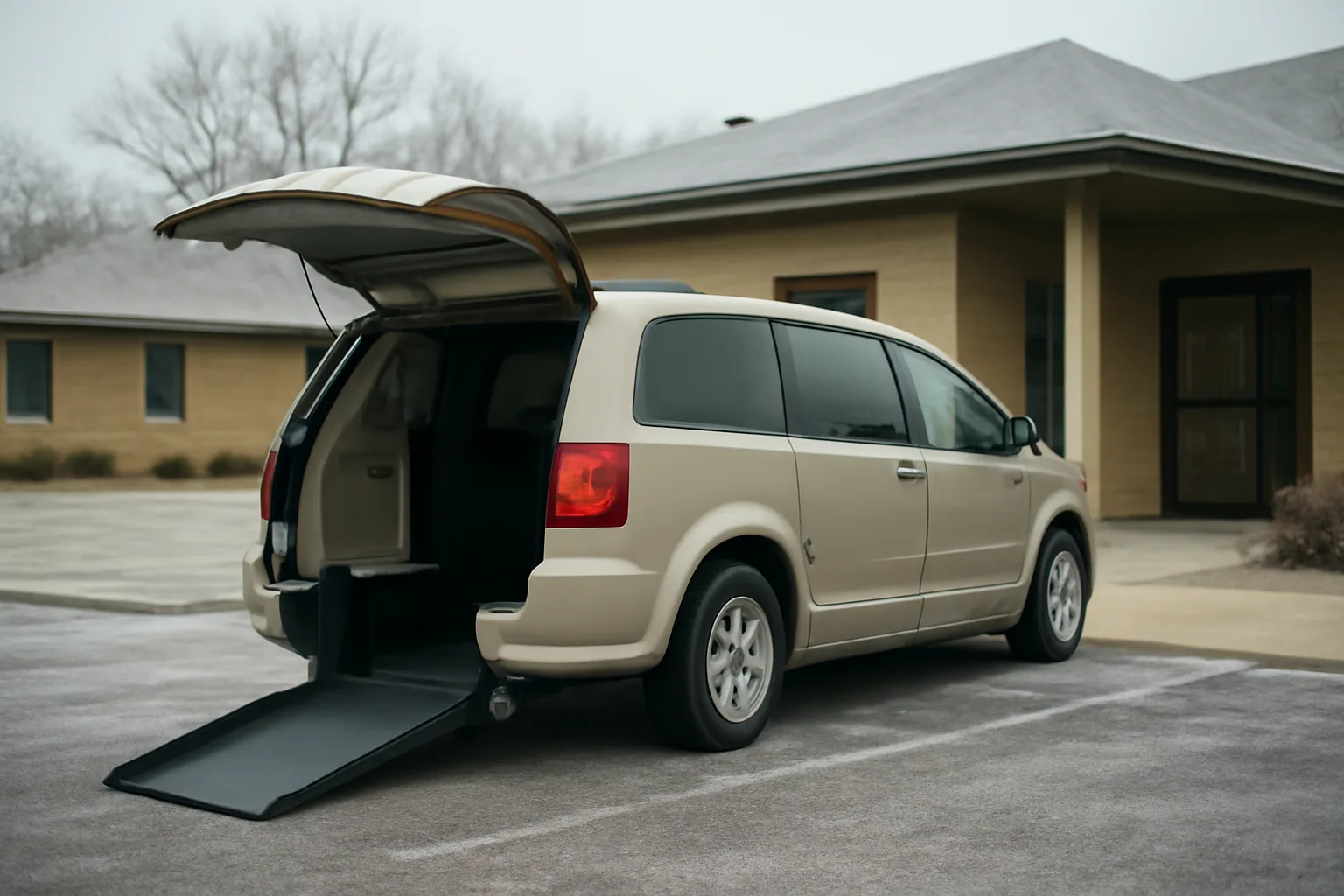
Your vehicle needs current Minnesota registration and must pass any applicable safety inspection. If you're running a wheelchair-accessible van, the wheelchair lift or ramp and the securement system typically need to meet the vehicle manufacturer's certification and any additional standard your broker specifies in its vehicle inspection checklist. Ask your broker for their exact checklist before you buy or convert a van, because retrofitting after the fact costs more than building it right the first time. Drivers need a valid Minnesota driver's license of the appropriate class. A standard wheelchair van under the weight threshold for a commercial license typically only requires a Class D license, but if your vehicle's gross vehicle weight rating crosses into commercial thresholds, or if you're transporting more passengers than a standard van allows, you may need a Class B or a passenger endorsement. Confirm the exact threshold and endorsement requirement with Minnesota DVS for your specific vehicle's GVWR, since this depends on the van's rating, more than how many seats it has. Background checks are required for anyone transporting Medicaid enrollees. Both DHS and the regional broker typically require a criminal background check, and many brokers also require a motor vehicle record check and drug screening as a condition of credentialing. Minnesota's Department of Human Services background study process (administered through NETStudy 2.0 for many health and human services providers) is one route this can run through, though the exact process for NEMT drivers should be confirmed with your broker and DHS directly, since requirements differ by provider category [4]. If you're just getting into the vehicle side of this business, our page on vehicles and equipment covers the general wheelchair van buying considerations that apply across states.
How do you start a medical transportation business in Minnesota, step by step?
Here's the realistic order of operations, based on how the pieces actually depend on each other rather than an idealized checklist. First, form your business entity (LLC is common for owner-operators) and get your EIN from the IRS. You'll need this before almost anything else, including insurance and DHS enrollment. Second, get commercial auto insurance quotes specifically for NEMT or livery use, not personal auto or generic commercial coverage. Insurers price wheelchair van NEMT work differently than standard rideshare or taxi because of the passenger vulnerability and lift equipment. Get quotes before you finalize your vehicle purchase so you know your real operating cost. Third, buy or convert your vehicle and get any required local passenger transportation permit if your city or county requires one. Fourth, apply for MHCP provider enrollment through DHS. This step alone can take several weeks depending on DHS processing volume and whether your application is complete on the first submission. Fifth, in parallel, contact the regional broker for your service area and request their credentialing packet. Don't wait for DHS enrollment to finish before starting this, since some brokers will begin review while your state enrollment is still processing, though they typically won't grant dispatch access until both are complete. Sixth, get your drivers through background checks, any required training, and vehicle inspection sign-off. Seventh, once both DHS enrollment and broker credentialing are approved, you'll get access to the broker's dispatch system and start receiving trip assignments. Realistically, treat this as a multi-week to multi-month process depending on how quickly you gather documents and how backed up DHS and the broker are that season. Rushing rarely helps; incomplete applications just get kicked back and restart the clock.
How to start an NEMT business with just one van
One van is a completely normal way to start, and Minnesota's enrollment process doesn't scale up or down based on your fleet size in terms of the paperwork required. You'll go through the exact same DHS enrollment and broker credentialing steps whether you have one van or twenty. What does change with a one-van operation is your risk exposure and scheduling flexibility. If your single vehicle is in the shop or your one driver is sick, you have zero backup capacity for that day's assigned trips. Brokers generally expect providers to fulfill assigned trips reliably, and repeated no-shows or cancellations can affect your standing with the broker, even outside a formal written policy, simply because dispatchers stop routing to unreliable providers. A practical move a lot of solo owner-operators make: line up a backup driver arrangement (even informal, as long as that driver is separately credentialed and background-checked through the same process) before you take your first trip assignment, not after your first breakdown. One van also means you should be conservative about how many trips you accept per day until you understand real drive times between pickups in your actual service area. Broker scheduling software doesn't always account for Minnesota winter driving conditions accurately, and a route that looks fine on paper in July can be unrealistic in a January whiteout.
Does Medicaid cover ambulance rides, and how is that different from NEMT?
Yes, Medicaid covers ambulance transportation when it's medically necessary, but that's a separate benefit category from NEMT and it works through a different reimbursement structure entirely. Medicaid.gov describes NEMT as required specifically for enrollees who need transportation to a covered service and have no other means of getting there, distinct from emergency ambulance transport [5]. Ambulance transport (emergency or medically necessary non-emergency ambulance transport, like an inter-facility transfer for a patient who needs monitoring en route) is billed as an ambulance service, typically requiring EMT or paramedic-level staffing and specific ambulance licensure through the state's EMS regulatory board, not through the NEMT broker system. If you're picturing wheelchair van or ambulatory sedan work, you are in the NEMT lane, not the ambulance licensure lane, and you don't need EMS certification for standard NEMT work. The distinction matters for two reasons. First, don't apply through the wrong channel; ambulance licensure in Minnesota runs through the Minnesota Department of Health's Emergency Medical Services Regulatory Board, a completely separate process from DHS provider enrollment for NEMT. Second, if a potential client or family member asks whether 'Medicaid covers ambulance rides' versus 'covers a ride to dialysis,' you can accurately tell them these are two different benefits with two different provider networks, which helps you set expectations about what your wheelchair van service can and can't do.
Does Medicare cover medical transportation the same way Medicaid does?
No, and this is one of the most common points of confusion for new operators and their prospective clients. Medicare's coverage of non-emergency transportation is much narrower than Medicaid's. Original Medicare generally covers ambulance transportation only when other transportation could endanger the person's health, and it does not have a broad NEMT benefit comparable to Medicaid's [6]. Some Medicare Advantage plans offer supplemental transportation benefits as an added perk, but that's plan-specific, not a standard Medicare Part A or Part B benefit, and coverage varies enormously by plan and by year. If you want to serve Medicare Advantage enrollees under a plan's transportation benefit, you'd typically need a separate contract with that specific insurance plan or its transportation vendor, which is a different credentialing process from Medicaid NEMT enrollment. Practically, this means your Minnesota NEMT business is overwhelmingly built around Medicaid (MHCP) enrollees and broker-dispatched trips, not Medicare. If a caller says 'my Medicare covers this ride,' verify that before you schedule anything, because in most cases it doesn't, and you don't want to provide a trip assuming reimbursement that isn't coming.
What does it cost to get licensed and credentialed, and how long does it take?
Minnesota DHS doesn't charge a standalone application fee for MHCP provider enrollment itself, though your actual out-of-pocket costs come from business formation, insurance, vehicle compliance, and driver background checks, all of which vary by vendor and provider. Confirm current fee structures directly with DHS provider enrollment, since fee policies can change. Your real costs are mostly indirect: business entity filing fees with the Minnesota Secretary of State, commercial insurance premiums (which vary widely based on your driving record, vehicle, and coverage limits), vehicle inspection and any wheelchair lift certification costs, and background check fees which some brokers pass through to providers directly. Timeline is the bigger variable than cost for most new operators. DHS provider enrollment processing time depends heavily on submission volume and whether your application is complete the first time; incomplete applications get returned, which restarts your place in the queue. Broker credentialing timelines are set by the individual broker and can run from a few weeks to a couple months depending on their current backlog. Confirm current expected timelines directly with DHS and your regional broker, since these are operational timeframes that shift with staffing and application volume, not fixed statutory deadlines. A reasonable expectation for a first-time applicant, based on how multi-step Medicaid provider enrollment generally works across states, is somewhere in the range of six to twelve weeks from a complete application submission to full dispatch access, assuming no major hiccups. That's a general expectation, not a Minnesota-specific guarantee, and yours could run faster or considerably slower.
What ongoing compliance do you need after you're licensed?
Getting enrolled and credentialed is the start, not the finish. Federal rule requires Medicaid provider revalidation at minimum every five years [3], and Minnesota DHS will contact enrolled providers when it's time to revalidate; missing that deadline can suspend your ability to bill. Your broker will likely have its own recurring requirements: annual vehicle inspections, periodic driver background check renewals, ongoing insurance certificate updates whenever your policy renews, and sometimes mystery-rider or quality audits. Keep a simple calendar of every renewal date across both the DHS side and the broker side, because these two systems don't automatically talk to each other and a lapse on one side doesn't get flagged by the other. Also expect periodic documentation requests tied to specific trips: pickup and drop-off time logs, mileage, and sometimes signature confirmation from the passenger or facility. Brokers audit these records, and inconsistent or missing trip documentation is a common reason providers get flagged or temporarily suspended from dispatch, separate from any state-level enrollment issue. If your business grows past one van, remember that every additional vehicle and driver typically needs to go through the same vehicle inspection and background check steps individually. Adding a van isn't just a fleet decision, it's a fresh compliance task.
Where a $199 launch kit fits into this process
None of the individual steps above are secret, but assembling them correctly, in the right order, with the paperwork formatted the way DHS and your specific regional broker actually want it, is where a lot of first-time operators lose weeks. If you'd rather not build every state and broker form from scratch, RideCredential's $199 one-time State + Broker NEMT Launch Kit bundles the Minnesota DHS enrollment checklist with broker-specific credentialing templates so you're not guessing what each packet wants. It's a paperwork accelerator, not a guarantee of approval; DHS and your broker still make the final call. Check it out at /launch-kit-builder if you want a structured starting point instead of a blank page.
Frequently asked questions
What is non-emergency medical transportation (NEMT)?
NEMT is transportation to and from Medicaid-covered medical services for people who have no other way to get there and don't need emergency ambulance care. It covers rides like dialysis, physical therapy, and mental health appointments. States must provide it under federal Medicaid rules, and it's coordinated in Minnesota through regional broker contractors rather than one central agency [5].
Does Medicaid cover ambulance rides in Minnesota?
Yes, Medicaid covers ambulance transportation when it's medically necessary, but that's a separate benefit from NEMT with separate licensure through Minnesota's EMS Regulatory Board, not through DHS's NEMT provider enrollment or the regional broker system that wheelchair van and ambulatory operators go through.
Does Medicare cover medical transportation?
Original Medicare covers ambulance transport mainly when other transportation would endanger the patient's health, and it doesn't have a broad non-emergency transportation benefit like Medicaid does. Some Medicare Advantage plans add supplemental transportation benefits, but that's plan-specific and requires its own separate contract, not standard Medicare NEMT coverage [6].
How do you start a medical transportation business in Minnesota?
Form your business entity, get commercial auto insurance for NEMT use, acquire your vehicle, apply for MHCP provider enrollment through DHS, and simultaneously start broker credentialing with your region's contracted transportation vendor. You need both DHS enrollment and broker approval before you can receive dispatched trips; neither alone is sufficient.
How do you start an NEMT business with just one van?
You go through the same DHS enrollment and broker credentialing steps as a larger fleet; paperwork requirements don't scale down for a single vehicle. The real difference is operational risk: no backup vehicle or driver if yours is unavailable. Line up a credentialed backup driver before your first trip, not after your first breakdown.
Is there a single 'NEMT license' issued by Minnesota?
No. Minnesota requires a bundle of separate approvals: Medicaid (MHCP) provider enrollment through DHS, driver licensing and background checks through DVS, vehicle registration and inspection compliance, broker credentialing with your regional managed transportation contractor, and sometimes a local passenger transportation permit depending on your city or county.
Which broker manages NEMT dispatch in Minnesota?
Minnesota assigns NEMT coordination through regional broker contracts that DHS periodically rebids, so the specific company covering your county can change over time. Confirm the current broker for your service region directly with DHS's transportation unit before building your credentialing paperwork around any particular company's name.
What vehicle requirements apply to Minnesota wheelchair vans used for NEMT?
Your van needs current Minnesota registration and must pass applicable safety inspections. Wheelchair lifts and securement systems generally need to meet manufacturer certification standards plus any additional checklist items your specific broker requires. Ask for the broker's exact vehicle inspection checklist before buying or converting a van.
Do NEMT drivers need a commercial driver's license (CDL) in Minnesota?
It depends on your vehicle's gross vehicle weight rating and passenger capacity, more than how many seats it has. Standard wheelchair vans usually only require a Class D license, but heavier vehicles or higher passenger counts can require a Class B license or passenger endorsement. Confirm the exact threshold with Minnesota DVS for your specific vehicle.
How much does Minnesota NEMT provider enrollment cost?
DHS doesn't charge a standalone fee for MHCP provider enrollment itself, though your real costs come from business formation, commercial insurance, vehicle compliance, and driver background checks, which vary by vendor. Confirm current fee policies directly with DHS provider enrollment since fee structures can change.
How long does Minnesota NEMT licensing and credentialing take?
There's no fixed statutory timeline; it depends on DHS processing volume and your broker's current backlog. A reasonable general expectation is roughly six to twelve weeks from a complete application to full dispatch access, though incomplete submissions restart the clock and can push this much longer.
Do I need to revalidate my Medicaid NEMT enrollment after I'm approved?
Yes. Federal Medicaid rules require provider revalidation at least every five years, and DHS will contact enrolled providers when revalidation is due. Missing that deadline can suspend your ability to bill MHCP, so track your revalidation date the same way you'd track an insurance renewal.
What background checks do Minnesota NEMT drivers need?
Both DHS and your regional broker typically require criminal background checks, and many brokers also require motor vehicle record checks and drug screening. Minnesota's background study process for many health and human services providers runs through NETStudy 2.0, but confirm the exact process that applies to your provider category directly with DHS and your broker.
Sources
- Minnesota Department of Human Services, Non-Emergency Medical Transportation: Minnesota organizes Medicaid NEMT through regional transportation management contractors/brokers assigned by DHS
- Minnesota Department of Human Services, MHCP Provider Enrollment: Providers must be enrolled and periodically revalidated to continue billing MHCP
- 42 CFR 455.414, Revalidation of enrollment: Federal rule requires state Medicaid agencies to revalidate provider enrollment at least every five years and sorts providers into screening risk categories
- Minnesota Department of Human Services, NETStudy 2.0: Minnesota DHS administers background studies for many health and human services providers through NETStudy 2.0
- Medicaid.gov, Non-Emergency Medical Transportation: NEMT is required for enrollees needing transportation to a covered service with no other means of transportation, distinct from emergency ambulance transport
- Medicare.gov, Ambulance Services coverage: Original Medicare covers ambulance transportation mainly when other transportation would endanger the person's health, and does not have a broad NEMT benefit