Last updated 2026-07-25
TL;DR
Original Medicare (Parts A and B) generally does not cover non-emergency medical transportation. It covers emergency ambulance transport when medically necessary, and non-emergency ambulance transport only in narrow, documented cases. Medicaid, not Medicare, is the main payer for NEMT nationwide, and federal rule requires every state Medicaid program to provide it. Some Medicare Advantage (Part C) plans offer limited NEMT as a supplemental benefit.
does medicare cover non-emergency medical transportation?
Mostly no. Original Medicare (Part A and Part B) covers ambulance transportation when it's medically necessary, meaning any other way of getting you to care would endanger your health. That's an emergency or near-emergency standard, not a ride-to-your-dialysis-appointment standard. Medicare.gov states plainly that ambulance services are covered "only if it would endanger your health to travel by other means" [1]. Non-emergency transportation in a wheelchair van, a livery sedan, or a volunteer driver's car is a different category entirely. Original Medicare doesn't pay for that kind of ride in almost all circumstances. There's one narrow exception: Medicare Part B can cover non-emergency ambulance transport (not van transport) if a doctor certifies in writing that the ambulance is medically required, for example a bed-confined patient needing transport to dialysis. CMS guidance describes this as requiring a "physician certification statement" that the beneficiary is bed-confined or that transport by other means would be medically contraindicated [2]. If you're picturing curb-to-curb or door-to-door van rides for routine doctor visits, physical therapy, or dialysis, that's NEMT, and Original Medicare almost never touches it. Some Medicare Advantage plans do offer a limited number of NEMT trips per year as a supplemental benefit, but that varies plan by plan and isn't guaranteed. Check the Evidence of Coverage document for any specific plan; CMS doesn't require Medicare Advantage plans to offer it, it's optional supplemental coverage [3].
what is non-emergency medical transportation (nemt)?
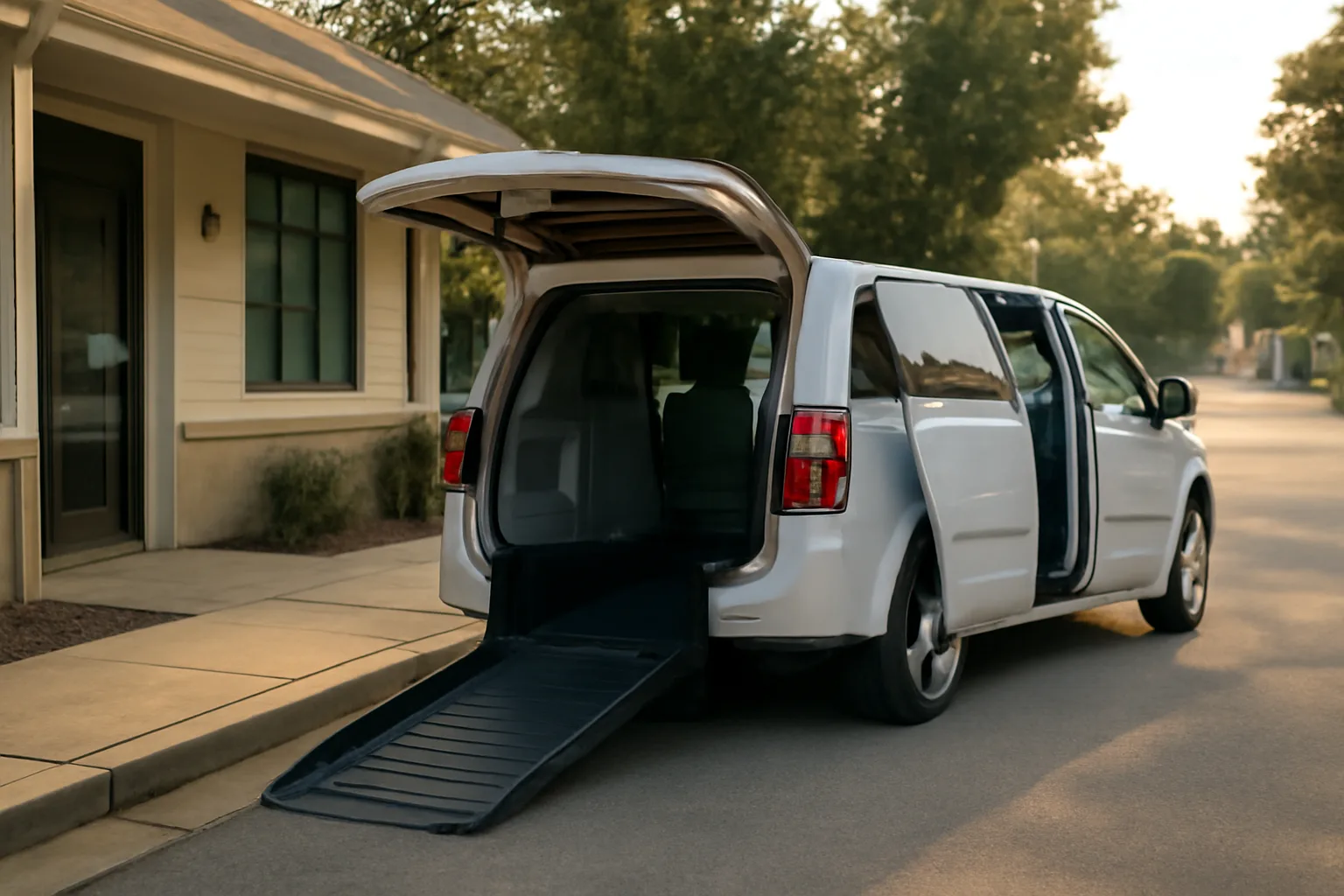
NEMT is transportation to and from medical appointments for people who don't need an ambulance but can't get there on their own, because of a disability, a wheelchair, a cognitive issue, or just no access to a car. Think dialysis three times a week, dental appointments, physical therapy, prenatal visits, or a discharge ride home from a hospital. It's not emergency transport (that's 911 and ambulances) and it's not routine taxi service either, because NEMT trips are tied to a covered medical service and usually require some kind of prior authorization or scheduling through a broker. Federal Medicaid rule requires it: 42 CFR 431.53 says each state Medicaid plan must "ensure necessary transportation for recipients to and from providers" and may do so directly, by contract, or through a broker arrangement [4]. Most states now run their NEMT through managed transportation brokers such as Modivcare, MTM, Access2Care, or SafeRide, rather than paying drivers directly. If you're building a business around this, read our breakdown of what NEMT actually covers and how non emergency medical transportation differs from ambulance dispatch.
does medicaid cover non-emergency medical transportation?
Yes, in every state. This is the single biggest difference between Medicare and Medicaid for NEMT purposes, and it's worth repeating because so many new operators get it backwards. Federal Medicaid regulation at 42 CFR 431.53 requires state Medicaid agencies to ensure necessary transportation for enrollees to and from Medicaid-covered services [4]. CMS's own guidance describes NEMT as "a critical benefit for beneficiaries whose income and resources are, by definition, limited and who may not have a car or access to public transportation" [5]. That's a real quote from CMS's informational bulletin on NEMT, not paraphrase. How it's delivered varies a lot by state. Some states use a statewide broker contract (Modivcare and MTM cover the largest number of states between them). Others let managed care organizations handle it inside their existing plan networks. A few rural states still run a mix of county-level coordination and broker contracts. Before you buy a van or sign a lease, confirm with your state Medicaid agency which model your state uses and whether enrollment goes through the state directly or exclusively through the broker. Our state guides hub has details by category if you want to compare models.
does medicaid cover ambulance rides?
Yes, both emergency and, in some cases, non-emergency ambulance rides are Medicaid benefits, though non-emergency ambulance coverage rules vary by state and generally require prior authorization. Emergency ambulance transport (911 dispatch to an ER) is covered nationwide as part of the mandatory Medicaid benefit package tied to emergency services. Non-emergency ambulance transport (a stretcher-level medical need that isn't an emergency, like a hospital-to-hospital transfer for a bed-bound patient) is covered too, but states typically require prior authorization and documentation that a lower level of transport (like a wheelchair van) wouldn't be medically appropriate. This is different from NEMT wheelchair-van work: ambulance rides require licensed EMS providers, not NEMT credentialed drivers, and they bill through a separate ambulance fee schedule. If your business is wheelchair vans and ambulatory sedans, you're not competing with ambulance providers at all. It's worth knowing the boundary so you don't accept a dispatch that actually needs a stretcher-equipped ambulance crew. Confirm with your state Medicaid agency and your broker exactly where that line sits for your service area, since some states classify stretcher van service as its own tier between NEMT and full ambulance.
what is nemt (in plain terms, for someone building a business around it)?
For a new owner-operator, NEMT means: you drive a Medicaid (or occasionally Medicare Advantage) member to a covered appointment in a wheelchair-accessible van or ambulatory vehicle, you get dispatched through a broker or transportation management company, and you bill per trip or per mile through that broker's system, not directly to Medicaid in most states. The money doesn't come from Medicare. It comes from state Medicaid dollars (with federal matching funds) flowing through the broker to you. That's why your two real customers, in a business sense, are your state Medicaid transportation unit (which decides who's allowed to operate) and the broker (which decides who gets dispatched work). See our full explainer on what non emergency medical transportation actually involves day to day, including trip types, vehicle requirements, and how billing flows.
how to start a non-emergency medical transportation business
There's a real sequence here, and skipping steps is the single most common way new operators waste months. Here's the order that actually works, roughly: 1. Form your business entity (LLC is standard) and get an EIN from the IRS. 2. Get your state or local commercial/for-hire vehicle permits and any state-specific NEMT operating license (many states require one separate from your business license; confirm with your state Medicaid agency). 3. Buy or lease your wheelchair van and get it inspected/certified to your state's ADA and NEMT vehicle standards. 4. Get commercial auto insurance with the liability limits your state and broker require (this is often higher than personal auto minimums; confirm the exact number with your broker). 5. Get driver requirements sorted: background check, drug screen, defensive driving or passenger-assistance training, CPR/first aid where required. 6. Enroll as a Medicaid transportation provider with your state Medicaid agency (this is separate from broker credentialing). 7. Apply for broker credentialing with whichever broker(s) run NEMT in your state (Modivcare, MTM, Access2Care, SafeRide, or a state-specific broker). 8. Get dispatched, start running trips, and build your documentation habits (trip logs, mileage, signatures) from day one because audits happen. Medicaid.gov's transportation page is the right starting point for understanding the federal framework before you spend money [6]. From there, your actual next call is your state Medicaid transportation unit, because state-level rules (vehicle age limits, driver background check specifics, insurance minimums) vary enormously and nobody at the federal level can answer those questions for you.
how to start a medical transportation business with one van
One van is a completely normal, viable way to start, and plenty of owner-operators run solo for years before adding a second vehicle. The steps don't really change with fleet size, but a few things matter more when you're a fleet of one. First, your own schedule becomes your capacity limit. If you're the only driver, a no-show cancellation or a vehicle breakdown means zero trips that day, not a rescheduled route. Build a maintenance and backup plan (a rental agreement with a local company, or a relationship with another small operator for overflow) before you need it. Second, broker credentialing timelines don't move faster for a one-van operation. You'll typically go through the same document checklist (insurance certificate, vehicle inspection, driver background check, W-9, business license) whether you have one van or ten. Budget real weeks, not days, for credentialing to clear; states and brokers process these in batches and timelines vary by region and season, so confirm current turnaround with your broker directly rather than assuming. Third, get your insurance right the first time. Undercutting your coverage to save money on a one-van operation is the fastest way to get denied at credentialing, because brokers check certificates of insurance line by line before they'll dispatch you a single ride.
how do you start a medical transportation business (documents and approvals you'll actually need)
| Business entity + EIN | State + IRS | LLC/corp formation, tax ID | |
|---|---|---|---|
| For-hire / livery permit | State or local DMV/transport authority | Varies widely by state | |
| Commercial auto insurance | Private insurer | Often $1M+ liability; confirm with broker | |
| Vehicle inspection/ADA compliance | State DOT or Medicaid vehicle standards | Wheelchair lift/ramp certification | |
| Driver background check | State + broker vendor | Criminal, driving record | |
| Drug/alcohol screening | Broker or state requirement | Pre-employment and random | |
| Medicaid provider enrollment | State Medicaid agency | NPI, provider agreement | |
| Broker credentialing application | Modivcare, MTM, Access2Care, SafeRide, etc. | Separate from Medicaid enrollment | Two of these steps get confused constantly: Medicaid provider enrollment and broker credentialing are not the same thing. Medicaid enrollment is your state agency saying you're an eligible provider type. Broker credentialing is the broker's own vetting process before they'll dispatch you trips. In most broker-managed states you need both, and they run on separate timelines with separate paperwork. |
Here's a realistic document checklist, pulled from what state Medicaid provider enrollment and broker credentialing packets commonly ask for. Exact requirements differ by state and broker, so treat this as a planning list, not a guarantee. | Requirement | Who issues it | Typical need |
how to start a nemt business without wasting money upfront
The most expensive mistake new operators make is buying a van before confirming their state's vehicle standards and their target broker's credentialing requirements. A used wheelchair van that doesn't meet your state's lift certification or age limit is money gone. Before you spend on a vehicle, get two things in writing (email is fine): your state Medicaid transportation unit's current vehicle and insurance requirements, and your target broker's credentialing checklist. These two documents together tell you exactly what to buy and what coverage to carry, before you sign anything. After that, sequence your spending: insurance quote first (it's cheap to get quoted, expensive to guess wrong), then vehicle purchase, then driver onboarding costs (background checks, training), then the credentialing application itself. Some owner-operators try to run credentialing and vehicle purchase in parallel to save time; that's fine as long as you've already confirmed requirements in writing so you're not buying a vehicle that fails inspection. A structured document checklist genuinely saves weeks here. That's the whole idea behind our $199 one-time State + Broker NEMT Launch Kit: it's a paperwork and sequencing tool, not a guarantee of approval, and it doesn't replace confirming live requirements with your state Medicaid agency and broker.
what's the difference between medicare and medicaid coverage for transportation?
Medicare is federal health insurance mostly for people 65+ or with certain disabilities, and it covers ambulance transport under a strict medical-necessity standard, with routine NEMT essentially excluded except through some Medicare Advantage supplemental benefits [1][3]. Medicaid is the joint federal-state program for lower-income individuals, and NEMT is a mandatory benefit under federal regulation in every state's Medicaid plan [4]. That means your Medicaid-enrolled passenger has a federally guaranteed right to NEMT for covered appointments, while a Medicare-only beneficiary generally doesn't, unless their Medicare Advantage plan happens to include it as an extra. Some people are "dual eligible," meaning they have both Medicare and Medicaid; for those trips, Medicaid is almost always the payer for the NEMT portion, since Medicare doesn't cover it. This distinction matters for your business planning because your revenue is Medicaid-driven (plus any Medicare Advantage supplemental contracts you separately credential for), not Medicare fee-for-service driven. Don't build a business plan assuming Original Medicare will ever be a meaningful payer for van-based NEMT trips, because it structurally isn't designed to be one.
how does broker credentialing work once medicaid enrollment is done?
Broker credentialing is a separate application process run by the private transportation management companies that states contract with, like Modivcare, MTM, Access2Care, or SafeRide. Being an enrolled Medicaid provider doesn't automatically get you dispatched trips; you also need to pass the broker's own vetting. Brokers typically want proof of your Medicaid enrollment status, current insurance certificates naming them or the state as certificate holder, vehicle inspection records, driver background checks and training records, and a signed provider services agreement outlining rates and service standards. Rates and specific documentation requirements are set by each broker's contract with the state and are not standardized nationally, so confirm current rate and requirement details directly with the broker for your state. Some states have more than one active broker or region-specific broker contracts, so it's worth confirming with your state Medicaid transportation unit exactly which broker (or brokers) hold the contract for your service area before you apply, rather than assuming the biggest national name is the only option. Our broker guides section breaks down what each major broker's process tends to look like.
when does non-emergency transport actually need to be an ambulance instead of a van?
The line is medical necessity, not preference. If a patient needs to travel lying down, needs oxygen or monitoring en route, or a physician certifies that transport by any other means would endanger their health, that's ambulance territory, even if it's not a 911 emergency. CMS requires a physician certification statement for scheduled, repetitive non-emergency ambulance transport in many cases, particularly for dialysis patients [2]. If a patient can sit upright, transfer with assistance or a lift, and doesn't need medical monitoring during the ride, that's NEMT wheelchair-van territory. Getting this distinction wrong matters operationally: dispatching a wheelchair van to a trip that actually requires ambulance-level care isn't just a compliance problem, it's a real safety risk. When in doubt, brokers and case managers are the ones who make this call, not the driver. If you ever get a dispatch that seems mismatched to the passenger's needs, flag it before the trip, not after. See our guide on emergency medical transport for where that boundary sits in more detail.
Frequently asked questions
Does Medicare cover non-emergency medical transportation?
Generally no. Original Medicare covers ambulance transport only when it's medically necessary (an emergency or a documented bed-confined situation), not routine van rides to appointments. Some Medicare Advantage plans offer limited NEMT trips as a supplemental benefit, but that's plan-specific and not guaranteed. Check the plan's Evidence of Coverage document directly.
Does Medicaid cover non-emergency medical transportation?
Yes. Federal regulation (42 CFR 431.53) requires every state Medicaid program to ensure necessary transportation to and from covered medical services. States deliver this differently, often through broker contracts with companies like Modivcare or MTM, but the underlying benefit is federally mandated in all 50 states.
Does Medicaid cover ambulance rides?
Yes, both emergency ambulance transport and, with prior authorization in most states, non-emergency ambulance transport for patients who need stretcher-level or monitored care. This is separate from NEMT wheelchair-van service, which doesn't require licensed EMS staff or an ambulance-level vehicle.
What is NEMT?
NEMT stands for non-emergency medical transportation: rides to and from covered medical appointments (dialysis, therapy, dental, prenatal care) for people who don't need an ambulance but can't get there independently. It's usually a Medicaid benefit, arranged through a state-contracted broker, and delivered by wheelchair vans, ambulatory sedans, or stretcher vans.
How do I start an NEMT business?
Form your LLC, get required state/local for-hire permits, buy or lease a van meeting your state's accessibility standards, secure commercial auto insurance, complete driver background checks and training, enroll as a Medicaid transportation provider with your state, and separately apply for broker credentialing with whichever company (Modivcare, MTM, Access2Care, SafeRide, etc.) runs NEMT dispatch in your state.
Can I start an NEMT business with just one van?
Yes, plenty of owner-operators start with a single vehicle. The credentialing steps and document requirements are the same regardless of fleet size. The main practical difference is capacity risk: with one van and one driver, a breakdown or sick day means zero trips that day, so a backup plan matters more.
What's the difference between Medicaid provider enrollment and broker credentialing?
Medicaid provider enrollment is your state agency recognizing you as an eligible transportation provider type, usually tied to an NPI and a signed provider agreement. Broker credentialing is a separate vetting process run by the private company (Modivcare, MTM, etc.) that actually dispatches trips. In most states you need both, on separate timelines.
How much does it cost to start a wheelchair van NEMT business?
Costs vary too widely by state, vehicle condition, and insurance market to give one honest number; major line items are the vehicle itself, commercial auto insurance, permits/licensing fees, driver background checks and training, and any state or broker application fees. Get quotes for insurance and confirm state fee schedules before budgeting.
Do Medicare Advantage plans ever cover NEMT?
Some do, as an optional supplemental benefit, but it's not required by CMS and varies plan by plan, often capped at a set number of one-way trips per year. Confirm details directly in the specific plan's Evidence of Coverage document rather than assuming coverage exists.
Which brokers manage Medicaid NEMT in most states?
Modivcare and MTM together hold contracts covering the largest number of states, with Access2Care, SafeRide, and various regional or state-specific brokers covering others. Some states use more than one broker across different regions. Confirm the current broker for your specific state and county with your state Medicaid transportation unit.
Is a stretcher van the same as an ambulance for Medicaid billing purposes?
No. Stretcher van service is typically its own tier between NEMT wheelchair-van service and full ambulance transport, for patients who need to travel lying down but don't need medical monitoring or licensed EMS staff. Billing codes and state classification of this tier vary, so confirm with your state Medicaid agency.
What documents does broker credentialing usually require?
Common items include proof of Medicaid enrollment, current commercial auto insurance certificates, vehicle inspection and ADA lift certification records, driver background check results, drug screening records, and a signed provider services agreement. Exact requirements and rates differ by broker and state contract, so confirm the current checklist directly with the broker.
Sources
- Medicare.gov, Ambulance Services coverage page: Original Medicare covers ambulance services only if traveling by other means would endanger the beneficiary's health
- CMS, Medicare Benefit Policy Manual, Chapter 10 (Ambulance Services): Non-emergency, scheduled repetitive ambulance transport requires a physician certification statement
- CMS, Medicare Managed Care Manual, Chapter 4 (Benefits and Beneficiary Protections): Medicare Advantage plans may offer supplemental benefits beyond Original Medicare, at the plan's discretion
- Electronic Code of Federal Regulations, 42 CFR 431.53: States must ensure necessary transportation for Medicaid recipients to and from providers
- CMS, Non-Emergency Medical Transportation Informational Bulletin: CMS describes NEMT as a critical benefit for beneficiaries with limited income and resources who may lack a car or access to public transportation
- Medicaid.gov, Non-Emergency Medical Transportation: Medicaid.gov's overview of the federal NEMT benefit framework