Last updated 2026-07-25
TL;DR
Minnesota doesn't restrict NEMT business names beyond normal entity registration with the Secretary of State, but your vehicle must carry a valid STS license (through MnDOT/DPS) and your provider must be enrolled with DHS Medicaid transportation to bill MHCP. "STS" in your name isn't required or forbidden; what matters is the license number and Medicaid enrollment, not the name on the door.
Does Minnesota restrict what you can name your NEMT business?
No. Minnesota doesn't have a rule that bans or requires specific wording (like "STS" or "NEMT") in a transportation company's legal or trade name. What Minnesota regulates heavily is the vehicle and driver credentialing that has to sit behind that name. Special Transportation Services (STS) is Minnesota's legal term for non-emergency medical transport vehicles that carry people who need help getting in or out of a vehicle, generally people using wheelchairs, stretchers, or other mobility equipment. Minnesota Statute 174.29 gives the Commissioner of Transportation authority to regulate STS, and Minnesota Rules chapter 8840 sets the actual vehicle, driver, and equipment standards [1][2]. So the naming question and the licensing question are really two separate systems. Your business name is filed with the Minnesota Secretary of State like any other LLC or corporation. Your vehicle and driver credentials go through the Minnesota Department of Public Safety / Department of Transportation STS licensing process, and separately, your provider enrollment for Medicaid billing goes through the Minnesota Department of Human Services (DHS). None of those three checks your business name for approved wording. Where naming actually matters is trade name registration and DBA filings if you operate under a name different from your legal entity name, and in contracts with brokers, who will list you by both legal name and any assumed name on file with the state.
What is STS licensing, and does my company need it?
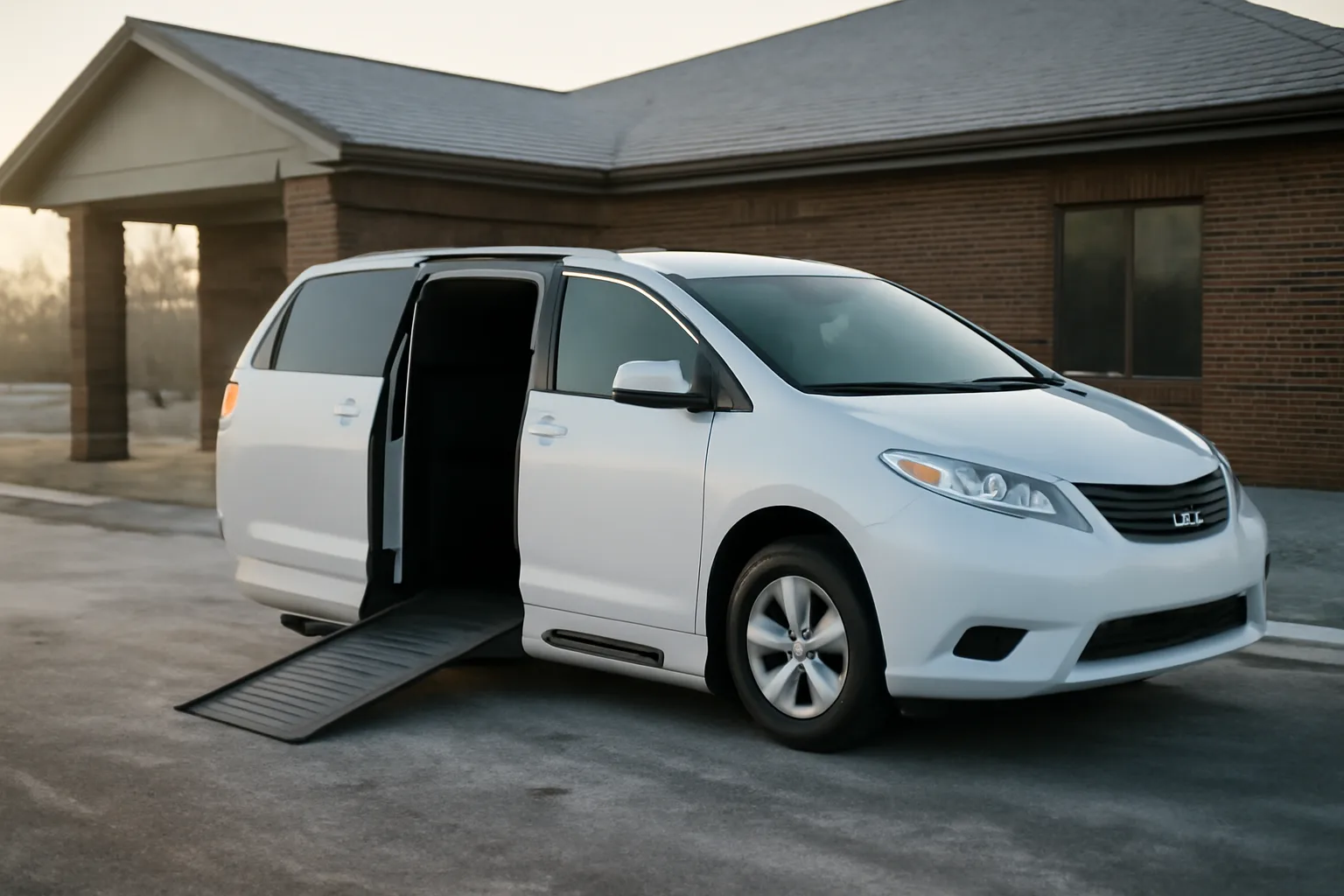
STS licensing is Minnesota's vehicle-and-operation certification for special transportation service, which covers most wheelchair van and stretcher van NEMT work. If your vehicle is designed to carry people who need help boarding, alighting, or securing mobility devices, it almost certainly falls under STS rules, not standard livery or taxi rules [2]. Minnesota Rule 8840 sets out driver training requirements, vehicle equipment (wheelchair lifts, securement systems, first aid kits), inspection schedules, and insurance minimums specific to STS vehicles [2]. This is separate from a standard chauffeur's license or a for-hire vehicle permit; STS has its own driver training curriculum that covers passenger assistance, securement of mobility devices, and emergency procedures. A single wheelchair van business still has to go through this licensing per vehicle and per driver. There's no owner-operator exemption for fleet size. If you're running one van, confirm current STS application steps and fees directly with the Minnesota Department of Public Safety's Special Transportation Services unit, since forms and inspection intervals get updated and a blog post can go stale fast on exact numbers.
How do I enroll as a Medicaid NEMT provider in Minnesota?
To bill Minnesota Health Care Programs (MHCP) for NEMT trips, you need a separate DHS provider enrollment, on top of your STS vehicle license. Minnesota's DHS runs its own provider enrollment portal (MN-ITS) and publishes specific manual pages for transportation providers describing which provider type and specialty codes apply to NEMT [3]. The practical sequence most owner-operators follow looks like this: form your legal entity and get an EIN, get your vehicle(s) STS licensed through MnDOT/DPS, get general liability and commercial auto coverage that meets STS minimums, then apply for DHS provider enrollment as a transportation provider. Minnesota's DHS Provider Manual explicitly separates "common carrier" transportation from "special transportation services," and the reimbursement and eligibility rules differ between the two [3]. Minnesota also uses managed care organizations and, depending on county and program, transportation brokers to actually schedule and dispatch trips. That means enrollment with DHS alone doesn't guarantee ride volume; you typically also need broker credentialing (confirm current broker assignments and requirements with your regional Medicaid transportation contact, since Minnesota's broker landscape by region should be confirmed directly rather than assumed from older articles). For background on how broker credentialing generally overlays state Medicaid enrollment nationwide, see medical transportation and nemt.
What is NEMT, exactly?
NEMT stands for non-emergency medical transportation. It's transport to and from covered medical services for people who don't have an emergency but also can't safely get there on their own, whether because of a disability, a wheelchair, a temporary mobility limit after surgery, or lack of any other transportation option. Federal Medicaid regulation requires states to "ensure necessary transportation for beneficiaries to and from providers" and to describe in their state plan how they meet that requirement, per 42 CFR 431.53 [4]. That's the federal backbone that makes NEMT a mandatory part of Medicaid, not an optional add-on states can drop. NEMT covers a wide spectrum of vehicle types: ambulatory sedan and minivan trips for people who can walk and transfer on their own, wheelchair van trips for people who use a wheelchair and need a lift or ramp, and stretcher van trips for people who must travel lying down but don't need ambulance-level medical monitoring. Minnesota's STS category specifically targets the wheelchair and stretcher tier, where physical assistance and securement equipment are involved [2]. For broader definitions and how NEMT differs from ambulance transport, see non emergency medical transportation and what is non emergency medical transportation services.
Does Medicaid cover ambulance rides?
Yes, Medicaid covers ambulance transportation when it's medically necessary, but that's a different benefit category from NEMT. Ambulance service (basic life support or advanced life support) is for situations requiring medical monitoring or intervention during transport, and it's billed and licensed completely differently than a wheelchair van trip. Medicaid.gov's benefits page for non-emergency medical transportation notes that NEMT is specifically for beneficiaries who "need assistance getting to and from providers" but don't require ambulance-level care [5]. Ambulance providers are licensed separately (often through a state's EMS regulatory board rather than the STS or NEMT transportation unit) and have their own Medicare and Medicaid billing codes distinct from wheelchair van mileage or trip-based NEMT rates. If you're buying a wheelchair van and planning STS or NEMT work, you're not stepping into ambulance licensing at all. Different vehicle standards, different staffing rules (EMTs vs. STS-trained drivers), different reimbursement structure. Don't confuse the two when you're researching startup costs; ambulance certification is a much heavier lift (EMT-level staffing, medical equipment, separate state EMS licensing) than STS/NEMT.
Does Medicare cover medical transportation?
Medicare's coverage of NEMT is much narrower than Medicaid's. Original Medicare generally covers emergency ambulance transportation and, in limited circumstances, non-emergency ambulance transportation when a doctor certifies it's medically necessary (for example, a bed-confined patient needing dialysis transport) [6]. Medicare Part B's ambulance services coverage page describes this medical-necessity standard directly [6]. Routine non-emergency transportation, like a ride to a doctor's appointment in a wheelchair van, generally is not a standard Medicare Part A/B benefit. Some Medicare Advantage (Part C) plans have started offering limited NEMT as a supplemental benefit, but that varies plan by plan and isn't guaranteed the way Medicaid NEMT is under federal regulation. This matters for owner-operators because it shapes your payer mix. If you're building a business plan around Medicaid NEMT and Medicaid managed care broker contracts, don't assume traditional Medicare fee-for-service will be a meaningful revenue source for wheelchair van work; it mostly won't be, outside specific Medicare Advantage supplemental contracts you'd need to pursue and confirm separately with each plan.
How do you start a medical transportation business, step by step?
There's no single national process, because NEMT licensing is state-by-state and broker credentialing is broker-by-broker, but the sequence is fairly consistent across states. Here's the general order: 1. Form your business entity (LLC is common) and get a federal EIN. 2. Buy or lease your vehicle, and confirm it meets your state's wheelchair/stretcher accessibility equipment standards (in Minnesota, that's Rule 8840) [2]. 3. Get commercial auto and general liability insurance meeting your state's minimums for NEMT/STS vehicles. 4. Complete state-specific vehicle inspection and licensing (Minnesota calls this STS licensing; other states use different names like "non-emergency medical transportation permit" or "ambulette license"). 5. Train and credential drivers to the state's required curriculum (defensive driving, passenger assistance, wheelchair securement, first aid/CPR are common elements). 6. Enroll as a Medicaid transportation provider with your state Medicaid agency. 7. Apply for credentialing with whichever regional broker manages Medicaid-funded trip dispatch in your area (Modivcare, MTM, and others operate in different states and regions; confirm which broker covers your specific county with your state Medicaid transportation unit). Steps 6 and 7 are often confused as one step, but they're not. State Medicaid enrollment gets you into the system as a recognized provider type; broker credentialing is what actually gets trips assigned to your vehicles day to day. For a broader walkthrough of general licensing patterns across states, see nemt transportation.
How do you start a NEMT business with just one van?
Starting with one wheelchair van is common and totally workable, but it does mean every piece of paperwork rides on that single vehicle passing inspection and every driver credential staying current, since you don't have a backup vehicle if something falls through. The core requirements don't shrink because you're small. You still need the entity registration, the vehicle inspection and STS (or equivalent) license, the insurance minimums, the driver training, the DHS (or your state's) Medicaid provider enrollment, and broker credentialing if you want Medicaid-funded dispatch work. One van doesn't exempt you from any of those; it just means your total upfront paperwork and cost is concentrated on a single unit. A few practical notes for single-van operators: keep your STS or state inspection certificate and your insurance certificate scanned and ready, because brokers will ask for both during credentialing and re-credentialing. Build slack into your calendar around inspection renewal dates; a lapsed inspection on your only van means zero trip capacity until it's fixed. And confirm with your state Medicaid transportation unit whether there's a minimum fleet size or service-area requirement tied to enrollment, since a few states do set expectations here that could affect a true one-van operation.
What does broker credentialing actually check, beyond state licensing?
Brokers like Modivcare, MTM, Access2Care, and SafeRide run their own credentialing process on top of whatever your state requires, and it's usually more document-heavy than state enrollment alone. Typical broker credentialing packets ask for proof of your state operating license or permit (STS certificate in Minnesota), current vehicle inspection records, commercial auto insurance certificates naming the broker as certificate holder or additional insured, driver background check results, driver training certificates, and your Medicaid provider enrollment confirmation. Brokers also periodically re-credential, meaning you'll resubmit updated insurance certificates and inspection records on a schedule (often annually), more than once at onboarding. Missing a re-credentialing deadline can pause your ability to receive trip assignments even if your underlying state license is still valid, so track these dates separately from your state renewal dates. Because each broker's packet and portal differs, and because broker assignments by region change over time, confirm the current credentialing checklist directly with the broker operating in your part of Minnesota rather than relying on a general list. For background on how NEMT and broader medical transport categories interact with brokers, see emergency medical transport and nemt.
Where do owner-operators lose the most time in this process?
Two places, consistently: vehicle inspection scheduling and document mismatches between your state license and your broker application. STS or equivalent vehicle inspections often have to be scheduled weeks out depending on the state agency's capacity, so starting that process late is the single biggest self-inflicted delay. The second time-sink is small mismatches, like your business name on your insurance certificate not exactly matching the legal name on your Medicaid enrollment, or a DBA that's registered with the Secretary of State but not reflected on your broker application. Brokers and state agencies both tend to kick documents back for exact-match discrepancies rather than fixing them internally, so a week of back-and-forth email is common if your paperwork isn't consistent across every filing. Building a consistent paper trail early, same legal name, same EIN, same DBA if you use one, across your entity filing, insurance certificates, state license application, Medicaid enrollment, and broker credentialing packet, saves real time later. This is the kind of administrative overhead a fixed-format toolkit helps with; RideCredential's $199 one-time State + Broker NEMT Launch Kit is built around exactly this multi-document consistency problem, and it's worth a look before you start filing individual applications one at a time (see the launch-kit-builder).
What should I confirm directly with Minnesota agencies before I file anything?
A few specifics change often enough that you should verify them fresh rather than trust any article, including this one, for exact current numbers. Confirm current STS licensing fees and inspection intervals with the Minnesota Department of Public Safety's Special Transportation Services program. Confirm current DHS provider enrollment forms, provider type codes for transportation, and any county-specific broker assignment with the Minnesota Department of Human Services transportation unit. And confirm insurance minimum coverage amounts for STS vehicles, since these are set in rule and get updated periodically. If you operate near a state border, or if you plan to transport patients to appointments in a neighboring state, also confirm whether your STS license and Medicaid enrollment cover interstate trips, since reciprocity rules vary and aren't something to assume. None of this is legal advice, and licensing/credentialing outcomes aren't guaranteed by following a checklist; the agencies and brokers make the actual approval decisions based on your specific application, insurance carrier, vehicle, and driver records.
Frequently asked questions
Is there a rule against naming my Minnesota NEMT business with "STS" in the title?
No. Minnesota doesn't restrict business naming for STS or NEMT companies; your name is filed with the Secretary of State like any other entity. What's regulated is your vehicle license (STS certification under Minnesota Rule 8840) and your DHS Medicaid provider enrollment, not the wording of your business name.
What is NEMT?
NEMT (non-emergency medical transportation) is transport to and from covered medical appointments for people who aren't having a medical emergency but can't get there safely on their own, often due to a disability or mobility limit. Federal Medicaid rule 42 CFR 431.53 requires state Medicaid programs to ensure this transportation exists for beneficiaries.
Does Medicaid cover ambulance rides?
Yes, when medically necessary, but ambulance transport is a separate benefit from NEMT, licensed and billed differently. Ambulance covers situations needing medical monitoring during transport; NEMT (wheelchair van, stretcher van, ambulatory) covers people who need assistance but not medical care en route.
Does Medicare cover medical transportation?
Medicare covers emergency ambulance transport and limited non-emergency ambulance transport when a doctor certifies medical necessity, per CMS's Part B ambulance services rules. Routine non-emergency wheelchair van transport generally isn't covered by standard Medicare, though some Medicare Advantage plans offer it as a supplemental benefit; confirm with the specific plan.
How do I start a medical transportation business in Minnesota?
Form your entity, buy or lease a vehicle meeting Minnesota Rule 8840 accessibility standards, get commercial insurance, complete STS vehicle licensing through the state, train drivers to STS standards, enroll as a Medicaid provider with DHS, then apply for broker credentialing with whichever broker covers your county.
How do I start a NEMT business with just one van?
The requirements are the same as for a larger fleet: entity registration, vehicle licensing/inspection, insurance, driver training, Medicaid provider enrollment, and broker credentialing. One van means your entire trip capacity depends on that vehicle passing inspection and staying insured, so track renewal dates closely.
What's the difference between state Medicaid enrollment and broker credentialing?
State Medicaid enrollment (through your state Medicaid agency, DHS in Minnesota) registers you as a recognized provider type eligible to bill Medicaid. Broker credentialing (with companies like Modivcare or MTM) is a separate process that actually assigns you trips day to day. You typically need both to receive Medicaid-funded ride volume.
What is Special Transportation Services (STS) in Minnesota?
STS is Minnesota's regulatory category for vehicles transporting people who need help boarding, alighting, or securing mobility equipment, covering most wheelchair and stretcher van NEMT work. It's governed by Minnesota Statute 174.29 and Minnesota Rules chapter 8840, which set driver training, vehicle equipment, and inspection standards.
Do I need an EMT to drive a wheelchair van in Minnesota?
No. STS drivers complete a specific STS training curriculum covering passenger assistance, wheelchair securement, and emergency procedures, which is different from EMT certification. EMT-level staffing applies to ambulance transport, not standard NEMT wheelchair or stretcher van service.
How much does it cost to get STS licensed in Minnesota?
Fees and inspection requirements change periodically, so confirm current amounts directly with the Minnesota Department of Public Safety's Special Transportation Services program rather than relying on a fixed number from any article.
Can I use a DBA (different trade name) for my NEMT business?
Generally yes, provided you register the assumed name with the Minnesota Secretary of State as required. Keep your legal name and DBA consistent across your insurance certificates, STS license, DHS Medicaid enrollment, and broker credentialing paperwork; mismatches are a common cause of application delays.
Does NEMT cover trips to the pharmacy or grocery store?
Typically no. NEMT under Medicaid is tied to covered medical services and appointments, not general errands. Some Medicaid managed care plans or Medicare Advantage supplemental benefits cover limited non-medical trips, but that varies by plan and state; confirm with your state Medicaid transportation unit or the specific plan.
Who regulates ambulette or stretcher van companies in Minnesota?
The same STS framework covers wheelchair and stretcher van transport in Minnesota, under Minnesota Statute 174.29 and Rule 8840, administered through the Department of Public Safety/Department of Transportation. Ambulance-level (EMT-staffed) transport is regulated separately through the state's EMS regulatory board.
Sources
- Minnesota Legislature, Statute 174.29 (Special Transportation Service): Minnesota Statute 174.29 gives the Commissioner authority to regulate Special Transportation Services
- Minnesota Legislature, Minnesota Rules Chapter 8840 (Special Transportation Service): Minnesota Rules chapter 8840 sets vehicle, driver training, and equipment standards for STS
- Minnesota Department of Human Services, MHCP Provider Manual - Transportation Services: DHS distinguishes common carrier transportation from special transportation services for MHCP billing
- Code of Federal Regulations, 42 CFR 431.53: Federal Medicaid regulation requires states to ensure necessary transportation for beneficiaries to and from providers
- Medicaid.gov, Non-Emergency Medical Transportation: NEMT is for beneficiaries who need assistance getting to providers but don't require ambulance-level care
- Medicare.gov, Ambulance Services coverage: Medicare covers emergency ambulance transport and limited non-emergency ambulance transport when medically necessary