Last updated 2026-07-25
TL;DR
There's no magic list of winning medical transportation business names. What matters is picking a name that's available as an LLC in your state, clears a trademark search, and doesn't box you into one service type. This guide covers naming logic plus the real steps to start a NEMT business: state Medicaid enrollment, broker credentialing, insurance, and vehicle requirements.
What actually makes a good medical transportation business name?
| Geographic + service | "[City] Medical Transport" | Local SEO, easy to explain to brokers | |
|---|---|---|---|
| Founder/family name + service | "[Name] NEMT LLC" | Owner-operators building a personal brand | |
| Descriptive + reliability word | "[Word] Care Rides" | Sounds patient-facing, works for Medicaid members | |
| Acronym-based | "[Initials] Transport Services" | Shorter for invoices, decals, dispatch systems | Whatever you land on, say it out loud to a stranger. If they ask 'wait, what do you do?' after hearing the name, that's a signal to simplify. |
A good name does three boring jobs well: it's legally available, it's easy to find in a Google search next to your competitors, and it doesn't lock you out of services you might add later. That's it. There's no evidence that a clever name gets you more broker contracts or faster Medicaid approval. Nobody at your state Medicaid transportation unit is scoring your application on branding. Start with the legal check, not the creative one. Search your Secretary of State business name database to see if the name is taken as an LLC or corporation. Then run a search on the U.S. Patent and Trademark Office's TESS database to see if someone already has a federal trademark on it or something confusingly similar. A name search takes twenty minutes and can save you a rebrand later, new signage, new DOT numbers, new broker paperwork, all of it. Avoid names that are too narrow. 'ABC Wheelchair Van' sounds fine on day one with a single wheelchair-accessible van, but if you add an ambulatory sedan or a stretcher van in year two, the name works against you. Something like 'ABC Medical Transport' or 'ABC NEMT Services' leaves room to grow. If you plan to bid on broker contracts across non emergency medical transportation and ambulatory rides, don't paint yourself into a wheelchair-only corner in the name itself, even if wheelchair vans are your first vehicle. Here's a naming framework that holds up: | Naming pattern | Example style | Good for |
How do I check if a name is legally available?
Three checks, done in this order, before you fall in love with anything. First, your state's Secretary of State business entity search, this tells you if another LLC or corporation is already using the exact name or something close enough to get rejected at filing. Most states reject names that are 'confusingly similar' to an existing registered entity, more than identical ones. Second, the USPTO Trademark Electronic Search System (TESS), where you check for federal trademarks that could conflict with your name nationally even if your state filing goes through fine. A state LLC approval does not protect you from a trademark dispute; those are separate legal systems. Third, check domain availability and social handles. This isn't legally required but it's practically required. If your NEMT company can't get a matching web domain, potential Medicaid members and brokers doing basic due diligence may struggle to find or verify you. A few states also require a 'doing business as' (DBA) or fictitious name filing if you operate under a name different from your registered LLC name, this is usually a separate, cheap filing at the county or state level, confirm the process with your Secretary of State's office. None of this is NEMT-specific, it's the same process any small business goes through, but skipping it is one of the most common and easily avoidable mistakes new owner-operators make.
How do I start a medical transportation business, step by step?
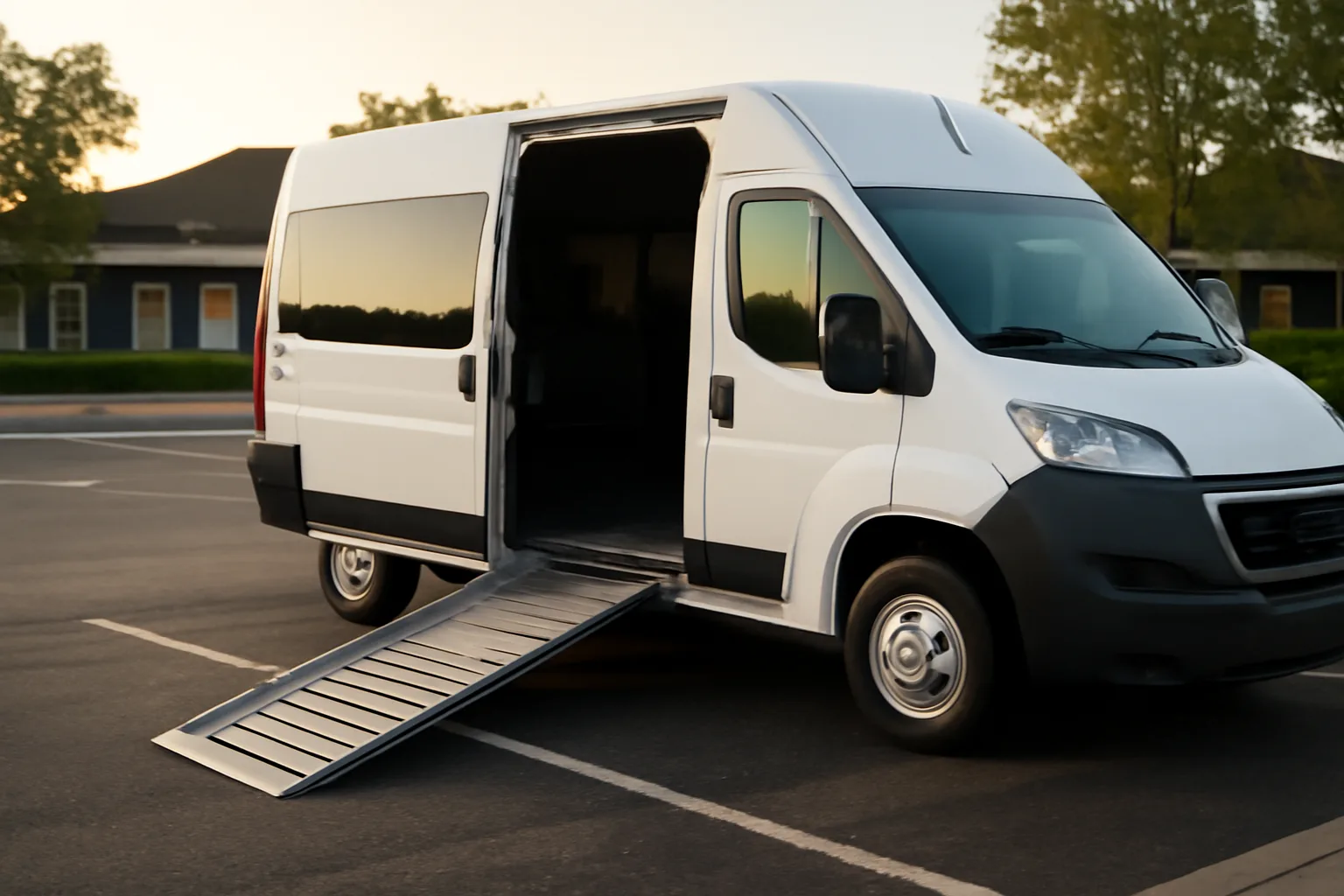
Starting a NEMT business has a real sequence, and skipping steps costs you time later, not money saved. Here's the order that actually works, based on how state Medicaid agencies and brokers structure their requirements. 1. Form your legal entity (LLC or corporation) and get your EIN from the IRS. 2. Get your state and local business licenses, plus any specific transportation or livery permits your state or municipality requires. 3. Buy or lease your vehicle(s), a wheelchair-accessible van needs to meet ADA and state accessibility standards, more than have a ramp bolted on. 4. Get commercial auto insurance with limits that meet your state Medicaid and broker minimums (often $1 million combined single limit, but confirm with your state Medicaid agency and broker). 5. Set up driver requirements, background checks, drug testing, defensive driving or passenger assistance training, whatever your state mandates. 6. Enroll as a Medicaid transportation provider with your state Medicaid agency. This is a separate process from broker credentialing. 7. Apply for broker network credentialing with whichever broker manages NEMT in your state (Modivcare, MTM, Access2Care, or another regional broker), confirm which broker holds your state's contract before applying. 8. Set up your dispatch and billing systems before you take your first trip, not after. Each state runs this differently. Some states let you enroll with Medicaid directly and bill fee-for-service; others route everything through a single broker and you never touch Medicaid billing directly. Confirm this structure with your state Medicaid agency before you build a business plan around one model. For the naming piece specifically, get it done in step one, since your EIN, licenses, insurance policy, and Medicaid enrollment all need to match the exact legal name on file.
How do I start a NEMT business with just one van?
One van is enough to start. Plenty of NEMT owner-operators begin exactly this way, but a single vehicle limits which broker contracts and Medicaid enrollment categories you'll qualify for, so confirm minimum fleet requirements with your state before you assume one van is sufficient long-term. Some states and brokers have no minimum vehicle count for provider enrollment; others require a minimum number of vehicles or a certain service radius before they'll credential you. This varies enough that there's no honest universal number to give you here, confirm directly with your state Medicaid transportation unit and the broker operating in your area. With one van, focus your name and business setup on what you can actually deliver reliably: wheelchair-accessible, non-emergency, local trips. Don't advertise services (stretcher transport, long-distance transfers, ambulance-level care) that your single vehicle and staffing can't cover. Brokers check this during credentialing, and overselling your capacity in your business name or marketing can slow down or sink your application. A one-van operation should still budget for the same overhead as a larger fleet: commercial insurance, a backup driver arrangement (what happens when your one van needs a repair?), and enough cash reserve to cover a gap between trip completion and broker payment, which can run several weeks depending on the broker's payment cycle.
What is NEMT (non-emergency medical transportation)?
NEMT stands for non-emergency medical transportation. It covers rides to and from medical appointments, like dialysis, physical therapy, or a primary care visit, for people who don't need an ambulance but can't drive themselves or use regular public transit due to a disability, age, or medical condition. Federal Medicaid regulation requires states to ensure 'necessary transportation for beneficiaries to and from providers' as a condition of the state Medicaid plan [1]. This is why NEMT exists as a distinct, regulated category: it's a mandatory Medicaid benefit in every state, not an optional add-on, even though each state runs the actual logistics differently, some through managed care organizations, some through a single statewide broker, some through direct provider enrollment. NEMT is different from emergency ambulance transport in a specific, important way: NEMT vehicles are not staffed or equipped for medical emergencies. A wheelchair van driver is not a paramedic. If you're building a business around nemt transportation specifically, your name, marketing, and driver training should make that distinction clear, both for legal liability reasons and because brokers credential NEMT and emergency transport as entirely separate categories with different vehicle and staffing standards.
Does Medicaid cover ambulance rides?
Yes, Medicaid covers medically necessary ambulance transportation, but it's billed and regulated separately from NEMT. Ambulance services (both emergency and some non-emergency ambulance trips that require medical monitoring) fall under a different provider enrollment category than wheelchair van or livery-level NEMT. Medicaid.gov states that non-emergency transportation is a required benefit, and separately, ambulance transport is billed under its own provider type with its own certification requirements tied to state EMS licensing, more than a business license [1]. If you're planning to offer both wheelchair van NEMT and ambulance-level stretcher transport, understand that these usually require separate credentialing tracks, separate vehicle certifications, and in many states, separate state licensing bodies (a Department of Health EMS office rather than the Medicaid transportation unit). For a new owner-operator starting with one or two wheelchair vans, ambulance-level service is almost always a later-stage expansion, not a starting point, because of the additional clinical staffing (EMTs, in many states) and equipment certification required.
Does Medicare cover medical transportation?
Medicare's coverage of medical transportation is narrower than Medicaid's. Original Medicare Part B covers ambulance transportation when it's medically necessary and other transportation would endanger the person's health, this is spelled out directly in Medicare's own coverage guidance [2]. Routine non-emergency rides to a doctor's appointment for someone who is simply unable to drive are generally not a covered Medicare benefit under Original Medicare. Some Medicare Advantage (Part C) plans do offer NEMT-style transportation benefits as a supplemental benefit, this varies plan by plan and is not guaranteed across all Medicare Advantage plans [3]. If your business plans to bid for Medicare Advantage transportation contracts in addition to Medicaid work, you'll be dealing with a private insurance plan's transportation vendor or broker rather than a state Medicaid unit, and the credentialing requirements can differ meaningfully. This is a common point of confusion for new owner-operators: Medicaid NEMT is the default customer base for most wheelchair van startups, while Medicare transportation coverage is the exception, tied to specific plan benefits or ambulance-level medical necessity, not general NEMT eligibility.
How do I get credentialed with a broker like Modivcare, MTM, Access2Care, or SafeRide?
Broker credentialing runs on a separate track from state Medicaid enrollment, and most states now route Medicaid NEMT trips through one of a handful of national or regional brokers rather than paying providers directly. Modivcare, MTM, Access2Care, and SafeRide are the largest, but which broker holds the contract in your state (and whether it's even broker-managed at all) varies and changes over time, so confirm the current broker for your state with your Medicaid transportation unit before applying anywhere. General credentialing steps brokers commonly require: - Active state Medicaid provider enrollment (often required before or alongside broker credentialing, confirm the order with your specific broker)
- Proof of commercial auto insurance meeting the broker's minimum limits
- Vehicle inspection records showing ADA compliance for wheelchair-accessible vehicles
- Driver background checks, often including a motor vehicle record check and sometimes a fingerprint-based criminal background check
- Drug and alcohol testing program enrollment for drivers
- A signed provider agreement or contract specific to that broker Broker credentialing paperwork is famously repetitive across brokers, similar documents, different forms, different portals. If you're bidding into more than one broker's network (common if you operate near a state line or in a state with regional broker contracts), expect to submit largely the same insurance certificates, vehicle documentation, and driver files multiple times in slightly different formats. Building a clean, organized document file once and reusing it across applications saves real time. This is the exact gap the $199 State + Broker NEMT Launch Kit is built to close, it doesn't get you approved (no one can promise that) but it organizes the state-by-state and broker-by-broker paperwork so you're not rebuilding your file from scratch for every application.
What vehicle and insurance requirements come before I can operate?
| Vehicle accessibility | ADA ramp/lift specs, securement, signage | State Medicaid agency, broker vehicle inspection team |
|---|---|---|
| Commercial auto insurance | Minimum liability limits, additional insured endorsements | Broker contract terms, state Medicaid provider manual |
| Vehicle age/mileage | Some brokers cap vehicle age or require regular inspection | Specific broker's provider handbook |
| Driver credentials | License class, background check, drug testing | State Medicaid agency, broker onboarding packet |
Before you touch a Medicaid application or broker portal, your vehicle and insurance need to be in order, because both state agencies and brokers will ask for documentation of both early in the process. Wheelchair-accessible vehicles need to meet accessibility standards under Title II and Title III of the Americans with Disabilities Act, codified at 42 U.S.C. Chapter 126, which cover things like ramp or lift specifications, securement systems, and interior clearance for vehicles used in public and private transportation services [4]. A van with an aftermarket ramp installed by a non-certified shop can fail inspection even if it 'works fine' in daily use, brokers and states typically want documentation from a certified mobility equipment dealer or conversion company. Commercial auto insurance is non-negotiable and the limits are usually higher than a standard commercial auto policy for cargo or delivery vehicles, because you're transporting people, some of whom are non-ambulatory. Confirm exact minimum limits with your state Medicaid agency and your target broker, since these numbers do change and vary by state; don't rely on a generic figure from a forum post or a competitor's website. A rough overview of what's typically checked, though exact numbers vary by state and broker: | Requirement area | What's typically checked | Confirm with |
How do I set up state Medicaid provider enrollment?
State Medicaid enrollment for NEMT providers usually happens through your state's Medicaid agency or its designated managed care/broker system, and the exact portal, forms, and required documents differ by state, there is no single national NEMT Medicaid enrollment form. Generally, you'll need: your business's legal formation documents, EIN, National Provider Identifier (NPI) if your state requires one for transportation providers, proof of insurance, vehicle documentation, and driver background check results. Some states enroll NEMT providers directly as Medicaid providers who then bill fee-for-service; other states require enrollment only through the broker, meaning you never file directly with the Medicaid agency at all. Medicaid.gov's guidance confirms that '[non-emergency medical transportation] is provided for beneficiaries who need to get to and from medical services and have no other means of transportation,' and that states have flexibility in how they administer this benefit, including through broker arrangements [1]. That flexibility is exactly why you can't shortcut this by reading a generic guide, you need your specific state's Medicaid transportation unit page and its current provider manual. Find your state's process by searching '[your state] Medicaid non-emergency medical transportation provider enrollment' directly on your state's.gov Medicaid site, and call the transportation unit if the online guidance is unclear, most maintain a dedicated phone line for exactly this kind of provider onboarding question.
What licenses and permits does a NEMT business actually need?
Beyond your LLC formation and Medicaid/broker credentialing, most NEMT owner-operators need a stack of separate licenses and permits that vary heavily by state and even by county. There is no single federal NEMT license, this is regulated almost entirely at the state and local level. Common requirements to check for in your area: a state-issued livery or passenger transportation permit (sometimes called a Certificate of Public Convenience and Necessity in some states), local business licenses from your city or county, vehicle inspection and registration specific to for-hire passenger vehicles, and driver-specific requirements like a chauffeur's license or passenger endorsement in some states. Some states regulate NEMT vehicles similarly to taxis or livery services, with separate permitting through a state Department of Transportation or Public Utilities Commission, entirely apart from Medicaid enrollment. This means you could be fully enrolled with Medicaid and credentialed with a broker but still not legally allowed to operate the vehicle on the road for hire without the separate transportation permit. Confirm every layer, state DOT or PUC, county business licensing, and Medicaid/broker credentialing, since they're usually three separate offices that don't automatically talk to each other.
How much does it cost to start, and what's actually worth paying for?
There's no honest single number here, and any article that gives you one specific total startup cost is guessing or padding a range with fake precision. Your biggest variable costs are the vehicle (buying a used wheelchair-accessible van versus a new one from a certified mobility dealer swings the price enormously) and your state's specific licensing and permit fees, which range from under $100 to several hundred dollars depending on the state and permit type. What's worth paying for early: a properly ADA-certified wheelchair conversion (not a DIY or uncertified ramp install), adequate commercial insurance at the limits your broker actually requires (underinsuring to save money now just gets your application rejected later), and organized recordkeeping from day one, background check results, insurance certificates, vehicle inspection reports, driver training logs, all filed in a way you can hand to a broker or state auditor on short notice. What's often a waste of money for a brand-new one-van operator: an expensive dispatch software platform before you have any trips to dispatch, a fancy logo and branding package before your name is even confirmed available, or paying a consultant for generic 'NEMT business setup' advice that isn't specific to your state's actual Medicaid transportation unit and broker requirements. Spend your early dollars on compliance documentation, not marketing polish.
Frequently asked questions
What is NEMT and how is it different from an ambulance?
NEMT (non-emergency medical transportation) moves people to medical appointments who don't need emergency or ambulance-level care but can't drive or use regular transit. It's typically a wheelchair van, ambulatory sedan, or stretcher van, not staffed with paramedics. Ambulance transport is a separate, clinically-staffed service billed and licensed under different state and Medicaid rules entirely.
Does Medicaid cover ambulance rides?
Yes, Medicaid covers medically necessary ambulance transportation, but it's a separate provider category from NEMT with its own state EMS licensing and certification requirements. Confirm specifics, including any prior authorization rules, with your state Medicaid agency, since ambulance coverage details vary by state Medicaid plan.
Does Medicare cover medical transportation?
Original Medicare Part B covers ambulance transportation when medically necessary and other transport would endanger the person's health. Routine non-emergency rides for someone who simply can't drive generally aren't covered under Original Medicare. Some Medicare Advantage plans offer NEMT-style benefits as a supplemental extra, but this varies by plan, so it's not a guaranteed revenue source.
How do I start a NEMT business with just one van?
You can start with one van, but confirm minimum fleet or service-area requirements with your state Medicaid agency and target broker, since some have no minimum and others require more than one vehicle for credentialing. Focus your setup, insurance, and marketing on exactly what one van can reliably deliver: local wheelchair-accessible, non-emergency trips.
How do I start a medical transportation business step by step?
Form your legal entity, get licensed and insured, secure an ADA-compliant vehicle, set driver requirements, enroll with your state Medicaid agency, then apply for broker credentialing with whichever company (Modivcare, MTM, Access2Care, or another) holds your state's contract. Set up dispatch and billing before your first trip. Each state sequences and structures this slightly differently.
What is non-emergency medical transportation used for?
NEMT covers scheduled trips to dialysis, physical therapy, primary care, specialist visits, and similar medical appointments for people who have no other transportation option due to disability, age, or medical condition. It's a mandatory Medicaid benefit in every state under federal Medicaid transportation assurance requirements, though states administer it differently.
How do I get credentialed with Modivcare, MTM, Access2Care, or SafeRide?
Each broker has its own application, but common requirements include active Medicaid provider enrollment, proof of commercial auto insurance at the broker's minimum limits, ADA vehicle inspection documentation, driver background checks, and a signed provider agreement. Confirm which broker holds your state's current contract before applying, since state contracts change over time.
How much does it cost to start a NEMT business?
There's no honest single figure; costs depend heavily on your state's licensing fees, whether you buy new or used ADA-converted vehicles, and your insurance limits. Spend early money on proper ADA vehicle certification, adequate commercial insurance, and organized compliance documentation rather than on dispatch software or branding before you have any trips.
Do I need a special license to drive a wheelchair van for Medicaid trips?
Requirements vary by state; some require only a standard driver's license plus passenger assistance or defensive driving training, others require a chauffeur's license or specific endorsement. Background checks and drug testing enrollment are commonly required by both state Medicaid agencies and brokers. Confirm exact driver licensing rules with your state Medicaid transportation unit.
Is NEMT enrollment the same as broker credentialing?
No, they're separate processes. State Medicaid provider enrollment registers you as an approved Medicaid provider; broker credentialing is a separate application with the private company (like Modivcare or MTM) that manages trip dispatch and payment in your state. Many states require both, and the order you complete them in varies by state.
What should I name my medical transportation business?
Pick a name that's available as an LLC in your state, clears a USPTO trademark search, and doesn't limit you to one vehicle type (avoid naming yourself only after 'wheelchair van' if you might add stretcher or ambulatory service later). Geographic names or your own name plus 'Medical Transport' or 'NEMT Services' both work well and read clearly to brokers and Medicaid members.
Can I operate across state lines with one NEMT business?
Generally no, without separate registration, licensing, and broker credentialing in each additional state. Medicaid enrollment, broker contracts, and vehicle/driver permits are state-specific, so operating in a second state usually means repeating much of the enrollment and credentialing process with that state's own Medicaid agency and broker.
Sources
- Medicaid.gov, Non-Emergency Medical Transportation: NEMT is a required Medicaid benefit for beneficiaries with no other means of transportation to medical services, administered with state flexibility including broker arrangements
- Medicare.gov, Ambulance Services Coverage: Medicare Part B covers ambulance transportation only when medically necessary and other transportation would endanger the person's health
- Medicare Payment Advisory Commission (MedPAC), Report to Congress: Medicare Advantage Program: Some Medicare Advantage plans offer supplemental benefits beyond Original Medicare, including transportation, which vary by plan
- 42 U.S.C. Chapter 126, Americans with Disabilities Act, Subchapter II (Public Services and Transportation): Wheelchair-accessible vehicles used for transportation must meet ADA accessibility standards for ramps, lifts, and securement
- Code of Federal Regulations, 42 CFR 440.170 (Transportation): Federal Medicaid regulation defines transportation as a Medicaid service state plans may cover, including arrangements to ensure necessary transportation for beneficiaries