Last updated 2026-07-23
TL;DR
Colorado runs non-emergency medical transportation (NEMT) for Health First Colorado (Medicaid) members through regional transportation brokers under HCPF oversight. To haul Medicaid trips you generally need a Health First Colorado provider enrollment plus separate credentialing with the broker covering your region, valid PUC or local operating authority where required, and compliant wheelchair-van equipment. Confirm current broker assignments and requirements with HCPF's transportation unit before you buy a vehicle.
What is NEMT and why does Colorado Medicaid pay for it?
Non-emergency medical transportation, usually shortened to NEMT, is rides to and from covered medical appointments for people who have no other way to get there and don't need an ambulance. Think dialysis three times a week, physical therapy, a psychiatrist visit, a prenatal checkup. No siren, no stretcher, just a ride, sometimes with a wheelchair lift. Federal Medicaid law requires states to make sure eligible people can get to and from providers. The rule sits in 42 CFR 431.53, which says state Medicaid plans must "specify that the Medicaid agency will ensure necessary transportation for recipients to and from providers" [1]. States get wide latitude in how they do that, and almost every state, Colorado included, contracts the job out to regional transportation brokers instead of paying drivers directly. In Colorado that program lives inside Health First Colorado, the state's Medicaid brand, and it's administered by the Department of Health Care Policy and Financing (HCPF). HCPF doesn't dispatch the vans itself. It hires brokers by region, and those brokers build networks of transportation providers, wheelchair vans, sedans, sometimes bus passes, that actually move members. If you're new to this space and just now learning the vocabulary, our nemt overview and the broader non emergency medical transportation explainer are good starting points before you dig into Colorado specifics.
How does Colorado's Medicaid transportation broker system actually work?
Colorado splits the state into regions and each region has a transportation broker awarded through a state procurement. The broker takes member trip requests, usually by phone or an online portal, schedules them, and assigns them to credentialed transportation providers in its network. That's where you come in as a wheelchair-van operator. This two-layer structure matters because you don't just enroll once. You need Health First Colorado provider enrollment through HCPF's Medicaid provider system, and separately you need to pass the broker's own credentialing process for whichever region(s) you want to run in. One without the other doesn't get you trips. Broker contracts get rebid periodically, and the incumbent can change. That's not something you can predict from a general article; you have to confirm with your state Medicaid agency which broker currently holds your region before you build a business plan around a specific company's requirements. HCPF's transportation program page is the right place to check current broker assignments and contact information. Because this two-broker, one-state pattern shows up nationwide, our broker guides hub covers how Modivcare, MTM, Access2Care, and SafeRide each run credentialing, if one of those ends up holding your Colorado region.
What is NEMT versus emergency medical transport, and does that distinction matter for enrollment?
NEMT is scheduled, non-emergency rides for Medicaid members who are stable enough to travel by van or sedan. Emergency medical transport is ambulance response to a 911 call or an urgent inter-facility transfer where the patient needs clinical monitoring en route. They are regulated differently, billed differently, and staffed differently. As a wheelchair-van owner-operator you are firmly in the NEMT lane. You are not running lights and siren, you don't need paramedics on board, and Medicaid doesn't pay NEMT claims through the same ambulance fee schedule. If a rider's condition changes and they need actual emergency care, the answer is always call 911, not load them into your van. Some new operators get confused because both categories fall under "medical transportation" broadly, and some state and broker paperwork uses overlapping language. If you want the ambulance side explained separately, see our emergency medical transport piece. For the day-to-day operational meaning of NEMT specifically, our nemt transportation article walks through trip types, vehicle classes, and typical broker expectations in more depth.
Does Medicaid cover ambulance rides in Colorado?
Yes, Medicaid covers ambulance transportation when it's medically necessary, but that's a completely separate benefit from NEMT and it runs through different billing and different providers (licensed ambulance services, not wheelchair-van operators). CMS guidance describes ambulance services as a distinct Medicaid benefit category with its own coverage and payment rules, separate from the transportation-access requirement in 42 CFR 431.53 that covers NEMT [2]. In Colorado, ambulance providers enroll with Health First Colorado separately from NEMT transportation providers, and they're licensed under Colorado's EMS statutes, not under the broker networks discussed here. If you're picturing a business that runs both a wheelchair van and an ambulance, understand that's really two different regulatory tracks, two different licenses, and two different sets of insurance requirements. Most new owner-operators start with NEMT only, and that's the right call unless you already have EMS licensure and staffing lined up.
Does Medicare cover medical transportation the same way Medicaid does?
No, and this trips up a lot of new operators. Medicare is federal health insurance mostly for people 65 and older or with certain disabilities, and it does not generally cover routine non-emergency transportation to medical appointments the way Medicaid does. Medicare Part B covers ambulance services when transport by other means could endanger the patient's health, under the Medicare ambulance benefit rules at 42 CFR 410.40 [3], but it doesn't fund a standing NEMT benefit for stable wheelchair users going to routine appointments. Some Medicare Advantage plans have started adding limited transportation as a supplemental benefit, and that market is growing, but it's plan-specific and contracted separately from anything Medicaid-related. If a caller tells you they have Medicare only, no Medicaid, don't assume the trip is billable the way a Health First Colorado member's trip would be. Confirm coverage and any transportation benefit directly with the plan before you commit a driver.
How do you start a medical transportation business, step by step?
Here's the realistic order of operations for a new wheelchair-van NEMT business, whether in Colorado or any other state. First, pick a business structure and get your basics done: LLC formation with the Colorado Secretary of State, EIN from the IRS, a business bank account. This is boring paperwork but skipping it or doing it sloppily causes headaches later during broker credentialing, which usually wants your entity documents. Second, line up insurance. Commercial auto liability that specifically covers passenger-for-hire and wheelchair-lift operation, plus whatever general liability the broker requires. Insurance minimums vary by broker and by whether you're under a state PUC filing, so get quotes before you buy a van, not after. Third, sort out operating authority. Colorado has historically required certain for-hire passenger carriers to hold authority through the Colorado Public Utilities Commission (PUC), though exemptions and requirements for medical transport specifically have shifted over the years. Confirm current PUC requirements for wheelchair-accessible NEMT with the PUC directly and with HCPF, because rules here are exactly the kind of thing that changes and shouldn't be assumed from an old blog post. Fourth, buy or convert your vehicle to meet accessibility and safety standards (more on that below). Fifth, apply for Health First Colorado provider enrollment through HCPF, and separately apply for credentialing with the broker(s) covering the county or region you plan to serve. Sixth, get your drivers background-checked, trained on wheelchair securement, and enrolled in whatever driver credentialing the broker requires (many brokers use a third-party platform for this). For a structured, checklist version of this whole sequence that isn't specific to any one state, see our medical transportation hub article.
How do you start a NEMT business specifically, as opposed to general medical transport?
Starting an NEMT business narrows the general medical-transportation path above to one thing: scheduled, non-emergency rides, usually for Medicaid, Medicare Advantage supplemental benefits, or private-pay clients. You don't need EMS licensure, you don't need paramedics, and you don't need ambulance-grade equipment. What you do need is reliability, because brokers measure on-time performance and no-show rates closely, and repeated failures can get you dropped from a network. The practical build-out for NEMT specifically looks like this: one or more accessible vehicles, drivers trained in passenger assistance and wheelchair securement (some states or brokers require a specific certification, others just want documented training), a dispatch method (even a phone and a whiteboard works at one-van scale), and the compliance paperwork: insurance certificates, vehicle inspection records, driver background checks and motor vehicle records. Most new operators underestimate how much of the early workload is administrative, not driving. Between HCPF enrollment forms, broker credentialing packets, and insurance paperwork, expect weeks of back-and-forth before your first Medicaid trip, not days. Build that lag into your plan and don't buy the van until you have a realistic read on how long credentialing in your specific broker region tends to take, which you should ask the broker directly.
How do you start a non-emergency medical transportation business with just one van?
One van is a completely viable way to start, and it's how a lot of operators in this space begin. The core requirements don't scale down much just because your fleet is small: you still need the entity, the insurance, the operating authority if applicable, and the credentialing. What does scale down is complexity. With one van you are the driver, the dispatcher, and the biller, at least at first. That's manageable if you're realistic about how many trips you can safely run in a day, especially with wheelchair loading and unloading eating time that a standard sedan trip wouldn't. A few things matter more at one-van scale, not less. Vehicle uptime is everything: if your single van is in the shop, you have zero capacity, so a maintenance reserve and a relationship with a shop that understands wheelchair-lift mechanicals is worth setting up before you need it. Broker credentialing timelines don't get faster because you're small, so apply early and don't count on trips flowing the week you finish paperwork. And insurance for a wheelchair-accessible vehicle used commercially is a distinct product from a personal auto policy or even a standard livery policy; shop it specifically as commercial NEMT coverage. A one-van operator credentialing with a Colorado broker should expect the same document list as a ten-van fleet: business registration, insurance certificates naming required parties, vehicle registration and inspection records, driver files, and often a facility or vehicle inspection by the broker before you go live. Confirm exact document lists with your broker; they do vary.
What wheelchair van and equipment does Colorado Medicaid NEMT require?
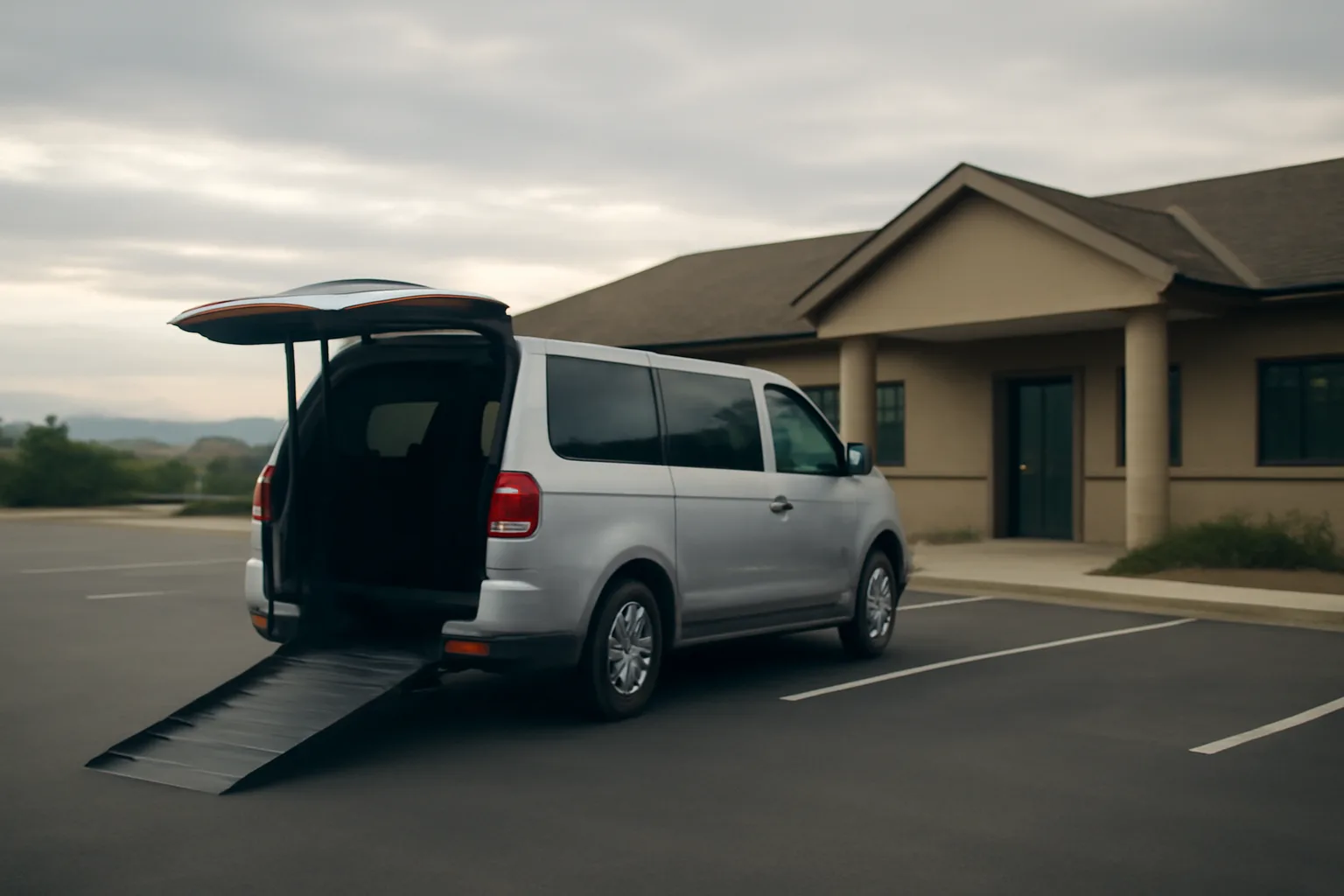
There's no single federal spec sheet for a "Medicaid wheelchair van," and Colorado doesn't publish one universal vehicle standard binding on every broker either. What you'll actually encounter is a mix of ADA-related accessibility expectations, broker-specific vehicle age and mileage limits, and standard passenger-vehicle safety and inspection rules. Practically, brokers commonly want: a functioning wheelchair lift or ramp rated for the loads you'll carry, four-point wheelchair securement (tie-downs plus an occupant restraint, more than tie-downs), a vehicle age cap (many brokers won't credential vehicles past a certain model-year threshold, often somewhere in the 8 to 10 year range, though this varies by broker and you must confirm the current number), and passed state vehicle inspection and emissions where applicable. Buy your van with credentialing in mind, more than price. A used van that's technically driveable but sits right at a broker's age cutoff, or that needs lift repairs to pass inspection, can cost you weeks of downtime before you ever get your first trip assignment. Get the broker's current vehicle standards in writing before you close on a vehicle, not after.
How does Colorado Medicaid NEMT provider enrollment actually work?
Enrollment happens on two separate tracks and you need both. Track one is Health First Colorado provider enrollment through HCPF, which establishes you as a recognized Medicaid provider type in the state's system. Track two is broker credentialing, a separate application and document review run by whichever transportation broker covers your service area. HCPF's transportation benefits page is the authoritative source for current program structure, broker contacts, and any state-level provider enrollment requirements specific to NEMT. Because broker contracts and requirements shift, and because this article can't guarantee what will be true when you read it, the right move is to call HCPF's transportation unit and your target broker directly, get the current document checklist in writing, and work from that rather than assumptions. Expect the broker side to ask for things like: proof of business registration, insurance certificates meeting their minimums, vehicle registration and inspection documentation, driver background checks (often including a Colorado Bureau of Investigation check or equivalent), and sometimes an in-person or virtual vehicle inspection. None of this is a guarantee of approval or of trip volume once approved; it's simply the gate you have to clear to be eligible for dispatch. If you want a state-agnostic breakdown of how broker credentialing packets are typically structured, our non emergency medical transportation services guide walks through the common document categories brokers ask for across states.
What does it cost and how long does it take to get credentialed?
Nobody, including us, has solid published data on average Colorado credentialing timelines, and any broker or state agency estimate you get is going to be specific to current staffing and volume, not something that stays fixed. What we can say honestly is that new operators consistently report weeks, not days, for full credentialing across the entity setup, insurance binding, and broker document review combined, and that's the assumption you should plan around rather than a specific promised date. Costs are similarly variable and depend heavily on choices you control: whether you buy new or used, whether the van already has a lift installed or needs a conversion, and what your insurance carrier quotes for a commercial wheelchair-accessible policy. None of those numbers are set by Medicaid or the broker, so treat any specific dollar figure you see online (including here) as a rough planning range, not a quote. What is fixed, or close to it, is the paperwork list: entity documents, insurance certificates, vehicle documentation, and driver files. Getting a clean, organized set of those ready before you start calling brokers is the single biggest thing you control to shorten your own timeline. That's the gap a lot of new owner-operators hit: they buy the van first and figure out the paperwork later, which is backwards. Our $199 State + Broker NEMT Launch Kit at /launch-kit-builder is built around that exact problem, organizing the state enrollment and broker credentialing document sets into one place so you're not reconstructing a checklist from five different phone calls.
What should you double-check with Colorado's Medicaid transportation program before you buy a van?
Confirm four things directly with HCPF and your target broker before spending money on a vehicle. First, which broker currently holds the region you want to serve, since contracts change and the incumbent from a year ago may not be the incumbent now. Second, the broker's current vehicle age, mileage, and equipment standards, since these determine whether the specific used van you're eyeing will even pass inspection. Third, current PUC or local operating-authority requirements for wheelchair-accessible for-hire transport in Colorado, since exemptions and filing requirements for medical transport have been adjusted over time. Fourth, current insurance minimums, since a policy sized for a standard livery vehicle usually isn't sized correctly for a wheelchair-lift-equipped commercial vehicle carrying Medicaid members. HCPF's Health First Colorado transportation benefits page is the right first call, and it should point you to current broker contacts. From there, get everything in writing. Verbal answers from a call center change depending on who picks up; a written requirements sheet or checklist doesn't.
Frequently asked questions
What is NEMT in simple terms?
NEMT stands for non-emergency medical transportation. It's scheduled rides, usually in a wheelchair van or sedan, for people who need to get to medical appointments but don't need an ambulance or emergency response. Medicaid programs, including Colorado's Health First Colorado, cover NEMT as a benefit under federal transportation-access rules in 42 CFR 431.53 [1].
Does Medicaid cover ambulance rides?
Yes. Medicaid covers medically necessary ambulance transportation as a separate benefit from NEMT, billed under its own fee schedule and provided by licensed ambulance services, not wheelchair-van operators [3]. Coverage specifics and prior authorization rules vary by state, so confirm ambulance billing details with your state Medicaid agency rather than assuming they match NEMT rules.
Does Medicare cover medical transportation?
Generally no, not the way Medicaid does. Medicare Part B covers ambulance transport when other transportation would endanger the patient's health, under 42 CFR 410.40 [4], but it doesn't fund routine scheduled rides to appointments for stable patients. Some Medicare Advantage plans add limited transportation as a supplemental benefit, but that's plan-specific and separate from any Medicaid NEMT program.
How do I start a medical transportation business in Colorado?
Form your business entity, get commercial insurance sized for passenger-for-hire and wheelchair-lift operation, confirm Colorado PUC or local operating authority requirements, buy or convert a compliant wheelchair van, then apply for Health First Colorado provider enrollment through HCPF and separately for credentialing with the broker covering your region. Confirm each requirement directly with HCPF and the broker since specifics change.
How do I start a NEMT business with just one van?
One van is enough to start. You still need the full entity setup, commercial insurance, applicable operating authority, and both state Medicaid provider enrollment and broker credentialing. What changes with one van is workload concentration: you're likely driver, dispatcher, and biller at once, so plan for realistic daily trip capacity and vehicle downtime before committing to a schedule.
What is the difference between NEMT and emergency medical transport?
NEMT is scheduled, non-urgent transportation for stable patients, usually by wheelchair van or sedan. Emergency medical transport is ambulance response to urgent situations, staffed by EMS personnel and billed under a separate Medicaid or Medicare ambulance benefit. Wheelchair-van owner-operators work in NEMT and should always direct true emergencies to call 911 instead.
Who runs Colorado's Medicaid NEMT program?
The Colorado Department of Health Care Policy and Financing (HCPF) administers NEMT as part of Health First Colorado, the state's Medicaid program, and contracts regional transportation brokers to schedule trips and manage provider networks [2]. Which broker covers a given region can change with procurement cycles, so confirm current assignments with HCPF directly.
Do I need Colorado PUC authority to run a wheelchair van for Medicaid trips?
Possibly, depending on current Colorado Public Utilities Commission rules for for-hire passenger transport, which have included exemptions and requirements that shift over time for medical transport specifically. Confirm your exact obligation directly with the Colorado PUC and with HCPF before assuming either that you need authority or that you're exempt.
How long does Colorado Medicaid NEMT broker credentialing take?
There's no fixed published timeline, and any number you find online is a rough estimate, not a guarantee. New operators commonly report a process spanning several weeks once entity formation, insurance, and vehicle documentation are all in hand. Ask your specific broker for their current typical processing time in writing before planning a launch date around it.
What documents do brokers usually require for wheelchair-van credentialing?
Commonly requested items include business registration documents, insurance certificates meeting the broker's minimums, vehicle registration and inspection records, wheelchair-lift and securement equipment documentation, and driver files including background checks and motor vehicle records. Exact lists vary by broker, so get the current checklist in writing from the broker covering your Colorado region.
Can I run NEMT and ambulance service under the same business?
Technically yes, but they're separate regulatory tracks: NEMT needs broker credentialing and, where applicable, PUC authority, while ambulance service needs EMS licensure under Colorado's emergency services statutes plus separate Medicaid ambulance-provider enrollment. Most new owner-operators start with NEMT only and add ambulance service later, if at all, once they have EMS staffing and licensure.
What is the age limit for a wheelchair van used in Colorado Medicaid NEMT?
There's no single statewide vehicle-age rule; limits are typically set by each transportation broker's credentialing standards and commonly fall somewhere around 8 to 10 years, though this varies and changes. Confirm the current age, mileage, and equipment standards with your specific broker before buying a used van.
How is Colorado Medicaid transportation different from what Medicare pays for?
Colorado's Health First Colorado NEMT benefit covers scheduled non-emergency rides through regional brokers, funded and structured under Medicaid rules. Medicare doesn't have an equivalent standing non-emergency transportation benefit; it mainly covers ambulance transport under specific medical-necessity conditions [4], with any routine ride coverage limited to certain Medicare Advantage supplemental benefits.
Sources
- Electronic Code of Federal Regulations, 42 CFR 431.53 (Assurance of transportation): Federal Medicaid regulation requiring states to ensure necessary transportation to and from providers
- 42 CFR Part 440, Subpart B (Medicaid transportation and ambulance services as covered benefits): Medicaid covers both ambulance and non-emergency medical transportation as distinct covered benefit categories
- 42 CFR 410.40, Coverage of ambulance services: Medicare Part B covers ambulance services when transportation by other means would endanger the patient's health
- 42 U.S.C. 1396a(a)(4), State plan requirements (methods of administration, including transportation): Statutory basis requiring state Medicaid plans to include proper methods of administration, which HHS has interpreted to include ensuring transportation access
- Medicaid.gov: Explanation of what NEMT is and why state Medicaid programs are required to provide it as an assurance of transportation to covered services
- Colorado Secretary of State: Steps to register a new business entity in Colorado, relevant to starting a medical transportation business
- Colorado Department of Revenue, Division of Motor Vehicles: Vehicle registration requirements for wheelchair vans used in Colorado NEMT operations