Last updated 2026-07-23
TL;DR
A "Medicaid taxi cab" is common shorthand for non-emergency medical transportation (NEMT), a Medicaid benefit that covers rides to and from covered medical appointments for people who have no other way to get there. It's arranged through a state Medicaid agency or a regional broker (Modivcare, MTM, Access2Care, or similar), not hailed off the street like a regular cab.
what is medicaid taxi cab, exactly?
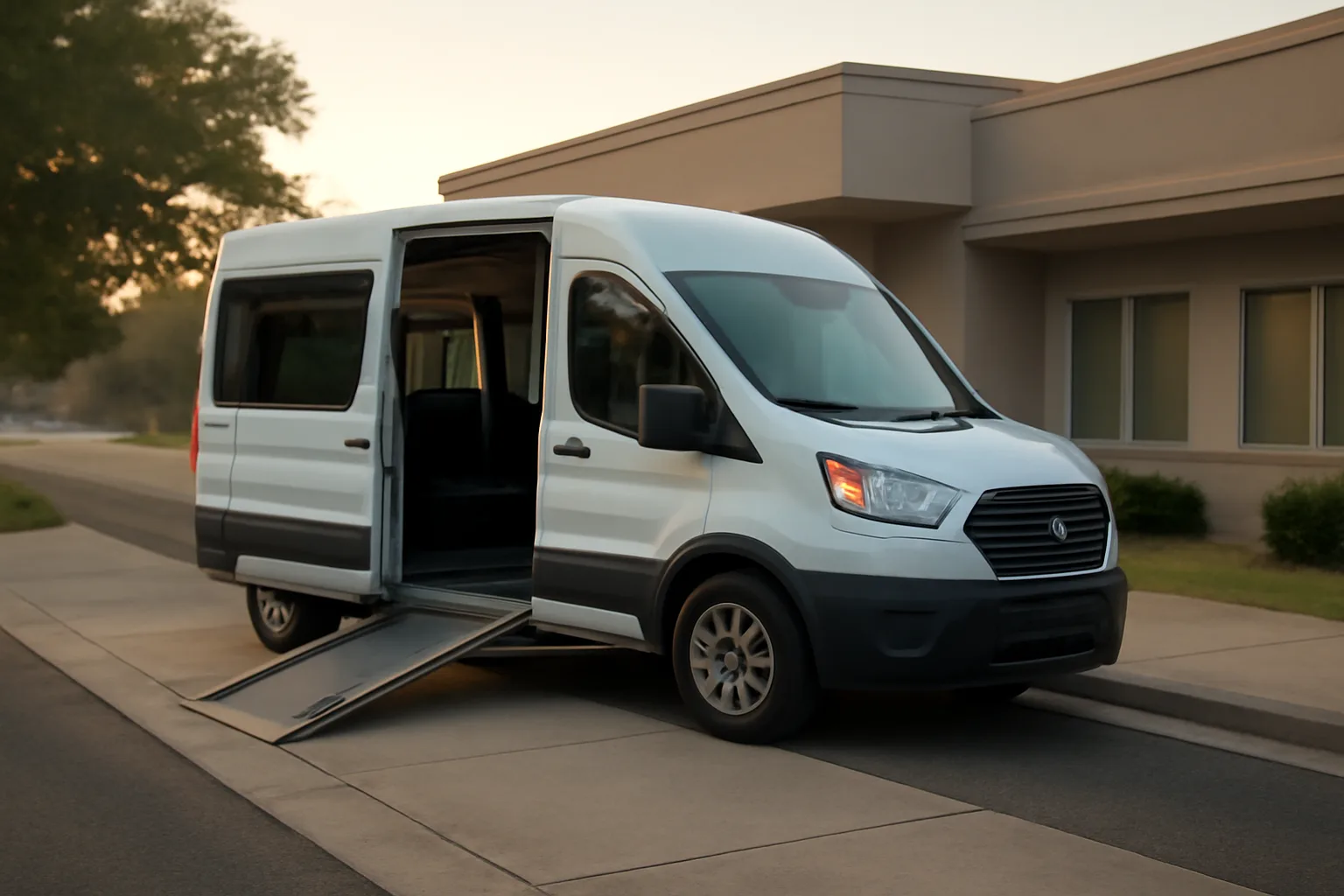
"Medicaid taxi cab" isn't an official program name. It's what people call non-emergency medical transportation (NEMT), the Medicaid benefit that pays for rides to and from covered medical services for people who don't have a car, can't drive, or can't use regular public transit because of a disability or medical condition. Federal Medicaid regulations require states to make sure eligible people can get to and from providers. The rule sits at 42 CFR 431.53, which says states must "ensure necessary transportation for beneficiaries to and from providers" [1]. States can run this in-house, contract with a transportation broker, or pay individual drivers and transportation companies directly. Either way, the ride has to be tied to a Medicaid-covered service, like a dialysis appointment, a primary care visit, physical therapy, or a specialist consult. The word "taxi" sticks around because in a lot of rural counties, NEMT really did start as a deal with the local cab company. Today the same trips are just as likely to be a wheelchair van, a sedan under contract with a broker, or in some states, mileage reimbursement to a friend or family member who drives the person themselves. For background on how the benefit works nationally, see medical transportation.
what is nemt?
NEMT stands for non-emergency medical transportation. It covers scheduled rides to Medicaid-covered appointments for people who have no other transportation option, as opposed to emergency transport (ambulance) for a sudden medical crisis. CMS describes it as a benefit for beneficiaries who "need assistance getting to and from providers" for covered services [2]. It's not an emergency service and it's not a general-purpose ride benefit. A Medicaid member can't use NEMT to get to the grocery store or a job interview. It has to be a trip to a covered medical service, and in most states the member (or their case manager, facility, or caregiver) has to schedule it in advance, often 24 to 72 hours ahead depending on the state. Modes vary by state and by the individual's medical need: ambulatory sedan or van service, wheelchair-accessible van, stretcher van, and in rural areas, public transit passes or mileage reimbursement for a volunteer driver. States that use a broker model (Modivcare, MTM, Access2Care, and others operate contracts in different states) route trip requests through that broker's call center or app, and the broker dispatches an enrolled transportation provider. For a broader look at how the benefit is structured, see non emergency medical transportation and nemt.
does medicaid cover ambulance rides?
Yes, but it's a separate benefit from NEMT. Medicaid covers ambulance transportation when it's medically necessary, meaning the person's condition requires the level of care and monitoring an ambulance crew provides, or transport by any other means would endanger the person's health. This is true for both emergency ambulance calls (911 dispatch to an ER) and some non-emergency ambulance transports, like a stretcher-level interfacility transfer for a patient who can't sit upright. The distinction matters because reimbursement rules and provider enrollment are different. Ambulance providers bill Medicaid directly (often through the state fee schedule) and must be licensed as ambulance services under state EMS regulations, more than enrolled as an NEMT vehicle. NEMT wheelchair vans and sedans are not ambulances and can't bill as one; they can't provide oxygen, cardiac monitoring, or clinical care during transport. CMS guidance and state Medicaid manuals both draw this line: ambulance is for medical necessity tied to the patient's clinical condition during transport, NEMT is for people who are medically stable but lack transportation [2]. If you're planning a wheelchair-van business, you're in the NEMT lane, not the ambulance lane, unless you also hold state EMS licensure and Medicaid ambulance provider enrollment, which is a very different regulatory path.
does medicare cover medical transportation?
Original Medicare covers ambulance transportation when medically necessary, under Medicare Part B, but it generally does not cover routine non-emergency rides to a doctor's office the way Medicaid's NEMT benefit does. Medicare.gov states that Part B covers ground ambulance transportation "when other transportation could endanger your health" and the destination is an appropriate facility [3]. Some Medicare Advantage plans have started offering limited NEMT-style transportation as a supplemental benefit, since CMS expanded flexibility for Advantage plans to cover non-medical supplemental benefits including transportation for enrollees with chronic conditions. But this is plan-specific and not guaranteed; a member has to check their individual Advantage plan's Evidence of Coverage document to see if rides to appointments are included. So if a caller asks "does Medicare cover medical transportation," the honest answer is: usually only ambulance transport under Part B, and possibly limited non-emergency rides if they're on a specific Medicare Advantage plan that offers it as a supplemental benefit. Dual-eligible beneficiaries (Medicare and Medicaid both) typically get their non-emergency rides covered through their state's Medicaid NEMT benefit instead.
how to start a medical transportation business
Starting a medical transportation business means picking a lane first: emergency ambulance (heavily regulated, requires state EMS licensure, paramedics or EMTs, and specialized vehicles) or non-emergency medical transportation (NEMT), which serves people who are medically stable but need help getting to appointments. Most new owner-operators with a single wheelchair van start in NEMT, not ambulance. The rough sequence looks like this for NEMT: 1. Form your business entity (LLC is common) and get an EIN. 2. Get commercial auto insurance for the vehicle, and general liability coverage; many brokers require minimum limits, commonly in the $1 million per occurrence range, though this varies by broker and state, so confirm with your broker and state Medicaid agency. 3. Equip and inspect the wheelchair van to meet ADA and state vehicle standards (wheelchair lift or ramp, tie-downs, securement points). 4. Get your state's required permits: business license, vehicle inspection/certification specific to medical transport, and any state-level NEMT operator license if your state requires one. 5. Enroll as a Medicaid provider with your state Medicaid agency (this is separate from broker credentialing). 6. Credential with the regional transportation broker(s) operating in your service area, since many states use brokers like Modivcare, MTM, Access2Care, or SafeRide to manage trip dispatch instead of paying providers directly. 7. Get drivers background-checked, drug-tested, and trained (many states and brokers require a specific defensive driving or passenger assistance course, plus CPR/First Aid). Expect this whole process to take weeks to a few months, not days, largely because state Medicaid enrollment and broker credentialing run on their own review timelines. Nobody has a universal number for how long it takes; it depends heavily on your state's backlog and the broker's onboarding cadence, so build in slack. See [how to start a nemt business](#) below for the NEMT-specific version of this checklist, and nemt transportation for more on how trips get dispatched once you're credentialed.
how to start a nemt business
Starting an NEMT business is largely the same process as starting any medical transportation business, but scoped specifically to non-ambulance rides: wheelchair van, ambulatory sedan, or stretcher van work. The core difference from ambulance is regulatory weight. You don't need paramedics or EMS licensure, but you do need to satisfy both state Medicaid provider enrollment and broker credentialing requirements, which are two separate applications with two separate reviewers. State Medicaid provider enrollment usually asks for: your NPI (National Provider Identifier), business licensing documents, proof of insurance, vehicle registration and inspection records, and driver credentialing documentation (background checks, driving record, drug screening results). Some states also require a Medicaid provider agreement and a site visit before final approval. Broker credentialing (with Modivcare, MTM, Access2Care, SafeRide, or whichever broker holds the contract in your state) is a separate onboarding track. Brokers typically want their own insurance certificate naming them as additional insured, vehicle photos and inspection records, driver files, and sometimes a road test or ride-along before they'll start dispatching trips to you. Requirements differ by broker and by state contract, so confirm the current checklist directly with the broker's provider network team and your state Medicaid transportation unit. A realistic build-out budget for a single wheelchair van, once you've already bought the vehicle, commonly runs into several thousand dollars for insurance down payments, permitting fees, lift/ramp certification, and driver background checks and training, though exact costs vary widely by state and insurer. Nobody has a single national number for this because state fees and insurance markets differ so much; get quotes locally before you commit.
how do you start a medical transportation business? (the credentialing sequence in detail)
Once you've got the entity, insurance, and vehicle sorted, credentialing is really where new owner-operators get stuck, mostly because state Medicaid enrollment and broker credentialing don't run in parallel automatically; you often have to push both at once. Here's the order that tends to cause the least backtracking: First, confirm which broker (if any) holds the NEMT contract in your county or region. Some states run NEMT through a single statewide broker, some carve it up regionally, and a few states still pay providers directly without a broker layer. Your state Medicaid transportation unit's website is the authoritative source for this, so confirm with your broker and state Medicaid agency before assuming which model applies to you. Second, apply for state Medicaid provider enrollment. This is a prerequisite in most states before a broker will even accept your credentialing application, since the broker needs to verify you're an active enrolled Medicaid provider in good standing. Third, submit broker credentialing paperwork in parallel with, or immediately after, state approval. Brokers each have their own portal and document checklist. Missing documents are the single most common delay reported anecdotally by owner-operators in industry forums; there's no formal published data on this, but incomplete files are consistently the reason credentialing stalls. Fourth, once approved by both the state and the broker, you'll get access to a dispatch platform or app where trip offers come through. Some brokers use phone-based dispatch, others use apps similar to rideshare driver apps. A one-time reference kit that walks through state enrollment forms and broker credentialing checklists side by side, like the $199 State + Broker NEMT Launch Kit at Launch Kit Builder, can save real time here, mainly because it keeps you from missing a document on one track while you're focused on the other. It's not a guarantee of approval from any state or broker; approval decisions are entirely theirs.
what documents and vehicle specs does a wheelchair van need?
Wheelchair vans used for Medicaid NEMT generally need a certified wheelchair lift or ramp, floor-mounted wheelchair securement (tie-down) points meeting at least four-point tie-down standards, and passenger restraint systems. States and brokers vary on exact specs, so confirm current requirements with your state Medicaid transportation unit and broker before buying or retrofitting a vehicle. ADA (Americans with Disabilities Act) accessibility standards apply broadly to vehicles used in public transportation-type services, and many state Medicaid vehicle standards borrow from those same accessibility principles, though ADA itself doesn't set a single national wheelchair-van spec for Medicaid NEMT specifically. Documents you'll typically need on file for both state and broker review: - Vehicle registration and title
- Annual (or more frequent) vehicle safety inspection records
- Lift/ramp maintenance and certification records
- Commercial auto insurance certificate with required liability limits
- Driver's license, background check, and drug screening results for every driver
- Proof of driver training (defensive driving, passenger assistance, CPR/First Aid, where required) Keep copies of everything. Brokers audit files periodically, and a missing inspection record is a common reason a provider gets temporarily suspended from dispatch until it's resolved.
how much does it cost to start with one van?
How to start a medical transportation business with one van comes down to four cost buckets: the vehicle, insurance, permitting/credentialing fees, and driver costs. None of these have a single fixed national price, because state fees and insurance markets vary this much county to county, but here's the rough shape of it. Vehicle: a used, already-converted wheelchair van (lift or ramp already installed) commonly runs in the tens of thousands of dollars depending on age, mileage, and conversion quality; new conversions cost considerably more. Buying an unconverted van and adding a conversion separately is another path, but adds its own certification step. Insurance: commercial auto insurance for a wheelchair van with passenger-for-hire coverage costs more than a personal auto policy, and brokers often require specific liability minimums (frequently cited around $1 million per occurrence, though this varies), so get quotes from insurers who specifically write NEMT or paratransit policies. Permitting and credentialing: state business licensing fees, vehicle inspection fees, and any state NEMT operator permit fees are usually a few hundred to low thousands of dollars combined, though states differ a lot here. Driver costs: background checks, drug screening, and required training courses (defensive driving, passenger assistance, CPR/First Aid) typically run from under a hundred dollars to several hundred dollars per driver depending on the state and vendor. There is no reliable published national total for "cost to start a one-van NEMT business" because so much of it is state-specific and market-specific; anyone giving you a single hard number without asking what state you're in is guessing.
what's the difference between a medicaid taxi and a regular taxi or rideshare?
| Trip purpose | Medicaid-covered medical appointment only | Any destination | |
|---|---|---|---|
| Payment | Billed to Medicaid/broker, not rider | Paid by rider directly | |
| Scheduling | Usually booked 24-72 hrs ahead | On-demand | |
| Provider requirements | State Medicaid enrollment + broker credentialing | State/local taxi/TNC licensing | |
| Vehicle | Often wheelchair-accessible or stretcher-capable | Standard passenger vehicle | |
| Driver screening | Background check, drug test, often passenger-assistance training | Varies by city/state TNC rules | Some regions have also piloted rideshare companies (Uber Health, Lyft's healthcare offerings) contracting directly with health plans or brokers to provide ambulatory (non-wheelchair) NEMT trips, which blurs the line a little, but the underlying regulatory structure, Medicaid billing and broker credentialing, still applies to those arrangements too. |
A Medicaid taxi (NEMT) trip is scheduled in advance through the state Medicaid program or its broker, tied to a covered medical appointment, and billed to Medicaid, not paid cash by the rider. A regular taxi or rideshare trip is hailed or booked on demand, goes anywhere, and is paid directly by the rider or their card on file. The practical differences for a driver/operator: | Feature | Medicaid NEMT | Regular taxi/rideshare |
who is eligible to use medicaid nemt, and how do they book a ride?
Eligibility for Medicaid NEMT generally requires the person to be an active Medicaid beneficiary who has no other means of transportation to a covered medical service, and whose medical condition doesn't require ambulance-level care during transport. States determine the exact eligibility screening process, and some require documentation that the person lacks access to a personal vehicle or a family member who can drive them. Booking usually works like this: the Medicaid member (or a caregiver, facility scheduler, or discharge planner) calls the state Medicaid transportation line or the regional broker's reservation line, gives the appointment details (date, time, provider, address), and the broker assigns the trip to an enrolled, credentialed transportation provider. Many brokers now also offer app-based booking similar to rideshare apps. Most states require some advance notice, commonly 24 to 72 hours, except for urgent same-day medical needs, which some brokers accommodate through a separate urgent/will-call process. If you're building out a provider business and want to understand the demand side of this booking flow, non emergency medical transportation services covers how service delivery is structured from the beneficiary's side.
what's the difference between nemt and emergency medical transport?
NEMT covers scheduled, non-emergency rides for people who are medically stable but need transportation help. Emergency medical transport (EMT/ambulance) covers sudden medical situations where the person's condition requires immediate clinical care and monitoring during transport, typically dispatched through 911. The regulatory gap between the two is large. Emergency medical transport requires state EMS agency licensure, certified EMTs or paramedics on board, specific equipment (oxygen, cardiac monitors, stretchers with clinical restraint systems), and compliance with state EMS protocols. NEMT wheelchair vans and sedans carry no clinical equipment and their drivers are not certified medical providers; they're trained in passenger assistance and safe driving, not clinical care. A person can technically qualify for both benefits at different times: stable enough for NEMT to get to a scheduled dialysis appointment on Tuesday, but needing an ambulance if they have a cardiac event on Wednesday. For more on the emergency side of the spectrum and how it differs structurally from NEMT, see emergency medical transport.
Frequently asked questions
What is a Medicaid taxi cab?
"Medicaid taxi cab" is informal language for NEMT, non-emergency medical transportation, a Medicaid benefit that pays for rides to covered medical appointments for beneficiaries who have no other transportation option. It's booked through a state Medicaid agency or regional broker, not hailed like a street taxi, and only covers trips to Medicaid-covered services.
Does Medicaid cover ambulance rides?
Yes. Medicaid covers ambulance transportation when medically necessary, meaning the patient's condition requires clinical monitoring or care during transport, or any other transport method would endanger their health. This applies to both emergency ambulance dispatch and some non-emergency stretcher-level interfacility transfers. It's a separate benefit and provider category from NEMT wheelchair van or sedan service.
Does Medicare cover medical transportation?
Original Medicare Part B covers ground ambulance transportation when medically necessary, but generally doesn't cover routine non-emergency rides to appointments. Some Medicare Advantage plans offer limited NEMT-style transportation as a supplemental benefit, but this varies by plan and isn't guaranteed. Dual-eligible beneficiaries typically get non-emergency rides through their state's Medicaid NEMT benefit instead.
What is NEMT?
NEMT stands for non-emergency medical transportation, a Medicaid benefit covering scheduled rides to and from covered medical appointments for people who lack other transportation options. It includes wheelchair vans, ambulatory sedans, stretcher vans, and in some states, mileage reimbursement or transit passes. It does not cover emergencies, which fall under ambulance transport instead.
How do you start a medical transportation business?
Form your business entity, get commercial insurance, acquire and certify a properly equipped vehicle, get required state permits, enroll as a state Medicaid provider, and credential with the regional broker(s) operating in your area. Background-check and train your drivers. Expect this to take weeks to months, since state and broker review timelines vary and run somewhat independently of each other.
How do I start an NEMT business with just one van?
Starting with one van follows the same steps as any NEMT launch: business entity, insurance, a compliant wheelchair van, state Medicaid enrollment, and broker credentialing. Costs vary widely by state for permitting, insurance, and driver training, so get local quotes rather than relying on a national average, since none exists that's reliably accurate for every state.
What documents do I need to become a Medicaid NEMT provider?
Typically an NPI, business licensing documents, proof of commercial insurance, vehicle registration and inspection records, lift/ramp certification, and driver files including background checks, drug screening, and training certificates. Requirements differ by state and by broker, so confirm the exact checklist with your state Medicaid transportation unit and the broker operating your service area before applying.
What's the difference between NEMT and a regular taxi?
NEMT trips are scheduled in advance, tied to a Medicaid-covered medical appointment, and billed to Medicaid or its broker rather than paid by the rider. A regular taxi or rideshare trip is on-demand, goes anywhere, and is paid directly by the passenger. NEMT providers also need separate state Medicaid enrollment and broker credentialing, more than standard taxi or TNC licensing.
Can I use Medicaid NEMT for any appointment?
No. NEMT only covers trips to services covered by Medicaid, like doctor visits, dialysis, physical therapy, and specialist appointments, for beneficiaries who have no other way to get there. It doesn't cover errands, work, or non-medical appointments, and most states require advance booking, commonly 24 to 72 hours ahead, except for urgent medical needs.
Do I need an ambulance license to run a wheelchair van business?
No. Wheelchair van and ambulatory sedan NEMT services don't require state EMS licensure or certified EMTs/paramedics, since they're for medically stable passengers, not clinical emergencies. You do need state Medicaid provider enrollment, broker credentialing where applicable, proper vehicle equipment (lift or ramp, securement points), and trained, background-checked drivers.
How long does it take to get credentialed as an NEMT provider?
There's no fixed national timeline; it depends on your state Medicaid agency's processing backlog and the broker's onboarding schedule, and these two tracks don't always move at the same pace. Realistically, plan for weeks to a few months rather than days, and confirm current processing times directly with your state Medicaid transportation unit and broker.
Which brokers manage Medicaid NEMT in most states?
Modivcare, MTM, Access2Care, and SafeRide are among the largest national NEMT brokers, but which one (if any) holds the contract in your area depends entirely on your state's current Medicaid transportation procurement. Some states use a single statewide broker, some split it regionally, and a few pay providers directly. Confirm with your state Medicaid transportation unit.
Sources
- eCFR, 42 CFR 431.53 (Assurance of transportation): Federal Medicaid regulation requiring states to ensure necessary transportation for beneficiaries to and from providers
- Medicaid.gov, Non-Emergency Medical Transportation: Description of NEMT as a benefit for beneficiaries who need help getting to and from Medicaid-covered providers
- Medicare.gov, Ambulance Services: Medicare Part B covers ground ambulance transportation when other transportation could endanger the person's health
- eCFR: States must ensure necessary transportation for Medicaid beneficiaries to and from providers (the regulatory basis for NEMT)
- Medicaid.gov CMS Informational Bulletin: CMS guidance clarifying non-emergency medical transportation requirements and coverage under Medicaid
- Federal Motor Carrier Safety Administration: Requirements for obtaining an MC number and operating authority relevant to starting a medical transportation/NEMT business
- Medicaid.gov: Eligibility criteria for Medicaid, relevant to who qualifies for Medicaid NEMT rides