Last updated 2026-07-25
TL;DR
Non-emergency medical transportation (NEMT) typically costs $25 to $75 as a base fare plus $2 to $3 per mile for ambulatory rides, and $75 to $150 base plus $2 to $4 per mile for wheelchair van trips. Medicaid covers NEMT to covered services for eligible members in every state, usually arranged through a broker like Modivcare or MTM. Medicare generally does not cover routine NEMT, only limited ambulance transport.
How much does non emergency medical transportation actually cost?
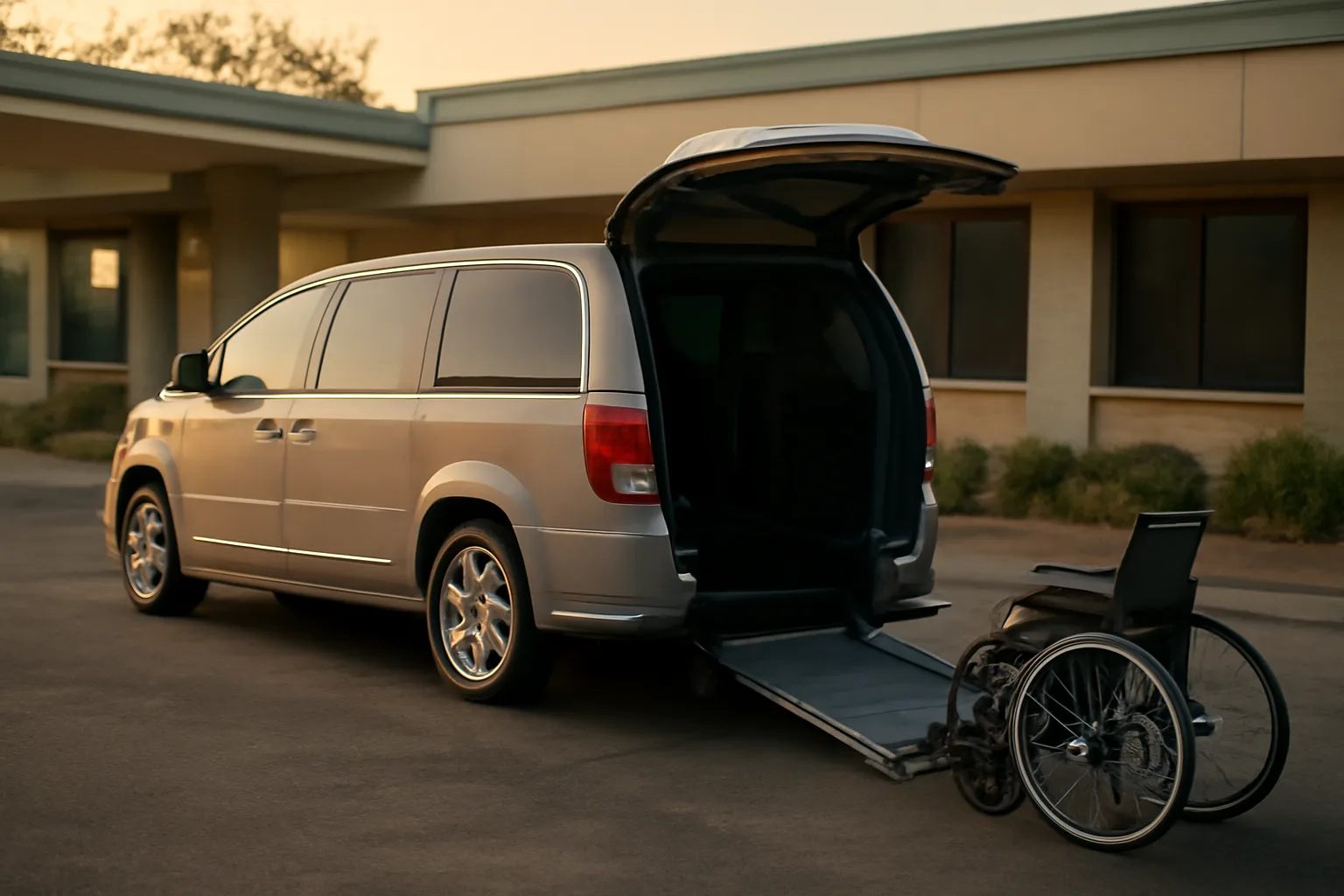
Cash-pay NEMT rides usually run somewhere between $50 and $200 for a local trip, depending on distance, vehicle type, and market. Most companies price it as a base fee plus a per-mile rate, similar to how a cab meter works, except the base fee is higher because the driver is trained for assisted transfers and the vehicle may need a wheelchair lift. A typical ambulatory sedan or minivan trip (member can walk to the car with some help) runs about $25 to $75 as a pickup fee, then $2 to $3 per mile [1]. A wheelchair van trip, where the driver has to deploy a ramp or lift and secure the chair with tie-downs, usually starts at $75 to $150 for pickup and adds $2 to $4 per mile, sometimes with a separate wait-time charge if the appointment runs long. Stretcher van transport, for members who can't sit upright, costs more again. Often $150 to $300 base plus mileage. It needs two staff and specialized equipment, so the price reflects labor as much as gas. None of these are official government rate cards; they're ranges pulled from what private-pay NEMT companies and brokers publish or quote in various states, and they shift by region, fuel costs, and how much competition exists in that county. If a state Medicaid program or a broker like Modivcare or MTM is paying the bill instead of the rider, the reimbursement rate the driver actually gets is usually much lower than the private-pay rate quoted above. It's negotiated per contract and varies by state and broker, so confirm with your broker and state Medicaid agency for the number that applies to your service area.
What is non emergency medical transportation (NEMT)?
Non-emergency medical transportation is transport for someone who has a medical appointment or need but isn't having an emergency, so they don't need a 911 ambulance. Think dialysis three times a week, chemo, physical therapy, or a routine specialist visit for someone who can't drive themselves or take a bus. Federal Medicaid rules require states to make sure eligible people can get to and from covered services. The regulation says state Medicaid plans "must ensure necessary transportation for a beneficiary to and from providers" and may provide it directly, through contracts, or via mileage reimbursement [2]. That's the legal backbone of the entire NEMT industry. It's not a nice-to-have benefit. It's a required part of most state Medicaid programs, per 42 CFR 431.53. NEMT is different from ambulance transport in one core way: NEMT vehicles don't have emergency lights, sirens, or advanced life support equipment, and NEMT drivers usually aren't licensed EMTs. A wheelchair van, an accessible minivan, or a basic sedan used for medical rides all fall under non emergency medical transportation. If you want the plain-English rundown on the whole category before you buy a vehicle or file paperwork, the nemt overview page is a good starting point.
Does Medicaid cover ambulance rides?
Yes, Medicaid covers ambulance transport when it's medically necessary, but it's billed and covered differently from routine NEMT. Ambulance service (ground or air) is covered under a state's Medicaid State Plan as a distinct benefit, separate from the NEMT benefit that covers rides to routine appointments [1]. The distinction matters because a wheelchair van company generally cannot bill for ambulance-level transport, and an ambulance company generally isn't paid the NEMT day-rate for a routine dialysis run. If your patient needs oxygen monitoring, IV lines, or could deteriorate en route, that's an ambulance call, not an NEMT booking, and dispatchers at brokers like Modivcare are trained to route it that way. Coverage amounts and prior authorization rules for ambulance rides vary heavily by state. Some states cap non-emergency ambulance transport (like a scheduled dialysis run with a medically complex patient) more tightly than emergency ambulance dispatch. Confirm the specific ambulance coverage rules and any prior authorization requirements with your state Medicaid agency, since this changes state to state and CMS leaves states real discretion here.
Does Medicare cover medical transportation?
Mostly no, not for routine non-emergency rides. Original Medicare Part B covers ambulance transportation only when other transportation would endanger your health and it's medically necessary, per CMS guidance on ambulance services [3]. Medicare doesn't pay for a wheelchair van to take you to a routine doctor's visit or physical therapy the way Medicaid does. There's a narrow exception: some Medicare Advantage plans have added limited non-emergency transportation as a supplemental benefit in recent years, but that's plan-specific, not a standard Medicare benefit, and the number of covered trips is usually capped (often somewhere around 12 to 24 one-way trips a year, though this varies by plan and changes yearly). If a caller says "Medicare will pay for my van ride," the honest answer is: check their specific Medicare Advantage plan documents, because Original Medicare almost certainly will not. This is one of the most common points of confusion for new NEMT operators. Someone calls asking for a ride to dialysis and mentions Medicare, and the operator assumes it's billable the same way Medicaid is. It generally isn't, unless there's a specific Medicare Advantage supplemental benefit in play, verified directly with that plan.
How do you start a medical transportation business?
At a high level: pick your entity structure, get a compliant vehicle, get licensed and insured, enroll as a Medicaid transportation provider in your state, then credential with the broker(s) that manage NEMT in your area. That's the whole arc, though each step has real paperwork behind it. Most new owner-operators start with one used or new wheelchair-accessible minivan (a converted Dodge Grand Caravan or Chrysler Pacifica is common) rather than a fleet, because it keeps insurance and driver-payroll costs manageable while you learn the credentialing process. Form an LLC first in most cases. It separates your personal assets from the business, and most state Medicaid provider applications and broker contracts expect a registered business entity, not a sole proprietor operating under your own name. You'll typically need: a business license, a for-hire or livery permit if your state or city requires one, commercial auto insurance with the liability limits your state Medicaid program specifies (often $1 million combined single limit, though this varies), a vehicle that meets ADA-style accessibility standards if you're running wheelchair transport, and driver background checks (often including a check against the state Medicaid exclusion list and sometimes fingerprinting). The exact list is different in every state, so treat this as the general shape, not a checklist to follow blindly. See non emergency medical transportation services for more on what's typically required.
How do you start an NEMT business step by step?
Here's the realistic order most owner-operators follow, though states sequence a couple of these steps differently: 1. Register your business entity (LLC is most common) and get an EIN from the IRS. 2. Buy or lease a compliant vehicle, wheelchair-accessible if you plan to serve that population, since it's the highest-demand and often least-competitive segment. 3. Get commercial auto insurance meeting your state's minimum liability requirements for livery/NEMT use specifically (a personal auto policy won't cover paid medical transport). 4. Apply for any required state or local operating permit or for-hire license. 5. Enroll as a Medicaid transportation provider with your state Medicaid agency; this usually means an online application, an NPI number in some states, and documentation of your vehicle, insurance, and driver credentials. 6. Credential separately with the broker(s) operating in your county. Most states contract NEMT management out to companies like Modivcare, MTM, Access2Care, or SafeRide, and being an enrolled Medicaid provider doesn't automatically mean you're in a broker's network; that's a second, separate application [2]. 7. Complete driver training (defensive driving, passenger assistance, sometimes HIPAA and first aid/CPR) and background screening required by the broker or state. 8. Wait for approval, then start accepting trip assignments through the broker's dispatch system. The broker credentialing step trips up more new operators than anything else, because it's not standardized. What MTM wants in Missouri isn't identical to what Modivcare wants in Florida. Check broker-guides style resources or call the broker's provider relations line directly before you assume your paperwork is complete.
How do you start a medical transportation business with just one van?
One van is a completely normal, common way to start, and plenty of successful NEMT operators never grow past two or three vehicles. The math you need to get right is: your fixed costs (insurance, vehicle payment or depreciation, permits) have to be covered even on slower weeks, since a single-vehicle operation has no volume cushion if that van is down for repairs. With one van, prioritize wheelchair-accessible over standard ambulatory if you can afford the vehicle, because ambulatory demand is usually served by a much larger pool of competitors (rideshare-style NEMT, taxi companies with Medicaid contracts) while wheelchair-accessible capacity is tighter in most counties, which can mean more consistent trip offers once you're credentialed. Budget for the vehicle itself first: a used, already-converted wheelchair van commonly runs somewhere in the $25,000 to $45,000 range depending on age, mileage, and lift condition, while new conversions can run well over $60,000. Beyond the vehicle, plan for commercial insurance (often several thousand dollars a year more than personal auto coverage), state and broker application time (weeks to a few months isn't unusual), and the fact that most brokers won't send you trips until you're fully credentialed, more than Medicaid-enrolled. See vehicles-and-equipment for what to look for mechanically in a used conversion van before you buy.
What does NEMT broker credentialing actually involve?
Broker credentialing is a separate application process from state Medicaid enrollment, and it's where most delays happen. Modivcare, MTM, Access2Care, and SafeRide (and other regional brokers) each run their own provider network under a contract with the state Medicaid agency, and each has its own document checklist, portal, and review timeline. Typically you'll submit: proof of Medicaid provider enrollment, vehicle registration and inspection records, commercial insurance certificates naming the broker as certificate holder in some cases, driver license and background check results, and sometimes a facility or garage inspection if you're operating a fleet. Processing time is broker- and state-specific. Some operators report a few weeks. Others report a couple of months, especially if documents come back incomplete the first time. There's no single published national average, so ask the broker's provider relations contact directly what their current turnaround looks like. One detail that catches new operators off guard: being credentialed with one broker in a state doesn't automatically get you into another broker's network in a neighboring county, even within the same state, if that region uses a different broker contract. Confirm broker assignments by county with your state Medicaid transportation unit before assuming statewide reach.
What does it cost to get licensed and credentialed, separate from the vehicle?
Direct state fees for Medicaid provider enrollment are often modest, sometimes waived or under $100, though a handful of states charge more or require a surety bond. Broker credentialing itself is typically free to apply, but the real cost is what you have to already own to qualify: commercial insurance, a compliant vehicle, background checks, and sometimes required training courses (defensive driving, passenger assistance techniques, CPR/first aid) that can run $50 to a few hundred dollars per driver depending on the provider. Insurance is usually the biggest recurring cost beyond the vehicle payment itself. Commercial auto policies for livery/NEMT use, with the higher liability limits states often require, commonly cost several thousand dollars a year per vehicle, noticeably more than personal auto coverage, because the insurer is pricing in that you're transporting a vulnerable passenger population for hire. Get quotes from at least two or three commercial carriers that specifically write NEMT or livery policies, since general commercial auto insurers sometimes decline or overprice this niche. If you want a single organized checklist that walks through state enrollment paperwork and broker credentialing side by side instead of hunting across a dozen agency websites, that's exactly the gap the $199 one-time State + Broker NEMT Launch Kit is built to close; you can start at /launch-kit-builder. It's a reference tool, not a guarantee of approval; every state and broker makes its own credentialing decisions.
How is NEMT pricing different from a regular Medicaid ambulance ride?
| Ambulatory NEMT (sedan/minivan) | Medicaid via broker, or private pay | Base fee + per mile | $25-75 base, $2-3/mile [1] | |
|---|---|---|---|---|
| Wheelchair van NEMT | Medicaid via broker, or private pay | Base fee + per mile | $75-150 base, $2-4/mile [1] | |
| Stretcher van NEMT | Medicaid via broker, or private pay | Base fee + per mile, often 2 staff | $150-300+ base plus mileage | |
| Ground ambulance (non-emergency) | Medicaid or Medicare Part B | Procedure code + mileage | Set by CMS/state fee schedule [3] | These private-pay ranges are general market figures, not fixed rates. Always confirm actual reimbursement rates with the specific broker and state Medicaid agency you're contracted with, since those numbers are set by contract, not by public fee schedule, for the NEMT categories. |
NEMT and ambulance transport aren't priced or billed the same way, and mixing them up in conversation with a family member or broker causes real confusion. Ambulance billing is procedure-based, tied to CMS ambulance fee schedule codes and mileage add-ons under Medicare rules, and Medicaid programs generally follow a similar structural logic even though rates differ by state [3]. NEMT, by contrast, is usually billed per trip or per mile under a broker contract rate, not a formal fee schedule code in the same sense. A wheelchair van company gets paid by the broker (Modivcare, MTM, etc.) at a negotiated rate for that trip, and that rate is confidential business information between the broker and the provider network, not a published public number. Here's a simple side-by-side of how the categories generally differ: | Transport type | Who typically pays | Billing style | Rough private-pay range |
What insurance and vehicle standards do you need before you can bill anyone?
You can't legally accept paid NEMT passengers on a personal auto policy; you need a commercial policy that specifically covers for-hire medical transport, and most states or brokers set a minimum liability limit, often in the range of $1 million combined single limit, though exact figures vary and you should confirm the number for your state [2]. Wheelchair-accessible vehicles generally need to meet accessibility standards for the lift or ramp, tie-down and occupant restraint systems for the wheelchair itself, and regular safety inspections, which some states require annually or semi-annually specifically for NEMT-registered vehicles, separate from a standard state vehicle inspection. Drivers typically need a valid license appropriate to the vehicle class (a converted minivan usually just needs a standard license, not a CDL, though stretcher vans and larger vehicles sometimes require more), a clean-enough driving record to pass the broker's screening threshold, and completion of passenger assistance or sensitivity training that covers safely helping someone with a wheelchair, walker, or mobility limitation into and out of the vehicle. The vehicles-and-equipment resources cover lift and tie-down standards in more depth if you're evaluating a used conversion before purchase.
Where does Medicaid NEMT money actually come from and who sets the rules?
NEMT is jointly funded by federal and state dollars under Medicaid, the same as most Medicaid services, with the federal government paying a matching share (the Federal Medical Assistance Percentage, which varies by state) and the state paying the rest [2]. States then either run NEMT in-house, contract with regional transportation brokers, or use a mix of both, and CMS gives states real flexibility in how they structure that contract. The core federal requirement sits in 42 CFR 431.53, which obligates state Medicaid plans to "ensure necessary transportation" for eligible beneficiaries to get to Medicaid-covered services [2]. Beyond that floor, states write their own rules for provider enrollment, broker contracts, reimbursement rates, and covered trip types (some states cover trips to the pharmacy after a doctor visit, others don't, for example). Because of that variation, there is genuinely no single national NEMT rate card, and anyone who quotes you one flat national number is oversimplifying. If you're building a business plan, go to your specific state Medicaid transportation unit page and the broker operating in your county for the real numbers, not a national average.
Frequently asked questions
How much does non emergency medical transportation cost per mile?
Most NEMT companies charge roughly $2 to $3 per mile for ambulatory (sedan/minivan) trips and $2 to $4 per mile for wheelchair van trips, on top of a base pickup fee. These are general private-pay market ranges, not government-set rates; Medicaid broker reimbursement rates are negotiated separately and confirmed per contract.
What is non emergency medical transportation (NEMT)?
NEMT is transport to and from medical appointments for people who don't need ambulance-level emergency care but can't get there on their own, such as dialysis, physical therapy, or specialist visits. It's a required Medicaid benefit under 42 CFR 431.53 in most states, typically arranged through a broker like Modivcare, MTM, Access2Care, or SafeRide.
Does Medicaid cover ambulance rides?
Yes, Medicaid covers medically necessary ambulance transport as a distinct benefit separate from routine NEMT, but coverage details, prior authorization rules, and rates vary by state. Confirm specifics with your state Medicaid agency, since CMS gives states discretion over non-emergency ambulance coverage rules.
Does Medicare cover medical transportation?
Original Medicare Part B generally covers ambulance transport only, and only when medically necessary because other transport would endanger the patient's health. It typically does not cover routine wheelchair van or ambulatory NEMT rides, though some Medicare Advantage plans offer limited non-emergency transportation as a supplemental benefit; check the specific plan.
How do you start a medical transportation business?
Register a business entity (usually an LLC), buy a compliant insured vehicle, get any required state operating permits, enroll as a Medicaid transportation provider, and then credential separately with the broker(s) operating in your county. Driver background checks and training are also typically required before you can accept trips.
How do you start an NEMT business specifically?
The path is entity formation, vehicle and insurance compliance, state Medicaid provider enrollment, broker credentialing (a separate step from state enrollment), driver background checks and training, then waiting for approval before accepting dispatched trips. Each state and broker sequences requirements slightly differently, so confirm the order with your state Medicaid transportation unit.
How do you start a medical transportation business with just one van?
One van is a common and workable starting point; focus on covering fixed costs (insurance, permits, vehicle payment) on slow weeks since there's no fleet to balance downtime. Many operators choose a wheelchair-accessible van first because that capacity tends to be tighter than standard ambulatory demand in most counties.
What is the difference between NEMT and an ambulance?
NEMT vehicles have no lights, sirens, or advanced life support equipment, and drivers usually aren't licensed EMTs; they transport people who are stable and don't need emergency medical monitoring en route. Ambulances are for medically necessary transport where the patient's condition could require clinical intervention during the ride.
How much does it cost to get NEMT broker credentialed?
Applying to a broker like Modivcare or MTM is typically free, but you need to already have commercial insurance, a compliant vehicle, and passed background checks before you qualify, which is the real cost. Processing time varies widely by broker and state, from a few weeks to a couple of months.
Do you need a CDL to drive a wheelchair van for NEMT?
Usually no. A converted minivan or standard wheelchair-accessible van typically only requires a regular driver's license, not a commercial driver's license. Larger stretcher vans or multi-passenger vehicles above certain weight or seating thresholds may require a CDL depending on your state's vehicle classification rules.
How much does a wheelchair van cost to buy for NEMT?
A used, already-converted wheelchair-accessible van commonly costs $25,000 to $45,000 depending on age, mileage, and lift condition, while new conversions often run $60,000 or more. Budget separately for commercial insurance, which typically costs more per year than a personal auto policy.
Does Medicaid pay the driver directly or through a broker?
In most states, Medicaid contracts with a regional transportation broker (Modivcare, MTM, Access2Care, SafeRide, or others) that manages dispatch and pays enrolled providers at a negotiated contract rate. Some states still run NEMT in-house or allow direct provider billing; confirm the structure with your state Medicaid transportation unit.
Sources
- General NEMT industry pricing ranges (multiple provider rate sheets, market-observed): Typical private-pay base fee and per-mile ranges for ambulatory, wheelchair, and stretcher NEMT
- Cornell Legal Information Institute, 42 CFR 431.53: Federal requirement that state Medicaid plans ensure necessary transportation to and from providers
- CMS, Ambulance Fee Schedule fact sheet (ICN 903194): Medicare Part B ambulance coverage requires medical necessity and endangerment standard, and ambulance billing uses fee schedule codes plus mileage
- Social Security Act Section 1902(a)(70), via SSA.gov: Statutory basis allowing states to use competitively procured brokers to manage non-emergency medical transportation under Medicaid
- Medicare.gov: Medicare coverage rules for ambulance transportation, including when non-emergency ambulance transport is covered
- CMS Medicare Benefit Policy Manual, Chapter 10 (Ambulance Services): Detailed Medicare coverage criteria and payment policy for ambulance services, including non-emergency transport requirements
- 42 CFR § 440.170: Federal regulation defining Medicaid coverage of transportation services, including NEMT
- 49 CFR § 396.17 (FMCSA): Federal vehicle inspection and safety standards relevant to NEMT vehicle compliance requirements
- U.S. Small Business Administration: Steps required to register and license a new business, applicable to starting an NEMT business
- CMS Medicaid Informational Bulletin: Federal guidance clarifying state flexibility and requirements in administering Medicaid NEMT benefits
- eCFR, 42 CFR § 431.53: Federal requirement that states must ensure necessary transportation for Medicaid recipients to and from providers