Last updated 2026-07-25
TL;DR
You start a non-emergency medical transportation (NEMT) business by forming a legal entity, getting commercial auto and general liability insurance, buying a compliant wheelchair van, enrolling as a Medicaid transportation provider with your state, then credentialing with brokers like Modivcare or MTM. Most states require enrollment before broker credentialing, not the other way around. Confirm exact steps with your broker and state Medicaid agency.
What is non emergency medical transportation (NEMT)?
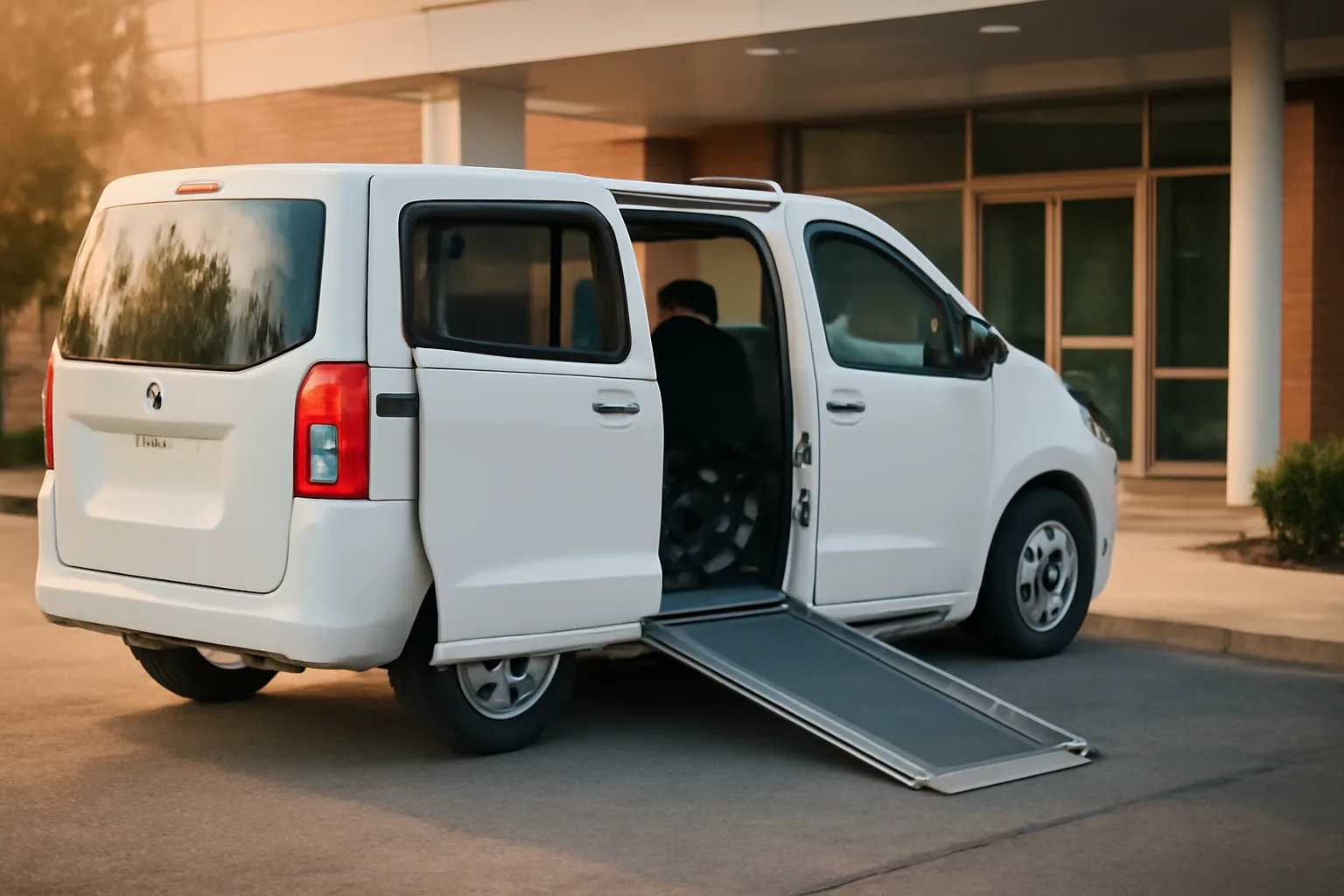
Non-emergency medical transportation is scheduled transport for people who need to get to medical appointments, dialysis, therapy, or pharmacy visits but don't need an ambulance. No siren, no paramedic, no IV drip. Just a driver, a vehicle (sedan, wheelchair van, or stretcher van), and a rider who can't drive themselves or use regular transit because of a disability, age, or a medical condition. Medicaid is required to cover this. Federal regulation at 42 CFR 431.53 requires state Medicaid programs to "ensure necessary transportation for beneficiaries to and from providers" and to describe how they meet that requirement in their state plan [1]. That's the legal hook that makes NEMT a real, federally-backed line of business rather than just a local courier gig. Most states don't run NEMT themselves. They contract it out to a transportation broker, and companies like Modivcare, MTM, Access2Care, and SafeRide manage the rides, dispatch, and provider network on the state's behalf. You'll typically deal with both a state Medicaid enrollment step and a separate broker credentialing step. See our nemt overview for how that split works state by state.
How do I start a NEMT business, step by step?
There's a real order to this, and doing it out of order costs you time and money. Here's the sequence that actually works for a new owner-operator. 1. Form your legal entity (LLC is standard) and get an EIN from the IRS. 2. Get commercial auto insurance for livery/passenger-for-hire use, plus general liability. Personal auto policies exclude paid passenger transport. 3. Buy or lease your vehicle. For a wheelchair van, confirm it meets ADA and state accessibility specs (ramp or lift, wheelchair tie-downs, securement points). 4. Get any required state-level permits: many states require a livery, passenger carrier, or NEMT-specific operating permit before Medicaid will even look at your application. 5. Enroll as a Medicaid transportation provider through your state Medicaid agency (or its transportation unit). This is a distinct step from anything a broker does. 6. Apply for broker credentialing with whichever broker manages NEMT in your service area (Modivcare, MTM, Access2Care, SafeRide, or a state-specific vendor). 7. Pass any required vehicle inspection and driver background check/drug screen the broker or state requires. 8. Get your NPI (National Provider Identifier) if your state or broker requires one for billing. Some states let you run steps 5 and 6 close together. Some brokers won't process your file until your Medicaid enrollment number is active. Confirm the sequence with your broker and state Medicaid agency before you spend money on anything broker-specific like their portal fees or their own inspection.
How do you start a medical transportation business (entity, insurance, licensing basics)?
Before you touch Medicaid paperwork, get the boring business fundamentals locked down. An LLC is the standard structure for a single-van operator because it separates your personal assets from business liability. You'll need an EIN from the IRS, a business bank account, and in most states, a registered agent. Insurance is where new operators get tripped up. You need a commercial auto policy rated for passenger-for-hire or livery use, not a personal or standard commercial policy. General liability coverage of at least $1,000,000 per occurrence is common in broker contracts, though exact minimums vary by broker and state, so confirm the number before you bind a policy. Some states also require a surety bond or proof of financial responsibility filed with the state transportation or insurance department. Most states require some kind of for-hire vehicle permit or livery license separate from Medicaid enrollment. That's a state Department of Transportation or Public Utilities Commission function in many states, not the Medicaid agency. Skipping this step is one of the most common reasons a Medicaid or broker application gets bounced back.
Does Medicaid cover ambulance rides?
Yes, Medicaid covers ambulance transportation, but that's a separate benefit from NEMT and it's billed and regulated differently. Ambulance services fall under emergency medical transport rules, generally billed through Medicare Part B and Medicaid physician/ambulance fee schedules, and they require licensed EMTs or paramedics and emergency vehicle certification. NEMT is a different animal. No emergency personnel required. No lights and sirens. The vehicle certification standards are lower too (wheelchair van or ambulatory sedan, not a fully-equipped ambulance). If you're building a wheelchair-van business, you're in the NEMT lane, not the ambulance lane. For background on how the ambulance side works, see our emergency medical transport page. Medicaid's own coverage page confirms transportation is a required benefit tied to getting beneficiaries to covered services, and describes non-emergency transport as a component states must address [2].
Does Medicare cover medical transportation?
Medicare's rules are narrower than Medicaid's. Medicare Part B covers ambulance transportation when other transportation could endanger your health, generally for emergencies or when a doctor certifies medical necessity for a non-emergency ambulance trip, per Medicare's ambulance services coverage guidance [3]. Medicare does not generally cover routine non-emergency transportation like a wheelchair van ride to a dialysis appointment the way Medicaid does. That's a meaningful business distinction. Your NEMT wheelchair-van business will be built almost entirely around Medicaid beneficiaries and Medicaid managed-care plans, not traditional Medicare fee-for-service. Some Medicare Advantage plans do offer supplemental transportation benefits as an extra. That's plan-by-plan, not a standard Medicare entitlement. If you want your business to serve both Medicaid and Medicare Advantage riders, you'll likely need to credential separately with each Medicare Advantage plan's transportation vendor in addition to your state Medicaid broker relationship.
How do I start a NEMT business with just one van?
One van is plenty to start. Plenty of owner-operators run their entire business on a single wheelchair van for the first year or two, and most state and broker enrollment processes don't require a fleet minimum. What you do need with one van: a vehicle that meets the accessibility and safety spec your state and broker require (ramp or lift, functioning tie-downs, current inspection sticker), insurance rated for that specific VIN, and a driver (often you) who passes the background check and any required training, like defensive driving or passenger assistance techniques. The practical limits of a one-van operation show up on the scheduling side, not the credentialing side. Brokers assign trips through their own dispatch systems, and if you're not available during the hours they're routing rides, you won't get assigned much volume. That's a business-planning question, not a regulatory one, and this article deliberately isn't projecting how many trips or how much revenue you'd see, because that varies enormously by broker, region, and how many other providers are already credentialed in your area. For a broader look at how the vehicle side works, see vehicles-and-equipment content on wheelchair van specs.
How do I enroll as a Medicaid NEMT provider in my state?
Every state Medicaid agency runs (or contracts out) its own transportation enrollment process, and there's no single national portal. You'll typically apply directly to your state Medicaid agency's transportation unit or provider enrollment division, submit your business license, insurance certificates, vehicle registration and inspection records, driver background check results, and in many states, get a state Medicaid provider number distinct from any broker ID. Medicaid.gov's non-emergency medical transportation page describes NEMT as a benefit "provided under two separate authorities" (regular state plan coverage and optional broker/waiver-based models), which is exactly why the enrollment path looks different from state to state [2]. Some states enroll providers directly and then hand you off to a broker for scheduling. Others require broker credentialing as the front door, and the broker handles Medicaid enrollment paperwork alongside its own. Because this varies so much, the only universally correct answer here is: confirm the exact sequence, forms, and fees with your specific state Medicaid agency's transportation unit before you assume anything based on a neighboring state's process. Our state-guides hub tracks the differences state by state.
What's the difference between state Medicaid enrollment and broker credentialing?
| Business licensing/permits | State DOT or Public Utilities Commission | Legal right to operate a for-hire vehicle | |
|---|---|---|---|
| Medicaid provider enrollment | State Medicaid agency | Provider number, right to bill Medicaid | |
| Broker credentialing | Modivcare, MTM, Access2Care, SafeRide, etc. | Access to trip dispatch and scheduling | |
| Vehicle/driver compliance | State + broker, often both | Passed inspection, background check, insurance on file | For broker-specific requirements, our broker-guides hub breaks down what each major broker asks for during credentialing. |
State Medicaid enrollment makes you a recognized Medicaid transportation provider in the state's system, eligible to bill for covered rides. Broker credentialing is a separate, private-company process (Modivcare, MTM, Access2Care, SafeRide, or a smaller state vendor) that qualifies you to actually receive trip assignments through that broker's dispatch network. You generally need both. Being Medicaid-enrolled without broker credentialing usually means you have no way to get trips, because the broker controls dispatch in most states. Being broker-credentialed without state Medicaid enrollment isn't possible in most states, because brokers typically require an active state Medicaid provider number as a condition of credentialing. | Step | Who runs it | What it gets you |
What do brokers like Modivcare, MTM, Access2Care, and SafeRide actually require?
Each broker runs its own credentialing packet, and requirements shift over time, so treat anything here as a starting checklist, not a guarantee of what you'll be asked for. Across most brokers, expect to submit: proof of state Medicaid enrollment (or an in-progress application), commercial auto insurance certificates naming the broker as certificate holder in many cases, vehicle registration and a passed safety/accessibility inspection, driver background checks (often including a sex offender registry check and motor vehicle record pull), and proof of driver training relevant to passenger assistance and wheelchair securement. Some brokers also require a signed provider services agreement with specific liability and indemnification language, a W-9, and direct deposit banking information for payment. Processing time varies a lot by broker and by how busy their credentialing team is in your region. There's no standard national timeline, so ask the broker directly what their current turnaround looks like rather than planning around a number you saw somewhere else. Because requirements genuinely change and differ by state and broker, confirm the current packet directly with the broker's provider network or credentialing department before you submit anything, and double check against your state Medicaid transportation unit's own provider manual.
What vehicle and driver requirements apply to NEMT wheelchair vans?
Wheelchair van requirements generally combine ADA accessibility standards with state-specific vehicle and driver rules, and both the state and the broker may inspect independently. At minimum, expect requirements around a working ramp or lift, wheelchair tie-down/securement systems, a current state vehicle inspection, and commercial auto insurance rated for the vehicle's actual use as a for-hire passenger vehicle. Driver requirements commonly include a valid driver's license (commercial license requirements vary by vehicle weight and seating capacity under state rules), a clean or explainable motor vehicle record, a background check, and completion of some form of passenger assistance or wheelchair securement training. Some states also require CPR/first aid certification for NEMT drivers, though that's not universal, so check your specific state Medicaid transportation manual. Don't assume federal ADA rules alone cover you. ADA sets baseline accessibility expectations, but your state Medicaid transportation unit and your broker can and often do layer additional vehicle-age limits, mileage caps, or inspection frequency requirements on top of that baseline.
What ongoing compliance do I need after I'm credentialed?
Getting credentialed is the start, not the finish. Most states and brokers require periodic re-credentialing, typically annually, including renewed insurance certificates, a fresh vehicle inspection, and sometimes a repeated background check. You'll also need to keep your Medicaid provider enrollment current, which in most states means responding to periodic revalidation notices. Federal rule requires state Medicaid agencies to revalidate provider enrollment at least every five years under 42 CFR 455.414, though many states and brokers run their own more frequent checks on top of that [4]. Miss a revalidation deadline and you can be deactivated from billing without much warning. Keep clean trip records, maintain your vehicle maintenance logs, and hold onto insurance documentation well past your current policy period, since audits can look backward. If you're building a broader operations checklist for compliance and audits, our non-emergency-medical-transportation-services page covers day-to-day operational standards in more depth.
What does it cost to start, and where do people waste money?
Costs vary enormously by state, vehicle condition, and insurance market, so treat any number you see (including here) as a rough range, not a quote. A used, already-converted wheelchair van can run anywhere from the high five figures to over $60,000 depending on age, mileage, and lift/ramp condition. New conversions cost considerably more. Commercial auto insurance for livery use is typically several thousand dollars a year and varies widely by state and driving record, so get quotes from carriers that specifically write NEMT or livery policies rather than assuming a standard commercial auto quote applies. Where people waste money: buying a van before confirming their state's specific accessibility and inspection requirements, paying for broker-specific training or inspection services before their Medicaid enrollment is even filed, and signing exclusive vehicle financing deals before they know which broker territories they'll actually be credentialed in. That's part of why we built a $199 one-time State + Broker NEMT Launch Kit at /launch-kit-builder: it maps out the state Medicaid and broker documents you'll actually need in the right order, so you're not guessing which paperwork to chase first or paying twice for the same inspection. It doesn't replace confirming details with your state Medicaid agency or your broker, and it doesn't promise approval, but it saves you from the sequencing mistakes that cost owner-operators real time and money.
Frequently asked questions
How to start a medical transportation business?
Form an LLC, get commercial auto and general liability insurance, secure any required state for-hire vehicle permit, buy a compliant vehicle, enroll as a Medicaid transportation provider with your state, then get credentialed with the broker (Modivcare, MTM, Access2Care, SafeRide, or another vendor) operating in your area. Confirm exact sequencing and fees with your state Medicaid transportation unit.
Does Medicaid cover ambulance rides?
Yes. Medicaid covers ambulance transportation as part of its required transportation benefit under 42 CFR 431.53, but ambulance service is billed and regulated separately from non-emergency medical transportation (NEMT), and it requires licensed EMT/paramedic staffing and emergency vehicle certification that NEMT wheelchair vans don't need.
What is NEMT?
NEMT stands for non-emergency medical transportation: scheduled rides to medical appointments, dialysis, or therapy for people who don't need an ambulance but can't drive themselves or use regular transit due to a disability or medical condition. Medicaid is federally required to ensure this transportation is available to eligible beneficiaries.
Does Medicare cover medical transportation?
Medicare Part B covers ambulance transportation when other transport would endanger your health, generally for emergencies or medically necessary non-emergency trips certified by a doctor. Medicare generally does not cover routine non-emergency rides the way Medicaid does, though some Medicare Advantage plans offer supplemental NEMT-style benefits.
How to start a NEMT business?
Set up your business entity and insurance, buy a compliant wheelchair van or sedan, enroll with your state Medicaid agency as a transportation provider, then apply for broker credentialing with whichever company (Modivcare, MTM, Access2Care, SafeRide, etc.) manages NEMT dispatch in your state or region.
How do you start a medical transportation business as a one-person operation?
Yes, a single wheelchair van is enough to start. You'll still need full commercial insurance, a compliant vehicle, driver background checks, state Medicaid enrollment, and broker credentialing. The limiting factor for a one-van operator tends to be scheduling availability, not credentialing eligibility.
What is non-emergency medical transportation?
It's transportation for people who need to reach medical care but don't need ambulance-level emergency service, using wheelchair vans, stretcher vans, or ambulatory sedans instead. Medicaid programs must cover it as part of ensuring beneficiaries can get to covered medical services under federal regulation.
How to start a medical transportation business with one van?
The steps are the same as with a larger fleet: entity formation, commercial insurance rated for livery use, a vehicle meeting your state's accessibility and inspection standards, state Medicaid provider enrollment, and broker credentialing. No state or major broker requires a fleet minimum to get started.
How to start a non-emergency medical transportation business without existing healthcare experience?
You don't need a healthcare license to run NEMT, but you do need business licensing, commercial insurance, a compliant vehicle, and driver background checks/training. Healthcare experience isn't a formal requirement in most states, though some brokers prefer or require passenger-assistance training you can complete separately.
Do I need a CDL to drive a wheelchair van?
It depends on the vehicle's weight rating and seating capacity under your state's commercial license rules; many standard wheelchair vans don't require a CDL, but larger stretcher vans or multi-passenger vehicles sometimes do. Confirm the specific threshold with your state's motor vehicle department.
How long does NEMT broker credentialing take?
There's no standard national timeline; it varies by broker, region, and how complete your submitted documents are. Ask the specific broker's credentialing department for their current processing estimate rather than relying on a fixed number, since backlogs and requirements change.
Do I need to enroll with Medicaid before applying to a broker like Modivcare or MTM?
In most states, yes, an active or in-process state Medicaid provider enrollment is a prerequisite for broker credentialing, since brokers dispatch rides on the state's behalf and need a valid provider number on file. Confirm the exact sequence with your specific state Medicaid transportation unit.
What insurance do I need to start an NEMT business?
You need commercial auto insurance rated for passenger-for-hire or livery use (not personal auto) and general liability coverage, often at least $1,000,000 per occurrence per broker contracts, though exact minimums vary. Some states also require a surety bond. Confirm current minimums with your broker and state before buying a policy.
Sources
- eCFR, 42 CFR 431.53: States must ensure necessary transportation for Medicaid beneficiaries to and from providers
- Medicaid.gov, Non-Emergency Medical Transportation: NEMT is provided under separate authorities and states must describe how they meet transportation requirements
- Medicare.gov, Ambulance Services coverage: Medicare Part B covers ambulance transportation when other transportation would endanger health
- CMS, Medicare Managed Care Manual, Chapter 4 (Benefits and Beneficiary Protections): Medicare Advantage plans may offer supplemental benefits including transportation, separate from standard Medicare coverage
- eCFR, 42 CFR 455.414: State Medicaid agencies must revalidate provider enrollment at least every five years