Last updated 2026-07-25
TL;DR
Original Medicare rarely pays for non-emergency medical transport. It requires a doctor's written order stating transport is medically necessary, and even then coverage is inconsistent and often limited to non-emergency ambulance trips, not wheelchair vans. Medicaid, not Medicare, is the main payer for NEMT nationwide, run through state agencies and brokers like Modivcare, MTM, Access2Care, and SafeRide.
Does Medicare cover non-emergency medical transportation?
Mostly no. Original Medicare (Part A and Part B) does not cover routine rides to dialysis, doctor visits, or physical therapy just because you need a lift. Medicare Part B will only cover non-emergency ambulance transportation when a doctor certifies in writing that transport by any other means "could endanger the person's health" [1]. That's a high bar. It's written for stretcher-level medical need, not for a wheelchair van picking someone up for a routine checkup. CMS is explicit about this. Its official guidance states that Medicare covers ambulance services, including non-emergency ambulance transport, "only if they're medically necessary" and only when other transportation "could endanger your health" [1]. Read literally: a wheelchair van, a taxi, or a family member's car doesn't meet that standard in the eyes of Medicare, because those aren't ambulances and don't need to be. Some Medicare Advantage (Part C) plans are the exception. CMS finalized a rule in 2019 letting Medicare Advantage plans offer expanded supplemental benefits, including transportation for health-related services, when the plan determines the benefit has a "reasonable expectation of improving or maintaining the health or overall function" of the enrollee [2]. Whether a specific Advantage plan actually includes this benefit varies by insurer, county, and plan year. You have to check the plan's Evidence of Coverage document, not assume it's included. So the honest answer for an owner-operator building a business plan: original Medicare is not a reliable revenue source for wheelchair van trips. Some Medicare Advantage members will have a transportation benefit through their plan, and some plans contract with the same brokers who run Medicaid NEMT (Modivcare, MTM, and others), but that's a separate credentialing relationship from anything Medicaid-based. Confirm any Medicare Advantage transportation contract directly with the plan or broker.
What is non-emergency medical transportation (NEMT)?
NEMT is transportation for people who need to get to a medical appointment, like dialysis, dosing, physical therapy, or a specialist visit, but don't need an ambulance or emergency response. It covers wheelchair van trips, ambulatory sedan trips, and sometimes stretcher van trips for patients who can't sit upright but aren't in an emergency. Medicaid defines this as a required benefit, not an optional one. Federal regulation at 42 CFR 431.53 requires state Medicaid programs to "ensure necessary transportation for beneficiaries to and from providers" and to describe the methods each state will use to meet that requirement [3]. This is why NEMT exists as an industry at all: states are federally required to guarantee that a Medicaid enrollee without a car can still get to their appointments. Most states don't run this in-house. They contract with a transportation broker, who then contracts with local NEMT companies (owner-operators like you) to actually provide the rides. That's the layered structure you're stepping into: state Medicaid agency, broker, then transportation provider. Understanding non emergency medical transportation as a distinct Medicaid benefit, separate from ambulance coverage, is the first thing to get straight before you spend money on a van.
Does Medicaid cover ambulance rides?
Yes, generally. Medicaid covers ambulance transportation, including non-emergency ambulance rides in some circumstances, as part of the transportation benefit required under 42 CFR 431.53 [3]. This is separate from the NEMT wheelchair van and sedan trips that make up most of the owner-operator business. The distinction matters because ambulance transport (emergency and non-emergency stretcher-level) is usually billed under a state's ambulance fee schedule and requires EMT-level licensure and a licensed ambulance service, not a standard wheelchair van business. If you're planning to buy a wheelchair van, you are not entering the ambulance business. Most state Medicaid transportation units keep those two provider categories, and their enrollment paths, completely separate. Medicaid.gov's non-emergency medical transportation guidance describes NEMT specifically as a benefit "for beneficiaries who need assistance getting to and from medical services" who don't require emergency or ambulance-level care [4]. If your business model is a wheelchair-accessible van, not a licensed ambulance, you'll be credentialing as an NEMT provider through your state's broker, and ambulance billing rules generally won't apply to you.
Who actually pays for wheelchair van and NEMT trips?
Medicaid is the dominant payer for NEMT nationwide. It's a required benefit under federal Medicaid rules, and states are obligated to "ensure necessary transportation" for enrollees to get to covered services [3]. That obligation is what funds almost every wheelchair van trip you'll run as a new operator. Medicare, by contrast, only pays in the narrow ambulance-necessity scenario described above, or through a Medicare Advantage plan's optional transportation benefit if one exists. Private insurance almost never covers routine NEMT trips at all. So realistically, your revenue as a new wheelchair van operator will come from state Medicaid NEMT contracts run through a broker, not from Medicare billing. This is why every serious new operator's first move is state Medicaid enrollment, not a Medicare provider number. You'll enroll as a Medicaid transportation provider with your state agency, then get credentialed with whichever broker (Modivcare, MTM, Access2Care, SafeRide, or a state-specific broker) manages NEMT dispatch in your region. Confirm with your state Medicaid agency which broker currently holds the contract in your service area, because these contracts do change hands between renewal cycles.
How do you start a medical transportation business?
Five things need to happen before you give your first paid ride: business registration, vehicle compliance, driver qualification, state Medicaid enrollment, and broker credentialing. None of these can really be skipped or done out of order, because Medicaid enrollment usually requires your business entity and vehicle info already in hand, and broker credentialing usually requires an active Medicaid provider number first. Start with your business entity (LLC is standard for owner-operators), then get your EIN, general liability and commercial auto insurance, and any state-required NEMT operating permit or Certificate of Need, if your state uses one. Then get the vehicle itself inspected and equipped to your state's wheelchair-accessible vehicle standard, which usually means ADA-style tie-downs, a ramp or lift, and a current DOT or state vehicle inspection. After that, apply for state Medicaid provider enrollment specifically as a transportation/NEMT provider (not a general Medicaid provider category), which typically requires your NPI, business licensing, insurance certificates, and vehicle documentation. Once that's approved, you apply separately to the broker(s) operating in your state, submitting largely the same documents again plus driver background checks and often a vehicle inspection specific to the broker's standards. The honest timeline: state Medicaid enrollment alone can take anywhere from a few weeks to a few months depending on the state's backlog, and broker credentialing adds more time on top of that. Confirm current processing times with your state Medicaid agency's transportation unit before you commit to a lease or purchase date on your van.
How do you start a NEMT business step by step?
Here's the realistic order of operations, based on how state Medicaid transportation units and brokers structure their onboarding: 1. Form your LLC and get your EIN. 2. Get general liability, commercial auto, and workers' comp (if you'll have employees) insurance quotes and binders. 3. Confirm your state's specific NEMT vehicle standard (ramp/lift specs, tie-down anchor points, vehicle age limits) with your state Medicaid transportation unit. 4. Buy or lease a compliant wheelchair van and get it inspected. 5. Get drivers licensed appropriately (many states require a Class C or specific passenger endorsement, plus CPR/first aid certification) and background-checked. 6. Apply for state Medicaid provider enrollment as an NEMT transportation provider. 7. Apply for broker credentialing (Modivcare, MTM, Access2Care, SafeRide, or your state's broker) once your Medicaid number is active. 8. Complete any required broker driver/vehicle inspections and orientation. 9. Get your dispatch/scheduling setup (many brokers require specific software or a portal login) before your first trip assignment. Each state names its own forms and portals differently, so confirm the exact document list with your state Medicaid agency before you start step 6. Some states, like Ohio, publish an explicit non-emergency transportation provider enrollment packet through their Medicaid provider network management system; others fold NEMT enrollment into general Medicaid provider enrollment with an added transportation supplement. There's no single national form.
Can you start a medical transportation business with one van?
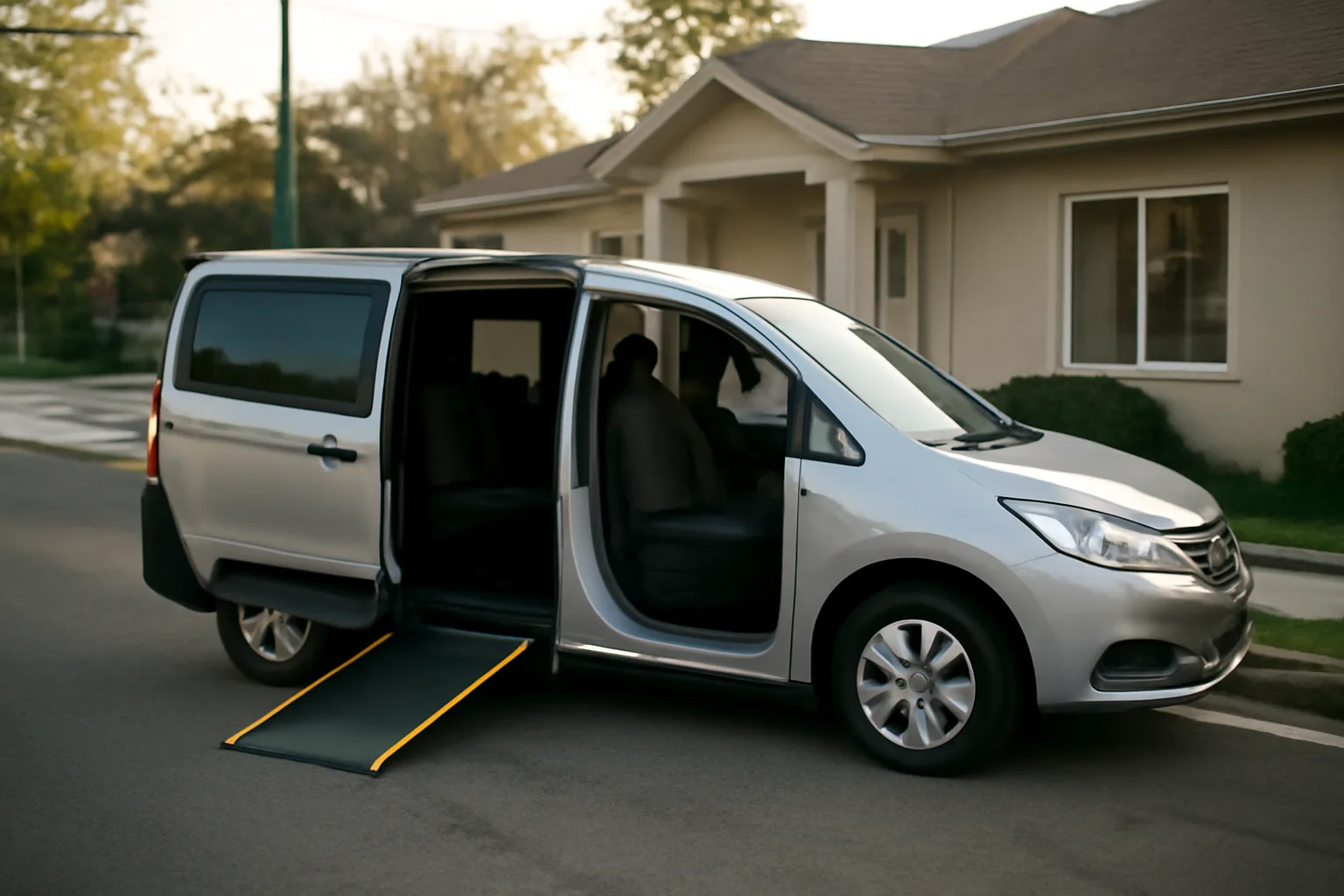
Yes. Most NEMT owner-operators start with exactly one wheelchair-accessible van, and brokers do credential single-vehicle providers in most states. There's no federal rule requiring a minimum fleet size, though a handful of state contracts or broker networks set minimum trip-volume or vehicle-count thresholds for certain service tiers (like dedicated stretcher service). Confirm any minimum fleet requirement with your broker before assuming one van is enough for every contract type. A one-van operation is genuinely the standard entry point. What actually varies by broker and state is whether they'll assign you a meaningful trip volume with only one vehicle, since dispatch software often batches trips by geographic zone and vehicle availability. Ask your broker directly how trip assignment works for single-vehicle providers in your specific service area before buying a second van. One practical note: buy or lease a van that already meets your state's wheelchair-accessible vehicle spec (ramp incline, interior clearance, tie-down anchor count) before you apply, not after. Retrofitting a van that fails inspection wastes both money and calendar time you don't get back during broker credentialing review.
What documents does Medicaid NEMT enrollment usually require?
| Business entity proof | Articles of organization/incorporation, EIN letter | |
|---|---|---|
| Insurance | Commercial auto liability, general liability, sometimes workers' comp | |
| Vehicle documentation | Registration, current safety/ADA-vehicle inspection, wheelchair lift/ramp certification | |
| Driver credentials | Valid driver's license with appropriate class/endorsement, CPR/first aid cert, background check clearance | |
| NPI | National Provider Identifier from CMS, required for most Medicaid enrollment types | |
| State-specific forms | Medicaid provider agreement, W-9, direct deposit/EFT form | The National Provider Identifier is issued free through the National Plan and Provider Enumeration System, and most state Medicaid programs require an active NPI as part of provider enrollment. Get this early. It costs nothing and takes about ten minutes online, but it's a hard prerequisite for the rest of the application in nearly every state. Once your state Medicaid packet is approved, broker credentialing (Modivcare, MTM, Access2Care, SafeRide) usually asks for the same documents again plus their own vehicle inspection and driver orientation. Building one clean, complete document file up front saves you from re-scanning the same paperwork three separate times. |
Every state's list differs, but most state Medicaid transportation units ask for a common core of documents. Below is the general shape, not a guarantee of any specific state's exact list. Confirm the current required document list with your state Medicaid agency's transportation or provider enrollment unit before applying. | Document type | Typical requirement |
How long does state Medicaid and broker credentialing actually take?
There's no single national number, and any site that gives you one is guessing. State Medicaid provider enrollment processing time varies by state workload, completeness of your application, and whether your state requires an additional NEMT-specific supplement or Certificate of Need review. Broker credentialing adds its own separate timeline on top of Medicaid approval, since most brokers won't start their review until your Medicaid provider number is active. What you can control is completeness. Incomplete applications are the single biggest cause of delay at both the state and broker level, according to how these programs are structured (missing insurance certificates, expired vehicle inspections, and unclear W-9/EFT paperwork are the most common holdups reported by state Medicaid provider enrollment units generally). Submit a fully complete packet the first time, with every insurance certificate, vehicle document, and driver credential already gathered, and you avoid the multi-week request-and-resubmit cycle that stalls most first-time applicants. This is the exact gap the $199 State + Broker NEMT Launch Kit is built to close: pre-organized document checklists matched to your specific state and broker, so you're not guessing what's missing on your third resubmission.
What's the difference between NEMT and emergency medical transport?
NEMT is scheduled, non-emergency transport for people who need help getting to a medical appointment but aren't in medical crisis. Emergency medical transport is ambulance-level response to an active emergency, requiring licensed EMTs or paramedics and a certified ambulance vehicle. They are regulated separately, licensed separately, and reimbursed under completely different Medicaid and Medicare rules. As a wheelchair van owner-operator, you're not competing with ambulance companies and you don't need EMT licensure to run a compliant NEMT business. Your driver qualifications, vehicle standards, and Medicaid provider category are all specific to the NEMT/transportation provider type, distinct from ambulance provider enrollment. Confirm your state's exact provider category names with your Medicaid transportation unit; some states use terms like "non-emergency transportation provider" while others fold it under a broader "transportation network" category.
Where do Medicaid brokers like Modivcare, MTM, Access2Care, and SafeRide fit in?
These companies are transportation brokers, not Medicaid agencies. States contract with one or more of them to manage NEMT scheduling, dispatch, trip verification, and provider network management on the state's behalf. As an owner-operator, you don't bill Medicaid directly in most broker-managed states; you get credentialed with the broker, and the broker assigns and pays you for trips. Which broker operates in your state, and whether your state uses more than one broker for different regions, changes over contract cycles. Confirm the current broker assignment for your specific county or region directly with your state Medicaid agency's transportation unit before you apply anywhere, since applying to the wrong broker wastes real time. Each broker runs its own credentialing portal, vehicle inspection standard, and driver orientation process, layered on top of (not instead of) your state Medicaid enrollment. If you're comparing brokers or trying to understand how a specific broker's process works, see our broader guide to NEMT transportation and Medicaid NEMT programs by state.
Does Medicare Advantage cover non-emergency transportation better than original Medicare?
Sometimes, but it's plan-specific and never guaranteed. CMS finalized supplemental benefit flexibility for Medicare Advantage plans beginning with contract year 2019, allowing plans to cover items and services, including transportation, that have "a reasonable expectation of improving or maintaining the health or overall function" of a chronically ill enrollee [2]. Some Advantage plans in some counties do include a set number of one-way trips per year as a supplemental benefit; many don't. This means an NEMT owner-operator might get broker-routed trips funded by a Medicare Advantage plan's transportation benefit, separate entirely from Medicaid NEMT. If you want to pursue this, you'd contract with the Advantage plan directly or through a broker that manages Advantage transportation networks, which is a different credentialing relationship than state Medicaid NEMT enrollment. Confirm with the specific plan or broker whether Medicare Advantage transportation trips are even part of the contract you're being credentialed for, since some brokers run Medicaid-only networks and others run mixed Medicaid/Advantage networks.
Frequently asked questions
Does Medicare cover non-emergency medical transportation?
Rarely. Original Medicare Part B only covers non-emergency ambulance transport when a doctor certifies that any other transportation method could endanger the patient's health, per CMS ambulance coverage rules. It does not generally cover wheelchair van or livery-style rides to routine appointments. Some Medicare Advantage plans offer a supplemental transportation benefit, but that varies by plan and county.
Does Medicaid cover ambulance rides?
Yes. Medicaid transportation coverage, required under 42 CFR 431.53, includes ambulance services in addition to non-emergency wheelchair van and sedan trips. Ambulance transport is billed and licensed separately from NEMT wheelchair van service, and it requires EMT-level licensure, so it's a different business category than a standard wheelchair-accessible van operation.
What is NEMT?
NEMT stands for non-emergency medical transportation. It's transportation, usually by wheelchair van or ambulatory sedan, for Medicaid enrollees who need to get to medical appointments but don't require an ambulance or emergency response. States must guarantee this transportation under federal Medicaid rules, and most run it through contracted brokers like Modivcare, MTM, Access2Care, or SafeRide.
How do you start a medical transportation business?
Form your LLC, get commercial auto and general liability insurance, buy or lease a wheelchair-accessible van that meets your state's spec, get an NPI, enroll as a transportation provider with your state Medicaid agency, then get credentialed with the broker operating in your area. Order matters: Medicaid enrollment usually must happen before broker credentialing starts.
How do you start a NEMT business with just one van?
You can. Most owner-operators start with a single wheelchair van, and most state Medicaid programs and brokers credential single-vehicle providers without a fleet minimum. Some broker service tiers or contract types set volume or vehicle-count thresholds, so confirm with your specific broker whether one van limits which contract categories you can access.
How do you start a non-emergency medical transportation business?
Register your business entity, secure commercial insurance, get a compliant wheelchair-accessible vehicle inspected, obtain an NPI, complete state Medicaid NEMT provider enrollment, then apply for broker credentialing (Modivcare, MTM, Access2Care, SafeRide, or your state's broker). Each step generally depends on the one before it being finished and documented.
Does Medicaid cover wheelchair van transportation?
Yes, wheelchair van trips are a core part of the NEMT benefit that states must provide under 42 CFR 431.53. Coverage details, like trip approval rules, mileage radius, and prior authorization requirements, are set by each state Medicaid agency and administered through the state's contracted broker.
What's the difference between NEMT and emergency medical transport?
NEMT is scheduled, non-emergency transport for people who need help reaching medical appointments. Emergency medical transport is ambulance response to an active medical emergency, requiring licensed EMTs and a certified ambulance vehicle. They're licensed, regulated, and reimbursed under entirely separate rules and provider categories.
Do I need an NPI to enroll as a Medicaid NEMT provider?
Most state Medicaid programs require an active National Provider Identifier as part of transportation provider enrollment. It's issued free through the National Plan and Provider Enumeration System and typically takes about ten minutes to apply for online. Get it before starting your state Medicaid application, since most states won't process enrollment without it.
Will Medicare pay for a wheelchair van to take me to dialysis?
Generally no, under original Medicare. Medicare Part B ambulance coverage requires a doctor's certification that other transportation could endanger your health, which is a stretcher/ambulance-level standard, not a wheelchair van standard. Some Medicare Advantage plans include a transportation supplemental benefit that could cover this; check the specific plan's Evidence of Coverage.
How long does it take to get credentialed with Modivcare, MTM, Access2Care, or SafeRide?
There's no fixed national timeline; it depends on your state's Medicaid enrollment speed first, then the broker's own review queue, vehicle inspection scheduling, and driver background check turnaround. Incomplete applications cause most delays. Confirm current processing expectations directly with your state Medicaid transportation unit and the specific broker.
Can I bill Medicaid directly instead of going through a broker?
In most states, no. States that use a managed broker model route all NEMT trip assignment and payment through the broker, not direct state billing. A small number of states manage NEMT in-house or use a different model. Confirm your state's specific structure with its Medicaid transportation unit before assuming direct billing is an option.
Sources
- Medicare.gov, Ambulance Services coverage page: Medicare covers non-emergency ambulance transportation only when medically necessary and other transportation could endanger the person's health
- Federal Register, Medicare and Medicaid Programs; Policy and Technical Changes to the Medicare Advantage, Medicare Prescription Drug Benefit, PACE, Medicaid Fee-For-Service, and Medicaid Managed Care Programs for Years 2020 and 2021 (84 FR 15680, April 16, 2019): CMS finalized expanded supplemental benefit rules for Medicare Advantage plans allowing coverage of items and services with a reasonable expectation of improving or maintaining health, including transportation
- 42 CFR 431.53, Assurance of Transportation: States must ensure necessary transportation for Medicaid beneficiaries to and from providers
- Medicaid.gov, Non-Emergency Medical Transportation: NEMT is a required Medicaid benefit for beneficiaries who need transportation assistance to medical services
- 42 CFR 440.170, Transportation: Federal regulation defines the scope of transportation services, including ambulance and NEMT, that states may cover under Medicaid