Last updated 2026-07-25
TL;DR
Nobody can honestly tell you a NEMT owner-operator's income without knowing your state's reimbursement rates, your broker contracts, and your per-trip costs. What you can control: vehicle cost, insurance, fuel, and driver pay. This article breaks down the real expense and reimbursement variables so you can build your own math instead of trusting a made-up number.
What is NEMT and how does the business actually work?
NEMT stands for non-emergency medical transportation. It moves Medicaid (and sometimes Medicare Advantage) members to dialysis, chemo, physical therapy, and routine doctor visits in a vehicle that is not an ambulance, usually a wheelchair van, a sedan, or a stretcher van. Federal Medicaid rules require states to make sure eligible people can get to and from providers. The regulation is blunt about it: "The agency must ensure necessary transportation for beneficiaries to and from providers" under 42 CFR 431.53 [1]. States meet that duty either by running transportation themselves or, far more commonly now, by hiring a regional broker like Modivcare, MTM, Access2Care, or SafeRide to manage the network of transportation providers. As an owner-operator, you don't usually bill Medicaid directly. You sign a credentialing agreement with the broker (or in some states, directly with the Medicaid transportation unit), get assigned trips through a dispatch app or portal, and get paid by the broker at a negotiated per-trip or per-mile rate. That rate, not some national average, is what actually determines whether the business makes money. This is also why nobody can give you a trustworthy income figure without knowing your state, your broker contract, and your vehicle mix. Rates vary by region, by trip type (ambulatory vs. wheelchair vs. stretcher), and by broker. Anyone quoting you a flat "NEMT drivers make $X a year" number is guessing.
How much does a NEMT business actually make? (the honest answer)
There is no reliable, sourced national figure for NEMT owner-operator income, and you should be skeptical of any article that gives you one. Revenue depends on your state's Medicaid reimbursement structure, your broker's per-trip rates (which are usually confidential and set contract by contract), your trip volume, your vehicle type, and your operating costs. None of that is public or standardized. What you can find and verify are the cost inputs. A new or lightly used wheelchair-accessible van typically runs from the mid-$30,000s to over $60,000 depending on age, mileage, and lift/ramp condition. Commercial auto insurance for a single wheelchair van, with the liability limits many brokers require (often $1 million combined single limit), commonly runs several thousand dollars a year, and it varies enormously by state, driving record, and whether you're rated as livery or NEMT-specific. Some state Medicaid programs do publish base fee-for-service rates for certain NEMT modes and mileage, which gives you at least a partial anchor before you talk to a broker. Pull that kind of document directly from your state's Medicaid transportation or fee schedule page, not from a blog estimate. The honest framework: build a per-trip cost model (fuel, driver pay if you're not driving yourself, insurance, maintenance, vehicle payment, dispatch/broker fees) and compare it against the actual per-trip rate your broker offers in your credentialing agreement, before you commit to a vehicle purchase. Ask the broker directly what the current rate is for wheelchair van trips in your county. Rates are typically not published publicly and change over time.
How to start a NEMT business: what actually has to happen first
Starting an NEMT business, in order, generally looks like this: form a business entity, get a wheelchair-accessible vehicle inspected and insured, enroll as a Medicaid transportation provider with your state (if your state requires direct enrollment), get credentialed with the regional broker(s) operating in your area, hire and background-check drivers if you're not driving solo, and pass any vehicle and driver inspections the broker requires before you get dispatch access. Most states route Medicaid NEMT through a broker rather than paying providers directly, so your real first call after forming your business is usually the broker's provider network or credentialing line, not a state office. That said, some states still require or additionally require state Medicaid provider enrollment alongside broker credentialing. Confirm with your state Medicaid agency which model applies where you operate. Documentation you'll typically need across most states and brokers: a business license, vehicle registration and title, commercial auto insurance meeting the broker's minimum limits, a vehicle inspection (often DOT or state-specific), driver background checks (sometimes including a fingerprint-based check), drug testing compliance, and proof of driver training for wheelchair securement if you're running a wheelchair van. Requirements differ by state and broker, so confirm the exact list with your state Medicaid transportation unit and the broker before you spend money on anything. A realistic timeline from "I bought a van" to "I'm getting dispatched trips" is often measured in weeks to a few months, not days, because credentialing paperwork, insurance binder verification, and vehicle inspections all have to clear before a broker activates you in their system.
How do you start a medical transportation business step by step?
Step one is deciding your vehicle type: ambulatory sedan service, wheelchair van, or stretcher van. Each has different equipment requirements, insurance costs, and broker credentialing rules, so this decision drives almost everything downstream. Step two is business formation: LLC or corporation registration with your state, an EIN from the IRS, and general liability plus commercial auto coverage. Step three is vehicle acquisition and inspection. A used wheelchair van needs its lift or ramp inspected and certified as functional before most brokers will approve it; some brokers require annual or semi-annual vehicle inspections on a specific form. Step four is state Medicaid enrollment, if your state requires it. Some states use a Medicaid provider enrollment portal even when a broker manages dispatch; check whether your state falls into that category by contacting the state Medicaid transportation unit directly, since this varies and changes. Step five is broker credentialing itself: submitting your business license, insurance certificates, vehicle documents, and driver files to Modivcare, MTM, Access2Care, SafeRide, or whichever broker holds the contract in your service area. Step six is driver hiring and training, including wheelchair securement training and defensive driving, which many brokers now require documentation of before dispatch access is granted. For a structured checklist across these steps, see our guide to non emergency medical transportation services and the broader medical transportation overview, which walks through documentation requirements state by state.
How to start a NEMT business with one van: is it realistic?
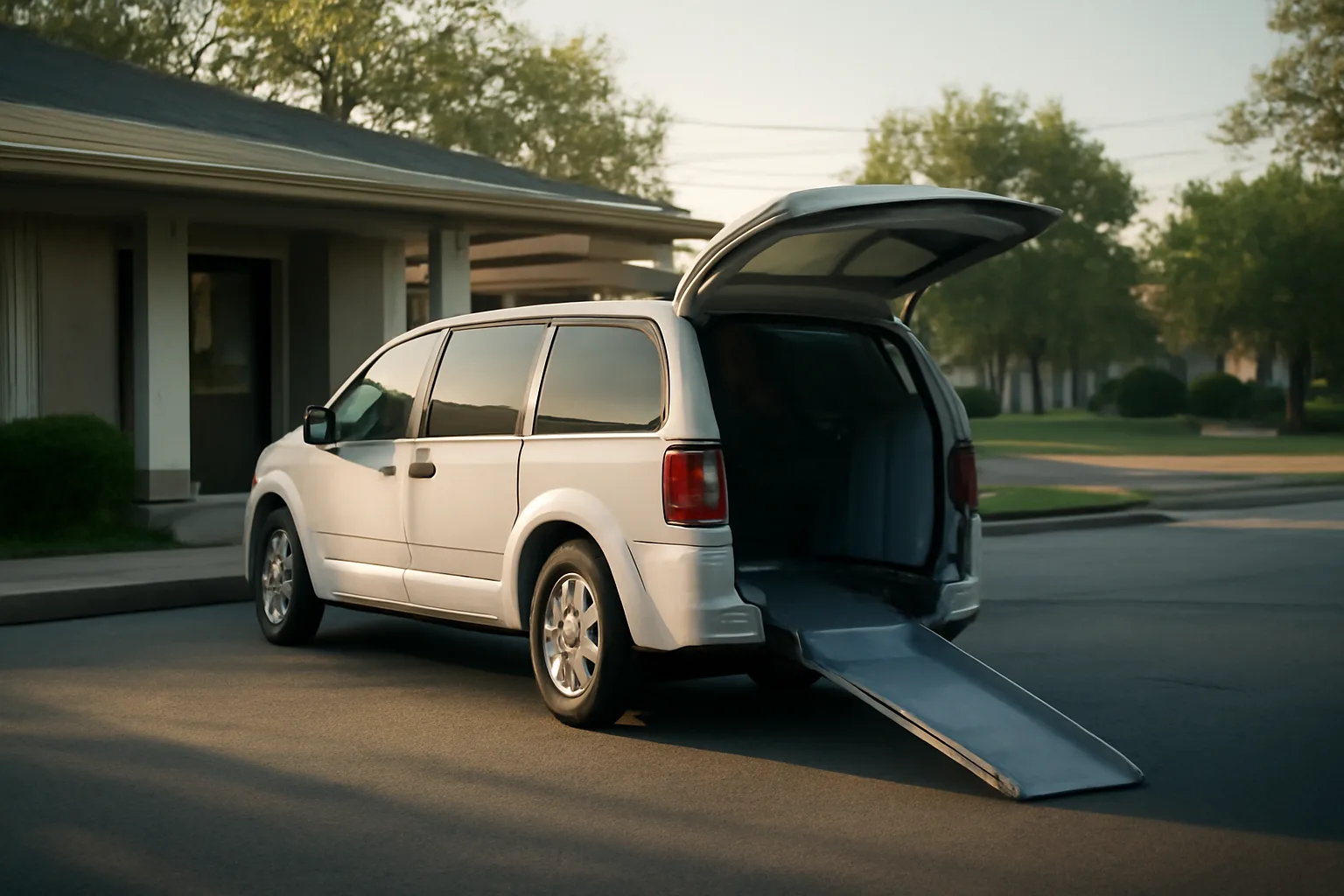
Yes, plenty of owner-operators start with exactly one wheelchair van and drive it themselves. The math is simpler with one vehicle because you're not carrying multiple insurance policies, multiple driver files, or fleet-level compliance paperwork, but the tradeoff is that your income ceiling is capped by however many trips one van and one driver (you) can physically run in a day. With a single van, your fixed costs are the vehicle payment or purchase price, insurance, fuel, maintenance, and whatever fees your broker charges for dispatch or platform access. Your variable cost is largely fuel and wear, since you're the driver. That makes one-van operations relatively low-overhead compared to fleets, but it also means any single mechanical breakdown takes 100% of your capacity offline until it's fixed. A few practical things solo one-van operators consistently need to sort out early: a backup plan for when your van is in the shop (some drivers keep a relationship with another local owner-operator for trip coverage), a clear understanding of the broker's minimum trip volume expectations if any exist in your contract, and a realistic look at whether the wheelchair van trip rate in your specific county actually covers your per-mile cost once fuel and insurance are factored in. Many successful one-van operations add a second vehicle or a driver only after they've run the numbers for several months and know their real per-trip margin, not before. Buying a second van on a hope is a common way new operators overextend.
Does Medicaid cover ambulance rides?
Yes. Medicaid covers ambulance transportation when it is medically necessary, meaning other forms of transportation would endanger the person's health, and this is a separate benefit category from NEMT with its own billing structure [2]. Ambulance transport (emergency medical transport) is for situations requiring medical monitoring or intervention during the ride, typically dispatched through 911 or hospital transfer protocols, and billed under a different provider type than NEMT. NEMT, by contrast, covers members who need a ride but do not need medical care during transit, such as a dialysis patient who uses a wheelchair. States set their own specific ambulance coverage and prior authorization rules within federal guidelines, so the exact conditions for coverage (mileage rate, prior authorization requirements, covered transport types) vary by state. Check your state Medicaid agency's ambulance/emergency transportation policy manual for the specifics. If you're deciding whether to build an NEMT business or pursue ambulance/emergency transport licensure instead, know that they require entirely different vehicle certifications, staffing (EMTs/paramedics), and state licensing pathways. Our emergency medical transport guide breaks down that distinction in more detail.
Does Medicare cover medical transportation?
Medicare's coverage of medical transportation is narrower than Medicaid's. Original Medicare Part B covers ambulance services when other transportation would endanger your health, and Medicare pays for ambulance services only to the nearest appropriate medical facility able to give the needed care [3]. It generally does not cover routine non-emergency rides to a doctor's office or dialysis center the way Medicaid NEMT does. Some Medicare Advantage (Part C) plans do offer non-emergency transportation as a supplemental benefit, but this is plan-specific, not a standard Medicare entitlement. Coverage, trip limits, and whether prior approval is needed differ by individual Medicare Advantage plan, so this has to be confirmed plan by plan, not assumed. For NEMT owner-operators, this distinction matters commercially: your primary payer base as a Medicaid NEMT provider is almost always state Medicaid members dispatched through a broker, not traditional Medicare beneficiaries. If you want to also serve Medicare Advantage members needing rides, that typically means a separate contracting relationship with the specific MA plan or its transportation vendor, which is a different credentialing process than Medicaid broker enrollment. Don't assume Medicare referrals will supplement your Medicaid NEMT volume unless you've actually secured a contract with a specific Medicare Advantage plan's transportation network.
What credentialing does a broker actually require before you get dispatched trips?
Every broker has its own credentialing packet, but most require the same core categories: business documentation (license, EIN, insurance certificates), vehicle documentation (registration, inspection reports, lift/ramp certification for wheelchair vans), and driver documentation (background checks, driving record, drug testing compliance, and training certificates). Modivcare, MTM, Access2Care, and SafeRide each run their own provider network application, and none of them are affiliated with each other, so credentialing with one does not transfer to another. If your state contracts with more than one broker in different regions, or is transitioning contracts (which happens periodically when states rebid their NEMT broker contract), you may need to maintain credentialing with multiple brokers simultaneously. Insurance minimums are one of the most common credentialing snags. Brokers frequently require commercial auto liability limits well above what a personal auto policy carries, sometimes $1 million combined single limit or higher, plus proof that the policy explicitly covers livery or for-hire/NEMT use, not personal use. A policy that doesn't list the correct use classification can get rejected even if the coverage amount is right. Background check standards also vary: some brokers require a specific look-back period on driving records (for example, no major moving violations within a set number of years) or exclude certain criminal history categories entirely. None of these thresholds are standardized nationally, so confirm the exact requirements with each broker you plan to work with rather than assuming one broker's rules apply to another.
What does it cost to get a wheelchair van NEMT business running?
| Used wheelchair van | ~$30,000-$50,000+ | Varies by age, mileage, lift/ramp condition | |
|---|---|---|---|
| Commercial NEMT auto insurance | Varies widely by state | Livery/NEMT rating usually costs more than personal auto | |
| Business licensing/formation | Low hundreds of dollars | State-specific fees | |
| Driver background/drug screening | ~$50-$150 per driver | Vendor and scope dependent | |
| Vehicle inspection/certification | State/broker-specific fee | Often required annually or semi-annually | These are planning ranges, not quotes. Get actual figures for your state and broker before you commit money. |
The vehicle is usually the single largest expense. A used wheelchair-accessible van with a working lift or ramp, sold through a dealer that specializes in mobility vehicles, commonly ranges from roughly $30,000 to $50,000+ depending on age, mileage, and conversion quality; new conversions run considerably higher. Buying from a private seller can be cheaper but carries more risk on lift/ramp condition, which most brokers will inspect before approving the vehicle. Insurance is the second major line item and the one new operators most often underestimate. Commercial auto policies rated for livery/NEMT use, at the liability limits many brokers require, typically cost meaningfully more per year than a personal auto policy on the same vehicle. Get quotes before you buy the van, not after, because the insurance cost can change whether a given van purchase actually pencils out. Other startup costs to budget for: business formation and licensing fees (state-specific, often in the low hundreds of dollars), a DOT or state vehicle inspection, driver background checks and drug screening (per-driver cost, sometimes $50 to $150 depending on the vendor and scope), wheelchair securement training if required by your broker, and a dispatch device or app access if the broker requires proprietary hardware. Here's a simple way to see the major categories side by side. | Cost category | Typical range | Notes |
How is non-emergency medical transportation different from other medical rides?
Non-emergency medical transportation is exactly what it sounds like: transportation for a medical appointment where the passenger does not need emergency care or medical monitoring during the ride. That's the line that separates NEMT from ambulance service. NEMT vehicles range from standard sedans for ambulatory Medicaid members, to wheelchair-accessible vans with lifts or ramps, to stretcher vans for members who must remain lying down but don't need paramedic-level care in transit. Each vehicle type typically has its own broker credentialing track and its own reimbursement rate, because the equipment and driver training requirements differ. Federal Medicaid regulation requires states to ensure necessary transportation to and from Medicaid providers as a condition of the program [1], which is the legal basis for the entire NEMT industry existing. States implement that requirement differently: some run NEMT in-house, most contract it out to a regional broker, and a few use a hybrid model with multiple regional brokers covering different parts of the state. If you want a state-by-state breakdown of how each state structures its NEMT program and which broker holds which region, our nemt and non emergency medical transportation guides track that by state, since it changes when states rebid contracts.
What ongoing costs and margin pressures should a new operator expect?
Fuel and maintenance are the two variable costs that most directly erode margin, and they're also the two most within your control. Wheelchair vans, especially older conversions, tend to have higher maintenance costs than a standard sedan because the lift or ramp mechanism itself needs periodic service, and a broken lift takes the vehicle out of service entirely, more than out of comfort. Broker payment timing is another practical margin issue new operators underestimate. Some brokers pay on a delay (weekly or biweekly rather than per-trip), which means you need enough working capital to cover fuel and driver pay for a stretch of days or weeks before the first reimbursement check arrives. Ask about the payment schedule during credentialing, not after your first month of trips. No-shows and cancellations also affect real-world margin in ways a simple per-trip rate calculation misses. Depending on the broker's policy, a no-show may pay a reduced "dead mileage" or cancellation rate rather than the full trip rate, and those policies differ by broker and by state contract. Understanding the no-show/cancellation payment policy before you build your revenue model matters more than most new operators realize going in. Finally, insurance and vehicle costs tend to rise over time, not stay flat: insurance premiums shift with claims history and state rate filings, and older vehicles cost more to maintain each year. Build some cushion into your cost model rather than assuming your first-year numbers hold steady for five years.
Where can you get help building your state and broker paperwork?
Every state Medicaid transportation unit publishes its own NEMT provider manual, and every broker publishes its own credentialing checklist, but pulling all of it together for your specific state and broker combination is genuinely one of the more tedious parts of getting started. There's no shortcut around confirming the actual current requirements directly with your state Medicaid agency and your broker, since both change requirements periodically. If you'd rather not build the state and broker paperwork checklist from scratch yourself, RideCredential's $199 one-time State + Broker NEMT Launch Kit organizes the state Medicaid enrollment and broker credentialing document checklist for your specific state and broker combination, so you're not hunting through a dozen different portals and PDFs to figure out what you actually need to submit. It doesn't guarantee approval from any broker or state, and there's no substitute for confirming final requirements directly with your state Medicaid agency and broker before you submit anything, but it saves you the research time. Whatever route you take, treat the paperwork stage as seriously as the vehicle purchase. A vehicle that sits uncredentialed for two extra months because of a missing insurance endorsement or an incomplete background check is a vehicle that's costing you money and earning nothing.
Frequently asked questions
How to start a medical transportation business?
Form a business entity, choose your vehicle type (sedan, wheelchair van, or stretcher van), get commercial insurance meeting broker minimums, get the vehicle inspected, complete state Medicaid enrollment if your state requires it, and get credentialed with the regional broker(s) covering your area. Confirm the exact document list with your state Medicaid transportation unit and target broker before spending money.
Does Medicaid cover ambulance rides?
Yes, when medically necessary, meaning other transportation would endanger the patient's health. Ambulance coverage is a separate benefit category from NEMT, with its own billing rules, mileage rates, and prior authorization requirements set individually by each state Medicaid agency.
What is NEMT?
NEMT stands for non-emergency medical transportation. It's transportation to and from medical appointments, like dialysis or physical therapy, for people who need a ride but don't require medical monitoring during transit. Most state Medicaid programs manage NEMT through regional brokers like Modivcare, MTM, Access2Care, or SafeRide rather than paying providers directly.
Does Medicare cover medical transportation?
Original Medicare Part B covers ambulance transportation when medically necessary, but generally doesn't cover routine non-emergency rides. Some Medicare Advantage plans offer non-emergency transportation as a supplemental benefit, but that coverage is plan-specific and must be confirmed with the individual Medicare Advantage plan, not assumed as standard.
How do you start a medical transportation business step by step?
Pick your vehicle type, form your business entity and get an EIN, secure commercial auto insurance at the limits your broker requires, get the vehicle inspected, complete state Medicaid enrollment if applicable, submit broker credentialing documents (license, insurance, vehicle, driver files), and complete driver training like wheelchair securement before requesting dispatch access.
What is non-emergency medical transportation?
It's transportation for Medicaid (and some Medicare Advantage) members to medical appointments who don't need emergency care or in-transit medical monitoring. It covers ambulatory sedan trips, wheelchair van trips, and stretcher van trips, each with different vehicle, equipment, and broker credentialing requirements.
How to start a NEMT business with one van?
It's a common and realistic starting model. You'll need the van inspected and insured at broker-required limits, business formation and licensing done, and broker credentialing completed before dispatch begins. The tradeoff is a capacity ceiling: one van and one driver can only run so many trips a day, so plan for downtime coverage if the vehicle needs repair.
How to start a non-emergency medical transportation business?
Same core steps as any NEMT startup: choose vehicle type, form the business, secure proper commercial insurance, pass vehicle inspection, enroll with the state Medicaid agency if required, and complete broker credentialing (background checks, driver training, insurance verification) before you can accept dispatched trips.
How much does a wheelchair van cost for NEMT?
A used wheelchair-accessible van with a functioning lift or ramp commonly runs roughly $30,000 to $50,000 or more depending on age, mileage, and conversion quality, with new conversions costing considerably more. Get the lift/ramp inspected before purchase since brokers will require it to pass their own inspection standards.
Do all NEMT brokers have the same credentialing requirements?
No. Modivcare, MTM, Access2Care, and SafeRide each run independent provider network applications with their own document requirements, insurance minimums, and background check standards. Credentialing with one broker doesn't transfer to another, and if your state uses multiple brokers by region, you may need separate credentialing with each.
How much can a NEMT owner-operator realistically earn?
There's no reliable published figure, because it depends entirely on your state's reimbursement rates, your specific broker contract's per-trip pay, your trip volume, and your operating costs, none of which are standardized or publicly posted. Build your own model using your broker's actual quoted rates and your real vehicle, insurance, and fuel costs rather than trusting a generic income number.
What insurance do I need to start an NEMT business?
Commercial auto insurance rated for livery or for-hire/NEMT use, not a personal auto policy, at whatever liability limits your broker requires, often $1 million combined single limit or similar. General liability coverage is commonly required too. Confirm exact minimums with your specific broker before buying a policy, since requirements vary.
How long does NEMT broker credentialing take?
It varies by broker and by how complete your submitted documents are, but expect weeks to a few months from application to dispatch access, not days. Delays commonly come from incomplete insurance certificates, unfinished background checks, or vehicle inspection scheduling, so submitting a complete packet up front speeds things up.
Sources
- eCFR, 42 CFR 431.53 Assurance of transportation: Federal Medicaid regulation requiring states to ensure necessary transportation to and from providers
- eCFR, 42 CFR 440.170(a) Transportation: Federal regulation defining transportation, including NEMT, as a service states may cover under Medicaid
- Social Security Act Section 1902(a)(70), Medicaid ambulance and non-emergency transportation provisions: Medicaid ambulance coverage is a distinct statutory benefit category from non-emergency medical transportation
- 42 CFR 410.40, Coverage of ambulance services: Medicare Part B covers ambulance services when other transportation would endanger the beneficiary's health, to the nearest appropriate facility
- GAO-16-238, Non-Emergency Medical Transportation: Updated Medicaid Guidance Could Help States: Federal oversight review of how states and brokers administer Medicaid NEMT programs