Last updated 2026-07-25
TL;DR
Nobody can honestly give you a per-month income number for a NEMT business because it depends on your state's Medicaid mileage/trip rate, broker contract terms, vehicle costs, and trip volume, none of which are standard nationwide. What you can control: getting your Medicaid provider enrollment and broker credentialing done right before you buy a van, so you're not burning cash on a vehicle sitting idle.
how much does a medical transportation business make per month
Short answer: nobody can tell you a real number, and anyone who quotes you one ("$8,000 a month per van" or similar) is guessing or selling something. There's no federal or state dataset that publishes average monthly income for NEMT owner-operators. Medicaid reimbursement rates for NEMT are set state by state, sometimes county by county, and they change. Broker payment terms (Modivcare, MTM, Access2Care, SafeRide, and the dozens of regional brokers) are contract-specific and often confidential. What drives your actual monthly number, in rough order of impact: your state's per-trip or per-mile Medicaid NEMT rate, how many trips your broker actually dispatches to you (which depends on your service area, vehicle type, and how many other providers are competing for the same trips), your fuel and maintenance costs, your insurance premium, and whether you're running one van yourself or paying a driver. A wheelchair-accessible van trip typically pays more than an ambulatory sedan trip because the vehicle and driver requirements are higher, but the exact spread depends on your state Medicaid fee schedule and your broker's rate card. Confirm current per-trip and per-mile rates with your broker and your state Medicaid transportation unit before you buy anything. Treat any unverified revenue estimate you see online, including implied ones, as marketing until you've seen your own contract's rate sheet. The honest framing: this is a low-margin, volume-and-utilization business. Your profit lives in the gap between what the broker pays per trip and what it costs you to run that trip (fuel, driver time, insurance allocation, maintenance reserve). Get the cost side nailed down before you guess at the revenue side.
what is nemt (non-emergency medical transportation)?
NEMT stands for non-emergency medical transportation: transportation for Medicaid (and some Medicare Advantage) enrollees who need a ride to a covered medical appointment but don't need an ambulance or emergency response. Think dialysis three times a week, physical therapy, a wheelchair user's specialist visit, or a senior with no other way to get to a primary care appointment. Federal Medicaid regulation requires states to ensure "necessary transportation for beneficiaries to and from providers" as a condition of getting federal matching funds, and this assurance obligation is codified at 42 CFR 431.53 [1]. States meet that obligation differently. Some run NEMT in-house through the state Medicaid agency. Most contract it out to a transportation broker who manages a network of vehicle owner-operators and small fleets. NEMT is not an ambulance. It's not emergency dispatch. It's scheduled, non-emergency rides in a sedan, wheelchair van, or occasionally stretcher vehicle, dispatched by a broker who has a state Medicaid contract. If you're researching this space, start with a general overview of non emergency medical transportation and how the broker layer fits between the state and the driver.
does medicaid cover ambulance rides?
Yes, Medicaid covers emergency ambulance transportation in every state, but the rules and reimbursement rates differ by state Medicaid program. Emergency ambulance service is different from NEMT: an ambulance responds to a 911-triggered emergency, staffed with EMTs or paramedics, billed through a different provider enrollment pathway than a NEMT wheelchair van. CMS confirms that "Medicaid covers ambulance service, but only if other transportation would endanger the beneficiary's health" as a matter of federal guidance on medically necessary transportation [2]. That "other transportation would endanger health" standard is also the line that separates ambulance-level need from NEMT-level need. If a rider can be safely transported in a wheelchair van or sedan, it's NEMT, not an ambulance claim. If you're building a wheelchair-van business, you generally do not need ambulance licensure or EMT-certified staff. That's a separate, more heavily regulated business line (emergency medical transport covers that distinction in more depth). NEMT wheelchair van providers need a state Medicaid NEMT provider enrollment and, in most states, a broker credentialing application, not an ambulance service license.
does medicare cover medical transportation?
Original Medicare covers ambulance transportation when medically necessary, but it does not generally cover non-emergency wheelchair van or sedan transportation the way Medicaid does. This is a common point of confusion for new owner-operators who assume Medicare is a parallel revenue source to Medicaid NEMT. It mostly isn't. CMS's own guidance states Medicare Part B covers ambulance services "only if they are furnished to a beneficiary whose medical condition is such that other means of transportation would be contraindicated" [3], which is the ambulance-level standard again, not routine NEMT. Where Medicare NEMT-like coverage does exist is through some Medicare Advantage plans, which can offer non-emergency transportation as a supplemental benefit under CMS's expanded definition of supplemental benefits for chronically ill enrollees, described in the CY2020 Medicare Advantage and Part D final rule [4]. That's plan-specific and not guaranteed, and it's arranged through the individual Medicare Advantage plan's transportation vendor, not a standard Medicaid broker contract. If you want that revenue stream, you'd need to separately credential with whichever Medicare Advantage plans in your area offer the benefit and use a vendor network. Confirm this directly with the plan, because it's not automatic and not universal.
how to start a medical transportation business
Starting a medical transportation business (meaning NEMT, not ambulance) generally follows this sequence: form your business entity, get commercial auto and general liability insurance, buy or lease a compliant vehicle, get your state Medicaid NEMT provider enrollment, get credentialed with the broker(s) operating in your state, and pass any vehicle/driver inspection required before you can accept dispatched trips. The order matters more than people expect. A lot of new operators buy the van first, then discover their state's Medicaid NEMT enrollment application requires a specific ADA lift certification, a specific insurance minimum, or a background check turnaround that takes six to ten weeks. Confirm your state's specific document list with your state Medicaid transportation unit before you sign a vehicle purchase agreement. Roughly, here's the sequence most new owner-operators actually go through: 1. Business entity formation (LLC is common, not legally required in most states) 2. Commercial insurance quote and binder (this alone can take one to three weeks) 3. Vehicle acquisition or retrofit to ADA wheelchair-accessible standard 4. State Medicaid NEMT provider enrollment application 5. NPI number registration if your state requires it for NEMT billing 6. Broker credentialing application(s): Modivcare, MTM, Access2Care, SafeRide, or your state's regional broker 7. Vehicle inspection and driver background check/drug screen 8. Broker onboarding and first dispatch Each of steps 4 through 7 has its own document checklist that varies by state and broker, and missing one document is the single most common reason applications sit in "pending" for months. General background on the field is at medical transportation and the enrollment-specific mechanics are covered under nemt.
how to start a nemt business (the credentialing-specific path)
Starting a NEMT business specifically means two parallel applications, not one: state Medicaid provider enrollment and broker network credentialing. They are not the same thing, and a lot of new owner-operators assume passing one gets them the other. It doesn't. State Medicaid provider enrollment is your legal authorization to bill Medicaid for transportation services in that state. It typically requires a business license, proof of insurance meeting the state's minimums, vehicle registration and inspection records, and sometimes a state-specific NEMT provider application form managed by the state Medicaid transportation unit. Broker credentialing is separate. Even after you're an enrolled Medicaid NEMT provider, you still need to apply to and pass credentialing with whichever broker holds the transportation brokerage contract in your state or region. Brokers run their own vehicle inspections, their own driver background checks, and their own insurance verification, on top of what the state already required. Modivcare, MTM, Access2Care, and SafeRide each have separate credentialing portals and separate document requirements, and none of them are identical state to state even within the same broker. This dual-track structure is why a realistic timeline from "I have a van" to "I'm getting dispatched trips" runs eight to sixteen weeks in a lot of states, sometimes longer if your state's enrollment queue is backed up or your broker requires an in-person vehicle inspection with limited appointment slots. Confirm current processing times with your specific state Medicaid transportation unit and broker, because these timelines shift with staffing and application volume.
how do you start a medical transportation business? (the first four decisions)
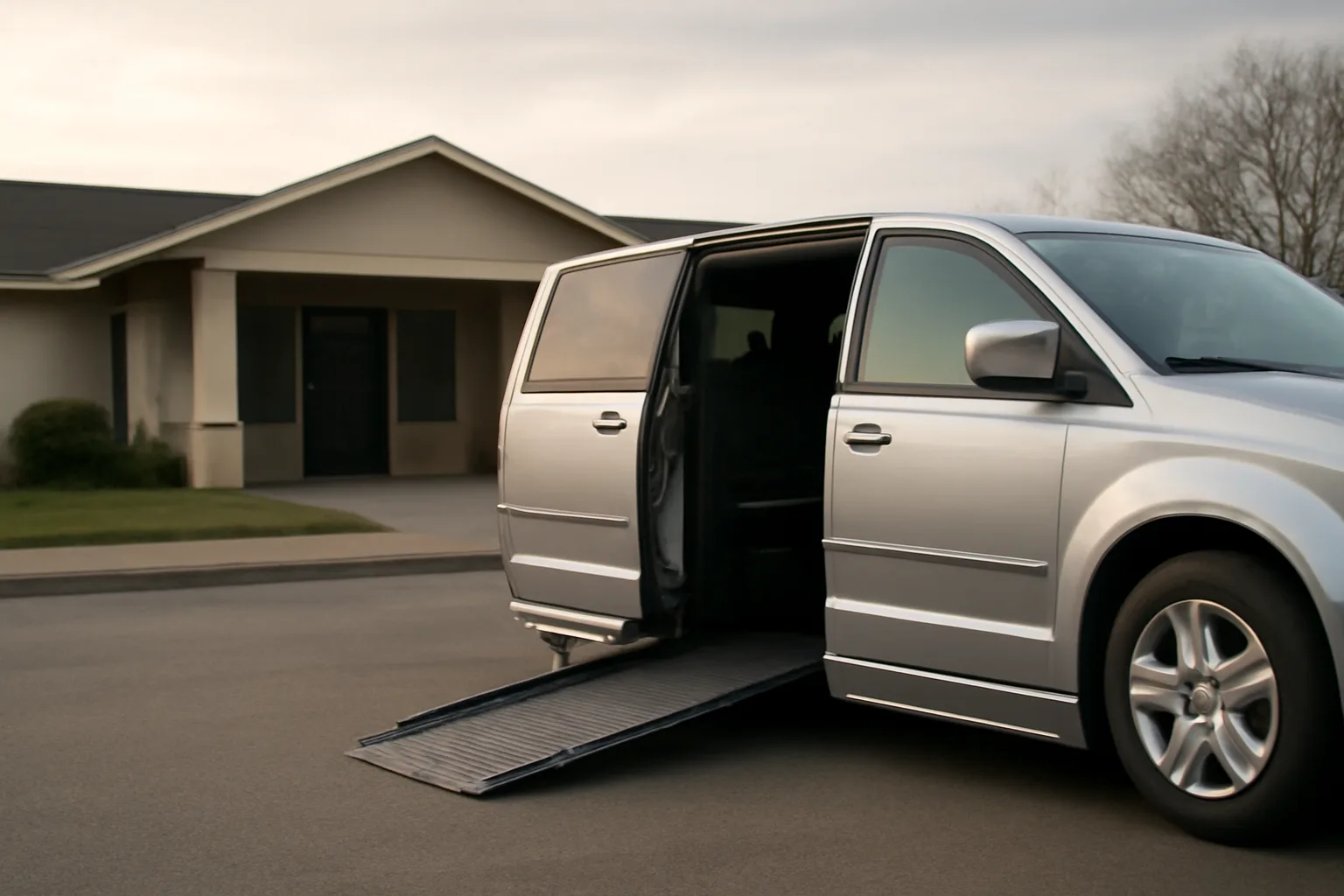
Before you touch a state application or a broker portal, you need to make four decisions that shape everything downstream: which state (and if applicable, which county/region within it) you'll operate in, what vehicle type you'll run (ambulatory sedan, wheelchair van, or stretcher van), whether you'll drive yourself or hire drivers from day one, and which broker(s) actually hold contracts in your target service area. The broker question matters most and is the one new operators skip. Not every broker operates in every state, and within a state, the broker holding the Medicaid NEMT contract can change when the state re-bids the contract, sometimes with only a year or two of notice. If you credential heavily with one broker and that broker loses the state contract in a re-bid, your business relationship with the state effectively resets. Check your state Medicaid transportation unit's current broker announcement before committing. Vehicle type decision affects both your upfront cost and your trip mix. A wheelchair-accessible van costs more upfront (new ADA-compliant conversion vans commonly run in the $50,000 to $80,000+ range depending on chassis and lift type, though used/refurbished units can be substantially less), but wheelchair trips are typically rarer and often reimbursed at a higher rate than ambulatory sedan trips, because fewer providers can serve them. Confirm actual per-trip rates in your state and broker contract rather than assuming the wheelchair premium covers the extra vehicle cost automatically.
what is non emergency medical transportation? (definitions and the regulatory basis)
Non-emergency medical transportation is Medicaid-funded (and sometimes Medicare Advantage-funded) transportation to and from covered medical services for enrollees who have no other means of getting there, and whose medical condition does not require ambulance-level care. It's a federally-required Medicaid benefit, not an optional add-on states can simply drop. The federal regulatory anchor is 42 CFR 431.53, which requires state Medicaid plans to "specify that the Medicaid agency will ensure necessary transportation for recipients to and from providers" [1]. States satisfy this requirement through their own NEMT program design, described in each state's approved Medicaid State Plan and transportation broker contract. CMS's own guidance describes NEMT as helping people "get to and from medical appointments" when they have no other transportation option available to them, and frames it as a barrier-removal benefit tied to program access, not a general-purpose ride service [2]. That distinction matters operationally: trips have to be to a Medicaid-covered service, and eligibility verification happens on the broker's or state's side before a trip is ever dispatched to you. For a broader look at how this fits into the wider transportation landscape, see non emergency medical transportation services and nemt transportation.
how to start a medical transportation business with one van
Starting with one van is the normal way people enter this business, and it's not a disadvantage for credentialing purposes. Most state Medicaid NEMT provider applications and broker credentialing processes don't require a minimum fleet size. What they do require is that your one van meets the specific ADA and inspection standards, and that your insurance covers commercial NEMT operation, not personal or standard commercial auto use. Realistically, running one van yourself means you are the business: driver, dispatcher, bookkeeper, and maintenance scheduler. That's fine as a starting structure, but it caps your trip volume to whatever hours you personally drive, and it means any vehicle downtime (routine maintenance, an accident, a broken lift) stops all revenue, more than a portion of it. Some new operators budget for a backup vehicle or at least a loaner arrangement before their broker will trust them with a full trip schedule, since brokers care about reliability and no-show rates. One-van operators should also budget for the fact that broker credentialing document requests (proof of insurance riders, vehicle inspection certificates, driver background check results) sometimes need to be resubmitted if any single document expires mid-application. A six-month insurance policy that expires while your state enrollment is still pending is a common, avoidable delay. Track your document expiration dates as carefully as you track the application itself.
how to start a non-emergency medical transportation business: the document checklist
| Business formation documents (LLC, EIN) | State Medicaid enrollment | State Secretary of State + Medicaid unit | |
|---|---|---|---|
| Commercial auto + general liability insurance | Both state enrollment and broker credentialing | Your insurance agent + broker credentialing packet | |
| Vehicle registration and ADA lift certification | State enrollment, broker vehicle inspection | State DMV + broker inspection team | |
| Driver background check / drug screen | Broker credentialing (sometimes state too) | Broker credentialing portal | |
| NPI number | Most states for Medicaid billing | State Medicaid transportation unit | |
| State-specific NEMT provider application form | State Medicaid enrollment | State Medicaid transportation unit website | |
| Broker-specific credentialing application | Broker network access | Modivcare / MTM / Access2Care / SafeRide portal, as applicable | A practical note: keep digital copies of every document with its expiration date logged somewhere you'll actually check. Applications stall most often not because an operator is unqualified, but because one document (usually an insurance certificate or a background check) expired between submission and final review. |
Every state and broker combination has its own specific list, but these categories show up almost everywhere. Confirm the exact list and current version of each form with your state Medicaid transportation unit and your target broker, because forms get updated and old versions get rejected. | Category | Typically required for | Confirm with |
which broker do i credential with: modivcare, mtm, access2care, or safeRide?
You don't get to choose in the way that question implies. Each state Medicaid program contracts with one or more specific brokers for NEMT, and which broker holds your state's (or region's) contract determines who you credential with, not personal preference. Some states use one statewide broker, some split by region, and some manage NEMT directly without a broker at all. Modivcare, MTM, Access2Care, and SafeRide are the largest national or multi-state NEMT brokers, but none of them operate everywhere, and their state footprints shift over time as states re-bid their transportation broker contracts, typically on multi-year cycles. The only reliable way to know who to apply to is to check your specific state Medicaid transportation unit's current broker listing, not a general list found online (including this one), since broker assignments change. Once you know your broker, expect a credentialing process that's separate from, and in addition to, your state Medicaid enrollment: separate application, separate vehicle inspection standards in some cases, separate insurance verification, and a separate timeline. Don't assume state enrollment approval fast-tracks broker approval; treat them as two full, independent processes running mostly in parallel. For a walk-through of how state and broker layers interact, nemt and medical transportation both cover the two-track structure in more depth.
what actually eats into nemt profit margins
Since nobody can honestly hand you a monthly income figure, it's more useful to understand where the money actually goes, so you can build your own realistic model with your state's actual rate sheet. Fuel is the most volatile line item and the one new operators underestimate, especially for wheelchair vans, which typically get worse fuel economy than a sedan due to weight and lift equipment. Maintenance is the second underestimated cost: wheelchair lifts are mechanical systems that need regular service, and a lift failure during a scheduled trip can mean a broker complaint or trip cancellation penalty on top of the repair bill. Insurance is a fixed cost that doesn't scale down with slow months, and commercial NEMT insurance (which covers passenger transport for compensation, different from personal auto) typically costs more than standard commercial auto coverage. Get quotes specific to NEMT operation, not generic commercial auto, before you budget. Broker payment terms and timing also matter more than people expect going in. Some brokers pay per completed trip on a lag (weekly or biweekly), which means you're financing fuel and driver costs for one to two weeks before you see reimbursement. If you're financing a vehicle purchase on top of that, your cash flow timing needs to survive that lag comfortably, more than your total monthly math on paper.
getting the paperwork right before you buy anything
The single biggest mistake new owner-operators make is buying the van first and figuring out the enrollment and credentialing paperwork after. It should be the other way around, or at minimum, done in parallel, because a vehicle that doesn't meet your state's specific ADA lift certification standard or your broker's inspection requirements is a vehicle you can't legally dispatch trips in, no matter how nice it is. If you want a structured starting point instead of piecing together your state's forms, your broker's credentialing packet, and your insurance requirements from scratch, RideCredential's Launch Kit Builder is a $199 one-time tool that walks through state Medicaid NEMT enrollment and broker credentialing requirements together, so you're working from one checklist instead of five open browser tabs. It doesn't replace confirming specifics with your state Medicaid transportation unit or your broker (nothing can, since rules change), but it gives you the sequence and document list up front instead of after a rejected application. Whatever path you take, the rule holds: confirm every requirement, fee, and timeline directly with your state Medicaid transportation unit and your target broker before you spend money on a vehicle. Nobody, including this article, can guarantee your enrollment or credentialing approval; the agencies and brokers make that call, based on their own current rules.
Frequently asked questions
How much does a medical transportation business make per month?
There's no reliable published figure, because Medicaid NEMT rates, broker payment terms, and trip volume all vary by state and contract. Your real monthly number depends on your state's per-trip/mile rate, how many trips your broker dispatches to you, and your fuel, insurance, and maintenance costs. Build a model from your own state's rate sheet and broker contract, not from an internet average.
What is NEMT?
NEMT stands for non-emergency medical transportation: scheduled rides to Medicaid-covered medical appointments for people who don't need an ambulance but have no other way to get there. It's required under federal Medicaid rules at 42 CFR 431.53, and most states run it through a contracted transportation broker rather than in-house.
Does Medicaid cover ambulance rides?
Yes. Medicaid covers ambulance transportation nationally when it's medically necessary, meaning other transportation would endanger the beneficiary's health, per CMS guidance. Reimbursement rates and specific rules vary by state Medicaid program. Ambulance transport is a separate provider category from NEMT wheelchair van or sedan transport.
Does Medicare cover medical transportation?
Medicare Part B covers ambulance transportation when medically necessary, but generally does not cover routine non-emergency wheelchair van or sedan rides the way Medicaid NEMT does. Some Medicare Advantage plans offer non-emergency transportation as a supplemental benefit, but that's plan-specific and requires separate credentialing with that plan's vendor network.
How do I start a NEMT business?
Form your business entity, get commercial NEMT insurance, acquire a compliant vehicle, then run two parallel applications: state Medicaid NEMT provider enrollment and broker credentialing with whichever broker (Modivcare, MTM, Access2Care, SafeRide, or a state-specific broker) holds your state's contract. Expect eight to sixteen weeks total, and confirm exact requirements with your state Medicaid transportation unit.
How do you start a medical transportation business with just one van?
One van is normal for a starting operator and isn't a disqualifier for most state or broker applications. Make sure that van meets your state's ADA lift certification standard and your broker's inspection requirements, and budget for the fact that any vehicle downtime stops all your revenue since you have no backup capacity yet.
What's the difference between state Medicaid enrollment and broker credentialing?
State Medicaid enrollment is your legal authorization to bill Medicaid for transportation in that state. Broker credentialing is a separate process required by the transportation broker (like Modivcare or MTM) holding the state's contract, with its own vehicle inspection, background check, and insurance verification. Passing one does not automatically grant the other.
Which broker do I need to credential with?
Whichever broker currently holds the Medicaid NEMT contract for your state or region, not a broker you simply prefer. Check your state Medicaid transportation unit's current broker listing directly, since contracts get re-bid periodically and broker assignments can change with little notice.
Does Medicaid cover ambulance transportation the same way in every state?
Coverage of medically necessary ambulance transport is required nationwide under federal Medicaid rules, but reimbursement rates, prior authorization rules, and specific covered circumstances vary by state Medicaid program. Always confirm your state's specific ambulance and NEMT policies with its Medicaid transportation unit.
How long does it take to get approved as a NEMT provider?
There's no fixed national timeline. Combined state Medicaid enrollment and broker credentialing commonly takes eight to sixteen weeks, depending on your state's application queue, document completeness, and whether your broker requires an in-person vehicle inspection. Confirm current processing times directly with your state Medicaid transportation unit and broker.
What vehicle do I need to start a wheelchair van NEMT business?
You need a vehicle meeting your state's ADA wheelchair accessibility and lift certification standards, plus commercial NEMT insurance (not standard personal or commercial auto coverage). New ADA-compliant conversion vans commonly run in the tens of thousands of dollars; confirm your state's specific vehicle age, inspection, and equipment requirements before purchasing.
What is non-emergency medical transportation used for?
It's used to get Medicaid enrollees to and from covered medical services, like dialysis, physical therapy, or specialist visits, when they have no other transportation available and don't require ambulance-level medical care. It's a federally required Medicaid benefit under 42 CFR 431.53, administered by states directly or through contracted brokers.
Sources
- eCFR, 42 CFR 431.53: Federal Medicaid regulation requires state plans to ensure necessary transportation for beneficiaries to and from providers
- Medicaid.gov, Non-Emergency Medical Transportation: Medicaid NEMT program purpose and structure, ambulance vs. non-emergency transportation distinction
- Medicare.gov, Ambulance Services coverage: Medicare covers ambulance services only when other transportation would be contraindicated by the beneficiary's medical condition
- Federal Register, Medicare and Medicaid Programs; Policy and Technical Changes to the Medicare Advantage, Medicare Prescription Drug Benefit... CY2020 final rule (84 FR 15680): CMS expanded definition of supplemental benefits for chronically ill enrollees, allowing some Medicare Advantage plans to cover non-emergency transportation
- 42 CFR 440.170: Federal regulation defining transportation as a Medicaid service states may cover, including the scope of NEMT as a distinct benefit category