Last updated 2026-07-24
TL;DR
Medical transport drivers (usually meaning NEMT drivers, not paramedics) move Medicaid and Medicare patients to non-emergency appointments. Requirements vary by state but typically include a valid driver's license, a clean background check, CPR/first aid, and enrollment through a broker like Modivcare or MTM. Ambulance transport and NEMT are regulated and paid differently.
What is NEMT and how is it different from ambulance transport?
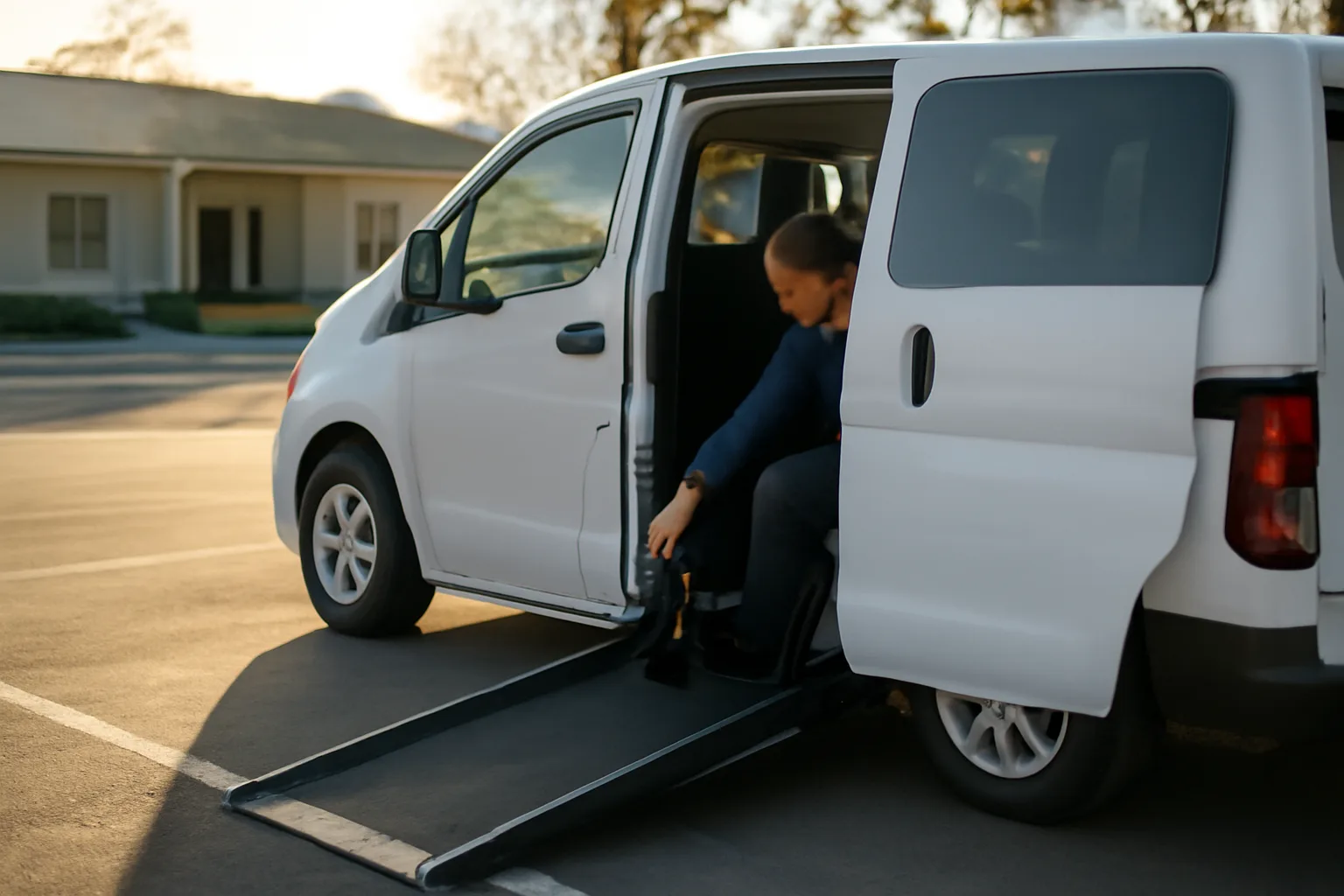
NEMT stands for non-emergency medical transportation. It covers rides for people who need to get to a medical appointment, dialysis, or pharmacy but don't need an ambulance or emergency care. Think wheelchair vans, ambulatory sedans, and stretcher vans, not units with lights and sirens. Ambulance transport is a different regulatory and payment world. Ambulances are staffed by EMTs or paramedics and are meant for emergencies or medically necessary transport where a patient needs monitoring or clinical intervention en route. NEMT drivers generally aren't required to hold EMT certification. Some states do require specific training for wheelchair securement or passenger assistance, but that's a different bar than paramedic-level clinical training. The federal Medicaid rule that created the NEMT benefit is at 42 CFR 431.53, which requires state Medicaid programs to "arrange for transportation of the recipient to and from providers" [1]. States implement this in different ways: some run it in-house, most contract it out to transportation brokers who then subcontract to owner-operators and small fleets. If you're new to the space, start with a general primer on non emergency medical transportation before you get into driver-specific paperwork. The distinction matters for your business plan. If you're buying a wheelchair van and want to drive for Medicaid trips, you're building an NEMT operation, not an ambulance company. Ambulance licensure (state EMS agency oversight, paramedic staffing, different insurance requirements) is a much heavier lift and isn't what most new owner-operators are trying to do.
Does Medicaid cover ambulance rides, and does it cover NEMT too?
Yes to both, but they're separate benefits with separate rules. Medicaid covers emergency ambulance transport under each state's medical benefits, and it covers non-emergency transportation under the NEMT benefit described in 42 CFR 431.53 [1]. Whether a specific ambulance ride is covered depends on medical necessity documentation, more than whether a patient simply rode in an ambulance. States and their Medicaid Managed Care Organizations have their own definitions of what counts as an emergency versus what should have been an NEMT trip. If a patient calls 911 for something that turns out to be non-emergent, Medicaid may still cover the ambulance run, but reimbursement rates and rules differ from NEMT reimbursement. For the NEMT side, most states now run this through a broker, and the broker decides which mode of transport (ambulatory sedan, wheelchair van, stretcher van, public transit reimbursement, even mileage reimbursement for a family member) fits the trip. That's the system you're plugging into as a wheelchair van owner-operator: you don't bill Medicaid directly in most states, you get dispatched trips through a broker and get paid by the broker or the state, depending on the contract structure. See our broader breakdown of medical transportation programs for how the money actually flows.
Does Medicare cover medical transportation?
Medicare's coverage is narrower than Medicaid's. Medicare Part B covers ground ambulance transportation when other transportation could endanger your health, under 42 CFR 410.40, which sets the conditions for coverage of ambulance services including the requirement that transport be medically necessary [2]. Medicare does not have a general non-emergency transportation benefit the way Medicaid does. There's a narrower exception built into that same regulation for scheduled, non-emergency ambulance transport, mainly for beneficiaries with end-stage renal disease traveling to dialysis, but this still runs through the ambulance benefit, not an NEMT-style van benefit [2]. Some Medicare Advantage plans have started offering supplemental transportation benefits (rides to appointments, for example) as an extra perk, but that's plan-specific and not guaranteed. If you want to drive for Medicare Advantage transportation contracts, you'd confirm the specific plan's benefit design directly with that plan or its transportation vendor, because it varies plan to plan and changes yearly. The upshot for a new owner-operator: your steady, plannable volume is almost always going to come from state Medicaid NEMT programs and their brokers, not from Medicare. If you hear a pitch that Medicare is a big NEMT market, be skeptical, because the traditional Medicare benefit design just doesn't work that way.
How do you start a medical transportation business?
Starting a wheelchair van NEMT business has roughly five phases: entity formation, vehicle and insurance setup, driver qualification, state Medicaid enrollment, and broker credentialing. None of these are optional if you want to run Medicaid trips legally. First, form your business entity (LLC is common) and get an EIN. Then get commercial auto insurance appropriate for passenger-for-hire wheelchair transport; this is not the same policy as personal auto or even a standard livery policy, and your state Medicaid transportation unit or broker will usually specify minimum liability limits. Next comes the vehicle itself: it needs to meet ADA-compliant wheelchair securement standards and often needs a state or broker vehicle inspection before you can accept trips. Then there's you, the driver: background check, drug screening, a clean motor vehicle record, and often CPR/first aid certification. Some states also require a specific NEMT driver training course or defensive driving certificate. After that you enroll as a Medicaid transportation provider with your state's Medicaid agency (this is separate from broker credentialing) and then get credentialed with whichever broker (Modivcare, MTM, Access2Care, SafeRide, or a state-specific broker) manages NEMT in your service area. The order matters. Most states won't let a broker credential you until you're an active, enrolled Medicaid transportation provider, and you can't get real trip volume without broker credentialing on top of that state enrollment. Confirm the exact sequence and paperwork with your broker and state Medicaid agency, because it differs by state and sometimes by county or region within the same state.
How to start an NEMT business step by step
Here's the practical order most owner-operators follow, though you should confirm specifics with your broker and state Medicaid agency since requirements change. 1. Research your state's NEMT structure. Find out if it's broker-managed statewide, managed by regional brokers, or run by Managed Care Organizations directly. Your state Medicaid transportation unit's website is the starting point [3]. 2. Form your LLC, get your EIN, and open a business bank account. Lenders and insurers will ask for this before they'll talk vehicle financing or commercial policies. 3. Buy or convert your wheelchair van. It needs a certified wheelchair lift or ramp and securement points that meet accessible design standards, and a used ambulance conversion doesn't automatically meet NEMT vehicle standards, so check before you buy. 4. Get commercial auto insurance with passenger endorsement, and confirm the liability minimums your state or broker requires. This step alone knocks out a chunk of underprepared applicants because minimums can run higher than a standard commercial policy. 5. Handle your own driver qualifications: background check, drug test, MVR pull, CPR/first aid card, and any state-specific NEMT driver training. 6. Enroll as a Medicaid transportation provider with your state Medicaid agency. This usually means an application, an NPI number in many states, W-9, proof of insurance, and vehicle documentation. 7. Apply for broker credentialing (Modivcare, MTM, Access2Care, SafeRide, or your state's broker). This is a separate application with its own document checklist, and it's where a lot of new operators lose weeks to back-and-forth over missing paperwork. 8. Get your vehicle inspected if required, finish any onboarding training the broker mandates, and get your trip-dispatch account or app set up. Many owner-operators use a checklist tool to keep the state and broker paperwork moving in parallel instead of serially, since the two applications often ask for overlapping documents. That's the whole idea behind our $199 Launch Kit: one packet of state-enrollment and broker-credentialing documents organized so you're not hunting for the same W-9 three separate times.
How do you start a medical transportation business with just one van?
You can absolutely start with one van. Most owner-operators do. The paperwork burden (state Medicaid enrollment, broker credentialing, insurance, driver qualification) is nearly identical whether you own one van or ten, so a single-vehicle operation is a completely normal, common way to enter this business. The practical difference is capacity, not compliance. With one van, you (or one hired driver) are the whole operation, so you'll want to think honestly about how many broker contracts you can realistically service. Some new operators sign up with two or three brokers in their region and quickly discover that dispatch volume from any one broker fluctuates, so diversifying which brokers you're credentialed with can smooth things out, but each broker relationship still means its own credentialing file to maintain. One-van operators should pay close attention to the vehicle inspection and backup plan questions in broker applications. Brokers often ask what happens to scheduled trips if your one vehicle is in the shop. Have an honest answer (a rental backup arrangement, a partner operator you can refer trips to) because "nothing, I'd just cancel" is a red flag in some broker reviews. Don't let anyone tell you one van isn't enough to be a legitimate NEMT business. It is. Just build in a maintenance and backup plan before you promise a broker a full weekly schedule.
How do you start a non-emergency medical transportation business (the full picture)?
This is really the same question as starting an NEMT business, just phrased differently, and it's worth restating because the acronym confuses new operators. "Non-emergency medical transportation" and "NEMT" are the exact same thing; one is just spelled out. The fundamentals don't change based on how you phrase the search: entity formation, compliant vehicle, proper insurance, qualified driver, state Medicaid enrollment, and broker credentialing. Where people get tripped up is assuming this is a single application. It's not. It's at minimum two separate approval processes (state and broker) that happen to require a lot of the same underlying documents. A realistic planning timeline: state Medicaid enrollment alone can take anywhere from a few weeks to a couple of months depending on the state's backlog and whether your application is complete on the first try. Broker credentialing adds its own timeline on top, and brokers sometimes won't start their review until your state enrollment is active. Budget more time than you think you need, and don't quit a day job or sign a vehicle lease assuming a fast turnaround. For a plain-language overview of how the pieces fit together, our NEMT explainer walks through the broker layer in more detail, and NEMT transportation covers day-to-day operational expectations once you're credentialed.
What licenses or certifications does a medical transport driver actually need?
There's no single federal medical transport driver license. Requirements are set state by state and, for NEMT specifically, often layered with broker-specific requirements on top of the state minimum. Across most states, a medical transport driver working NEMT wheelchair van trips will need: a valid state driver's license (commercial license is not usually required for van-class vehicles under a certain weight, but confirm your state's threshold), a clean or explainable motor vehicle record, a completed background check often including a fingerprint-based criminal history check, drug screening, and CPR/First Aid certification (American Heart Association or American Red Cross certifications are commonly accepted). Many states or brokers additionally require a passenger assistance or wheelchair securement training course, sometimes state-specific and sometimes a broker's own internal course you complete during onboarding. A handful of states also require defensive driving course completion or a specific NEMT driver orientation before you can accept your first dispatched trip. Because every one of these can vary (and does vary meaningfully between, say, a large urban Medicaid managed care market and a rural fee-for-service state), the honest answer is: confirm the exact list with your state Medicaid transportation unit and with each broker you plan to credential with. Don't assume what worked for a driver in another state applies to you.
What does broker credentialing actually involve, and why is it separate from state enrollment?
Broker credentialing is the private-sector layer that sits on top of your public Medicaid enrollment. States contract with brokers like Modivcare, MTM, Access2Care, and SafeRide (among others, depending on the state) to manage day-to-day trip scheduling, dispatch, and driver networks, so even after you're an approved Medicaid transportation provider, you generally can't get trips without also being credentialed by whichever broker holds the contract in your region. Credentialing packets typically ask for your business license, proof of insurance meeting the broker's minimums, vehicle registration and inspection records, driver background checks and training certificates, and sometimes a facility or garage inspection if you operate more than a couple of vehicles. Brokers periodically re-verify this paperwork, so credentialing isn't a one-time event; expect annual or biannual re-credentialing cycles. Each broker's process is a little different, and broker contracts change when states rebid them (a broker that holds a state contract today may lose it in two or three years when the state issues a new RFP). That's part of why generic advice always comes with the caveat to confirm with your broker and state Medicaid agency directly: the broker holding your state's contract, and its specific requirements, can and does change.
What should a new owner-operator's paperwork and timeline actually look like?
| Entity + insurance setup | LLC, EIN, commercial auto policy with passenger endorsement | 1-3 weeks | |
|---|---|---|---|
| Vehicle compliance | ADA-compliant lift/ramp, securement, possible inspection | 1-4 weeks (longer if buying/converting a van) | |
| Driver qualification | Background check, drug screen, CPR/first aid, MVR | 1-3 weeks | |
| State Medicaid enrollment | Application, NPI (where required), supporting docs | 2-8+ weeks, state-dependent | |
| Broker credentialing | Separate application, document verification, possible vehicle/driver review | 2-6+ weeks, broker-dependent | |
| Onboarding/orientation | Broker-specific training, dispatch account setup | Days to 2 weeks | Total realistic runway from a standing start to your first dispatched trip is commonly two to four months, sometimes faster in well-run states, sometimes considerably longer if your state Medicaid unit has a backlog or your application comes back with missing documents. Nobody publishes a national average timeline because states don't report this data consistently, so treat any specific number you hear as one operator's experience, not a guarantee. |
Here's a realistic sequencing table based on the general order most states and brokers follow. Treat the day ranges as rough planning estimates, not promises, since actual timelines depend entirely on your state's backlog and how complete your application is on the first submission. | Step | What's involved | Rough planning window |
What are the most common reasons applications get delayed or rejected?
Incomplete insurance documentation is the single most common holdup. Brokers and state Medicaid units want to see specific liability limits, specific endorsements (passenger transport, more than general commercial auto), and current effective dates. A policy that's technically active but doesn't list the right coverage type gets bounced back. Missing or expired driver documents are next: background checks and drug screens often have validity windows (some states require checks within the last 12 months, for example), so if your paperwork sat in a drawer for a year before you applied, you may need to redo it. Vehicle documentation mismatches also cause delays. Registration under a different name than your business entity, missing lift/ramp certification, or a VIN that doesn't match across your insurance, registration, and broker application will all get flagged. Keep every document under the same legal business name from day one. Finally, plain incompleteness. Both state Medicaid enrollment forms and broker credentialing packets tend to be long, multi-page applications with a lot of small required attachments (W-9, void check, certificate of insurance, vehicle photos). Missing even one attachment can send the whole packet back to the bottom of a review queue. This is the exact problem the $199 Launch Kit is built to solve: a single organized packet of the state-enrollment and broker-credentialing documents so you submit complete the first time instead of trading emails for three weeks over a missing form.
Frequently asked questions
What is NEMT in simple terms?
NEMT stands for non-emergency medical transportation. It's rides for people getting to medical appointments, dialysis, or pharmacies who don't need an ambulance. Medicaid programs are required to provide it under 42 CFR 431.53, and most states manage it through contracted transportation brokers rather than paying providers directly.
Does Medicaid cover ambulance rides?
Yes, Medicaid covers medically necessary emergency ambulance transport, separate from its non-emergency transportation (NEMT) benefit. Coverage depends on medical necessity documentation and each state's specific rules, since Medicaid is state-administered within federal minimum standards set by CMS.
Does Medicare cover medical transportation?
Medicare Part B covers ambulance transportation when other travel would endanger your health, under conditions set out in 42 CFR 410.40, but it does not have a general non-emergency ride benefit like Medicaid's NEMT program. Some Medicare Advantage plans offer supplemental transportation perks, but that varies by plan and isn't guaranteed.
How do I start a medical transportation business?
Form your business entity, get compliant insurance and a wheelchair-accessible vehicle, complete driver background checks and certifications, then enroll as a Medicaid transportation provider with your state and get credentialed with the broker managing NEMT in your area (Modivcare, MTM, Access2Care, SafeRide, or others depending on state).
Can I start an NEMT business with only one van?
Yes. One van is a completely normal way to start, and the state enrollment and broker credentialing paperwork is essentially the same whether you have one vehicle or ten. Just have an honest backup plan for what happens to scheduled trips if your single vehicle needs maintenance.
What certifications do medical transport drivers need?
Common requirements include a valid driver's license, clean or explainable motor vehicle record, background check, drug screening, and CPR/First Aid certification. Many states or brokers also require passenger assistance or wheelchair securement training. Exact requirements vary by state and by broker, so confirm both before applying.
Is broker credentialing the same as state Medicaid enrollment?
No, they're separate processes. State Medicaid enrollment makes you an approved Medicaid transportation provider under your state's program. Broker credentialing is a private-sector layer on top of that, required by the specific broker (Modivcare, MTM, Access2Care, SafeRide, etc.) managing trip dispatch in your region.
How long does it take to get NEMT credentialed?
Realistically two to four months from a standing start, though this varies a lot by state backlog and application completeness. State Medicaid enrollment can take two to eight or more weeks, and broker credentialing typically adds another two to six weeks on top.
Do NEMT drivers need a commercial driver's license (CDL)?
Usually not for standard wheelchair vans, since most fall under the weight threshold that triggers CDL requirements. Larger stretcher vans or multi-passenger vehicles may cross that threshold in some states. Confirm your specific vehicle's weight class against your state's CDL rules.
What's the difference between NEMT and ambulance transport?
NEMT is for patients who need a ride to a medical appointment but don't need clinical care during transport; drivers typically aren't required to be EMTs. Ambulance transport is for emergencies or cases needing medical monitoring, staffed by EMTs or paramedics, and regulated separately under state EMS agencies.
How much insurance do I need for an NEMT wheelchair van?
Requirements vary by state and broker, but commercial auto insurance with a passenger-for-hire endorsement is standard, often with liability limits higher than typical commercial auto minimums. Confirm exact required limits with your state Medicaid transportation unit and the broker you plan to credential with before buying a policy.
Which broker should I credential with first?
It depends entirely on which broker holds the active Medicaid transportation contract in your state or region, which can change when states rebid contracts. Check your state Medicaid transportation unit's website for the current broker assignment before applying anywhere.
Sources
- eCFR, 42 CFR 431.53: Federal requirement that state Medicaid programs ensure necessary transportation for beneficiaries to and from providers
- Medicaid.gov, Non-Emergency Medical Transportation: CMS description of the NEMT benefit ensuring beneficiaries can access Medicaid-covered services
- Medicare.gov, Ambulance Services coverage: Medicare Part B ambulance coverage description for beneficiaries
- 28 CFR Part 36, Appendix A (ADA Standards for Accessible Design, 2010), section 810 Passenger Loading Zones: Federal accessibility design standards relevant to wheelchair loading zones and vehicle accessibility
- eCFR, 42 CFR 410.40: Medicare conditions for coverage of ambulance services, including non-emergency scheduled transport such as dialysis trips