Last updated 2026-07-25
TL;DR
NEMT software runs your own dispatch, billing, and driver compliance. Broker platforms (Modivcare, MTM, Access2Care, SafeRide) are separate systems you plug into after credentialing. New owner-operators usually need both: internal software to run the business, and broker portal access to receive trip assignments. Confirm every requirement with your specific broker contract and state Medicaid transportation unit.
What is non-emergency medical transportation (NEMT)?
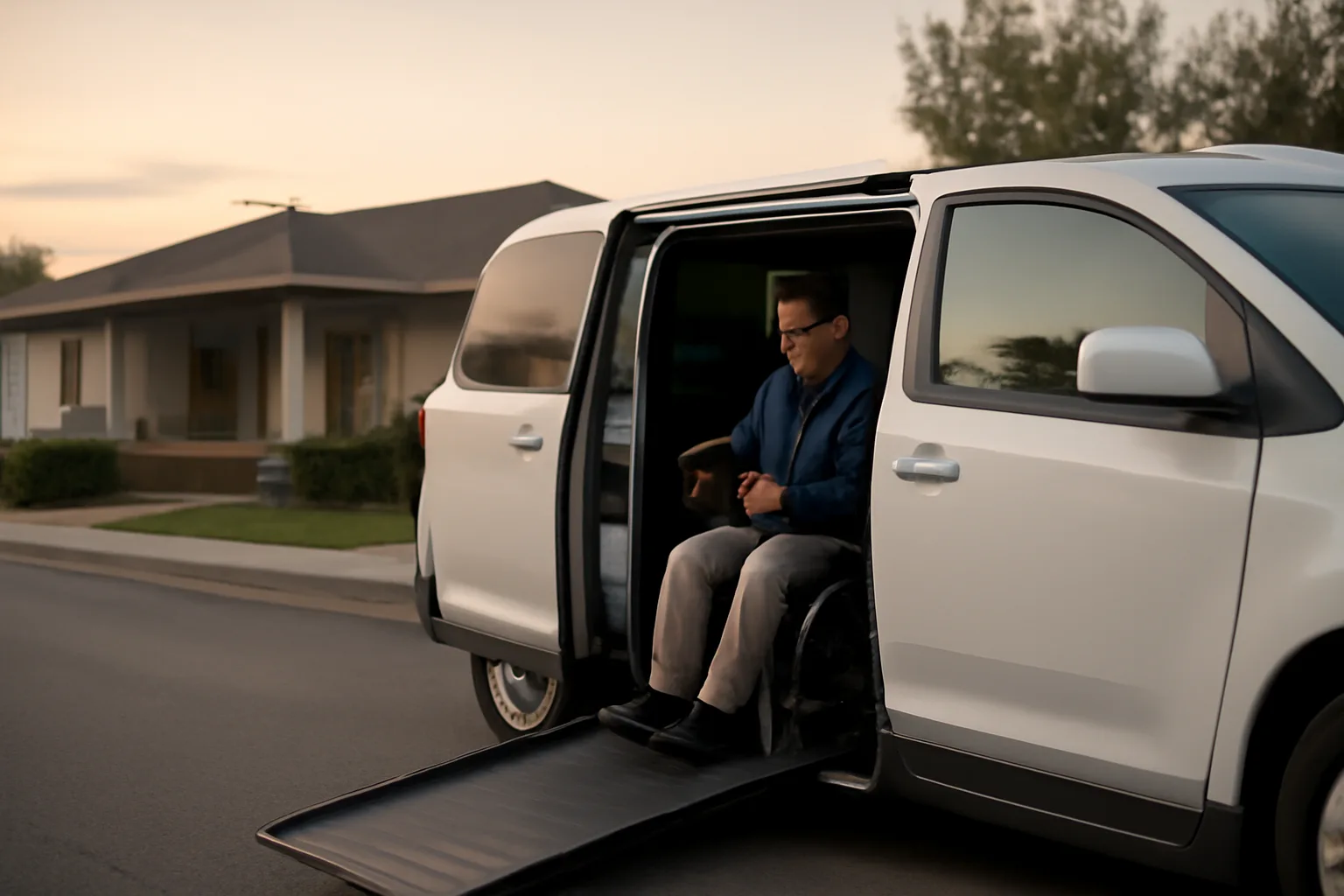
Non-emergency medical transportation is scheduled transport for Medicaid enrollees who need a ride to a covered medical appointment but don't need an ambulance. Think dialysis three times a week, chemo infusions, physical therapy, or a routine OB visit for someone without a car or a working wheelchair lift at home. Federal Medicaid rules require states to guarantee "necessary transportation for beneficiaries to and from providers" as part of ensuring access to care, under 42 CFR 431.53 [1]. States can deliver that guarantee directly, through managed care plans, or by contracting with a regional broker who then subcontracts to local transportation companies. That broker layer is where most new owner-operators enter the business. NEMT is not an ambulance. It doesn't carry emergency lights, oxygen tanks for acute distress, or paramedics. Vehicles range from a sedan for an ambulatory rider to a wheelchair-accessible van with a lift or ramp, up to stretcher vans for people who must travel lying down but aren't in crisis. If you're researching this for the first time, the non emergency medical transportation overview and what is NEMT explainer cover the basic vehicle and service tiers in more depth.
Does Medicaid cover ambulance rides, and how is that different from NEMT?
Yes, Medicaid covers ambulance transportation when it's medically necessary, but that's billed and regulated separately from NEMT. Ambulance transport (ground or air) is for emergencies or situations where a patient's condition requires medical monitoring en route. Medicaid.gov describes NEMT specifically as transport "for Medicaid enrollees who have no other means of transportation to get to their medical appointments" [2], which is a narrower, non-emergency lane. If you're buying a wheelchair van and planning to run trips for people who are stable but can't drive themselves, you're in the NEMT lane, not the ambulance lane. Ambulance companies need EMS licensure, paramedic or EMT staffing, and a completely different regulatory file with your state's EMS office, not the Medicaid transportation unit. Don't confuse the two when you're reading state requirements. Search state guidance for both terms separately, since some state pages lump them under one "emergency medical transport" heading even when the NEMT rules live in a different chapter.
Does Medicare cover medical transportation?
Medicare's NEMT coverage is much thinner than Medicaid's. Original Medicare (Part B) covers ambulance transportation when medically necessary, under the rules at 42 CFR 410.40 [3], but it does not have a standing non-emergency ride benefit the way Medicaid does. Some Medicare Advantage plans offer limited NEMT as a supplemental benefit, but that varies plan by plan and is not guaranteed federal coverage. This matters for owner-operators because it shapes your customer base. If you're building a business around scheduled recurring rides, Medicaid managed care members and Medicaid fee-for-service beneficiaries are your primary payer pool, not Medicare. Some operators pick up private-pay or Medicare Advantage supplemental contracts too, but those contracts are negotiated separately and aren't run through the state Medicaid broker network.
What does NEMT broker software actually do, and do I need my own system too?
Broker software is the platform the broker (Modivcare, MTM, Access2Care, SafeRide Health, and others depending on your state and contract) uses to assign trips, verify eligibility, and process claims to subcontracted transportation providers like you. You typically get portal or app access after you're credentialed, not before. Your own operational software is different. It's what you use to schedule drivers, track vehicle maintenance and inspections, log driver hours, store credentialing documents (insurance certificates, background checks, driver's license copies), and reconcile what the broker actually paid you against what you billed. A one-van operator can technically run this on a spreadsheet and a paper binder for a while. It gets painful fast once you're juggling recurring dialysis clients, one-off broker trip assignments, and renewal deadlines for insurance and vehicle inspection. Most small operators end up using some combination of: a broker's own trip portal (mandatory, no choice), a low-cost dispatch/scheduling app built for NEMT or paratransit, and a basic accounting tool. Vendors in the small-operator NEMT dispatch space include companies like RouteGenie, Bootstrap, TripSpark, and Ride Right, among others; pricing and feature sets change often enough that you should get a current quote directly rather than relying on any number printed here. Nobody publishes a reliable third-party benchmark on what a one-van shop should expect to pay per month for dispatch software, so treat any number you see quoted online as a starting point to verify, not a fact.
How do you start a medical transportation business?
Starting a NEMT business follows roughly the same sequence regardless of state, though every step has state-specific paperwork layered on top. 1. Form your business entity (LLC is common) and get an EIN from the IRS. 2. Get commercial auto insurance for NEMT, plus general liability. Some states and brokers set minimum coverage amounts; confirm the specific dollar minimum with your state Medicaid agency and your broker contract, since these numbers vary and change. 3. Buy or convert a wheelchair-accessible vehicle that meets your state's vehicle age, mileage, and ADA lift/ramp requirements. 4. Get your state's NEMT provider or transportation network company permit, if your state requires one separate from Medicaid enrollment. 5. Enroll as a Medicaid transportation provider with your state Medicaid agency. This is a separate step from broker credentialing. 6. Apply for credentialing with the regional broker(s) operating in your area (Modivcare, MTM, Access2Care, SafeRide, or a state-run alternative). 7. Complete driver requirements: background checks, drug testing, defensive driving or passenger-assistance training, and any state-mandated NEMT driver certification. 8. Pass vehicle inspection, get your Medicaid provider number and broker ID active, and start receiving trip assignments. Every one of those steps has a real state or broker document behind it. Don't take a generic checklist as gospel; pull your own state Medicaid transportation unit's provider manual and your target broker's credentialing packet before you spend money on a vehicle.
How to start a NEMT business with one van
One van is a completely normal way to start, and plenty of successful operators never grow past two or three vehicles. The economics and paperwork burden don't scale down proportionally, though, so go in with eyes open. With one van, you are the driver, the dispatcher, the biller, and the compliance officer. That's fine at low trip volume but it means every sick day or vehicle breakdown stops revenue completely, since you have no backup driver or vehicle. Some new operators solve this by starting part-time alongside another job, or partnering with a second driver-owner early so there's coverage. On the vehicle side, confirm your state's specific rules on vehicle age limits, mileage caps, and required equipment (wheelchair lift or ramp, tie-downs, specific number of securement points) before buying. These requirements vary by state and are enforced at inspection, so a van that passed inspection in one state may not pass in another. On the paperwork side, a single-van operator still has to complete full Medicaid provider enrollment and full broker credentialing, there's no lighter-weight track for owning fewer vehicles. If you want a structured walk-through of the state enrollment paperwork specifically, the medical transportation hub page is a reasonable next stop.
How to start a non-emergency medical transportation business step by step
The practical sequencing question owner-operators ask most is which comes first: the vehicle, the Medicaid enrollment, or the broker application. The honest answer is Medicaid enrollment first, vehicle purchase in parallel once you know the vehicle spec, and broker credentialing after both. Why Medicaid enrollment first? Because your state Medicaid agency sets the baseline rules (insurance minimums, vehicle age, driver background check standards, business licensing) that everything downstream depends on. Buying a van before you know your state's exact lift/ramp and mileage requirements risks buying the wrong van. States publish this in their Medicaid provider manual or transportation services section as part of their approved state plan under 42 CFR 440.170, which defines transportation as a coverable Medicaid service and leaves the specific standards to each state [4]. Why broker credentialing last? Because most brokers won't process your credentialing application until you already hold an active state Medicaid provider number. Confirm this exact sequencing with your target broker, since it can vary by state and by which broker holds that state's contract.
Which brokers do I need to credential with, and how is that different from Medicaid enrollment?
State Medicaid enrollment makes you an approved Medicaid transportation provider in the state's own system. Broker credentialing is a separate, private-contract process with whichever company holds the transportation brokerage contract for your region. Modivcare, MTM, Access2Care, and SafeRide Health are the largest national brokers, but a given state usually contracts with only one or two of them for a specific region, sometimes rotating that contract every few years when it goes back out to bid. Some states, like several using managed care organizations, route NEMT through the MCO's own subcontracted broker instead of a single statewide vendor. You have to find out which broker (or brokers) hold the contract for your specific county or region before you apply anywhere, because credentialing with the wrong broker is a wasted application. Each broker runs its own credentialing packet: insurance certificate submission, vehicle inspection form, driver roster with background check attestations, W-9, and often a separate trip-management software onboarding session. None of this is standardized across brokers, so expect to fill out largely the same information three or four different ways if you're trying to credential with multiple brokers in a border region. Confirm current broker contract holders and packet requirements directly with your state Medicaid transportation unit; broker contracts do change hands.
What software or systems do brokers expect you to use day to day?
Most brokers require you to use their trip-assignment platform, whether that's a phone-based IVR dispatch system, a web portal, or a smartphone driver app. This part isn't optional. It's how you receive trip offers, confirm pickups, and log arrival/drop-off times, which feeds directly into what they pay you. On top of the mandatory broker platform, you'll want internal tools for things the broker system doesn't track well: driver schedule management, vehicle maintenance logs, recurring-client scheduling if you also do private-pay or facility-direct work, and reconciliation of broker remittances against your trip logs. A common early mistake is assuming the broker's payment report is automatically correct; brokers do make errors in trip counts and mileage calculations, and you need your own records to catch and dispute them. Some brokers also require electronic visit verification (EVV) style GPS check-ins for pickup and drop-off, layered on top of or separate from any EVV mandate your state runs for other Medicaid personal-care services. That broader EVV mandate comes from Section 12006 of the 21st Century Cures Act, which requires states to implement EVV for personal care and home health services [5]. Confirm with your broker whether their trip app satisfies any state EVV requirement that might apply to your service line, since the two systems aren't always the same thing.
How do you pick between NEMT dispatch software vendors as a small operator?
| Broker integration | Does it import trip assignments from your specific broker's portal, or do you have to double-enter? | |
|---|---|---|
| Pricing structure | Per-vehicle, per-driver, or flat monthly, and is there a contract term or month-to-month option? | |
| Mobile driver app | Can drivers log pickups/drop-offs from a phone, or do you need a separate tablet mount? | |
| Compliance document storage | Does it track insurance, inspection, and background check expiration dates and alert you before they lapse? | |
| Billing/claims support | Does it generate the claim format your state Medicaid agency or broker requires? | |
| Support during onboarding | Is there a real person who'll walk you through setup, or is it self-serve only? | Ask any vendor for a reference from another one-to-three-vehicle NEMT operator in a state similar to yours, more than their biggest client. A system built around 200-vehicle fleets often has an interface and price point that's overkill for someone running a single wheelchair van. Get pricing in writing and confirm there's no long-term contract lock-in before you're sure the broker relationship is stable. |
Small operators should weigh a short list of practical factors rather than getting pulled into a features arms race meant for 50-vehicle fleets. | Factor | What to check |
What paperwork should I gather before applying anywhere?
Before you touch a broker application or a Medicaid enrollment form, assemble a folder with your entity documents (Articles of Organization, EIN letter), commercial auto and general liability insurance certificates, vehicle title and registration, ADA lift/ramp compliance documentation for the vehicle, driver background check results, driver's license and any required state NEMT driver certificate, and a copy of your business's state transportation permit if your state requires one separate from Medicaid. Having this ready before you start applications saves real time, since incomplete applications are the most common reason for delay. This is also where a structured checklist earns its keep instead of you rebuilding the same folder for a second or third broker application from scratch. If you want a starting framework built specifically around state Medicaid enrollment plus broker credentialing paperwork, RideCredential's $199 one-time State + Broker NEMT Launch Kit is built around exactly this document set, though you can absolutely assemble it yourself from your state's Medicaid provider manual and each broker's published credentialing packet.
What are common mistakes new owner-operators make with software and credentialing?
The most expensive mistake is buying a vehicle before confirming state-specific lift, ramp, age, and mileage requirements, then finding out at inspection that it doesn't qualify. The second is assuming Medicaid provider enrollment and broker credentialing are the same process; they're not, and skipping one delays your ability to actually take trips even after the other is approved. A third common mistake is picking dispatch software based on a slick sales demo without confirming it actually integrates with the specific broker you'll be working under. If the software can't pull trip assignments from your broker's system, you're manually re-entering every trip, which defeats a lot of the point. A fourth mistake, more subtle, is letting insurance or background check documents lapse without a tracking system, which can get you suspended from a broker's active roster even after you've been running trips successfully for months. None of these mistakes are fatal if caught early, but they all cost real time and sometimes real money to fix after the fact. For a broader look at how these pieces fit into the overall business setup, how to start a NEMT business and non emergency medical transportation services are useful next reads.
Frequently asked questions
What is non-emergency medical transportation (NEMT)?
NEMT is scheduled, non-urgent transportation to medical appointments for people who have no other way to get there, most commonly Medicaid enrollees. It covers rides in wheelchair vans, stretcher vans, or ambulatory sedans, and is distinct from ambulance service, which handles emergencies and medically monitored transport. States must ensure this access under federal Medicaid rules at 42 CFR 431.53.
Does Medicaid cover ambulance rides?
Yes, Medicaid covers medically necessary ambulance transportation, but it's billed and regulated as a distinct benefit from NEMT, with separate provider requirements through your state's EMS licensing authority rather than the Medicaid transportation broker network. Confirm specific coverage rules and rates with your state Medicaid agency directly.
Does Medicare cover medical transportation?
Original Medicare Part B covers ambulance transportation when medically necessary under 42 CFR 410.40, but it does not have a standing non-emergency ride benefit like Medicaid does. Some Medicare Advantage plans offer limited NEMT as a supplemental benefit; check the specific plan, since this isn't a guaranteed federal Medicare benefit.
How do I start a medical transportation business?
Form your business entity, get commercial insurance, buy a compliant vehicle, get any required state transportation permit, enroll as a Medicaid provider with your state, get credentialed with the regional broker (Modivcare, MTM, Access2Care, SafeRide, or your state's contracted vendor), meet driver requirements, and pass vehicle inspection before accepting trips.
How do I start a NEMT business with just one van?
One van is common for new owner-operators. You still need full state Medicaid enrollment and full broker credentialing; there's no reduced process for owning fewer vehicles. Plan for the fact that with one vehicle, any breakdown or driver sick day stops your ability to run trips until it's resolved.
What's the difference between Medicaid enrollment and broker credentialing?
Medicaid enrollment makes you an approved transportation provider in your state's own Medicaid system. Broker credentialing is a separate private application with the company (Modivcare, MTM, Access2Care, SafeRide, etc.) that holds the trip-dispatch contract for your region. Most brokers require active Medicaid enrollment before they'll process your credentialing application.
Do I need my own dispatch software if I'm working through a broker?
Yes, in practice. The broker's platform is mandatory for receiving and confirming trip assignments, but it typically doesn't track your vehicle maintenance, driver compliance document expirations, or reconcile broker payments against your own trip logs. Small operators usually run a low-cost NEMT dispatch tool alongside the required broker portal.
Which brokers should I credential with as a new NEMT owner-operator?
Whichever broker holds the Medicaid transportation contract for your specific state or region right now. Modivcare, MTM, Access2Care, and SafeRide Health are the largest national names, but contracts rotate and vary by county. Confirm the current contract holder directly with your state Medicaid transportation unit before applying anywhere.
What is NEMT, in plain terms?
NEMT stands for non-emergency medical transportation: scheduled rides to medical appointments (dialysis, physical therapy, specialist visits) for people who don't need an ambulance but can't get there themselves. It's a required Medicaid benefit in most states, delivered through contracted transportation brokers who assign trips to local providers like wheelchair-van owner-operators.
What vehicle requirements apply to wheelchair vans for NEMT?
Requirements vary significantly by state and typically cover vehicle age limits, mileage caps, wheelchair lift or ramp specifications, tie-down and securement points, and inspection frequency. There's no single national standard. Confirm the exact specs with your state Medicaid transportation unit's provider manual before purchasing a vehicle, since a van compliant in one state may fail inspection in another.
Does NEMT dispatch software satisfy electronic visit verification (EVV) requirements?
Sometimes, but not automatically. Some broker trip apps include GPS check-in features that may satisfy a state's EVV mandate for certain service lines, while others don't. Confirm directly with your broker and your state Medicaid agency whether their specific platform meets any EVV requirement that applies to your trips.
How much does NEMT dispatch software cost for a one-van operator?
There's no reliable published industry benchmark for this, and pricing structures (per-vehicle, per-driver, flat monthly) vary by vendor and change often. Get a current quote directly from vendors serving small NEMT fleets and confirm there's no long-term contract lock-in before committing, rather than relying on a number quoted elsewhere online.
Can I run a NEMT business without going through a broker at all?
In some states and situations, yes, particularly for private-pay clients, facility-direct contracts, or certain managed care arrangements that pay providers directly. But most Medicaid fee-for-service NEMT trips are routed through a state-contracted broker, so broker credentialing is typically required if Medicaid trip volume is part of your plan.
Sources
- eCFR, 42 CFR 431.53 (Assurance of transportation): States must ensure necessary transportation for Medicaid beneficiaries to and from providers
- Medicaid.gov, Non-Emergency Medical Transportation: NEMT is described as transport for enrollees who have no other means to reach medical appointments
- eCFR, 42 CFR 410.40 (Coverage of ambulance services): Medicare Part B covers ambulance services when medically necessary
- eCFR, 42 CFR 440.170 (Transportation): Transportation is defined as a coverable Medicaid service with standards left to each state's plan
- Social Security Act Section 1903(l), added by 21st Century Cures Act Section 12006: Federal law requires states to implement electronic visit verification for personal care and home health services