Last updated 2026-07-25
TL;DR
NEMT (non-emergency medical transportation) moves Medicaid members to routine medical appointments in vans, wheelchair vehicles, or sedans when they have no other ride. States must cover it under 42 CFR 431.53. Medicare covers it only in narrow cases; ambulance rides are a separate, higher-acuity service. Starting a NEMT business means entity setup, vehicle/insurance compliance, state Medicaid enrollment, and broker credentialing with companies like Modivcare or MTM.
What is NEMT (non-emergency medical transportation)?
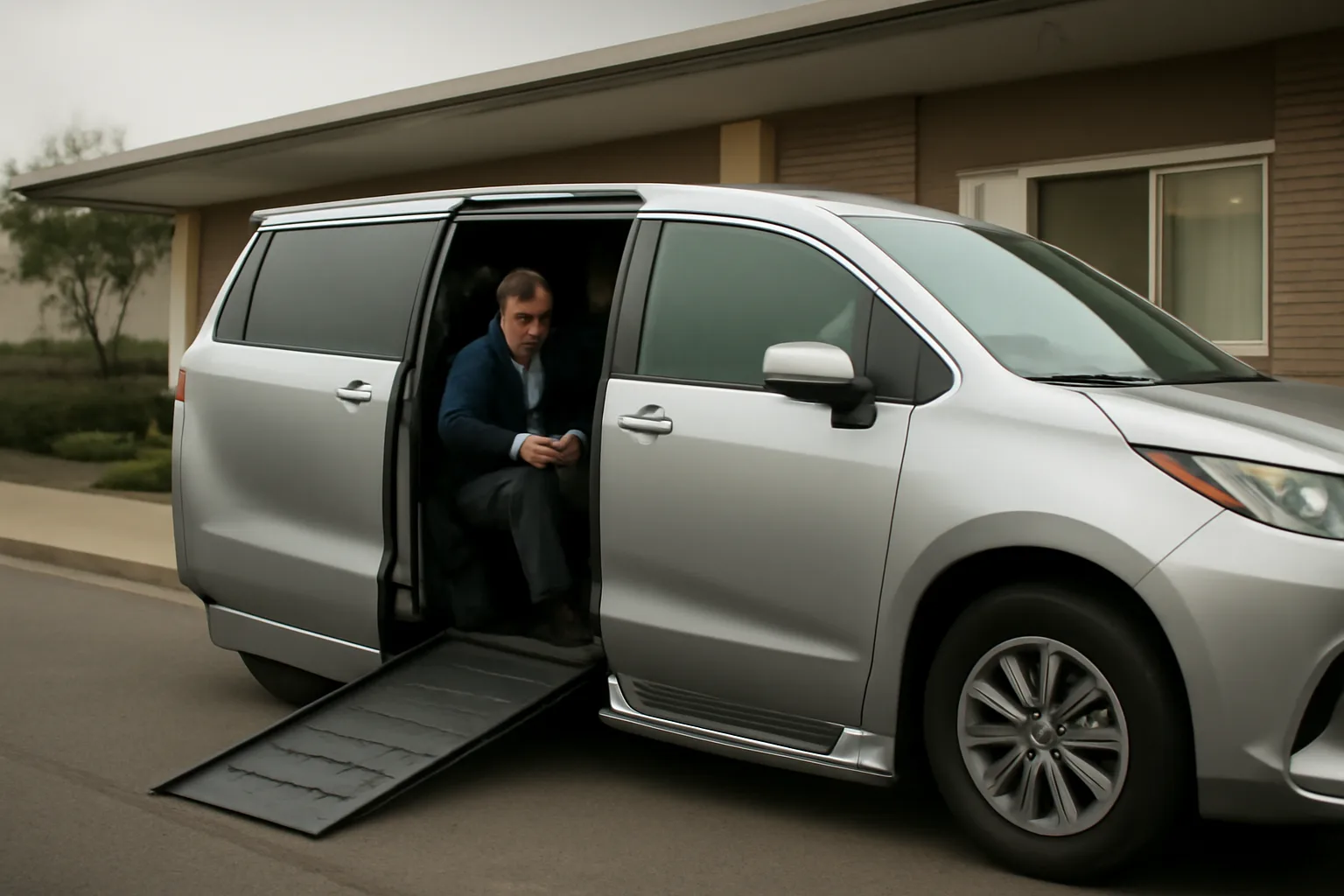
NEMT stands for non-emergency medical transportation. It's the transport of people to and from medical appointments, dialysis, therapy, and pharmacy runs when they don't need an ambulance but also can't get there on their own. Think wheelchair vans, accessible minivans, and ambulatory sedans, not lights-and-sirens rigs. The legal backbone is federal Medicaid rule 42 CFR 431.53, which requires states to "ensure necessary transportation for recipients to and from providers" and to describe those transportation services in their state plan [1]. That's a federal mandate, not a state option. It's why NEMT exists as an industry at all: every state Medicaid program has to provide some version of it. Most states don't run NEMT themselves. They contract with transportation brokers (Modivcare, MTM, Access2Care, SafeRide Health are the big national names) who schedule trips, dispatch them to a network of local transportation providers, and pay per completed ride. As an owner-operator, you're one of those local providers. You enroll with the state Medicaid agency first, then credential with whichever broker(s) hold the contract in your region. See our NEMT overview for how that structure plays out state by state. NEMT is distinct from ambulance service, which is emergency or medically necessary transport requiring clinical staff and life-support equipment. NEMT vehicles carry a driver, sometimes an attendant, and no clinical crew.
Does Medicaid cover ambulance rides?
Yes, Medicaid covers ambulance transportation when it's medically necessary, but that's a different benefit category from NEMT. Ambulance services are billed under a state's emergency/medical transportation benefit and require a higher level of vehicle licensure (EMT or paramedic staffing, life-support equipment) than a wheelchair van needs. Medicaid.gov describes the required transportation benefit broadly, covering both emergency ambulance transport and non-emergency transportation to get eligible people to covered services [2]. States set their own medical necessity criteria and prior authorization rules for ambulance trips, and those criteria vary a lot. A dialysis patient who needs a stretcher because they can't sit upright might qualify for ambulance transport instead of a wheelchair van; that's a case-by-case medical determination, not something an owner-operator decides. If you're buying a wheelchair van, you're not in the ambulance business. Don't confuse the two credentialing paths. Ambulance companies need state EMS licensure, ambulance service permits, and separate Medicaid provider enrollment as an ambulance supplier. NEMT wheelchair van operators need a different, generally less clinical, set of state and broker requirements, covered below.
Does Medicare cover medical transportation?
Medicare's coverage of medical transportation is much narrower than Medicaid's. Original Medicare Part B covers ambulance transportation only when other transportation would endanger the patient's health, and only to the nearest appropriate facility that can provide the needed care [3]. Medicare does not have a general non-emergency wheelchair van benefit the way Medicaid does. There is one exception worth knowing: Medicare Part B does cover non-emergency ambulance transportation for people who need scheduled, repetitive ambulance trips (for example, some dialysis patients), but only with a physician's written order certifying medical necessity, and only via ambulance, not a wheelchair van [3]. Some Medicare Advantage plans have started adding supplemental non-emergency transportation benefits (rides to appointments via a van or rideshare), but that's a plan-by-plan perk, not a standard Medicare benefit. CMS's 2019 final rule expanding supplemental benefits for the chronically ill confirms plans have flexibility to offer non-medical services, including transportation, when they have a reasonable expectation of improving or maintaining health [4]. If you want that business, you'd be contracting with the individual Medicare Advantage plan or its transportation vendor, not enrolling in traditional Medicare NEMT, because there isn't one. Bottom line for a new operator: your steady volume is almost certainly going to come from Medicaid NEMT contracts, not Medicare. Confirm with your state Medicaid agency and any Medicare Advantage plans in your area if you want to chase both markets.
How do you start a medical transportation business?
Starting a medical transportation (NEMT) business breaks into five stages: legal setup, vehicle and insurance compliance, state Medicaid enrollment, broker credentialing, and driver compliance. None of these are optional, and skipping ahead usually means redoing paperwork later. First, form your business entity (LLC is standard for owner-operators) and get an EIN from the IRS. Get general liability and commercial auto insurance with limits that meet your state's NEMT requirements, which often run higher than personal auto minimums, sometimes $1 million combined single limit or more; confirm the exact figure with your state Medicaid transportation unit because it varies widely. Second, get your vehicle compliant. A wheelchair van needs a certified wheelchair lift or ramp, tie-down restraints meeting ADA and often SAE J2249 standards, and passes whatever state vehicle inspection applies to NEMT or paratransit vehicles. Some states require a separate NEMT vehicle permit or decal. Third, enroll as a Medicaid transportation provider with your state Medicaid agency. This is a formal provider enrollment process, usually through the state's Medicaid Management Information System (MMIS) portal, and it produces a Medicaid provider ID you'll need for every broker credentialing application later. This step alone can take weeks depending on the state, and background checks or site visits are common. Fourth, credential with the broker(s) operating in your service area (Modivcare, MTM, Access2Care, SafeRide, or a state-run alternative). Brokers each run their own vetting: insurance verification, vehicle inspection, driver background checks, and a network agreement or contract. You typically can't skip straight to broker credentialing without state Medicaid enrollment first, since brokers usually require an active state Medicaid provider ID as a prerequisite. Fifth, get your drivers compliant: background checks, drug testing where required, defensive driving certification, and passenger assistance / wheelchair securement training. See drivers and training resources for what's typically required.
How to start a NEMT business with one van
You can absolutely start with a single wheelchair van; plenty of owner-operators do. The process is the same five stages above, just scoped to one vehicle and, often, one driver (you). With one van, be realistic about what you can service. Brokers assign trips based on your registered capacity and service area; a single van means you'll be handling one ride at a time, so plan your day around appointment windows, not a dispatch queue you can't fill. Many owner-operators run non-emergency ambulatory and wheelchair trips together with one accessible van rather than buying separate vehicles for each trip type. Don't underestimate the paperwork load for a one-van operation. You still need the same insurance certificates, the same state Medicaid enrollment, and the same broker credentialing packet as a 20-van fleet. The compliance overhead doesn't shrink with fleet size, which is exactly why a lot of new owner-operators underestimate the time between "I bought a van" and "I'm getting dispatched trips." Budget for a real gap, often measured in weeks to a couple of months, between purchase and your first paid trip, depending on how fast your state processes enrollment and how backed up the broker's credentialing queue is. Confirm current processing timelines with your state Medicaid agency and target broker directly, since they change. One practical note: some states or brokers set a minimum vehicle age or mileage cutoff for NEMT vans (for example, rejecting vehicles over a certain age or odometer reading). Confirm this before you buy a used van, not after.
What licenses and permits does a NEMT business need?
| Business entity | LLC/corp registration, EIN | State Secretary of State, IRS | |
|---|---|---|---|
| Vehicle permit | NEMT or paratransit vehicle permit/decal, annual inspection | State DMV or Dept. of Transportation | |
| Insurance | Commercial auto liability (often $1M+ CSL), general liability | Private insurer, state-set minimums | |
| Driver credential | Background check, drug/alcohol screen, defensive driving cert, passenger assistance training | State Medicaid agency / broker | |
| Payer enrollment | State Medicaid provider ID | State Medicaid Management Information System | |
| Broker network | Signed transportation provider agreement | Modivcare, MTM, Access2Care, SafeRide, or state broker | Some states also require a separate for-hire or livery permit for passenger transportation, layered on top of NEMT-specific rules. A few states run NEMT through managed care organizations instead of (or alongside) a broker, which changes who you actually credential with. Always confirm the current structure with your state Medicaid transportation unit; contract structures do change when states rebid their broker contracts. |
Requirements vary heavily by state, but the recurring categories are business licensing, vehicle permits, driver credentials, and payer enrollment. | Category | Typical requirement | Who issues it |
How much does it cost to start a NEMT business?
There's no single honest number here because it depends entirely on whether you're buying a vehicle outright, financing it, and what your state and broker require, but the major cost buckets are consistent: vehicle acquisition, insurance, entity/licensing fees, and compliance equipment. A used wheelchair-accessible van (conversion included) commonly runs somewhere in the tens of thousands of dollars on the used market, with new conversions costing considerably more; exact pricing depends on the mobility conversion company and local market, so get quotes rather than relying on a rule of thumb. Commercial auto insurance for a single NEMT vehicle is a recurring annual cost that varies by state and driving history; get quotes from insurers who specifically write NEMT commercial policies rather than a generic personal auto quote, since coverage requirements differ. State fees for entity formation, vehicle permits, and Medicaid provider enrollment are typically in the low hundreds of dollars combined, though some states charge more for inspections or background check processing. Broker credentialing itself is often free to apply, but you're responsible for supplying compliant insurance certificates and passing their vehicle inspection, which may cost you time and possibly repair costs if your van doesn't pass the first time. We don't publish revenue or trip-volume projections here, because broker reimbursement rates, trip volume, and state fee schedules vary too much to responsibly generalize, and any site that hands you a specific income number without knowing your state and broker is guessing.
How does NEMT broker credentialing actually work?
Broker credentialing is the process by which a company like Modivcare, MTM, Access2Care, or SafeRide vets your business, vehicles, and drivers before dispatching Medicaid trips to you. It sits downstream of state Medicaid enrollment, not instead of it. Each broker runs its own application, but the common elements are: proof of active state Medicaid provider enrollment, current commercial auto and general liability insurance certificates naming the broker as an additional insured (a common requirement, though exact language varies), vehicle inspection records, driver background check and drug screen results, and a signed transportation provider agreement covering rates, service area, and performance standards (on-time percentage, complaint rates, etc.). Brokers periodically re-verify these items. Insurance certificates expire; vehicle inspections need renewal; driver rosters change. Falling out of compliance on any one item can get you suspended from the dispatch pool until you fix it, so track your renewal dates like you'd track a DOT medical card. Because requirements differ broker to broker and state to state, this is the part of the process where a lot of new owner-operators waste time hunting down forms and re-answering the same intake questions for each broker. That's the specific gap our $199 one-time Launch Kit is built to close: it organizes the state Medicaid enrollment and broker credentialing paperwork into one build so you're not starting from a blank page for every application. It doesn't replace your state's actual approval process or guarantee credentialing; no legitimate service can promise that.
What's the difference between NEMT and medical transportation more broadly?
"Medical transportation" is the broader umbrella term, covering everything from ambulance and air medical transport to NEMT to specialized transport for organ delivery or long-distance medical transfers. NEMT is one specific slice of that umbrella: non-emergency, non-clinical, wheelchair-van-and-sedan-level transport, almost always tied to Medicaid or, less commonly, Medicare Advantage supplemental benefits. If you're researching "medical transportation business" broadly, you'll find content mixing in ambulance services, medical courier work, and even patient repatriation flights. None of that applies to a wheelchair-van owner-operator. Stay focused on the NEMT-specific licensing and broker requirements; chasing ambulance-level certification you don't need wastes money and time. For a broader look at how the umbrella term is used across state programs, see medical transportation and non emergency medical transportation.
What vehicles qualify for a NEMT business?
The most common NEMT vehicle types are wheelchair-accessible minivans (ramp or lift-equipped), full-size wheelchair vans, and ambulatory sedans or minivans for members who can transfer without a wheelchair. Stretcher vans exist in some markets but sit closer to the ambulance side of the spectrum and usually require additional licensure. Wheelchair vans need a certified lift or ramp and wheelchair securement systems, commonly required to meet standards referenced in ADA accessibility rules and SAE wheelchair tie-down standards; states differ on which specific standard they cite, so confirm with your state Medicaid transportation unit or vehicle inspection authority which securement standard applies in your jurisdiction. Age and mileage limits on vehicles are common but not universal. Some states or brokers won't credential a van past a certain age or odometer threshold, and some require annual (or more frequent) safety inspections beyond standard state vehicle inspection. Check both your state's NEMT vehicle rules and your target broker's vehicle standards before buying a used van, since a great price on an 8-year-old van does you no good if it fails the broker's age cutoff on day one. See NEMT transportation and emergency medical transport for how vehicle categories split between non-emergency and emergency use.
Is NEMT a good business to start as an owner-operator?
That's a judgment call that depends on your local broker rates, your state's provider network needs, and how much administrative work you're willing to take on, and honestly nobody running a reference site can responsibly hand you an ROI number without knowing your state and broker contract. What's true across markets is that demand for NEMT is federally mandated (42 CFR 431.53), so the underlying need for rides isn't going away [1]. What varies enormously is how many providers a given broker network already has, what the per-trip or per-mile reimbursement rate is, and how competitive your specific region is. The honest way to evaluate this before you buy a van is to call your state Medicaid transportation unit and ask whether the provider network in your target county is open or capped, and to ask the broker directly about current reimbursement structure and whether they're actively recruiting owner-operators. Some counties are underserved and actively recruiting; others have a saturated provider list and long waits for new credentialing slots. That single phone call, made before you spend money on a van, will tell you more than any generic estimate.
Frequently asked questions
What is NEMT?
NEMT stands for non-emergency medical transportation: rides to and from medical appointments, dialysis, and therapy for people who don't need an ambulance but lack another way to get there. It's mandated for state Medicaid programs under 42 CFR 431.53 and is usually run through contracted brokers like Modivcare or MTM rather than the state directly.
What is non-emergency medical transportation exactly?
It's transportation, not medical care: a driver (sometimes with an attendant) takes a Medicaid member in a wheelchair van, accessible minivan, or ambulatory sedan to a covered medical service and back. No clinical staff or life-support equipment is involved, which is what separates it from ambulance transport.
Does Medicaid cover ambulance rides?
Yes, when medically necessary, but under a separate benefit category from NEMT with its own state medical-necessity criteria and provider licensure (EMT/paramedic staffing). NEMT wheelchair vans and ambulance services are different businesses requiring different state credentials; confirm ambulance-specific rules with your state EMS office if that's the path you want.
Does Medicare cover medical transportation?
Original Medicare Part B covers ambulance transport only when other transport would endanger the patient's health, plus a narrow exception for scheduled non-emergency ambulance trips with a physician's written order. Medicare doesn't have a general wheelchair-van NEMT benefit; some Medicare Advantage plans add non-emergency transportation as a supplemental perk instead.
How do you start a medical transportation business?
Form your entity and get an EIN, secure compliant commercial auto and liability insurance, get your vehicle inspected and permitted, enroll as a Medicaid transportation provider with your state, then credential with the broker(s) operating in your area (Modivcare, MTM, Access2Care, SafeRide). Driver background checks and training close out the process.
How to start a NEMT business with one van?
Follow the same steps as any NEMT startup, scoped to one vehicle: entity formation, insurance, vehicle permitting, state Medicaid enrollment, and broker credentialing. One van means limited daily trip capacity, so plan your schedule around appointment windows rather than expecting a full dispatch queue right away.
How much does it cost to start a NEMT business?
Costs vary by state and vehicle choice, with the biggest line items being the wheelchair van itself, commercial insurance, and compliance equipment (lift, tie-downs). State fees for entity formation and Medicaid enrollment are usually in the low hundreds of dollars; get direct quotes for the van and insurance since those swing the total most.
What is a NEMT broker and why do I need one?
A broker (Modivcare, MTM, Access2Care, SafeRide, or a state-run equivalent) holds the state's contract to schedule and dispatch Medicaid NEMT trips to a network of local providers. You generally can't get Medicaid ride assignments without credentialing with whichever broker covers your service area, in addition to your state Medicaid enrollment.
Do I need a special license to drive a wheelchair van for NEMT?
Requirements vary by state, but most require a background check, drug/alcohol screening, defensive driving certification, and passenger assistance or wheelchair securement training rather than a commercial driver's license (CDL), since most NEMT vans fall under CDL weight thresholds. Confirm exact requirements with your state Medicaid transportation unit.
Can I start NEMT credentialing before I buy a van?
You can start the business entity, insurance shopping, and research phases early, but state Medicaid enrollment and broker credentialing both require documentation tied to a specific, compliant vehicle (VIN, inspection records, lift certification). You'll need the van in hand before you can complete either application.
What's the difference between NEMT and an ambulance service?
NEMT is non-clinical transport for people who don't need medical care during the ride; ambulance service involves clinical staff (EMTs or paramedics) and life-support equipment for people who do. They require entirely separate state licensure paths, and a wheelchair van owner-operator doesn't need ambulance-level certification.
How long does it take to get approved as a NEMT provider?
There's no universal timeline; it depends on your state Medicaid agency's processing speed and the broker's credentialing backlog. Expect the combined process (state enrollment plus broker credentialing) to take weeks at minimum, sometimes a couple of months. Confirm current processing times directly with your state Medicaid transportation unit and target broker.
Do all states use the same NEMT broker?
No. Brokers hold state-specific or region-specific contracts, and the same state can even use different brokers in different regions or switch brokers when contracts are rebid. Modivcare, MTM, Access2Care, and SafeRide are among the largest national players, but coverage varies by state; confirm which broker holds your area's contract with your state Medicaid agency.
Sources
- eCFR, 42 CFR 431.53 Assurance of transportation: States must ensure necessary transportation for Medicaid recipients to and from providers
- Medicaid.gov, Non-Emergency Medical Transportation: Medicaid's required transportation benefit covers both emergency and non-emergency transportation to covered services
- Medicare.gov, Ambulance Services coverage: Medicare Part B covers ambulance transportation only when other transport would endanger health, plus scheduled non-emergency ambulance trips with a physician's order
- Federal Register, CMS Final Rule 83 FR 16440, Medicare Program; Contract Year 2019 Policy and Technical Changes to the Medicare Advantage program: CMS finalized expanded flexibility for Medicare Advantage plans to offer non-medical supplemental benefits, including transportation, for the chronically ill
- 42 CFR 440.170, Transportation: Federal Medicaid regulation defines transportation as a coverable service including expenses for transportation and other travel necessary to secure medical examinations and treatment