Last updated 2026-07-25
TL;DR
Starting a medical transportation business needs a legal entity, commercial auto/livery insurance, a compliant wheelchair-accessible vehicle, driver background checks and training records, and two separate approvals: state Medicaid enrollment as an NEMT provider and credentialing with brokers like Modivcare or MTM. Confirm exact requirements with your state Medicaid agency before spending on a vehicle.
How do you start a medical transportation business, step by step?
You start by picking a lane. NEMT (non-emergency medical transportation) means driving Medicaid-eligible people to dialysis, physical therapy, and checkups in a car, van, or wheelchair van. It's not the same business as ambulance service, and the licensing paths barely overlap. The rough order that actually works: form your business entity, get commercial insurance quotes before you buy a vehicle (rates vary wildly by state and vehicle type), buy or convert a vehicle that meets ADA and state accessibility rules, get your drivers cleared (background checks, drug testing, defensive driving certs, wheelchair securement training), then apply for state Medicaid NEMT provider enrollment. Broker credentialing with companies like Modivcare, MTM, Access2Care, or SafeRide usually comes after or alongside state enrollment, since most brokers require an active state Medicaid provider number before they'll even open a file. Don't buy the van first. That's the single most common expensive mistake. Insurance underwriters and some state programs have specific vehicle age, mileage, and equipment requirements, and you don't want a wheelchair van sitting in a driveway for three months while you sort out paperwork. Most states publish a transportation provider manual through their Medicaid agency. Read it before you spend a dollar. It will tell you the vehicle inspection standard, the driver file requirements, and whether your state requires a Certificate of Need or separate state operating permit on top of Medicaid enrollment. For a full walkthrough of state-specific document lists, see medical transportation enrollment guidance.
What is NEMT and how is it different from an ambulance?
NEMT stands for non-emergency medical transportation. It covers rides for Medicaid enrollees who can get to a car or van under their own power, or with a wheelchair lift, but can't drive themselves or use public transit because of a medical or disability barrier. Federal Medicaid rules require states to ensure this kind of transportation is available; it's not optional coverage states can drop [1]. Ambulance transport is a different category entirely, covering emergency response and medically necessary transport that requires clinical monitoring en route. Ambulances need EMT or paramedic staffing, state EMS licensure, and specific vehicle certification under state EMS codes. NEMT vans don't carry that staffing requirement. Drivers need CPR/first aid and passenger assistance training, not a paramedic license. CMS guidance describes NEMT as helping beneficiaries "get to and from medical appointments" when they have no other means of transportation [1]. If your business model involves stretcher transport, oxygen administration, or any clinical care during the ride, you're drifting into ambulance or medical transport territory that needs EMS licensing, more than NEMT Medicaid enrollment. For the broader category overview, see non emergency medical transportation and what is nemt.
Does Medicaid cover ambulance rides?
Yes, Medicaid covers ambulance transportation when it's medically necessary, meaning the person's condition requires the vehicle itself (and its equipment or staffing) to move safely. This is billed separately from NEMT and reimbursed under different fee schedules set by each state. Medicaid ambulance coverage typically requires prior authorization for non-emergency ambulance trips (like a scheduled dialysis run for a bed-bound patient) but not for true emergencies. Reimbursement rates and covered mileage differ by state; some states pay a base rate plus per-mile loaded mileage, others use a flat rate. There's no single national number, so confirm the fee schedule with your state Medicaid agency's ambulance/EMS billing unit. If you're building a wheelchair-van NEMT business, you generally don't need ambulance licensure at all. Keep the two credential tracks separate in your head: ambulance is EMS-licensed and clinical, NEMT is transportation-only.
Does Medicare cover medical transportation?
Medicare Part B covers ground ambulance transportation when other transportation would endanger your health, and only to the nearest appropriate facility that can treat you [2]. It does not generally cover routine non-emergency rides like NEMT vans to a doctor's office or dialysis for most beneficiaries. There's a narrow exception: some Medicare Advantage plans offer non-emergency transportation as a supplemental benefit. If you want Medicare Advantage referral volume, you'd contract directly with individual MA plans, not through Medicaid NEMT brokers, and the credentialing process is separate again. This matters for a new operator because it shapes who you can actually bill. Traditional Medicare fee-for-service is mostly closed to standard NEMT wheelchair van trips. Your revenue base as a new NEMT provider is almost always state Medicaid and broker-contracted trips, not Medicare.
What licenses and registrations does a medical transportation business need?
| Business entity + EIN | Secretary of State, IRS | Before anything else | |
|---|---|---|---|
| Commercial auto/livery insurance | Private insurer | Before vehicle purchase | |
| Vehicle inspection/permit | State DOT or Medicaid transportation unit | After vehicle acquired | |
| Driver background check, drug test | State/FBI, DOT-certified labs | Before driver is scheduled | |
| State Medicaid NEMT provider enrollment | State Medicaid agency | 30 to 90+ days, varies by state | |
| Broker credentialing (Modivcare, MTM, etc.) | Individual broker | After state enrollment, timing varies | Some states also require a Certificate of Public Convenience and Necessity or a separate passenger transportation permit through the state DOT, on top of Medicaid enrollment. This is common for wheelchair-accessible vehicle operators specifically. Confirm with your state Medicaid agency and state DOT whether both are required, since skipping one is a common reason applications get bounced back. See nemt transportation for a broader look at how these layers stack in practice. |
Every state requires a legal business entity (LLC or corporation is standard), an EIN from the IRS, and a state business license before you can even apply for Medicaid enrollment. Beyond that, expect these layers: | Requirement | Who issues it | Typical timing |
What insurance does a wheelchair van NEMT business need?
You need commercial auto insurance rated for livery or for-hire passenger transport, not a personal or standard commercial policy. Most states and brokers set a minimum combined single limit, commonly in the $1 million range per occurrence for bodily injury and property damage, though the exact figure depends on your state and the broker's contract terms. On top of auto liability, expect to need general liability insurance, and many brokers require workers' compensation coverage for your drivers even if you're a small operation. If you use independent contractor drivers instead of employees, some states still require a workers' comp policy, so don't assume contractor status gets you out of it; check with your state's workers' comp board. Wheelchair securement and lift equipment can also affect your premium. Underwriters ask about lift maintenance records and driver securement training when quoting, because unsecured wheelchair claims are a real liability exposure. Get insurance quotes on the specific make and model you're considering before you sign a purchase agreement; premiums differ by a meaningful margin between a converted minivan and a full-size cutaway van.
What vehicle requirements apply to wheelchair-accessible NEMT vans?
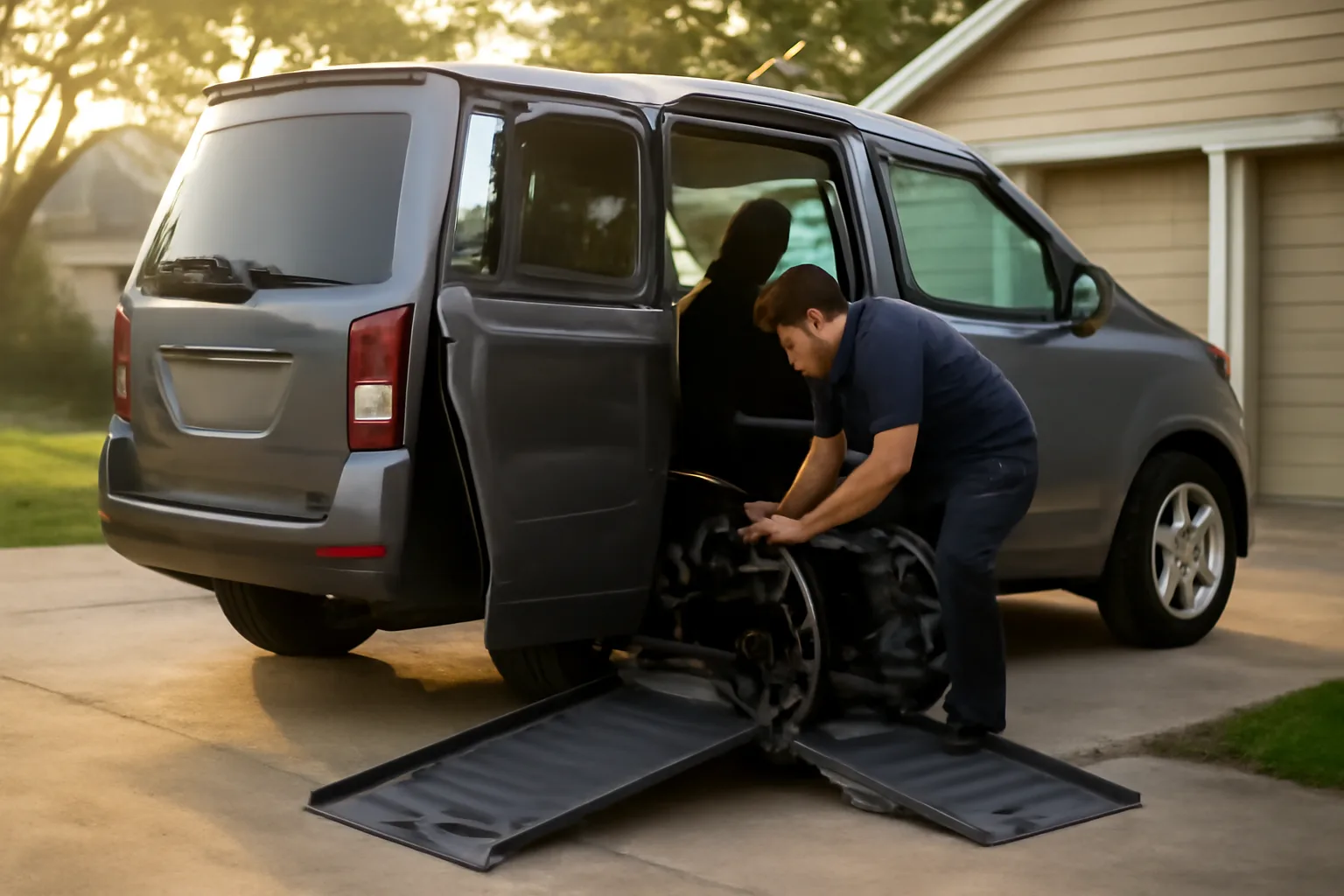
Your vehicle needs to meet Americans with Disabilities Act accessibility standards if you're transporting wheelchair users, plus whatever age, mileage, and inspection standard your state Medicaid transportation unit sets. States commonly cap vehicle age (for example, a maximum vehicle age of 5 to 10 years is typical in many state manuals, though the exact cutoff varies) and require annual safety inspections separate from standard state vehicle inspection. Wheelchair lifts or ramps need to meet weight capacity and securement standards, generally four-point tie-down systems plus a lap and shoulder belt for the wheelchair occupant. Some states require lift inspection certificates from the equipment manufacturer or an authorized dealer, renewed annually. Don't assume any converted van qualifies. A vehicle converted by an unlicensed shop, without proper documentation of the conversion meeting Federal Motor Vehicle Safety Standards, can get flagged during your state's vehicle inspection and delay your enrollment by weeks. NHTSA's FMVSS rules govern how altered vehicles, including wheelchair conversions, must be certified by the entity that performs the modification [3]. Buy from a shop that provides FMVSS compliance documentation with the conversion. For equipment specifics by vehicle type, see emergency medical transport for how equipment standards differ across vehicle categories.
How do you get state Medicaid NEMT provider enrollment?
You apply directly through your state Medicaid agency's provider enrollment portal or paper application, submitting your business entity documents, insurance certificates, vehicle registration and inspection records, and driver credential files. Most states also require you to enroll through a centralized system; many states use a centralized Medicaid Management Information System portal, and some require a separate NPI (National Provider Identifier) even for transportation-only providers. Federal rule requires states to have methods of administration ensuring NEMT is available to eligible beneficiaries. The regulation at 42 CFR 431.53 states that the Medicaid agency must "ensure necessary transportation for recipients to and from providers" [4]. That's why every state has a transportation-specific enrollment track separate from medical provider enrollment. The exact document checklist differs by state, so pull your state's NEMT provider manual directly from its Medicaid transportation unit page rather than relying on a generic list. Expect a background check on the business owner, more than drivers, in most states. Processing time realistically runs 30 to 90 days depending on the state and how complete your initial submission is; incomplete applications are the number one reason for delay, according to how most state provider manuals describe their own rejection patterns. Once you're enrolled with the state, you're eligible to pursue broker credentialing. Some states run NEMT entirely through a broker (meaning the state contracts out all trip management to Modivcare, MTM, or a similar company), while others pay providers directly for a portion of trips. Confirm which model your state uses, since it changes who actually holds your contract.
What is broker credentialing and how is it different from state enrollment?
Broker credentialing is a separate, additional application process required by managed transportation companies like Modivcare, MTM, Access2Care, or SafeRide, who many states hire to manage NEMT trip dispatch and provider networks. Passing state Medicaid enrollment does not automatically get you into a broker's network; it's a second, distinct credentialing file. Brokers typically ask for your state Medicaid provider number, insurance certificates naming the broker as additional insured, vehicle photos and inspection reports, driver rosters with background check results, and sometimes a facility or garage inspection. Some brokers cap the number of providers they onboard in a given region at any given time, so credentialing can be competitive even when your paperwork is clean. Each broker has its own portal, its own document formats, and its own renewal cycle (often annual). If your state uses more than one broker across different regions or plan types, you may need to credential separately with each one. Confirm current requirements and any regional caps directly with the broker and your state Medicaid transportation unit, since broker rules change more often than state statutes do. This is also where a lot of new owner-operators lose time re-doing paperwork because they didn't know a broker wanted documents in a specific format. A Launch Kit style document set built once, matched to your state and target broker, cuts down on that rework, but read the broker's own checklist as the final word.
How much does it cost to start a NEMT business with one van?
Startup costs vary too much by state and vehicle choice for a single honest number, but the major line items are consistent: the vehicle (purchase or wheelchair conversion), commercial insurance premium, business formation and licensing fees, driver background checks and training, and any state-required inspection or application fees. A used wheelchair-accessible van with a professional conversion commonly runs from the high five figures upward depending on age, mileage, and lift type; new conversions cost more. Insurance premiums for livery-rated commercial auto policies differ sharply by state, driving record, and vehicle type, so get real quotes before committing to a number. Rather than publish a placeholder total that would mislead you, treat this as a build-your-own-budget exercise: get a vehicle quote, an insurance quote, and your state's specific fee schedule, then add them up. One van is enough to start. Most states don't set a minimum fleet size for NEMT provider enrollment, and plenty of owner-operators run a single wheelchair van as their entire fleet while building broker relationships. The constraint isn't fleet size; it's whether your paperwork, insurance, and driver files are complete and compliant before you apply.
What driver qualifications are required for NEMT?
Drivers generally need a valid driver's license appropriate to the vehicle class (a standard passenger van usually doesn't require a CDL, but check your state and vehicle weight), a clean or acceptable motor vehicle record, and a passed background check that typically includes a check against state and federal sex offender and abuse registries. Most states and brokers also require CPR and first aid certification, defensive driving certification, and specific wheelchair securement and passenger assistance training. Drug and alcohol testing (pre-employment and random, sometimes following DOT standards even for non-CDL drivers) is commonly required by brokers even where the state doesn't mandate it outright. Keep a driver file for each person that includes license copy, MVR, background check results, drug test results, training certificates, and any state-required attestation forms. Brokers audit these files, sometimes with no notice, and a missing document in one driver's file can suspend that driver from taking trips until it's fixed.
How do brokers like Modivcare, MTM, Access2Care, and SafeRide fit in?
These companies are transportation brokers that states and managed care organizations hire to manage NEMT networks: they take ride requests from Medicaid members, dispatch them to credentialed provider companies (that's you), and handle billing and reimbursement on the state's behalf. A state may use one broker statewide or different brokers for different regions or plan types. Getting credentialed with a broker is how most new owner-operators actually get trip volume, since brokers control dispatch in states that use the broker model. Some states instead let providers bill Medicaid directly per trip without a broker middleman; this is sometimes called a "brokerage-free" or direct-provider model and it's less common but exists in a handful of states. Find out which model your state uses before you build your business plan around a specific broker, since applying to the wrong broker (or assuming there's a broker at all) wastes real time. Your state Medicaid transportation unit page will name the current broker or brokers for your region.
What ongoing compliance keeps a NEMT provider in good standing?
Enrollment isn't a one-time event. States and brokers require periodic re-credentialing, usually annual, covering insurance renewal, vehicle re-inspection, driver file updates, and sometimes a facility check. Missing a renewal deadline can suspend your ability to take trips even if your original application was approved without issue. You also need to track incident reporting requirements; most states require you to report accidents, complaints, or missed trips within a specific window (commonly 24 to 72 hours, but confirm your state's exact rule), and brokers track on-time performance and complaint rates as part of ongoing network standing. Build a calendar for every renewal date the day you get approved: insurance expiration, vehicle inspection due date, each driver's certification expiration, and broker recredentialing windows. This single habit prevents more suspensions than anything else in this business.
Frequently asked questions
How do I start a medical transportation business from scratch?
Form a legal business entity, get livery-rated commercial insurance quotes, buy a compliant wheelchair-accessible vehicle, complete driver background checks and training, then apply for state Medicaid NEMT provider enrollment before pursuing broker credentialing with companies like Modivcare or MTM. Order matters: insurance and vehicle compliance before you're locked into a purchase, state enrollment before broker applications.
What is NEMT?
NEMT means non-emergency medical transportation: rides for Medicaid enrollees who need help getting to medical appointments because of a disability or lack of transportation, but who don't need ambulance-level clinical care during the ride. Federal Medicaid rules require states to make this transportation available to eligible beneficiaries.
Does Medicaid cover ambulance rides?
Yes, Medicaid covers medically necessary ambulance transport, billed separately from NEMT under state-specific ambulance fee schedules. Non-emergency ambulance trips often require prior authorization; true emergencies generally don't. Reimbursement rates differ by state, so confirm the current fee schedule with your state Medicaid agency's ambulance or EMS billing unit.
Does Medicare cover medical transportation?
Medicare Part B covers ground ambulance transport when other transportation would endanger your health, but it generally doesn't cover routine non-emergency rides like a wheelchair van trip to a doctor's office. Some Medicare Advantage plans offer non-emergency transportation as a supplemental benefit; that's a separate contracting path from Medicaid NEMT.
How do you start a NEMT business specifically, versus general medical transportation?
NEMT is a subset focused on non-clinical, wheelchair or ambulatory transport for Medicaid members. You need state Medicaid NEMT provider enrollment and, in most states, broker credentialing, rather than EMS/ambulance licensure. Vehicle, insurance, and driver requirements are lighter than ambulance requirements but still state-specific and non-negotiable.
Can I start a NEMT business with just one wheelchair van?
Yes. Most states don't set a minimum fleet size for NEMT provider enrollment, so a single wheelchair-accessible van can be your entire starting fleet. What matters more is complete paperwork: insurance, vehicle inspection, and driver files all need to be compliant before your state enrollment or broker credentialing application will move forward.
What's the difference between NEMT and ambulance transport?
NEMT drivers assist passengers who can travel safely in a van or wheelchair-accessible vehicle without clinical monitoring. Ambulance transport requires EMT or paramedic staffing, state EMS licensure, and vehicles certified for medical equipment and emergency response. Mixing the two into one business plan usually means holding two separate license types.
How long does state Medicaid NEMT enrollment take?
Processing commonly runs 30 to 90 days depending on the state and how complete your initial application is, though timelines vary and some states move faster or slower. Incomplete applications, missing insurance certificates, or unfinished driver files are the most common causes of delay described in state provider manuals.
Do I need broker credentialing if I'm already enrolled with my state Medicaid agency?
In most states, yes. State Medicaid enrollment and broker credentialing (with companies like Modivcare, MTM, Access2Care, or SafeRide) are separate processes. Many states route NEMT trip dispatch entirely through a broker, so your state provider number gets you eligible to apply, but doesn't automatically place you in a broker's active network.
What insurance minimums do NEMT providers typically need?
Livery-rated commercial auto liability is standard, often with a combined single limit around $1 million per occurrence, though the exact minimum depends on your state and broker contract. General liability and workers' compensation are commonly required too. Get quotes on your specific vehicle before purchase since premiums vary by vehicle type and state.
What background check and training does an NEMT driver need?
Drivers typically need a valid appropriate license, a clean motor vehicle record, a background check against abuse and offender registries, CPR/first aid certification, defensive driving training, and wheelchair securement/passenger assistance training. Drug and alcohol testing is commonly required by brokers even when not strictly mandated by the state.
What documents does a state Medicaid NEMT application usually require?
Expect to submit business entity paperwork, an EIN, insurance certificates, vehicle registration and inspection records, driver credential files (license, background check, training certificates), and sometimes an NPI number. Exact requirements differ by state, so pull the current checklist from your state Medicaid transportation unit's provider manual directly.
Sources
- Medicaid.gov, Non-Emergency Medical Transportation: Federal Medicaid requirement that states ensure NEMT availability for eligible beneficiaries
- Medicare.gov, Ambulance Services coverage: Medicare Part B covers ground ambulance transportation only when other transportation would endanger health, to the nearest appropriate facility
- NHTSA, 49 CFR Part 567, Certification: Federal Motor Vehicle Safety Standards certification requirements apply to entities that alter or convert vehicles, including wheelchair accessibility conversions
- 42 CFR 431.53, Assurance of transportation: States must assure necessary transportation for Medicaid beneficiaries to and from providers
- Social Security Act Section 1902(a)(4), 42 U.S.C. 1396a(a)(4): States must provide methods of administration necessary for proper and efficient operation of the Medicaid plan, the statutory basis for the transportation assurance rule at 42 CFR 431.53