Last updated 2026-07-25
TL;DR
Non-emergency medical transportation (NEMT) covers wheelchair vans, ambulatory sedans, stretcher cars, and volunteer driver programs for people who need rides to medical appointments but don't need an ambulance. Medicaid must cover NEMT for eligible beneficiaries under federal rule; Medicare generally doesn't, except limited non-emergency ambulance cases. Starting a business means picking a vehicle type, getting state Medicaid enrollment, and credentialing with brokers like Modivcare or MTM.
What is non-emergency medical transportation (NEMT)?
Non-emergency medical transportation is any ride to a medical appointment, dialysis session, pharmacy pickup, or therapy visit for someone who doesn't need emergency care but can't drive themselves or use a regular taxi or bus safely. That's the whole definition. No siren, no IV bag, no paramedic. Just a driver, a vehicle suited to the passenger's needs, and a trip from point A (home, usually) to point B (a clinic, a dialysis center, a specialist's office) and back. The federal Medicaid regulation that requires states to offer this describes it plainly: states must "ensure necessary transportation for beneficiaries to and from providers" and must describe in their state plan "the methods that the agency will use to meet this requirement" [1]. That's 42 CFR 431.53, and it's the legal foundation the entire NEMT industry sits on. NEMT is different from emergency medical transport, which involves 911 dispatch, trained EMTs or paramedics, and a vehicle equipped for in-transit medical intervention. If you want to understand how the two categories relate and where the line gets drawn in billing and licensing, the emergency medical transport overview covers that split in more detail. For this article, we're staying entirely in the non-emergency lane, which is where almost all new owner-operators start.
What are the different types of NEMT services?
| Ambulatory / sedan | Can walk, get in/out of a car unassisted | Sedan or minivan | |
|---|---|---|---|
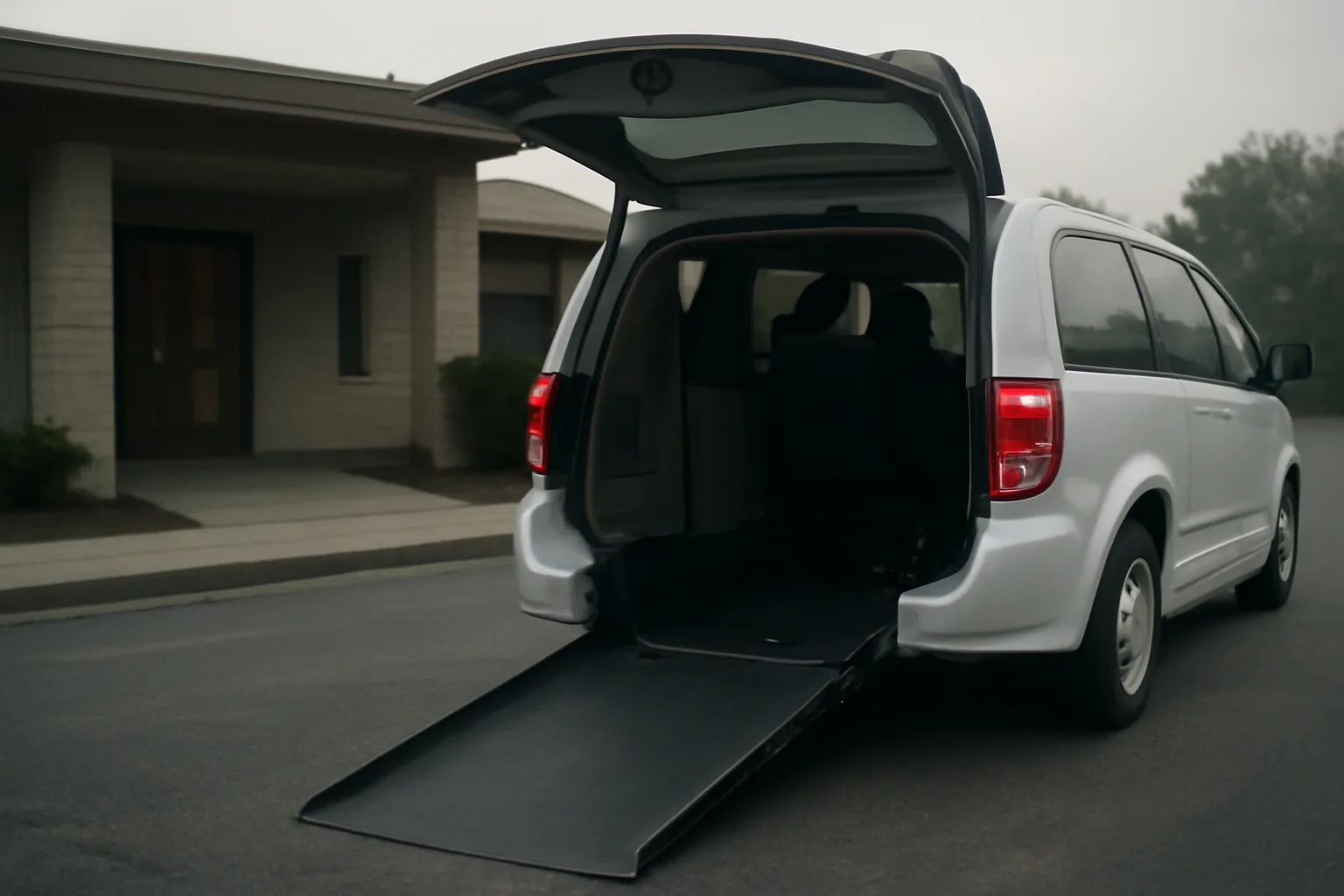
| Wheelchair van | Uses a wheelchair, can't transfer to a car seat | Van with ramp or lift, wheelchair tie-downs | |
| Stretcher car | Needs to stay lying down, but isn't an emergency case | Van or specialty vehicle with a gurney | |
| Bariatric transport | Needs a reinforced ramp, wider doors, higher weight rating | Modified van or light truck | |
| Group/shared ride | Multiple riders going to similar destinations | Van or small bus | |
| Volunteer driver / mileage reimbursement | Rural areas with no NEMT provider nearby | Personal vehicle, reimbursed per mile | |
| Public transit voucher or rideshare | Ambulatory riders in urban areas with transit access | Bus pass, Uber/Lyft voucher through a broker program | Most owner-operators entering the field start with a wheelchair van because it hits the sweet spot: real demand (dialysis and dropped-off wheelchair users are a huge share of recurring Medicaid trips), a manageable vehicle cost compared to a stretcher van, and no need for EMT-level driver certification. If you're trying to figure out which lane fits your budget and your local broker's needs, the general NEMT and NEMT transportation overviews break down demand patterns by state in more depth. |
NEMT isn't one thing. It's a menu of vehicle types and service levels, and states plus brokers sort riders into the right one based on a level-of-need assessment (sometimes done by the broker's call center, sometimes by the referring provider). Here's the rough hierarchy, cheapest and least equipped to most expensive and most equipped: | Service type | Who rides it | Typical vehicle |
What is NEMT and how is it different from ambulance transport?
NEMT moves people who are stable and don't need medical monitoring during the ride. Ambulance transport, emergency or non-emergency, moves people who need a trained clinician nearby in case something changes during transit, or who need equipment like oxygen, cardiac monitoring, or an IV running. Here's where it gets confusing: there IS a category called "non-emergency ambulance transport," and it's different from NEMT. A patient being moved between a hospital and a skilled nursing facility who's bed-bound and needs oxygen but isn't in a 911 emergency might ride in a Basic Life Support (BLS) ambulance, non-emergency mode. That's billed differently than NEMT and requires the vehicle and crew to meet ambulance licensing standards, not NEMT wheelchair-van standards. NEMT wheelchair vans, sedans, and stretcher cars generally don't require EMT-certified staff. State rules vary here (confirm with your state Medicaid agency and, if applicable, your state EMS office), but the baseline distinction holds nationally: NEMT is transportation, ambulance is a mobile medical service that happens to include transportation.
Does Medicaid cover ambulance rides, and does it cover NEMT?
Yes to both, with different rules. Medicaid covers medically necessary ambulance transportation as a mandatory benefit category under federal law, and separately, states must ensure NEMT access for beneficiaries who need it to get to covered services [1][2]. CMS is direct about the NEMT requirement: "States must ensure that Medicaid beneficiaries have transportation to and from medical providers," and this can be delivered through a state-run program, contracted transportation brokers, or direct provider agreements [2]. Every state runs this differently. Some states manage NEMT in-house through their Medicaid transportation unit; most now contract it out to regional or statewide brokers (Modivcare, MTM, Access2Care, SafeRide, and others depending on the state and region). Ambulance coverage under Medicaid works through each state's fee schedule and medical necessity rules, and it's billed as a distinct service category from NEMT, usually requiring the vehicle to be a licensed ambulance and the crew to hold EMT or paramedic certification. If your business plan involves ambulance-level service, that's a different licensing track entirely from wheelchair van or stretcher car NEMT, and it usually means state EMS agency licensing on top of, or instead of, Medicaid NEMT enrollment. Bottom line for a new operator: if you're buying a wheelchair van, you're going after the NEMT lane, not the ambulance lane. Confirm exact covered-service definitions with your state Medicaid transportation unit, because "medically necessary" and the assessment process for who qualifies varies by state.
Does Medicare cover medical transportation?
Mostly no, and this trips up a lot of new operators who assume Medicare works like Medicaid here. Traditional Medicare (Part B) covers ambulance services when other transportation "could endanger your health" and the trip is to a hospital, critical access hospital, or skilled nursing facility, or from one of those back home, under specific medical necessity conditions [3]. That's ambulance coverage, not NEMT. Medicare does NOT generally cover routine non-emergency transportation to a doctor's appointment, dialysis, or physical therapy the way Medicaid does. There's no standing NEMT benefit in traditional Medicare. Where it gets more available: some Medicare Advantage (Part C) plans offer NEMT as a supplemental benefit, and CMS has expanded the flexibility for MA plans to include transportation as a supplemental benefit for enrollees with certain chronic conditions [4]. But this is plan-by-plan and not guaranteed. If a caller tells you "Medicare is paying for my ride," it's almost always either a Medicare Advantage supplemental benefit or the caller is actually dual-eligible and Medicaid is the payer. For your business, this means: your Medicaid enrollment and broker credentialing is where the volume lives. Medicare Advantage NEMT contracts exist and some operators do pick them up, but they're a smaller, plan-specific add-on, not a foundation.
How do you start a medical transportation business?
At the highest level, starting a medical transportation business (specifically an NEMT business) breaks into five phases: business setup, vehicle acquisition, insurance and driver compliance, state Medicaid enrollment, and broker credentialing. Skipping ahead in this order is the single most common way new operators waste money, usually by buying a van before confirming what their state and target brokers actually require of the vehicle. 1. Form your business entity (LLC is standard) and get an EIN. 2. Get commercial auto insurance quoted for NEMT use specifically, not personal auto or generic commercial. NEMT carries its own risk profile and some general commercial policies exclude it. 3. Decide your vehicle type (wheelchair van is the common starting point) and confirm your state's vehicle inspection and ADA equipment standards before you buy, not after. 4. Get any required state-level permits: many states require a separate NEMT operating permit or transportation network permit distinct from Medicaid enrollment itself (confirm with your state Medicaid agency, since some fold this into enrollment and others run it through a separate transportation regulatory body). 5. Enroll as a Medicaid transportation provider with your state Medicaid agency, and separately apply for credentialing with the broker(s) operating in your region. That last step is really two different applications with two different reviewers, and a lot of new owner-operators don't realize that until they've already spent weeks on one and assumed it covered the other. The non emergency medical transportation guide walks through what each application actually asks for.
How do you start a NEMT business specifically (not ambulance, not rideshare)?
If your plan is squarely wheelchair van or ambulatory NEMT, here's the practical order that avoids the most expensive mistakes: First, call your state Medicaid transportation unit before buying anything. Ask what vehicle age limits, ADA lift/ramp specs, and inspection requirements apply to NEMT vehicles in your state. These vary meaningfully: some states cap vehicle age at 5 to 10 years for Medicaid NEMT enrollment, others don't specify an age but require annual DOT-style inspections plus a wheelchair securement check. There's no single national standard here, so treat any blog post (including this one) that gives you a specific age cutoff as unreliable unless it names your state's rule directly. Second, get your driver requirements straight before you hire anyone. Most states and brokers require a background check, a driving record check (often a specific number of years back, commonly 3 to 7 depending on the state or broker), CPR/First Aid certification, and passenger assistance or wheelchair securement training. The drivers-and-training content on this site (if you're comparing hubs) covers what training actually satisfies broker requirements versus what's just nice to have. Third, apply for Medicaid enrollment in your state. This is usually done through the state Medicaid agency's provider enrollment portal, and NEMT providers are typically classified under a specific taxonomy or provider type code. Processing time varies widely by state, commonly running anywhere from a few weeks to a few months, so build that lag into your cash flow planning. Fourth, apply separately to each broker operating in your service area. Brokers like Modivcare, MTM, Access2Care, and SafeRide each run their own credentialing process on top of your state Medicaid enrollment; being Medicaid-enrolled doesn't automatically get you into a broker's network. Each broker sets its own insurance minimums, vehicle inspection cadence, and background check standards, and these can be stricter than the state's baseline. Confirm current requirements directly with each broker, since they change these periodically without much public notice.
How do you start a medical transportation business with just one van?
One van is completely normal and, for a first-year operator, often the smarter move than starting with two or three. It keeps insurance costs, maintenance overhead, and driver payroll manageable while you learn how trip volume, broker payment timing, and dispatch actually work in your market. A few things matter more when you're a one-van operation. You're both the owner and, usually, the driver, so make sure your own driver file (background check, driving record, CPR card, any state-required passenger assistance training) is complete before you apply anywhere; a missing document on the owner's file stalls everything. You also want a backup plan for when the van is in the shop: some brokers require proof you can maintain scheduled trips, and a single vehicle with no contingency plan can be a credentialing sticking point. On insurance: a one-van business still needs commercial auto coverage rated for NEMT/livery use, and most brokers set minimum liability limits (often in the range of $1 million combined single limit, though this varies by broker and state, so confirm current minimums directly) regardless of fleet size. Don't assume a smaller fleet means a smaller insurance requirement; it usually doesn't. Growing from one van to a small fleet is a separate decision to make later, once you understand actual broker trip assignment patterns in your area (which nobody can promise you in advance, and any article that gives you a revenue or trip-volume projection is guessing).
What does Medicaid NEMT provider enrollment actually involve?
Enrollment is a state-by-state process, run through each state's Medicaid agency (sometimes with a dedicated transportation unit, sometimes folded into general provider enrollment). Expect to submit: business formation documents, an EIN, proof of commercial auto insurance meeting state minimums, vehicle registration and inspection records, a National Provider Identifier (NPI) if your state requires one for transportation providers, and driver documentation for anyone who'll be behind the wheel. Some states also require a surety bond or background check at the business level, more than the driver level. Processing timelines are not standardized nationally; states publish their own timelines and backlogs vary. The honest answer is: call your state Medicaid transportation unit directly and ask for their current NEMT provider enrollment timeline and checklist, because what's published online is sometimes outdated. Once enrolled, you're eligible to bill Medicaid for trips, but in most states you still need a broker relationship to actually receive trip assignments, since the broker (not the state directly) handles dispatch and rider matching in the majority of states now. The medical transportation hub page is a good next stop if you want the state-by-state breakdown of which agency runs enrollment where.
What does broker credentialing involve, and how is it different from Medicaid enrollment?
Broker credentialing is a private, contractual process. Modivcare, MTM, Access2Care, and SafeRide each operate under contracts with state Medicaid agencies (or sometimes managed care organizations) to manage the NEMT network in a given region, and each one runs its own vendor credentialing separate from, and usually after, your state Medicaid enrollment. Expect each broker to ask for: current commercial auto insurance certificates naming the broker as certificate holder or additional insured, vehicle inspection reports (sometimes on the broker's own form), driver files including background checks and MVR pulls, W-9 and banking information for payment, and sometimes a facility or dispatch capability questionnaire if you're applying with multiple vehicles. The credentialing standards are NOT identical across brokers, and they change. A vehicle inspection form that satisfied one broker last year might not satisfy a different broker this year, or the same broker after a contract renewal. This is the part of starting an NEMT business that eats the most time for first-year operators, mostly because nobody centralizes the paperwork checklist in one place; you're often assembling the same documents into three or four slightly different formats for three or four different brokers. That gap (state enrollment paperwork plus separate broker paperwork, done right the first time) is exactly what a $199 State + Broker NEMT Launch Kit is built to shortcut; if you'd rather have the document set organized once instead of hunting it down broker by broker, the Launch Kit Builder puts state and broker requirements into one packet.
How much does it cost to get NEMT set up, and where does the money actually go?
There's no single national number here, and anyone quoting you a flat all-in figure is oversimplifying. Costs break into buckets: the vehicle itself (a used wheelchair-accessible van typically runs a wide range depending on age, mileage, and lift/ramp condition), commercial auto insurance (NEMT-rated policies cost more than standard commercial auto because of the passenger risk profile), state enrollment fees (some states charge a provider enrollment fee, others don't), and driver training and background check costs (CPR/First Aid certification, MVR pulls, and passenger assistance training all have direct costs, usually well under $500 combined per driver, though exact pricing depends on your certifying organization). The honest budgeting approach: get your state's specific NEMT vehicle and insurance requirements in writing first, get insurance quotes based on those exact requirements, and then shop vehicles that meet the spec. Buying a van first and discovering afterward that it doesn't meet your state's ramp width or floor-to-ceiling clearance requirement is the single most common expensive mistake new operators report anecdotally in NEMT operator forums, though there's no formal published study quantifying how often this happens.
Frequently asked questions
What is NEMT?
NEMT stands for non-emergency medical transportation: rides for people who need help getting to medical appointments, dialysis, therapy, or the pharmacy, but who don't need an ambulance or emergency medical care during the trip. It's typically delivered by wheelchair vans, ambulatory sedans, or stretcher cars, and Medicaid is required by federal rule to ensure access to it for eligible beneficiaries [1].
Does Medicaid cover ambulance rides?
Yes. Medicaid covers medically necessary ambulance transportation as part of its mandatory benefits, separate from NEMT. Coverage rules, fee schedules, and medical necessity criteria are set at the state level, so confirm specifics with your state Medicaid agency. Ambulance transport requires a licensed ambulance and certified EMT/paramedic crew, unlike NEMT wheelchair vans or sedans.
Does Medicare cover medical transportation to doctor appointments?
Traditional Medicare generally does not cover routine non-emergency rides to appointments. Medicare Part B covers ambulance transport only under specific medical necessity conditions [3]. Some Medicare Advantage plans offer NEMT as a supplemental benefit, but this varies by plan and isn't a standard Medicare benefit.
How do I start a NEMT business?
Form your business entity, get NEMT-rated commercial auto insurance, confirm your state's vehicle and driver requirements before buying a van, enroll as a Medicaid transportation provider through your state agency, and separately apply for credentialing with the brokers (Modivcare, MTM, Access2Care, SafeRide, etc.) operating in your area.
How do I start a medical transportation business with one van?
One van is a normal and often smart starting point. Make sure your driver file (background check, MVR, CPR certification) is complete, your commercial auto insurance meets broker minimums regardless of fleet size, and you have a basic contingency plan for when the vehicle needs maintenance, since some brokers ask about service continuity during credentialing.
What's the difference between NEMT and ambulance transport?
NEMT moves stable patients who don't need medical monitoring en route; ambulance transport (emergency or non-emergency) moves patients who need a trained clinician or medical equipment during transit. NEMT vehicles like wheelchair vans generally don't require EMT-certified drivers; ambulances do, and they're licensed under separate state EMS rules.
Do I need an NPI number to enroll as an NEMT provider?
Many states require a National Provider Identifier for Medicaid transportation provider enrollment, but this isn't universal. Confirm directly with your state Medicaid transportation unit whether NEMT providers in your state need an NPI, since some classify NEMT under a non-NPI transportation vendor category instead.
Is broker credentialing the same as Medicaid enrollment?
No. Medicaid enrollment is done through your state Medicaid agency and makes you an eligible provider. Broker credentialing (with Modivcare, MTM, Access2Care, SafeRide, or others) is a separate, private process each broker runs to decide who gets trip assignments in their network. You typically need both, done in that order.
What kind of insurance does an NEMT business need?
NEMT businesses need commercial auto insurance rated for livery or NEMT use, not personal or standard commercial auto, since many policies exclude paid passenger transport. Brokers typically set minimum liability limits, often around $1 million combined single limit, but confirm exact current minimums with each broker and your state.
How long does Medicaid NEMT provider enrollment take?
There's no single national timeline; states set and publish their own processing times, and backlogs vary. It can take anywhere from a few weeks to a few months. Call your state Medicaid transportation unit directly for their current published timeline rather than relying on outdated third-party estimates.
What vehicle types count as NEMT?
Common NEMT vehicle types include ambulatory sedans or minivans, wheelchair-accessible vans with ramps or lifts, stretcher cars for non-emergency lying-down transport, and bariatric vans with reinforced ramps. Some states or brokers also cover volunteer driver mileage reimbursement or rideshare vouchers for ambulatory riders in areas with transit access.
Can I run an NEMT business without a broker contract?
In states where Medicaid manages NEMT directly rather than through a contracted broker, yes, you may bill the state directly once enrolled. But most states now use regional or statewide brokers to handle dispatch, so in those states you generally need broker credentialing to receive trip assignments even after Medicaid enrollment.
Do NEMT drivers need to be EMT certified?
Generally no. NEMT drivers typically need a background check, a clean-enough driving record, CPR/First Aid certification, and passenger assistance or wheelchair securement training, not EMT certification. EMT certification is required for ambulance crews, which is a separate licensing category from NEMT.
Sources
- eCFR, 42 CFR 431.53 (Assurance of transportation): States must ensure necessary transportation for Medicaid beneficiaries to and from providers, and describe the methods used in the state plan
- Medicaid.gov, Non-Emergency Medical Transportation: States must ensure Medicaid beneficiaries have transportation to and from medical providers, delivered via state-run programs, brokers, or direct provider agreements
- Medicare.gov, Ambulance Services coverage: Medicare Part B covers ambulance services only when other transportation could endanger the beneficiary's health and specific trip conditions are met
- CMS, Medicare Advantage Supplemental Benefits for Chronically Ill Enrollees fact sheet: CMS expanded flexibility allowing Medicare Advantage plans to offer transportation as a supplemental benefit for enrollees with chronic conditions
- U.S. Government Accountability Office: Medicaid non-emergency medical transportation programs vary by state and face oversight challenges in ensuring cost-effective service delivery.
- Electronic Code of Federal Regulations (eCFR): Federal regulations define transportation services, including NEMT, that states may cover under Medicaid.
- Medicaid.gov CMS Informational Bulletin: CMS guidance clarifies state flexibilities and requirements for administering Medicaid non-emergency medical transportation benefits.
- U.S. Small Business Administration: Steps for registering and licensing a new business, relevant to starting a medical transportation or NEMT company.
- Internal Revenue Service: An Employer Identification Number (EIN), obtained via IRS Form SS-4, is typically required when setting up a new NEMT business entity.
- Federal Motor Carrier Safety Administration: Certain NEMT operators transporting passengers across state lines or meeting vehicle weight thresholds may need to register for a USDOT number.
- Medicaid.gov: States issue provider enrollment and credentialing requirements for Medicaid-participating NEMT vendors.
- Centers for Medicare & Medicaid Services: Provider enrollment procedures for Medicare, relevant to understanding how Medicare handles medical transportation providers differently from Medicaid.