Last updated 2026-07-25
TL;DR
Non-emergency medical transportation (NEMT) in St. Louis means driving Medicaid or Medicare Advantage members to routine medical appointments in a car, van, or wheelchair-accessible vehicle. To operate, you generally need MO HealthNet provider enrollment (or a subcontract under one), broker credentialing with whoever manages Missouri Medicaid transportation in your region, a compliant vehicle, and driver background checks. Confirm current requirements with MO HealthNet and your broker before you buy a van.
What is non-emergency medical transportation (NEMT)?
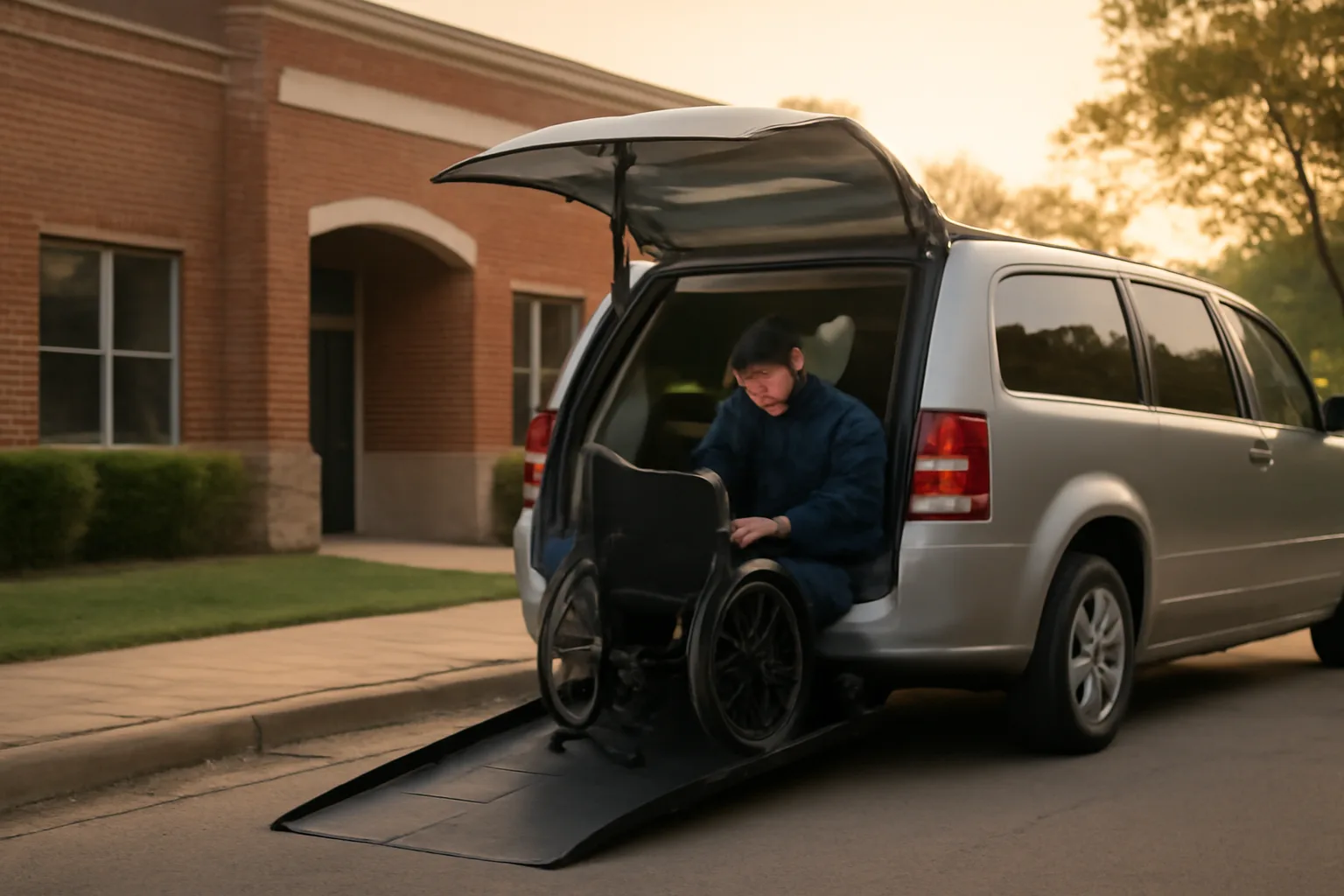
Non-emergency medical transportation is scheduled, non-911 transport for people who can't drive themselves to medical care but don't need an ambulance. Think dialysis three times a week, chemo infusions, physical therapy, or a routine OB visit. The federal rule that makes this a Medicaid benefit is at 42 CFR 431.53, which requires state Medicaid programs to "ensure necessary transportation for recipients to and from providers" [1]. States can run this benefit directly or hand it to a transportation broker, and Missouri, like most states, uses a broker model. NEMT is not an ambulance. There's no lights-and-sirens, no paramedic staffing requirement, no cardiac monitor. The vehicle types range from sedans and minivans for ambulatory riders up to wheelchair-accessible vans with ramps or lifts, and in some cases stretcher vans for people who must travel lying down but aren't in crisis. In St. Louis, the mix you'll see most is ambulatory sedan trips and wheelchair-van trips, with stretcher work being a smaller, higher-barrier niche. If you're comparing NEMT to other transport categories before you commit capital, the broader medical transportation overview and the non emergency medical transportation hub page walk through how NEMT differs from ambulance and stretcher-only services in more depth.
Does Medicaid cover ambulance rides, and how is that different from NEMT?
Yes, Medicaid covers ambulance transportation when a beneficiary's condition requires emergency or medically necessary ambulance-level care, but that's billed and regulated separately from NEMT. Ambulance trips go through emergency medical services agencies and are billed as a medical service with clinical necessity documentation. NEMT trips go through a broker or direct-enrolled transportation provider and don't require EMT-level clinical justification, just a verified medical appointment and a transportation need. Missouri's Medicaid program, MO HealthNet, publishes provider manuals covering both ambulance and NEMT (called "transportation services" in the manuals), and they sit in different chapters with different billing codes and different provider enrollment tracks [2]. If you're building a wheelchair-van business, you're on the NEMT track, not the ambulance track, and you should not need EMT or paramedic certification to drive for NEMT (though your broker or state may still require CPR/first aid and defensive driving training, confirm current rules with MO HealthNet and your broker). One practical confusion point: a trip that starts as "non-emergency" can occasionally end with a 911 call if a rider's condition changes en route. Your driver training and your broker contract should spell out exactly what to do in that situation, and it's worth asking about this specifically during onboarding rather than assuming.
Does Medicare cover medical transportation?
Medicare's NEMT coverage is much thinner than Medicaid's. Original Medicare (Part A/B) generally covers ambulance transportation only, and only when other transportation would endanger the person's health, a standard set out in the Medicare Benefit Policy Manual, Chapter 10, which requires that transport by other means "would be contraindicated" by the beneficiary's medical condition [3]. Original Medicare does not have a standing non-emergency van or wheelchair-van benefit the way Medicaid does. Where Medicare NEMT work shows up is through Medicare Advantage (Part C) plans. CMS's 2019 final rule expanding supplemental benefits allows Medicare Advantage plans to offer non-emergency transportation to medical appointments as part of their approved benefit package, so long as it's primarily health-related [4]. Coverage, trip limits, and the network of approved transportation vendors vary plan by plan, so if you want Medicare Advantage NEMT work in the St. Louis area, you'd be credentialing with each plan's transportation network or a broker that manages it for them, not with CMS directly. For most new owner-operators, Medicaid NEMT through MO HealthNet and its broker is still the bigger, steadier volume of work to chase first. Medicare Advantage contracts are worth adding once you have a vehicle, insurance, and a driver history file already built out.
How does Medicaid NEMT work in Missouri and the St. Louis area specifically?
Missouri Medicaid, MO HealthNet, is the state agency you'll deal with for provider enrollment. Missouri, like the large majority of state Medicaid programs, contracts with a transportation broker to manage trip dispatch, driver credentialing, and payment for NEMT rather than paying every van company directly. Most states use some form of managed transportation, whether a broker or a managed care arrangement, rather than pure fee-for-service enrollment of every vendor. Which broker manages Missouri Medicaid NEMT, what regions they cover, and what their current credentialing packet requires can all change year to year as the state re-bids the contract. Rather than naming a broker here and risking it being outdated by the time you read this, confirm the current broker assignment and enrollment process directly with MO HealthNet's transportation unit before you apply [2]. The same goes for whether St. Louis City and St. Louis County sit under the same broker region or a different one; regional boundaries do shift. What stays fairly constant across broker transitions: you'll need MO HealthNet provider enrollment (or a subcontractor agreement under an already-enrolled company), a signed broker agreement, vehicle inspection paperwork, driver background checks, and proof of insurance meeting the broker's minimums. Build your file around those five things and you'll adapt faster no matter who holds the contract when you apply.
How do you start a medical transportation business, step by step?
Here's the realistic order of operations, based on how state Medicaid and broker enrollment processes are generally structured (confirm exact sequencing and forms with MO HealthNet and your target broker): 1. Pick your business structure and register it with the Missouri Secretary of State (LLC is the common choice for owner-operators). 2. Get a federal EIN from the IRS, since providers and brokers require it for enrollment and 1099 payments. 3. Line up your vehicle. If you don't already own a compliant wheelchair van, decide whether you're buying new, used, or a conversion before you apply, since some brokers ask for vehicle documentation as part of the packet. 4. Get commercial auto insurance with the liability limits your target broker requires; this number varies by broker and can be higher than typical commercial policies, so ask before you shop coverage. 5. Complete driver requirements: valid license (CDL is not usually required for a standard wheelchair van under the weight threshold, but confirm), background check, drug screen, and any defensive-driving or passenger-assistance training the broker mandates. 6. Apply for MO HealthNet provider enrollment as a transportation provider, or arrange a written subcontract with a company that's already enrolled. 7. Apply for broker credentialing separately; provider enrollment with the state and credentialing with the broker are usually two distinct applications, not one. 8. Once approved, complete any onboarding orientation, get your dispatch app or portal access set up, and confirm how billing and reimbursement timing works before you take your first trip. Each of those steps has its own paperwork trail, and missing one document is the single most common reason applications stall. Building your file once, cleanly, beats submitting fast and getting bounced back for corrections.
How to start a NEMT business with just one van
One van is a completely normal, legitimate way to start. Plenty of owner-operators run a single wheelchair van for a year or more before adding a second vehicle or their first employee-driver. The credentialing process itself doesn't require a fleet; it requires that the one vehicle you have meets spec and that you personally (or your one driver) clear background and training requirements. What one-van operators underestimate is the paperwork overhead relative to trip volume. You still need the same insurance minimums, the same background check, the same vehicle inspection, and the same broker credentialing packet as a company running twenty vans. The fixed cost of getting compliant doesn't shrink because your fleet is small, so budget real time (often measured in weeks) for enrollment and credentialing before your first paid trip, not days. A few practical notes for solo operators: keep a maintenance log from day one, since brokers and state auditors both ask for vehicle inspection and maintenance records during periodic reviews. Keep your own trip log separate from whatever dispatch software the broker uses, in case of billing disputes. And don't let your only vehicle go a single day without your insurance, registration, and inspection sticker all current, because a lapse on any one of those can suspend your ability to accept trips until it's fixed.
What vehicle and equipment requirements should you expect for a wheelchair van in St. Louis?
Exact specs come from your broker's vehicle standards and Missouri's applicable vehicle safety rules, and these details do get updated, so treat what follows as the general shape, not a final checklist. Confirm the current version with your broker and MO HealthNet before buying. Wheelchair-accessible vans generally need: a working ramp or lift rated for the weight of an occupied wheelchair, wheelchair securement straps (typically a four-point tie-down system) and a working seatbelt for the passenger once secured, functioning interior and exterior lighting, and a vehicle age or mileage limit that some brokers enforce (commonly vehicles under a set age, though the exact cutoff varies by broker and region). Regular preventive maintenance and documented inspections are standard requirements, since brokers often audit vehicle files periodically. Before you buy, ask your target broker directly: what wheelchair securement system do they require, is there a maximum vehicle age or mileage at enrollment, do they require a specific inspection form completed by a certified mechanic, and do they have a list of already-approved vehicle makes/models or conversion vendors. Buying first and asking questions later is how new operators end up owning a van that needs expensive retrofitting before it can pass inspection.
What insurance and driver requirements does NEMT credentialing usually involve?
Insurance minimums for NEMT are almost always higher than the state's baseline auto liability minimum, because you're carrying a vulnerable, often disabled passenger population. Brokers commonly require commercial auto liability with per-occurrence limits well above a personal policy, plus in many cases contingent liability or non-owned/hired auto coverage if you subcontract to other drivers. The exact dollar figures are set by each broker and can change, so get a written insurance requirement sheet from your broker before binding a policy. Driver requirements typically include a state motor vehicle record check, a criminal background check (often including a federal-level check, more than state), a drug and alcohol screening, and proof of a valid driver's license appropriate to the vehicle class. Many brokers also require completion of passenger assistance techniques training, sometimes a specific certified curriculum, and CPR/first aid certification. Missouri's commercial driver's license classes and weight-based thresholds are set out in the state's implementation of federal CDL rules under 49 CFR 383.91, which defines Class A, B, and C license requirements by vehicle gross weight rating, so confirm whether your specific van's weight rating triggers a CDL requirement before you assume a standard license is enough [5]. One detail owner-operators miss: some brokers require ongoing, more than onboarding, drug screening and background rechecks on a set schedule. Ask about the recheck cadence during credentialing, not after you're already scheduled for a random screen you didn't know was coming.
How does broker credentialing work with Modivcare, MTM, Access2Care, or SafeRide?
Missouri's specific NEMT broker contract has changed hands before and can change again, so rather than asserting who currently holds it in the St. Louis region, the responsible thing is to tell you how to check: contact MO HealthNet's transportation unit directly and ask which broker or brokers currently manage NEMT in the St. Louis City and St. Louis County region, since regional splits do happen [2]. National brokers like Modivcare, MTM, Access2Care, and SafeRide operate Medicaid NEMT contracts across many states, and any of them (or a different company entirely) could hold the Missouri contract at any given time. What's consistent across most broker credentialing processes, regardless of which company runs it: an online or paper application, submission of your business registration and insurance certificates, vehicle documentation, driver background check results, and often a phone or in-person orientation before you're activated in their dispatch system. Processing time varies widely, from a few weeks to a couple of months depending on the broker's current application volume, so apply well before you need income from NEMT trips, not the week after you buy the van. Brokers also periodically re-credential existing providers, typically annually, requiring updated insurance certificates, vehicle inspections, and sometimes refreshed background checks. Missing a re-credentialing deadline can suspend your active status even if nothing else about your business has changed, so calendar it the day you're approved.
How much does it cost and how long does it take to get set up?
There's no single official number for total startup cost because it depends heavily on whether you already own a compliant van, what your state's provider enrollment fee is (if any), and what insurance quote you get. Rather than inventing a range, here's what's genuinely variable and what to ask about directly: MO HealthNet provider enrollment may or may not carry an application fee depending on provider type, and this can change, so confirm current fee schedules directly with MO HealthNet before applying [2]. Vehicle cost for a compliant wheelchair van ranges enormously depending on new versus used and conversion quality, and insurance premiums vary by carrier, driving history, and broker-required limits. Timeline is more predictable in shape even if not in exact days: expect state provider enrollment review, separate broker application review, and vehicle/driver document verification to each take real processing time, often stacking up to a couple of months total from a cold start to your first dispatched trip. Applicants who submit incomplete packets (missing an insurance certificate, an unsigned form, an expired background check) routinely lose weeks to resubmission cycles, so a clean first submission is the highest-leverage thing you control. If you want a structured way to organize the state enrollment and broker credentialing paperwork in one pass instead of assembling it piecemeal, that's exactly the gap RideCredential's $199 one-time State + Broker NEMT Launch Kit is built to close: a checklist-driven packet builder for the documents state Medicaid agencies and brokers actually ask for, not a guarantee of approval, since only the state and broker decide that.
How do you find and keep steady referral sources once you're credentialed?
Credentialing gets you into the broker's dispatch pool, but it doesn't guarantee trip volume; that depends on the broker's own contracted trip demand in your zip codes and how many other providers are already active there. Dialysis centers, oncology clinics, and community mental health centers are consistently heavy generators of recurring NEMT trips because their patients often need transport multiple times a week for months or years. Some providers supplement broker-assigned trips by building direct relationships with case managers at dialysis centers or senior living facilities, who can request a specific provider by name through the broker's system in many markets (confirm whether your broker allows rider or facility preference requests). This doesn't replace broker credentialing, since the broker still has to authorize and pay for the trip, but it can steady your schedule once you're in the system. Don't assume more vehicles automatically means more trips. Broker dispatch is demand-driven, not supply-driven, and adding a second van before you understand your actual trip flow in month one is one of the more common overextension mistakes new owner-operators make.
What mistakes do new St. Louis NEMT owner-operators make most often?
Buying the van before confirming broker vehicle specs. It's the single most expensive mistake in this business, because retrofitting a wheelchair securement system or replacing an out-of-spec ramp after purchase costs far more than getting the spec sheet first. Assuming provider enrollment and broker credentialing are the same application. They're not, in Missouri or in most states; you generally need both, and doing one without starting the other just delays your launch. Underestimating insurance minimums. New operators often shop personal-grade commercial auto policies, then find out the broker requires higher liability limits, forcing a re-quote that costs time and sometimes money if the cheaper policy was already bound. Letting credentialing paperwork (insurance certs, background checks, vehicle inspections) lapse after initial approval. Re-credentialing is usually annual, and a missed deadline can pause your active status with no warning beyond an email you might not see in time. For a wider look at how these pieces fit across different states and broker relationships, the nemt and nemt transportation hub pages, and the non emergency medical transportation services overview, are good next stops before you finalize a vehicle purchase.
Frequently asked questions
What is non-emergency medical transportation?
Non-emergency medical transportation (NEMT) is scheduled transport, by sedan, van, or wheelchair-accessible vehicle, for people who need help getting to medical appointments but don't require ambulance-level care. It's a required Medicaid benefit under 42 CFR 431.53, and most states, including Missouri, run it through a contracted transportation broker rather than paying every provider directly.
How do you start a medical transportation business?
Register your business entity, get an EIN, secure a compliant vehicle, obtain commercial auto insurance meeting broker minimums, complete driver background checks and training, apply for MO HealthNet provider enrollment, and separately apply for broker credentialing. Confirm exact sequencing and current forms with MO HealthNet and your target broker, since requirements do change.
How do you start a NEMT business specifically?
Starting a NEMT business follows the same core path as general medical transportation: state Medicaid provider enrollment plus separate broker credentialing, a compliant vehicle, adequate insurance, and cleared drivers. NEMT-specific extras often include passenger assistance training and wheelchair securement equipment if you're running a wheelchair van rather than an ambulatory sedan.
How do you start a medical transportation business with just one van?
One van is a normal starting point. You still need the full credentialing packet (insurance, background checks, vehicle inspection, broker application) regardless of fleet size, so budget real time, often several weeks to a couple of months, before your first paid trip, and keep careful maintenance and trip logs from day one.
Does Medicaid cover ambulance rides?
Yes, Medicaid covers ambulance transportation when a member's condition requires emergency or medically necessary ambulance-level care, billed separately from NEMT under different provider rules. NEMT covers non-emergency trips to routine appointments and doesn't require clinical necessity documentation the way ambulance transport does. Confirm Missouri-specific billing rules in MO HealthNet's provider manuals.
Does Medicare cover medical transportation?
Original Medicare mainly covers ambulance transportation, and only when other transport would endanger the person's health, per the Medicare Benefit Policy Manual. Non-emergency van or wheelchair-van transportation is generally not covered by Original Medicare but may be offered as a supplemental benefit by some Medicare Advantage (Part C) plans, with coverage varying by plan.
What broker manages Medicaid NEMT in St. Louis right now?
Missouri's Medicaid NEMT broker contract can change over time and may vary by region within the state. Rather than naming a broker that could be outdated, contact MO HealthNet's transportation unit directly to confirm which broker currently manages NEMT for St. Louis City and St. Louis County.
Do I need a CDL to drive a wheelchair van for NEMT?
Usually not, since most standard wheelchair vans fall under the weight threshold that triggers Missouri's commercial driver's license requirements, but this depends on the specific vehicle's gross weight rating. Confirm against the federal CDL weight thresholds in 49 CFR 383.91 and check with your broker before assuming a standard license is sufficient.
How much insurance do I need for a wheelchair van NEMT business?
Brokers set their own minimum liability limits, and they're typically higher than a standard personal or basic commercial auto policy, especially given the vulnerable passenger population. There's no single statewide number; get the written insurance requirement sheet from your specific broker before you shop or bind a policy.
How long does NEMT provider enrollment and broker credentialing take in Missouri?
There's no fixed official timeline, but expect state provider enrollment review, separate broker credentialing review, and vehicle and driver document verification to each take real processing time, often stacking up to a couple of months total from a cold start. Incomplete applications are the most common cause of delay.
Can I subcontract under an already-enrolled NEMT provider instead of enrolling myself?
In many states, yes, you can drive under a company that's already MO HealthNet-enrolled and broker-credentialed, through a written subcontractor agreement, instead of completing full enrollment yourself. Terms, insurance responsibility, and payment splits vary by agreement, so confirm the specifics with the enrolled provider and check whether the broker requires you to be separately listed as an approved driver.
What vehicle age or mileage limits apply to wheelchair vans for NEMT in Missouri?
Vehicle age and mileage limits are set by individual brokers, not by a single statewide Missouri rule, and they vary and change over time. Ask your target broker for their current written vehicle standards, including maximum age, mileage, required securement systems, and inspection form requirements, before purchasing a van.
What's the difference between NEMT and ambulance transportation?
NEMT is non-emergency, scheduled transport for people who don't need clinical care en route, using vans, sedans, or wheelchair-accessible vehicles and non-clinical drivers. Ambulance transportation is for emergency or medically necessary situations requiring EMT or paramedic-level care and monitoring, billed and regulated under separate Medicaid rules from NEMT.
Sources
- eCFR, 42 CFR 431.53: Federal Medicaid regulation requiring states to ensure necessary transportation for beneficiaries to and from providers
- MO HealthNet Division, Provider Enrollment: Missouri Medicaid (MO HealthNet) provider enrollment process and transportation provider manuals
- CMS, Medicare Benefit Policy Manual, Chapter 10 (Ambulance Services): Original Medicare covers ambulance transportation mainly when other transport would endanger the beneficiary's health
- CMS, CY 2019 Medicare Advantage and Part D Final Rule (83 FR 16440): CMS rules allow Medicare Advantage plans to offer non-emergency transportation as a supplemental benefit
- eCFR, 49 CFR 383.91: Federal CDL license classes and vehicle gross weight rating thresholds governing which vehicles require a commercial license