Last updated 2026-07-25
TL;DR
San Diego non-emergency medical transportation moves people to Medi-Cal appointments by wheelchair van, gurney vehicle, or ambulatory sedan, not by ambulance. Providers enroll with California's Medi-Cal program, get vetted by the county's managed care plans and their transportation brokers, and meet CHP vehicle inspection and driver requirements before ever running a paid trip.
What is non-emergency medical transportation (NEMT)?
Non-emergency medical transportation, usually shortened to NEMT, is transportation to and from medical appointments for people who don't need ambulance-level care but can't drive themselves or use regular transit. Think dialysis three times a week, chemo infusions, physical therapy, or a psychiatrist visit. The passenger might use a wheelchair, might need someone to help them from the door to the vehicle, or might just lack a car and a ride. Federal Medicaid rules require states to make sure eligible people can get to and from providers. The regulation says the state plan must "specify that the Medicaid agency will ensure necessary transportation for beneficiaries to and from providers" and may do this directly, through contracts, or through broker arrangements [1]. California runs this obligation through Medi-Cal, and in San Diego County that means coordination between Medi-Cal managed care plans, county social services, and private transportation companies. NEMT is different from medical transportation in general and very different from emergency transport. An ambulance responds to 911 calls and treats acute, unstable conditions. NEMT vehicles, by contrast, are wheelchair vans, gurney vans, or ambulatory sedans driven by people trained in passenger assistance and first aid, not paramedics. If you're building a company around this distinction, our overview on medical transportation breaks down the different vehicle classes and how each one gets used.
Does Medicaid cover ambulance rides?
Yes, but it's a separate benefit from NEMT and has its own billing rules. Medicaid covers ambulance transportation when a beneficiary's condition requires it, meaning other transportation would endanger the person's health, per federal guidance on medically necessary transportation [1]. This is emergency or urgent ground and air ambulance service, billed by a licensed ambulance provider, not a wheelchair-van company. California's Medi-Cal program separates ambulance transportation from NEMT and non-medical transportation (NMT) as distinct benefit categories, each with its own enrollment path and documentation rules, under DHCS's provider enrollment framework [2]. If you're planning to launch a wheelchair-van business, you are not applying for ambulance provider status. Those are different licenses, different California Highway Patrol vehicle standards, and different Medi-Cal enrollment categories entirely. A lot of new operators get this confused early on because "ambulance" gets used loosely to mean "any medical ride." It matters for licensing: ambulance services in California need certification from the local EMS agency and CHP vehicle permits, on top of any Medi-Cal enrollment. NEMT wheelchair vans need CHP inspection too, but under a different vehicle code section (more on that below), and no paramedic staffing.
Does Medicare cover medical transportation?
Medicare's coverage of non-emergency transportation is much thinner than Medicaid's. Original Medicare (Part B) covers ambulance transportation when other transport would endanger your health, and it covers non-emergency ambulance transport only with a doctor's written order stating it's medically necessary [3]. Original Medicare generally does not pay for routine wheelchair-van rides to a doctor's office. Where Medicare beneficiaries do get NEMT-style benefits is through Medicare Advantage (Part C) plans, many of which now offer transportation as a supplemental benefit, often a limited number of one-way trips per year to plan-network providers [3]. Coverage varies a lot by plan and by county, so a San Diego Medicare Advantage enrollee needs to check their specific plan's evidence of coverage document, not assume anything based on what Medi-Cal covers. For an NEMT operator, this means your dual-eligible clients (people on both Medicare and Medi-Cal) are usually billed through Medi-Cal or the Medi-Cal managed care plan's transportation benefit, not Medicare directly, unless you've separately contracted with a Medicare Advantage plan's transportation network.
What is NEMT provider enrollment in San Diego, step by step?
San Diego NEMT operators generally need two separate approvals: state Medicaid provider enrollment and broker/managed care plan credentialing. Skipping either one means you can't legally bill for Medi-Cal trips in the county. Step one is Medi-Cal enrollment. California's Department of Health Care Services (DHCS) requires transportation providers, including NEMT and NMT companies, to enroll through the Medi-Cal Provider Enrollment Division and pass screening, which can include fingerprinting and site visits depending on your provider risk category [2]. NEMT and NMT enrollment in California runs through the PAVE portal (Provider Application and Validation for Enrollment). Step two is broker or plan credentialing. San Diego's Medi-Cal managed care plans (Community Health Group and Health Net are the two commercial plan options in the county under California's Medi-Cal managed care model) may contract directly or route non-emergency transportation through a broker. Nationally, brokers like Modivcare, MTM, Access2Care, and SafeRide manage networks in many states and counties; which one (if any) operates in San Diego for a given plan changes over time, so confirm the current broker assignment with your county's Medi-Cal managed care plan and DHCS transportation unit before building your business plan around a specific broker's requirements. Step three is vehicle and driver compliance, covered in the next two sections. All three steps typically run in parallel, not sequence, since credentialing applications usually ask for your CHP vehicle inspection certificate and driver records up front.
How to start a medical transportation business (the general path)
Starting any medical transportation business, whether it's one van or a small fleet, follows a similar sequence regardless of state. First, decide what you're actually operating: wheelchair van, gurney van, ambulatory-only sedan/SUV, or some mix. This decision drives your vehicle purchase, your insurance quote, and which broker contracts you're even eligible for. Second, form your business entity and get your basics in order: EIN, business bank account, commercial auto insurance quote, and a general liability policy. Most brokers and state Medicaid programs require proof of commercial auto insurance with minimum liability limits before they'll credential you, and those minimums vary by state and sometimes by vehicle type. Third, get the vehicle itself compliant. This means DOT/state vehicle safety inspection, wheelchair lift and tie-down certification if applicable, and any state-specific ambulance/NEMT vehicle permitting. Fourth, enroll with your state Medicaid agency as a transportation provider. This is separate from, and usually a prerequisite to, credentialing with any broker network. Fifth, apply for broker or managed care plan credentialing, which typically wants your Medicaid provider number, insurance certificates, vehicle inspection documents, driver background checks, and sometimes a facility or vehicle site visit. A lot of the friction in this process is paperwork duplication: the same insurance certificate, the same vehicle inspection report, and the same driver background check often need to go to your state Medicaid enrollment file and separately to each broker or plan you want to work with. Our NEMT overview walks through how that duplication typically plays out across different states.
How to start a NEMT business with one van
One van is a completely legitimate way to start, and a lot of owner-operators do exactly this. The core requirements don't shrink much just because your fleet is one vehicle: you still need Medi-Cal enrollment, still need broker credentialing if you want managed care trips, and still need the vehicle itself to pass inspection. What does change with one van is your operating model. You're the driver, the dispatcher, and the biller, at least at first. Realistically budget for: the van itself (a used wheelchair-accessible conversion van typically runs a wide range depending on age, mileage, and lift condition, so get a mechanical inspection before buying), commercial auto insurance (NEMT-specific policies cost more than personal auto because of the passenger-for-hire exposure), a wheelchair lift/tie-down system that meets state inspection standards, and the time to get through enrollment and credentialing paperwork, which commonly takes weeks to a few months depending on how quickly your state processes applications and how complete your submission is. One practical tip: many one-van operators start by taking private-pay and non-Medicaid contract trips (adult day health centers, dialysis clinics paying directly, senior living facilities) while their Medi-Cal enrollment and broker credentialing work through the pipeline, so the van isn't sitting idle during the paperwork stretch. That's a business decision, not a legal requirement, so confirm with any facility contract you sign whether it requires you to already hold Medi-Cal enrollment.
How do you start a medical transportation business that serves San Diego Medi-Cal riders specifically?
If your target market is Medi-Cal beneficiaries in San Diego County, the general startup steps above get layered with California and county specifics. California requires NEMT and NMT providers to enroll through DHCS's Medi-Cal Provider Enrollment Division, which sets documentation requirements including vehicle permits and driver qualifications as part of the provider screening process [2]. San Diego County residents on Medi-Cal are generally assigned to a Medi-Cal managed care plan, and non-emergency transportation for a managed care member typically routes through that plan's transportation benefit rather than being billed fee-for-service to DHCS directly. Confirm with your county's Medi-Cal managed care plan and DHCS transportation unit which model currently applies, since managed care contracting structures get renegotiated periodically. California Vehicle Code also has specific requirements for vehicles used to transport people with disabilities for hire, including inspection and identification requirements enforced by CHP [4]. Your wheelchair van will need to pass this inspection before you can put it into paid service, and you'll typically need to keep the inspection certificate current and available for any credentialing application. Drivers need to meet state requirements too. California requires certain background check and training standards for NEMT drivers depending on the population served (for example, drivers transporting people with developmental disabilities under Regional Center contracts have separate training mandates). Confirm current driver requirements with DHCS and with any broker or plan you're applying to, since these get updated.
How much does it cost to get a wheelchair van NEMT operation running in San Diego?
There's no single official number for this because vehicle cost, insurance cost, and enrollment fees all vary, but here's the honest range based on what's publicly documented and what typically applies. Vehicle cost: a used wheelchair-accessible conversion van (Dodge, Ford, or Chrysler-based) commonly sells in a wide range depending on age, mileage, and lift condition; get an independent mechanical inspection and a lift/ramp function test before buying, since lift repairs are one of the most common surprise costs new owner-operators hit. Commercial auto insurance: NEMT-specific commercial auto policies cost more than personal auto insurance because you're carrying passengers for hire, often people with mobility limitations. Get quotes from at least two or three insurers that specifically write NEMT or livery policies, since general commercial auto carriers sometimes decline this class of business. Medi-Cal enrollment and application costs: California's Medi-Cal Provider Enrollment Division doesn't charge NEMT providers the same application fee structure as some other provider types; confirm current fee requirements directly with DHCS's Provider Enrollment Division since fee schedules do get updated [2]. Broker credentialing: most broker credentialing applications themselves don't carry a direct fee, but background checks, vehicle inspections, and drug testing that brokers require of your drivers usually cost money out of pocket, typically in the range of tens to a couple hundred dollars per driver depending on the vendor. If you want a structured starting point instead of piecing this together from a dozen agency websites, RideCredential's $199 one-time Launch Kit Builder walks through state Medicaid enrollment and broker credentialing requirements together so you're not filling out the same documentation five separate times.
What vehicles and equipment do San Diego NEMT providers need?
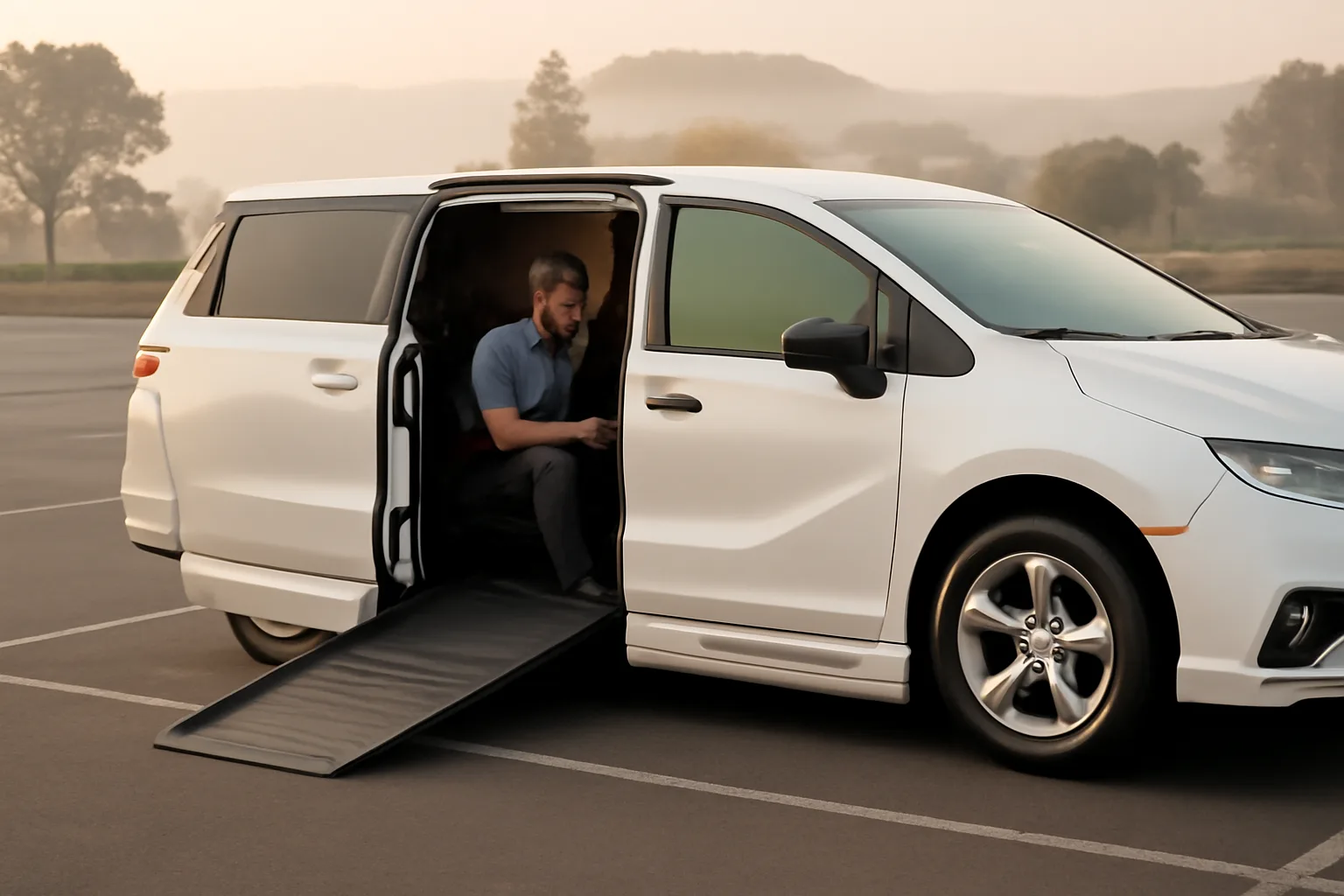
The vehicle you buy has to match the population you plan to serve, and mismatching this is one of the most expensive mistakes new operators make. Wheelchair vans need a functioning lift or ramp, floor-mounted tie-down anchors (typically four-point systems), and a securement system for the passenger's own wheelchair, more than the seat belt. CHP inspection standards apply to vehicles used to transport people with disabilities for hire in California [4]. Gurney vans, if you go that route, need a stretcher securement system and typically carry more insurance and driver training requirements because the passenger population skews more medically fragile. Ambulatory sedans and SUVs need less specialized equipment but still typically need to meet whatever vehicle age and condition standards your state Medicaid program or broker sets, plus general commercial vehicle safety standards. Beyond the vehicle itself: first aid kits, fire extinguishers, and often a two-way communication device (this used to mean a two-way radio; now it's often just a reliable smartphone with the dispatch app the broker requires) are common baseline equipment expectations across brokers. For deeper detail on vehicle classes, conversions, and lift standards, see our guide on non emergency medical transportation and non emergency medical transportation services.
How does broker credentialing actually work once you're enrolled?
Getting your Medi-Cal provider number is necessary but it's not the finish line. Managed care plans in San Diego typically route trips through either an internal transportation team or a contracted broker, and that broker (or plan) runs its own credentialing process on top of your state enrollment. A typical broker credentialing application asks for: your state Medicaid provider number, current commercial auto insurance certificate naming the broker as certificate holder or additional insured, vehicle registration and inspection documents for every vehicle you want in the network, driver license and background check results for every driver, and sometimes proof of a minimum fleet size or geographic coverage area. Brokers periodically re-verify all of this: insurance renewal dates, vehicle re-inspection dates, driver license expirations. Missing a renewal deadline is one of the most common reasons an otherwise good operator gets suspended from a broker network temporarily. Build a calendar reminder system for every expiration date the day you get approved, not the week before something lapses. Which specific broker or brokers operate in San Diego County for which Medi-Cal managed care plan changes over time as contracts get rebid. Rather than naming a broker here and risking it being outdated by the time you read this, confirm the current broker assignment directly with your Medi-Cal managed care plan's member services or provider relations line, and separately with DHCS's transportation unit.
What ongoing compliance does a San Diego NEMT provider have to keep up with?
Enrollment and credentialing aren't one-time events. Both DHCS and any broker you work with expect ongoing compliance, and lapses can mean suspension or termination from the network. Common ongoing requirements include: annual or biennial vehicle re-inspection (confirm the current interval with CHP and your broker), insurance policy renewal with continuous coverage (a even a short gap can trigger a compliance flag), driver background check renewal on whatever cycle the broker or state sets, and revalidation of your Medi-Cal enrollment, which DHCS requires periodically per federal Medicaid provider revalidation rules [1] [2]. Drivers also need to keep training current if your county or broker requires periodic refreshers in passenger assistance, wheelchair securement, or first aid/CPR. Some of this training gets required by the Regional Center system for developmental disability transportation contracts specifically, separate from general Medi-Cal NEMT rules, so confirm what applies to your specific client mix. Most operators who get dropped from a network don't get dropped for fraud. They get dropped for a missed insurance renewal date or an expired vehicle inspection nobody caught in time. A simple compliance calendar, checked monthly, prevents almost all of this.
Where does NEMT fit next to ambulance and emergency transport?
It's worth being precise about where NEMT sits relative to the rest of the medical transportation world, because mixing these up costs new operators real money in wrong licensing paths. Emergency medical transport (ambulance response to 911 calls, or urgent inter-facility transfers requiring medical monitoring) needs EMS agency certification, paramedic or EMT staffing, and separate CHP ambulance permitting. See our emergency medical transport guide for how that licensing path differs. Non-emergency medical transportation, the subject of this article, covers scheduled or same-day rides to appointments for people who don't need medical monitoring en route but do need wheelchair accessibility, a gurney, or simply door-to-door assistance because they can't drive or use transit. Non-medical transportation (NMT), a term California uses specifically for its Medi-Cal program, covers even lower-acuity rides, sometimes just mileage reimbursement or a bus pass for someone who can walk and doesn't need any special vehicle equipment, as a category distinct from both ambulance and NEMT under DHCS's provider enrollment structure [2] [2]. Knowing which category your target client falls into determines your vehicle purchase, your insurance policy type, and which Medi-Cal enrollment category you apply under. Our nemt transportation page covers this distinction in more depth if you're still deciding which service type to build your business around.
Frequently asked questions
What is non-emergency medical transportation?
Non-emergency medical transportation (NEMT) is transportation to and from medical appointments for people who don't need ambulance-level care but can't drive or use regular transit, often because they use a wheelchair or need physical assistance. It's a required Medicaid benefit under federal rules, and states run it through direct contracts, brokers, or managed care plans [1].
Does Medicaid cover ambulance rides?
Yes. Medicaid covers ambulance transportation when a beneficiary's medical condition requires it and other transport would endanger their health [1]. This is billed separately from NEMT wheelchair-van services, by a licensed ambulance provider, not a non-emergency transportation company.
Does Medicare cover medical transportation?
Original Medicare Part B covers ambulance transportation when medically necessary, including some non-emergency ambulance trips with a doctor's written order [3]. It generally does not cover routine wheelchair-van rides. Some Medicare Advantage plans offer limited non-emergency transportation as a supplemental benefit; check your specific plan's coverage documents.
How do I start a NEMT business in San Diego with just one van?
You need the same core pieces as a larger fleet: a compliant wheelchair-accessible vehicle, commercial auto insurance for passenger-for-hire transport, Medi-Cal provider enrollment through DHCS, and broker/managed care plan credentialing. Many one-van operators cover private-pay or facility contract trips while their Medi-Cal enrollment paperwork is processing.
How to start a medical transportation business from scratch?
Pick your vehicle type, form your business entity, get commercial auto and liability insurance, get your vehicle inspected and permitted, enroll with your state Medicaid agency as a transportation provider, then apply for credentialing with any broker or managed care plan whose network you want to join. Confirm every step's current requirements with your state Medicaid agency.
How do you start a medical transportation business that accepts Medi-Cal?
You enroll as a transportation provider through California DHCS's Medi-Cal Provider Enrollment Division, then separately get credentialed by the Medi-Cal managed care plan (or its contracted broker) covering the San Diego County members you want to transport. Both steps are required; enrollment alone doesn't get you trips.
What's the difference between NEMT and ambulance transport?
Ambulances handle emergency 911 responses and medically unstable patients, staffed by EMTs or paramedics and licensed through the local EMS agency. NEMT covers scheduled, non-emergency rides for people who need wheelchair access or assistance but not medical monitoring en route, using wheelchair vans, gurney vans, or ambulatory vehicles.
Do I need CHP inspection for a wheelchair van in California?
Yes. California Vehicle Code requirements apply to vehicles transporting people with disabilities for hire, and CHP enforces inspection and identification standards for these vehicles [5]. Keep your inspection certificate current since brokers and DHCS credentialing typically require proof of it.
Which broker handles Medi-Cal NEMT trips in San Diego County?
This changes as managed care contracts get rebid, so there's no single fixed answer. Confirm the current broker or internal transportation team assignment directly with your Medi-Cal managed care plan's provider relations department and with DHCS's transportation unit before building your business plan around a specific broker.
How long does Medi-Cal NEMT provider enrollment take?
There's no single published turnaround time; it depends on your application completeness and DHCS processing volume. Build in weeks to a few months as a realistic planning window, and start broker credentialing paperwork in parallel where the broker allows pre-application, since the two processes have different documentation needs.
Does Medicaid cover non-emergency transportation for dialysis?
Generally yes, since dialysis is a recurring, medically necessary appointment that many patients can't get to independently. Confirm the specific authorization and mileage/frequency rules with your state Medicaid agency or Medi-Cal managed care plan, since prior authorization requirements for recurring trips vary.
What insurance does an NEMT wheelchair van business need?
At minimum, commercial auto insurance covering passenger-for-hire transport with liability limits that meet your state and broker's minimums, plus general liability coverage. NEMT-specific policies cost more than personal auto insurance; get quotes from insurers that specifically underwrite NEMT or livery fleets rather than assuming a standard commercial policy covers this exposure.
Can I run NEMT trips before my Medi-Cal enrollment is approved?
Not for Medi-Cal-billed trips; you need active enrollment and, typically, broker credentialing before billing for those rides. You can generally take private-pay, facility-contract, or non-Medicaid trips during the enrollment process, but confirm any facility contract's own requirements before assuming this is allowed.
Sources
- 42 CFR 431.53, eCFR (assurance of transportation): Federal Medicaid regulation requiring states to ensure necessary transportation for beneficiaries to and from providers
- California DHCS, Medi-Cal provider enrollment requirements for transportation providers: Medi-Cal separates ambulance, NEMT, and non-medical transportation (NMT) as distinct benefit categories with different enrollment and documentation requirements
- Medicare.gov, Ambulance Services coverage page: Original Medicare Part B covers ambulance transportation when medically necessary and requires a doctor's written order for non-emergency ambulance transport
- California Vehicle Code Section 2500-2517 (vehicles for transportation of persons with disabilities): California Vehicle Code sets inspection and identification requirements enforced by CHP for vehicles transporting people with disabilities for hire
- 42 CFR 455.414, eCFR (revalidation of enrollment): Federal Medicaid rule requiring state Medicaid agencies to revalidate enrollment of all providers, including transportation providers, at least every five years