Last updated 2026-07-25
TL;DR
Non-emergency medical transportation (NEMT) moves Medi-Cal members to covered appointments when they don't need an ambulance. In Orange County, that means enrolling as a Medi-Cal provider through DHCS, then credentialing with the managed care plans and brokers (like CalOptima Health and its contracted transportation vendors) that actually dispatch trips. Ambulance rides are billed separately under emergency or non-emergency medical transport rules.
What is non-emergency medical transportation (NEMT)?
Non-emergency medical transportation is scheduled transport for people who need help getting to a medical appointment but don't need an ambulance or emergency care. Think dialysis three times a week, chemo infusions, physical therapy, or a specialist visit across town. The rider isn't in crisis. They just can't drive themselves, don't have a car, or need a wheelchair-accessible vehicle and an attendant to get from the door to the seat. Federal Medicaid rules require every state to provide "necessary transportation for beneficiaries to and from providers" and to describe how it does this in its state plan [1]. That's the legal foundation for the whole industry. States meet the requirement differently. Some run it through county welfare departments, some hire a single statewide broker, some let managed care plans handle it plan by plan. California does a mix of all three, and Orange County sits inside that mix through CalOptima Health, the county's Medi-Cal managed care plan. NEMT is not an ambulance. It's not a rideshare app either, even though from the outside a wheelchair van pulling up to a dialysis center can look similar to an Uber. The differences that matter for a new operator are licensing, driver training, vehicle equipment (wheelchair lifts, tie-downs, oxygen tank securement), and who's allowed to bill for the ride. For a broader look at how NEMT fits into the larger transportation system, see medical transportation and nemt.
Does Medicaid cover ambulance rides?
Yes, but under a different set of rules than NEMT. Medicaid covers ambulance transportation when it's medically necessary, meaning the person's condition requires the vehicle itself and its lifesaving equipment, more than a ride [1]. That's emergency ambulance service, and in some cases non-emergency ambulance transport for people who are bed-confined or need medical monitoring during the trip. Ordinary NEMT, the wheelchair van or ambulatory sedan business most new owner-operators are trying to build, is a completely separate benefit category with its own enrollment path, its own vehicle standards, and its own reimbursement rates. If you're buying a wheelchair van and not an ambulance, you generally don't need ambulance licensure or paramedic staffing. Confirm this distinction with your state Medicaid agency and, if you're in Orange County, with CalOptima Health, because the line between "non-emergency ambulance" and NEMT can get fuzzy for bed-bound patients and gets policed closely by whoever audits your claims.
Does Medicare cover medical transportation?
Medicare's NEMT coverage is much narrower than Medicaid's. Original Medicare Part B covers ambulance services when other transportation would endanger the person's health, and it covers non-emergency ambulance transport only with specific medical necessity documentation, including a physician certification statement in some cases [2]. Medicare does not have a general non-emergency van or wheelchair-transport benefit the way Medicaid does. Some Medicare Advantage plans add limited transportation benefits, like a set number of one-way trips per year to plan-approved providers, as a supplemental benefit. That's plan-specific and changes yearly, so if you want to serve Medicare Advantage riders, you'd credential directly with each plan or its transportation vendor, not with a single Medicare-wide broker. For most new owner-operators, Medi-Cal (Medicaid) work is the more reliable base of business because the benefit is defined and the demand (dialysis, dementia day programs, wound care) is recurring.
How does NEMT work in Orange County specifically?
Orange County's Medi-Cal managed care plan is CalOptima Health, and it's the entity that ultimately controls most NEMT dollars flowing to riders in the county [3]. CalOptima doesn't necessarily dispatch every trip itself; managed care plans commonly contract with a transportation broker or manage a network of approved transportation providers directly. The exact model (in-house coordination vs. a national broker like Modivcare or MTM) changes from year to year as contracts are rebid, so confirm the current setup with CalOptima Health before you assume anything. What stays constant is the two-layer structure everywhere in California: first you enroll as a Medi-Cal transportation provider with the California Department of Health Care Services (DHCS), then you separately credential with whichever plan or broker actually schedules the trips in your service area [4]. Passing DHCS enrollment does not automatically get you into CalOptima's network, and being in CalOptima's network doesn't substitute for DHCS enrollment. You need both. Orange County also has ADA paratransit (OC ACCESS, run through OCTA) for eligible riders, which is a separate, non-Medicaid system with its own application and eligibility process [5]. It's worth knowing about because prospective riders and their case managers sometimes ask about it, but it's not something a new NEMT owner-operator typically contracts into directly the way they would with Medi-Cal transportation.
How do you start a medical transportation business?
Strip away the paperwork and starting an NEMT business comes down to five things: a legal business entity, a compliant vehicle, a driver who meets the state and broker's requirements, the right insurance, and enrollment with Medicaid plus credentialing with whatever brokers operate in your area. Here's the rough order most new operators follow: 1. Form your business entity (LLC is common) and get an EIN. 2. Get commercial auto insurance sized for passenger transport, not personal auto coverage. See non emergency medical transportation services for how coverage requirements typically get structured. 3. Buy or convert a wheelchair-accessible vehicle that meets ADA and state inspection standards. 4. Get any required state-level permits (some states require a separate NEMT operator permit or CPUC-style transportation charter permit before you ever touch Medicaid paperwork). 5. Enroll as a Medi-Cal provider through DHCS, then apply for credentialing with the managed care plan or broker (CalOptima Health, and whichever transportation vendor it uses) in the counties you plan to serve. None of this happens overnight. Enrollment and credentialing packets commonly ask for driver background checks, vehicle inspection reports, proof of insurance, and sometimes a facility or garage address. Budget weeks, not days, and don't buy a fleet before you've read one broker's actual credentialing checklist.
How to start a NEMT business with just one van
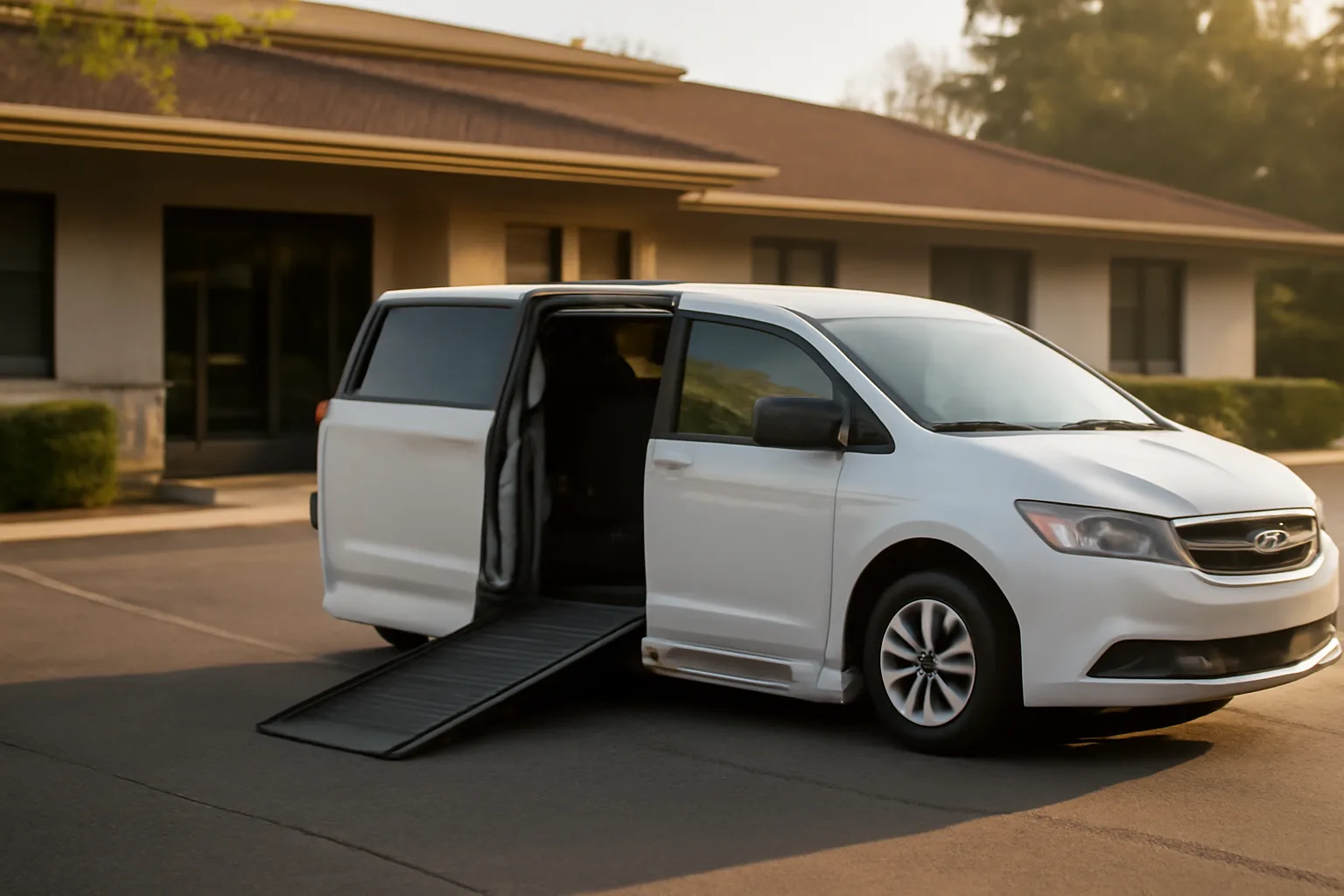
One van is not a disadvantage. Most successful owner-operators start exactly there, and many brokers credential single-vehicle operators the same way they credential a ten-van company, just with a smaller trip allocation to start. With one wheelchair van, focus your energy on three things: getting the vehicle inspection-ready (working lift, four-point tie-downs, functioning lighting and signage as required by your state), getting one driver fully credentialed (background check, driving record, defensive driving or passenger-assistance training if the broker requires it), and getting your Medi-Cal/DHCS enrollment paperwork exactly right the first time, because rejected applications add weeks. A common mistake is applying to every broker at once before you're actually operational. Pick your state Medicaid enrollment first, because that's the prerequisite everyone downstream checks for. Then credential with one or two brokers that actually run trips in Orange County rather than casting a wide net across brokers with no local volume. You can always add broker relationships later once you have your first vehicle proven out. For the mechanics of vehicle requirements, non emergency medical transportation and nemt-transportation walk through typical lift, tie-down, and inspection standards state by state.
What does Medi-Cal enrollment actually require?
California's Medi-Cal provider enrollment for transportation providers runs through DHCS's Provider Enrollment Division, using the standard Medi-Cal enrollment application process (Form DHCS 6216, plus supporting documents, depending on your provider type) [4]. Requirements commonly include: - A National Provider Identifier (NPI), even for transportation providers, since Medi-Cal bills through standard claims systems.
- Business licensing and fictitious business name filing if applicable.
- Vehicle registration and inspection documentation.
- Driver background checks and, for wheelchair van and litter van providers specifically, documentation of driver training on passenger securement.
- Disclosure of ownership and any excluded individuals, per federal program integrity rules that apply to all state Medicaid programs . DHCS periodically updates its provider manuals and enrollment forms, so treat any specific fee amount, processing timeframe, or form number you find online as something to confirm directly on the DHCS Medi-Cal provider enrollment page before you submit anything [4]. Federal regulation also requires state Medicaid agencies to screen and enroll all providers, including transportation providers, at appropriate risk levels, which is part of why the paperwork feels heavier than a typical small-business license .
What's the difference between Medi-Cal enrollment and broker credentialing?
Medi-Cal enrollment is your legal right to bill the state Medicaid program at all. Broker or plan credentialing is a private business contract that determines whether you actually get trip assignments in a specific county. Think of it like this: enrollment is your driver's license, credentialing is getting hired by a specific taxi company. You need the license before anyone will consider hiring you, but having the license doesn't obligate anyone to give you work. CalOptima Health, or whatever transportation vendor it contracts with for Orange County, will run its own credentialing process on top of your DHCS enrollment: insurance minimums, vehicle inspection, driver files, sometimes a capacity or geographic-need review before they'll even open a new provider slot. This two-step structure isn't unique to California. It's how most states run Medicaid NEMT, whether the broker is a national company or a regional nonprofit transportation coordinator. Don't skip either step, and don't assume credentialing with one broker in one county gets you automatically approved somewhere else, even within the same state.
What vehicle and driver requirements should I expect?
Exact standards vary by state and by broker, but a few things show up almost everywhere. Wheelchair vans need a working lift or ramp, functioning four-point (or equivalent) wheelchair securement, working interior lighting, and current state vehicle inspection or registration specific to passenger transport. Drivers commonly need a clean driving record, a background check that screens for disqualifying criminal history, and sometimes a specific certification in passenger assistance or defensive driving. Some states require a CPR/first aid card for drivers even though NEMT explicitly excludes emergency medical care; check what your state and broker specify rather than assuming. Insurance minimums for commercial passenger vehicles are typically well above personal auto minimums, and a broker will usually want to see the certificate of insurance naming them, or naming the state program, before finalizing your file. Because every one of these numbers (insurance minimums, inspection intervals, required certifications) is set by the state or the individual broker and changes periodically, treat any specific dollar figure you see online as a starting point to confirm with your broker and state Medicaid agency, not a locked-in fact.
How much does it cost to get credentialed, and how long does it take?
There's no single national number, because DHCS enrollment fees, broker application costs, insurance premiums, and vehicle conversion costs are all set independently and change over time. What's consistent is that this is a multi-week process with several parallel tracks: state enrollment, broker credentialing, insurance binding, and vehicle inspection, all of which typically need to complete before your first paid trip. A realistic new-operator timeline runs something like: 1 to 2 weeks to form your entity and get insured, 2 to 6 weeks for state Medicaid enrollment processing (DHCS doesn't publish a guaranteed turnaround, and it varies with application completeness), then another 2 to 6 weeks for broker credentialing once your enrollment is active. Overlapping steps where possible (getting insurance quotes while your entity paperwork is filing, for instance) is the main lever you actually control. A lot of first-time applicants lose weeks to avoidable mistakes: submitting a Medi-Cal application with a mismatched business name, forgetting a required attachment, or applying to a broker before their DHCS enrollment is fully active. This is the exact gap the $199 State + Broker NEMT Launch Kit is built to close: a structured way to assemble your state Medicaid enrollment packet and broker credentialing documents together so you're not discovering missing pieces one rejection letter at a time.
What trips actually qualify for NEMT reimbursement?
Medicaid transportation covers trips to and from Medicaid-covered services, generally when the member has no other means of transportation and the trip is to a covered medical appointment: dialysis, physical therapy, mental health services, medical equipment fittings, and similar recurring or one-time medical visits [1]. It typically does not cover trips to the pharmacy alone, non-medical errands, or trips for services Medicaid doesn't cover in the first place. Managed care plans like CalOptima Health administer this benefit for their Medi-Cal members, generally requiring the trip to be scheduled in advance (same-day or urgent trips are handled differently and less predictably) and sometimes requiring prior authorization for certain trip types or higher levels of service, like wheelchair van versus ambulatory sedan. As an operator, you don't decide who qualifies. The rider, their care coordinator, or the plan's authorization process determines that. Your job is showing up for the trips you're assigned, documenting pickup and drop-off correctly, and billing (or having your broker bill) accurately. Getting sloppy with trip documentation is one of the most common reasons new operators get flagged in audits, so build a simple, consistent log from day one.
What mistakes do new Orange County NEMT operators make?
The most common mistake is buying the vehicle first and figuring out enrollment later. A wheelchair van sitting idle while enrollment paperwork gets sorted out is money on a lot payment with nothing coming in. Sequence it the other way: get your enrollment and credentialing timeline mapped out, then time your vehicle purchase so it's ready roughly when your paperwork clears. Second mistake: assuming one broker relationship covers the whole county or region. CalOptima Health's contracted vendor arrangement can change, and different Medi-Cal managed care plans (if you're also trying to work across county lines) may use entirely different brokers. Confirm, don't assume, who's actually running trips in each ZIP code you want to serve. Third: underestimating insurance. Personal auto policies almost never cover paid passenger transport, and finding out after a claim gets denied is the worst possible time to learn that. Get quotes from carriers that specifically write commercial NEMT or livery policies early in the process, since this line item can also affect your broker credentialing timeline if the coverage doesn't meet their minimums. Fourth: not reading the actual DHCS and CalOptima documentation and instead relying on secondhand forum advice. Rules change. What worked for someone's cousin's van business two years ago may not reflect the current fee schedule, insurance minimum, or credentialing form. For more on avoiding this trap across state lines, emergency medical transport and non-emergency-medical-transportation-services cover how requirements diverge state to state.
Frequently asked questions
What is non-emergency medical transportation?
Non-emergency medical transportation (NEMT) is scheduled transport to and from medical appointments for people who don't need ambulance-level care but can't get there on their own. It typically covers dialysis, therapy, and specialist visits for Medicaid members, and federal Medicaid rules require states to provide this transportation as part of ensuring access to covered care [1].
Does Medicaid cover ambulance rides?
Yes. Medicaid covers ambulance transportation, including non-emergency ambulance transport, when it's medically necessary because the person's condition requires the vehicle and its equipment, more than a ride [2]. This is billed and regulated separately from standard NEMT wheelchair van or sedan service, with its own licensure requirements.
Does Medicare cover medical transportation?
Medicare's coverage is narrow. Part B covers ambulance transport, including some non-emergency ambulance trips with physician certification, when other transport would endanger the patient's health [3]. Medicare generally does not cover routine wheelchair van or NEMT rides the way Medicaid does, though some Medicare Advantage plans add limited transportation as a supplemental benefit.
How do I start a medical transportation business?
Form a business entity, get commercial passenger auto insurance, acquire a compliant wheelchair-accessible vehicle, get any state-required transportation permits, then enroll as a Medicaid provider with your state agency and credential separately with the managed care plans or brokers operating in your service area. Each step has its own paperwork and timeline, so plan for several weeks minimum.
How do you start a NEMT business with one van?
Start by getting that single van inspection-ready and one driver fully credentialed, then focus your paperwork on state Medicaid enrollment first, followed by credentialing with one or two brokers that actually run trips where you operate. Don't apply to every broker nationwide before your state enrollment is active; it wastes time and often gets rejected on sequencing alone.
How much does NEMT credentialing cost in Orange County?
There's no fixed number, since state enrollment costs, broker application requirements, insurance premiums, and vehicle costs are all set independently and change over time. Confirm current fees directly with DHCS and with CalOptima Health or its contracted transportation vendor rather than relying on outdated figures found online.
Do I need a special permit to run NEMT in California?
You need Medi-Cal provider enrollment through DHCS if you plan to bill Medi-Cal, plus broker or managed care plan credentialing to actually receive trip assignments. Depending on your business structure and vehicle type, you may also need state transportation permits; confirm current requirements with the California DHCS Medi-Cal provider enrollment office [5].
Who runs Medi-Cal transportation in Orange County?
CalOptima Health is Orange County's Medi-Cal managed care plan and controls most Medicaid transportation benefits for members in the county [4]. Whether it dispatches trips directly or through a contracted transportation broker changes over time, so confirm the current arrangement directly with CalOptima Health before assuming a specific broker structure.
What's the difference between NEMT and ADA paratransit?
NEMT is a Medicaid benefit for medical appointments, funded and administered through Medi-Cal and managed care plans. ADA paratransit, like OC ACCESS through OCTA in Orange County, is a separate transit-agency program for eligible riders with disabilities and isn't tied to Medicaid billing or medical necessity for a specific appointment [6].
Can I bill Medicaid without going through a broker?
In practice, most Medicaid NEMT trips in states that use managed care, including California's Medi-Cal, flow through the managed care plan's transportation coordination, which often means a broker or contracted vendor. Being Medicaid-enrolled is necessary but usually not sufficient; you generally need broker or plan credentialing to receive trip assignments and get paid.
What insurance do I need for an NEMT wheelchair van?
You need commercial auto insurance sized for paid passenger transport, not a personal auto policy. Minimum liability limits are set by your state and often by the broker you credential with, and they're typically well above standard personal auto minimums. Get quotes from carriers that specifically write NEMT or livery coverage early in your planning.
How long does Medi-Cal provider enrollment take?
DHCS doesn't publish a guaranteed turnaround, and processing time depends heavily on how complete your application is. A realistic planning range is several weeks to a couple of months, with incomplete applications adding significant delay. Confirm current processing expectations directly with the DHCS Medi-Cal Provider Enrollment Division.
Does NEMT cover trips to the pharmacy or grocery store?
Generally no. Medicaid NEMT covers transportation to and from Medicaid-covered medical services, not general errands. Some managed care plans offer separate supplemental benefits (like limited grocery or pharmacy trips) outside the core NEMT benefit, but that's plan-specific, not a standard Medicaid transportation entitlement.
Sources
- Medicaid.gov, Non-Emergency Medical Transportation: Federal Medicaid rules require states to ensure necessary transportation for beneficiaries to and from Medicaid providers
- Medicare.gov / CMS, Ambulance Services coverage: Medicare Part B covers ambulance services, including some non-emergency ambulance transport with physician certification, when other transportation would endanger health
- California DHCS, Medi-Cal Provider Enrollment Division: California Medi-Cal transportation providers must enroll through the DHCS Provider Enrollment Division before billing Medi-Cal
- 42 CFR Part 455, Subpart B, Provider Screening and Enrollment: Federal regulations require state Medicaid agencies to screen and enroll providers, including disclosure of ownership and exclusion checks
- 42 CFR § 455.450, Screening levels for Medicaid providers: Medicaid provider screening is applied at categorical risk levels, contributing to enrollment processing requirements for transportation providers