Last updated 2026-07-24
TL;DR
New Jersey NEMT operators must enroll as an NJ Medicaid provider (or subcontract through one), then credential with the state's contracted broker, currently Modivcare, for trip dispatch. You'll need a livery or NEMT vehicle license from NJ MVC, commercial auto/livery insurance, driver background checks, and vehicle inspections. Confirm exact steps with NJ Medicaid and Modivcare before buying a van.
What is non-emergency medical transportation?
Non-emergency medical transportation (NEMT) is scheduled transport for people who need to get to medical appointments, dialysis, adult day care, or pharmacy visits but don't need an ambulance or emergency response. Think wheelchair vans, stretcher vans, and ambulatory sedans, not lights-and-sirens rigs. Federal Medicaid rules require states to make sure eligible people can actually get to covered care. The regulation at 42 CFR 431.53 says states must "ensure necessary transportation for recipients to and from providers" [1]. NEMT is the mechanism states use to meet that requirement for people without other transportation options. Most states, New Jersey included, don't run NEMT trips directly. They contract with a transportation broker who builds a network of local NEMT companies, then routes ride requests to whichever qualified driver is available and appropriate for the rider's needs. Ambulatory car, wheelchair van, or stretcher van, the broker matches the vehicle to the need. If you're brand new to the space, it helps to read a general primer on nemt and how the broker model works nationally before you dig into New Jersey specifics, since a lot of the mechanics (credentialing, trip assignment, billing through the broker rather than the state) are similar across states even though the names and portals differ.
How does NEMT work in New Jersey specifically?
New Jersey Medicaid, branded as NJ FamilyCare, contracts with a managed transportation broker to handle non-emergency trips for Medicaid members statewide. As of this writing that broker is Modivcare, but broker contracts get rebid periodically, so confirm the current vendor directly with NJ Medicaid's transportation unit before you build a business plan around any single broker name. Here's the practical flow: a Medicaid member calls the broker's reservation line, the broker verifies eligibility and trip necessity, then assigns the trip to a credentialed NEMT provider in its network based on vehicle type needed and geographic coverage. You get paid by the broker, not directly by NJ Medicaid, under whatever per-trip or per-mile rate structure is in your contract with them. Some NJ counties also layer in county-level paratransit or Area Agency on Aging transportation for non-Medicaid seniors. That runs on a totally separate track from Medicaid NEMT. Don't confuse the two when you're pricing out your service area. New Jersey Medicaid publishes its transportation program details through the NJ Department of Human Services, Division of Medical Assistance and Health Services (DMAHS), which oversees NJ FamilyCare [2]. That's your first stop for the official rulebook, not a broker's marketing page.
How do I start a non-emergency medical transportation business?
Starting an NEMT business has a handful of gates you must clear, roughly in this order: business formation, vehicle acquisition, insurance, state licensing, Medicaid enrollment, and broker credentialing. Skipping ahead, buying vans before you know the state's vehicle inspection standard, for example, is the most common expensive mistake. Step 1: Form your business entity (LLC is standard) and get an EIN from the IRS. You'll need this before you can open a business bank account or apply for provider numbers. Step 2: Decide your vehicle type. A single wheelchair-accessible van covers ambulatory and wheelchair riders but not stretcher cases. Stretcher work requires additional equipment and, in many states, EMT-level staffing, which raises your insurance and labor costs a lot. Step 3: Get a National Provider Identifier (NPI) from the National Plan and Provider Enumeration System. This is free and takes about 10 minutes online through CMS's NPPES portal. Step 4: Apply for New Jersey business and transportation licensing. NEMT vehicles operating for hire in NJ generally need registration and inspection through the NJ Motor Vehicle Commission, and depending on your municipality you may also need a local livery or limousine license. Requirements vary by town, so confirm with your local clerk's office and NJ MVC directly. Step 5: Enroll as an NJ Medicaid provider through DMAHS, and separately apply for network credentialing with the state's NEMT broker. These are two different applications with two different reviewers, and you generally need both, not one or the other. Confirm the current combined process with NJ Medicaid's transportation unit and the broker, since intake procedures do change. Step 6: Get your insurance in place, background checks done on every driver, and vehicle inspections scheduled, then submit your broker credentialing packet. If you want a broader walkthrough of the enrollment mechanics that applies across states, the non emergency medical transportation overview covers the general Medicaid provider enrollment sequence in more depth.
How do I start an NEMT business with just one van?
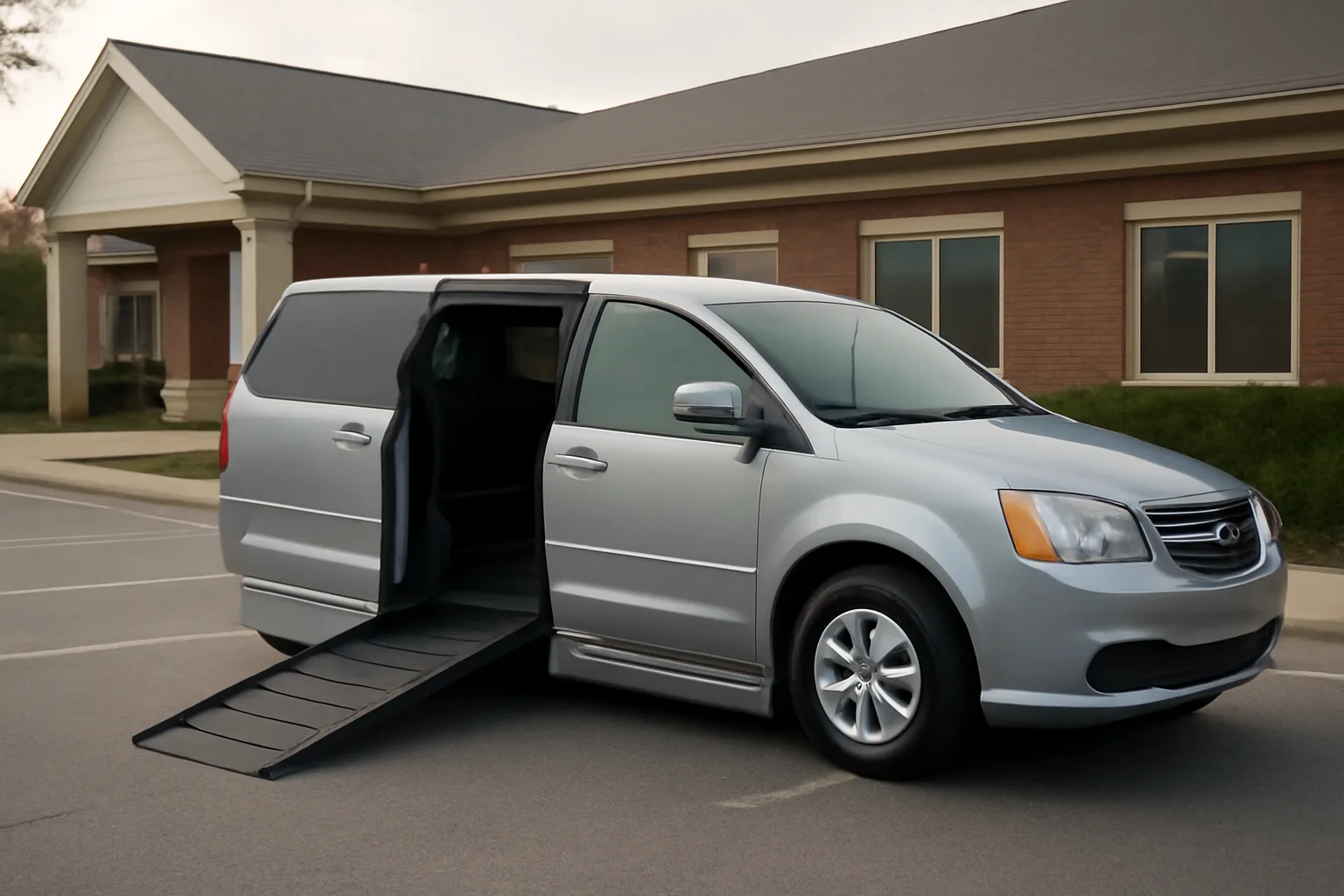
You can absolutely start with one wheelchair van. Plenty of owner-operators do exactly that, running the vehicle themselves as both driver and owner before hiring anyone. The math changes what you should prioritize. With one vehicle, downtime is catastrophic to your schedule, so mechanical reliability and a maintenance budget matter more than fleet size ever will. Look hard at total cost of ownership, more than sticker price, when you're comparing a used conversion van against a new one. With a single van you also can't diversify across vehicle types. If you buy only a wheelchair van, you can't take stretcher trips, and if the broker's dispatch software routes you a trip type you can't handle, you're turning down revenue. Decide up front whether ambulatory-only, wheelchair-accessible, or a raised-roof van with both capabilities fits your target caseload, and price that against what you can actually finance. One owner-operator with one van still has to complete the exact same state and broker paperwork as a 20-van fleet: NPI, NJ Medicaid enrollment, broker credentialing application, insurance certificates, driver background check, vehicle inspection. There's no simplified track for small operators in most states' Medicaid programs. Budget the time (often 60 to 120 days total between state and broker approval, though timelines vary and neither NJ Medicaid nor any broker publishes a guaranteed turnaround) as much as the money.
What does Medicaid actually cover for transportation, and does it cover ambulances?
Medicaid covers two very different categories of transportation, and mixing them up will confuse both your business plan and your reimbursement expectations. Emergency ambulance transport is covered under a state's regular Medicaid medical benefit when medically necessary, billed by ambulance providers directly to Medicaid or a managed care plan, generally at rates tied to CMS ambulance fee schedule methodology. So yes, Medicaid does cover ambulance rides when the situation is a true emergency and medical necessity criteria are met [3]. But that's a completely separate provider category (licensed ambulance services, usually with paramedics or EMTs) from NEMT. Non-emergency medical transportation is the separate benefit that covers rides to and from covered Medicaid services (dialysis, physical therapy, doctor visits, pharmacy pickups tied to a visit) for members who have no other means of transportation. CMS describes this as the "non-emergency medical transportation" or NEMT benefit, distinct from ambulance services, and notes that most states run it through brokers under what's often called the "broker model" [3]. So does Medicaid cover ambulance rides? Yes, for emergencies, under the regular medical benefit. Does Medicaid cover non-emergency transportation? Yes, through the NEMT benefit, generally through a broker, and generally only when the member genuinely lacks other transportation and the trip is to a Medicaid-covered service. If you're building an NEMT business, you're competing for the second category, not the first, and you should never advertise or bill as if you provide ambulance-level emergency service unless you're separately licensed and staffed for that.
Does Medicare cover medical transportation?
Medicare's coverage of non-emergency transportation is much thinner than Medicaid's, and this trips up a lot of new operators who assume the two programs work the same way. Original Medicare (Part B) covers emergency ambulance transportation when medically necessary, and in limited cases covers non-emergency ambulance transportation if a doctor certifies it's medically necessary, such as for a beneficiary who needs transport for dialysis and whose condition requires ambulance-level transport specifically [4]. Medicare.gov states plainly that Medicare Part B "covers ground ambulance transportation when you need to be transported to a hospital, critical access hospital, or skilled nursing facility, for medically necessary services, and transportation in any other vehicle could endanger your health" [4], which is a narrower standard than Medicaid's NEMT benefit. Medicare generally does not cover routine non-emergency medical transportation the way Medicaid NEMT does. Some Medicare Advantage plans offer transportation as a supplemental benefit, and coverage there varies enormously by plan and insurer, so if you want Medicare Advantage business you need to contract separately with each plan or its transportation vendor, not with a state Medicaid broker. For a NEMT startup, this means your addressable Medicare business is much smaller and more plan-specific than your Medicaid business. Most new NJ operators build their initial book around NJ FamilyCare Medicaid trips through the broker, then layer in Medicare Advantage plan contracts later if it makes sense for their coverage area.
What licenses and vehicle requirements does New Jersey require for NEMT vans?
New Jersey requires several layers of approval before a wheelchair van can legally run paid non-emergency trips, and the layers stack (state, municipal, and broker) rather than substitute for each other. Vehicle registration and inspection: NEMT vehicles typically need commercial or livery-class registration through the NJ Motor Vehicle Commission, plus passing a vehicle inspection. Wheelchair-accessible vans also need to meet accessibility equipment standards (ramp or lift function, wheelchair securement points) that a broker's credentialing team will physically verify during vehicle inspection, separate from the state inspection. Municipal licensing: Many NJ municipalities require a local livery, limousine, or for-hire vehicle license on top of state registration. This varies town by town, so check with the specific municipality where you'll be based, more than the state. Driver requirements: Expect a valid NJ driver's license (commercial license generally not required for standard wheelchair vans under the weight threshold, but confirm vehicle-specific requirements with NJ MVC), a clean driving record check, a criminal background check, and often CPR/first aid certification plus passenger assistance and wheelchair securement training before a broker will approve a driver. Insurance: You'll need commercial auto insurance with livery or NEMT-specific endorsements at limits the broker specifies in its contract, commonly in the $1 million combined single limit range for liability, though exact minimums come from your specific broker agreement and should be confirmed in writing before you bind a policy. NJ Medicaid provider enrollment: Separate from vehicle and driver licensing, your business entity needs an active NJ Medicaid provider enrollment through DMAHS to bill for Medicaid-funded trips, whether you bill the broker directly or the broker bills on your behalf depending on contract structure. None of these approvals happen instantly, and none of them guarantee broker credentialing or a set volume of trips once you're approved. Treat each step as a gate to clear, not a formality. For state contact information and current registration procedures, start with NJ MVC's main site and its listed customer service lines [5].
How do I enroll as an NJ Medicaid transportation provider?
NJ Medicaid provider enrollment for transportation runs through the Division of Medical Assistance and Health Services (DMAHS), the agency inside NJ's Department of Human Services that administers NJ FamilyCare [2]. The enrollment application asks for your business entity information, NPI, tax ID, ownership disclosure, and licensing documentation. Because NJ (like most states) uses a broker model for NEMT dispatch, Medicaid provider enrollment and broker network credentialing are usually two separate applications with two separate reviewers. Being an enrolled NJ Medicaid provider doesn't automatically put you in the broker's active dispatch network, and being credentialed by the broker doesn't substitute for state provider enrollment. Confirm the current sequencing (some states require state enrollment first, others let you run them in parallel) directly with DMAHS and the broker, since procedures do get revised. Expect the state application to ask for proof of your business license, vehicle registration and inspection records, insurance certificates, and driver credentialing documentation, essentially all the pieces from the licensing section above bundled into one submission. Missing documentation is the single biggest cause of delay, so build a checklist before you start the online application rather than discovering gaps mid-review. Once enrolled, you'll get a provider identifier you use when the broker verifies your network status and, depending on contract terms, when trips get billed.
How do I get credentialed with the NJ Medicaid broker (Modivcare)?
Broker credentialing is a separate business process from state Medicaid enrollment, and it's the step that actually gets you dispatched trips. As of this writing, New Jersey's NEMT broker is Modivcare, but broker contracts are periodically rebid by the state, so always confirm the current broker name and application portal with NJ Medicaid's transportation unit before you apply. A typical broker credentialing packet asks for: your business license and entity documents, NJ Medicaid provider number, vehicle registration and inspection reports for every vehicle you want in the network, proof of insurance meeting the broker's minimum limits, driver background check results, driver training certificates, and often a physical vehicle inspection by broker staff or a designated inspection partner. Brokers also typically require ongoing compliance items after initial approval: annual vehicle re-inspections, updated insurance certificates, driver re-training on schedules the broker sets, and adherence to on-time performance and complaint-rate standards written into your service agreement. Falling below those standards can get you suspended from dispatch even after you're credentialed, so read the performance clauses in your contract as carefully as the application requirements. Because requirements and portals change with contract cycles, don't rely on secondhand forum posts or outdated blog checklists for the credentialing packet. Call the broker's provider relations line and NJ Medicaid's transportation unit directly, get the current requirements in writing, and keep a dated copy of whatever they send you. Reading up on how broker-guides work generally across Modivcare, MTM, and other brokers will help you spot which requirements are boilerplate across the industry and which ones are New Jersey-specific.
What does starting an NEMT business actually cost?
There's no single number that applies to every operator, and any site that quotes you an exact all-in startup cost without knowing your vehicle choice and state is guessing. That said, the major cost buckets are consistent enough to plan around. Vehicle: A used wheelchair-accessible conversion van typically runs somewhere in the tens of thousands of dollars depending on mileage, ramp/lift condition, and age; a new one costs considerably more. This is usually the single largest upfront expense for a one-van startup. Insurance: Commercial auto with livery/NEMT endorsements at broker-required limits costs meaningfully more than personal auto insurance, and rates vary widely by driver history, vehicle type, and NJ zip code. Get quotes from carriers who specifically write NEMT/livery policies, not generic commercial auto, since standard commercial policies often exclude for-hire passenger transport. Licensing and inspection fees: Business formation, NJ MVC registration and inspection fees, municipal licensing fees where applicable, and NPI registration (free through CMS NPPES) add up to a modest but real line item. Driver costs: Background checks, CPR/first aid certification, and passenger assistance training all cost money per driver, even if that driver is you. Working capital: Broker payment cycles aren't instant. Plan for a real gap, often several weeks, between running trips and getting paid, and make sure you have cash reserves to cover fuel, insurance, and loan payments during that gap. Some owner-operators use a packaged resource to organize the state and broker paperwork instead of assembling checklists from scratch. RideCredential's $199 one-time State + Broker NEMT Launch Kit is built for exactly that gap, organizing NJ Medicaid provider enrollment steps and broker credentialing requirements into one place, though it doesn't replace confirming specifics directly with NJ Medicaid or your broker, and it doesn't guarantee approval.
How long does it take to get approved and start running trips?
Realistically, plan for two to four months from a standing start (no entity formed, no vehicle bought) to your first dispatched Medicaid trip in New Jersey, though this varies a lot and neither the state nor any broker publishes a guaranteed timeline. Business formation and NPI registration are fast, often a week or two combined. Vehicle acquisition and outfitting timing depends entirely on whether you're buying used and ready-to-go or ordering a new conversion, which can add months if you're waiting on a build slot. NJ Medicaid provider enrollment review timelines vary and DMAHS doesn't publish a fixed guarantee; the same is true of broker credentialing review. Insurance binding is usually fast once you have vehicle and driver documentation ready, often days, not weeks. The biggest controllable variable is documentation completeness. Incomplete applications get kicked back for corrections, and each round trip through the review queue can add weeks. Build your full document packet (business license, NPI, vehicle titles and inspection reports, insurance certificates, driver background checks and training records) before you submit anything, rather than submitting and scrambling to fill gaps afterward.
Frequently asked questions
What is non-emergency medical transportation?
Non-emergency medical transportation (NEMT) is scheduled, non-ambulance transport for Medicaid and Medicare Advantage members who need rides to covered medical services like dialysis, therapy, or doctor visits but don't need emergency response. It's typically delivered by wheelchair vans, stretcher vans, or ambulatory sedans through a state-contracted broker network.
Does Medicaid cover ambulance rides?
Yes, Medicaid covers emergency ambulance transportation when medically necessary, billed under the regular Medicaid medical benefit rather than the NEMT benefit. Non-emergency ambulance use is covered only in limited cases where a doctor certifies ambulance-level care is required. Confirm specific coverage criteria with your state Medicaid agency, since medical necessity rules vary.
Does Medicare cover medical transportation?
Medicare Part B covers emergency ground ambulance transportation and limited non-emergency ambulance transport when a doctor certifies it's medically necessary and other transport would endanger the patient's health, per Medicare.gov. Original Medicare generally doesn't cover routine non-emergency rides; some Medicare Advantage plans offer transportation as a supplemental benefit, which varies by plan.
How do I start a medical transportation business in New Jersey?
Form a business entity, get an NPI from CMS's NPPES system, acquire and license your vehicle through NJ MVC (plus any municipal livery license), secure commercial/livery insurance, complete driver background checks and training, then enroll as an NJ Medicaid provider through DMAHS and separately apply for broker network credentialing (currently Modivcare, subject to change).
How do I start an NEMT business with just one van?
Yes, you can start with a single wheelchair van as an owner-operator. You'll complete the same state licensing, NJ Medicaid enrollment, and broker credentialing steps as a larger fleet; there's typically no simplified track for small operators. Prioritize vehicle reliability and cash reserves for the gap between running trips and getting paid.
What vehicle license does NEMT require in NJ?
NEMT vehicles generally need commercial or livery-class registration and inspection through the NJ Motor Vehicle Commission, and many municipalities layer on a local livery or for-hire vehicle license. Wheelchair-accessible vans must also pass equipment checks (ramp/lift function, securement points) during broker credentialing. Confirm exact requirements with NJ MVC and your target municipality.
Who is the NEMT broker for NJ Medicaid?
As of this writing, Modivcare holds New Jersey's NEMT broker contract for NJ FamilyCare, but state broker contracts get periodically rebid. Always confirm the current broker directly with NJ Medicaid's transportation unit before building a credentialing plan, since the vendor can change between contract cycles.
Is NEMT provider enrollment the same as broker credentialing?
No. NJ Medicaid provider enrollment through DMAHS gives you an official Medicaid provider status; broker credentialing is a separate application process with the state's contracted transportation broker that actually gets you dispatched trips. Most operators need both, and they're reviewed by different organizations with different requirements.
How much does it cost to start an NEMT business?
Costs vary widely, but expect major line items for the vehicle (a used wheelchair van often runs into the tens of thousands of dollars), commercial/livery insurance, licensing and inspection fees, driver background checks and training, and working capital to cover the gap before broker payments start arriving. No fixed total applies to every operator.
How long does NJ Medicaid provider enrollment take?
Timelines vary and NJ's Division of Medical Assistance and Health Services doesn't publish a guaranteed processing time. Realistically, budget several weeks to a few months for state enrollment plus additional time for broker credentialing, with incomplete documentation being the most common cause of delay. Confirm current timelines with DMAHS directly.
Do NEMT drivers need special certification in New Jersey?
Most brokers require a valid driver's license, clean driving record, criminal background check, CPR/first aid certification, and passenger assistance or wheelchair securement training before approving a driver. Specific requirements come from your broker's contract and NJ Medicaid rules, so confirm exact certification standards before hiring or driving yourself.
Can one company do both Medicaid NEMT and Medicare Advantage transportation?
Yes, but they require separate contracts. Medicaid NEMT trips typically flow through the state's Medicaid broker; Medicare Advantage transportation benefits are arranged plan-by-plan, often through different transportation vendors. You'd need to credential separately with each Medicare Advantage plan or its contracted transportation network beyond your Medicaid broker relationship.
Sources
- eCFR, 42 CFR 431.53 Assurance of transportation: Federal Medicaid regulation requiring states to ensure necessary transportation for recipients to and from providers
- NJ Department of Human Services, Division of Medical Assistance and Health Services (NJ FamilyCare): NJ FamilyCare Medicaid program administration and transportation benefit oversight
- Medicaid.gov, Non-Emergency Medical Transportation: NEMT is a distinct Medicaid benefit from ambulance services, generally administered through brokers
- Medicare.gov, Ambulance Services coverage: Medicare Part B covers ground ambulance transportation when medically necessary and other transport would endanger health
- 42 U.S.C. 1396a, State plan for medical assistance: Statutory basis for state Medicaid plan requirements, including the assurance of transportation implemented through 42 CFR 431.53