Last updated 2026-07-25
TL;DR
Non-emergency medical transportation (NEMT) in Boise runs through Idaho Medicaid, which contracts trip dispatch to a broker rather than paying drivers directly. To operate, you need a business entity, a compliant wheelchair van, Idaho commercial insurance, and enrollment as an Idaho Medicaid provider before you can bill for any trip the broker assigns you.
What is non-emergency medical transportation, exactly?
Non-emergency medical transportation, usually shortened to NEMT, is scheduled transport for Medicaid (and some Medicare Advantage) members who can get to a medical appointment on their own power but can't get there without help, whether that's a ride, a wheelchair lift, or a stretcher. It's not a 911 response. No lights, no sirens, no paramedic care en route. Federal Medicaid rules require states to guarantee "necessary transportation for beneficiaries to and from providers" under 42 CFR 431.53, and to describe in their state plan how they'll meet that obligation [1]. States don't have to run the rides themselves. Most, including Idaho, contract with a transportation broker who takes ride requests, verifies Medicaid eligibility, and dispatches approved drivers and companies. In Boise, that means your customer isn't really the rider. It's the broker. The rider calls (or a case manager calls for them), the broker checks eligibility and medical necessity, and then the broker assigns the trip to a contracted provider, which might be you, once you're credentialed. You never bill the patient directly for a covered trip.
How is NEMT different from an ambulance ride, and does Medicaid cover ambulances too?
Yes, Medicaid covers ambulance rides, but under a completely different bucket than NEMT. Ambulance service (emergency or medically necessary non-emergency transport requiring a licensed EMT crew and equipment) is billed as a distinct Medicaid service category, separate from the broker-managed NEMT rides that move people in wheelchair vans, ambulatory sedans, and stretcher cars. Medicaid.gov describes NEMT as covering trips "to and from medical appointments" for people with no other way to get there, which is the wheelchair-van and sedan world [2]. Ambulance transport, by contrast, generally requires a documented medical need for monitoring or a gurney with clinical staff, and it's billed under Idaho Medicaid's ambulance fee schedule rather than through the NEMT broker. If you're buying a wheelchair van and not an ambulance, you're building an NEMT business, not an ambulance company, and you should stay out of the ambulance licensing track entirely, since that requires EMT-level certifications you likely don't have and don't need for this business model. One related question people ask: does Medicare cover medical transportation? Original Medicare covers ambulance transport when it's medically necessary and covers some NEMT only through certain Medicare Advantage plans that add it as a supplemental benefit, not as a standard Part A/B service [3]. If you want Medicare Advantage trips in Boise, that's a separate contracting relationship with the plan or its broker, on top of, not instead of, your Idaho Medicaid enrollment. See emergency medical transport for how the ambulance side works if you're weighing both.
How do I start a non-emergency medical transportation business in Boise?
The order matters. Skip a step and you'll be stuck redoing paperwork later. 1. Form your business entity (LLC is standard) with the Idaho Secretary of State and get an EIN from the IRS. 2. Get your Idaho commercial (or NEMT-specific) auto insurance and workers' comp lined up, since brokers require proof of coverage before credentialing. 3. Buy or lease a wheelchair-accessible van that meets ADA and state vehicle inspection standards. 4. Enroll as an Idaho Medicaid transportation provider through the Idaho Department of Health and Welfare's provider enrollment process, confirm current requirements with your state Medicaid agency [4]. 5. Apply for broker credentialing (Idaho currently contracts NEMT brokerage; confirm the current broker name and portal with the Idaho Department of Health and Welfare, since broker contracts get rebid periodically). 6. Pass any vehicle and driver background check requirements the broker sets. 7. Start accepting dispatched trips once both your Medicaid enrollment and broker credentialing are active. Don't buy the van first and figure out paperwork later. Confirm Idaho Medicaid's vehicle standards and the broker's specific inspection checklist before you sign a purchase agreement, because retrofitting a van that doesn't meet spec is expensive.
What does it cost and how long does it take to get credentialed?
| LLC formation, Idaho Secretary of State | roughly $100-$120 | State of Idaho | |
|---|---|---|---|
| Commercial auto/NEMT insurance (annual) | varies widely by fleet size and driving record | Insurance carrier | |
| Wheelchair van (used, retrofitted) | tens of thousands of dollars, varies by condition and lift type | Vehicle dealer/converter | |
| Medicaid provider enrollment | typically no direct state fee for NEMT providers, confirm current fee schedule | Idaho Dept. of Health and Welfare | |
| Broker credentialing | usually no direct fee, but background checks and vehicle inspections may cost separately | Broker/vendor | Timeline is the bigger variable than cost. Medicaid provider enrollment alone commonly takes several weeks once your application is complete, and broker credentialing runs on its own separate clock after that. Plan for a two- to three-month runway between "I have my van" and "I'm taking dispatched trips," and build your insurance and loan payments into that gap, because the credentialing clock doesn't pause for your bills. |
Idaho doesn't publish one master fee number for NEMT startup because your costs are split across the state, the broker, and your own vehicle purchase. Here's the realistic breakdown. | Cost item | Rough range | Who you pay |
How do I enroll as an Idaho Medicaid NEMT provider?
Idaho Medicaid enrollment happens through the Idaho Department of Health and Welfare's provider enrollment system. You'll need your business entity documents, EIN, National Provider Identifier (NPI) if applicable to your provider type, proof of insurance, and vehicle documentation. The Idaho Department of Health and Welfare's Medicaid provider handbook process requires providers to meet ongoing program requirements, more than pass a one-time check [4]. That means keeping your insurance current, renewing any required licenses, and responding to periodic revalidation requests. Confirm the specific NEMT provider category, application forms, and any provider-type-specific requirements directly with the Idaho Department of Health and Welfare's Medicaid provider enrollment unit, since these get updated and a stale form is a fast way to get your application bounced back. One thing new operators miss: Medicaid enrollment and broker credentialing are two separate approvals. Idaho Medicaid enrollment establishes you as an eligible biller in the state's system. Broker credentialing is a separate contract layer that decides whether the broker will actually dispatch trips to you. You typically need both, and they don't happen automatically together. For a broader walkthrough of how state programs structure this, see non emergency medical transportation.
How does broker credentialing work in Idaho, and who is the broker?
Idaho Medicaid manages NEMT through a contracted broker model rather than paying individual drivers directly. The broker takes calls, verifies trip eligibility, and assigns rides to a network of credentialed transportation providers. Broker contracts get rebid on a schedule set by the state, so the specific company holding Idaho's NEMT broker contract can change. Confirm the current broker name, application portal, and credentialing checklist directly with the Idaho Department of Health and Welfare's Medicaid transportation program before you start filling out paperwork, since applying through an outdated broker portal wastes weeks. Whatever the current broker is, expect them to ask for: proof of Idaho Medicaid enrollment, current commercial insurance certificates, vehicle inspection records, driver background checks and drug screening documentation, and a signed provider agreement. Some brokers also run their own vehicle inspection separate from any state DOT-type inspection, checking things like wheelchair securement points, lift function, and interior cleanliness standards. Budget real time for this step. It is rarely instant, and rework because of a missing document is common. For broker-specific mechanics beyond Idaho, nemt and nemt transportation walk through how credentialing works across different broker relationships.
What vehicle and driver requirements should I expect for a wheelchair van?
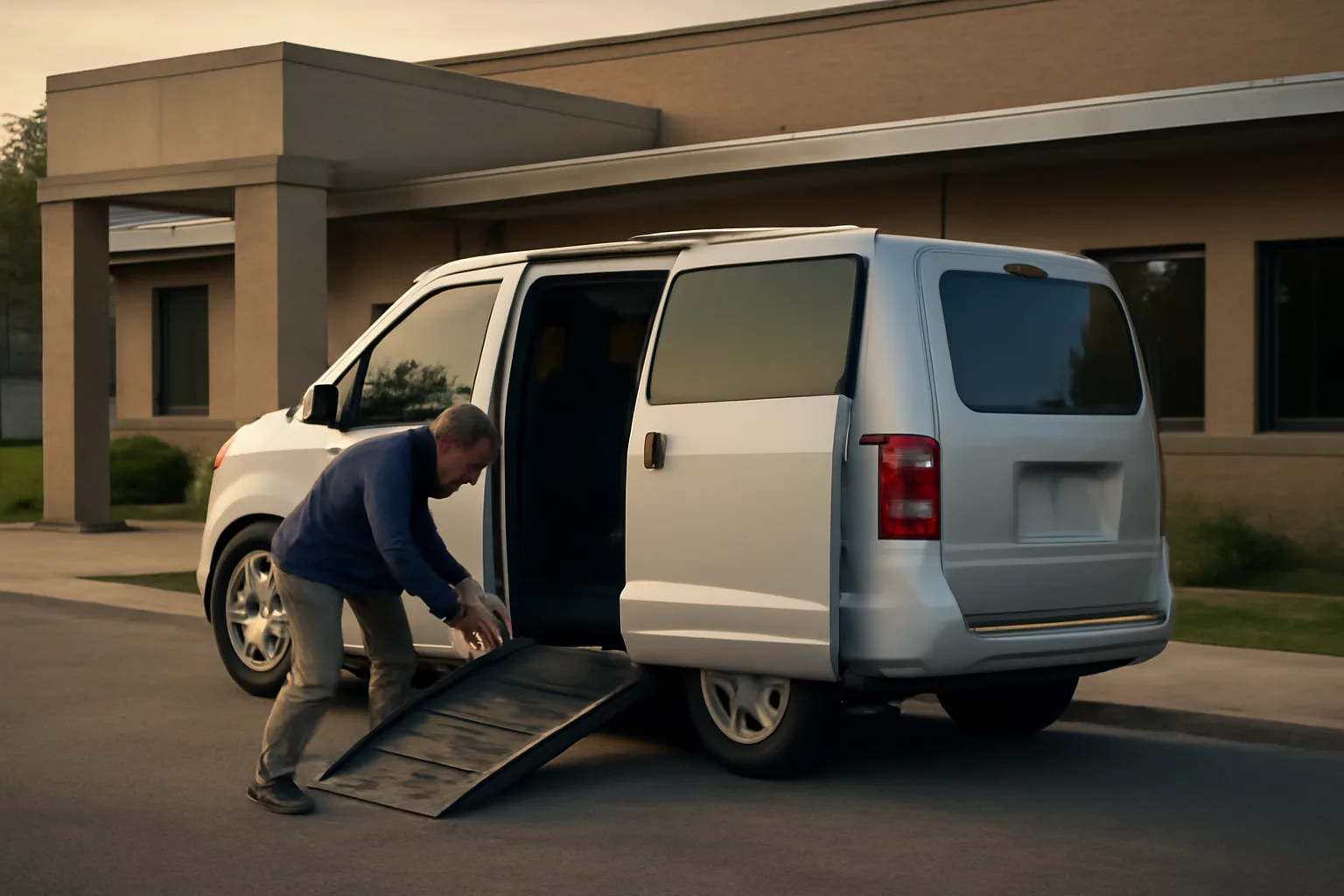
Your wheelchair van needs a functioning lift or ramp, secure wheelchair tie-down points, and documentation that it passes whatever inspection standard your state and broker apply, which commonly references ADA accessibility expectations for public transportation vehicles under Title II/III of the ADA as a baseline reference point [5]. Drivers typically need a clean driving record, a background check (often including a check against state and federal excluded-provider lists), and in many programs, CPR/first-aid certification. Idaho doesn't require a special CDL for a standard wheelchair van under most weight thresholds, but confirm this with the Idaho Transportation Department based on your specific vehicle's gross vehicle weight rating, since heavier stretcher vans can cross into different licensing categories. Excluded-provider screening deserves its own line here. Federal rules require state Medicaid agencies and their contractors to check providers and staff against the OIG List of Excluded Individuals/Entities before enrollment and periodically afterward. If a driver shows up on that list, that's an automatic disqualifier, and it's checked again, more than once at hiring. Build this check into your own hiring process before the broker does it for you, so you're not surprised mid-credentialing. For vehicle-specific buying guidance, non emergency medical transportation services covers the vehicle spec side in more depth.
Can I start with just one van, or do I need a fleet?
One van is a completely normal way to start, and plenty of owner-operators run their whole business that way for years. Idaho Medicaid enrollment and broker credentialing don't require a minimum fleet size; they require that whatever vehicles you do have meet the accessibility, insurance, and inspection standards. What changes with a single van is your operating risk, not your eligibility. If that van is in the shop, you have zero capacity that day. Brokers generally don't guarantee trip volume to any provider, so don't structure your finances around an assumed number of daily trips; that number depends on your local trip demand, broker allocation, and your own service area, none of which are things a broker or state agency will promise you in writing. If you're financing the van, talk to your lender about how NEMT provider agreements typically work (broker-assigned trips, not guaranteed volume) so your loan terms don't assume revenue that isn't contractually promised. Insurance is the other place a one-van operation needs to get right immediately: confirm your policy explicitly covers wheelchair-lift equipment and passenger transport for hire, more than general commercial auto use, because a gap here can void a claim exactly when you need it most.
What insurance and business setup do Idaho NEMT operators actually need?
At minimum, expect to need: a formal business entity (LLC is common for liability separation), commercial auto insurance rated for passenger-for-hire and wheelchair-lift use, general liability coverage, and workers' compensation once you have employees. Some brokers set minimum liability coverage thresholds as a condition of the provider contract, so get the broker's specific numbers before you shop insurance, not after. Workers' compensation in Idaho is generally required once you have employees, administered under Idaho's Industrial Commission rules; confirm your specific obligations based on how many drivers you employ and whether you use independent contractors, since misclassifying drivers as contractors when they function as employees is a common compliance trap in this industry. Keep your entity, insurance, and Medicaid enrollment documents in one file, literally, because both Idaho Medicaid and the broker will ask you to re-submit proof of insurance at renewal, and a lapsed certificate is one of the fastest ways to get suspended from a broker's active provider list, sometimes without much warning.
How does billing and payment actually work once I'm credentialed?
Once you're both Idaho Medicaid-enrolled and broker-credentialed, the trip flow generally looks like this: the broker dispatches a trip to you, you (or your driver) complete it, you document the pickup/drop-off and mileage, and you submit that trip record either to the broker or directly to Idaho Medicaid for payment, depending on how the current contract structures billing. Most broker-managed NEMT programs pay providers a set rate per trip or per mile rather than a fee-for-service rate you negotiate yourself, and that rate schedule is set by the broker contract with the state, not by you. Confirm current per-trip and per-mile rates directly with the broker during credentialing, since these are contract terms that change when contracts get rebid, and no state-published number is reliable enough to plan a budget around without direct confirmation. Documentation matters here more than almost anything else. Federal Medicaid program integrity rules require that claims be supported by proper documentation, and NEMT trip records (pickup time, drop-off time, mileage, rider signature where required) are exactly what gets audited if a payment is questioned. Sloppy trip logs are the single most common reason NEMT providers lose payment disputes, not fraud, just missing paperwork.
What are the most common mistakes new NEMT owner-operators make in Boise?
The biggest one is buying the van before confirming vehicle specs with the broker. Retrofitting after the fact is expensive, and some brokers won't accept certain lift types or vehicle ages at all. The second is assuming Medicaid enrollment and broker credentialing are the same process. They're not. You can be a fully enrolled Idaho Medicaid provider and still not be receiving trips because you haven't cleared the broker's separate credentialing checklist. The third is underestimating the timeline. Between entity formation, insurance binding, Medicaid enrollment, and broker credentialing, a realistic runway is measured in months, not weeks, and treating it like a two-week process leads to cash flow problems while you wait. The fourth is letting insurance or license renewals lapse once you're active. Broker networks routinely suspend providers for expired documentation, and reinstatement isn't always instant. Put renewal dates on a calendar with 30-day advance reminders, not the expiration date itself. If you want a structured way to organize the state and broker paperwork instead of tracking it across a dozen browser tabs, RideCredential's $199 one-time State + Broker NEMT Launch Kit walks through the state enrollment and broker credentialing steps in one place; see the Launch Kit Builder for details. It's a paperwork organizing tool, not a guarantee of approval from any state agency or broker.
Where do I go for Idaho-specific answers, and is any of this legal advice?
The two authoritative sources for anything in this article are the Idaho Department of Health and Welfare's Medicaid program (for provider enrollment, covered services, and program rules) and whatever entity currently holds Idaho's NEMT broker contract (for credentialing and dispatch logistics). Broker identities and specific fee or rate figures change when contracts get rebid, so always confirm current details directly with both before making purchase or hiring decisions. Nothing in this article is legal, tax, or insurance advice, and it isn't a promise that any application will be approved. State Medicaid rules, broker requirements, and vehicle standards vary and change over time; treat every dollar figure and timeline here as a planning range to confirm, not a guarantee. For general background on how state Medicaid transportation programs are structured nationally, see medical transportation and non emergency medical transportation.
Frequently asked questions
What is non-emergency medical transportation (NEMT)?
NEMT is scheduled, non-emergency transport for Medicaid members (and some Medicare Advantage members) who can't get to a medical appointment on their own but don't need ambulance-level care. It covers wheelchair vans, ambulatory sedans, and stretcher cars, dispatched through a state-contracted broker rather than billed directly to the patient.
How do I start a medical transportation business?
Form a business entity, secure commercial insurance, buy a compliant vehicle, enroll as a Medicaid provider through your state's Medicaid agency, and get credentialed with your state's NEMT broker. Each step has its own paperwork and timeline; confirm current requirements directly with your state Medicaid agency and broker before buying a vehicle.
How do you start a NEMT business specifically, versus a general medical transport business?
NEMT specifically requires broker credentialing on top of Medicaid provider enrollment, since most states, including Idaho, dispatch NEMT trips through a contracted broker rather than paying providers directly. A general medical transport business (private-pay, non-Medicaid) skips the broker step but also loses access to Medicaid trip volume.
How do I start a non-emergency medical transportation business with just one van?
One van is enough to enroll and get credentialed; there's no state-mandated minimum fleet size. The tradeoff is capacity risk (one vehicle down means zero trips that day) and no guaranteed trip volume from the broker, so finance and insure the vehicle based on a conservative, not optimistic, revenue assumption.
Does Medicaid cover ambulance rides?
Yes. Medicaid covers medically necessary ambulance transport as a distinct service category from NEMT, billed under the state's ambulance fee schedule and requiring licensed EMT-level staff and equipment, separate from wheelchair-van or sedan NEMT trips dispatched through a broker.
Does Medicare cover medical transportation?
Original Medicare covers ambulance transport when medically necessary but generally does not cover routine NEMT. Some Medicare Advantage plans add NEMT as a supplemental benefit, contracted separately from Medicaid's broker system, so check the specific plan's benefits, not standard Medicare rules.
How much does it cost to become a credentialed NEMT provider in Idaho?
Costs vary: LLC formation runs roughly $100-$120 through the Idaho Secretary of State, insurance and vehicle costs vary widely by fleet size, and most states, including Idaho, charge no direct fee for basic Medicaid NEMT provider enrollment. Confirm current fee schedules with the Idaho Department of Health and Welfare.
How long does NEMT credentialing take in Boise?
Plan for roughly two to three months between having your vehicle and insurance ready and actually receiving dispatched trips, since Medicaid enrollment and broker credentialing run as separate, sequential processes, each taking several weeks. Incomplete applications or missing documentation add delay on top of that.
Is Medicaid enrollment the same as broker credentialing?
No. Medicaid enrollment makes you an eligible biller in the state's Medicaid system. Broker credentialing is a separate contract process with the entity that actually dispatches trips. You generally need both to receive and get paid for NEMT trips in a broker-managed state like Idaho.
Do NEMT drivers need a CDL to drive a wheelchair van?
Usually not for a standard wheelchair van under typical weight thresholds, but this depends on the vehicle's gross vehicle weight rating. Confirm with the Idaho Transportation Department based on your specific van's specs, since heavier stretcher vehicles can cross into different licensing categories.
What insurance does an Idaho NEMT owner-operator need?
At minimum: commercial auto insurance rated for passenger-for-hire and wheelchair-lift use, general liability coverage, and workers' compensation once you have employees. Brokers often set minimum liability thresholds as a contract condition, so confirm specific coverage amounts with your broker before purchasing a policy.
Can excluded individuals work as NEMT drivers?
No. Federal rules require Medicaid agencies and their contracted brokers to screen providers and staff against the OIG List of Excluded Individuals/Entities before enrollment and on an ongoing basis. A driver on that list is disqualified, and the check is repeated periodically, more than once at hiring.
What's the biggest mistake new NEMT owner-operators make?
Buying a wheelchair van before confirming the broker's exact vehicle and lift specifications. Retrofitting a non-compliant van afterward is expensive, and some brokers reject certain lift types or vehicle ages outright, so confirm specs before you sign a purchase agreement.
Sources
- eCFR, 42 CFR 431.53: States must assure necessary transportation for Medicaid beneficiaries to and from providers
- Medicaid.gov, Non-Emergency Medical Transportation: NEMT covers transportation to and from medical appointments for beneficiaries with no other means of transportation
- Medicare.gov, Ambulance Services: Original Medicare covers ambulance transportation when medically necessary, distinct from routine NEMT
- ADA.gov, ADA Title II and III Requirements Overview: Accessibility standards for transportation vehicles reference ADA Title II/III requirements
- HHS Office of Inspector General, List of Excluded Individuals/Entities (LEIE): Medicaid agencies and contractors must screen providers and staff against the OIG exclusion list before and during enrollment