Last updated 2026-07-25
TL;DR
Non-emergency medical transport (NEMT) is scheduled transportation to medical appointments for people who don't need an ambulance but can't get there on their own. Medicaid must cover it as a federal requirement in most states. Medicare Part B covers it in very limited cases, and traditional Medicare doesn't cover routine rides at all. Starting an NEMT business means state Medicaid enrollment, broker credentialing, and vehicle/insurance compliance before your first paid trip.
What is non-emergency medical transportation (NEMT)?
NEMT is transportation for people who need to get to a medical appointment, dialysis, physical therapy, or a pharmacy pickup but don't need an ambulance or emergency response. It covers everything from an ambulatory sedan ride to a wheelchair van to a stretcher van, depending on the rider's mobility level. The federal government treats NEMT as part of the Medicaid benefit package, not an optional add-on. The Centers for Medicare & Medicaid Services (CMS) requires state Medicaid plans to "specify that the Medicaid agency will ensure necessary transportation for recipients to and from providers" under 42 CFR 431.53 [1]. That's why almost every state Medicaid program either runs its own NEMT unit or contracts with a broker like Modivcare, MTM, Access2Care, or SafeRide to manage rides. NEMT is different from ambulance transport (which responds to emergencies and requires clinical staff) and different from public paratransit (which is federally required under the ADA for fixed-route transit systems, not tied to Medicaid). If you're cross-shopping terms, our medical transportation overview breaks down how these categories relate, and the nemt page covers the term itself in more depth.
Does Medicaid cover ambulance rides?
Yes, but ambulance coverage and NEMT coverage are two separate benefits with different rules. Medicaid covers ambulance transport when a beneficiary's condition requires emergency response or medically necessary transport that only an ambulance can safely provide, per state plan definitions under 42 CFR 440.170 [2]. NEMT, by contrast, is for people who are stable enough to travel in a van, sedan, or accessible vehicle without medical monitoring during the ride. A dialysis patient going three times a week is a textbook NEMT case. Someone having a heart attack is an ambulance case. States define the specific vehicle types and provider qualifications in their own Medicaid transportation manuals, so the line between "needs an ambulance" and "needs a wheelchair van" can shift a little state to state. Confirm the exact clinical criteria with your state Medicaid transportation unit before you assume a ride type qualifies. One thing that trips up new owner-operators: Medicaid ambulance coverage rules and Medicaid NEMT coverage rules live in different parts of the state plan, sometimes administered by different vendors. Getting credentialed for one doesn't automatically qualify you for the other.
Does Medicare cover medical transportation?
Mostly no, and this is the single biggest misconception new operators run into. Original Medicare (Part A and Part B) covers ambulance transportation when it's medically necessary, but it does not cover routine non-emergency rides to a doctor's office or dialysis center for most beneficiaries [3]. Medicare.gov states directly that Part B "covers ground ambulance transportation when you've had a sudden medical emergency" and adds that non-emergency ambulance transportation may be covered only "if you have a written order from your doctor stating that the transportation is medically necessary" [3], and even then it's ambulance-level transport, not a wheelchair van or sedan ride. Where NEMT does show up under Medicare is through Medicare Advantage (Part C) plans. CMS regulations at 42 CFR 422.102 allow Medicare Advantage plans to offer non-emergency transportation as a supplemental benefit, and a growing share of plans do, but it's plan-specific and not a guaranteed benefit across all Medicare Advantage products [4]. If you're building a business plan around Medicare Advantage rides, you'll be contracting with individual health plans or their transportation vendors, not with a state Medicaid agency. That's a fundamentally different credentialing path than Medicaid NEMT.
What NEMT vehicle types and service levels exist?
| Ambulatory | Sedan, minivan | Walks independently or with a cane/walker | |
|---|---|---|---|
| Wheelchair van | Ramp or lift-equipped van | Uses a wheelchair, can't transfer to a car seat | |
| Stretcher van | Van with a gurney mount | Must remain lying down, doesn't need ambulance-level care | |
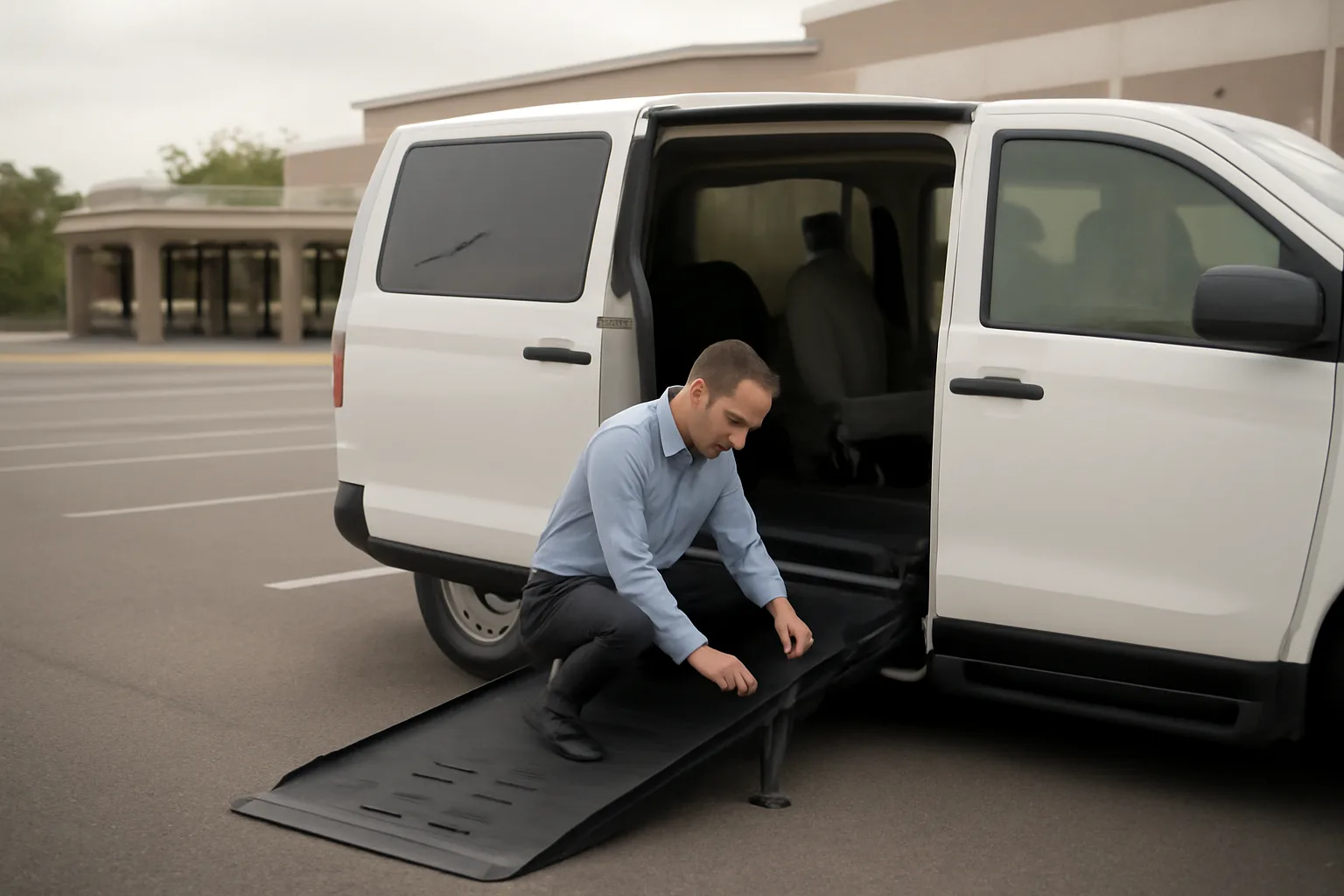
| Group/shared ride | Larger van or small bus | Multiple riders on overlapping routes | Wheelchair van is the most common entry point for new owner-operators because the vehicle cost is lower than a stretcher van and the demand is steady (dialysis, dental, specialist visits). Stretcher work usually requires more insurance and sometimes a second crew member, which raises your operating cost before you've booked a single trip. If you're weighing vehicle types, our nemt transportation guide and the broader non emergency medical transportation page both go deeper on how service level maps to vehicle spec. |
Most state Medicaid NEMT programs sort rides into three or four tiers, and knowing which one you're credentialing for determines what vehicle and insurance you need. | Service level | Typical vehicle | Rider mobility |
How to start a non-emergency medical transportation business
The order matters. Doing these steps out of sequence is the number one reason new operators lose weeks waiting on approvals they could have started earlier. 1. Form your business entity (LLC is standard) and get an EIN from the IRS. 2. Get commercial auto insurance with limits that meet your state Medicaid transportation unit's minimum, more than what a generic commercial policy defaults to. 3. Buy or lease a vehicle that meets your state's NEMT vehicle standards (ADA-compliant lift or ramp for wheelchair vans, specific tie-down and restraint systems, sometimes an age limit on the vehicle itself). 4. Enroll as a Medicaid provider through your state's provider enrollment portal. This is separate from broker credentialing and usually has to happen first, or at least in parallel. 5. Apply for credentialing with the broker(s) that manage NEMT in your state or region (Modivcare, MTM, Access2Care, SafeRide, or a state-run alternative). Each broker has its own application, insurance minimums, and background check requirements. 6. Pass vehicle inspection and driver background checks, which most states and brokers require annually. 7. Get your driver credentials in order: a clean driving record check, drug testing where required, and CPR/First Aid certification is common across state programs. Budget real time for this. Provider enrollment alone can take several weeks depending on the state's processing backlog, and broker credentialing often adds more time on top, especially if your paperwork bounces back for corrections. Don't buy a van and then start the paperwork; start the paperwork while you're still shopping for a van.
How to start an NEMT business with one van
One van is a completely normal way to start, and plenty of successful owner-operators never grow past two or three vehicles. The math and the paperwork are the same whether you own one van or twenty; you just don't get economies of scale on insurance or dispatch software yet. With one van, your biggest constraint is driver redundancy. If you're the only driver, a sick day or a vehicle breakdown means zero revenue that day, and some brokers require a minimum on-time performance rate to stay credentialed. Read your broker agreement's service-level requirements before you sign, because a single missed pickup window can trigger a corrective action notice depending on the broker's policy. A one-van operation should still budget for: commercial auto insurance sized to broker minimums, general liability insurance, a state-compliant vehicle inspection, driver background check and drug screen costs, and whatever your state charges for Medicaid provider enrollment (fees vary by state; some charge an application fee, others don't). Confirm current fee amounts with your state Medicaid transportation unit, since these numbers change and some states have moved to fee schedules tied to provider type.
How do you get Medicaid provider enrollment and broker credentialing at the same time?
Most states now route Medicaid NEMT through a transportation broker rather than paying providers directly, which means you're often doing two applications: one to the state Medicaid program (to be recognized as an enrolled provider at all) and one to the broker (to actually get dispatched trips). The state enrollment establishes you're a legitimate Medicaid provider under state law and gets you a provider ID. The federal regulation behind this, 42 CFR 431.53, requires the state plan to "assure necessary transportation" for beneficiaries [1], but the day-to-day mechanics (which broker runs your region, what their app looks like, what their insurance floor is) are set at the state and broker level, not federally. Broker credentialing typically asks for your Medicaid provider ID, proof of insurance, vehicle inspection records, driver files, and sometimes a facility inspection if you operate out of a physical office or lot. Each broker (Modivcare, MTM, Access2Care, SafeRide) has its own portal and its own timeline, and none of them are required to accept every applicant. Confirm current requirements directly with the broker operating in your state and with your state Medicaid transportation unit, since broker contracts change when states rebid them, sometimes swapping which broker even holds the contract.
What insurance and licensing do NEMT operators actually need?
Requirements vary by state, but a few categories show up almost everywhere. Commercial auto liability insurance is universal, and most states or brokers set minimum limits well above a personal auto policy's default, often in the range of $1,000,000 combined single limit for passenger transport, though the exact figure depends on your state and vehicle type; confirm with your state Medicaid transportation unit and broker contract. Most states also want general liability coverage, and some require workers' compensation once you have employees (or even for owner-operators, depending on state labor law). Driver-level requirements commonly include a Motor Vehicle Record (MVR) check, a criminal background check, and drug and alcohol testing, particularly if you're operating a vehicle that meets the federal definition of requiring a CDL, though most wheelchair vans and sedans used in NEMT don't require one. Vehicle-side, expect an annual or semi-annual inspection requirement, ADA lift/ramp certification, and wheelchair tie-down systems that meet a recognized standard. Some states reference SAE or ADA vehicle accessibility requirements directly in their Medicaid transportation manuals. None of this is exotic, but skipping a step (say, letting your general liability lapse for two weeks) can get you suspended from a broker's network even if your Medicaid provider status is still active.
How is NEMT different from ambulance or paratransit service?
Three different systems solve three different mobility problems, and they get confused constantly. Ambulance service (emergency or non-emergency) requires clinical staff, is dispatched for medical urgency or medical necessity documented by a doctor, and is billed under different Medicaid and Medicare rules (42 CFR 440.170) [2]. Our emergency medical transport page covers how that side of the system works. NEMT is scheduled, non-clinical transportation for Medicaid (and sometimes Medicare Advantage) beneficiaries who don't need medical care during the ride itself, just help getting to where the care happens. Paratransit is a separate federal requirement under the Americans with Disabilities Act, obligating public transit agencies to provide comparable service for riders who can't use fixed-route buses or trains, under 49 CFR 37.121 [5]. It's run by transit authorities, not Medicaid brokers, and it isn't tied to a Medicaid eligibility determination at all. If you're only trying to serve Medicaid beneficiaries, paratransit contracts are a different animal with different procurement rules. Our non emergency medical transportation services page walks through how these service categories get procured differently at the state level.
What does it cost to start, realistically?
Nobody can give you one national number here because state fees, insurance minimums, and vehicle costs vary too much, but you can build a real budget from known categories. A used ADA-compliant wheelchair van typically runs from the low five figures into the $30,000-$40,000 range depending on age, mileage, and lift condition; new conversion vans run considerably higher. Commercial auto insurance for a single wheelchair van used in NEMT commonly runs from a few hundred to over a thousand dollars a month depending on your state, driving history, and coverage limits, so get quotes before you commit to a vehicle purchase, not after. State Medicaid provider enrollment fees vary; some states charge nothing, others charge an application or revalidation fee. Broker credentialing itself is typically free to apply, but you're on the hook for the insurance, inspections, and background checks that make the application acceptable. Add in fuel, maintenance reserves for a mobility van (lift maintenance especially), and a phone/dispatch system, and your pre-revenue startup cost realistically spans a wide range depending entirely on whether you're buying new or used and what your state requires. If you want a structured way to track every state and broker requirement in one place instead of hunting across a dozen agency PDFs, that's exactly what the $199 one-time State + Broker NEMT Launch Kit is built for.
How long does it take to get approved and start taking trips?
Plan for one to three months from a standing start, though this varies enormously by state processing speed and how quickly your insurance and vehicle paperwork clear. Medicaid provider enrollment alone can take anywhere from a few weeks to a couple of months depending on the state's backlog and whether your application gets kicked back for corrections. Broker credentialing runs in parallel or right after, and brokers often need proof of your active Medicaid provider status before they'll finish your file, which is why sequencing matters (see the step-by-step above). Vehicle inspection scheduling and driver background check turnaround add more time, and drug testing results typically come back within days but scheduling the test can take longer in rural areas with fewer testing sites. The realistic advice: start your Medicaid provider enrollment and your insurance shopping in week one, order your vehicle inspection as soon as you own the van, and submit broker credentialing the moment your provider ID comes through. Operators who wait to start each step until the previous one is fully done often add a month or more of pure waiting that didn't need to happen.
Frequently asked questions
What is non-emergency medical transportation (NEMT)?
NEMT is scheduled transportation for Medicaid (and some Medicare Advantage) beneficiaries who need to get to medical appointments, dialysis, or pharmacies but don't require ambulance-level clinical care during the ride. It covers ambulatory sedans, wheelchair vans, and stretcher vans, and is a required part of the Medicaid benefit under 42 CFR 431.53.
Does Medicaid cover ambulance rides?
Yes. Medicaid covers ambulance transport when it's medically necessary under 42 CFR 440.170, but this is a separate benefit category from NEMT with its own eligibility rules, provider qualifications, and often a different administering vendor. Confirm the specific clinical criteria with your state Medicaid transportation unit.
Does Medicare cover medical transportation?
Original Medicare Part B covers ambulance transportation for emergencies and, with a doctor's written order, some non-emergency ambulance transport, but it generally does not cover routine rides in a wheelchair van or sedan. Some Medicare Advantage (Part C) plans offer non-emergency transportation as a supplemental benefit, but this varies by plan.
How do you start a medical transportation business?
Form your business entity, secure commercial auto and liability insurance meeting your state's minimums, buy a compliant vehicle, enroll as a Medicaid provider through your state's portal, get credentialed with the NEMT broker operating in your area, and pass vehicle and driver background checks. Sequence matters; start enrollment and insurance shopping in parallel, not after buying the van.
How do I start an NEMT business with just one van?
One van is a normal starting point. You'll go through the same state Medicaid enrollment and broker credentialing steps as a larger fleet, just with less driver redundancy, so plan for what happens if your one driver or vehicle is unavailable, since brokers often enforce minimum on-time performance standards.
What's the difference between NEMT and ambulance transport?
Ambulance transport requires clinical staff and responds to medical emergencies or medically necessary conditions documented by a doctor. NEMT is for stable patients who need a ride but no medical care during transit. They're billed and regulated under different Medicaid rules and often run by different administering entities.
Do I need a CDL to drive a wheelchair van for NEMT?
Most wheelchair vans and sedans used in NEMT don't meet the federal weight or passenger thresholds that require a Commercial Driver's License. Larger stretcher vans or multi-passenger buses might, depending on gross vehicle weight rating. Confirm the specific threshold with your state's Department of Motor Vehicles and your broker's driver requirements.
How much does it cost to start an NEMT business?
Costs vary widely by state and vehicle choice. A used ADA-compliant wheelchair van commonly runs from the low five figures up to $30,000-$40,000, plus monthly commercial auto insurance, state provider enrollment fees (which vary, some states charge none), and driver background check/drug testing costs. Get insurance quotes before buying a vehicle.
How long does Medicaid NEMT provider enrollment take?
It varies by state, but plan for several weeks to a couple of months for state Medicaid provider enrollment, plus additional time for broker credentialing, which often can't finish until your Medicaid provider ID is active. Starting insurance shopping and vehicle inspection early can shorten your total wait.
Which brokers manage NEMT in most states?
Modivcare, MTM, Access2Care, and SafeRide are among the largest national NEMT brokers contracted by state Medicaid agencies, though which broker holds a given state's contract changes when states rebid the contract. Confirm which broker currently manages your state or region directly with your state Medicaid transportation unit.
Can I do NEMT and ambulance transport with the same business?
Yes, but they require separate qualifications. Ambulance transport needs licensed EMTs or paramedics and ambulance-specific vehicle and state EMS licensing, while NEMT needs a compliant passenger vehicle, driver background checks, and broker credentialing. Many operators start with NEMT only because the entry requirements are lower.
Does NEMT include rides to the pharmacy or dialysis?
Yes, in most states. State Medicaid NEMT programs typically cover rides to any Medicaid-covered service, which commonly includes dialysis centers, pharmacy pickups tied to a medical visit, physical therapy, and specialist appointments. Coverage specifics vary by state, so confirm what trip types qualify with your state Medicaid transportation unit.
Sources
- eCFR, 42 CFR 431.53 Assurance of Transportation: States must assure necessary transportation to and from Medicaid providers under 42 CFR 431.53
- eCFR, 42 CFR 440.170 Transportation: Medicaid ambulance coverage rules and definitions of medically necessary transportation
- Medicare.gov, Ambulance Services: Medicare Part B covers emergency ground ambulance and limited non-emergency ambulance with a doctor's written order
- eCFR, 42 CFR 422.102 Supplemental Benefits: Medicare Advantage plans may offer non-emergency transportation as a supplemental benefit
- eCFR, 49 CFR 37.121 Requirement for Complementary Paratransit: Public transit agencies must provide complementary paratransit service under the ADA