Last updated 2026-07-25
TL;DR
An NEMT program is the Medicaid benefit and state system that pays for non-emergency rides to medical appointments for people who have no other way to get there. Medicaid must cover NEMT under federal rule; Medicare generally does not, except for limited ambulance situations. Starting a business means entity setup, vehicle and driver compliance, state Medicaid enrollment, and broker credentialing, usually in that order.
what is nemt?
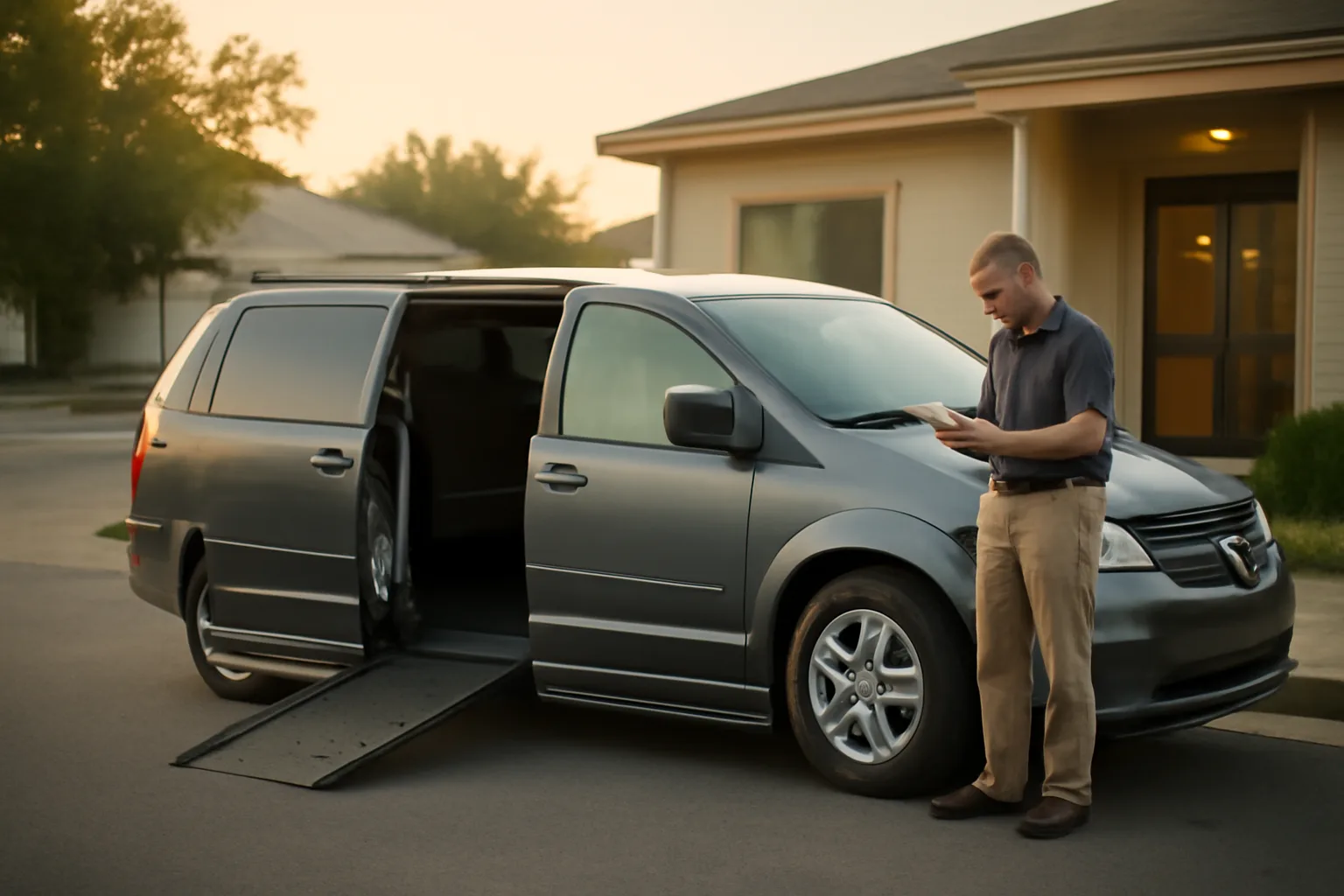
NEMT stands for non-emergency medical transportation. It is transportation to and from covered medical services for people who don't have a disability or emergency requiring an ambulance, but who also don't have a car, a valid license, or anyone able to drive them. Think dialysis three times a week, a monthly OB visit, or a same-day sick visit for a kid on Medicaid whose mom doesn't drive. The federal government requires state Medicaid programs to make sure eligible people can actually get to and from covered care. The rule lives in 42 CFR 431.53, which says states must "ensure necessary transportation for beneficiaries to and from providers" and may do this directly, through contracts, or through mileage reimbursement [1]. That single sentence in federal code is the whole legal foundation of the NEMT industry. Every broker contract, every state transportation manual, every wheelchair van company's Medicaid enrollment traces back to it. NEMT is not an ambulance. It's not a paramedic crew, oxygen, or lights and sirens. It's a sedan, a wheelchair-accessible van, or sometimes a stretcher van, driven by someone trained in passenger assistance and CPR/first aid, getting a Medicaid member to a doctor and home again. Some states also call this "non-emergency medical transportation services" or fold it into a broader medical transportation benefit that includes mileage reimbursement for a friend or family member who drives the member themselves.
does medicaid cover ambulance rides?
Yes, but through a different benefit than NEMT. Medicaid covers emergency ambulance transportation when a member's condition requires immediate care and other transport would risk their health, and it covers non-emergency ambulance transport (like a stretcher-level transfer between facilities) when a lower level of transport isn't medically appropriate. States set their own rates and prior authorization rules for ambulance, and CMS's Medicaid benefits overview confirms transportation is included among mandatory and optional benefits states must address [2]. Here's the distinction that trips people up: ambulance transport is billed as a medical service, usually through the state's fee-for-service system or a managed care plan, and it requires licensed EMS personnel and a certified ambulance. NEMT is arranged transportation, usually through a broker, using a wheelchair van, ambulatory sedan, or stretcher van that is not an ambulance and does not provide medical care en route beyond basic passenger assistance. If you're buying a wheelchair van and thinking about NEMT, you are not entering the ambulance business. Different licensing, different vehicle certification, different reimbursement path. Confirm with your state Medicaid agency which benefit category covers stretcher-van transport in your state, because a few states route stretcher runs through the ambulance side rather than NEMT.
does medicare cover medical transportation?
Mostly no. Original Medicare Part B covers ambulance services only when transportation by any other means would endanger the person's health, per 42 CFR 410.40, and it generally does not cover routine rides to a doctor's office or dialysis in a wheelchair van [3]. This is the single biggest confusion point for new NEMT operators. Medicare is not a reliable payer source for standard NEMT trips the way Medicaid is. There are exceptions. Some Medicare Advantage (Part C) plans offer NEMT as a supplemental benefit. CMS finalized a rule in 2019 that gave Medicare Advantage plans more flexibility to offer supplemental benefits that are not "primarily health related," which opened the door for transportation as a covered extra in many plans starting with the 2020 plan year; the rule itself is published at 84 Fed. Reg. 15680 [4]. If you want Medicare Advantage trips, you'd be credentialing with the specific MA plan or its transportation broker (often the same brokers who run Medicaid NEMT, like Modivcare or MTM, wearing a different contract hat), not with traditional Medicare. So the honest answer for a new owner-operator: build your business plan around Medicaid NEMT and Medicaid managed care NEMT first. Treat Medicare Advantage broker contracts as a possible second revenue stream you pursue after you're already running, not your starting point.
what is non-emergency medical transportation, exactly, and who runs it?
Non-emergency medical transportation is the door-to-door or curb-to-curb ride benefit that gets Medicaid members to covered appointments when they have no other transportation option. Most states don't run this in-house anymore. Instead they contract with a transportation broker who manages a network of local transportation providers, schedules trips, and pays claims. The big national brokers you'll hear about constantly are Modivcare (formerly LogistiCare), MTM (Medical Transportation Management), Access2Care, and SafeRide Health. Some states use one statewide broker, others carve it up by region, and a handful still manage NEMT directly through the state Medicaid agency or through managed care organizations that subcontract their own transportation vendor. There is no single national rulebook; each state Medicaid transportation unit sets its own provider enrollment and broker credentialing requirements, so "confirm with your broker and state Medicaid agency" is not a cop-out, it's the actual process. As an owner-operator, you'll typically deal with two separate approval processes that don't automatically unlock each other: state Medicaid provider enrollment (getting a Medicaid provider or trading partner number) and broker credentialing (getting approved into the broker's transportation network so trips actually get dispatched to you). You can be Medicaid-enrolled and still have zero trips if you're not also credentialed with the broker running your region. For background on the overall benefit landscape, see non emergency medical transportation and nemt transportation.
how to start a medical transportation business
Start with the legal and financial skeleton before you touch a vehicle. Form your business entity (LLC is standard for liability reasons), get a federal EIN, open a business bank account, and get commercial auto insurance quoted early because NEMT insurance is its own animal and pricing surprises people. Confirm with your state Medicaid agency and insurance department what minimum liability limits NEMT vehicles must carry; many broker contracts require $1 million combined single limit per vehicle, though this varies by state and by broker. Next, nail down your vehicle. A used wheelchair-accessible minivan (Dodge Grand Caravan, Honda Odyssey, or Toyota Sienna with a factory or aftermarket conversion) is the most common entry vehicle, and it needs to meet the Americans with Disabilities Act accessibility standards along with any state-specific vehicle inspection and lift-certification rules. Some states require an annual DOT or state highway patrol inspection specific to wheelchair lifts and tie-downs; confirm this with your state's transportation or Medicaid unit before you buy. Then line up drivers, even if that's just you at first. Most states and brokers require a background check, a motor vehicle record check, drug testing, CPR/First Aid certification, and passenger assistance/wheelchair securement training. Some states also require a specific NEMT driver certification course. Build this checklist before you enroll, because credentialing applications ask for proof of all of it upfront, not as a promise to get to later. Finally comes the two-track paperwork: state Medicaid provider enrollment and broker network credentialing. Do them in parallel where the state allows it, since each can take weeks and the broker application often asks whether you already have your Medicaid provider number.
how to start a nemt business step by step
Here's the realistic order of operations, based on how state Medicaid transportation units and brokers structure their requirements. Steps vary by state, so treat this as the shape of the process, not a guarantee of your state's exact sequence. 1. Register your business entity and get your EIN. 2. Get a NEMT-appropriate commercial auto insurance policy quoted (not a personal or rideshare policy). 3. Buy or convert your wheelchair van and get it inspected/certified to your state's accessibility and safety standard. 4. Complete driver requirements: background check, MVR, drug screen, CPR/First Aid, passenger assistance training. 5. Apply for your state Medicaid provider enrollment as a transportation provider (this is a separate application from broker credentialing). 6. Apply for broker network credentialing with the broker(s) operating in your county or region (Modivcare, MTM, Access2Care, SafeRide, or a regional/local broker, depending on your state). 7. Set up dispatch and billing systems: many brokers require electronic trip verification, GPS-based mobile apps, or specific claims-submission formats. 8. Pass any required vehicle and facility inspection before your first dispatched trip. None of these steps guarantee approval or a certain trip volume; brokers approve providers based on their own network capacity needs in a given service area, and some regions have closed networks or waitlists. If you want a structured way to organize the paperwork across both tracks, RideCredential's $199 State + Broker NEMT Launch Kit is built specifically around this two-track process, though you can absolutely assemble every piece yourself directly from your state Medicaid transportation unit's website and each broker's provider portal.
how do you start a medical transportation business with one van?
One van is how almost every owner-operator in this industry actually starts. It's a completely normal and often deliberate way to enter, not a limitation you need to apologize for on an application. The practical adjustments for a one-van operation: you are almost certainly also the driver, at least at first, so your own background check, MVR, and training have to be spotless and current before you submit anything. Your insurance cost per vehicle will look higher as a share of your total spend than a fleet operator's, because commercial NEMT insurance has real fixed minimums regardless of fleet size; get at least two or three quotes from carriers who specifically write NEMT or paratransit policies, not general commercial auto. Some brokers cap or deprioritize single-vehicle providers in oversaturated markets, and some counties have closed provider networks where they're not accepting new vendors at all regardless of vehicle count. Before you buy a van, call your state Medicaid transportation unit and ask directly whether your county's broker network is open to new providers. That single phone call can save you from buying a $25,000 to $45,000 used conversion van before you know there's a place for you to actually drive it. Once you're credentialed, growing from one van to two or three is usually far faster than the first approval, since you're adding a vehicle and driver to an existing, already-vetted provider file rather than starting from zero.
state medicaid enrollment vs broker credentialing: what's the difference?
| Who runs it | State Medicaid agency (or its enrollment contractor) | Private broker (Modivcare, MTM, Access2Care, SafeRide, or regional broker) | |
|---|---|---|---|
| What it gives you | A Medicaid provider number / trading partner ID | Access to the broker's dispatch network in your service area | |
| Typical requirements | Business licensing, tax ID, ownership disclosure, background checks | Vehicle inspection, insurance certificate, driver files, sometimes a facility check | |
| Can it be denied for network capacity reasons? | Rarely (states generally must enroll qualified providers) | Yes, brokers can decline based on network need | |
| Where to confirm specifics | Your state Medicaid transportation unit's website | The broker's own provider enrollment page for your state | For more on the broker side of this, nemt and non emergency medical transportation services cover how individual state programs structure their broker contracts. |
State Medicaid provider enrollment makes you a recognized Medicaid provider with a provider number, tax ID on file, and background checks cleared through the state's system, often via a national contractor like the Medicaid Provider Enrollment portal your state uses. Broker credentialing is a separate, private-contract process where a broker like Modivcare or MTM decides whether to let your vehicles and drivers into their dispatch network for a specific service area. You generally need both, and the order matters less than making sure you don't assume one substitutes for the other. Some states require Medicaid enrollment to be complete before a broker will even open your file; others let you start broker credentialing while Medicaid enrollment is pending. This differs by state, so confirm the sequence directly with your state Medicaid agency's transportation unit and with the broker's provider relations department before you submit either application. | Step | State Medicaid Enrollment | Broker Credentialing |
what documents and requirements does credentialing usually ask for?
Expect both processes to ask for a version of the same core file, even though they're separate applications. Business formation documents (articles of organization, EIN letter), proof of commercial auto insurance meeting minimum limits, vehicle registration and accessibility/lift certification, and a roster of drivers with background checks, MVR pulls, drug test results, and training certificates are close to universal. Brokers typically add operational requirements on top: a signed provider agreement or contract, proof of a working dispatch/communication system, sometimes a GPS or electronic verified transportation system (EVV-adjacent tools some states now require for trip verification), and a facility or vehicle inspection scheduled before your go-live date. States sometimes require a surety bond or specific Medicaid provider agreement signature alongside your enrollment. Keep every document in one file from day one; digital and physical copies. Credentialing delays are overwhelmingly caused by missing or expired paperwork (an insurance certificate that lapsed, a background check that aged out, a driver certification that expired mid-review), not by anything dramatic. A simple folder system per vehicle and per driver saves weeks.
how long does it take to get approved and start getting trips?
There's no single national timeline, and any article that gives you one exact number for every state is guessing. What's true across most states: Medicaid provider enrollment commonly takes several weeks to a few months depending on how complete your application is and how backed up the state's enrollment unit is, and broker credentialing runs on a similar or sometimes faster timeline once your Medicaid enrollment and insurance are in place. The biggest delay drivers aren't mysterious. Incomplete driver files, insurance certificates that don't list the broker as a certificate holder when required, vehicles that haven't passed inspection yet, and missing background check results account for most of the back-and-forth. Submitting a genuinely complete package the first time is the single biggest thing you control. Once credentialed, getting trips dispatched to you depends on the broker's network need in your specific service area on a given day, more than your approval status. Being approved and being busy are two different milestones.
what does it cost to get started, roughly?
Costs vary enormously by state, vehicle age and condition, and insurance market, so treat these as rough, honest ranges rather than promises. A used wheelchair-accessible conversion van typically runs from around $20,000 to $50,000+ depending on age, mileage, and lift type, with newer or lower-mileage conversions costing more. Commercial NEMT insurance premiums vary widely by state and driving history; get quotes from carriers that specifically write NEMT or paratransit coverage rather than assuming a standard commercial auto quote applies. On top of the vehicle and insurance, expect fees for business registration, any required state vehicle inspection, driver background checks and drug screening (often $50 to $150 per driver depending on the vendor and state), and CPR/First Aid or passenger assistance training courses (often $50 to $150 per person). None of these numbers are fixed nationally; confirm current fees with your state's business registration office, your insurance broker, and your background check vendor. What we won't do here is tell you what you'll earn once you're running. Trip volume, per-trip or per-mile reimbursement rates, and broker payment terms differ so much by state and county that any earnings estimate you read online is a guess dressed up as a fact. Build your budget around your actual costs, not around someone else's assumed revenue.
what mistakes do new owner-operators make most often?
The most common mistake is buying the van before confirming the broker network in your service area is even open to new providers. A closed or capacity-limited network means a perfectly good wheelchair van sitting idle while you wait, or worse, while you look for a different county to serve. The second most common mistake is treating Medicaid enrollment and broker credentialing as one process. They're not. Getting your Medicaid provider number does not automatically get you into Modivcare's or MTM's dispatch network, and vice versa; you need both files complete, and each has its own document requirements, renewal dates, and point of contact. Third: underestimating insurance. General commercial auto policies frequently don't meet broker minimum liability requirements or don't cover wheelchair lift operation and passenger assistance the way a real NEMT policy does. Shop this specifically and early, because insurance approval timing can hold up your whole credentialing file. Fourth: letting a document expire mid-review. A background check, insurance certificate, or driver certification that's valid on submission day but expires while the state or broker is still processing your file can bounce you back to the start of the queue. Track expiration dates like they're due dates on a loan.
Frequently asked questions
what is nemt?
NEMT (non-emergency medical transportation) is transportation to and from covered medical appointments for Medicaid members who have no other way to get there and don't need an ambulance. States must ensure this under federal rule 42 CFR 431.53, usually by contracting with a transportation broker who manages a network of vehicle providers.
does medicaid cover ambulance rides?
Yes. Medicaid covers emergency and, in many states, medically necessary non-emergency ambulance transport as part of its mandatory and optional transportation benefits, per CMS guidance on Medicaid benefits. Ambulance is billed separately from NEMT and requires licensed EMS personnel and a certified ambulance, not a wheelchair van.
does medicare cover medical transportation?
Original Medicare Part B covers ambulance transport only when other transportation would endanger the patient's health (42 CFR 410.40), and it does not typically cover routine wheelchair-van or sedan rides to appointments. Some Medicare Advantage plans offer NEMT as a supplemental benefit; confirm with the specific plan.
how to start a medical transportation business?
Form your business entity, get NEMT-specific commercial auto insurance, buy or convert an accessibility-compliant vehicle, complete driver background checks and training, then pursue state Medicaid provider enrollment and broker network credentialing in parallel where your state allows it. Confirm exact sequencing with your state Medicaid transportation unit.
how to start a nemt business?
Register your entity, secure insurance and a compliant wheelchair van, complete driver background checks and CPR/passenger assistance training, then apply for state Medicaid enrollment and broker credentialing (Modivcare, MTM, Access2Care, SafeRide, or a regional broker). Both approvals are usually required before you receive dispatched trips.
how do you start a medical transportation business?
Build the business foundation first (entity, EIN, insurance quotes), then handle the vehicle and driver compliance side, then pursue the two credentialing tracks: state Medicaid provider enrollment and broker network credentialing. Neither guarantees trip volume, and broker networks can be closed in some counties.
what is non emergency medical transportation?
It's the Medicaid transportation benefit that covers rides to covered medical services for members who aren't in a medical emergency but lack any other way to get there, delivered through wheelchair vans, ambulatory sedans, or stretcher vans, typically arranged through a state-contracted broker rather than billed like an ambulance run.
how to start a medical transportation business with one van?
Start exactly like a fleet operator legally (entity, insurance, Medicaid enrollment, broker credentialing) but expect to be your own driver initially, so your own background check and training must be current. Call your state Medicaid transportation unit first to confirm your county's broker network is open to new providers before buying the van.
how to start a non-emergency medical transportation business?
Set up your LLC and EIN, get NEMT-appropriate insurance, buy an ADA-accessible wheelchair van, complete driver background checks and passenger-assistance training, and apply for both state Medicaid provider enrollment and broker credentialing. Timelines and requirements differ by state, so confirm specifics with your state Medicaid transportation unit and target broker.
is nemt the same as an ambulance service?
No. NEMT uses non-ambulance vehicles (wheelchair vans, accessible sedans, sometimes stretcher vans) driven by trained but non-paramedic personnel, and it's arranged through a broker rather than billed as an emergency medical service. Ambulance transport requires licensed EMS crews and a certified ambulance vehicle.
do i need to be Medicaid-enrolled and broker-credentialed, or just one?
In almost every state you need both. Medicaid provider enrollment gives you a provider number recognized by the state; broker credentialing gets your vehicles and drivers into the dispatch network that actually assigns trips. Confirm your state's required sequence with the Medicaid transportation unit and your target broker.
which brokers should i expect to deal with?
Modivcare, MTM (Medical Transportation Management), Access2Care, and SafeRide Health are the largest national NEMT brokers, though several states use regional or local brokers instead, and some manage NEMT directly through Medicaid managed care plans. Confirm which broker(s) operate in your specific county with your state Medicaid agency.
can i get denied even if i'm fully Medicaid-enrolled?
Yes. Broker credentialing is a separate, private decision based partly on the broker's network capacity in your service area, more than whether your paperwork is complete. Some counties have closed or capacity-limited networks; call the broker's provider relations line before assuming approval is guaranteed.
Sources
- eCFR, 42 CFR 431.53: States must ensure necessary transportation for Medicaid beneficiaries to and from providers
- Medicaid.gov, Medicaid Benefits: Transportation, including ambulance, is among the mandatory and optional benefits states must address in their Medicaid programs
- eCFR, 42 CFR 410.40: Medicare Part B covers ambulance services only when other transportation would endanger the beneficiary's health
- Federal Register, 84 FR 15680 (Medicare and Medicaid Programs; Policy and Technical Changes to the Medicare Advantage, Medicare Prescription Drug Benefit, and PACE Programs for 2019 and 2020): CMS finalized a rule expanding flexibility allowing Medicare Advantage plans to offer non-primarily health-related supplemental benefits, including transportation, starting with the 2020 plan year
- 42 U.S.C. 1396a(a)(4) (Social Security Act Section 1902(a)(4)): State Medicaid plans must provide such methods of administration as are found necessary for proper and efficient operation, the statutory basis CMS cites for the NEMT assurance-of-transportation requirement
- Americans with Disabilities Act Title III regulations, 28 CFR Part 36: Vehicles and facilities used in transportation services must meet federal accessibility standards under the ADA
- eCFR, 42 CFR 431.107: States must have provider agreements meeting specific federal requirements as part of Medicaid provider enrollment