Last updated 2026-07-25
TL;DR
New York doesn't issue a standalone "NEMT license." You enroll as a Medicaid transportation provider through eMedNY, get your vehicles marked under NYSDOH Part 405/1002 rules, and then credential with the regional Medicaid transportation broker (often Medical Answering Services, MAS) that manages trip dispatch in your county.
Is there actually a New York State NEMT license?
No. New York does not have a single state agency that hands out a document called an "NEMT license." What it has instead is a layered system: state vehicle and driver rules from the Department of Health, county-level or regional broker credentialing, and Medicaid provider enrollment through eMedNY. People search for "NEMT license New York" because that's the plain-English way to describe getting legal to bill Medicaid for rides, but the actual process is enrollment plus credentialing, not licensure in the traditional sense. The closest thing to a state permit is the vehicle and operator registration under New York's ambulance and medical transportation rules (Public Health Law Article 30 covers ambulance services; non-emergency vehicle transport programs are governed separately under NYSDOH Part 405 nursing home transport rules and county social services regulations) [1]. If you're running wheelchair vans rather than ambulettes tied to a specific facility, your real gatekeepers are: eMedNY provider enrollment, your regional Medicaid transportation manager or broker, and county DMV/vehicle inspection requirements for wheelchair-accessible vehicles. Confirm the exact structure with your county Medicaid transportation unit and your assigned broker, because New York runs transportation management differently upstate versus in the five boroughs, and the entity that credentials you in Erie County is not the same one that credentials you in Nassau County. For a broader look at how this compares to other states, see our state guides for NEMT and the general medical transportation overview.
How do I start a NEMT business in New York, step by step?
Start with the business basics before you touch a Medicaid application: form your LLC or corporation with the New York Department of State, get an EIN from the IRS, and set up a business bank account. Then work through vehicle compliance, insurance, and driver requirements before you ever submit a Medicaid enrollment packet, because brokers and eMedNY will ask for proof of all of it. Here's the realistic sequence: 1. Register your business entity with the NY Department of State and get your EIN. 2. Buy or lease your wheelchair van(s) and get them inspected to meet accessible vehicle standards (wheelchair lockdowns, ramp or lift, and NY DMV inspection). 3. Get commercial auto insurance with the liability limits your county or broker requires (this varies; some regions require limits well above New York's minimum financial responsibility levels). 4. Enroll as a Medicaid provider through eMedNY, New York's Medicaid Management Information System operator [2]. 5. Get NPI numbers for your business and drivers as required. 6. Apply for credentialing with the regional Medicaid transportation broker covering your county (Medical Answering Services, LLC, known as MAS, manages transportation in most upstate and many downstate counties) [3]. 7. Complete driver background checks, drug testing, and any defensive driving or passenger assistance training the broker requires. 8. Wait for approval and a trip assignment start date. This can take weeks to a few months depending on the county's backlog; there's no fixed statewide timeline, so confirm current processing estimates with your broker. If you already have general questions about what this business model even involves, our non emergency medical transportation explainer covers the basics before you commit money to a van.
What is non-emergency medical transportation (NEMT), exactly?
NEMT is transportation for people who need to get to medical appointments, dialysis, adult day programs, or pharmacy pick-ups but don't need an ambulance. The federal Medicaid program requires states to guarantee "necessary transportation for beneficiaries to and from providers" as a condition of the program, codified at 42 CFR 431.53 [4]. Medicaid.gov describes it directly: NEMT is transportation for Medicaid enrollees who have no other way to get to covered medical services [5]. In practice, NEMT vehicles range from ambulettes and wheelchair vans to sedans and, in some counties, public transit vouchers or mileage reimbursement for a family member's car. A wheelchair van owner-operator sits in the middle of that spectrum: not an ambulance, but equipped for riders who can't transfer into a regular car seat. New York's Medicaid transportation benefit is one of the largest in the country by enrollment, since New York's Medicaid program covers over 7 million people [6], and the state has used regional brokers since the mid-2000s specifically to manage the volume and cost of this benefit.
Does Medicaid cover ambulance rides, and how is that different from NEMT?
Yes, Medicaid covers ambulance transportation when it's medically necessary, meaning any other means of transport would endanger the person's health, per federal Medicaid transportation rules [4]. That's a completely different lane from what you're licensing for as a wheelchair van operator. Ambulance transport in New York is regulated under Public Health Law Article 30 and requires state certificate of need approval, State Emergency Medical Services Council oversight, and EMT/paramedic-level staffing [1]. That's a heavier regulatory lift with its own licensing track through the New York State Department of Health Bureau of EMS. NEMT, by contrast, doesn't require EMT certification for most wheelchair van work. Your drivers typically need a valid license, a clean background check, and sometimes passenger assistance or CPR training set by the broker, not full EMS credentialing. If your business plan involves both wheelchair vans and ambulettes with medical staff aboard, you're looking at two separate regulatory paths, and you should talk to NYSDOH's Bureau of EMS directly before assuming your wheelchair van credentialing covers it.
Does Medicare cover medical transportation the same way Medicaid does?
No, and this trips up a lot of new operators. Medicare covers ambulance transportation under Medicare Part B when it's medically necessary and other transportation would endanger health, per CMS guidance on ambulance services [7]. Medicare generally does not cover routine non-emergency transportation like a ride to a dialysis appointment in a wheelchair van, unless it's a scheduled non-emergency ambulance trip that meets specific medical necessity documentation, which CMS requires prior authorization for in some cases. Some Medicare Advantage plans have added NEMT as a supplemental benefit in recent years, but that's plan-specific, not a Medicare fee-for-service entitlement. If your business plan leans on Medicare Advantage NEMT contracts, you're negotiating directly with the individual plan or its transportation vendor (often the same brokers who manage Medicaid, like Modivcare or MTM), not enrolling through a state Medicaid channel. This matters for your New York plan because most wheelchair van revenue in this space comes from Medicaid NEMT, not Medicare, so don't build your first-year plan around Medicare trips.
How does eMedNY provider enrollment work for NEMT?
eMedNY is New York's Medicaid claims processing system, and it's where you formally become a Medicaid-enrolled transportation provider. The enrollment packet asks for your business structure, tax ID, ownership disclosure, vehicle information, and often a site visit or documentation review [2]. A few things that catch new operators off guard: - You need a National Provider Identifier (NPI) even if you're a small operator with one van, and the enrollment ties your NPI to your Medicaid provider ID.
- Ownership disclosure requirements under federal rules (42 CFR 455 Subpart B) apply to Medicaid provider enrollment generally, including transportation providers, so be ready to disclose anyone with 5% or more ownership interest [8].
- eMedNY enrollment is necessary but not sufficient. Enrollment lets you bill Medicaid; it doesn't guarantee a broker will send you trips. You still need broker credentialing separately, and in many counties the broker won't even start your credentialing file until eMedNY enrollment is confirmed. Confirm current eMedNY enrollment forms and required attachments directly on the eMedNY provider enrollment page before you start, because forms and required documentation get updated periodically.
Who is the NEMT broker in New York, and do I have to work with them?
For most of New York outside New York City, Medical Answering Services, LLC (MAS) is the transportation manager that handles trip authorization, scheduling, and provider credentialing under contract with the state [3]. New York City has used its own transportation management structure historically, and coverage arrangements have shifted over the years, so confirm the current broker or manager for your specific borough or county with the NYSDOH Medicaid transportation unit rather than assuming it's the same statewide. You generally do have to work with whichever broker or manager covers your county if you want Medicaid trip volume, because the broker controls dispatch. Direct billing to Medicaid without going through the regional manager is uncommon in New York's current model; most counties moved to a broker system specifically to centralize authorization and reduce fraud and duplicate billing. Credentialing with the broker typically means a separate application on top of your eMedNY enrollment: vehicle inspection sign-off, insurance certificates naming the broker or state as certificate holder in some cases, driver rosters, and background check results. Ask your broker directly for their current credentialing checklist, because these change and a checklist from even two years ago may be missing a step they've since added. If you want a side-by-side sense of how broker credentialing compares across states, our nemt transportation hub page has links to other state processes.
What vehicle and driver requirements apply to a NY wheelchair van?
| Driver's license | Valid NY license, class depends on vehicle GVWR | DMV and broker | |
|---|---|---|---|
| Background check | Criminal history check, sometimes fingerprint-based | Broker/county | |
| Drug testing | Pre-employment and random, especially for Medicaid-funded routes | Broker | |
| Passenger assistance training | Often required for wheelchair securement | Broker | |
| CPR/First Aid | Frequently required, not always | Broker | |
| Vehicle inspection | NY DMV inspection plus accessibility equipment check | DMV/broker | Don't assume your broker's list matches a neighboring county's list. This is one of the most common expensive mistakes new operators make: they build a driver file to one broker's specs and then can't cross into a second county's contract without redoing background checks or training. |
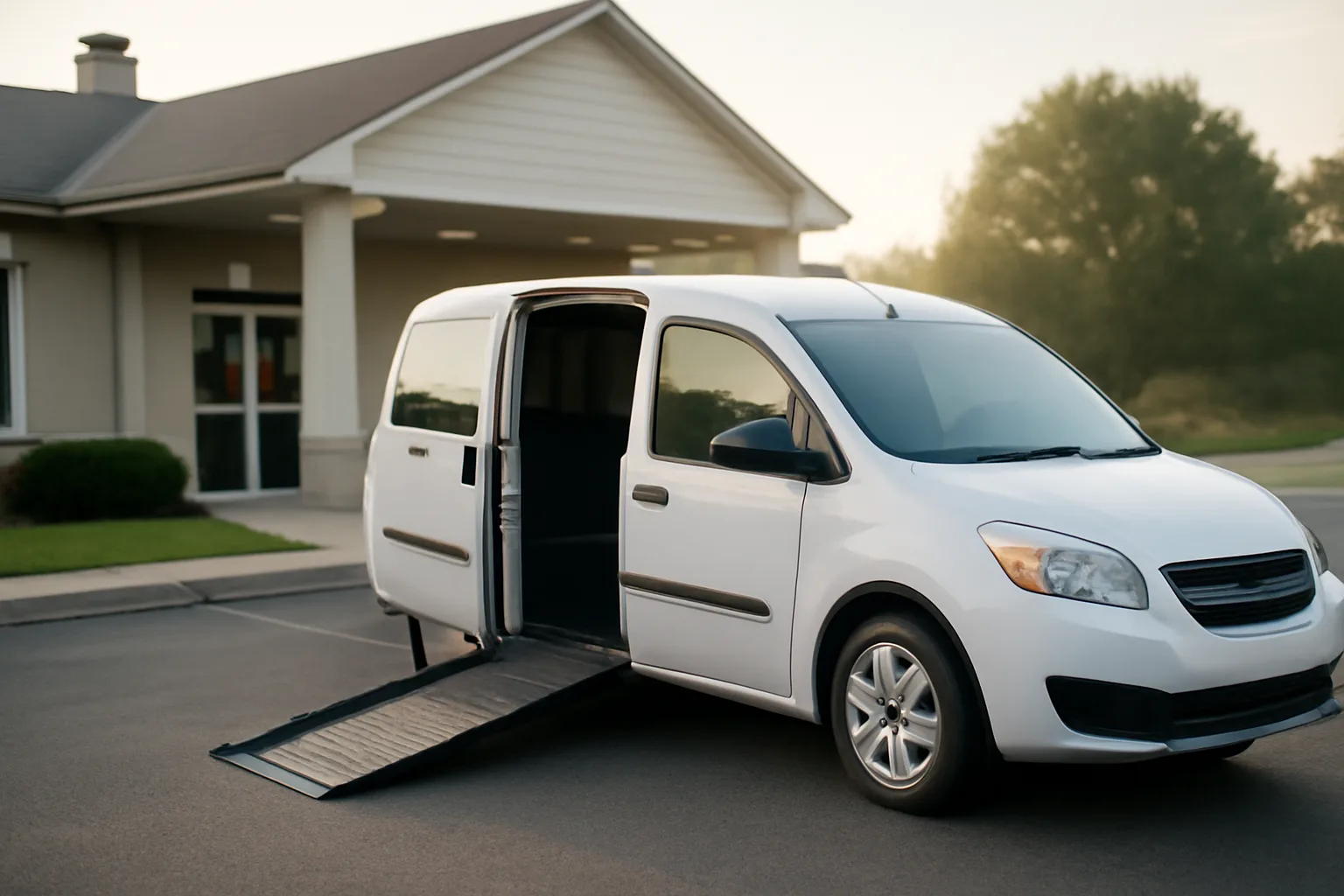
Your wheelchair van needs a standard DMV vehicle inspection plus whatever accessibility equipment standards your broker or county requires (secured wheelchair lockdowns, functioning ramp or lift, and usually a specific number of tie-down points). New York doesn't have one universal statewide wheelchair van equipment code that applies identically in every county; it's layered through DMV inspection rules, broker-specific vehicle standards, and in some cases county social services department sign-off. Driver-side, expect these categories of requirement, though exact specifics vary by broker and county: | Requirement | Typical standard in NY NEMT | Confirm with |
How much does it cost to start a NEMT business with one van in New York?
There's no single official number for this because it depends heavily on whether you buy new or used, finance or pay cash, and what insurance market you land in. A wheelchair-accessible van (new conversion) commonly runs somewhere in the tens of thousands of dollars, and used conversions can be significantly less, but conversion quality and mileage vary enormously, so get an independent mobility equipment inspection before buying used. Beyond the vehicle, budget for: business registration fees with the NY Department of State (a few hundred dollars for LLC filing), commercial auto insurance (this is often the biggest recurring cost surprise for new operators, and NEMT-specific commercial policies cost more than personal auto because of passenger liability exposure), driver background checks and drug testing per hire, and any broker credentialing fees. We deliberately aren't giving you a total dollar figure here, because anyone who tells you "NEMT startup costs $X" without knowing your vehicle condition, county, and insurance market is guessing. Get quotes for your specific van and county before committing. What we can tell you: skip guessing at the paperwork sequence and it'll cost you real time. A lot of new operators lose weeks bouncing between eMedNY, DMV, and broker offices because they didn't know the order things needed to happen in. That's the exact gap a state-specific document checklist closes, which is why we built the $199 State + Broker NEMT Launch Kit, a one-time packaged checklist covering state enrollment and the major broker credentialing steps side by side.
How do you start a medical transportation business if you're not sure NEMT is the right model?
Start by defining what kind of trips you actually want to run, because "medical transportation business" covers ground from BLS ambulance services down to a single sedan doing Medicaid rides to dialysis. If you're buying a wheelchair van, you're almost certainly aiming at the NEMT lane, not ambulance transport, and that's the right call for most new small operators because it doesn't require EMT staffing or a certificate of need. The honest starting question is: who's going to pay you? If it's Medicaid, you need eMedNY enrollment and broker credentialing as described above. If it's private pay (families paying out of pocket for non-Medicaid rides), you can often start operating faster since you skip Medicaid enrollment entirely, but you also give up the more predictable trip volume that broker dispatch can provide. Some operators start private-pay and add Medicaid credentialing once they have vehicles and drivers proven out; others go straight for Medicaid enrollment because that's where the bulk of demand sits in their county. Either way, get your entity, insurance, and vehicle compliance sorted first. Nothing about broker credentialing moves faster because you skipped the boring business setup steps.
What documentation do brokers and eMedNY actually ask for?
Expect to assemble, roughly: articles of organization or incorporation, EIN confirmation letter, NPI documentation, certificate of insurance meeting minimum limits, vehicle registration and inspection records, driver license copies, background check and drug test results, and a completed provider enrollment application specific to eMedNY plus a separate broker credentialing application. Some counties or brokers also want a copy of your business's Medicaid provider agreement once eMedNY approves you, W-9 forms, and banking information for electronic funds transfer of claim payments. If you plan to use subcontracted drivers rather than employees, be ready for extra disclosure since Medicaid ownership and control rules under 42 CFR 455 extend scrutiny to certain contracted relationships [8]. Because every county and broker updates its exact document list on its own schedule, treat any checklist (including this one) as a starting draft, then confirm the live version with your broker and the NYSDOH Medicaid transportation unit before submitting anything.
Frequently asked questions
Is there a separate New York State license just for NEMT drivers?
No single statewide "NEMT driver license" exists. Drivers need a valid NY driver's license appropriate to the vehicle class, plus whatever background check, drug testing, and passenger assistance training the regional broker or county requires. Requirements vary by broker, so confirm the current list with whichever entity (often Medical Answering Services) manages your county before hiring drivers.
What is NEMT?
NEMT stands for non-emergency medical transportation: rides to medical appointments, dialysis, or pharmacies for people who don't need an ambulance but can't drive themselves or use regular transit. Medicaid.gov describes it as transportation for enrollees with no other way to reach covered medical services. It includes wheelchair vans, ambulettes, sedans, and sometimes transit vouchers.
Does Medicaid cover ambulance rides in New York?
Yes, Medicaid covers medically necessary ambulance transportation under federal rules at 42 CFR 431.53, and New York's ambulance services are separately regulated under Public Health Law Article 30 through the state's Bureau of EMS. That's a distinct licensing track from wheelchair van NEMT and requires EMT-level staffing and certificate of need approval.
Does Medicare cover medical transportation the same way Medicaid NEMT does?
No. Medicare Part B covers ambulance transport when medically necessary, per CMS guidance, but generally does not cover routine non-emergency rides like wheelchair van trips to dialysis under standard fee-for-service Medicare. Some Medicare Advantage plans add NEMT as a supplemental benefit, but that's negotiated per plan, not a standard Medicare entitlement.
How do I start a NEMT business in New York?
Register your business entity, get an EIN, buy or lease a compliant wheelchair van, secure commercial auto insurance, enroll as a Medicaid provider through eMedNY, get NPI numbers, then apply for credentialing with your county's regional Medicaid transportation broker. Driver background checks and training typically happen alongside broker credentialing, not before you've picked a vehicle.
How much does it cost to start a NEMT business with one van?
Costs vary too much by vehicle condition, financing, and county insurance rates to give one honest number. Budget for the van itself (new conversions often run into the tens of thousands), commercial auto insurance with passenger liability coverage, LLC filing fees with the NY Department of State, and per-driver background check and drug test costs. Get quotes before assuming a total.
Who is the Medicaid transportation broker in New York?
Medical Answering Services, LLC (MAS) manages Medicaid transportation for a large share of New York counties outside New York City under contract with the state. New York City's arrangement has changed over time, so confirm the current broker or transportation manager for your specific county or borough directly with the NYSDOH Medicaid transportation unit.
Do I need an eMedNY provider number even if I only have one van?
Yes. eMedNY enrollment is how you become a Medicaid-billable provider in New York regardless of fleet size, and it requires an NPI, ownership disclosure, and business documentation. One-van operators go through the same enrollment system as larger fleets; there's no small-operator exemption for enrollment itself.
How is NEMT different from ambulance transport for licensing purposes?
Ambulance transport in New York requires Bureau of EMS oversight, EMT or paramedic staffing, and certificate of need approval under Public Health Law Article 30. NEMT wheelchair van work generally doesn't require EMT certification; instead it requires Medicaid provider enrollment through eMedNY and broker credentialing, with driver requirements set by the broker rather than EMS regulation.
Can I run a NEMT business without ever enrolling in Medicaid?
Yes, if you plan to operate purely private-pay, taking rides paid directly by families or facilities rather than billed to Medicaid. You'd skip eMedNY enrollment and broker credentialing, but you'd also give up access to broker-dispatched Medicaid trip volume, which is a large share of demand in most New York counties.
What's the difference between provider enrollment and broker credentialing in New York?
eMedNY provider enrollment makes you a Medicaid-billable entity at the state level. Broker credentialing is a separate process with your regional transportation manager (like MAS) that actually gets you added to their driver and vehicle roster for trip dispatch. You typically need both; enrollment alone won't get you trips.
How long does it take to get approved to run Medicaid NEMT trips in New York?
There's no fixed statewide timeline. It depends on eMedNY processing volume, your county's broker backlog, and how complete your documentation is on first submission. Realistically it can take anywhere from several weeks to a few months. Confirm current processing estimates directly with your broker and the NYSDOH Medicaid transportation unit.
Sources
- New York Public Health Law, Article 30 (Emergency Medical Services): Ambulance services in New York are regulated under Public Health Law Article 30 with State Emergency Medical Services Council oversight
- eMedNY, Provider Enrollment: eMedNY is New York's Medicaid claims system and the enrollment point for Medicaid transportation providers
- New York State Department of Health, Medicaid Transportation Manager: New York uses regional transportation managers, including Medical Answering Services (MAS), to administer Medicaid NEMT in most counties
- 42 CFR 431.53, Assurance of Transportation: Federal Medicaid regulation requires states to assure necessary transportation for beneficiaries to and from providers
- Medicaid.gov, Non-Emergency Medical Transportation: Medicaid.gov defines NEMT as transportation for Medicaid enrollees with no other means to reach covered medical services
- New York State Department of Health, Medicaid Enrollment Data: New York's Medicaid program covers over 7 million enrollees
- Centers for Medicare & Medicaid Services, Ambulance Services Coverage: Medicare Part B covers ambulance transportation when medically necessary and other transport would endanger health
- 42 CFR Part 455, Subpart B, Disclosure of Ownership and Control: Federal Medicaid rules require disclosure of ownership interests of 5% or more for enrolled providers