Last updated 2026-07-25
TL;DR
A solid NEMT business plan lays out your vehicles, your state Medicaid enrollment path, your broker credentialing targets (Modivcare, MTM, Access2Care, SafeRide), your insurance, and your driver requirements in plain terms. Skip revenue guesses; lenders and Medicaid agencies care more about compliance readiness than trip-count guesses you can't actually back up yet.
What is non-emergency medical transportation (NEMT)?
Non-emergency medical transportation is scheduled transport to and from medical appointments for people who don't need an ambulance but can't drive themselves or use regular public transit. Think dialysis three times a week, physical therapy, chemo, prenatal visits, or a discharge ride home from the hospital. It's not a 911 response. No lights, no siren, no paramedic crew. Medicaid defines NEMT as an assurance states have to provide under federal law, not an optional add-on. The Code of Federal Regulations requires state Medicaid plans to "ensure necessary transportation for beneficiaries to and from providers" and to describe how they'll meet that assurance, either by paying providers directly, contracting with a broker, or some mix of both [1]. That's why almost every state now runs its Medicaid NEMT program through a broker instead of paying transportation companies directly. Modivcare, MTM, and Access2Care hold contracts across dozens of states between them; SafeRide and a handful of regional brokers cover others. Your business plan needs to name which model your target state uses, because it changes almost everything downstream: enrollment, credentialing, rate setting, even how fast you get paid. For the mechanics of that setup, see medical transportation and nemt transportation.
How do you start a medical transportation business? (the real order of operations)
Most people ask this backward. They price a van first, then wonder about paperwork. Do it in this order instead, because each step gates the next one. 1. Pick your state and county service area, and confirm whether it uses a broker model or state-run NEMT. 2. Get your business entity, EIN, and any required transportation operating authority from your state DOT or Public Utilities Commission (this varies a lot by state, confirm with your state Medicaid agency and state transportation regulator). 3. Buy or lease your vehicle(s) and get them ADA-compliant if you're doing wheelchair transport (see wheelchair van requirements for lift specs). 4. Get commercial auto insurance with the liability limits your state Medicaid program requires. 5. Enroll as a Medicaid provider with your state Medicaid agency (this is separate from broker credentialing). 6. Apply for credentialing with the broker(s) operating in your county (Modivcare, MTM, Access2Care, SafeRide, or a state-specific broker). 7. Complete driver background checks, drug testing, and any required NEMT or passenger-assistance training. 8. Wait for approval, then start taking dispatched trips. Step 5 and step 6 are not the same thing and people mix them up constantly. Medicaid provider enrollment is your legal authorization to bill Medicaid at all. Broker credentialing is a separate vetting process the broker runs on top of that, checking your insurance certificates, vehicle inspections, driver files, and often requiring its own orientation or portal setup. You need both before you can get a single dispatched trip. See nemt for a fuller walkthrough of enrollment paperwork.
How to start a NEMT business with one van
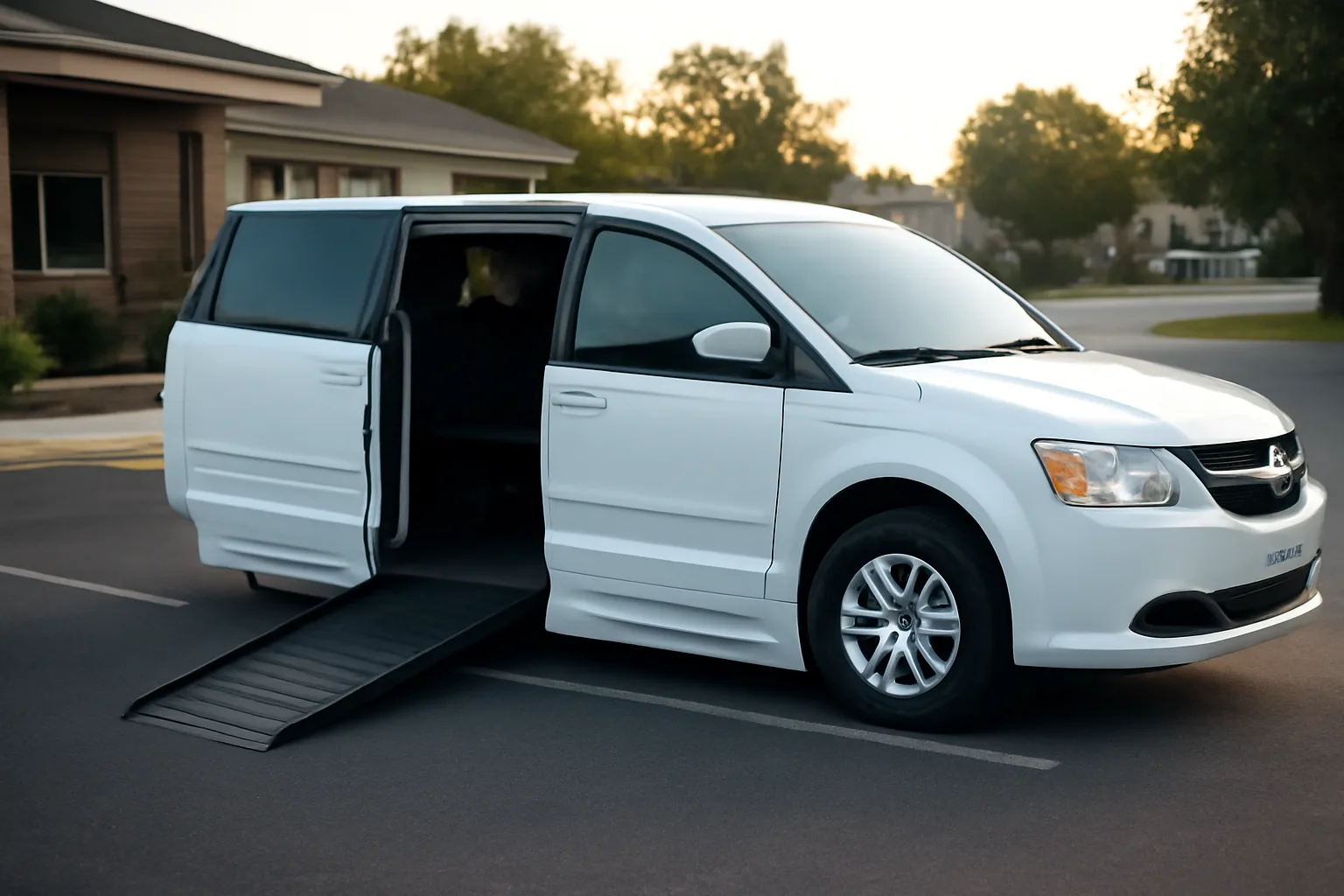
One van is a completely legitimate way to start, and plenty of owner-operators run this way for years before adding a second vehicle. The plan doesn't need to be smaller, just tighter. With a single wheelchair van, your business plan should be explicit about capacity limits: you can't accept simultaneous dispatch requests, you may need backup driver coverage for sick days, and brokers may cap how many standing (recurring) trips they'll assign to a one-vehicle fleet because a no-show risk is higher when you have zero redundancy. Say this in the plan instead of hiding it. Lenders and even brokers respect operators who are upfront about capacity. Financially, a wheelchair-accessible van conversion is the biggest line item. New ADA-compliant minivan conversions commonly run in the $45,000 to $65,000 range depending on the lift type and conversion vendor, and used/reconditioned units can run meaningfully less; get quotes from at least two conversion companies before you finalize numbers in your plan, because pricing shifts with chassis availability. Don't put a specific trip-count-based dollar guess in your plan based on "X trips per day at $Y per trip." You don't have a signed broker contract yet, you don't know your county's trip volume, and guessing here makes the whole plan look less credible, not more. Lenders who fund small fleets have seen enough of these to spot padding immediately.
What does a NEMT business plan actually need to include?
| Business summary | Entity type, state, county service area, broker model in that state | |
|---|---|---|
| Licensing and enrollment plan | State Medicaid provider enrollment status, target broker(s), timeline | |
| Vehicles and equipment | Make/model, lift type, ADA compliance, maintenance schedule | |
| Insurance | Commercial auto liability limits, whether the state requires a minimum, bond if applicable | |
| Drivers | Background check process, drug testing, CPR/first aid, passenger assistance training | |
| Operations | Dispatch method, scheduling software or manual process, backup driver plan | |
| Compliance calendar | Vehicle inspection renewal dates, insurance renewal, broker re-credentialing cycle | |
| Financials | Startup costs, monthly fixed costs, funding source; skip speculative revenue | Notice financials is last and deliberately thin on projections. Fixed costs (insurance, fuel, vehicle payment, phone/dispatch, driver pay if you're not solo) are knowable numbers. Revenue depends on broker trip assignment volume, which nobody can promise you before you're credentialed. Write the plan that way and it reads as credible instead of hopeful. |
A banker, an SBA lender, or your own sanity check doesn't need 40 pages. It needs these sections, each answering a real question a reader will actually ask. | Section | What goes in it |
How does state Medicaid provider enrollment fit into the plan?
Every state Medicaid agency runs its own provider enrollment process, and NEMT providers typically enroll as a distinct provider type separate from ambulance providers. Your plan should name the specific state Medicaid transportation unit you're enrolling with and list what that unit requires, because requirements genuinely differ state to state: some want a surety bond, some want proof of a vehicle inspection from a state-approved inspector, some require you to already hold broker credentialing before final enrollment approval. Federal Medicaid rules require states to describe their NEMT assurance method in their state plan, and the regulation gives states latitude in how they meet the transportation assurance, including operating the benefit directly, contracting with a broker, or a hybrid [1] [2]. That flexibility is exactly why you can't write a national playbook here; you write the plan for your specific state and confirm every requirement directly with that state's Medicaid transportation unit before you submit anything. Don't guess at processing times either. Some states process NEMT provider enrollment in a few weeks; others take considerably longer, especially if your application is missing a document and gets kicked back for resubmission. Build slack into your plan's timeline section, and confirm current processing time with your state Medicaid agency directly rather than trusting a number from a forum post.
How does broker credentialing (Modivcare, MTM, Access2Care, SafeRide) fit in?
Once you're enrolled with the state, you still need the broker operating your county to credential you before you get dispatched trips. This is where most new operators lose weeks they didn't budget for. Each broker runs its own credentialing packet: proof of Medicaid enrollment, current commercial auto insurance certificate naming the broker (sometimes), vehicle inspection records, driver background check results, driver training certificates, and often a signed provider services agreement with rate schedules attached. Modivcare, MTM, Access2Care, and SafeRide each have their own portal and document format, and none of them are identical, so don't assume a packet built for one broker transfers cleanly to another if your county has two active brokers. Your plan should list, county by county, which broker(s) currently hold the contract, because broker contracts do change when states rebid them. Confirm current broker assignment with your state Medicaid transportation unit before you build your credentialing timeline around a broker that might be mid-transition. This is genuinely the single most time-consuming administrative step for new owner-operators, more than vehicle purchase or insurance shopping, because it involves the most back-and-forth document requests. For a walkthrough of what states expect from providers, see non emergency medical transportation and non emergency medical transportation services.
Does Medicaid cover ambulance rides?
Yes, Medicaid covers ambulance transportation when it's medically necessary, but that's a completely different benefit category from NEMT and it pays differently. Ambulance transport (ground or air) is billed under emergency medical services codes, requires licensed EMS crews, and is reimbursed through a separate fee schedule from NEMT. Federal regulation requires state Medicaid programs to ensure beneficiaries have transportation to and from medical providers as part of the NEMT assurance [1], which is distinct from the ambulance benefit covered under each state's Medicaid ambulance policy. If your business plan is for a wheelchair van company, you are not an ambulance provider and shouldn't blur these two things in your plan or your marketing. Mixing them up on a broker application is a fast way to get flagged during credentialing review, because ambulance providers and NEMT providers go through entirely different licensing tracks (state EMS office versus state Medicaid transportation unit).
Does Medicare cover medical transportation?
Medicare's coverage of transportation is much narrower than Medicaid's. Original Medicare (Part B) covers ambulance services when other transportation could endanger the beneficiary's health, and CMS states that Medicare Part B covers "ground ambulance transportation when you've had a sudden medical emergency and your health is in danger" or in specific non-emergency situations that meet medical necessity documentation requirements [3]. Medicare generally does not cover routine non-emergency medical transportation the way Medicaid does. Some Medicare Advantage plans offer a supplemental NEMT-type benefit as a plan extra, but that's decided plan by plan and isn't a guaranteed Medicare benefit; confirm directly with the specific Medicare Advantage plan if you're trying to contract as a transportation provider for one. If your business plan targets dual-eligible clients (people on both Medicare and Medicaid), be precise in the plan about which payer is actually covering which ride, because reimbursement paths differ and mixing them up in your financial assumptions will make your numbers wrong before you even start.
What insurance and licensing does the plan need to specify?
Insurance requirements are set at the state level and sometimes layered by the broker on top, so your plan needs two insurance lines, not one: state-required minimums and broker-required minimums (which are often higher). Commercial auto liability for passenger-carrying vehicles is typically required well above a personal auto policy's minimums; some states and brokers require $1,000,000 combined single limit coverage for wheelchair-accessible vehicles specifically, though the exact figure varies by state and by broker contract. Don't put a specific dollar figure in your plan without confirming it directly with your state Medicaid transportation unit and the broker you're targeting, because this is one of the numbers that changes most often and getting it wrong on paper looks worse than leaving it as "confirm with broker" until you have the actual contract in hand. Your plan should also list any state-specific operating authority (some states require a Certificate of Public Convenience and Necessity or a for-hire vehicle permit through the state DOT, separate from Medicaid enrollment entirely), plus your commercial driver's license status if your vehicle's weight class requires it. Most single wheelchair-van conversions on a minivan chassis don't require a CDL, but larger cutaway vans might, depending on gross vehicle weight rating; check your specific vehicle spec sheet against your state's CDL threshold.
What should the driver and training section of the plan cover?
Brokers and states both scrutinize driver qualifications hard, and this section of your plan should read like a checklist a broker reviewer would actually check off. At minimum, plan for: a clean motor vehicle record check, a criminal background check (often required to go back a set number of years, varies by state), drug and alcohol testing consistent with your state's requirements, CPR and first aid certification, and passenger assistance/sensitivity training specific to wheelchair securement and transferring passengers with mobility limitations. Some states require a specific NEMT driver training curriculum or certification before a driver can be assigned trips; others leave training format up to the broker. Confirm the specific requirement with your state Medicaid transportation unit, because "CPR certified" alone is not always sufficient. If you're a true one-person operation, your plan should still name a backup driver plan, even if that backup is informal at first (a licensed family member, a per-diem contract driver). Brokers routinely ask new providers how they'll cover a no-show or sick day, and "I have no backup" is a real risk factor that shows up in credentialing reviews.
What should the vehicle and equipment section cover?
List the exact make, model, and conversion vendor for your wheelchair van, plus the lift or ramp type (side-entry versus rear-entry changes loading logistics and parking needs at pickup locations). Note the wheelchair securement system you're using, since ADA-adjacent securement standards matter to both state inspectors and broker vehicle audits. Include your maintenance and inspection schedule as a real calendar item, more than a sentence. Many states require an annual (or more frequent) vehicle inspection specifically for NEMT vehicles, sometimes through a state-approved inspection station, separate from your regular state vehicle safety inspection. Missing a renewal date is one of the more common (and entirely avoidable) reasons an active provider gets temporarily suspended from broker dispatch, so put the renewal dates directly into your plan's compliance calendar, more than in a filing cabinet somewhere. For vehicle-buying specifics, see nemt transportation and emergency medical transport for how NEMT and emergency transport equipment standards differ.
What's the realistic timeline from plan to first dispatched trip?
Nobody can give you an exact number that holds across all 50 states and every broker, and anyone who promises you a specific week count is guessing. What's realistic to plan around is a sequence with buffer built in at each stage. Entity formation and insurance shopping can often move in parallel and take a few weeks. Vehicle purchase or conversion, if you're not buying off a lot, can take longer than people expect, especially with a custom lift conversion on backorder. State Medicaid provider enrollment processing time varies significantly by state, some move in a few weeks, others take considerably longer if your application gets kicked back for a missing document. Broker credentialing typically starts only after state enrollment is confirmed, and it has its own document review cycle on top. Build your plan's timeline with the honest assumption that something gets kicked back at least once. It usually does. A plan that says "operational in 30 days" and doesn't survive a single document resubmission looks worse to a lender than a plan that says "90 to 120 days with reasonable buffer, confirmed against our specific state and broker timelines." If you want a structured starting point instead of building every checklist from scratch, a state-and-broker-specific packet like the $199 one-time State + Broker NEMT Launch Kit walks through the same enrollment and credentialing sequence tailored to your target state, though the actual approval timeline and outcome always depend on your state Medicaid agency and broker, not on any kit.
What should you leave out of a NEMT business plan?
Skip specific revenue-per-trip guesses you can't back with a signed rate schedule. Skip guaranteed trip-volume assumptions; brokers assign trips based on need in your service area, and no honest plan can promise you a set number of daily rides before you're even credentialed. Skip claiming any approval is guaranteed, because no broker or state agency guarantees credentialing outcomes, and a plan that implies otherwise will read as naive to anyone who's actually worked in this industry. Also skip generic "the NEMT market is growing" filler paragraphs with no source. If you want to cite market growth, cite an actual data source and be specific about what it measures; vague growth claims without a number attached don't help a lender evaluate your plan and they don't help you either. What you should include instead: your specific state, your specific target broker(s), your specific vehicle and its actual cost quote, your specific insurance quote once you have one, and a compliance calendar with real dates. That's a plan that survives a second read.
Frequently asked questions
How do you start a medical transportation business?
Pick your state and service area, confirm whether it uses a Medicaid broker model, set up your business entity and insurance, buy or convert your vehicle, enroll as a Medicaid provider with your state, then get credentialed with the broker (Modivcare, MTM, Access2Care, SafeRide, or your state's broker) operating in your county before accepting dispatched trips.
What is non-emergency medical transportation (NEMT)?
NEMT is scheduled transport to and from medical appointments for people who don't need ambulance-level care but can't drive or use regular transit, covering things like dialysis, therapy, and prenatal visits. Federal Medicaid rules require states to ensure this transportation is available to eligible beneficiaries, either directly or through a contracted broker [1].
Does Medicaid cover ambulance rides?
Yes, Medicaid covers medically necessary ambulance transportation, but it's billed and regulated separately from NEMT. Ambulance transport requires licensed EMS crews and goes through a state's ambulance fee schedule, while NEMT covers non-emergency rides through a different provider enrollment track entirely.
Does Medicare cover medical transportation?
Medicare Part B covers ground ambulance transportation in emergencies or specific medically necessary non-emergency situations, per CMS guidance [4]. Original Medicare generally doesn't cover routine non-emergency medical transportation; some Medicare Advantage plans offer it as a supplemental benefit, but that varies plan by plan.
How to start a NEMT business with one van?
One van is a normal way to start. Be upfront in your plan about capacity limits (no simultaneous trips, need a backup driver plan), get your vehicle ADA-compliant if doing wheelchair transport, secure commercial auto insurance meeting state/broker minimums, then complete state Medicaid enrollment and broker credentialing before accepting trips.
How much does a wheelchair-accessible van cost for NEMT?
New ADA-compliant minivan conversions commonly run roughly $45,000 to $65,000 depending on lift type and conversion vendor, with used or reconditioned units often costing less. Get current quotes from at least two conversion companies, since pricing shifts with chassis availability and lift technology.
Is Medicaid provider enrollment the same as broker credentialing?
No. State Medicaid provider enrollment is your legal authorization to bill Medicaid at all, done through your state Medicaid agency. Broker credentialing is a separate process run by Modivcare, MTM, Access2Care, SafeRide, or another broker, checking your insurance, vehicles, and driver files before they'll dispatch trips to you.
What insurance does a NEMT provider need?
You need commercial auto liability insurance meeting your state's minimum for passenger-carrying vehicles, and the broker operating your area may require higher limits on top of the state minimum. Exact figures vary by state and broker contract, so confirm current requirements directly with your state Medicaid transportation unit and target broker before buying a policy.
How long does it take to get credentialed with a NEMT broker?
There's no fixed timeline that applies everywhere; it depends on your state's Medicaid enrollment processing speed and the specific broker's document review cycle. Build in buffer for at least one round of document resubmission, since incomplete packets are common and get kicked back for corrections.
What training do NEMT drivers need?
Typical requirements include a clean motor vehicle record, criminal background check, drug and alcohol testing, CPR/first aid certification, and passenger assistance training for wheelchair securement. Some states mandate a specific NEMT driver training curriculum; confirm the exact requirement with your state Medicaid transportation unit since it varies.
Do I need a CDL to drive a wheelchair van for NEMT?
Most wheelchair van conversions on a minivan chassis don't require a commercial driver's license, but larger cutaway vans might, depending on the vehicle's gross vehicle weight rating. Check your specific vehicle's weight class against your state's CDL threshold before assuming either way.
What should a NEMT business plan financial section include?
Include known fixed costs like vehicle payment, insurance, fuel, and dispatch or phone costs, plus your actual vehicle purchase quote. Avoid specific revenue-per-trip or trip-volume guesses before you have a signed broker rate schedule, since trip assignment volume isn't something you can honestly predict before credentialing.
Which brokers run NEMT credentialing for Medicaid?
The major national brokers are Modivcare, MTM, and Access2Care, along with regional brokers like SafeRide depending on the state. Broker contracts are assigned by state (and sometimes by county) and can change when states rebid them, so confirm the current broker for your specific service area with your state Medicaid transportation unit.
Sources
- eCFR, 42 CFR 431.53 (Assurance of transportation): States must assure necessary transportation for Medicaid beneficiaries to and from providers, via direct payment or broker contract
- 42 CFR 440.170 (Transportation as a Medicaid state plan service): States have flexibility in how transportation is defined and provided as a covered Medicaid service, including via broker arrangement
- Social Security Act Section 1902(a)(70), Non-Emergency Medical Transportation brokers: Federal Medicaid statute authorizes states to use NEMT brokers to arrange transportation for beneficiaries under a broker contract
- Medicare.gov, Ambulance Services coverage: Medicare Part B covers ground ambulance transportation in emergencies and certain non-emergency medically necessary situations
- GAO-16-238, Non-Emergency Medical Transportation: Updated Medicaid Guidance Could Help States: GAO reporting on how states structure NEMT broker contracts and the oversight challenges involved