Last updated 2026-07-25
TL;DR
NEMT (non-emergency medical transportation) is transport to and from medical appointments for people who can't drive themselves and don't need an ambulance. Medicaid must cover it under federal rule 42 CFR 431.53. Medicare generally doesn't, except limited cases. Starting a business means a vehicle, state Medicaid enrollment, broker credentialing (Modivcare, MTM, etc.), and insurance, usually 60 to 120 days before your first paid trip.
What is non-emergency medical transportation (NEMT)?
NEMT is transportation to and from medical appointments, dialysis, therapy, and pharmacy pickups for people who don't need an ambulance but can't get there on their own. Think wheelchair vans, ambulatory sedans, and stretcher vans, not lights-and-sirens rigs. The federal government requires state Medicaid programs to provide it. The rule sits at 42 CFR 431.53, which says states must "ensure necessary transportation for beneficiaries to and from providers" and may do this directly, through contracts, or by paying beneficiaries' costs [1]. That single sentence is the whole legal foundation of the NEMT industry. No statute created "NEMT companies" on purpose; states just needed a way to comply, and most now hire brokers to run it. NEMT is not an ambulance service. It doesn't do emergency response, doesn't carry ALS/BLS equipment as a rule, and drivers usually aren't EMTs (though some contracts require CPR/first aid certification, confirm with your broker and state Medicaid agency). It's closer to a specialized rideshare with wheelchair lifts, gurney restraints, and Medicaid billing on the back end. Medicaid NEMT moved a lot of people in recent years. CMS's own guidance calls it "a critical benefit that helps ensure Medicaid beneficiaries have access to necessary health care services" [2]. Most states now farm the coordination out to transportation brokers like Modivcare, MTM, or Access2Care rather than paying transportation companies directly. That broker layer is the part new owner-operators find most confusing, and it's the part worth understanding before you buy a van.
How do you start a medical transportation business?
You start by confirming there's real, ongoing demand in your service area, then build the business in a specific order: entity and insurance, vehicle, state Medicaid enrollment, broker credentialing, and driver hiring, roughly in that sequence because each step gates the next one. Here's the realistic order, based on how state Medicaid transportation units and brokers actually process applications: 1. Form a legal entity (LLC is standard) and get an EIN. 2. Get commercial auto insurance with the liability limits your state and broker require (often $1,000,000 combined single limit, confirm with your broker and state Medicaid agency). 3. Buy or lease a vehicle that meets ADA and state accessibility specs if you're doing wheelchair transport. 4. Apply for Medicaid transportation provider enrollment with your state Medicaid agency. 5. Apply for broker credentialing with whichever broker(s) hold the contract in your region (Modivcare, MTM, Access2Care, SafeRide, or a state-specific broker). 6. Pass vehicle inspection and driver background checks. 7. Get your NPI number if your state requires it for billing. 8. Start receiving trip assignments once credentialed. Most states also require a background check through their state Medicaid exclusion database and a check against the federal List of Excluded Individuals/Entities (LEIE) maintained by HHS-OIG [3]. Every driver you ever hire needs to clear that list too, more than you. The honest timeline: 60 to 120 days from paperwork start to first paid trip is typical, but it varies a lot by state workload and broker backlog. Some owner-operators report faster; some wait longer during broker re-procurement periods (when a state switches broker vendors, credentialing can stall for months while the new broker rebuilds its provider network). Nobody publishes hard national data on this, so treat any specific number you hear as one operator's experience, not a guarantee. See medical transportation for how state programs structure this differently, and nemt for a broader look at the industry.
How do you start a NEMT business with one van?
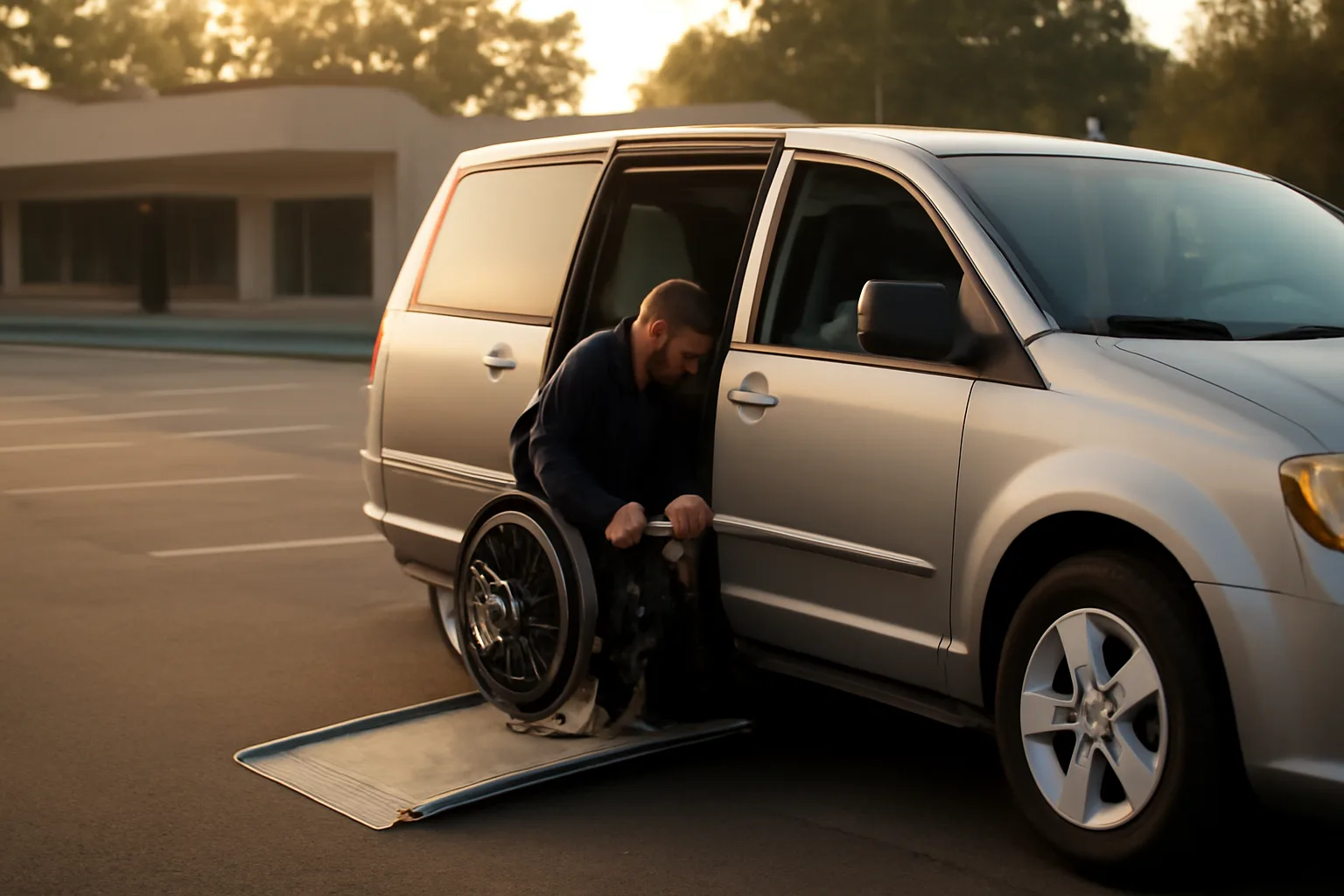
Yes, plenty of owner-operators start with exactly one wheelchair van, and it's the most common entry point into NEMT. The steps are the same as starting any NEMT business; you just size everything (insurance, driver hiring, trip volume) to one vehicle instead of a fleet. With one van, a few things matter more than they would with a fleet. Vehicle choice locks in your trip mix. A wheelchair-accessible van (a converted minivan or full-size van with a ramp or lift) lets you take both ambulatory and wheelchair trips, which is more flexible than a sedan-only setup. Most brokers pay a higher per-trip or per-mile rate for wheelchair transport than ambulatory sedan transport, though exact rates are set by each broker/state contract and change, so confirm current rates with your broker. Insurance costs proportionally more for a single vehicle because you don't get fleet discounts. Get quotes from at least two commercial auto insurers that specifically write NEMT or livery risk; not every commercial auto carrier will write it. You'll likely be your own driver at first. That means you personally need to pass the same background check, drug screening, and driver training requirements (defensive driving, passenger assistance, sometimes CPR/first aid) your future hires would need. Confirm your state's specific driver requirements with its Medicaid transportation unit, because they vary (some states require a specific number of behind-the-wheel training hours; others don't). One van also means no backup vehicle. If your van is in the shop, you have zero capacity that day. Some operators keep a second older vehicle in reserve once cash flow allows it, even before they hire a second driver, just to protect broker trip-completion metrics (brokers track no-show and late rates, and repeated misses can affect your standing or contract renewal).
What does credentialing with a broker like Modivcare or MTM actually involve?
Broker credentialing is a separate approval process, on top of state Medicaid enrollment, run by the private company (Modivcare, MTM, Access2Care, SafeRide, or a regional broker) that holds the trip-dispatch contract for your state or region. You can't just enroll with Medicaid and start getting trips; the broker decides who's in its provider network. The general documents brokers ask for: - Proof of state Medicaid provider enrollment
- Certificate of insurance meeting minimum limits
- Vehicle registration, inspection report, and photos
- Driver rosters with license, background check, and drug screen results
- W-9 and business licensing documents
- Sometimes a facility/vehicle site visit Each broker runs its own portal and paperwork, and requirements shift when contracts change hands (a state re-procuring its broker contract every few years is normal and can mean re-credentializing with a brand-new company). Because these specifics move, confirm current document lists and minimum insurance limits directly with the broker operating in your state and with your state Medicaid transportation unit. This is also where most new operators lose the most time, not because the paperwork is hard, but because they don't know which broker actually holds their region's contract, or they submit incomplete files and sit in a review queue for weeks. Building your document packet once, correctly, before you submit anywhere saves real time. That's the specific problem the $199 Launch Kit is built to shortcut: a one-time packet of state enrollment and broker credentialing document checklists so you're not guessing at what each portal wants.
Does Medicaid cover ambulance rides?
Yes, Medicaid covers ambulance transportation when it's medically necessary, but that's a separate benefit category from NEMT. Ambulance covers emergency and some non-emergency medical transport that requires medical monitoring or equipment during the ride; NEMT covers rides where no medical care is needed en route, just accessible transport to get to care. CMS distinguishes these in its own program guidance, and both trace back to the same 42 CFR 431.53 mandate that states arrange "necessary transportation" for beneficiaries [1]. States decide the specific covered modes (ambulance, wheelchair van, stretcher car, public transit reimbursement, mileage reimbursement for a family member's car) as part of their state plan. If you're building a wheelchair-van business, you're in the NEMT lane, not the ambulance lane. Running an ambulance service requires EMT/paramedic staffing, ALS/BLS licensure, and a completely different regulatory track through your state's EMS office, more than the Medicaid transportation unit.
Does Medicare cover medical transportation?
Medicare's coverage of medical transportation is much narrower than Medicaid's. Original Medicare Part B covers ambulance services only when other transportation would endanger the person's health, and generally does not cover routine non-emergency rides to a doctor's appointment [4]. Medicare.gov states plainly that Part B covers ground ambulance transportation when it is medically necessary and other transportation would be harmful to your health, subject to Part B deductible and 20% coinsurance after the deductible is met [4]. There is a limited non-emergency ambulance benefit for repetitive scheduled trips (like dialysis) when a physician certifies medical necessity, but this is still ambulance-level transport, not a wheelchair van for a routine specialist visit. Some Medicare Advantage (Part C) plans offer supplemental non-emergency transportation benefits as an extra perk, but this is plan-specific, not a guaranteed Medicare benefit, and each Medicare Advantage insurer sets its own rules and rides limit. CMS's chapter on Medicare Advantage supplemental benefits confirms plans have discretion to offer transportation as a non-mandatory supplemental benefit, meaning coverage and ride limits differ insurer to insurer [5]. If you want to serve Medicare Advantage members, you'd contract directly with the specific MA plan or its transportation vendor, which is a different sales process from state Medicaid broker credentialing entirely. This is exactly why most NEMT owner-operators build their business around Medicaid, not Medicare: the Medicaid NEMT mandate is a fixed federal requirement (42 CFR 431.53) [1], while Medicare's coverage of routine rides essentially doesn't exist outside of narrow ambulance and MA-plan cases.
What licenses and permits does a NEMT business need?
| State business registration | LLC/corp formation, EIN, general business license | |
|---|---|---|
| State Medicaid transportation enrollment | Provider agreement, NPI (if required), Medicaid provider number | |
| Broker credentialing | Vehicle inspection, insurance certificate, driver files | |
| Local/municipal permit | City or county for-hire vehicle permit, sometimes taxi/livery board | |
| Driver-level requirements | CDL (if vehicle class requires it), passenger endorsement in some states, background check, drug screen | Vehicle accessibility compliance is its own layer if you're running wheelchair vans. The vehicle itself, ramps or lifts, tie-downs, and wheelchair securement systems generally need to meet standards referenced under Title II and III of the Americans with Disabilities Act (42 U.S.C. Chapter 126) plus any state-specific vehicle inspection checklist your broker or state DOT applies [6]. Confirm exact inspection criteria with your state Medicaid transportation unit or broker, since checklists differ by state. None of this is legal advice, and requirements genuinely change year to year as states rebid broker contracts. Treat every specific number or requirement in this article as a starting point for your own confirmation call, not a final answer. |
Requirements stack from four different layers: your state's business licensing, your state Medicaid provider enrollment, your broker's credentialing requirements, and sometimes a separate local transportation or livery permit. There's no single national license. Typical layers, though every state's exact list differs: | Layer | What it usually covers |
How much does it cost to start a NEMT business?
Costs vary enormously by vehicle choice, state, and whether you're buying new or used, so there's no single honest number to give you. What's stable is the category list: vehicle, insurance, entity/licensing fees, credentialing document prep, and working capital to cover the gap before your first broker payment arrives. Rough categories to budget for, without invented totals: - Vehicle: a used wheelchair-accessible conversion van typically costs meaningfully more than a comparable non-converted van because of the ramp/lift and securement hardware; new conversions cost more still. Get quotes from at least two NEMT-specific vehicle dealers.
- Commercial auto insurance: premiums depend on your state, driving history, vehicle type, and coverage limits your broker requires; get multiple quotes rather than assuming a number.
- State Medicaid enrollment fees: some states charge a provider enrollment or application fee; others don't. Confirm with your state Medicaid agency's fee schedule.
- Broker credentialing: usually no direct fee to apply, but you'll spend real time (and sometimes pay for background checks, drug screens, and DOT physicals out of pocket) getting your document packet complete.
- Working capital: broker payment cycles typically run on a delay (net 15 to net 45 depending on the broker and claims process), so you need cash to cover fuel, insurance, and driver pay before revenue starts flowing. If you want a structured way to see the actual document and fee checklist for your specific state and broker before you spend on a vehicle, that's the gap the Launch Kit Builder fills: a one-time $199 packet mapped to your state's Medicaid transportation unit and the broker(s) active there, instead of piecing it together from scattered PDFs.
What's the difference between NEMT and emergency medical transport?
NEMT moves people who need help getting to care but aren't in a medical crisis; emergency medical transport (ambulance/EMS) responds to acute medical emergencies with trained medical staff and life-support equipment on board. They're regulated by entirely different agencies in most states. NEMT typically falls under your state Medicaid agency and its transportation broker contracts. Emergency medical transport falls under your state's EMS office or department of health, with EMT/paramedic licensure, ambulance vehicle permits, and response-time regulations that don't apply to NEMT at all. A wheelchair van driver isn't authorized to provide medical care during transport, beyond basic passenger assistance and, in some states, CPR/first aid if a medical event happens en route. If a rider needs oxygen monitoring, IV management, or any active medical care during the ride, that's an ambulance trip, not an NEMT trip, and dispatchers are trained (or supposed to be) to route those calls to the right vehicle type. This distinction matters for your business plan because it sets your ceiling: NEMT businesses don't need EMT-certified staff or ALS/BLS vehicle equipment, which keeps startup costs and staffing requirements dramatically lower than starting an ambulance company.
How do brokers assign trips and pay owner-operators?
Once you're credentialed, the broker's dispatch system (a portal, an app, or a phone-based system depending on the broker) assigns trips to your business based on your service area, vehicle type, and availability. You accept or the system auto-assigns, run the trip, document it (mileage, pickup/drop-off time, signature or verification code), and submit for payment through the broker's billing process. Payment terms differ by broker and are worth nailing down before you accept your first trip: ask specifically about payment cycle length, per-trip vs. per-mile rate structure, and what happens on a no-show or late cancellation. These terms are broker-set and change when contracts renew, so treat any number quoted online (including in this article) as needing a direct confirm call to your credentialing contact. Trip volume isn't guaranteed. Being credentialed with a broker means you're eligible to receive assignments, not that you're guaranteed a set number of trips per week. Your assigned service area, vehicle type mix, and on-time performance record all affect how much dispatch work you actually get, and none of that is something this article (or anyone) can responsibly forecast for you. For a broader look at how broker networks are structured across states, see nemt transportation and non emergency medical transportation services.
Frequently asked questions
What is NEMT in simple terms?
NEMT stands for non-emergency medical transportation: rides to and from medical appointments, dialysis, or pharmacy visits for people who can't drive themselves but don't need an ambulance. Medicaid must provide it under federal rule 42 CFR 431.53. Vehicles range from ambulatory sedans to wheelchair vans and stretcher vans, and trips are usually arranged through a state-contracted broker.
How do I start a medical transportation business?
Form a business entity, get commercial auto insurance, buy a compliant vehicle, enroll as a Medicaid transportation provider with your state, and get credentialed with the broker(s) operating in your area (Modivcare, MTM, Access2Care, SafeRide, or a state-specific broker). Expect 60 to 120 days from paperwork start to first paid trip, though timelines vary widely by state and broker backlog.
Does Medicaid cover ambulance rides?
Yes. Medicaid covers medically necessary ambulance transportation as part of its broader transportation mandate under 42 CFR 431.53, separate from the NEMT benefit. Ambulance covers rides requiring medical monitoring or emergency response; NEMT covers rides where no active medical care is needed en route, just accessible transport.
Does Medicare cover medical transportation?
Original Medicare Part B covers ambulance transport only when medically necessary and when other transportation would endanger your health, per Medicare.gov guidance, and generally does not cover routine rides to appointments. Some Medicare Advantage plans offer limited supplemental non-emergency transportation as an extra plan benefit, but this varies by plan and isn't guaranteed under Original Medicare.
What is non-emergency medical transportation exactly?
It's transportation for Medicaid (and sometimes other) beneficiaries to medical appointments, therapy, dialysis, or pharmacy pickups, using vehicles like ambulatory sedans, wheelchair vans, or stretcher vans, without the medical staffing or equipment an ambulance carries. States must provide it under 42 CFR 431.53, usually through contracted transportation brokers.
How do you start a non-emergency medical transportation business with one van?
The process is identical to starting any NEMT business, just scaled to one vehicle: entity formation, commercial insurance, state Medicaid enrollment, and broker credentialing. A wheelchair-accessible van is often the more flexible single-vehicle choice since it can take both ambulatory and wheelchair-dependent riders, and brokers generally pay more per trip for wheelchair transport.
What's the difference between a NEMT broker and a state Medicaid agency?
The state Medicaid agency sets the rules and enrolls you as a Medicaid provider. The broker (Modivcare, MTM, Access2Care, SafeRide, or a regional company) is a private contractor the state hires to actually coordinate and dispatch rides day to day. You typically need both state enrollment and broker credentialing before you get trip assignments.
Do NEMT drivers need a CDL?
It depends on the vehicle's size and passenger capacity. Standard wheelchair vans and sedans usually don't require a commercial driver's license, but larger vehicles or those with higher passenger counts may trigger CDL requirements under your state's DMV rules. Confirm the exact threshold with your state's motor vehicle agency, since it varies by vehicle class.
How long does NEMT broker credentialing take?
There's no fixed national timeline; it depends on the broker's application backlog, whether your documents are complete on first submission, and whether the state is mid-contract with an established broker or in the middle of a broker transition (which can add months). Submitting a complete, correctly formatted document packet the first time is the biggest lever you control.
Can I run a NEMT business with Medicare patients instead of Medicaid?
It's much harder. Original Medicare doesn't cover routine non-emergency rides, so there's no equivalent federal mandate to plug into. You'd need to contract directly with specific Medicare Advantage plans that offer supplemental transportation benefits, which is a separate sales process from Medicaid broker credentialing and depends entirely on each plan's own program.
What insurance does a NEMT owner-operator need?
Commercial auto insurance meeting the liability limits your state and broker require, commonly cited around $1,000,000 combined single limit though this varies, is standard. Many brokers and states also require workers' compensation once you hire drivers, and some require general liability coverage. Confirm exact minimums with your broker and state Medicaid transportation unit before buying a policy.
Is NEMT the same as medical transport or ambulance service?
No. NEMT covers non-emergency rides for people who need accessible transportation but not medical care during the trip. Ambulance and emergency medical transport involve EMT or paramedic staffing, medical equipment, and a completely separate state licensing track through the EMS office, not the Medicaid transportation unit.
Sources
- eCFR, 42 CFR 431.53 (Assurance of transportation): States must ensure necessary transportation for Medicaid beneficiaries to and from providers
- Medicaid.gov, Non-Emergency Medical Transportation: CMS describes NEMT as a critical benefit ensuring access to necessary health care services
- HHS Office of Inspector General, List of Excluded Individuals/Entities (LEIE): Providers and drivers must be checked against the federal exclusion list before enrollment
- Medicare.gov, Ambulance Services coverage: Medicare Part B covers ground ambulance transportation only when medically necessary and other transport would endanger health
- CMS, Medicare Managed Care Manual, Chapter 4 (Benefits and Beneficiary Protections), section 30.4 on supplemental benefits: Medicare Advantage plans may offer non-emergency transportation as a supplemental benefit at plan discretion
- 42 U.S.C. Chapter 126, Americans with Disabilities Act of 1990: Accessible vehicle standards for wheelchair securement and lifts trace to ADA statutory requirements