Last updated 2026-07-25
TL;DR
NEMT licensing has no single federal standard. You'll typically need a state business entity, a vehicle permit or NEMT operator license from your state (often through the Medicaid agency or DOT), driver background checks, commercial-grade insurance, and Medicaid provider enrollment plus broker credentialing (Modivcare, MTM, or similar) before you can bill for a single ride.
What is NEMT and why does it need its own licensing?
Non-emergency medical transportation (NEMT) is scheduled transport for Medicaid or Medicare Advantage members who need a ride to dialysis, chemo, physical therapy, or a routine doctor visit but don't need an ambulance. Think wheelchair vans, ambulatory sedans, and stretcher cars, not lights-and-sirens rigs. Medicaid has covered NEMT for decades because federal rules require it. The Code of Federal Regulations at 42 CFR 431.53 requires states to "ensure necessary transportation for beneficiaries to and from providers" and to describe how they meet that requirement in their state plan [1]. That's the legal root of the entire industry: states either run NEMT themselves, contract with a broker, or let managed care plans handle it. Because NEMT sits at the intersection of transportation law and healthcare law, you end up dealing with two totally different bureaucracies. Your state's Department of Transportation or DMV cares about vehicle safety and driver licensing. Your state Medicaid agency (and any broker it hires) cares about provider enrollment, background checks, and billing compliance. Miss either one and you can't operate legally, even with a paying wheelchair van sitting in your driveway. For a broader look at how the pieces fit together, see medical transportation and what NEMT actually covers.
How do you start a medical transportation business, step by step?
There's no national NEMT license. Every state runs its own process, and most states layer three separate approvals on top of each other: business registration, vehicle/operator permitting, and Medicaid enrollment or broker credentialing. Here's the realistic order of operations. 1. Form your business entity (LLC is the common choice) and get an EIN from the IRS. 2. Get your state or local business license, and check whether your city or county requires a separate for-hire vehicle permit. 3. Register your vehicle(s) as commercial and get any state-specific NEMT or medical transport operator permit, if your state issues one. 4. Buy commercial auto insurance that meets your state's minimum for passenger-for-hire vehicles, not personal auto coverage. 5. Get driver background checks done, including fingerprinting where required, plus a clean motor vehicle record. 6. Apply for Medicaid provider enrollment with your state Medicaid agency. 7. Apply for broker network credentialing (Modivcare, MTM, Access2Care, or whichever broker holds the contract in your state and region). 8. Wait. Enrollment and credentialing review can take weeks to a few months depending on the state and broker's current backlog. Step order matters because most brokers won't even open a credentialing file until you have an active Medicaid provider number. And most states won't issue that provider number until your vehicle and driver documentation is already on file. It's a chain, not a checklist you can do in parallel. Confirm the exact sequence with your state Medicaid agency, since a few states (and some Medicaid managed care plans) let you credential with the broker first and backfill the state enrollment paperwork afterward.
How do you start a NEMT business with just one van?
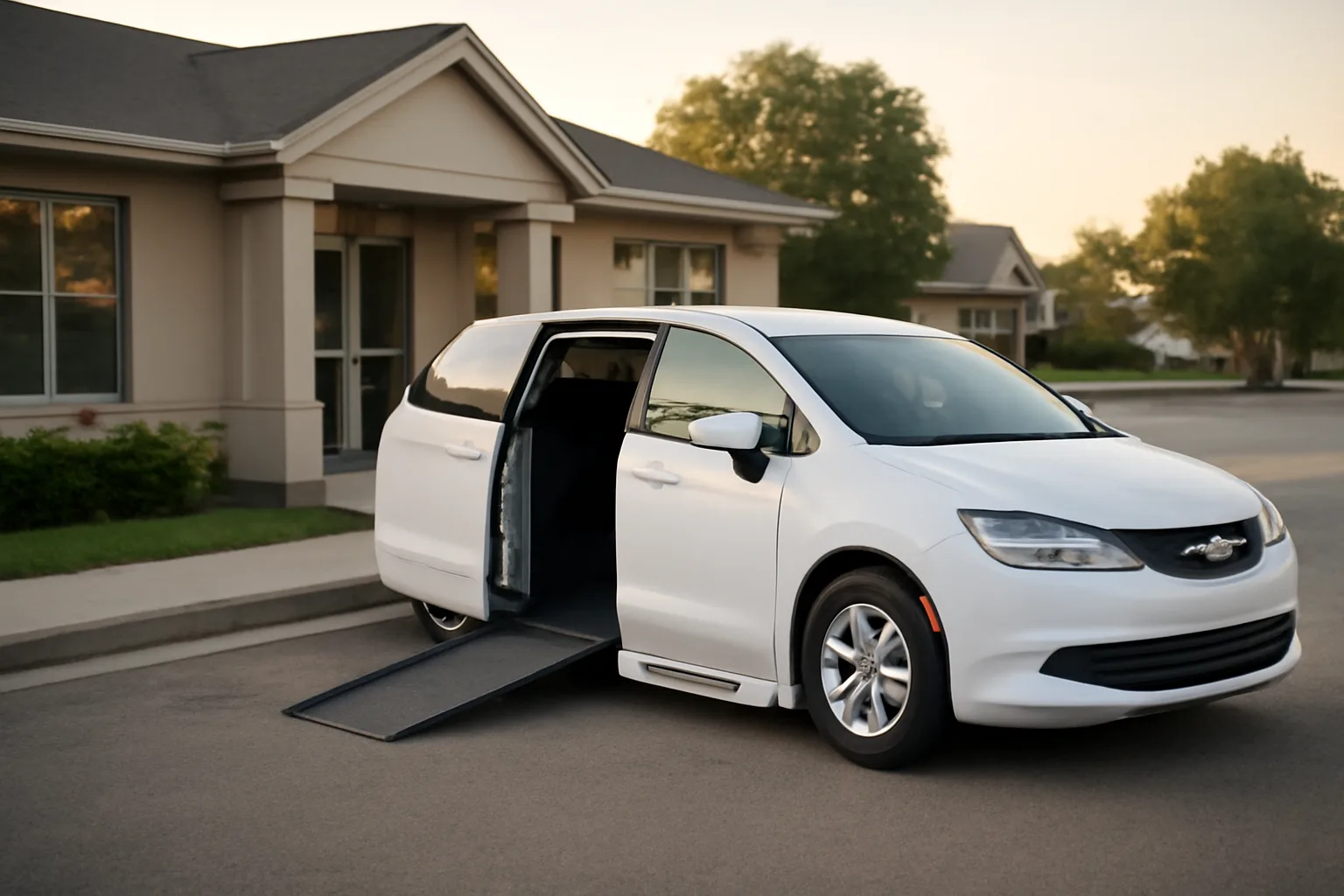
One van is plenty to start. Nothing about Medicaid enrollment or broker credentialing requires a fleet; sole proprietors and single-LLC owner-operators enroll every year. The paperwork burden per vehicle is the same whether you own one van or twenty. The practical constraints with one van are different from the licensing constraints. You'll want to think about backup coverage (what happens when your one van needs a brake job and you have three scheduled rides), driver redundancy (are you the only driver, and what happens if you're sick), and whether your local broker market even has open capacity for a new single-vehicle provider. On the licensing side, a one-van operation still needs: the business entity, the commercial insurance policy (insurers sometimes have per-vehicle minimums that make a single van slightly pricier per-unit than a small fleet), the wheelchair lift or ramp inspection if your state requires one, driver background checks, and the full Medicaid enrollment and broker credentialing package. You cannot skip any of these because you're small. Some states also have separate ADA and vehicle equipment standards for wheelchair-accessible vans, covering things like lift capacity, securement anchors, and interior clearance. Check with your state Medicaid transportation unit or your state's vehicle equipment regulator for the specific standard that applies to your vehicle type.
What licenses and permits does an NEMT owner-operator actually need?
| Business entity registration | LLC, corp, or sole proprietorship filing | Secretary of State | |
|---|---|---|---|
| Local/city business license | General right to operate a business | City or county clerk | |
| For-hire or livery vehicle permit | Commercial passenger vehicle operation | State DMV or DOT | |
| Vehicle inspection (and lift/ramp inspection) | Safety, wheelchair securement, ADA compliance | State DOT or third-party inspector | |
| Commercial auto insurance | Liability for passenger-for-hire trips | Private insurer, state-minimum limits | |
| Driver background check / fingerprinting | Criminal history, sex offender registry check | State Medicaid agency or broker | |
| Medicaid provider enrollment | Right to bill Medicaid for NEMT trips | State Medicaid agency | |
| Broker network credentialing | Right to receive dispatched trips through a broker | Modivcare, MTM, Access2Care, SafeRide, etc. | A few states fold several of these into a single "NEMT provider" application; others make you chase each one separately across different agency websites. There isn't a shortcut around the fragmentation. Start by calling your state Medicaid transportation unit directly and asking what their current provider enrollment packet requires, since these change and the agency's own page is the only reliably current source. |
The specific list varies by state, but most owner-operators run into some version of this stack. Treat every line as "confirm with your state Medicaid agency and broker," because thresholds and exact forms shift. | Requirement | What it typically covers | Who issues it |
What is NEMT and how is it different from an ambulance ride?
NEMT is non-emergency, scheduled transportation for people who need a ride to a covered medical service but don't need medical care during the ride itself. An ambulance is emergency or medically-necessary transport where a trained provider monitors or treats the patient en route. The distinction matters for licensing because ambulance services fall under an entirely different regulatory track, usually your state's EMS office, with EMT/paramedic staffing requirements, medical equipment standards, and a separate ambulance service license. NEMT wheelchair vans and ambulatory vehicles don't carry medical equipment beyond basic first aid, and drivers generally don't need EMT certification, though some states require CPR/first aid cards and specific wheelchair securement training. Medicaid.gov describes NEMT as helping beneficiaries "get to and from medical appointments" when they "have no other means of transportation," distinguishing it from emergency transport [2]. If your business plan includes both wheelchair vans and stretcher vehicles that require medical monitoring, you may need to license part of your fleet as ambulance-level service, which is a different application entirely. Most owner-operators starting with a single wheelchair van stay entirely in the NEMT lane and never touch ambulance licensing. See also what is NEMT and NEMT transportation basics for more on how trip types are classified.
Does Medicaid cover ambulance rides?
Yes. Medicaid covers ambulance transportation when it's medically necessary, meaning the beneficiary's condition requires the medical monitoring or equipment an ambulance provides during transport. This is separate from the NEMT benefit and is billed and licensed differently. Federal Medicaid rules require coverage of "necessary transportation" to and from covered services under 42 CFR 431.53 [1], and ambulance transport is one category of that broader transportation guarantee when a lower level of service (like a wheelchair van) wouldn't be medically appropriate. States set their own medical necessity criteria for ambulance versus NEMT, and those criteria differ enough that a trip that qualifies for ambulance coverage in one state might get bumped down to NEMT-level transport in another. If you're planning to operate an ambulance in addition to (or instead of) wheelchair vans, you're looking at a different licensing track through your state's EMS office, more than the NEMT broker credentialing process this article focuses on. That includes EMT or paramedic staffing, a separate ambulance service permit, and medical equipment inspections that don't apply to standard NEMT vehicles.
Does Medicare cover medical transportation?
Original Medicare (Part B) covers ambulance transportation when it's medically necessary and covers non-emergency ambulance transport only with specific conditions met, including cases where a doctor certifies it's medically required, per CMS's ambulance services coverage rules [3]. Original Medicare generally does not cover routine non-emergency transportation like a wheelchair van ride to a doctor's appointment. Medicare Advantage (Part C) plans are a different story. Many Medicare Advantage plans offer NEMT as a supplemental benefit, and CMS finalized a rule allowing Medicare Advantage plans to offer expanded supplemental benefits, including transportation, for chronically ill enrollees starting with the 2020 plan year [4]. If you're pursuing contracts beyond Medicaid, some brokers and managed care organizations handle both Medicaid NEMT and Medicare Advantage transportation benefit dispatch, so it's worth asking your broker contact whether their network includes Medicare Advantage trips or only Medicaid ones. The practical takeaway for a new owner-operator: don't assume Medicare Part B trip volume will be part of your business. It's a narrow ambulance-only benefit. Your bread and butter as a wheelchair van operator is Medicaid NEMT and, where available, Medicare Advantage supplemental transportation contracts.
How does Medicaid provider enrollment actually work for NEMT?
Medicaid provider enrollment is the process of getting your business registered as an approved provider with your state's Medicaid agency, giving you a provider number you can use to bill for covered NEMT trips. It's separate from, and usually a prerequisite to, broker network credentialing. Every state Medicaid agency runs its own enrollment portal and packet. Common elements include your business entity documents, EIN, vehicle registration and insurance certificates, driver rosters with background check results, and sometimes a site visit or vehicle inspection. Federal Medicaid regulations require states to screen providers based on risk level, and transportation providers are commonly categorized at a "moderate" screening level under 42 CFR 455.450, which can mean fingerprint-based background checks and site visits depending on the state [5]. Approval timelines vary widely and states don't publish reliable averages, so don't plan around a specific number of weeks. Call your state Medicaid transportation unit and ask directly what their current processing time looks like, since backlogs shift with staffing and application volume. Once you're enrolled with the state, you still need to separately apply to whichever broker or managed care plan handles NEMT dispatch in your region. Enrollment with the state doesn't automatically get you trips; the broker relationship is what actually puts riders in your van.
What is broker credentialing and why is it separate from Medicaid enrollment?
Broker credentialing is the process a transportation broker (Modivcare, MTM, Access2Care, SafeRide Health, or a regional equivalent) uses to vet and onboard NEMT providers into its dispatch network. Most states now contract NEMT management to one of these brokers rather than running trip assignment in-house, so credentialing with the broker is a separate, additional step from state Medicaid provider enrollment. Brokers typically require their own application, their own copies of your insurance and vehicle documents, their own driver background check standards (which can be stricter than the state's minimum), and sometimes a vehicle inspection by broker staff or a third party. Requirements differ by broker and by state contract, so a checklist that worked for a Modivcare application in one state may not match what MTM requires in a neighboring state. Don't assume your state Medicaid enrollment satisfies the broker, and don't assume broker credentialing satisfies your state. They're two files, two sets of renewal dates, and sometimes two different insurance certificate formats. Missing a broker credential renewal is one of the most common ways an otherwise-compliant owner-operator suddenly stops getting trip assignments. Because every state has a different broker (or multiple brokers by region), and the specific document checklist shifts as contracts get renewed, confirm the current credentialing packet directly with the broker's provider relations team before you assume any list you find online, including this one, is complete.
What insurance and driver requirements come with NEMT licensing?
Every state requires commercial auto insurance for passenger-for-hire vehicles, and that coverage is not the same as a personal auto policy even if you're the only driver and only vehicle in the business. Insurers price NEMT-specific policies differently because of the passenger liability exposure, and brokers commonly require proof of coverage at levels above your state's bare legal minimum. Driver requirements typically include a valid driver's license appropriate to your vehicle class, a clean or acceptably clean motor vehicle record, a criminal background check (often including fingerprinting), and sometimes a drug screening. Many states and brokers also require CPR/First Aid certification and specific training on wheelchair securement and passenger assistance, since a large share of NEMT riders use mobility devices. Federal Medicaid program integrity rules push states toward risk-based provider screening under 42 CFR 455.450 [5], and background check and screening standards for transportation providers have tightened in a number of states following federal oversight findings on NEMT payment and billing controls [6]. Expect your insurance agent and your broker's credentialing team to ask for slightly different documentation formats. Get the broker's exact certificate-of-insurance requirements before you bind a policy, since some brokers require themselves to be listed as a certificate holder or additional interested party.
What does it cost to get NEMT licensed and credentialed?
Costs vary a lot by state, and no government source publishes a national total, so treat any specific dollar figure you see online (including here) as a rough range, not a guarantee. Rough categories to budget for: - Business entity formation: state LLC filing fees commonly run $50 to $500 depending on the state.
- Commercial vehicle registration and for-hire permit fees: typically a few hundred dollars per vehicle, state-dependent.
- Commercial auto insurance: this is usually the largest recurring cost, and passenger-for-hire coverage costs meaningfully more than personal auto insurance; get quotes specific to NEMT use, not general commercial auto, since some insurers price them differently.
- Background checks and fingerprinting: often $50 to $150 per driver, sometimes billed through a state vendor.
- Medicaid enrollment application fees: some states charge an application fee for institutional or transportation providers; others don't. Confirm with your state Medicaid agency because this is one of the more variable line items.
- Broker credentialing: many brokers don't charge a direct credentialing fee, but expect costs tied to any inspection, background check vendor, or insurance certificate requirement they impose. Because the paperwork spans two agencies, two application timelines, and one or more broker portals, a lot of new owner-operators either spend weeks tracking down the current forms themselves or pay someone to assemble the packet. If you'd rather not spend a month chasing down which form is current in your state, RideCredential's $199 State + Broker NEMT Launch Kit bundles the current state Medicaid enrollment and broker credentialing checklists into one packet, though it doesn't replace your own state Medicaid agency's official application or guarantee approval.
What documents should you gather before you apply?
Having your documentation organized before you start any application saves real time, since both state Medicaid enrollment and broker credentialing ask for overlapping paperwork. Build a folder with these before you touch a single online form: - Articles of organization/incorporation and EIN confirmation letter
- Local business license and any for-hire vehicle permit
- Vehicle title, registration, and current commercial insurance certificate
- Wheelchair lift/ramp inspection or manufacturer certification, if your state requires one
- Driver's license, MVR report, background check results, and any required certifications (CPR, first aid, passenger assistance training) for every driver
- Bank account and routing information for Medicaid payment setup
- W-9 and any state tax registration numbers Most delays in enrollment and credentialing come from incomplete submissions, not rejected ones. A missing insurance certificate page or an expired background check date is the most common reason a file sits in "pending" status for weeks. Double-check expiration dates on every document before you submit, since a background check that's valid today but expires in three weeks can stall your file if the reviewer doesn't get to it in time. For context on how these documents fit into the trip-dispatch side of the business once you're approved, see NEMT transportation services and emergency medical transport if you're weighing whether to expand into higher-acuity transport later.
Frequently asked questions
How do you start a NEMT business from scratch?
Form a business entity, get commercial vehicle registration and a for-hire permit if your state requires one, buy commercial auto insurance, run driver background checks, then apply for state Medicaid provider enrollment and broker credentialing (Modivcare, MTM, or whichever broker holds your state's contract). Confirm the exact order and forms with your state Medicaid agency, since it varies by state.
What is NEMT?
NEMT stands for non-emergency medical transportation: scheduled rides to medical appointments for people who don't need ambulance-level care during transport, typically covered under Medicaid or, in some cases, Medicare Advantage supplemental benefits. It includes wheelchair vans, ambulatory sedans, and stretcher vehicles, distinct from emergency ambulance service.
Does Medicaid cover ambulance rides?
Yes, Medicaid covers medically necessary ambulance transportation, separate from the NEMT benefit that covers non-emergency rides. Federal rule 42 CFR 431.53 requires states to ensure necessary transportation to covered services, and states set their own medical necessity criteria for when ambulance-level transport (versus NEMT) applies.
Does Medicare cover medical transportation?
Original Medicare Part B covers medically necessary ambulance transportation but generally doesn't cover routine non-emergency rides like wheelchair van trips. Many Medicare Advantage plans do offer NEMT as a supplemental benefit, a policy CMS expanded starting with the 2020 plan year for chronically ill enrollees.
How much does it cost to start an NEMT business with one van?
Costs vary widely by state and aren't tracked in any single government total. Expect business filing fees ($50 to $500), commercial vehicle/for-hire permit fees, commercial auto insurance (usually the biggest line item), driver background check fees ($50 to $150 per driver), and possibly a Medicaid application fee. Confirm current fees with your state agencies directly.
Can you start an NEMT business with just one van?
Yes. Licensing and Medicaid enrollment requirements apply the same way whether you own one vehicle or a fleet. The bigger practical question with one van is backup coverage: what happens to scheduled trips if your only vehicle needs repair or your only driver is out sick.
What's the difference between NEMT and an ambulance?
NEMT is non-emergency, scheduled transport for people who don't need medical monitoring during the ride. Ambulances provide emergency or medically necessary transport with trained EMS staff and equipment. They're licensed through entirely different processes: NEMT through Medicaid/broker credentialing, ambulances through your state's EMS office.
Do NEMT drivers need to be EMTs or paramedics?
Generally no. NEMT drivers typically need a valid driver's license, a clean motor vehicle record, a background check, and often CPR/first aid certification plus wheelchair securement training, but not EMT or paramedic licensure. That level of certification applies to ambulance staffing, a separate track from standard NEMT vehicles.
How long does Medicaid NEMT provider enrollment take?
There's no reliable published national average, and timelines vary by state and current application backlog. Some states process enrollment in a few weeks; others take longer, especially if your application is missing documents. Call your state Medicaid transportation unit directly for their current processing estimate before you set a launch date.
Do you need separate approval from Medicaid and from a broker like Modivcare or MTM?
Yes, in most states. State Medicaid provider enrollment gives you a provider number to bill Medicaid; broker credentialing is a separate application with the specific broker managing NEMT dispatch in your area. Both usually need to be active before you receive trip assignments, and each has its own renewal schedule.
What vehicle requirements apply to wheelchair vans for NEMT?
Requirements vary by state but commonly include commercial vehicle registration, a for-hire or livery permit, passenger vehicle safety inspection, and wheelchair lift/ramp and securement standards tied to ADA accessibility. Some states require periodic re-inspection. Confirm the specific equipment standard with your state DOT or Medicaid transportation unit.
What background check requirements do NEMT drivers face?
Most states and brokers require a criminal background check, often including fingerprinting, plus a motor vehicle record review. Federal Medicaid rules place transportation providers in a risk-based screening category under 42 CFR 455.450, which can trigger additional site visits or fingerprint-based checks depending on the state's chosen screening level.
Is NEMT business licensing the same in every state?
No. There's no federal NEMT license. Each state sets its own combination of business registration, vehicle/operator permitting, Medicaid provider enrollment rules, and broker contracts, so requirements, fees, and timelines differ meaningfully from one state to the next. Always verify specifics with your own state Medicaid agency.
Sources
- eCFR, 42 CFR 431.53 (Assurance of transportation): Federal Medicaid regulation requiring states to ensure necessary transportation to and from covered medical services
- Medicaid.gov, Non-Emergency Medical Transportation: Definition and purpose of Medicaid's NEMT benefit for beneficiaries with no other means of transportation
- Medicare.gov, Ambulance Services coverage: Medicare Part B coverage rules for medically necessary ambulance transportation, including non-emergency conditions
- Federal Register, Medicare and Medicaid Programs; Policy and Technical Changes to the Medicare Advantage, Medicare Prescription Drug Benefit, PACE, Medicaid Fee-For-Service, and Medicaid Managed Care Programs for Years 2020 and 2021 (84 FR 15680): CMS expanded Medicare Advantage supplemental benefits, including transportation, for chronically ill enrollees starting plan year 2020
- eCFR, 42 CFR 455.450 (Level of screening based on risk of fraud, waste and abuse): Federal risk-based provider screening categories that commonly apply to Medicaid transportation providers
- HHS Office of Inspector General, "Medicaid Program Integrity: Texas's Efforts to Prevent, Detect, and Report Overpayments in Its Non-Emergency Medical Transportation Program" (A-06-19-07002): OIG findings on NEMT program integrity issues that have driven stricter state screening requirements