Last updated 2026-07-25
TL;DR
Minnesota non-emergency medical transportation runs through the Minnesota Department of Human Services (DHS) for Medicaid enrollment, the Department of Public Safety's Driver and Vehicle Services (DVS) for a Special Transportation Service (STS) permit if you use lift or ramp vehicles, and broker credentialing (MTM handles most Minnesota Medical Assistance transportation) before you get a single dispatched ride.
What is non-emergency medical transportation (NEMT)?
NEMT is transportation for Medicaid enrollees who need to get to a covered medical appointment but don't need an ambulance. Think dialysis three times a week, a wheelchair user going to physical therapy, or someone without a car getting to a mental health appointment. It's a wheelchair van, a sedan, or sometimes a bus pass or mileage reimbursement for a volunteer driver, not lights and sirens. Federal Medicaid rules require states to make sure eligible people can actually get to and from providers. The regulation is at 42 CFR 431.53, which says states must "ensure necessary transportation for recipients to and from providers" [1]. States meet that obligation differently. Minnesota, like most states, contracts with a transportation broker to manage the day-to-day work of scheduling rides, checking eligibility, and paying drivers and van companies. In Minnesota this program sits under Minnesota Health Care Programs (MHCP), the umbrella term DHS uses for Medical Assistance and MinnesotaCare. If you're picturing NEMT as just driving people around, it's really a credentialing and paperwork business first, and a driving business second. Most owner-operators underestimate how much time goes into enrollment before the first ride ever happens.
How do you start a non-emergency medical transportation business in Minnesota?
You need four things lined up roughly in this order: a business entity, a compliant vehicle, state Medicaid provider enrollment through DHS, and broker credentialing. Skipping the order costs you money, usually because people buy a van before they confirm what the state and broker will actually require of that vehicle. Step one is forming your business (LLC is the common choice) and getting an EIN. Step two is getting your vehicle right, which for wheelchair-accessible service means an STS permit from DVS, more than a regular driver's license and plates. Step three is enrolling as a Minnesota Health Care Programs transportation provider with DHS, which includes background studies, provider agreements, and NPI registration in some cases. Step four is credentialing with whichever broker manages your service area's rides, most commonly MTM for Minnesota Medical Assistance non-emergency transportation. A rough sequence that avoids wasted money: 1. Confirm with your state Medicaid agency and DVS which vehicle classification (regular NEMT vs. Special Transportation Service) applies to the trips you plan to run. 2. Buy or lease the van only after you know the equipment specs required (lift/ramp certification, tie-downs, etc.). 3. Apply for DHS provider enrollment. 4. Apply for the DVS STS permit if you're running wheelchair or stretcher vehicles. 5. Apply for broker credentialing once your state enrollment and vehicle permit are active. 6. Get commercial auto and liability coverage that matches broker minimums before you accept your first dispatch. This is the same basic path covered in our broader how to start an NEMT business breakdown, but Minnesota adds its own DVS layer that a lot of other states don't have in quite this form.
What licenses does Minnesota require for NEMT vehicles?
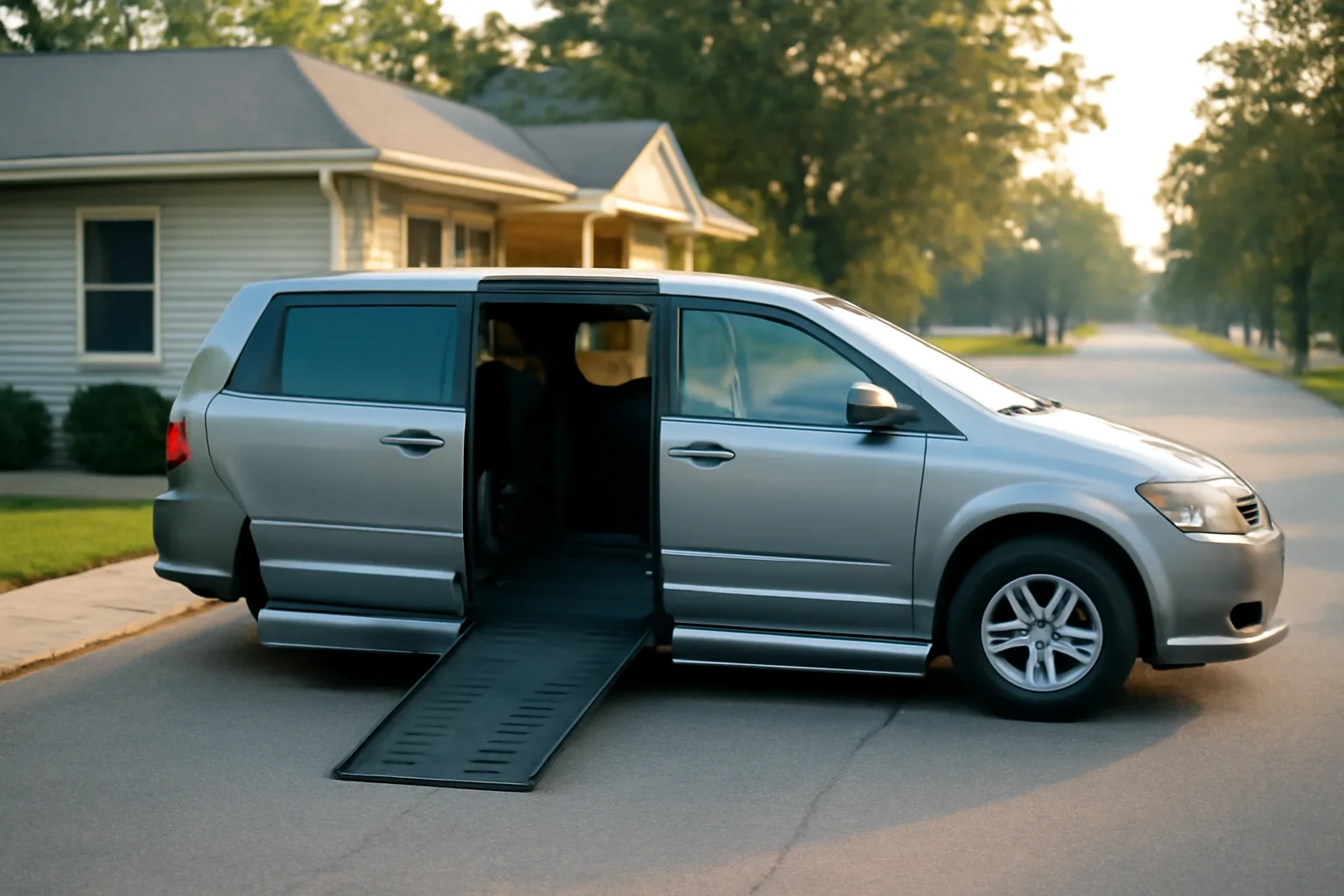
If your van has a wheelchair lift or ramp and you're transporting people who need that equipment, Minnesota generally treats you as a Special Transportation Service (STS) under Minnesota Statutes Chapter 174. DVS is the agency that issues the STS certificate, and it requires vehicle inspection, driver qualifications, and specific equipment standards separate from your regular commercial driver requirements [2]. The STS framework covers things like wheelchair securement systems, interior configuration, and driver training on lift operation, more than a basic chauffeur's permit. DVS publishes its own STS licensing guidance, and you should confirm current fee amounts and renewal cycles directly with DVS because permit fees and inspection intervals get updated periodically. If you're running ambulatory (non-wheelchair) NEMT only, in a sedan or minivan without lift equipment, you may not need the full STS certificate, but you still need to enroll as a Medicaid transportation provider with DHS and meet whatever vehicle safety and insurance standards DHS or your broker sets. This distinction, wheelchair-equipped STS vehicle versus ambulatory sedan, is the single most common point of confusion for new owner-operators, so confirm your specific vehicle's classification with DVS before you buy.
How do you enroll as a Minnesota Medical Assistance transportation provider?
DHS runs Minnesota Health Care Programs provider enrollment through its MHCP Provider Enrollment portal. Transportation providers, including individual owner-operators and small fleets, apply through this system and go through a background study process administered under Minnesota's Department of Human Services background study statute, Minnesota Statutes 245C [3]. The enrollment packet typically asks for your business structure documents, vehicle information, driver rosters, insurance certificates, and any required permits (like the STS certificate if applicable). DHS reviews the application, runs required background checks on owners and drivers, and issues a Minnesota Health Care Programs provider number once approved. Enrollment timelines vary and DHS doesn't publish a guaranteed turnaround, so confirm current processing times directly with the DHS provider enrollment unit. Build in a buffer of at least several weeks, and don't sign a broker contract or purchase a large fleet on the assumption enrollment is a formality. It isn't. A rejected or delayed application is common when background study paperwork is incomplete or when vehicle documentation doesn't match what's actually on the road.
What is broker credentialing and why do you need it separately from state enrollment?
State Medicaid enrollment tells DHS you're allowed to bill Medical Assistance for transportation. Broker credentialing is a separate contract process with the private company DHS pays to manage the transportation network. In Minnesota, MTM has managed non-emergency medical transportation for Minnesota Health Care Programs enrollees in significant portions of the state under contract with DHS. The two processes ask for overlapping but not identical documents. A broker will typically want your DHS provider number as a prerequisite, then layer on its own credentialing file: vehicle inspection records, driver background checks it runs independently, insurance certificates naming the broker as certificate holder or additional insured, and a signed transportation services agreement with its own rate schedule and dispute process. Don't assume DHS enrollment gets you dispatched rides automatically. You need both. And because broker contracts, coverage areas, and credentialing requirements change over time, confirm current broker assignments and application steps directly with MTM (or whichever broker DHS has assigned for your service area) rather than relying on older news coverage. Our broker guides hub tracks how credentialing works across brokers if you're weighing more than one contract.
Does Medicaid cover ambulance rides?
Yes, but ambulance transportation and NEMT are different benefit categories with different rules. Medicaid covers ambulance transportation, typically ground or air, when it's medically necessary and meets the emergency or medically-necessary-non-emergency criteria your state defines, and this is billed and regulated separately from the broker-managed NEMT network described above [1]. NEMT, by contrast, covers rides for people who don't need emergency medical care during transport but can't get to their appointment any other way, whether that's due to a disability, lack of a vehicle, or inability to travel alone. If you're building a wheelchair-van business, you're almost certainly in the NEMT lane, not the ambulance lane, and you don't need EMT certification or ambulance licensure to operate. Confirm with your state Medicaid agency which category any specific ride type falls into if a broker or facility describes a trip in ambiguous terms.
Does Medicare cover medical transportation?
Original Medicare's coverage of non-emergency transportation is much narrower than Medicaid's. Medicare Part B covers ambulance services when other transportation could endanger your health, and CMS guidance describes ambulance coverage as available when "transportation in any other vehicle could endanger your health" [4]. Routine non-emergency rides to a doctor's office generally aren't a covered Original Medicare benefit. Some Medicare Advantage plans have added supplemental NEMT benefits in recent years as part of their extra-benefits flexibility, but this varies plan by plan and isn't guaranteed. If you're building a business plan around Medicare-funded rides, don't assume the volume or reliability that Medicaid NEMT can offer. Most Minnesota wheelchair-van owner-operators build their core business around Medical Assistance NEMT and broker contracts, treating any Medicare Advantage supplemental transportation work as a smaller, separate revenue stream with its own plan-specific enrollment process.
What vehicle and insurance requirements apply to Minnesota NEMT vans?
| DHS Medical Assistance provider enrollment | All NEMT providers billing Minnesota Medicaid | Minnesota DHS |
|---|---|---|
| STS permit | Wheelchair/stretcher-equipped vehicles | Minnesota DVS |
| Broker credentialing | Anyone accepting dispatched broker rides | Contracted broker (e.g., MTM) |
| Commercial auto liability | All passenger-transport vehicles | State minimum + broker contract terms |
| Background studies | Owners and drivers | DHS under Minn. Stat. 245C |
Minimum insurance requirements come from three overlapping sources: Minnesota's no-fault auto insurance law, DVS requirements for STS-certified vehicles, and whatever your specific broker contract requires on top of the state minimum. Minnesota's no-fault law (Minnesota Statutes 65B) sets baseline liability and no-fault coverage for vehicles registered in the state, but commercial passenger transport, especially for people with disabilities, commonly requires higher liability limits than the personal-auto minimum [5]. Brokers routinely require commercial auto liability well above state minimums, often in the $1,000,000 combined single limit range for passenger vehicles, though exact figures vary by broker and contract year, so get the current number in writing from your broker before budgeting. Vehicle equipment requirements for STS-certified wheelchair vans include tie-down and securement systems, which DVS specifies as part of the STS certification, along with driver training standards on how to load, secure, and unload a passenger safely. If you're comparing van models before you buy, our vehicles and equipment coverage on securement standards is worth reading before you sign a purchase agreement, because retrofitting a van that fails securement inspection is expensive. | Requirement | Applies to | Set by |
How long does Minnesota NEMT licensing actually take from van purchase to first dispatched ride?
There's no single official timeline DHS or DVS publishes for the full sequence, and that's honest uncertainty worth naming rather than guessing around. What you can say is that it's a multi-step process with at least three separate approval bodies (DHS, DVS if you need STS, and the broker), each running on its own schedule. A realistic planning assumption for a new owner-operator is that DHS provider enrollment plus background studies takes several weeks at minimum, STS permitting adds its own inspection and application cycle, and broker credentialing typically doesn't start in earnest until your state enrollment is confirmed. Running all three in parallel where possible, rather than strictly sequentially, is the main lever you actually control. Call DHS provider enrollment and DVS STS licensing early to ask about current processing volume, since wait times shift with staffing and application volume in ways no article can predict months out.
Can you start a Minnesota NEMT business with one van?
Yes. Nothing in DHS enrollment or broker credentialing requires a minimum fleet size, and plenty of Minnesota NEMT providers operate as a single owner-operator with one wheelchair van. The paperwork burden per vehicle doesn't shrink much with fleet size though, so a one-van operation faces the same DHS application, the same STS certificate process (if wheelchair-equipped), and the same broker credentialing file as a ten-van company. What changes with one van is your operational risk. If that van is in the shop, you have no backup vehicle to cover a dispatched ride, and broker contracts typically have no-show and reliability standards you need to meet even with a single unit. Plan for a maintenance and backup strategy from day one, not as an afterthought once you've already got a credentialed contract and dispatched rides on the books. On cost: a used wheelchair-accessible van typically runs somewhere in the tens of thousands of dollars depending on age, mileage, and lift condition, though exact pricing is a used-vehicle-market question, not a licensing one, and varies too much to state a single number responsibly here.
What background checks and driver requirements apply in Minnesota?
Minnesota Statutes Chapter 245C governs the background study process DHS uses for people who have direct contact with Medical Assistance recipients, and that includes NEMT drivers and owners in most cases [3]. The background study looks at criminal history and maintenance of specific disqualifying offenses under Minnesota law, and DHS (not the broker) is the entity that runs this study for state Medicaid enrollment purposes. Brokers typically layer their own driver background check and motor vehicle record review on top of the DHS study, meaning a driver could clear DHS's background study but still get flagged by a broker's separate MVR standards (too many moving violations in a lookback period, for example), or vice versa. Ask your broker for its specific driver disqualification criteria in writing rather than assuming DHS clearance is sufficient on its own. Driver training requirements for STS-certified vehicles include instruction on wheelchair securement and passenger assistance, set by DVS as part of STS certification standards, separate from any defensive-driving or CPR/first-aid training a broker might additionally require in its contract.
Where do you go for help putting the paperwork together?
Start directly with the agencies: the DHS Minnesota Health Care Programs provider enrollment page for Medical Assistance enrollment, DVS for STS permitting, and your assigned broker's provider relations contact for credentialing. These three sources are the only ones with authority to actually approve you, and any third-party guide, including this one, is background information, not a substitute for their current forms and requirements. Where a paid resource can genuinely save time is in organizing the sequence and paperwork so you're not discovering a missing document three weeks into an application. RideCredential's $199 one-time State + Broker NEMT Launch Kit walks through the DHS enrollment packet, STS permit prep, and broker credentialing checklist side by side, built specifically so a one-van owner-operator isn't guessing at what order to file things in. It doesn't replace confirming requirements with DHS, DVS, or your broker directly, and it doesn't guarantee approval; nothing legitimately can.
Frequently asked questions
What is NEMT?
NEMT stands for non-emergency medical transportation: rides for Medicaid enrollees to covered medical appointments who don't need ambulance-level care. It includes wheelchair vans, sedans, and sometimes mileage reimbursement for volunteer drivers. Federal Medicaid rules under 42 CFR 431.53 require states to ensure this transportation exists for eligible recipients who otherwise couldn't reach medical care.
How do you start a medical transportation business in Minnesota?
Form a business entity, buy or lease a vehicle that matches your intended service type, enroll as a Minnesota Health Care Programs provider through DHS, get a DVS Special Transportation Service permit if you're running wheelchair or stretcher vehicles, then complete credentialing with your assigned broker (commonly MTM) before accepting dispatched rides.
Does Medicaid cover ambulance rides?
Yes. Medicaid covers medically necessary ambulance transportation, ground or air, under separate rules from the NEMT broker network. Coverage criteria and prior authorization requirements vary by state, so confirm specifics with your state Medicaid agency. NEMT and ambulance transport are billed and regulated as distinct benefit categories, even though both fall under Medicaid's broader transportation coverage obligation.
Does Medicare cover medical transportation?
Original Medicare Part B covers ambulance services when other transportation would endanger your health, per CMS guidance, but generally doesn't cover routine non-emergency rides to appointments. Some Medicare Advantage plans offer supplemental NEMT benefits, but this varies by plan and isn't standard, so check plan documents rather than assuming coverage.
How do you start a NEMT business with just one van?
You can start with a single wheelchair van; Minnesota's DHS enrollment and broker credentialing don't set a minimum fleet size. Plan for the same paperwork as a larger fleet, plus a backup plan for maintenance downtime, since a one-van operation has no spare vehicle to cover a dispatched ride if it breaks down.
What is a Special Transportation Service (STS) permit?
It's a Minnesota Department of Public Safety, Driver and Vehicle Services credential required for vehicles transporting people who need wheelchair lifts, ramps, or stretcher equipment, under Minnesota Statutes Chapter 174. It covers vehicle inspection, securement equipment standards, and driver training separate from regular driver licensing. Confirm current fees and renewal timing directly with DVS.
Do I need a separate license from the state and from the broker?
Yes. Minnesota DHS provider enrollment authorizes you to bill Medical Assistance for transportation. Broker credentialing (with MTM or another contracted broker) is a separate process that authorizes you to receive dispatched rides through that broker's network. You typically need both, and each has its own application and document requirements.
How long does Minnesota NEMT enrollment take?
There's no single published timeline covering DHS enrollment, DVS permitting, and broker credentialing together. Each step runs on its own schedule and can take weeks depending on application volume and completeness. Running steps in parallel where possible and confirming current processing times directly with DHS, DVS, and your broker is the most reliable planning approach.
What background checks do NEMT drivers need in Minnesota?
DHS runs a background study under Minnesota Statutes 245C for anyone with direct contact with Medical Assistance recipients, including NEMT drivers. Brokers commonly add their own motor vehicle record checks and background screening on top of the DHS study, so clearing one doesn't guarantee clearing the other. Ask your broker for its specific disqualification criteria in writing.
What insurance do I need for a Minnesota wheelchair van business?
You need commercial auto liability coverage that meets Minnesota's no-fault insurance requirements at minimum, but most brokers require higher limits, often around $1,000,000 combined single limit for passenger vehicles, though exact figures vary by broker and contract. Confirm current minimums with your specific broker before budgeting for insurance.
What is the difference between NEMT and ambulance transport?
NEMT serves people who don't need emergency medical monitoring during transport but need help reaching appointments due to disability, lack of transportation, or inability to travel alone. Ambulance transport is for medically necessary emergency or non-emergency situations requiring clinical care en route. They're separate Medicaid benefit categories with separate licensing paths; NEMT doesn't require EMT certification.
Which broker manages Minnesota Medicaid NEMT rides?
MTM has managed non-emergency medical transportation for Minnesota Health Care Programs enrollees in significant portions of the state under a DHS contract, though broker assignments and coverage areas can change over time. Confirm your current assigned broker and service area directly with Minnesota DHS or the broker's provider relations line before applying for credentialing.
Can an ambulatory sedan operate without an STS permit in Minnesota?
Possibly. If you're not transporting wheelchair or stretcher passengers and your vehicle has no lift or ramp equipment, you may not need the full STS certificate, but you still need DHS Medical Assistance provider enrollment and must meet broker and state vehicle safety requirements. Confirm your specific vehicle's classification with DVS directly.
Sources
- Code of Federal Regulations, 42 CFR 431.53: States must ensure necessary transportation for Medicaid recipients to and from providers
- Minnesota Statutes Chapter 174 (Special Transportation Service): Minnesota regulates wheelchair/stretcher transportation under the Special Transportation Service framework
- Minnesota Statutes Chapter 245C (Human Services Background Studies): DHS conducts background studies for individuals with direct contact with Medical Assistance recipients, including NEMT drivers
- Medicare.gov, Ambulance Services coverage page: Medicare Part B covers ambulance services when other transportation could endanger the patient's health
- Minnesota Statutes Chapter 65B (No-Fault Automobile Insurance Act): Minnesota's no-fault insurance law sets baseline auto liability and no-fault coverage for vehicles registered in the state
- Minnesota Statutes 256B.0625, subdivision 17 (Medical Assistance covered transportation services): Minnesota Medical Assistance statute defines covered transportation services, including non-emergency medical transportation, under the state's Medicaid program