Last updated 2026-07-25
TL;DR
Starting a medical transport business means picking a lane (NEMT, not ambulance), forming a company, insuring and permitting your vehicle, enrolling as a Medicaid transportation provider in your state, then credentialing with the broker (Modivcare, MTM, Access2Care, or similar) that manages rides in your area. One van is enough to start; the paperwork takes longer than the driving does.
How do you start a medical transportation business, step by step
Starting a medical transportation business is mostly a licensing and paperwork project before it's a driving job. You're building a small transportation company that happens to move people to dialysis, chemo, and doctor visits, so treat it like a regulated business from day one, not a side hustle with a van. Here's the realistic order of operations. Skipping steps rarely saves time; it just moves the delay to later, usually right when you're trying to get your first broker contract signed. 1. Decide your lane: non-emergency medical transportation (NEMT), not 911 ambulance work. They're regulated completely differently. 2. Form your business entity (LLC is standard) and get an EIN from the IRS. 3. Get commercial auto insurance built for livery or NEMT use, not a personal policy. 4. Buy or convert a wheelchair-accessible van that meets your state's ADA and equipment standards. 5. Get any state or local for-hire vehicle permit, business license, and driver background checks/training your state requires. 6. Enroll as a Medicaid transportation provider with your state Medicaid agency. 7. Credential with the NEMT broker(s) operating in your region (Modivcare, MTM, Access2Care, SafeRide, or a state-specific broker). 8. Set up trip-scheduling, invoicing, and mileage/documentation systems before you take your first ride. Most new owner-operators underestimate step 6 and 7. State Medicaid enrollment and broker credentialing each have their own applications, their own document lists, and their own timelines, and they don't always run in parallel. Confirm with your state Medicaid agency whether you need to be an enrolled Medicaid provider before a broker will even open a credentialing file, because in many states that's a hard prerequisite [1]. For a broader look at how the whole system fits together, see medical transportation and nemt.
What is NEMT and how is it different from an ambulance business
NEMT stands for non-emergency medical transportation: scheduled rides for people who need help getting to medical appointments but don't need an ambulance or emergency care. Think dialysis three times a week, a wheelchair user going to a specialist, or a stroke survivor needing door-through-door assistance to a therapy appointment. An ambulance business is a different regulatory world. Ambulances are licensed as emergency medical services, staff EMTs or paramedics, and bill for emergency or medically necessary ambulance transport under separate Medicare and Medicaid rules. NEMT vehicles are typically wheelchair vans, sedans, or stretcher vans, driven by trained drivers who are not required to hold EMT certification in most states, though some states do require specific NEMT driver training hours. Federal Medicaid rules require states to ensure "necessary transportation" for beneficiaries to and from providers, and states are directed to describe in their state plans how they meet this requirement, which is the legal root of the entire NEMT industry [2]. Medicaid.gov's own guidance describes NEMT as covering trips "to and from medical services" for beneficiaries who have no other means of transportation [1]. If your business plan involves emergency response, mutual aid, or 911 contracts, you're in ambulance licensing territory (state EMS office, not Medicaid transportation unit) and this article isn't your roadmap. If you're planning wheelchair van, sedan, or non-emergency stretcher trips booked in advance, you're squarely in NEMT, and everything below applies. For more on where the two overlap and diverge, see emergency medical transport.
How to start a NEMT business with just one wheelchair van
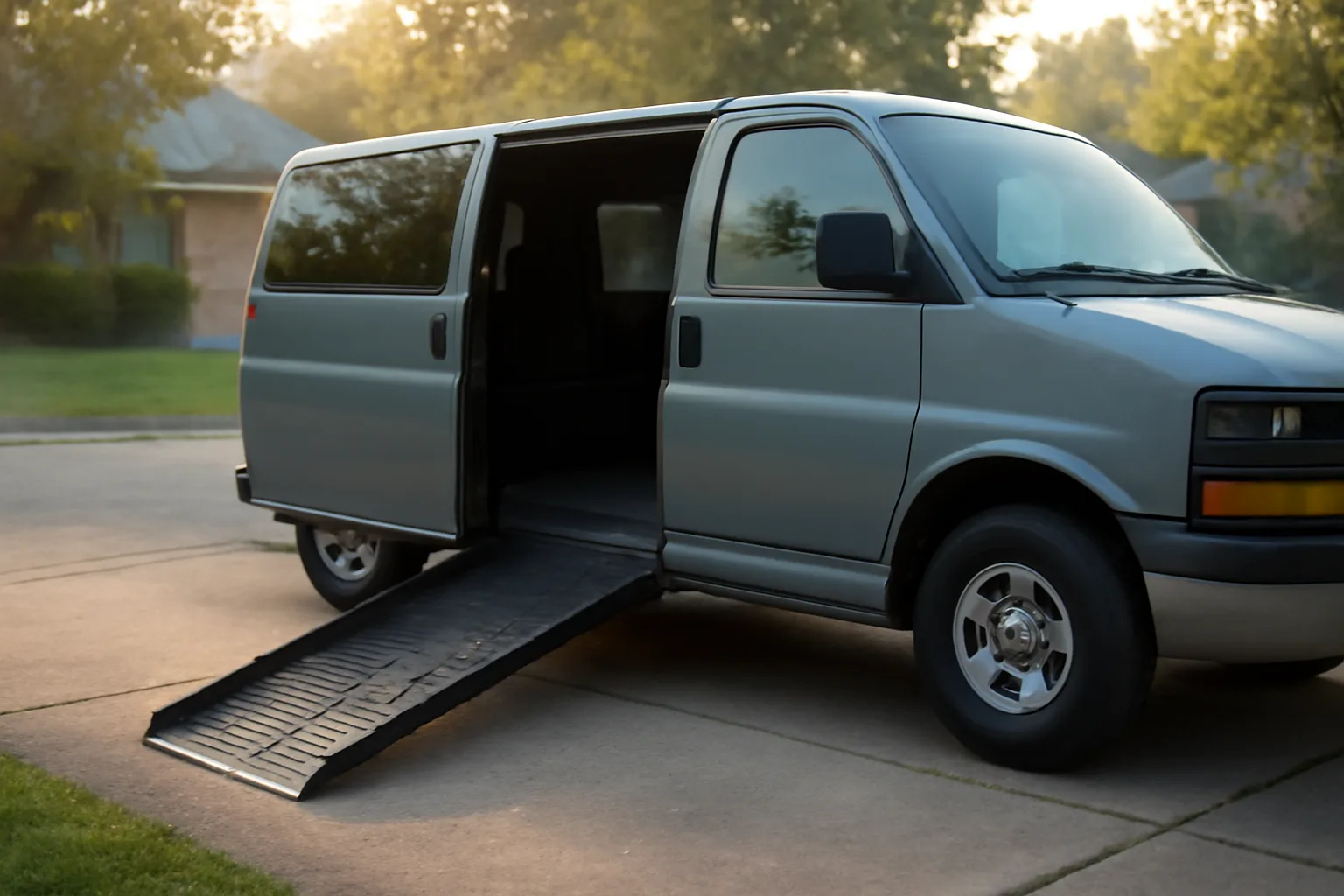
One van is a completely normal, legitimate way to start a NEMT business. Brokers and state Medicaid programs credential owner-operators with a single vehicle all the time; you don't need a fleet to get in the door. What you do need with one van: - A vehicle that meets ADA accessibility standards and your state's specific NEMT vehicle equipment requirements (wheelchair lift or ramp, tie-downs, sometimes specific interior clearance measurements).
- Commercial insurance rated for passenger-for-hire or NEMT transport, not personal auto or standard livery insurance, since many personal and even some commercial policies specifically exclude wheelchair-lift operations.
- A backup plan for when that one van is in the shop. Brokers ask about this during credentialing, and "I have a cousin who can drive" is not an answer that gets you approved. Some brokers require proof of a maintenance/breakdown contingency plan in writing.
- Realistic expectations about capacity. With one van and one driver (often you), you can typically only run one scheduled trip pattern at a time, so your broker-assigned trip volume will be limited by your own hours, not by demand. A lot of owner-operators start solo, prove out their credentialing and documentation systems on one van, then add a second vehicle and a driver once the paperwork side is running smoothly. That sequencing (systems first, fleet second) tends to go a lot better than trying to scale before you've even gotten your first Medicaid remittance to reconcile correctly.
How do you enroll as a Medicaid NEMT transportation provider
Medicaid provider enrollment is a state-level process, run by each state's Medicaid agency or its designated managed transportation unit, not a federal one-time application. Every state has its own portal, its own document checklist, and its own processing timeline. General requirements you'll almost always see, though specifics vary by state: - Business entity documents (LLC formation, EIN letter).
- Proof of commercial auto insurance meeting state minimums for NEMT.
- Vehicle registration and inspection records showing ADA-compliant equipment.
- Driver background checks, often including state criminal history and sometimes the federal exclusion databases.
- A National Provider Identifier (NPI) number in many states, even though NEMT providers aren't billing for medical services directly.
- Ownership disclosure forms (federal Medicaid rules require disclosure of ownership and control interests under 42 CFR 455.104) [3]. CMS's own Medicaid NEMT guidance describes states' obligation to "assure necessary transportation" and gives states flexibility in how they structure that, which is exactly why enrollment paperwork looks so different state to state; some run NEMT through a single statewide broker, some let counties or managed care plans run it locally [1]. Because requirements and portals change, don't rely on secondhand blog checklists (including this one) for your exact document list. Confirm with your state Medicaid agency's transportation unit directly, and check whether your state runs NEMT through managed care organizations, a single statewide broker, or direct enrollment, because that changes who you're actually submitting paperwork to. For state-specific breakdowns, see non emergency medical transportation and non emergency medical transportation services.
How do you get credentialed with a NEMT broker like Modivcare or MTM
Most states contract out day-to-day NEMT trip dispatch to a broker rather than running it directly, and getting on that broker's network is a separate step from Medicaid enrollment. Modivcare, MTM, Access2Care, and SafeRide are the largest national brokers, though many states use regional or state-specific brokers instead or in addition. Broker credentialing generally asks for: - Proof of active Medicaid provider enrollment (in states where that's a prerequisite).
- Certificate of insurance naming the broker as certificate holder or additional insured, at whatever liability limits that broker sets.
- Vehicle inspection reports, sometimes done by the broker's own inspector, sometimes self-certified with photos.
- Driver files: license, background check, drug screening, defensive driving certification, sometimes passenger assistance/sensitivity training completion.
- A signed broker services agreement covering rate schedules, trip acceptance rules, and compliance/audit terms. Each broker runs its own portal and re-credentialing schedule (often annual), and rate schedules and requirements are broker-and-state specific and do change, so confirm current requirements directly with the broker and your state Medicaid agency before you build a business plan around any specific number. This is genuinely the part where a lot of new owner-operators lose weeks, mostly from bouncing between the state portal and the broker portal without a checklist of what each one wants. A NEMT Launch Kit built around state-plus-broker paperwork (a one-time $199 product, not a subscription) exists specifically because this dual-track process is where most delays happen, but even with a checklist, you're the one submitting documents and following up. For the broker landscape overview, see nemt transportation.
Does Medicaid cover ambulance rides
Yes. Medicaid covers ambulance transportation when it's medically necessary, meaning the beneficiary's condition requires the safety and monitoring equipment of an ambulance and any other transportation would endanger their health. This is billed and covered separately from NEMT. CMS guidance and state Medicaid manuals distinguish ambulance coverage (emergency and medically necessary non-emergency ambulance transport) from NEMT (non-emergency rides where a wheelchair van or ordinary vehicle is medically appropriate) [1]. Coverage rules, prior authorization requirements, and reimbursement rates for ambulance transport are set at the state level within federal Medicaid guidelines, so ambulance coverage details (like whether non-emergency ambulance trips need prior authorization) vary by state; confirm specifics with your state Medicaid agency. If your business model is ambulance transport rather than wheelchair van or sedan NEMT, you're dealing with a state EMS licensing agency in addition to (or instead of) a Medicaid transportation broker, and the credentialing path described in this article for NEMT brokers generally does not apply to ambulance-level Medicaid billing.
Does Medicare cover medical transportation
Medicare's coverage of medical transportation is narrower than Medicaid's. Medicare Part B covers ambulance services when other transportation would endanger the beneficiary's health, and Medicare generally does not cover routine non-emergency transportation like a wheelchair van ride to a scheduled outpatient appointment, with limited exceptions. Medicare.gov states plainly that Medicare Part B covers ground ambulance transportation "when you need it for a medical reason" and other transportation could endanger your health, and separately notes that non-emergency transportation by ambulance may be covered if a doctor writes an order stating it's medically necessary [4]. Routine NEMT (the wheelchair van and sedan trips this article is about) is primarily a Medicaid and Medicare Advantage supplemental-benefit space, not a traditional Medicare Part B service. Some Medicare Advantage plans do offer NEMT as a supplemental benefit, and that market has grown, but it's structured through each individual MA plan's contracted transportation vendor, not through CMS directly. If you want Medicare Advantage trip volume as part of your business, you'd be contracting with individual MA plans or their transportation vendors, a separate credentialing relationship from state Medicaid broker credentialing.
What insurance and licensing do you actually need before day one
| Business entity + EIN | Secretary of State + IRS | Needed for every downstream application | |
|---|---|---|---|
| Commercial auto insurance (NEMT/livery rated) | Private insurer | Standard personal or even some commercial policies exclude wheelchair-lift operation | |
| For-hire vehicle permit | State DMV or public utilities commission | Required in many states before you can legally transport passengers for a fee | |
| ADA-compliant vehicle equipment | Vehicle upfitter, state inspection | Lift/ramp, tie-downs, clearances must meet state NEMT vehicle standards | |
| Driver background checks | State criminal history repository | Required for Medicaid enrollment and broker credentialing | |
| Medicaid provider enrollment | State Medicaid agency | Prerequisite for billing Medicaid trips in most states | |
| Broker credentialing | Modivcare, MTM, Access2Care, SafeRide, or state broker | Required to actually receive dispatched trips | Insurance is the line item people most often underbudget. NEMT-rated commercial auto policies cost meaningfully more than personal policies because insurers price in wheelchair-lift liability, passenger assistance risk, and higher claim severity. Get quotes from at least two or three carriers that specifically write NEMT or paratransit policies before you finalize your van purchase, because the insurance cost can change whether a used retrofit van or a factory-built one makes more financial sense. |
Insurance and licensing requirements stack up fast for NEMT, and getting the order wrong (buying a van before confirming your state's equipment rules, for instance) is one of the most expensive mistakes new owner-operators make. Here's a realistic pre-launch checklist: | Requirement | Typical source | Why it matters |
How much does it cost to start a one-van NEMT business
Costs vary enormously by state, vehicle condition, and insurance market, so treat any number here as a planning range, not a quote. The honest answer is that nobody publishes solid national averages for this because state minimum insurance requirements, vehicle costs, and licensing fees differ too much to average meaningfully. The major cost buckets you're budgeting for: - Vehicle: a used wheelchair-accessible van conversion versus a new factory-built unit represents a wide price range; condition, mileage, and lift type matter more than brand.
- Commercial NEMT insurance: typically a larger annual cost than personal auto insurance, varying by state minimum liability limits and your driving/claims history.
- Business licensing and permits: filing fees for LLC formation, EIN (free from the IRS directly), and any state for-hire vehicle permit fees.
- Medicaid enrollment: many states charge no direct enrollment fee for transportation providers, though some require application or background check fees; confirm with your state Medicaid agency.
- Broker credentialing: generally no direct fee from the broker itself, but you're paying for the insurance, inspections, and driver files that make credentialing possible. Because fee schedules and requirements change and vary this much by state, this article deliberately doesn't cite a specific total startup cost figure. Anyone giving you one national number is guessing or selling something.
How do you find NEMT brokers and Medicaid managed care plans in your state
Start with your state Medicaid agency's transportation unit page, which usually names the broker(s) contracted for your region, or confirms if your state runs NEMT through managed care organizations instead of a single statewide broker. This is the single most reliable source because broker contracts do change when states rebid them. Some states run one statewide broker for all NEMT trips. Others carve it out by region, or route it through each Medicaid managed care plan's own transportation vendor, which might mean you're credentialing with three or four different entities depending on which plans operate in your service area. CMS's Medicaid NEMT guidance explicitly gives states this flexibility, describing NEMT as something states can "provide directly, through a broker, or through a managed care arrangement" [1], which is exactly why there's no single national broker directory that stays accurate for long. Practical steps: check your state Medicaid transportation unit's website directly, call the number listed there (not a general Medicaid hotline), and ask specifically which broker or brokers hold the current NEMT contract in your county. Then go to that broker's provider or vendor portal directly rather than relying on secondhand lists, since broker contracts and portal URLs change when contracts are rebid every few years.
What ongoing compliance keeps your NEMT authority active
Getting credentialed is the start, not the finish. Both your state Medicaid enrollment and your broker agreement come with ongoing requirements, and letting any of them lapse can suspend your trip assignments with very little warning. Ongoing items to track: - Insurance renewal and certificate updates sent to your broker (missed renewals are a common, avoidable cause of suspension).
- Vehicle re-inspection on whatever schedule your state or broker sets, often annually.
- Driver re-screening (background checks, drug testing, license status) on a recurring cycle.
- Medicaid revalidation, which federal rules require states to conduct "no less frequently than every five years" for enrolled providers under 42 CFR 455.414 [5].
- Broker re-credentialing, often annual, sometimes tied to audit findings or complaint history.
- Trip documentation and mileage logs, which brokers and state program integrity units audit, sometimes well after the trip date. The owner-operators who stay credentialed longest tend to be the ones who build a simple recurring calendar for these renewal dates on day one, rather than reacting when a broker portal flags an expired document. It's not exciting work, but it's the difference between a business that keeps getting trips and one that gets quietly deactivated mid-quarter.
Frequently asked questions
How do I start a medical transportation business from scratch?
Form an LLC, get NEMT-rated commercial insurance, buy or convert a wheelchair-accessible van meeting your state's equipment standards, get any required for-hire permit, enroll as a Medicaid transportation provider with your state Medicaid agency, then credential with your area's NEMT broker (Modivcare, MTM, Access2Care, or similar). Confirm exact requirements with your state agency since they vary.
What is NEMT?
NEMT stands for non-emergency medical transportation: scheduled rides to medical appointments for people who don't need an ambulance but can't drive themselves or use regular transit, often because they use a wheelchair or need door-through-door assistance. Medicaid.gov describes it as transport "to and from medical services" for beneficiaries with no other means of getting there.
Does Medicaid cover ambulance rides?
Yes, Medicaid covers ambulance transport when it's medically necessary, meaning the person's condition requires the monitoring or safety equipment only an ambulance provides. This is billed and regulated separately from NEMT. Prior authorization rules and coverage details for non-emergency ambulance trips vary by state, so confirm specifics with your state Medicaid agency.
Does Medicare cover medical transportation?
Medicare Part B covers ambulance transportation when other transport would endanger your health, per Medicare.gov guidance. Traditional Medicare generally does not cover routine non-emergency wheelchair van or sedan trips to scheduled appointments. Some Medicare Advantage plans offer NEMT as a supplemental benefit, contracted separately through each plan's own transportation vendor.
Can I start a NEMT business with just one wheelchair van?
Yes. One van is a normal way to start; brokers and state Medicaid programs credential single-vehicle owner-operators regularly. You'll need ADA-compliant equipment, NEMT-rated commercial insurance, and a documented backup plan for when that van needs maintenance, since brokers ask about breakdown contingency during credentialing.
How long does Medicaid NEMT provider enrollment take?
There's no single national timeline; it depends entirely on your state Medicaid agency's process, whether you're enrolling directly or through managed care, and how complete your submitted documents are. Confirm expected processing time directly with your state Medicaid transportation unit, since it can range from a few weeks to several months.
Do I need an NPI number to run a NEMT business?
Many states require NEMT providers to obtain a National Provider Identifier (NPI) even though you're not billing for direct medical services, because it's used for provider identification in the state's Medicaid system. Requirements vary by state, so confirm with your state Medicaid agency whether an NPI is required for transportation providers.
What's the difference between NEMT and ambulance transport?
NEMT is scheduled, non-emergency transport (wheelchair vans, sedans, stretcher vans) for people who don't need medical monitoring en route. Ambulance transport is licensed emergency medical service, staffed by EMTs or paramedics, used when a person's condition requires monitoring or care during transit. They're regulated by different state agencies and billed differently.
Which NEMT brokers should I contact first?
Start with your state Medicaid agency's transportation unit page, which will name the broker(s) contracted in your region, whether that's Modivcare, MTM, Access2Care, SafeRide, or a state-specific broker. Broker contracts get rebid periodically, so don't rely on old blog lists; confirm directly with your state agency.
Do I need a CDL to drive a wheelchair van for NEMT?
Usually not for a standard wheelchair van, since most seat under the passenger threshold that triggers CDL requirements. Larger stretcher vans or multi-passenger vehicles may cross that threshold depending on seating capacity and your state's specific licensing rules. Confirm the exact seating/weight thresholds with your state's DMV or transportation licensing office.
How much insurance coverage does a NEMT vehicle need?
Minimum liability limits are set at the state level and often higher than standard personal auto minimums because of wheelchair-lift and passenger-assistance liability. Brokers may also require specific minimum limits and to be named as certificate holder or additional insured. Get quotes from insurers who specifically write NEMT or paratransit policies.
What ongoing paperwork keeps my NEMT authority active?
You'll need to keep insurance certificates current with your broker, pass recurring vehicle inspections, keep driver background checks and drug screening up to date, and revalidate your Medicaid enrollment on the schedule your state requires (federal rule sets a maximum of every five years). Broker re-credentialing is often annual on top of that.
Sources
- Medicaid.gov, Non-Emergency Medical Transportation: States must ensure necessary transportation for Medicaid beneficiaries and describe how in their state plans
- 42 CFR 431.53, Assurance of Transportation: Federal regulation requiring states to assure necessary transportation for Medicaid beneficiaries
- 42 CFR 455.104, Disclosure by Medicaid providers: ownership and control: Federal Medicaid rule requiring providers to disclose ownership and control interests
- Medicare.gov, Ambulance Services coverage: Medicare Part B covers ground ambulance transportation when other transportation would endanger health, and covers non-emergency ambulance transport with a doctor's written order
- 42 CFR 455.414, Revalidation of enrollment: States must revalidate enrollment of all providers no less frequently than every five years