Last updated 2026-07-25
TL;DR
Starting a Michigan NEMT business means registering your entity, insuring and equipping a compliant wheelchair van, enrolling as a Michigan Medicaid provider through MDHHS's CHAMPS system, then credentialing with the regional Medicaid transportation broker that manages trips in your county. Most owner-operators spend several weeks to a few months on paperwork before their first broker trip.
how to start a non-emergency medical transportation business in michigan
Start with five pieces that all have to line up: a legal business entity, a compliant vehicle, the right insurance, Michigan Medicaid provider enrollment, and credentialing with whichever regional broker manages NEMT trips in your service area. Skip one and the others don't matter. Michigan runs its Medicaid NEMT program through regional transportation brokers under contract with the Michigan Department of Health and Human Services (MDHHS), not through a single statewide broker. That means your actual onboarding checklist depends on which county or region you're serving. Before you spend money on anything, call MDHHS's Medical Transportation program area or check your region's current broker assignment, because broker contracts do get rebid. Here's the realistic order of operations: form your LLC or corporation, get your vehicle titled and equipped, get commercial auto and general liability insurance in place, apply for a Michigan Medicaid NPI and provider enrollment through CHAMPS, then apply to the regional broker. Some brokers will let you start credentialing while your Medicaid enrollment is pending, but nobody hands you trips until both are approved. Budget more calendar time than you think you need. Ninety days from a standing start to your first paid trip is a reasonable estimate, but confirm current processing times with your broker and MDHHS, since backlogs shift.
what is nemt and how is it different from an ambulance ride
NEMT stands for non-emergency medical transportation. It's transportation to and from medical appointments, dialysis, physical therapy, and similar covered services for people who don't need emergency care but can't get there on their own, often because of a wheelchair, a walker, or a medical condition that rules out driving [1]. An ambulance responds to emergencies or transports patients who need medical monitoring en route. NEMT does not. Your wheelchair van driver isn't providing medical care; they're providing a safe, accessible ride. That distinction matters for licensing too: NEMT vehicles in Michigan don't need EMS licensure the way ambulances do, but they do need to meet accessibility and safety standards set by MDHHS and by whichever broker credentials you. Federal Medicaid law backs this up directly. Under 42 CFR 431.53, states must "ensure necessary transportation for recipients to and from providers" and may do this "by direct payment to a public or private transportation provider" or through a broker arrangement [2]. That's the exact legal hook that makes your broker contract possible.
does medicaid cover ambulance rides and does it cover nemt too
Yes, Medicaid covers both, but as separate benefits. Ambulance transport is billed under emergency medical services rules when a beneficiary needs urgent transport, and Medicare covers ambulance service only when other transport "could endanger the person's health" according to CMS guidance [3]. NEMT is a distinct benefit for non-urgent rides to Medicaid-covered appointments. Medicaid.gov states plainly that NEMT "is often the only means of transportation for many Medicaid enrollees to get non-emergency healthcare services" and that it is a mandatory benefit states must provide, either directly or through contracted brokers [1]. In Michigan, that contracted-broker model is exactly what you'll be working inside. The overlap point to understand: your wheelchair van business fits into the NEMT lane, not the ambulance lane. If you find yourself picking up patients who need medical monitoring during transport, that's outside NEMT scope and outside what your broker credential covers.
does medicare cover medical transportation the same way medicaid does
No. Medicare's coverage of transportation is much narrower than Medicaid's. Medicare Part B covers ambulance services when medically necessary, and in limited cases covers non-emergency ambulance transport if a doctor certifies it's medically necessary, but it does not have a general NEMT benefit the way Medicaid does [3]. That means if you're building a wheelchair van business around Medicare-only patients, you're mostly looking at private-pay rides, contracts with Medicare Advantage plans that voluntarily offer transportation as a supplemental benefit, or dialysis and adult day program contracts. Some Medicare Advantage plans do add limited NEMT benefits, but that varies by plan and by year, so confirm directly with any Medicare Advantage plan you want to contract with rather than assuming coverage. Most new Michigan NEMT owner-operators build their base of business around Medicaid brokers first, because that's where the guaranteed federal and state coverage mandate sits, then add private pay and Medicare Advantage contracts once they have a track record.
how do you register your nemt business in michigan
Form your entity first. Most owner-operators pick an LLC through the Michigan Department of Licensing and Regulatory Affairs (LARA) Corporations, Securities & Commercial Licensing Bureau. You'll file online or by mail and pay the state filing fee for Articles of Organization [4]. After that, get an EIN from the IRS (free, done in minutes online), open a business bank account, and register for any required state tax accounts through the Michigan Department of Treasury. If you're hiring drivers rather than working solo, you'll also need workers' comp coverage and to register as an employer with the state. Don't skip the local layer. Some Michigan municipalities require a local business license or a vehicle-for-hire permit separate from anything the state or MDHHS requires. Check with your city or county clerk's office before you assume state registration is the whole picture.
how to start a nemt business with one van
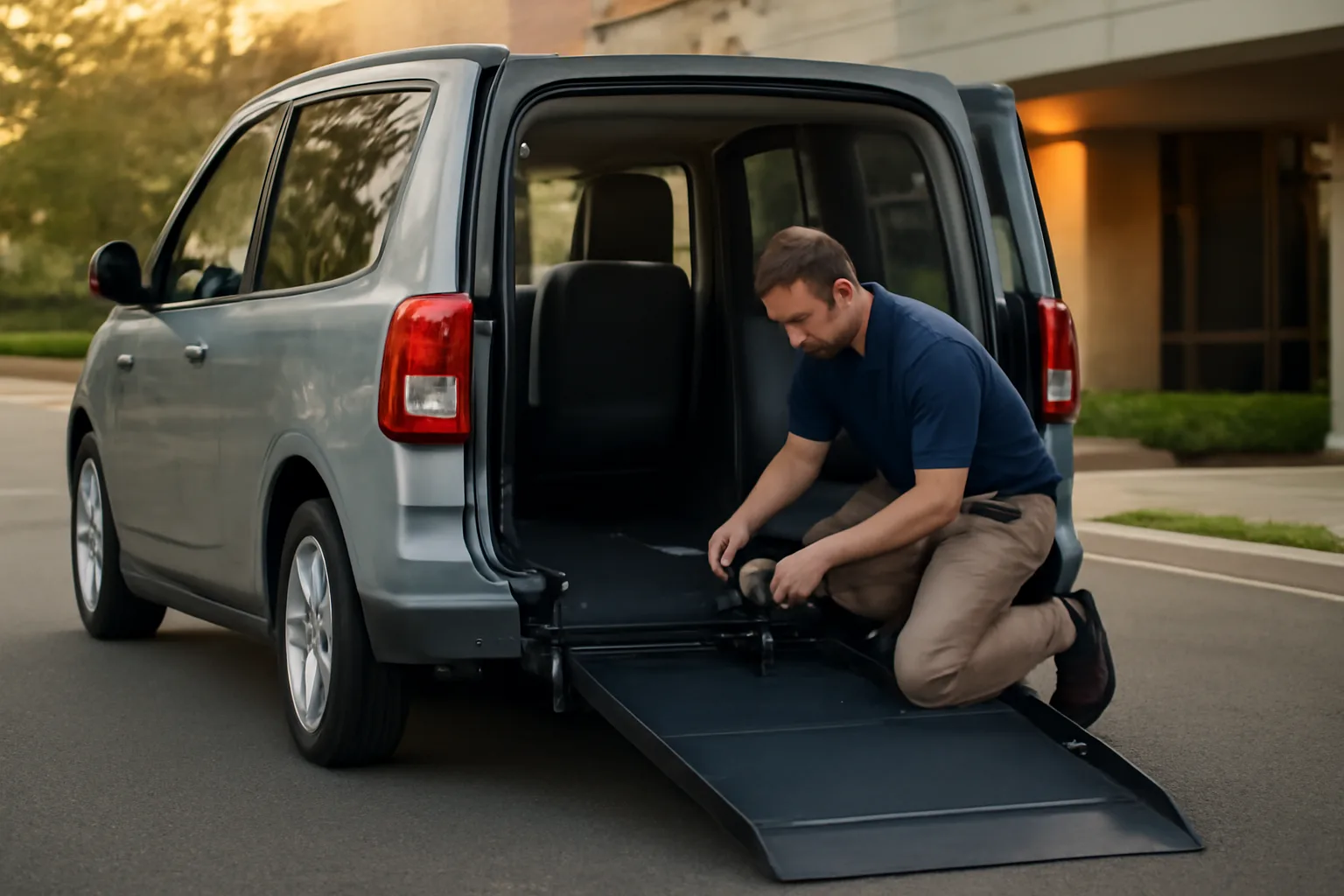
One van is completely normal and how almost everyone starts. Brokers credential owner-operators with a single vehicle all the time; you don't need a fleet to get on a broker's approved list. The practical constraint with one van is capacity, not eligibility. You'll only be able to run one trip at a time, so schedule tightly and build in real buffer time between pickups, especially for dialysis routes where late arrivals cascade through the whole day. Many single-van operators specialize early (dialysis-only, or one specific broker's territory) rather than trying to cover every trip type from day one. When you're buying that first van, get one built specifically for wheelchair transport: a lowered floor or raised roof, a certified wheelchair lift or ramp, and floor-mounted tie-downs rated to hold a wheelchair securely, not aftermarket straps bolted in later. Brokers and MDHHS both look at ADA-style accessibility and securement compliance during vehicle inspection, and a van that was never built for this work usually fails.
how to get michigan medicaid provider enrollment for nemt
Michigan Medicaid providers, including transportation providers, enroll through CHAMPS (Community Health Automated Medicaid Processing System), the state's provider enrollment and claims portal run by MDHHS. You'll need a National Provider Identifier (NPI) from the National Plan and Provider Enumeration System before you can complete Medicaid enrollment, and you'll submit your business licensing, ownership disclosure, and insurance documentation as part of the CHAMPS application. MDHHS revalidates enrolled providers periodically, and federal rules require state Medicaid agencies to screen providers based on a categorical risk level (limited, moderate, or high) under 42 CFR 424.518, which can include fingerprint-based background checks for higher-risk categories [5]. Transportation providers are commonly treated as at least moderate risk, which can mean site visits as part of enrollment. Confirm your specific risk category and screening requirements directly with MDHHS provider enrollment, since federal rules set the framework but the state applies it. One detail that trips people up: enrolling as a Michigan Medicaid provider through CHAMPS is a separate step from getting credentialed by a regional transportation broker. You typically need both. Some brokers require active Medicaid enrollment before they'll even start their own credentialing file, so check the sequence your broker wants before you submit anything.
how do you get credentialed with a michigan medicaid transportation broker
Once you know which broker covers your service area, contact them directly for their current owner-operator or subcontractor application. Broker networks and contract regions do change, so don't rely on outdated lists; confirm the current broker for your county with MDHHS's Medical Transportation program. Expect the broker application to ask for: proof of business registration, your Michigan Medicaid provider number, commercial auto and general liability insurance certificates naming the broker as an additional insured (a common broker requirement, though exact limits vary by broker), vehicle registration and inspection records, driver qualification files (license, background check, drug screening), and often a physical vehicle inspection before you're activated. Brokers typically also require ongoing compliance: annual vehicle inspections, driver recertification, and sometimes GPS or dispatch software integration. Ask upfront what technology the broker requires you to run, because some require a specific dispatch app or ELD-style tracking system, and that's a cost you should know about before you sign anything. If you want a structured way to track every document across both the state enrollment and the broker application side, that's exactly the gap the $199 State + Broker NEMT Launch Kit is built to close. It's a checklist and document organizer, not a guarantee of approval from MDHHS or any broker.
what insurance and vehicle requirements does michigan nemt require
Michigan requires commercial auto insurance for vehicles used to transport passengers for hire, and your limits need to satisfy both Michigan's no-fault auto insurance framework and whatever minimum your broker contract specifies (brokers commonly require limits well above the state's bare minimum). Michigan's no-fault law is set out in the Michigan Vehicle Code and Insurance Code; confirm current minimum limits directly with the Michigan Department of Insurance and Financial Services (DIFSFor) since no-fault reform in recent years changed available coverage tiers . General liability insurance is separate from your auto policy and covers incidents outside the vehicle, like a fall during wheelchair transfer. Most brokers require both, plus proof the broker is listed as a certificate holder or additional insured. On the vehicle side, your wheelchair van needs a functioning lift or ramp, floor-mounted four-point wheelchair securement, and passenger restraints that meet the vehicle's original equipment manufacturer or conversion manufacturer specifications. Keep every conversion and inspection document; brokers ask for them at credentialing and often again at annual recertification.
how much does it cost to start a michigan nemt business
There's no single honest number here because van condition, insurance history, and driver count swing the total wildly, but here's the shape of it. A used, already-converted wheelchair van typically runs from the high teens into the $40,000+ range depending on age, mileage, and lift type; new conversions cost considerably more. LLC formation in Michigan costs a modest state filing fee, plus whatever a registered agent or filing service charges if you use one [4]. Commercial auto and general liability premiums vary enormously by driving record, vehicle count, and coverage limits, so get quotes from at least two or three commercial auto insurers that specifically write NEMT or livery risk rather than assuming a personal auto agent can quote it correctly. Beyond the van and insurance, budget for driver background checks and drug screening, any broker-required dispatch software subscription, and a cash buffer for the gap between when you start incurring costs and when your first broker payments arrive. That gap is real. Enrollment and credentialing take weeks to months, and you're paying insurance and loan payments the whole time.
how long does it take to get approved to start operating
Realistically, plan for one to three months minimum from a standing start to your first paid broker trip, and treat that as optimistic rather than pessimistic. CHAMPS enrollment processing time varies with application completeness and current MDHHS workload; broker credentialing timelines vary by broker and by how quickly you supply complete documentation. The biggest time-wasters are incomplete applications (missing insurance certificates, wrong NPI taxonomy code, expired background checks) and sequencing errors (applying to a broker before your Medicaid enrollment is active, if that broker requires it first). Read the actual application checklist from both MDHHS and your broker before you submit anything, and call ahead if any requirement is unclear rather than guessing. Don't buy or lease your van assuming a specific start date. Vehicle payments and insurance start the day you take possession, whether or not your Medicaid number has been approved yet.
what mistakes do new michigan nemt owner-operators make
The most common one is buying a van before confirming broker and MDHHS vehicle requirements for your specific service type, then discovering the lift, securement, or conversion doesn't meet spec. Confirm requirements before you buy, not after. Second most common: assuming one broker covers the whole state. Michigan's NEMT broker system is regional, and your neighboring county might run through a different broker with different paperwork and different rates. Confirm your exact region's broker before building a business plan around any specific company's requirements. Third: underestimating insurance cost and treating it as an afterthought instead of pricing it before committing to a van purchase. Commercial NEMT insurance is a real, ongoing cost, and it should shape your vehicle decision, not follow it. Fourth: not budgeting the cash gap between startup spending and first broker payment. Plan for that gap to run into months, not weeks.
Frequently asked questions
how to start a medical transportation business
Form a legal business entity, buy or convert a compliant vehicle, get commercial auto and general liability insurance, enroll as a Medicaid provider with your state Medicaid agency, and credential with the regional broker covering your service area. Order and documentation requirements vary by state, so confirm specifics with your state Medicaid transportation unit before spending money.
does medicaid cover ambulance
Yes. Medicaid covers ambulance transport as an emergency medical service, separate from its non-emergency medical transportation (NEMT) benefit. States must ensure necessary transportation for beneficiaries under 42 CFR 431.53, either directly or through contracted providers and brokers, according to federal Medicaid regulations.
what is nemt
NEMT stands for non-emergency medical transportation. It's rides to and from covered medical appointments, dialysis, and therapy for Medicaid or other beneficiaries who can't drive themselves or use public transit, typically due to a disability, wheelchair use, or medical condition, but who don't need emergency ambulance care.
does medicare cover medical transportation
Medicare covers ambulance transport when medically necessary but does not have a general non-emergency medical transportation benefit like Medicaid does. Some Medicare Advantage plans voluntarily add limited NEMT as a supplemental benefit, but that varies by plan and year, so confirm coverage directly with the specific plan.
does medicaid cover ambulance rides
Yes, Medicaid covers medically necessary ambulance rides as part of its emergency medical services coverage, distinct from the non-emergency medical transportation benefit that covers wheelchair van and other non-urgent rides to Medicaid-covered appointments. Coverage details and prior authorization rules vary by state Medicaid agency.
how to start a nemt business
Register your business entity, get a compliant wheelchair-accessible vehicle and commercial insurance, enroll as a Michigan Medicaid provider through CHAMPS, and apply for credentialing with the regional Medicaid transportation broker covering your county. Confirm current requirements with MDHHS and your assigned broker, since regional broker contracts do change.
how do you start a medical transportation business
Start with entity formation and insurance, then move to vehicle compliance (wheelchair lift, securement, inspection), then state Medicaid provider enrollment, then broker credentialing. Each step depends on documentation from the one before it, so build a checklist covering all four areas before spending on a vehicle.
what is non emergency medical transportation
Non-emergency medical transportation (NEMT) is transportation for people who need to get to medical care but don't require an ambulance. It covers rides to dialysis, physical therapy, doctor visits, and similar covered services, and is a mandatory Medicaid benefit under federal regulations, typically delivered through state-contracted regional brokers.
how to start a medical transportation business with one van
One van is standard for a new owner-operator. Brokers routinely credential single-vehicle operators. Focus on getting that one van properly converted with a certified lift and floor-mounted securement, carrying adequate commercial insurance, and completing both Medicaid provider enrollment and broker credentialing before expecting trip assignments.
how to start a non-emergency medical transportation business in michigan
Register your LLC with LARA, equip a compliant wheelchair van, secure commercial auto and general liability insurance, enroll as a Michigan Medicaid provider through CHAMPS, and credential with the regional broker assigned to your service area. Confirm your specific region's broker directly with MDHHS's Medical Transportation program.
which broker manages nemt trips in my michigan county
Michigan's Medicaid NEMT program uses regional brokers under contract with MDHHS rather than one statewide company, and broker assignments do change over time. Contact MDHHS's Medical Transportation program directly to confirm the current broker covering your specific county before starting the credentialing process.
do i need a special license to drive an nemt wheelchair van in michigan
NEMT drivers generally need a valid Michigan driver's license appropriate to the vehicle type, a clean driving record, and to pass background checks and drug screening required by MDHHS and your broker. A commercial driver's license (CDL) is typically not required for a standard wheelchair van, but confirm vehicle-specific requirements with your broker.
Sources
- Medicaid.gov, Non-Emergency Medical Transportation: definition and scope of NEMT as a Medicaid benefit
- 42 CFR 431.53, Assurance of Transportation: states must ensure necessary transportation for recipients, directly or through broker arrangements
- Medicare.gov, Ambulance Services coverage: Medicare covers ambulance transport only when other transportation could endanger the person's health
- Michigan LARA, Corporations Division online filing: Michigan LLC formation is filed through LARA's Corporations, Securities and Commercial Licensing Bureau with a state filing fee
- 42 CFR 424.518, Screening levels for Medicare, Medicaid, and CHIP providers: federal rules require state Medicaid agencies to screen providers based on categorical risk levels, which can include fingerprint-based background checks