Last updated 2026-07-25
TL;DR
To start a medical transportation business in Missouri, you register your entity, get a wheelchair-accessible van meeting Missouri Department of Revenue and ADA standards, enroll as a MO HealthNet provider (or subcontract through a broker like Modivcare or MTM), pass driver background checks, and carry commercial auto and general liability insurance. Most solo operators run as broker subcontractors rather than direct Medicaid providers.
What is NEMT and how is it different from an ambulance?
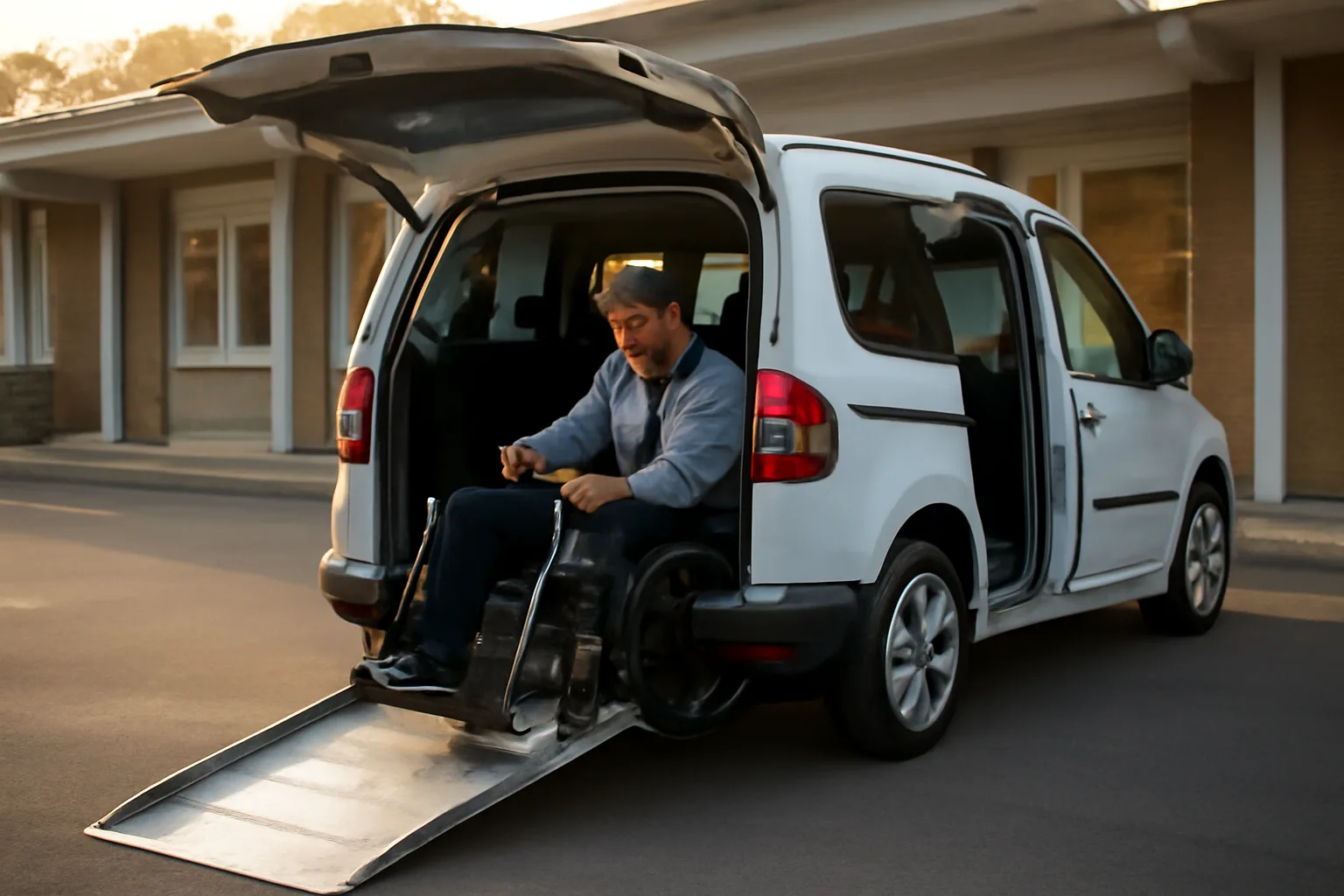
NEMT stands for non-emergency medical transportation. It covers rides for people who have a medical need but aren't in an emergency: dialysis, chemotherapy, physical therapy, prenatal visits, mental health appointments. The vehicle is usually a van, sedan, or wheelchair-accessible van, not an ambulance, and the driver isn't required to be a paramedic or EMT. An ambulance responds to 911 calls or handles medically necessary transport where a patient needs clinical monitoring en route. NEMT is the opposite end of the spectrum: the patient can sit in a regular seat or wheelchair, doesn't need an IV line watched, and just needs a safe, reliable ride to and from care. States and Medicaid programs treat these as separate provider categories with separate enrollment paths, separate vehicle standards, and separate reimbursement rates. If you're picturing 911 response trucks with lights and sirens, that's not this business. If you're picturing a wheelchair van picking up a dialysis patient three times a week, that's NEMT.
Does Medicaid cover ambulance rides, and does it cover NEMT too?
Yes to both, but through different rules. Medicaid covers emergency ambulance transport when medically necessary, and federal law requires state Medicaid programs to also provide transportation to and from medical appointments for beneficiaries who have no other means of getting there. This NEMT assurance comes from federal Medicaid regulations, specifically 42 CFR 431.53, which requires states to "ensure necessary transportation for beneficiaries to and from providers" [1]. Missouri's MO HealthNet program covers non-emergency medical transportation for eligible participants who lack access to a vehicle or can't use available transportation because of a disability or medical condition, consistent with the federal assurance requirement CMS describes for state Medicaid transportation benefits [2]. Missouri manages a lot of this NEMT volume through contracted transportation brokers rather than paying individual drivers directly, which is the model most new owner-operators actually plug into. Ambulance coverage under MO HealthNet is a separate benefit category. It has its own provider enrollment and billing codes, run through the state's ambulance services program, and it requires licensure as an ambulance service under Missouri's EMS statutes. If you're building a wheelchair-van business, you almost certainly want the NEMT path, not the ambulance path, unless you're planning to run licensed ambulances with EMTs on board.
Does Medicare cover medical transportation too?
Medicare's coverage is narrower than Medicaid's. Original Medicare (Part B) covers ambulance services when other transportation would endanger your health, and it covers non-emergency ambulance transport in limited cases, such as repeated trips for dialysis, but it does not generally pay for routine non-emergency van or sedan transportation the way Medicaid does. The Centers for Medicare & Medicaid Services confirms ambulance coverage requires medical necessity and, for non-emergency repetitive trips, prior authorization in many cases [3]. Some Medicare Advantage (Part C) plans offer NEMT as a supplemental benefit, and this varies enormously by plan and by insurer. If a chunk of your future client base is on Medicare Advantage rather than Medicaid, you'd contract with that specific plan or its transportation broker rather than assume blanket coverage. Confirm any Medicare Advantage transportation contracting directly with the plan; there's no single national rule to point to here.
How do you start a medical transportation business, step by step?
The order matters less than people think, but most successful Missouri operators follow roughly this sequence: form the business entity, secure a compliant vehicle, get insured, pass driver requirements, then pursue MO HealthNet enrollment and/or broker credentialing in parallel. 1. Register your business entity with the Missouri Secretary of State (LLC is the common choice for liability separation) [4]. 2. Get an EIN from the IRS and open a business bank account. 3. Buy or lease a wheelchair-accessible van or ambulatory sedan that meets Missouri vehicle inspection standards and, if wheelchair-equipped, ADA lift/ramp specifications. 4. Secure commercial auto insurance (not personal auto) and general liability coverage. 5. Set up driver requirements: valid Missouri driver's license, clean MVR, and, depending on broker, a Level 2 background check and drug screen. 6. Apply for a MO HealthNet provider number through the Missouri Department of Social Services, and/or apply to become a subcontracted transportation provider with the broker or brokers operating in your region. 7. Complete any required driver training (defensive driving, passenger assistance, wheelchair securement) that your broker mandates. 8. Set up dispatch, scheduling, and billing systems before you take your first ride. The honest version: most one-van owner-operators skip direct MO HealthNet enrollment. It's built for larger, ongoing provider relationships. Instead they credential as a subcontractor under a broker like Modivcare or MTM, since Missouri routes most of its NEMT volume through contracted brokers region by region. Confirm with your broker and the state Medicaid agency which regions are active and which brokers hold current contracts, since this changes over time.
How do you start a NEMT business specifically, versus a general transportation company?
A general transportation or livery business doesn't need Medicaid enrollment, ADA-compliant vehicles, or broker credentialing. A NEMT business does, because your revenue depends on being a recognized provider inside the Medicaid or Medicare Advantage referral system. The practical differences show up in four places: vehicle standards (wheelchair lifts, securement systems, cleanliness protocols), driver vetting (background checks tied to healthcare-adjacent work), documentation (trip logs, mileage records, prior authorization numbers), and payment (you bill the broker or the state, not the rider, in most cases). If you're deciding between the two, ask yourself who's actually going to hire you. If it's hospitals, dialysis centers, and case managers arranging rides for Medicaid or Medicare Advantage members, you need the NEMT credentialing path. If it's private-pay families booking rides directly, you can operate closer to a standard transportation business, though many owner-operators still build ADA-accessible service because it opens up private-pay wheelchair transport too. See how to start a NEMT business for the credentialing-specific version of this checklist.
What does it cost to get a wheelchair van NEMT business running in Missouri?
| Used wheelchair-accessible van (converted) | $18,000 to $45,000 | |
|---|---|---|
| New wheelchair-accessible van (converted) | $55,000 to $75,000+ | |
| Commercial auto insurance (annual, one van) | $4,000 to $10,000+ | |
| General liability insurance (annual) | $600 to $1,500 | |
| LLC formation + Missouri Secretary of State filing fee | $50 to $105 | |
| Driver background check / drug screen | $50 to $150 per driver | |
| Broker credentialing application fees | Often free to low-cost, confirm with broker | The single biggest line item is the vehicle. The biggest ongoing line item is commercial auto insurance, which runs well above personal auto rates because you're carrying passengers with mobility and medical needs for compensation. Don't underestimate insurance; some new operators budget for the van and get blindsided by the policy quote. |
Costs vary a lot by whether you buy new or used, and whether the van is already converted. Here's a rough breakdown based on typical market ranges (not a guarantee, and prices shift with the used vehicle market): | Item | Typical range |
What vehicle requirements does Missouri set for wheelchair vans?
Missouri requires vehicles operating commercially to meet state safety inspection standards, and wheelchair-accessible vehicles used for hire typically need to meet ADA accessibility standards for lifts, ramps, and securement anchors. Beyond state-level requirements, individual brokers add their own vehicle age limits (commonly a 5 to 10 year maximum, though this varies by broker and region), mileage caps, and interior cleanliness or signage requirements. Before you buy a van, ask the broker(s) you plan to work with for their specific vehicle inspection checklist. Some require a documented preventive maintenance log, a working wheelchair lift inspected on a set schedule, and functioning four-point tie-down securement systems in every wheelchair position. Buying a van that passes a basic inspection but fails a broker's internal vehicle audit is a common and expensive mistake. Confirm exact vehicle standards with your target broker before you buy, not after.
Can you start with just one van, or do you need a fleet?
You can start with one van. Missouri doesn't set a fleet-size minimum for MO HealthNet enrollment or for most broker subcontractor agreements; the barrier is usually credentialing and insurance, not vehicle count. One-van operators are common in the NEMT subcontractor world, especially in rural counties where brokers are actively looking for coverage. The tradeoff of one van is capacity risk: if that vehicle is in the shop, you have zero trips you can run that day, and some brokers penalize no-shows or cancellations tied to vehicle downtime. A lot of successful single-van operators keep a backup arrangement, either a second driver-ready vehicle they can rent quickly or a relationship with another small operator to cover overflow. Confirm with your broker whether they require a documented backup vehicle plan as part of credentialing; some regions do, some don't. For the specific mechanics of running a one-vehicle operation profitably (routing, broker dispatch minimums, driver scheduling around a single asset), see non emergency medical transportation.
How do you get credentialed with Missouri's NEMT brokers?
Missouri contracts NEMT management out to transportation brokers who handle scheduling, dispatch, and provider network management for MO HealthNet non-emergency rides. Modivcare and MTM are the two names most commonly associated with state Medicaid NEMT brokerage nationally, and Missouri has used contracted brokers for its NEMT program; confirm with the Missouri Department of Social Services MHD (MO HealthNet Division) which broker currently holds the active contract for your region, since broker contracts are rebid periodically and coverage can shift. The general credentialing process across most state broker networks looks similar: submit a provider application, prove your vehicle meets standards, prove your drivers pass background checks and drug screening, submit proof of commercial insurance naming the broker as an additional insured (often required), and sign a subcontractor or transportation provider agreement covering rates and service area. Rates paid by brokers to subcontracted drivers vary by trip type (ambulatory vs. wheelchair vs. stretcher), mileage, and broker; there's no single published statewide rate card, so get this in writing during credentialing rather than assuming. Broker credentialing timelines commonly run anywhere from a few weeks to a couple of months depending on document completeness and background check turnaround. Treat any specific promised timeline as unconfirmed until your broker states it in writing.
How do you enroll directly as a MO HealthNet provider instead of going through a broker?
Direct MO HealthNet provider enrollment is handled through the Missouri Department of Social Services, MO HealthNet Division, using the state's provider enrollment portal and application [5]. This path makes more sense for larger operations planning to bill the state directly for a defined service line, rather than solo owner-operators picking up broker-dispatched trips. Direct enrollment generally requires a National Provider Identifier (NPI) from the National Plan and Provider Enumeration System, business licensing documentation, proof of required insurance, and completion of MO HealthNet's provider enrollment application and agreement. Because Missouri routes the bulk of routine NEMT trip volume through brokers, most new owner-operators find broker subcontracting faster to get moving and less administratively heavy than standing up direct state billing. If you're unsure which path fits your business size, call the MO HealthNet Division provider enrollment unit directly and ask them to confirm current broker contracts and whether direct enrollment is open for independent NEMT owner-operators in your service area; this changes, and getting it from the source beats guessing.
What driver requirements and background checks does Missouri (and its brokers) require?
At minimum, drivers need a valid Missouri driver's license and a clean-enough motor vehicle record to qualify for commercial auto insurance coverage. Most NEMT brokers layer on additional requirements: a criminal background check (often a fingerprint-based check through the Missouri State Highway Patrol or a third-party vendor), a drug and alcohol screening, and sometimes a TB test or health screening given the passenger population served. Training requirements vary by broker but commonly include passenger assistance techniques, wheelchair securement procedures, defensive driving, and HIPAA basics since drivers are handling protected health information indirectly (appointment details, pickup addresses tied to medical visits). Confirm with your specific broker exactly which certifications they require before you schedule background checks, since duplicate or mismatched paperwork wastes real time and money.
How long does it take to actually get running?
Realistically, plan for 6 to 12 weeks from the day you form your LLC to the day you take a paid trip, assuming no major delays. Vehicle sourcing (especially a used wheelchair-accessible conversion in good mechanical shape) can be the longest pole in the tent if you don't already own one. Insurance quotes for commercial auto with wheelchair passenger endorsements can also take longer than a standard policy because fewer carriers write this coverage. Background check turnaround through Missouri State Highway Patrol channels or broker-contracted vendors typically runs one to a few weeks, but can stretch if fingerprint appointments are backed up or if a driver has a record requiring manual review. Build slack into your plan. Assuming everything lines up perfectly in three weeks is how new operators end up burning cash on an idle van.
Frequently asked questions
How do you start a medical transportation business in Missouri?
Form an LLC, get an EIN, buy a wheelchair-accessible or ambulatory vehicle meeting Missouri vehicle inspection standards, get commercial auto and general liability insurance, pass driver background checks, then apply for MO HealthNet provider enrollment or credential as a subcontractor with an active NEMT broker in your region.
What is NEMT?
NEMT means non-emergency medical transportation: rides for people who have a medical need, such as dialysis or a therapy appointment, but don't require an ambulance or clinical monitoring en route. It's a distinct Medicaid benefit category from ambulance transport, with its own vehicle standards, driver requirements, and provider enrollment path.
Does Medicaid cover ambulance rides?
Yes. Medicaid covers medically necessary ambulance transport, both emergency and certain non-emergency cases like repetitive dialysis trips, under a separate benefit category from routine NEMT van rides. Coverage rules and enrollment for ambulance providers differ from NEMT provider enrollment; ambulance services require Missouri EMS licensure.
Does Medicaid cover non-emergency medical transportation?
Yes. Federal regulation 42 CFR 431.53 requires state Medicaid programs to ensure transportation for beneficiaries to and from covered medical services. Missouri's MO HealthNet program provides this NEMT benefit, largely managed through contracted transportation brokers rather than direct state-to-driver payment for most trips.
Does Medicare cover medical transportation?
Medicare Part B covers ambulance transport when medically necessary and covers some non-emergency ambulance trips (like recurring dialysis rides) with prior authorization in many cases. Original Medicare generally does not cover routine non-emergency van or sedan transport; some Medicare Advantage plans offer it as a supplemental benefit, so check the specific plan.
How do you start a NEMT business with just one van?
Missouri sets no fleet-size minimum for broker subcontractor credentialing or MO HealthNet enrollment, so one van is enough to start. Focus your budget on a compliant wheelchair-accessible vehicle, adequate commercial insurance, and a backup plan for when that single vehicle is down for maintenance.
How much does it cost to start a wheelchair van NEMT business?
Plan on roughly $18,000 to $45,000 for a used wheelchair-accessible van, or $55,000 or more new, plus $4,000 to $10,000+ annually for commercial auto insurance and a few hundred more for general liability. LLC formation and background checks add a few hundred dollars on top.
Which brokers run Missouri's Medicaid NEMT program?
Missouri's MO HealthNet Division contracts NEMT management to transportation brokers, and broker contracts are rebid periodically by region. Confirm current active brokers, such as Modivcare or MTM, directly with the MO HealthNet Division since assignments can change; don't assume a broker holds a contract without checking.
Do you need a special license to drive NEMT vehicles in Missouri?
A standard valid Missouri driver's license is the baseline requirement; NEMT typically doesn't require a commercial driver's license (CDL) unless the vehicle's weight or passenger capacity crosses CDL thresholds. Brokers commonly add background check, drug screening, and passenger assistance training requirements on top of the basic license.
What's the difference between NEMT and an ambulance service?
NEMT transports patients who don't need clinical monitoring, using vans or sedans and drivers without EMT certification. Ambulance services handle emergencies or medically unstable patients, require state EMS licensure, staffed by certified EMTs or paramedics, and fall under a completely separate Medicaid billing and enrollment category.
How long does NEMT broker credentialing take in Missouri?
There's no single fixed timeline; it depends on document completeness, vehicle inspection scheduling, and background check turnaround. Budget several weeks to a couple of months, and get a specific estimate directly from your chosen broker rather than assuming a standard number, since it varies by broker and by region.
Can you run a NEMT business without going through a broker at all?
Yes, by enrolling directly as a MO HealthNet provider through the Missouri Department of Social Services rather than subcontracting with a broker. This route requires an NPI, direct billing setup, and more administrative overhead, and it tends to suit larger operations better than a single-van owner-operator just starting out.
Sources
- eCFR, 42 CFR 431.53: Federal Medicaid regulation requires states to ensure necessary transportation for beneficiaries to and from providers
- Medicaid.gov, Non-Emergency Medical Transportation benefit page: Medicaid programs are federally required to provide non-emergency medical transportation as an assurance of access to covered services, which Missouri's MO HealthNet program implements for eligible participants
- Medicare.gov, Ambulance Services coverage: Medicare Part B covers ambulance services when medically necessary, including limited non-emergency repetitive trips with prior authorization requirements
- Missouri Secretary of State, Business Entity Filing: Missouri LLC formation is filed through the Secretary of State with an associated filing fee
- Missouri Department of Social Services, MO HealthNet Division Provider Enrollment: MO HealthNet provider enrollment is handled through the Missouri Department of Social Services using a state provider enrollment application