Last updated 2026-07-24
TL;DR
A non emergency medical transportation provider (NEMT) drives Medicaid and Medicare members to routine medical appointments, not emergencies. Starting one means forming a business, getting the right insurance and vehicle permits, enrolling as a Medicaid transportation provider in your state, and credentialing with brokers like Modivcare, MTM, or Access2Care. Confirm exact rules with your state Medicaid agency before you buy a van.
What is non emergency medical transportation?
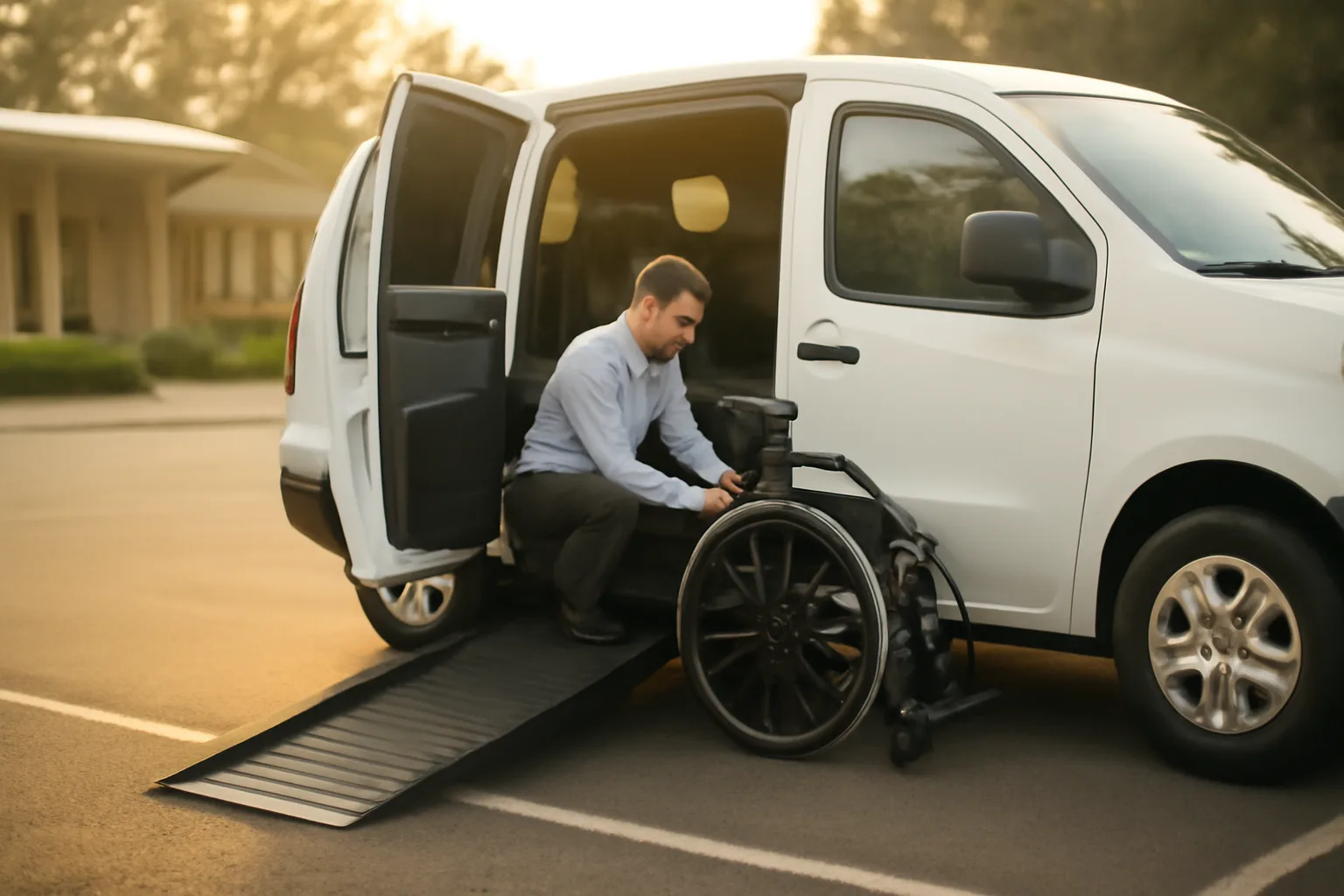
Non emergency medical transportation, or NEMT, is scheduled transport to and from medical appointments for people who don't need an ambulance but can't drive themselves or use regular transit. Think dialysis three times a week, physical therapy, a specialist visit two counties over, or a wheelchair user going to a dentist. It's not 911 transport and it's not staffed by paramedics. Federal Medicaid rules actually require states to make sure eligible people can get to and from covered services. The regulation is at 42 CFR 431.53, which says states must "ensure necessary transportation for beneficiaries to and from providers" [1]. States can run this directly, contract with a broker, or let managed care plans handle it. That's why almost every state now uses a broker like Modivcare, MTM, Access2Care, or in some regions SafeRide, instead of paying individual drivers directly. Most NEMT trips fall into two vehicle categories: ambulatory (a sedan or minivan for someone who can walk and transfer into a seat) and wheelchair-accessible (a van with a ramp or lift and tie-downs). Some areas also have stretcher van service, which sits between NEMT and ambulance service in terms of medical need. If you're comparing vehicle types and licensing across states, the nemt transportation overview breaks that out in more detail.
Does Medicaid cover ambulance rides, and how is that different from NEMT?
Yes, Medicaid covers ambulance rides, but that's a separate benefit from NEMT and it works differently. Ambulance transport is for emergencies or situations where a person's medical condition requires monitoring or equipment during the ride. It's billed as a medical service under EMTALA-adjacent emergency rules and paid through the state's ambulance fee schedule, usually to licensed EMS agencies, not NEMT brokers. NEMT, by contrast, is the non-emergency ride: someone who's medically stable enough to sit in a van but doesn't have another way to get to a covered appointment. Medicaid.gov describes NEMT as a required benefit that helps beneficiaries get to "medical care covered by Medicaid" [2] when they have no other transportation available. The practical difference for a business owner: if you want to run ambulances, you're in the EMS licensing and reimbursement world, which has its own certification (EMT, paramedic) and state EMS office oversight. If you're running a wheelchair van or ambulatory sedan service, you're in the NEMT provider and broker credentialing world, which is what this article covers. Don't confuse the two when you're reading state rules; a lot of state Medicaid transportation pages cover both in the same document.
Does Medicare cover medical transportation?
Sometimes, and it's more limited than Medicaid. Original Medicare (Part B) covers ambulance transportation when it's medically necessary and other transportation would endanger the person's health, per CMS coverage rules [3]. It generally does not cover routine non-emergency rides to a doctor's office the way Medicaid does. Where NEMT-style benefits show up under Medicare is mostly through Medicare Advantage plans. Many Part C plans now offer a limited number of non-emergency transportation trips per year as a supplemental benefit, something CMS has allowed plans to expand under its expanded supplemental benefits policy for enrollees with chronic conditions [4]. The number of covered trips, mileage radius, and approved destinations vary by plan and change every year during open enrollment, so there's no single national answer. If you're building a business plan around Medicare Advantage transportation contracts, you'll be dealing directly with the health plan or its transportation vendor, not a state Medicaid broker. Some NEMT companies run both a Medicaid broker contract and a separate Medicare Advantage transportation contract side by side. They're credentialed and billed completely separately, so don't assume enrollment with one covers the other.
How do you start a medical transportation business, step by step?
There's no single national license for NEMT. It's a patchwork of business registration, vehicle and driver requirements, state Medicaid provider enrollment, and separate broker credentialing. Here's the realistic order most owner-operators end up following. 1. Form the business entity (LLC is common) and get an EIN from the IRS. 2. Get commercial auto insurance with the liability limits your state and brokers require; this is often $1 million combined single limit for wheelchair-accessible vehicles, though limits vary by state and broker. 3. Buy or convert a wheelchair-accessible van that meets your state's ADA and vehicle inspection standards. 4. Get any state-specific transportation or ambulance service permits, if your state licenses NEMT vehicles separately (many do, some don't). 5. Enroll as a Medicaid transportation provider through your state Medicaid agency's provider enrollment portal. 6. Apply for credentialing with the broker(s) operating in your service area (Modivcare, MTM, Access2Care, or others depending on the state and region). 7. Complete required driver background checks, drug testing, and training (defensive driving, passenger assistance, sometimes CPR/First Aid). 8. Set up dispatch and billing workflows for the trip management system your broker uses. The order can shift; some states want Medicaid enrollment before broker credentialing, others let you credential with a broker while enrollment is pending. Confirm the sequence with your broker and state Medicaid agency before you commit to a timeline, because getting it backwards can cost you weeks.
How do I start a NEMT business with just one van?
One van is a completely normal way to start, and plenty of owner-operators run profitably that way for years before adding a second vehicle. The core steps don't change, but a few things matter more when you're a one-vehicle operation. First, pick your service area realistically. A single van can't cover a huge county efficiently, so look at where the broker actually has trip volume and where existing drivers already have coverage gaps, more than where you live. Second, budget for downtime. If your one van is in the shop, you have zero capacity, so many solo owners keep a maintenance reserve fund and a relationship with a mechanic who can turn quick jobs around fast. Third, be honest about your own hours. As a one-van operator you're likely both the driver and the office, doing your own scheduling, invoicing, and compliance paperwork. Some brokers require a certain level of trip acceptance or on-time performance to stay active in their network, so factor rest and vehicle maintenance time into what you can realistically commit to. There's no rule that says you need multiple vans to enroll with a state or credential with a broker. It's about meeting the same insurance, vehicle, and driver standards as a bigger fleet, just at a smaller scale.
How do you enroll as a Medicaid NEMT provider in your state?
Every state Medicaid agency runs its own provider enrollment process, usually through an online portal (names vary: MMIS, Provider Enrollment Portal, etc.). The general pattern is similar across states even though the forms differ. You'll typically need: your business's EIN and legal entity documents, NPI number (get this free from the National Plan and Provider Enumeration System), proof of vehicle insurance and inspection, driver credential documentation, and sometimes a state-specific transportation permit or letter of certification. Some states require a Medicaid provider agreement signed by the business owner personally attesting to program compliance. Processing time varies enormously by state; some approve in a few weeks, others take a couple of months, especially during high-volume enrollment periods. Medicaid.gov's provider resources page is the right starting point to find your state's specific enrollment portal and transportation unit contact. Because every state's forms, fees, and required attachments differ, and because they get updated, always confirm the current checklist directly with your state Medicaid transportation unit before assembling your application. If you want a broader look at how states differ, the non emergency medical transportation guide compares enrollment patterns across a handful of states.
How does broker credentialing work with Modivcare, MTM, Access2Care, or SafeRide?
Most states don't pay individual NEMT providers directly. Instead they contract with a broker who manages trip assignment, scheduling, and payment to a network of credentialed transportation companies. Modivcare and MTM are the two largest, covering NEMT brokerage in dozens of states between them; Access2Care and SafeRide operate in specific regions and states, often layered under managed care organizations. Credentialing with a broker is a separate process from state Medicaid enrollment, even though both are usually required. Brokers typically ask for: your Medicaid provider enrollment confirmation, vehicle registration and insurance certificates naming the broker as certificate holder or additional insured, driver background check results (often including sex offender registry and motor vehicle record checks), vehicle inspection reports, and sometimes a facility or dispatch capability review. Each broker has its own portal, its own inspection checklist, and its own timeline. Some brokers re-inspect vehicles annually, others quarterly. Some require you to complete their own driver training module even if you already completed a state-required course. None of this is standardized nationally, so don't assume what worked with Modivcare in one state will match MTM's requirements in another, even in the same region. Confirm current documentation requirements directly with each broker before you submit.
What vehicle and insurance requirements should I expect?
| Commercial auto liability | Often $1,000,000 combined single limit for WAV; some states/brokers accept lower for ambulatory sedans | |
|---|---|---|
| Vehicle age limit | Many brokers cap vehicle age (commonly 5-10 years) or mileage | |
| ADA wheelchair lift/ramp | Required for wheelchair-accessible vehicle (WAV) designation | |
| Annual/periodic inspection | State DOT or broker-run inspection, frequency varies | |
| Driver background check | State and often federal, plus MVR pull | |
| Drug and alcohol testing | Required in many states for commercial passenger transport | Because these numbers change by state and by broker contract cycle, treat this table as a starting checklist, not a guarantee. Always confirm current thresholds with your broker and your state Medicaid agency before buying a vehicle or binding a policy, since buying the wrong van (too old, wrong lift type) is an expensive mistake to fix after the fact. |
Requirements vary by state and broker, but a few things show up almost everywhere for wheelchair-accessible NEMT vehicles. | Requirement | Typical range/note |
How long does it take to get approved and start running trips?
Realistically, plan for two to four months from the day you start paperwork to the day you're accepting live trips, though it can run faster or considerably slower depending on your state's backlog and how complete your first submission is. The timeline usually breaks into three overlapping pieces: forming the business and getting insured (a few weeks if you move fast), state Medicaid provider enrollment (commonly 30 to 90 days depending on the state), and broker credentialing (often 2 to 6 weeks once your Medicaid enrollment is confirmed, though some brokers can run parallel review). Vehicle sourcing and any required conversion or ADA lift installation can add its own lead time, sometimes 4 to 12 weeks if you're ordering a converted van rather than buying one already equipped. The single biggest thing that blows up timelines is incomplete paperwork. Missing insurance endorsements, an NPI application filed with the wrong entity name, or a vehicle inspection that doesn't match the broker's checklist all send you back to the end of the queue. Building your document set correctly the first time matters more than moving fast and re-submitting.
What ongoing compliance do NEMT providers have to keep up with?
Enrollment and credentialing aren't one-time events. Most states require Medicaid provider revalidation on a set cycle (commonly every few years, though states vary this), and brokers usually re-review insurance certificates, vehicle inspections, and driver files on their own schedule, often annually. You'll also need to keep trip documentation clean: pickup and drop-off times, mileage, and signatures or electronic confirmations, because these get audited. Medicaid program integrity units and broker compliance teams both run audits, and unreadable or missing trip logs are a common reason for payment holds or network removal. Driver-side, expect periodic re-checks of motor vehicle records and background checks, plus any continuing education a state or broker requires (passenger assistance refreshers, defensive driving, sometimes HIPAA training since you're handling protected health information about where someone is going and why). None of this is glamorous, but it's the difference between staying credentialed for years and getting quietly dropped from a network after an audit finds gaps.
What does it cost to get an NEMT business off the ground?
Costs vary widely by state, vehicle choice, and whether you buy new or used, so there's no single honest number here, but the major cost buckets are consistent. Business formation and licensing fees are usually modest, often a few hundred dollars depending on your state's LLC filing fee. Commercial insurance for a wheelchair van is typically the largest recurring cost, and it varies enormously by state, driving record, and coverage limit, so get quotes from at least two or three commercial auto insurers who specifically write NEMT policies rather than assuming a standard commercial auto quote will match broker requirements. Vehicle cost is the other major variable. A used, already-converted wheelchair van can run considerably less than a new conversion, and a new ADA-compliant conversion added to a base van chassis is a significant additional cost on top of the vehicle itself. There are also smaller costs that add up: background check fees, DOT physical exams for drivers, broker application fees (some charge, some don't), and any state-required transportation permit fees. Because these numbers shift by state and change year to year, build your budget from current quotes, not from a number you saw in an old forum post.
Where do I go to double-check state-specific rules before I commit money?
Start with two sources: your state Medicaid agency's transportation or NEMT unit, and the broker(s) actually operating in your service area. Medicaid.gov's state overview pages link out to individual state Medicaid websites, which is the fastest way to find the right office. State pages usually list the current broker, provider enrollment portal, and any state-specific vehicle or driver rules. Call or email before you spend money on a vehicle or insurance policy. Ask directly: what's the current broker in this region, what insurance minimums do you require, what's the vehicle age limit, and what's the current provider enrollment turnaround time. Get the answer in writing if you can, because verbal answers from a call center sometimes don't match the written policy, and you want a record if there's ever a dispute. If you're comparing how requirements differ across multiple states before picking where to operate, the non emergency medical transportation services and medical transportation guides walk through more of that state-by-state variation. For a structured way to organize the paperwork itself, some owner-operators use a fixed checklist product like RideCredential's $199 one-time State + Broker NEMT Launch Kit, which organizes the state enrollment and broker credentialing document set into one packet; it doesn't replace confirming details with your state and broker, but it can save real time assembling the paperwork the first time. You can look at the current checklist at the launch kit builder.
Frequently asked questions
What is non emergency medical transportation?
Non emergency medical transportation (NEMT) is scheduled transport to and from medical appointments for people who are medically stable but can't drive themselves or use public transit, such as dialysis patients or wheelchair users going to therapy. Federal Medicaid rules require states to arrange this transport for eligible beneficiaries under 42 CFR 431.53.
Does Medicaid cover ambulance rides?
Yes. Medicaid covers ambulance transport for emergencies or when a beneficiary's condition requires medical monitoring during transport. It's a separate benefit from NEMT, billed through the ambulance fee schedule to licensed EMS providers, not through NEMT brokers like Modivcare or MTM.
Does Medicare cover medical transportation?
Original Medicare Part B covers ambulance transport when medically necessary, but generally doesn't cover routine non-emergency rides. Some Medicare Advantage (Part C) plans offer limited non-emergency transportation trips as a supplemental benefit; coverage and trip limits vary by plan and change annually.
How do I start a medical transportation business?
Form a business entity, get commercial auto insurance and a wheelchair-accessible van, obtain any required state transportation permits, enroll as a Medicaid provider through your state agency, credential with the broker(s) in your area (Modivcare, MTM, Access2Care, etc.), and complete driver background checks and training before accepting trips.
How do you start a NEMT business with only one van?
The same steps apply as a larger fleet: entity formation, insurance, state Medicaid enrollment, and broker credentialing. Focus your service area realistically for one vehicle, budget for downtime if the van needs repairs, and be realistic about handling both driving and back-office work yourself.
How much does it cost to start an NEMT business?
Costs vary widely by state and vehicle choice. Major expenses are commercial insurance (often the largest recurring cost), the wheelchair-accessible vehicle itself (new conversions cost significantly more than used converted vans), plus smaller fees for background checks, DOT physicals, and permits. Get current local quotes rather than relying on old estimates.
How long does NEMT provider enrollment and broker credentialing take?
Plan for roughly two to four months total, though it varies by state backlog and application completeness. State Medicaid enrollment commonly takes 30 to 90 days, and broker credentialing often adds 2 to 6 weeks after that. Incomplete paperwork is the most common cause of delay.
What insurance do I need for a wheelchair van NEMT business?
Most brokers and states require commercial auto liability insurance, often around $1 million combined single limit for wheelchair-accessible vehicles, though limits vary by state and broker. You'll typically need the broker named as certificate holder or additional insured. Confirm exact limits before binding a policy.
What's the difference between an NEMT provider and an ambulance service?
An NEMT provider transports medically stable people who don't need monitoring or emergency equipment during the ride, using vans or sedans. An ambulance service handles emergencies or medically unstable patients, requires EMS licensure and certified EMTs/paramedics, and is billed under a completely separate Medicaid or Medicare benefit.
Do I need to be credentialed with more than one broker?
It depends on your state. Some states use a single statewide broker; others split regions among multiple brokers or let managed care plans each pick their own vendor. Check with your state Medicaid transportation unit to find out which broker(s) actually operate in your specific service area.
Can I run an NEMT business without a broker contract?
In most states, no, if you want to bill Medicaid trips, because states route NEMT payment through a contracted broker rather than paying individual providers directly. Some private-pay, Medicare Advantage, or facility contracts don't require broker credentialing, but Medicaid trip volume almost always does.
What documents do brokers usually require for credentialing?
Typical requirements include proof of state Medicaid enrollment, vehicle registration and insurance certificates, vehicle inspection reports, driver background check results, motor vehicle records, and sometimes completion of the broker's own training module. Exact requirements differ by broker and by state, so confirm the current checklist directly.
How do NEMT providers get paid?
Most NEMT providers get paid per completed trip through the broker's system, based on trip mileage, vehicle type (ambulatory vs. wheelchair-accessible), and the negotiated or state-set rate. Payment cycles and rate structures vary by state and broker, so confirm current rates with your specific broker contract.
Sources
- eCFR, 42 CFR 431.53 (Assurance of transportation): States must ensure necessary transportation for Medicaid beneficiaries to and from providers
- Medicaid.gov, Non-Emergency Medical Transportation: NEMT is a required Medicaid benefit helping beneficiaries reach Medicaid-covered medical care
- Medicare.gov, Ambulance services coverage: Medicare Part B covers ambulance transportation when medically necessary and other transport would endanger health
- CMS, Medicare Advantage Supplemental Benefits: CMS has expanded allowed supplemental benefits, including transportation, for Medicare Advantage plans
- eCFR: Federal regulation defining NEMT as a required Medicaid benefit under 42 CFR 440.170(a)
- U.S. Government Accountability Office: GAO report examining Medicaid nonemergency medical transportation program oversight and administration
- Federal Motor Carrier Safety Administration: Federal requirements for operating authority that may apply to medical transportation vehicle operators
- Internal Revenue Service: Form used to apply for an Employer Identification Number when starting a NEMT business
- U.S. Small Business Administration: Federal guidance on steps to legally register a new small business such as an NEMT provider
- Centers for Medicare & Medicaid Services: CMS provider/supplier enrollment process relevant to transportation providers seeking Medicaid enrollment
- Medicaid.gov: Federal program integrity requirements NEMT providers must comply with on an ongoing basis